Tag: advertising

  • Netflix to reach $1bn in ad revenue in APAC by 2027: Ampere Analysis

    Netflix to reach $1bn in ad revenue in APAC by 2027: Ampere Analysis

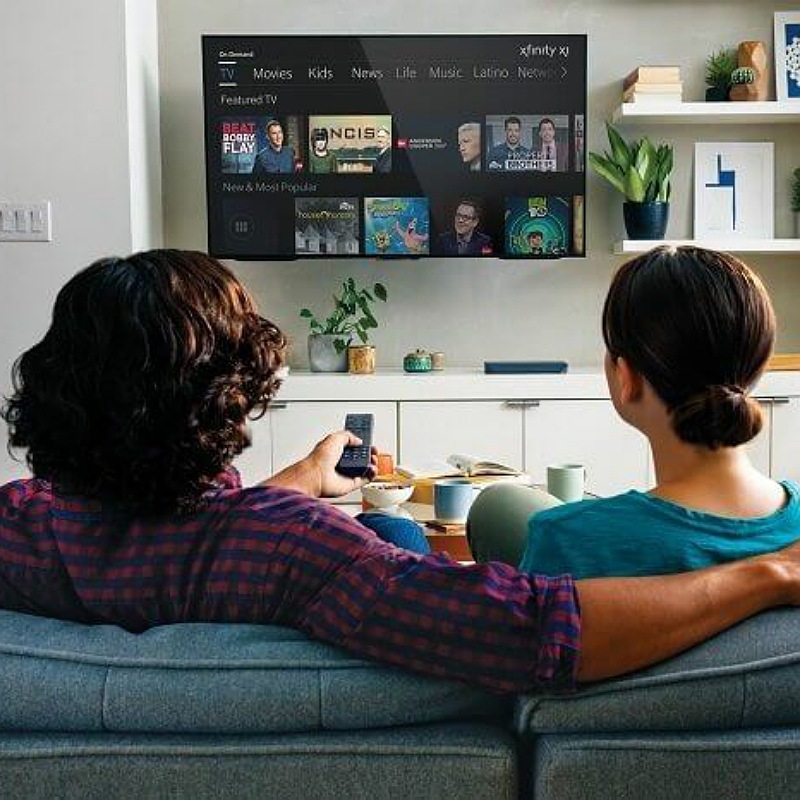
    Mumbai: According to a new report by Ampere Analysis, the Asia-Pacific will be the strongest growth region for Netflix’s ad tier, with one of the largest increases in revenue and the greatest average revenue per user (ARPU) uplift. High tolerance of advertising in the Asia Pacific will see the region generate nearly one billion dollars in ad revenue by 2027. In addition, $574 million will be generated by ad tier subscription fees.

    Due to relatively low ad rates, Asia-Pacific will earn a higher percentage of its ad-tier revenue from subscriptions (38 per cent vs. 34 per cent in North America and 30 per cent in Western Europe). A rapid rise in subscribers in the region will see overall ad-tier revenue grow quickly.

    Ampere explains that Asian-Pacific viewers are the most positive about advertising, with four in 10 (41 per cent) saying they do not mind ads. The comparative figures are 35 per cent in North America and 24 per cent in Western Europe. Ampere predicts that 22 per cent of users in the region will take the ad tier option. With a 17.6 per cent increase in subscriber growth by 2027, Asia-Pacific will be one of the fastest growing ad income markets.

    Globally, Netflix will earn $5.5 billion in annual ad income by 2027, boosted to $8.5 billion a year by ad tier subscription fees. The launch of an ad tier will see Netflix earn $2.2 billion more by 2027 versus a purely subscription-only model, driven by an Arpu uplift combined with a modest increase in the overall subscriber base. Ampere estimates that total customers will be 3.2 per cent higher than they would have been had Netflix not launched an ad tier.

    Ampere Analysis analyst Ben French said, “Although not as valuable as the US market, Asia will be a particularly strong region for Netflix’s ad model. The high tolerance of advertising will see the strongest uptake of the ad tier, and although rates charged for advertising are lower than in other regions, strong subscriber growth will ensure Asia remains central to the success of Netflix’s new strategy.”

  • Media experts are concerned about changing policies impacting their digital media buys: Report

    Media experts are concerned about changing policies impacting their digital media buys: Report

    Mumbai: Integral Ad Science (IAS), in collaboration with YouGov and a market research firm, has released its report ‘2022 Future of Privacy-First Advertising.’

    IAS surveyed 346 digital media experts and 1,131 consumers about their opinions on the future of ad targeting, upcoming changes to online data and privacy policies, and how media quality solutions can help marketers be more effective.

    The findings revealed that consumers have serious concerns about the security of their personal information when using the internet; that they are unaware of the laws governing the collection and use of their personal data; and that they are very uncomfortable when their online activity is used for advertising.

    IAS Global chief commercial officer Yannis Dosios said, “With upcoming online data and privacy policy changes coming down the pipe, privacy continues to be a priority for both consumers and media experts.”

    He further added, “IAS is well-suited to help ease the concerns of privacy policy transitions through our contextual targeting solutions that will help advertisers reach their ideal audience at scale, all while respecting their privacy.”

    The report explores a gap between what organisations are actually doing to deal with these changes and how crucial it is for media professionals to understand data privacy policies, as well as how concerned they are about how these policies will affect their work.

    The report also examines how brands are currently dealing with cookie depreciation through contextual, privacy-first advertising strategies that don’t use individuals’ personal information to target customers.

    Online data privacy 

    One of the report’s key findings was that while consumers value online data privacy, their trust in the security of their online data is low.

    While consumers agree that data privacy is important, only half (50 per cent) are confident in the security of their online data while surfing the web. More than two-thirds (67 per cent) of consumers also claim to be more cautious than ever when it comes to their privacy and online data.

    Targeting techniques 

    The study also discovered that consumers are aware of various targeting techniques. However, they might feel uncomfortable with their data being used for advertising.

    Although the majority of consumers (68 per cent) are still uncomfortable with personalisation, despite the fact that 90 per cent (nine in ten) of users are aware that websites and apps collect and share their data for advertising purposes.

    Brands have the chance to change the targeted ad experience so that contextual relevance is the driving factor. This would result in a better user experience for consumers and better results for advertisers.

    Privacy policy 

    Although the majority of media experts are concerned about evolving privacy policies, many are unaware of them and the majority lack a clear management strategy.

    Almost two-thirds (62 per cent) of media experts concur that this year it is important to understand data privacy, and an overwhelming majority (89 per cent) say that brands are particularly concerned about PII privacy.

    However, only about half of digital media experts are knowledgeable about privacy policy-related topics pertaining to browsers (53 per cent), regulations (51 per cent) or mobile identifiers (45 per cent).

    Furthermore, only 36 per cent of media experts claimed that their company had set up a team to handle upcoming policy changes, while 29 per cent said that they had taken no action.

    Contextual content

    The report suggested that brands should match their advertisements with contextually relevant content that appeals to consumers more.

    After seeing a targeted advertisement, 66 per cent of consumers said they are likely to visit a brand’s or product’s website.

    Considering consumers’ privacy concerns and desire for relevance, contextual targeting is an easy option for advertisers, but only 29 per cent of media experts have used this tactic.

    The majority of media experts (51 per cent) concur that ad buyers and sellers must actively cooperate throughout privacy changes and that media quality solutions will become more crucial for ensuring the right audiences are reached.

  • Why regional outreach is the way to go for brands this festive season?

    Why regional outreach is the way to go for brands this festive season?

    Mumbai: Historically, in India, during the three to four months of the festive season that stretches from August, starting with Raksha Bandhan, up until New Year’s eve in December, the marketing and advertising spending see their peak. This year, with the country nearly coming out of the pandemic hangover, the industry is buoyant and all set to launch an advertising blitzkrieg ahead of the celebrations. Brands are not only increasing their spending but are also aiming for deeper penetration and better engagement with their core consumers during this time. And towards this end, they are going beyond the metros to reach tier two and tier three towns to directly speak to them in a language they can relate to.

    Recently, Publicis Groupe-owned Leo Burnett India announced the launch of LB regional—a specialised division to help brands create localised content by understanding region-wise insights. The division that currently focuses on five languages—Tamil, Telugu, Malayalam, Punjabi, and Bengali—will have a team of creatives and writers who are experts in each of them to make content relatable and relevant. According to Leo Burnett India, the strategy and thinking are backed by an in-depth quantitative survey undertaken by the agency, spanning 10 states.

    “There is a growing demand for local, vernacular and Indianized content, which if done right, presents a big opportunity for brands to grow their audiences,” said Leo Burnett South Asia CEO & BBH India chairman Dheeraj Sinha, speaking about the launch of the division. “We have already created local level interventions for some brands and have seen great results in going region-up rather than national-down in our thinking and creation,” he added.

    Opportunities galore in regional markets

    The busy festive season serves as the perfect opportunity to tap into the regional market and cater to the needs of the customers. Speaking to a regional audience around a time that holds value to them helps brands grow their outreach. Digital reach and penetration have opened the doors for brands to reach out to a far bigger audience pool beyond metros. The growing popularity of online shopping in tier two and three towns of India too have made the top players sit up and explore avenues to further expand their consumer base into the country’s interiors, in time for the celebrations.

    Earlier last month, Parle Products launched three TVCs in Bengali to consolidate its position in the Bengal market. The new campaign, according to Parle, is in line with its belief in regional marketing, speaking in the voice of the local populace, using deeply relatable subjects, and in a tone that is immediately understood. Before that, in 2021, Parle launched three ads to celebrate their anniversary, and they were all in Marathi, targeting a specific audience.

    “In a nation as vast as ours, each region has its voice, values, and ideals,” said Parle Products senior category head Mayank Shah, weighing in on this subject. “A generic message addressed to the entire country may not always take root. Speaking to each consumer in his language, in idioms he understands, and in surroundings that he is familiar with, is a far better option.”

    It’s a known fact that a majority of consumer families are inclined to spend more during the festive season than during normal times, making it a no-brainer for brands to be in favour of investing greatly during this time of the year. This year’s festive ad spends are expected to range between 20-30 per cent of total annual spend for most product categories, with FMCG, e-commerce, lifestyle, and home improvement expected to be the top spenders.

    The festive season is the most cluttered time of the year for advertisers, and the need to measure ROI beyond just brand visibility is imperative for overall campaign efficacy, says BBH India VP strategy Radhika Burman. “Hyperlocal campaigns help brands reach out to captive audiences with high purchase intent and leverage these leads to push for conversions at a more affordable cost. Tools like Google My Business, geo-fencing, retargeted SMS/emailers, and push notifications help brands stay ahead of the curve.”

    Influencer marketing is gaining popularity

    Micro-influencer marketing is also changing the rules of brand outreach. “Going into the festive season, brands will try to break the clutter and maximise campaign efficacy by choosing regionally relevant content creators who create vernacular content that is seen as more authentic and credible. Across categories, brands are using platforms like TakaTak and Moj to leverage these micro-creator communities and reach out to younger consumers in a real, relevant and authentic way,” adds Burman.

    Reaching out to the right audience and brand connect remains a challenge for marketers. Often, marketing campaigns miss cultural nuances and appropriately generalised stereotypes of different communities. Region-specific marketing helps break this cycle and enables brands to think up appropriate content for each region.

    With influencer marketing on the rise, it has only helped brands further to be able to reach out to a more local and regional audience, which was not possible through conventional marketing. “This is quite evident from the fact that social media spends have surpassed TV media spends and are only going upwards here on,” opines DIZO digital marketing lead Sugandha Varshney.
    Furthermore, she says, “Brands have also started adopting more targeted campaigns instead of broadcast-to-all and hence it is boiling down to finding out and working upon the behaviours, demographics, and psychographics of the targeted market segment paired with the trends, attitudes, and perceptions of the customers towards the brand and the purchasing patterns of the consumers.”

    She adds that now either they target themselves or tie up with influencers or partner with other distribution networks who have already amassed relevant audiences for them to reach their targeted customers in a more connected fashion.

    Brands adopts hyper-local marketing strategies

    Brands have been actively including the vernacular aspect in a bid to reach out to the right audience set, corroborates Puretech Digital senior vice president-digital marketing, Kamaljit Saini. On the marketing strategies being adopted by brands to go hyper-local, he says, “Especially on connected TV or digital content publication mediums which allow to segment the audience based on consumption pattern and preferences far better than traditional TV approach, brands are consciously being vernacular in disseminating the message.”
    Be it in traditional TV commercials, connected TV ads, or content/commercial messaging on YouTube, Facebook, Instagram, etc., sharing the information in the language the audience understands has given brand adoption a boost. While this has helped in reaching out to audiences beyond the tier one and tier two circles, Saini believes brands can go one step ahead by not just incorporating vernacular adaptations but also being more regional. For instance, he says, simply dubbing the message in a regional language is not enough to create the connection.
    “Considering the overall persona of your audience at large, bringing in the cultural and human aspects is also critical for a much stronger brand connection.” The way personalisation in connecting with the audience is taking shape, in no time we will see information dissemination with a more precise regional and cultural mix, he adds.

    According to White Rivers Media creative director – design Bhushan Kadam, instead of just connecting with audiences pan-India in languages like Hindi or English, brands have started paying attention and money to campaigns that talk to people across areas by creating region-specific vernacular content and campaigns. “Investments in such vernacular campaigns have roughly increased by 20–30 per cent in the past few years.” When advertising for a festival specific to a particular region, regional campaigns pave the way for connections and conversations in a language that the people understand. It is an easy and effective way to build trust and brand recognition in regional or local parts of the country.

    However, Kadam believes the use of smartphones or access to the internet is still a challenge in small towns or rural parts of the country. But one thing that is still a big hit in these areas is television, he says. “Thus, creating TV ads for specific regions instead of just social media content makes sense for brands. It increases visibility by catering through a medium that is accessible there-TV. Advertisers are increasingly customising localised ads for regional markets because if spoken to customers in a language they understand, it’s a hit!”
    As for the ROI from investing in regional marketing so far this year, results are encouraging through the impact of localisation in one’s marketing mix. “We have seen encouraging numbers for early adopters. ROI is a direct function of how competitive the market is. Since the market is still opening up beyond metros, I’m sure brands who are early adopters and consciously taking steps towards localisation, will see greater ROIs than later comers,” says Saini.

    Optiminastic Media’s business development manager Aditya Pandey agrees and says, “ROI is one of the paramount metrics that a marketer relies on. The reason there has been a great shift of ad spending from national-level campaigns to regional says it all. Agencies and brands are working together to create regional content and integrate their brands organically.”

    The kind of outpour from the audience during the recent festivals like Eid and Raksha Bandhan have clearly shown how advertising during this season has increased sales volume and consumer loyalty, he adds.

    Today, 70 per cent of our total population lives in rural areas, with a substantial portion living in tier two, tier three, and tier four cities. They are the audience that makes or breaks a brand. Brands and marketers have understood the strength of regional audiences and how they can change the dynamics of a brand’s products and services.

    Increasing ad spends among brands

    “Brands have increased their marketing spend from 10 to 20 per cent and concentrated on regional audiences. 64 per cent of the rural population has access to connectivity and is spoilt for choice of content and offerings from the brand, says Pandey. According to Google, India will have 745 million internet users, with only 199 million of them speaking English. The rest of the consumer base is a big chunk where brands have shifted to advertise, Pandey adds.

    With the introduction of region-specific advertising, brands are consciously working towards targeting the various stratas of society as well as breaking the ideological and language barriers. Brands have understood the power of local reach and how making them happy would get them maximum reach and engagement. Taking cue, brands are not leaving any stones unturned to rope in regional content creators to engage with their consumers for relatability and promote new and old products alike.

    Ad films, social media posts, region-specific contests, campaigns, etc. are the various means that brands are using to reach out to regional audiences that comprise 70 per cent of India’s population. For instance, this Independence Day, we saw Prajakta Kohli, a social media influencer, in an ‘all Marathi’ reel with a subtle brand integration for Pepsi. “She has millions of followers on her social media handles and her YouTube channel, and that’s the reason Pepsi chose her for their brand,” says Pandey.

    “On the other hand, Diljit Dosanjh may not have been the main face behind Coca-Cola, but if you visit Punjab, you’ll see a lot of shops with his hoardings. And, as expected, the sales of the soft drink brand soared post-this association. That’s the power of regional marketing with the right stars,” he adds.

    Similarly, Parle leveraged the festive season by collaborating with Bombay Sweet Shop to create the special Geniusly Sweet Collection for Raksha Bandhan. Bhopal witnessed the highest sales during this time as they brought in sales worth Rs 20 crores in a week, according to Pandey.

    Marketers expect and anticipate a major uptick in consumer demand this holiday season as the country comes out of the pandemic. Most industry experts agree that with sales targets and industry benchmarks seeing consistent growth, it’s safe to assume that in the upcoming festive season, offline and online sales will exceed the numbers from last year.

  • Weekend Unwind with: Aditya Kuber, CEO & co-founder Ideabrew Studios

    Weekend Unwind with: Aditya Kuber, CEO & co-founder Ideabrew Studios

    Mumbai: Moving on to the next in our series of lighthearted snippets that peek into the minds of corporate executives by having them share their mantras to deal with the curveballs that life throws at them—not necessarily revolving around work life—and sometimes going beyond work.

    This week’s guest is Aditya Kuber, CEO and co-founder of Ideabrew Studios. Kuber is a media professional with over 20 years of experience in B2C, B2B, and market and business development, having worked with Sportz Interactive, Yahoo!, Times of India, and Sakal Media Group, as well as assisting in the establishment of Audioboom India in 2016. He led the launch and scaling of BookMyShow Jukebox, its music and podcast streaming business, before going on to launch his entrepreneurial venture, Ideabrew Studios, “one of India’s largest podcast networks” in August 2020.

    So here goes…

    Your mantra for Life

    Try. Don’t be afraid to fail.

    A Book you are currently reading / plan to read

    The Obstacle is the Way by Ryan Holiday.

    Your Fitness mantra, especially during the pandemic

    Tennis and regular workouts at the gym.

    Your comfort Food

    Almost anything homemade!

    When the chips are down a Quote/Philosophy that keeps you going

    This is a new challenge. Face it.

    Your guilty Pleasure

    Bad movies and ice-cream!

    When was the last time you tried something New?

    That would have to be when I started yoga a few months ago.

    A life Lesson you learnt the hard way

    No substitute for hard work.

    What gets you Excited about life?

    Possibilities and the fact that there’s so much left to experience.

    What’s on top of your Bucket List?

    Watching at least one match of every tennis Grand Slam.

    If you could give one piece of Advice to your younger self, what would it be?

    Get smarter! Work harder! There are no shortcuts in life.

    An Activity that keeps you motivated/charged during tough times

    Looking around to see that I am not the only one fighting a battle.

    What lifts your Spirits when life gets you down?

    My family and friends.

    Your go-to Stress Buster

    TV! Any action film will do!

    One thing you would most like to Change about the world

    Lack of opportunities for so many underprivileged people.

  • Adidas, Rohit Sharma partner to launch a sustainable apparel collection for the Indian market

    Adidas, Rohit Sharma partner to launch a sustainable apparel collection for the Indian market

    Mumbai: adidas and Rohit Sharma have signed a collaboration to launch their first-ever collaboration in sustainable apparel for the Indian market. This collection comes in continuation of adidas’ and Rohit’s long-standing partnership and commitment to end plastic waste. Rohit has been committed towards this cause in partnership with adidas, as was witnessed during the past two editions of the IPL, where he used the global stage to showcase specially crafted shoes, highlighting the cause and spreading awareness around marine plastic pollution.

    The stylish and sustainable collection will comprise an array of products ranging from training t-shirts, training pants, shorts, track suits, polo t-shirts, round neck t-shirts, sweatshirts, and lounge pants. The collection has been designed by leading experiential designer Aaquib Wani in collaboration with Rohit. The limited edition collection will be available in select stores and on adidas.co.in.

    Speaking at the launch, Indian Cricket Captain Rohit Sharma said, “Marine pollution is one of the biggest challenges mankind faces today. Oceans are key to our survival, and it is a world like no other and must be protected. My association with adidas over the years has been a major step towards spreading awareness for the cause, which is why I am proud to collaborate with them for this collection. Ending plastic waste is a priority for us both, and this collection is a result of unparalleled commitment and effort towards saving the oceans.”

    Sharing his thoughts at the launch, adidas India senior director Sunil Gupta said, “Sustainability has been one of the core values for adidas over the years. We have been on a mission to help end plastic waste, and all of our efforts ladder up to this goal. We believe that collaboration, creativity, and eco-innovation are the winning formulas to save our oceans and end the global plastic crisis. As our sustainability ambassador, Rohit has always been at the forefront of our quest to end plastic waste, which is why this collection marks a milestone for our partnership. It is through this partnership that we aim to spread awareness and inspire millions out there to join us in our effort to end plastic waste.”

  • Yardley London launches new campaign #Naturalfloralspa

    Yardley London launches new campaign #Naturalfloralspa

    Mumbai: On Wednesday, Yardley announced the launch of a new commercial for its all-new range of floral essence shower gels. Aimed at young women, this new range provides a luxurious bathing experience synonymous with a floral spa.

    The commercial has been conceptualised by Contract Advertising, a Wunderman Thompson Group company and a member of the WPP Network.

    Yardley, with 250 years of legacy in fine fragrances, has continually evolved to remain true and relevant across generations. It believes in inspiring women to showcase their true potential and step up to be the best version of themselves.

    Wipro Yardley CEO Manish Vyas said, “While Yardley has always been known for its fine floral fragrances, through this new range of shower gels under the floral essence sub brand, we intend to bring forth the goodness of floral ingredients apart from the fragrance.”

    Sharing the inspiration behind the commercial, Contract Mumbai general manager Ayan Chakraborty said, “When you hear of a spa-like experience, something that is invigorating and indulgent immediately comes to mind. This is the thought that we used to launch Yardley’s range of floral essence shower gels. The fragrance uplifts you instantly, and the floral oils work on the skin. It is like being in a spa everyday.”

    Adding to this, Contract Mumbai executive creative director Rahul Ghosh explains the approach and the creative thinking behind the ad, “Yardley is a passkey to a world of fragrance and freshness. And in this film, we showcase how its shower gel can transform a daily ritual into a magical moment.”

    The floral essence shower gels will be available at the nearest stores and on e-commerce platforms for Rs 225 for 250 ml.

  • Independence Day 2022: JSW Paints launches a new film ‘Think Beautiful’

    Independence Day 2022: JSW Paints launches a new film ‘Think Beautiful’

    Mumbai: JSW Paints released a new ad film titled “Think Beautiful” on Friday to commemorate India’s 75th Independence Day. The film drives home the brand’s promise—”Thoughtful is Beautiful.”

    The film was conceptualised by TBWAIndia. It captures India’s struggle and originality in the same breath.

    Always putting forth interesting takes on what beautiful truly means, JSW Paints seems to say real beauty is in our thoughts and it shows in the way a person, a home, a community, and a nation behave.

    The new film takes “Think Beautiful” out of the four walls of a home and into the neighbourhood. It takes a leap and makes a larger point. The power that beautiful thoughts have to make our nation beautiful Playing off a relatable event, the film finds an ingenious twist. One that suits the mega occasion of India’s 75th Independence Day and puts a smile on your face.

    This is a challenge that every neighbourhood in India faces. A problem that no amount of fines, warnings, or well-meaning public advisories has been able to solve. Until JSW Paints decided to modify the canvas and present a bold new answer in blazing tricolour.

    Speaking about the new film, JSW Paints chief marketing officer Anuradha Bosesaid, “Since our launch, we have been standing by the clarion call to ‘Think Beautiful’. Hence, we have ensured that every aspect of the JSW Paints brand has a never done before quality and a promise to deliver true value to our consumers. It appears everywhere-from our product innovations to price, community and marketing interventions.”

    Commenting on the widespread resonance of the work and its timing, TBWAIndia CEO Govind Pandey said, “As India stands today at the precipice of the future, we are realising that only thinking good is not enough. Beautiful thoughts that translate into beautiful deeds are what truly make a meaningful difference. Our progressive stories for JSW Paints are a reflection of this realisation and signal our commitment to creating a thoughtful and beautiful India. There is no better time to highlight how individual acts contribute to a beautiful nation than the 75th Independence Day of the country.”

    Speaking about the inception of the idea, TBWAIndia managing partner creative Parixit Bhattacharya said, “When a brand stands for beautiful thoughts, it becomes easy to imagine a beautiful world. We see our new film for JSW Paints as more than a film. It hints at a practical solution to a nagging problem nationwide. Here’s to making India more beautiful, one wall at a time.”

  • Weekend Unwind with: Thought Blurb Communications managing director & chief creative officer Vinod Kunj

    Weekend Unwind with: Thought Blurb Communications managing director & chief creative officer Vinod Kunj

    Mumbai : With yet another weekend upon us, it’s once again time to unwind with our special series ‘Weekend Unwind’. Where we take a peek into the mind of a corporate head through a fun lens in an attempt to get to know the person behind the title a little better.

    In this week’s edition, we have Thought Blurb Communications managing director & chief creative officer Vinod Kunj sharing with us his musings on the daily rigmarole that life and work has to offer. Having worked with a clutch of big names in adland like Saatchi & Saatchi, Enterprise Nexus (now Bates), FCB Ulka, Lowe Lintas and Rediffusion DY&R in a span of thirteen years, Kunj was ready to take the entrepreneurial plunge. His last stint as an employee was in the Mumbai office of Capital Advertising, a Delhi-based ad firm, heading its creative department.

    Kunj then teamed up with his life partner, Razia, even as the couple leveraged their individual strengths- his in advertising, and hers in design- to launch their own advertising agency, Thought Blurb Communications – “a one-stop shop for advertising, designing, strategy planning and activation services” in the year 2007.

    So without further ado here goes…

    Your mantra for life

    ‘You are what your deep driving desire is.’ From the Upanishads.

    A book you are currently reading / plan to read

    ‘Daily Rituals’ by Mason Currey on the routine that more than 160 creative people followed throughout their lives.

    Your fitness mantra, especially during the pandemic

    Yoga for 30 minutes every day.

    Your comfort food

    Fish curry and rice. (like more than 30 million Malayalee brethren)

    When the chips are down a quote/ philosophy that keeps you going

    ‘This too shall pass.’

    Your guilty pleasure

    A Single Malt with a dash of Perrier and a cube of ice.

    When was the last time you tried something new?

    I am in advertising, if I do not try something new everyday, I would be extinct!

    A life lesson you learnt the hard way

    That you lose a battle at the precise point you stopped trying.

    What gets you excited about life?

    People! Every single person I meet. Each one is such a mystery and it’s so much fun trying to figure them out knowing fully well that I won’t.

    What’s on top of your bucket list?

    Launch an app. I have been planning to for a long time now!

    One thing you would most like to change about the world

    Do we still need organised religion to bring us closer to God!

    An activity that keeps you motivated/ charged during tough times

    A nice long drive into the countryside, preferably the hills.

    What lifts your spirits when life gets you down?

    A good piece of creativity by one of my colleagues or a peer. A nature trail also has the same effect on me.

    Your go-to stress buster

    Classical Indian music or a Kishore Kumar song.

    If you could give one piece of advice to your younger self, what would it be?

    Leap before you look!

  • GUEST ARTICLE: Everything marketers need to know about optimising mobile OEM user acquisition campaigns

    GUEST ARTICLE: Everything marketers need to know about optimising mobile OEM user acquisition campaigns

    Mumbai: Mobile original equipment manufacturer (OEM) inventory is rapidly increasing, with a year-over-year growth of 3.8 per cent, and with shipments expected to reach 1.43 billion by the end of 2022. Within this space, brands such as Vivo, Samsung, Huawei, Xiaomi, and Oppo (which includes Realme and OnePlus) occupied 52 per cent of the global smartphone market share as of Q1 2022.

    The user inventory generated by these mobile OEMs provides a tremendous competitive advantage for budget holders, as it continues to scale for as long as smartphones dominate the telecommunications industry. In parallel, these giant companies have been developing new and better proprietary platforms and systems that support specific targeting and ongoing optimisation of their intrinsic user traffic.

    As a result, mobile OEMs are becoming one (if not the most) successful channels for mobile marketers to add to their marketing mix plans to achieve scalable and targeted user acquisition.

    Marketers should not miss the diversity and effectiveness of ad campaign optimisation capabilities provided by mobile OEMs.

    When mobile advertisers don’t see the right results for their campaigns, their first instinct is to pause the ad channels that are not meeting their expectations. However, as new inventory sources (such as mobile OEMs) provide a very granular range of optimisation options towards specific targets, learning and taking advantage of such features is crucial for the campaign’s success.

    From this perspective, to get better outcomes and higher engagements, mobile marketers should consider three layers of optimisation for their user acquisition (UA) advertising (ad) campaigns:

    1. Advertisement placement optimisation: Not all placements will drive the same level of quality. Advertisers need to look at which ad placements are driving quality users compared to others, and increase the bid for those placements so they can leverage more traffic. In addition, there are advertising placements that drive volumes but not quality, and those can be optimised by calculating the return on ad spend (ROAS) for a particular ad placement so they can decrease the bid and still get a positive ROAS result and retain volumes.

    2. Creative optimisation: When mobile advertisers are buying media, they need to prevent “advertising fatigue” and ensure that their users aren’t seeing the same ad multiple times, as it leads to them eventually not interacting with it. Therefore, an advertiser should always have three creatives running for A/B testing and constantly come up with new concepts. Hence, the engagement of the ad remains constant as users get to see something new each time the ad is displayed. The higher the engagement of the ad, the better the conversion rate and effective cost per install (ECPI) for the advertiser.

    3. Targeting optimisation: Some app stores also offer appographic targeting that helps app advertisers promote their apps to new users based on their unique app interests. It allows the advertiser to target over 200 appographic segments based on app interests and leverages audience insights beyond category and ownership, and all of this is user privacy compliant.

    Understanding how advertisers can optimise their advertising spend based on upcoming special promotions

    Timing, timing, timing!

    Advertisers looking to place their ads on mobile OEMs during the special promotions season need to start by planning way ahead. For example, if there is a shopping app that wants to run a campaign for promotional offers in a specific time period, they need to work closely and plan with their partner agency in order to leverage the right mobile OEM inventory mix.

    When the shopping app is featured within alternative app stores on any of these promotional days, then not only does the conversion rate go up, but overall conversion volumes also become higher, and this is when an optimisation strategy is key to achieving maximum success.

    Furthermore, if the shopping app has also been promoted through offline media and other networks such as TV and third-party ad networks, the effective cost per acquisition per user becomes much lower.

    Key takeaways for mobile marketers to consider for UA campaign optimisation

    Optimising efforts for app marketing can be challenging, but mobile marketers can certainly tackle such situations by focusing on a few things:

    First of all, they need to look at pricing based on quality. They should never remove an entire mobile OEM ecosystem because of quality. They need to be careful that app discoverability decreases if they pause the campaigns on a specific smartphone OEM. Therefore, they can always choose to negotiate price deals based on quality.

    Secondly, they should measure mobile OEM performance. Every mobile OEM has different levels of offering placements and inventories to get apps launched in their respective app stores since each is at a different maturity level in its offerings. Analysing which mobile OEM works best is the key to placing and winning bids for advertising user acquisition campaigns.

    Last but certainly not least, mobile marketers often tend to cannibalise when bidding for multiple inventories from their agency partners. They should choose one agency partner that acts as a single source of truth, specialises in mobile OEM inventory, and has close partnerships with those mobile OEMs. They need the know-how to deal with the individual platforms from launch to running user acquisition campaigns and optimisation.

    Adopting these success mantras can change the course of mobile marketers’ user acquisition goals ahead of this year’s festive season.

    The author of the article is AVOW co-founder Ashwin Shekhar.

  • Brands are allocating nearly 25-30% of their budgets to influencer marketing: GroupM’s Ashwin Padmanabhan

    Brands are allocating nearly 25-30% of their budgets to influencer marketing: GroupM’s Ashwin Padmanabhan

    The advertising & media landscape in the country is evolving every day, especially with the exponential growth of all things digital during the pandemic. According to market research firm Statista, the influencer marketing industry in India- a relatively new-age advertising segment- has grown robustly and is worth Rs 9 billion, as of 2021. It is projected to grow at a compound annual growth rate (CAGR) of 25 per cent over the next five years to reach Rs 22 billion by 2025. There has also been a perceptible paradigm shift from banking on celebrity endorsers to engaging influencers for product placements in recent years.

    On the sidelines of its flagship content summit Brew, IndianTelevision.com had an in-depth conversation with GroupM’s president of partnerships and trading Ashwin Padmanabhan, to find out whether influencer marketing has finally come of age in India.

    Padmanabhan also weighs in on the importance of responsible advertising, while sharing insights on the marketing & advertising strategies brands and OTT platforms are adopting to improve the bottom lines in today’s uncertain inflationary times, with consumers tightening their purses.

    Edited Excerpts:

    On has influencer marketing reached a stage in India where brands are now keeping aside a substantial part of its annual adspend towards it

    Absolutely. If we look at our clients in the GroupM universe, currently, close to 150 odd brands actively use influencer marketing as a strategy to reach their consumers. Importantly, they are using it in more than one area. One is to drive consideration because the nature of influencer marketing is such that influencers create content which their followers are highly engaged with. That’s one of the reasons that influencers are becoming very relevant in a brand’s marketing mix: to drive engagement.

    We are also seeing some brands now moving from driving consideration to engagement to actual action, as the tech infrastructure becomes increasingly better, to enable a call-to-action where the consumer can directly click on a link to buy a service or product. So we are seeing that shift too with brands in a mid-to-lower funnel.

    In fact, during the lockdown, nobody could go out & shoot content or create TVCs, etc. That’s when we started working with a lot of brands as an alternative to traditional television commercials or traditional web commercials, and influencers became very relevant in that environment. But as brands started working with them, they realised that they can start working with influencers on a standalone basis- as an integral part of their marketing strategy, and not just because they can’t do something else. And that’s the shift that has happened in the last two years.

    On how much percentage of a brand’s annual marketing/ ad spends is allocated today to influencer marketing

    The way we look at brands right now we see three buckets of clients: There are brands which have become native to influencer marketing who allocate close to 25-30 per cent of their budgets to influencer marketing. It’s a very integral part of their marketing strategy. D2C brands make up a large mix within this, but we are seeing even FMCG and especially, personal care brands allocating more than 15-20 percent of their budgets on influencer marketing. They may not be in the top four or five, but they are surely in the mid to lower funnel range. These brands have realised that it’s a great way to create ‘Share of Voice’ (SOV). They can’t fight the ‘big boys’ in the media space, especially in the CPG (consumer packaged goods) category, SOV is very critical. And influencer marketing becomes a great tool to drive SOV. And hence these brands are over-indexed in influencer marketing than their peers, which are the larger organisations.

    Loreal- one of our clients- although a big name, in specific categories like personal care and especially in cosmetics range like Maybelline, they are highly over-indexed in influencer marketing. They had an ‘always-on’ influencer marketing strategy throughout the year. And that’s the other shift we are seeing from stand-alone campaigns. It also allows you to have a threshold level of visibility, engagement, and driving action from the consumer through the year- that’s the beauty of influencer marketing.

    Also, there’s the middle bucket of the brands which have become mature, that would have anywhere from 10 to 25 per cent of its ad spend allocation. These are brands which have tried using influencer marketing and continue using it but it’s not part of their ‘always on’ strategy for them. They look at it very tactically, a lot of their influencer marketing is around events that they do. And then the set of influencers they work with amplifies the work they do. So, they use it differently as a strategic mix. But even here we see anywhere from five to ten per cent spending allocation.

    And then there’s still a very large bucket of clients who are curious and they are wondering how to work with influencer marketing. They are trying to gauge and test the waters & see what’s in it for them, and what kind of metrics they can work with. So they have a lot of questions in their mind on how they quantify their investment, how they define ROI in this case, is there some kind of measurement that’s credible. And that is where we come in with INCA. With the tech that we have built, today we can analyse anywhere close to 45,000 influencers in India & have a very detailed understanding of not only what space they create content in. We also have a detailed understanding of their audiences, their demographic, and what part of geography they come from. Stuff like this has not been organised in many years as it’s an evolving space,  which is also why we took out the INCA influencer marketing report- the first edition of which came out last year.

    Our estimate about the industry last year was close to Rs 900 crore, and this is not the money being spent on media or the money being spent on boosting the content being created. This is money being spent specifically and directly on influencers, which is a significant number. And it’s only growing 25-30 per cent YoY.

    And not just data, but also a lot of qualitative research as well that’s going into it, to quantify the ROI or shift that’s happening when we work with an influencer or celebrity influencers. And the more we do it, the more we see brands getting warmed up to it. It’s suddenly moving out of a space they didn’t understand to a space they can make sense of their investment.

    On ASCI stricture of ‘paid sponsorship’ tag affecting the influencer marketing revenue

    Not really because the way we advise our clients to work with influences is not to force the influencer to post your content. The idea is to create content that’s organic to the influencer and has a brand message embedded. As long as brands do that, there’s content for their followers to consume that’s in line with their expectations. The moment you stray from that and you start using the influencer purely as a reach medium then I think we are moving away from the basic principles of influencer marketing. So it’s not really about the guidelines, which are only making it clear that whatever content you are consuming is sponsored by someone. It’s a disclaimer or statement we are making upfront so it’s transparent. That’s a good thing, and as long as the content remains true to what the influencer makes regularly there’s no difference. On the other hand, even without that paid content tag if you stray away from this principle you’ll not get the required reach.

    On how GroupM ensures it stays in the realm of “responsible advertising”

    Creativity doesn’t mean a licence to abuse or licence to harm someone. Creativity is about connecting with people in ways that surprise them positively, not negatively. And for us “responsible investment” is a very huge part of what we do at GroupM. We have something called the Responsible Investment (RI) framework that we started applying to the content that we produce.

    One is the content that we produce with influencers around INCA. Then there is the long-form content we produce in the motion content group, such as web series, films as well as TV shows where we are bringing RI.

    From this perspective we have defined four goals or areas for us: The first is around sustainability, second is DEI (Diversity, equity and inclusion) with a magnifying glass into gender equality. The third is around primary education, because in India about 40 percent of kids drop out of school after fifth grade, and there are a lot of companies which are trying to do something to change this. The fourth is around financial inclusion. So these are the four pillars that we have defined.

    So the question we are asking is how can we bring any of these themes into the shows we are doing. And we believe that if we need to truly make a difference in the world then habits have to change. And I think “content” is the most powerful way to do that. Content creates cultures, passion and habits, even the way we behave with each other. And one of the routes to driving RI is how we create this content. We believe as an organisation we have to be the catalyst for the world to come around these four principles. 

    Creators and platforms are forever chasing a formula that they think works. Today, there’s a conflict in the creative space when it comes to content. Where at one level we are probably becoming more regressive because we have seen that certain regressive content has worked, and everybody wants to do the same kind of thing. On the other side, we see a lot of independent creators who want to create content which makes a positive difference. That’s why we are committed to them and putting our money behind them. These productions are investments done by GroupM, as we believe as such an important player in the media space in India if we don’t do it then we can’t expect others to do it.

    On how Netflix introducing ad-supported plans impacts OTT viewership

    The fact is that there’s some great content being produced today, but the access to that content is limited today because of the sheer investment a subscriber/ audience has to make to watch that content.

    On OTTs, unlike on TV, if somebody wants to watch content across different platforms and different languages, then they need to be in the top one per cent in the country, otherwise, nobody can afford it. So clearly, from an economic perspective while it does make sense for the channels as they will be able to get more viewership. But from the audience’s perspective, it makes the content more democratic. So I think it’s great if more platforms open up to that and understand that.

    On getting brands to achieve cost efficient & strategic ad spends during these times of rising inflation, and the impact on AdEx

    We don’t anticipate it to impact AdEx as much, it’s more about how those spends can stretch longer or do more for me. What it is potentially doing is, forcing organisations to go back to the question of efficiency. So, you start moving towards value communication at such times. But the value in the equation is being driven by questions such as how can we make it reach more people, are there different ways to reach them, and can I engage with them more and drive more actions?

    One big trend I’m seeing is that it’s forcing organisations to look inwards. And ask what are those systems and processes that they can build more efficiency to save cost, so as to reduce impact on the consumer. Be it in the way they are packaging their products, or the way they are distributing them physically. So, they are trying to build more efficiencies into their own processes to be able to cut costs, so they don’t need to pass on the burden of inflationary pressure they are facing onto the consumers.

    The other question is, how do they help the consumer get to their product in different ways which are not necessarily the way in which they have been used to buying the product. So new distribution channels, whether its D2C or e-marketplaces or whether its small kiosks or QSRs that have been set up to create a physical space as well. So there’s a lot of innovation happening at the ‘point of sale’ and how the consumer accesses the product.

    Yes, there is some part of the pressure which gets passed onto the consumer but that’s being done in different ways. Like, probably reducing the size of the product while keeping the price same as before, so it won’t pinch your monthly budget as much. The reality is that outside of the one per cent of the country’s population, these pressures that we are going through mean a lot to everybody else. If you are not sensitive to what consumers are going through, it’s not good business as well. And honestly, we are seeing this sensitivity very clearly across our clients. These are some of the biggest CPGs (consumer packaged goods) that we manage. And CPG is where one feels the pinch the most because these are staple, everyday items which you need to run your home. These organisations are being extremely realistic about the fact that they need to start at home before they start putting pressure on the consumer.