Tag: advertising

  • AIR introduces toll free number to connect with advertisers

    AIR introduces toll free number to connect with advertisers

    NEW DELHI: In a major initiative to push its commercial revenues, All India Radio is launching a Toll Free – 15102 – to connect with advertisers.


    This first of its kind initiative in a bid to provide a one-stop window for those looking for an easy way to advertise with AIR’s various stations will be launched on Independence Day, 15 August. 

    The toll free number will connect the stations of AIR and it will become faster to answer and tackle the problems encountered by advertisers in reaching the pubcaster.


    It will also provide an avenue for those who want to expand their business but have a limited budget to publicise and indulge in other promotional activities.


    Since AIR has maximum penetration as well as reach at both domestic and international levels, advertisers can gain a lot without spending too much. AIR programmes through its 413 stations and 584 transmitters reach nearly 92 per cent of the country’s area and 99.19 per cent of the total population in 23 languages and 146 dialects.

    Senior Prasar Bharati officials say, “As we are essentially working for the betterment of the country and public at large, our charges are basic and coverage is the best. An advertiser will certainly be better off with this toll free number.”
     

    These officials claim that this was one of the many steps being taken by Prasar Bharati to stay connected with the public and have a more dynamic public face so that they can serve better.

  • UK TV industry sees revenue growth: Ofcom report

    UK TV industry sees revenue growth: Ofcom report

    MUMBAI: The Communication Market 2014 report of Ofcom, an independent regulator and competition authority for the UK communications industries, highlights that TV industry generated ?12.9 billion in revenue during 2013, an increase of ?426 million (3.4 per cent).


    The increase was driven by growth in subscription revenues and net advertising revenues. However, there was a small decline in publicly-funded television programming in 2013, following an eventful year in 2012, including the London Olympic and Paralympic Games.


    The report examines the key developments and trends seen in the UK television market during the past year. Some of them include:


    Pay-TV subscription revenue continues to drive the growth as subscription revenues increased by 6.7 per cent in 2013 to reach almost ?5.9 billion. Subscriptions now account for 46 per cent of all television industry revenues in the UK.


    As far as broadcast-based TV advertising income is concerned, it returned to growth in 2013, increasing by 4 per cent (or ?146 million) to reach almost ?3.7 billion, its highest level in the past five years. The largest proportional growth was in the commercial PSBs’ portfolio channels, where revenues increased by 14 per cent to reach a combined total of ?669 million.


    Online TV revenue saw an increase of 41 per cent in 2013 to reach ?364 million. The subscription model saw the steepest growth; revenue rose by 76 per cent to ?112 million, possibly indicating that online streaming services are gaining traction in the UK market.


    Spend on content by all UK TV channels rose by 3.7 per cent to reach ?5.8 billion. In a year  of English Premier League broadcast rights renewal, spend on sports programming grew by 19 per cent to reach ?1,808 million or 59.1 per cent of all programme spend on commercial non-Public service broadcasting (PSB) channels. Spend on BBC digital channels and the other PSBs’ portfolio channels also increased, rising by 6 per cent and 4 per cent, respectively. However, spend on first-run originated programming for the main five PSB channels declined by 5 per cent; from ?2,588 million in 2012 to ?2,451 million in 2013, partly due to there being no major sporting events that year.


    In Q1 2014, 12 per cent of TV households had a smart TV, an increase of five percentage points on the previous year. Among smart TV owners, use of the internet functionality is increasing. 82 per cent used the internet connection on their TV in 2014 compared to 77 per cent in 2013 and 65 per cent in 2012.


    Nonetheless, the TV viewing has remained resilient, although there was a decline in 2013 across all age groups. According to broadcaster audience research board (BARB), average viewing dropped from 241 minutes in 2012 to 232 in 2013 among all individuals, with all age groups experiencing declines. This may be due in part to changing media habits, but it might also have been influenced by the hotter summer in 2013 and a lack of ‘event’ viewing – in previous years viewing was boosted by major sports events such as the 2010 Football World Cup or the Olympic Games in 2012. However, among 16 to 24 year olds viewing has declined for three consecutive years: from 169 minutes in 2010 to 148 in 2013.


    Click here to read the finer details

  • DDB Mudra North appoints Subhashish Dutta as senior CD

    DDB Mudra North appoints Subhashish Dutta as senior CD

    MUMBAI: Subhashish Dutta has joined DDB Mudra North’s formidable creative force as senior creative director (Art). He will be reporting to creative head Sambit Mohanty.


    After completing his BFA from College of Art (Delhi), Dutta’s advertising odyssey started out with Capital Advertising. In a career spanning 15 years, he has worked for leading agencies like Bates, Contract, Mudra and McCann before joining DDB Mudra (his second stint here). His diverse experience in various categories spans from Consumer Durables, Telecom, Automobiles and Hair-Care to Social Advertising. Subhashish has been actively involved in the creation and evolution of various brands like Nokia, Wrigley’s, Philips, Volkswagen, ESPN Star Sports, Jaypee Group, LG, Electrolux, Domino’s, Honda, Maruti, Dabur, Emami, NIIT, UNICEF, Videocon, Reebok and more.


    Dutta said, “It feels great to be part of DDB heritage where you get to work with such a young team with full of energy and enthusiasm. And I’m looking forward doing some fantastic work too.”


    Mohanty said, “Subhashish is a fantastic guy both in terms of talent and spirit. With him in place, our senior creative leadership is complete. His cheerful presence will undoubtedly make a positive difference to our work and workplace.”

  • ASCI upheld 121 complaints against 140 advertisements

    ASCI upheld 121 complaints against 140 advertisements

    MUMBAI: In May 2014, Advertising Standard Council of India’s (ASCI) Consumer Complaints Council (CCC) upheld complaints against 121 out of 140 advertisements. Health & personal care category continued to lead with the highest number of complaints received in the month.


    The CCC found the claims in health and personal care product or service ads of 66 advertisers, released in the print/TVC to be either misleading or false or not adequately/scientifically substantiated and hence violating ASCI’s code. Some of the health care products or services ads also contravened provisions of the Drug & Magic Remedies Act.


    Some of the complaints upheld included Reckitt Benckiser Healthcare India’s Dettol Soap advertisement’s which claims that ‘Only Dettol gives 10x more protection against germs’ was misleading as the advertiser’s product with germicidal actives was compared against products without germicidal actives. Dettol being the “only” effective product was not substantiated by comparison with other products in the market with germicidal actives. Marico’s advertisement of Nihar Naturals Shanti Amla hair oil claiming that it is enriched with 500 per cent vitamin E was misleading as the comparison was being made with a product marketed in 2010. Hindustan Unilever’s TVC of Fair & Lovely suggests that fairness is essential for a girl to match a boy in status or essential when a girl is to get married or grow up in hierarchy at work place.


    The second category in which CCC found claims in print ads by 39 different advertisers were not substantiated and thus, violated ASCI Guidelines for Advertising of Educational Institutions was education. Hence, the complaints against these ads were upheld. For example,   IIT Kalrashukla advertisement claims that ‘with Kalrashukla you get into IIT or get your fees back. If you don’t make it, we return the fees, no questions asked’. Institute of Rural Management advertisement claims that it is ‘Ranked A++ among the Top Business Schools in India’, ‘3rd among Top Sectoral B-Schools of India- Competition Success Review’,  ‘rated at level A2- Business Standard’ ‘7th among Best Sectoral B-Schools- The Outlook’, ‘ranked A+ among Best B-Schools- Dalal Street Journal’,  ‘exceptional 100 per cent Placement with renowned corporate.’


    As per the complaint “The advertisement of Dominos Pizza shows two roommates use a third roommate’s credit card to order a pizza without his permission.  This is spreading an unacceptable message to youngsters to use someone else’s credit card without their permission.” The CCC viewed the TVC and considered the advertiser’s response.  The CCC concluded that TVC depicts credit card of one individual being used by another without his permission contravenes Chapter III.4 of the ASCI code. This complaint was upheld in the food & beverages category.


    In the entertainment category, Sarthak Entertainment’s (Sarthak TV) advertisement claims to be number one Odia channel. But in fact it is positioned at number two. There is no mention of the source or criteria based on which the channel has claimed this position. In the absence of comments from the advertiser, the CCC concluded that the claim ‘No.1 Odia channel’ was not substantiated and the source of this data was not provided. The complaint was upheld.  


    Click here to read the full report

  • Will work closely with IBF and ISA to meet BARC deadlines: Ambi

    Will work closely with IBF and ISA to meet BARC deadlines: Ambi

    An advertising person constantly strives to connect market research data to insights to come up with a winning campaign and who better to understand it than MG Parameswaran aka Ambi. The brain behind the transformation of Ulka Advertising into Draftfcb Ulka Group (now FCB Ulka), the former IIT-ian with a sharp wit and a way with words knows his subject at the back of his hand.


    The man, who has seven books to his credit in which he has penned down insights from his 35 year long working career in advertising, is the new president of Advertising Agencies Association of India (AAAI).


    The newly elected executive council will meet in next 10 days and as he takes charge for the year 2014-2015, Indiantelevision.com’s Meghna Sharma speaks to him on the key focus areas, awards and much more…


    Excerpts…


    What are the five things you will focus on as the new AAAI president?


    The new elected executive council will meet to deliberate on what should be the key initiatives, but from the top of my head, I think we need to move on the following points with speed:


    – AAAI will literally move to its new office in the next six months; this is a spacious office located mid-town. We will create facilities for our member agencies to use (for outstation agency members it can be a big boon).


    – AAAI will endeavour to work closely with IBF and ISA to ensure that the BARC deadlines are met and we have a world-class television measurement system in place soon.


    – AAAI will try to help member agencies face the challenges of the future; targeted seminars and workshop on the business of advertising will be a priority going forward; but first we will ascertain the demand for such programs.


    – Talent development at the grassroot level will be a priority; we will see if we can leverage the online medium to help reach top class training to smaller cities and towns of our country.


    – AAAI has played a vital role in the development of sister organisations; we will endeavour to build strong bridges to all the other industry organisations including ISA, IBF, INS, Ad Club, IAA, IMAI, Outdoor Association, Radio Association, Cinema Association etc.


    To sum it up, we will ensure that AAAI serves the purpose of all its member agencies, big and small, in big cities and in small cities and help them stay vibrant and profitable, play a more meaningful role in helping their clients and the society at large.


    In the next year, what will be the focus area – seminars or awards – for the organisation?


    Awards were never the be-all and end-all of the AAAI. Unfortunately, that gets the maximum media coverage. Many things that AAAI does, like helping member agencies collect outstanding amounts from clients or helping media organisations collect their rightful dues are not as exciting to write and read about. Further, many of these are really in the private domain. AAAI is an industry body set up the help ad agencies do their business better, serve clients better and do well. Towards this end AAAI has held workshops, created forums and also hosted award shows. We will continue to do all that.


    In the recent past, many objections have been raised regarding obscenity in advertisements. Do you think there is a need for stricter rules?


     All ads have to follow the norms laid down by society. AAAI was one of the founding partners of ASCI and I think ASCI, in the last few years has made its process a lot more efficient and effective. All the big advertisers have signed off that ASCI will have the last word. Similarly all media organisations have agreed to abide by the ASCI rulings.


    Obscenity can come at you from any category, undergarments, perfumes etc. If readers feel any specific ad needs to be pulled off they should complain to ASCI. The process is well laid out on its website.


     Having said that, let me reiterate, an ad has to be measured against what is prevalent in society at large. At one time no Hindi movie showed a man and a woman kissing. That has become a norm today, and some heroes / heroines are vying to set new records. The society is also changing rapidly enabled by the rampant spread of digital medium. So our standards for measuring ads should also become more flexible. What was obscene 10 years ago may not be seen as obscene today. One needs to factor in the variable that consumers are not morons; they do see ads with a tinted pair of spectacles, especially ads that promise miraculous results, like deos.


    Finally, it is ASCI’s turf to decide what they think is permissible and what is not.


    Also, how do you plan to get back the lost glory of Indian awards?


    Awards play a useful purpose to motivate young people to stay engaged in the advertising industry. There is nothing to beat the joy of receiving an award in front of your industry peers. AAAI will work closely with Ad Club to ensure that we have a transparent mechanism in the jury process. Efforts will be made to ensure all the key agencies participate in the Awards. Please remember the Abby Awards belongs to Ad Club and has a wonderful history backing it. That will not be allowed to fade away.

  • Govt denies any plans to reduce DAVP allocations

    Govt denies any plans to reduce DAVP allocations

    NEW DELHI: The Government has denied that there is any move to drastically cut the budget of the Directorate of Advertising and Visual Publicity (DAVP).

    In fact, Information and Broadcasting Minister Prakash Javadekar has said that the publicity budget of DAVP has shown an increasing trend since 2009-10 onwards.

    While the actual plan and non-plan DAVP expenditure for 2010-11 was Rs 90.92 crore, it was Rs 127.72 crore in 2011-12, Rs 139.75 crore in 2012-13, and Rs 222.47 crore for 2013-14.  

    The allocation of budget for advertisement and publicity of the schemes/programmes of an individual Ministry/Department is allotted by Planning Commission and Ministry of Finance, the Minister told Parliament.

    Therefore, Javadekar said this Ministry cannot put any embargo on Ministries / Departments /Autonomous Bodies / Constitutional Bodies, etc. resorting to advertising. 

    In response to another question, the Minister said the money spent on electronic media and print media during 2013-14 was Rs 500.35 crore and Rs 446.68 crore, respectively. During 2012-13, the money spent on electronic media and print media was Rs 198.30 crore and Rs 404.38 crore, respectively.

  • Synopsis of  Travel & Tourism Advertising on TV during Jan – Dec 2013

    Synopsis of Travel & Tourism Advertising on TV during Jan – Dec 2013

    Highlights:

    Travel & Tourism Advertising accounted for 78% growth during Jan – Dec 2013 in comparison with Jan – Dec 2012

    Travel & Tourism Advertising was at peak during the last quarter i.e. Oct – Dec 2013 with 41% share of overall category advertising during Jan – Dec 2013

    Ministry of Tourism of the top advertiser within Travel & Tourism Sector during Jan -Dec 2013 on TV followed by Earls Tourism Limited

    Note:

    The analysis is based on Ad Volume in Seconds

    Travel & Tourism Advertising accounted for 78% growth during Jan – Dec 2013 in comparison with Jan – Dec 2012

    Travel & Tourism Advertising was at peak during the last quarter i.e. Oct – Dec 2013 with 41% share of overall category advertising during Jan – Dec 2013

    Travel and Tourism Advertising also witnessed growth during Quarter 3 in comparison with Quarter 1 & 2

    Ministry of Tourism of the top advertiser within Travel & Tourism Sector during Jan -Dec 2013 on TV followed by Pearls Tourism Limited


    Ashvini Khandekar

    Manager – Communications

    TAM Media Research Pvt. Ltd

    9th Floor, Hincon House (Tower B)

    247 Park, LBS Marg,

    Vikhroli (West)

    Mumbai – 400 083

    India

    Tel: +91 22 66531213

    E-mail: ashvini.khandekar@tamindia.com

    Website: www.tamindia.com

  • Sir Martin Sorrell shares 10 trends shaping the global ad business

    Sir Martin Sorrell shares 10 trends shaping the global ad business

    The world’s biggest media conglomerate, which shapes the advertising and marketing of brands globally, has good news for marketing companies even though some nations are going through economic crises.


    WPP’s founder and CEO Sir Martin Sorrell shared his views on the trends impacting the global marketing service industry on his Linkedin blog.


    “As we plan for the future of our business, looking across the 110 countries in which we operate, we try to identify the trends that we think are shaping the global marketing services industry.


    Here’s our top ten:


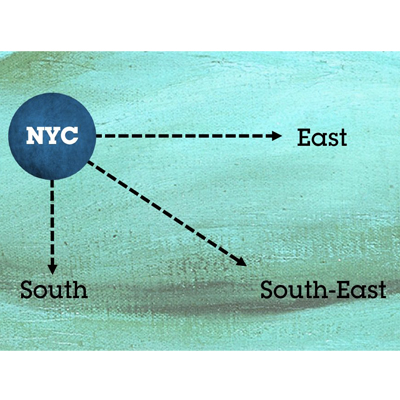
    1. Power is shifting South, East and South East

    New York is still very much the centre of the world, but power (economic, political and social) is becoming more widely distributed, marching South, East and South East: to Latin America, India, China, Russia, Africa and the Middle East, and Central and Eastern Europe.


    Although growth rates in these markets have slowed, the underlying trends persist as economic development lifts countless millions into lives of greater prosperity, aspiration and consumption.


    2. Supply exceeds demand – except in talent

    Despite the events that followed the collapse of Lehman Brothers in 2008, manufacturing production still generally outstrips consumer demand. This is good news for marketing companies, because manufacturers need to invest in branding in order to differentiate their products from the competition.


    Meanwhile, the war for talent, particularly in traditional Western companies, has only just begun. The squeeze is coming from two directions: declining birth rates and smaller family sizes; and the relentless rise of the web and associated digital technologies.


    Simply, there will be fewer entrants to the jobs market and, when they do enter it, young people expect to work for tech-focused, more networked, less bureaucratic companies. It is hard now; it will be harder in 20 years.


    3. Disintermediation (and a post-digital world)

    An ugly word, with even uglier consequences for those who fail to manage it. It’s the name of the game for web giants like Apple, Google and Amazon, which have removed large chunks of the supply chain (think music retailers, business directories and bookshops) in order to deliver goods and services to consumers more simply and at lower cost.


    Take our “frienemy” Google: our biggest trading partner (as the largest recipient of our clients’ media investment) and one of our main rivals, too. It’s a formidable competitor that has grown very big indeed by – some say – eating everyone else’s lunch, but marketing services businesses have a crucial advantage.


    Google (like Facebook, Twitter, LinkedIn and others) is not a neutral intermediary, but a media owner. Google sells Google, Facebook sells Facebook and Twitter sells Twitter.


    We, however, are independent, meaning we can give disinterested, platform-agnostic advice to clients. You wouldn’t hand your media plan to News Corporation or Viacom and let them tell you where to spend your advertising dollars and pounds, so why hand it to Google and co?


    Taking a broader view of our increasingly tech-based world, words like “digital”, “programmatic” and “data” will soon feel out-dated and obsolete as, enmeshed with so many aspects of our daily lives, network-based technologies, automation and the large-scale analysis of information become the norm.


    The internet has been a tremendous net positive for the advertising and communications services business, allowing us to reach consumers more efficiently, more usefully and often more creatively on behalf of clients. But it won’t be long before those clients stop asking our agencies for a “digital” marketing strategy (many already have). It will simply be an inherent part of what we’re expected to offer.


    4. Changing power dynamics in retail

    For the last 20 years or so the big retailers like Walmart, Tesco and Carrefour have had a lot more power than manufacturers because they deal directly with consumers who are accustomed to visiting their stores.


    This won’t change overnight, but manufacturers can now have direct relationships with consumers via the web and e-commerce platforms in particular. Amazon is the example we all think of in the West, but watch out for Alibaba, the Chinese behemoth due to list on the New York Stock Exchange later this summer in what could be the largest IPO in corporate history (and heading a capitalisation of around $200 billion).


    5. The growing reputation of internal communications


    Once an unloved adjunct to the HR department, internal comms has moved up the food chain and enlightened leaders now see it as critical to business success.


    One of the biggest challenges facing any chairman or CEO is how to communicate strategic and structural change within their own organisations. The prestige has traditionally been attached to external communications, but getting internal constituencies on board is at least as important, and arguably more than half of our business.


    6. Global and local on the up, regional down

    The way our clients structure and organise their businesses is changing. Globalisation continues apace, making the need for a strong corporate centre even more important.


    Increasingly, though, what CEOs want is a nimble, much more networked centre, with direct connections to local markets. This hands greater responsibility and accountability to local managers, and puts pressure on regional management layers that act as a buffer, preventing information from flowing and things from happening.


    7. Finance and procurement have too much clout, but this will change

    Some companies seem to think they can cost-cut their way to growth. This misconception is a post-Lehman phenomenon: corporates still bear the mental scars of the crash, and conservatism rules.


    But there’s hope: the accountants will only hold sway over the chief marketing officers in the short-term. There’s a limit to how much you can cut, but top-line growth (driven by investment in marketing) is infinite, at least until you reach 100% market share.


    8. Bigger government


    Governments are becoming ever more important – as regulators, investors and clients. Following the global financial crisis and ensuing recession, governments have had to step in and assert themselves – just as they did during and after the Great Depression in the 1930s and 1940s. And they’re not going to retreat any time soon.


    Administrations need to communicate public policy to citizens, drive health initiatives, recruit people, promote their countries abroad, encourage tourism and foreign investment, and build their digital government capabilities. All of which require the services of our industry.


    9. Sustainability is no longer “soft”

    The days when companies regarded sustainability as a bit of window-dressing (or, worse, a profit-sapping distraction) are, happily, long gone. Today’s business leaders understand that social responsibility goes hand-in-hand with sustained growth and profitability.


    Business needs permission from society to operate, and virtually every CEO recognises that you ignore stakeholders at your peril – if you’re trying to build brands for the long term.


    10. Merger flops won’t put others off

    Despite the failure of one or two recent high-profile mega-mergers, we expect consolidation to continue – among clients, media owners and marketing services agencies. Bigger companies will have the advantages of scale, technology and investment, while those that remain small will have flexibility and a more entrepreneurial spirit on their side.


    FMCG and pharmaceuticals (driven by companies like 3G and Valeant) are where we anticipate the greatest consolidation, while our own industry is likely to see some activity – with IPG and Havas the subject of constant takeover rumours. At WPP we’ll continue to play our part by focusing on small- and medium-sized strategic acquisitions (31 so far this year, and counting).”


     (These are purely personal views of  WPP’s founder and CEO Sir Martin Sorrell and indiantelevision.com does not subscribe to these views.)

  • Synopsis of oral hygiene sector advertising on TV during Jan – Dec 2013

    Synopsis of oral hygiene sector advertising on TV during Jan – Dec 2013

    Highlights:

    •    Oral Hygiene Sector Advertising on TV accounted for 29% growth during Jan – Dec 2013 in comparison with Jan – Dec 2012


    •    Tooth Paste is the highly advertised category within Oral Hygiene Sector Advertising on TV during Jan – Dec 2013


    Note:

    • The analysis is based on Ad Volume in Seconds


    • Oral Hygiene Sector Advertising on TV accounted for 29% growth during Jan – Dec 2013 in comparison with Jan – Dec 2012


    • Tooth Paste is the highly advertised category within Oral Hygiene Sector Advertising on TV during Jan – Dec 2013

    • Tooth Brush advertising contributed to 13% of Oral Hygiene Sector Advertising on TV during Jan – Dec 2013


    • Colgate Palmolive India Ltd was the top advertiser within Oral Hygiene Sector Advertising during Jan – Dec 2013


    Ashvini Khandekar
    Manager – Communications
    TAM Media Research Pvt. Ltd
    9th Floor, Hincon House (Tower B)
    247 Park, LBS Marg,
    Vikhroli (West)
    Mumbai – 400 083
    India
    Tel: +91 22 66531213
    E-mail: ashvini.khandekar@tamindia.com
    Website: www.tamindia.com

  • Cannes Lions 2014: Will JWT, Lowe, McCann steal the show?

    Cannes Lions 2014: Will JWT, Lowe, McCann steal the show?

    MUMBAI: Of the seven Indian entries shortlisted in Film Craft and Brand Content & Entertainment Lions four are of JWT India’s Nike campaign.


    Titled ‘Make every yard count’ has been qualified for the finals in these categories. The campaign has also been shortlisted in the Film Lions category under two subcategories – Editing and Sound Design.


    In the Branded Content & Entertainment Lions category Lowe and Partner’s work for HUL has been shortlisted.  ‘Kan Khajura Tesan’ was an effort to reach out to the media dark areas. It has also been shortlisted in the Integrated Lions category.  The entry has already bagged a Gold in the Mobile Lions category.


    McCann Worldgroup’s ‘Share My Dabba’ campaign which has grabbed two Silver Lions in the Direct Lions has made it to the Titanium category shortlist.


    The work was for Happy Life Welfare with the help of Dabbawala Foundation and aimed to feed street kids grabbed the attention of not only India’s Human Resource Minister but also inspired many other lunch services to take the initiative forward.


    India currently has 22 Lions in its kitty. 


    However, as Cannes Lions 2014 nears to the closure, will India’s entries add to the final wining tally? We will have to wait and watch.