Tag: advertising

  • IDOS 2014: SureWaves all set for the big digitised wave

    IDOS 2014: SureWaves all set for the big digitised wave

    GOA: Localisation is the new mantra, which businesses across the world are adopting to survive the highly competitive market scenario. Who would have thought of a paneer burger from the house of KFC?


    Taking a cue from that, national advertisers are increasing their spending on local cable television channels as it garners high viewership due to the locally relevant content it airs. The aim is simple: to target consumers in specific geographic areas.


    SureWaves MediaTech CMD Rajendra Khare during a fireside chat with Indiantelevision.com founder, CEO and editor in chief Anil Wanvari at IDOS 2014 spoke on ‘New drivers of monetisation for cable TV’.


    Cable reaches the remotest of hinterland and the national advertisers are looking for growth from these markets. “SureWaves is already on its way to becoming a game changer as far as geo-targeted advertising in the country is concerned,” he said.


    “The local content aired by the MSOs and the LCOs or the niche satellite channels has a great connect with the local audience. Not only in India but world over, people care more about what’s happening in their locality rather than what’s brewing at the national and global level,” he added.


    SureWaves MediaTech, a Bangalore-based digital media-technology company, offers the SureWaves Media Grid, an integrated advertisement aggregation, content delivery, network management, media planning and reporting platform. SureWaves provides real-time data monitoring of ads, which has, for the first time, made cable TV advertising accountable.


    Elaborating more about the company Khare said, “We build cloud based technology. We have our own devices, which we install at the studios of our channels partners.” The company positions a propriety device which is connected to the grid and the TV channels.


    It is learnt that the company has partnered with many channels, irrespective of the people watching those channels. “Here the national advertiser, who wants a large audience, benefits the most as the business house gets combined viewership of end number of channels together,” he said.


    As for the local channels, they are happy with the new advertising revenue coming in from the big players. The local channels till all these years never got access to the advertisement revenue from the national advertisers. So that problem is now getting solved. “We are solving the problems of the parties. Advertisers are experimenting with our platform,” he said.


    “This is the robust monetisation model that channel partners sign with us. We are accountable and instantly can see whether the advertisements are aired or not,” he highlighted.


    Stating the TAM report, Khare said that nationally these channels command around 4.5 per cent of the channels’ share and nationally it is top five channels. “The combined viewership of local channels is very large. As a standalone, these channels don’t get the national advertisers’ revenue as the national advertisers contribute a big chunk to the national television advertising spent,” he said.


    With the digitisation process in full swing, the country is expected to see satellite channels increasing, and post digitisation, the solution provided by the company would be more sought after. “In the digitised era, more niche high definition content would be there,” he said.


    Talking about the challenges, he agreed that it is problematic as some local broadcasters’ air pirated content. However, he further added that it is easier to screen content.


    He concluded by saying that the company is working on a solution to create content for the broadcasters, who are its partner.

  • “Indian media is going through a digital tsunami”: Aroon Purie

    “Indian media is going through a digital tsunami”: Aroon Purie

    NEW DELHI: The world is going digital and so is the print medium, which currently is at the forefront of a digital revolution. The digital boom has redefined print business. “Those in the medium, now call themselves as content producers,” said The India Today Group chairman and editor in chief Aroon Purie.


    According to Purie, print medium has gone a step further, as it now engages with the audience. Talking on monetisation in print at the CII Big Summit 2014, Purie emphasised on the growing need for those in the publication business, to engage with consumers in different ways. “We are going through a digital ‘tsunami’. The good news for print medium is that we are riding on top of this tsunami. But it is moving so fast that one doesn’t know where he/she is heading,” said Purie.


    While there was a time when print was in a depressed mood, things now have changed drastically. For Purie, print has converted the tsunami into an opportunity, where they are generating revenue not just by advertising in the print format but also on digital.


    Currently India has 240 million internet users, which according to reports will jump to 350-400 million in the next three to four years. “These are opportunities where content can be transferred,” he informed. The good thing, as for Purie, is that publishers in India have good content and so there is nothing to worry about when they go to the digital medium.


    But he agrees that the print content needs to be modified as per the medium, which is a challenge. “Traditional business is declining, while there is an increase in the digital business,” he informed.


    While advertisers are ready to catch the young eyeballs on the internet, digital advertising currently is not very prominent. “But the future is digital and if you don’t invest in that now, you will soon die,” he added.


    In order to have a healthy business, Purie suggested that the print industry should look at transforming itself into multi-platform, get into contextual advertising, build clients, brand launches for advertisers and also look at hosting events. “Sometimes the events become more popular and profitable than the publication itself,” he said. 


    Digital revolution has also changed the kind of content being produced. “Today, content needs to be designed in a way that it can be availed on any screen. It needs to be interactive, sharable and available all the time,” informed Purie.  

  • Ad Club Bangalore all set for the Big Bang Awards

    Ad Club Bangalore all set for the Big Bang Awards

    BENGALURU: The Advertising Club Bangalore, which has received a record number of 956 entries this year from Bangalore, Mumbai, Delhi NCR, Chennai, Kochi, Trivandrum, Ahmadabad and Pune, has announced this year’s edition of Big Bang Awards.


    Club Bangalore (The Ad Club) president Malavika Harita said, “We have received good number of entries almost across all categories. Digital advertising entries are on the rise, in keeping with the general trend in advertising”.


    The Ad Club executive director Arvind Kumar said, “A unique thing that is being added to the awards night this year, is a panel discussion on the topic ‘Online killed the offline star –true or false ‘.” The panelists expected to be on the panel include Colors CEO Raj Nayak, Google India’s Puneetha Armugam, among others.


    “Ad Club has roped in around 40 judges, who are judging the Big Bang entries this year, and each entry is being will be judged by a group of three judges, who are experts in their field of communication, to ensure there is fairness in the judging process” Arvind Kumar added.


    The awards event, presented by Bangalore Mirror of The Times of India group for the fifth year in a row, will be held on 19 September at The Ritz Carlton Hotel, Bangalore. The other partners of the event include Colors – Viacom 18 Group, Image Library, Radio City, Exchange4Media, Ritz Carlton and Jagdish Advertising. The event is conceptualised and managed by DNA Networks.

  • Kyoorius Designyatra successfully concludes its ninth edition

    Kyoorius Designyatra successfully concludes its ninth edition

    MUMBAI: Held over a period of three days (11 – 13 September), the ninth edition of Kyoorius Designyatra concluded on a thought-provoking and inspiring note. Over the three days, the conference was a hive of creativity that sparked new ideas amongst the best creative minds from across the globe. The 1520 delegates from 18 countries contributed to a diverse, eclectic atmosphere in Goa.


    Kyoorius founder CEO Rajesh Kejriwal said, “It’s exciting to see almost nine months of planning come to fruition. This year we brought together a group of divergent thinkers to encourage cross-pollination between people from different countries and disciplines. No matter your background or professional experience, each delegate left Designyatra thoroughly inspired. At Kyoorius, we hope that delegates will go back looking at their work with fresh eyes and take more chances to step out of their comfort zone.”


    The day kickstarted with Moving Brands CEO Mat Heinl speaking on creativity in a moving world and the need for brands to . Todd Rovak talked about Fahrenheit 212’s ideology of combining money and magic to create transformational growth and innovation for their clients. Hakuhodo’s Morihiko Hasebe emphasised that agencies need to evolve and explore possibilities beyond advertising. Chermayeff & Geismar & Haviv co-founder Ivan Chermayeff, offered the audience insights into some of his iconic, timeless identities, many of which are still in use; he ended his talk advising young designers to make things which are simple, memorable and appropriate. Holly Hall highlighted D&AD’s educational programmes, funded by its widely celebrated and extremely selective awards programme and the importance of giving back to the international creative community. For Ajaz Ahmed of AKQA, more than technology, imagination is the most powerful thing in the world. Liam Paton and Nathan Prince of Silent Studios wowed audiences, merging motion and sound to create immersive experiences for a number of brands.


     Interactions at Kyoorius Designyatra were not limited to the stage but also occurred during smaller, intimate breakout sessions, allowing for more in-depth knowledge sharing in an informal environment. Over the three days, hands-on sessions were conducted by professional experts, including one on law and intellectual property for designers by Kushagra Shah, a participative workshop on creative ways to ideate by Hyper Island’s Maria Eriksson. Students and young designers also had the opportunity to show their portfolios and gain insights from the who’s who of the industry.


     The Kyoorius Designyatra was also pledged to be a carbon neutral event, partnering with Greening Advertising and Media Entertainment to calculate and offset its carbon footprint.

  • McCann Worldgroup promotes Prasoon Joshi to APAC chairman

    McCann Worldgroup promotes Prasoon Joshi to APAC chairman

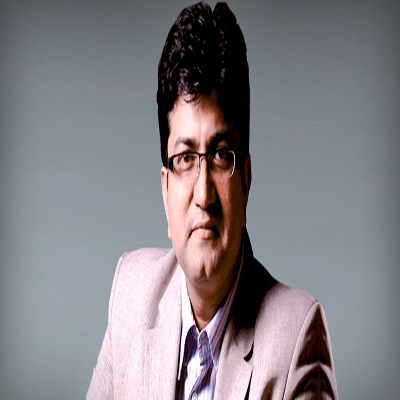
    MUMBAI: McCann Worldgroup has promoted Prasoon Joshi to McCann Worldgroup Asia Pacific chairman.


    In this position, he will focus, along with McCann Worldgroup Asia Pacific president Charles Cadell and, McCann Worldgroup Greater China CEO Jesse Lin, on driving client businesses through collaboration and integration across one of the world’s fastest growing economies.


    Joshi is currently McCann Worldgroup South Asia president as well as McCann Worldgroup India CEO. Joshi, Cadell and Lin will focus on delivering integrated approaches and communications solutions for clients by leveraging all of McCann Worldgroup’s broad capabilities and resources.


    McCann Worldgroup chairman and CEO Harris Diamond said, “Prasoon has built a model for the network by delivering integrated ideas to drive growth for our clients across India. His brand-building talent has been acknowledged globally. With our clients increasingly looking for multiplatform communications solutions to drive growth, the combined leadership team of Prasoon, Charles and Jesse will help all of our agencies in the region to take full advantage of these opportunities.”


    Recognised as one of the advertising and marketing communication world’s top creative leaders, Joshi this year headed the Cannes Lions Titanium and Integrated Jury.


    Joshi first joined McCann India in 2002 as executive VP and national creative director. In 2006, he was named McCann Worldgroup South and Southeast Asia executive chairman and regional CD. Under his leadership, McCann Worldgroup India has built its position as the most creatively awarded agency in the market while also expanding its multiplatform capabilities. As part of this expansion, last year it acquired the direct marketing and database company End to End Marketing Solutions which, like McCann, has offices in New Delhi, Mumbai, Bengaluru, and Chennai.


    Joshi said, “We are extremely well positioned for continued growth and I look forward to building on the momentum we’ve seen across the network. McCann Worldgroup is boldly entering this new era of advertising with leadership who realise the value in globalisation. Our capacity to effectively craft local communication with global leverage means we can solve our clients’ biggest marketing challenges.”


  • India leads growth in mobile advertising in the Asia Pacific Region: Opera Mediaworks

    India leads growth in mobile advertising in the Asia Pacific Region: Opera Mediaworks

    NEW DELHI: With a year-over-year growth rate of over 70 per cent, the Asia-Pacific region has been our fastest-growing region for the delivery of ad impressions this year, with India leading this rapid expansion of ad traffic by increasing its delivered impressions by over 260 per cent since July 2013.


    Coupled with this rapid growth of ad traffic is an aggressive transformation of the marketplace from one dominated by less capable feature phones to a transformational market, with Android devices emerging as the market leader, according to a study by Opera Mediaworks in its special edition of the State of Mobile Advertising Report.


    The future is bright for the mobile advertising business in India. This market continues to grow aggressively and is rapidly transitioning to advanced smartphone platforms, led by Android.


    With this growth and technological transformation, we believe the market presents tremendous opportunity for mobile sites and applications focused on delivering richer experiences in categories with higher monetisation potential, as we’ve witnessed on a global level.


    While India is still one of the global leaders in retaining older feature phone models, and the Symbian platform continues to hang on, it is significant to note that iOS struggles to make inroads.


    Overall, however, mobile users are shifting to “smart” devices — and with that transformation comes an increasing number of interactions with mobile services and advertising.

    As with many markets, there are major differences when one views market share based on the number of unique devices, the number of impressions served or the amount of revenue earned (eCPM).


    India is no exception to this rule, and while Android follows other devices (predominantly feature phones) in market share, it is the clear leader in impressions served and revenue production.


    However, iOS clearly outpaces the competition for its ability to produce ad revenue on a fairly small market share, producing over 2 per cent of total revenue on just 0.5 per cent of total ad impressions.

    India differentiates itself from other countries and regions in many other respects, as well. For example, when comparing the top mobile site categories supported by Opera Mediaworks’ advertising technologies globally, India presents a significantly different mix of media types.

    In both our global and India markets, social sites and apps lead the mix. However, India shows a significantly higher use of mobile app store sites (most with significant mobile games catalogs), gaming and education-oriented sites. Interest in music and other streaming media sites fall well below our global average, along with News & Information, and Arts & Entertainment.


    It is also significant to note that many of these sites and apps are accessed through a mobile operator/carrier portal, which is very different from our experience in the United States and Europe, but more common in Asia and Africa.

    The site category types and their accompanying user experience models, when coupled with a device mix that remains predominantly feature phone, result in advertising models significantly different than those experienced in the United States and parts of Europe.


    For example, simple banner ads dominate the Indian market, with only 3.2 per cent of impressions being rich-media creative. It is very promising to see, though, that over 26 per cent of revenue comes from rich media, and it clearly shows the huge potential for this market as more users adopt advanced device platforms.

    The dominant advertisers in the market focus on selling games and mobile devices, at 25.5 per cent and 22.7 per cent, respectively. Classifieds are also an important part of the ad economy, with about one in five ad impressions being for items like cars and bicycles via classified ads.

    Through our research on the market we found the India audience is predominantly young and male. The 18-24 age group accounts for over 60 per cent of all users, while males make up 82 per cent.

    Over 64 per cent of users access mobile sites and apps on a weekly basis. The most popular period for these interactions is during the weekend, with a slightly lower tendency to engage at mid-week. This day-of-week fluctuation is driven to a large extent by older feature phone users who show a much more pronounced decrease in activity at mid-week than do Android users.

    During the week, about half of unique users (49.5 per cent) are classified as “occasional” users. These users access the mobile web one or two days per week. The next largest group of users (28.9 per cent), is regular users (using the mobile web three, four or five days per week). Finally, 21.6 per cent are frequent users (accessing six or seven days per week). Over 60 per cent of impressions are served to users classified as “frequent”.

    Because so much of today’s ad traffic in India is driven by older technology feature phones, we thought it instructive to look specifically at user behavior on Android devices.


    As with the total audience, Android users flock to social-networking sites and apps. Disregarding this category, however, leads to several observed differences in audience behaviour. First, it is significant to note that interest in app stores and carrier portals is far less for the Android audience than for the audience in general. We believe this is the result of two factors. Primarily, it is likely caused by the heavy reliance feature phone users have on their carrier portals and different mobile stores and portals for content. It is also likely a reflection of our customer base, which does not include Google Play.


    Therefore, to gain more clarity into the different behaviour exhibited by the Android audience, we have eliminated the category from the graphic view, to the right. The resulting differences in user behavior between the total India audience and the India Android audience are marked.

    Android users are far more likely to engage with Arts & Entertainment, News & Information, as well as Business, Finance & Investing sites and apps than the audience in general.


    When these facts are considered in light of the revenue generation and monetization potential for these categories we see on a global basis, a critical opportunity emerges for the marketplace, as it transitions to Android and other more advanced devices.


    On a global basis, Arts & Entertainment and News & Information combine to generate over 30 per cent of the revenue managed on our platform. Compare this with the just over 4 per cent of revenue we see for these categories in India. However, when we compare our global ad traffic with India’s Android audience interest, we see more similarity and, therefore, great opportunity.

    India’s Android audience interest in News & Information sites is much more closely comparable to our experience delivering ad impressions globally than is the total Indian audience.


    News & Information publishers collectively account for just over 13 per cent of the revenue we manage for publishers globally. This is far above the 6.7 per cent we see in India.


    However, this opportunity pales in comparison to that presented by the Arts & Entertainment category. As shown on the chart above (which disregards traffic from social and application store and portal sites), the Android audience in India for Arts & Entertainment is larger than what we experience for ad traffic globally.


    Globally, these publishers account for just under 8 per cent of traffic (12 per cent disregarding social, app and portal) but they generate 17.6 per cent of the total revenue managed by our platform.

  • Going FTA suits most broadcasters and advertisers

    Going FTA suits most broadcasters and advertisers

    MUMBAI: With increasing number of channels in the country, much of the interior towns have found solace in having free-to-air (FTA) channels. Doordarshan’s own Direct to Home (DTH) service Freedish has found 12 million active subscribers in the interior parts of the country with its list of FTA channels.


    Discussing the FTA market were MCCS India CEO Ashok Venkatramani, TAM Media Research LV Krishnan, Zee Entertainment Enterprises chief content and creative officer Bharat Ranga, Reliance Broadcast Network Limited (RBNL) CEO Tarun Katial and RK Swamy Media group senior VP K Satyanarayana. The session was moderated by Chrome Data Analytics and Media Pankaj Krishna.


    Krishna started off by asking Satyanarayana if advertisers are monetising the platform to which he said that Freedish has very few satellite channels and it is not necessary to look at FTA channels particularly for media planning. However, he stated that research shows that Freedish is able to add 10 per cent incremental reach so it has more monetisation scope.


    Venkatramani heads three channels under the ABP brand name which hasn’t yet gone pay and in fact isn’t available on Freedish either. He said, “We haven’t gone pay because the ecosystem doesn’t allow us to do so. The price at which we sell channels to MSOs is not in our hands. Freedish is too expensive and cost per household is Rs 30.” FTA channels depend heavily on advertising revenue and according to Venkatramani, this is not sustainable and he doesn’t see any incremental reach happening in the news genre.


    Krishna questioned LV Krishnan on how TAM ensured fair representation from houses which were either metre dark or power dark. To which Krishnan said that the important metric is to see who the consumer is. “Is this consumer accepting FTA channels because he is economically unable to graduate to pay? What is the value of this customer for targeting advertising? And is it financially viable to create content especially for this industry?” he questioned. The positive points of this market, according to him, is that this audience doesn’t have any distraction and so time available for entertainment is higher than urban audiences. But the issue they face is frequent power cuts.


    Katial said that in its studies, RBNL has found that the northern market is less penetrated as compared to south or east but it needs a unique distribution for which Freedish fits perfectly. “Many advertisers will pay the delta for it whether it is FMCG or Telecom. Metros are fragmented while these markets have low penetration,” he said.


    Zee Anmol is Zee’s FTA channel that shows handpicked content from its channels. Ranga pointed out that a lot of marketwise and platform-wise research is done before deciding which content from its flagship channel Zee TV will work for this audience rather than just replicating the entire set of shows. He also feels that in future there will be three modes- FTA, pay and premium and soon Freedish will also offer pay channels. “Distribution will be far more competitive in the next 10 years. Currently, there isn’t much difference between FTA and Rs 200 for all channels. In future the gap will be large,” he said adding that he expects average revenue per user (ARPU) to rise up to Rs 1500 to Rs 2000.


    While geotargetted advertising is on the rise, Katial feels that is it more suitable for large MSOs and Freedish can’t do it. But the real winning situation will be when the ad cap regulation is resolved. “Today a radio station in Mumbai takes more ad rate than a national news channel,” he informed.


    Ranga said that when a new channel enters the market it can start off as FTA and then convert to pay, which is what Zee does. Krishnan highlighted that the audience doesn’t care about platform but about content. This was emphasised by Satyanarayana as well that the advertisers look at the audience and not the platform. FTA is not actually FTA, because the customer is paying money for the carrier’s bandwidth. In the future, advertising will be aligned either to content, such as in-branding or to the carrier.


    Katial shared the data that across Europe, there is the phenomenon of cord cutting at the rate of 5-10 per cent every month and every year and then going FTA.


    Krishnan shared data that according to their research, while five years ago 4.5 to 5 members of a home were watching at the same time, this has dropped to 3.8 today. However, the repeat gets about 1.5 members. “Broadcasters have started segmenting by ensuring repeats to cater to various age groups,” he informed.


    So while the FTA market has begun in India, it remains to be seen where it will finally head.

  • Online ad market to reach Rs 3575 crore by March 2015: IAMAI-IMRB report

    Online ad market to reach Rs 3575 crore by March 2015: IAMAI-IMRB report

    MUMBAI: As of June 2014, there were 243 million claimed internet users in India out of which 192 million are active internet users who access internet at least once a month. There has been a consistent growth in the number of internet users over the past few years. In urban cities, the penetration of active internet users is nearly 36 per cent whereas in rural villages the penetration is 6 per cent. There is a large part of the population that still needs to be included in ensuring a large-scale digital adoption in the country.


    The latest finding of the ‘Digital Advertising in India’, a report jointly published by the Internet and Mobile Association of India (IAMAI) and IMRB International, reveals that the online advertising market in India is projected to reach Rs 3,575 crore by March 2015 with a y-o-y growth rate of 30 per cent.


    The report finds that currently, search and display are the top two contributors to the total digital advertisement spends in India. Of the Rs 2,750 crore digital advertisement market, search ads constitute 38 per cent of the overall ad spends followed by display ads which contribute 29 per cent and social media contributing 13 per cent of overall digital advertisement spends. It is estimated that the proportion of spends on search advertisements will reduce and spends will increase on email, video and mobile advertisements.


    By 2015, spends on video ads will grow by a CAGR of 56 per cent and contribute 12 per cent to the overall market share of digital advertisements. In FY ending in March 2014, the contribution of search spends reduced to 30 per cent of the overall digital advertisement spends i.e. contributing Rs 825 crore to the Rs 2,750 crore digital advertisement market.


    According to the report, ad spends on mobile devices are growing at a CAGR of 43 per cent and social media is grew at a CAGR of 41 per cent y-o-y and touched Rs 385 crore and Rs 440 crore in March 2014. Spend on video grew at CAGR of 51 per cent and reached Rs 303 crore. Spends on email ads grew at a CAGR 16 per cent to reach Rs 88 crore.


    Further, on industry wise spends, the report finds that e-commerce, telecom and FMCG & consumer durables are the top three verticals driving the digital advertisement spends in India.


    Digital ad spend on mobile devices is 14 per cent whereas on desktop PCs, laptop computers, it is 86 per cent. Although traditional media still holds strong ground in the Indian ad space, digital advertising is catching up fast and is expected to overtake traditional media within the next 5 -10 years.

  • Strike ‘Out of the Box’ to win!

    Strike ‘Out of the Box’ to win!

    MUMBAI: While playing a game of tic tac toe, ever thought you could win a game by just drawing out of the box? If not, then maybe you weren’t creative enough.

    With a single stroke of pen, Out of the Box, a Delhi-based creative agency has proved its point. Tired of the recycled ideas and unoriginal advertising, Saatchi & Saatchi ex-creative Saatchi & Saatchi (then, now L&K Saatchi & Saatchi) Viral Pandya decided to start his own venture.

    The agency formed in 2006, has been planning to revamp its logo for a long time now. It claims that after long, it finally had time to put its creative heads together.  “With so much of work on your table, you rarely get time to think about yourself. Ironical as it may sound, it’s the truth. However, the thought of designing a fresh, new brand identity for Out of the Box was always there at the back of our mind,” says the agency’s co-founder and chief creative officer Pandya.

    With the new logo, the agency wanted to say everything about the agency without speaking a word – its philosophy, its approach, its challenges, its lunatic side, everything. So what one sees as the logo is what defines it as a creative company.

     However, it wasn’t an easy task. With hundreds of drafts on their heads, the agency arrived on something extremely simple – a tic tac toe game with a strike through outside the boxes to say that one will always win with out of the box ideas.

    When asked what the agency is trying to convey to its clients and market, Pandya explains, “Playfulness. Spirit. Radical Approach. All in all, it talks about what we truly are. For clients, it gives an indication of what can be expected of us. As for the market, it tells them how mad we are about what we do. For aspirants, it reminds them of what we expect them to be and deliver.”

    The year has been full of work, full of awards and full of happiness. Graceful to God, Pandya believes that the agency has been able to pull off work that augurs well for the clients. So, far the work has won a fair share of awards this year. Whether it’s One Show Design, New York Festivals, Kyoorius, Luerzer’s Archive or Goafest, the agency has hit a jackpot. “Indeed, it feels good to be consistent. And it also keeps us on our toes to deliver every time.”

    And with two or three exciting accounts in the pipeline, the agency believes that every day there’s a new brief, a new challenge, a new idea and new excitement. But the work that really excites the people at the agency is the curriculum books for Presidium Schools.

    It was the biggest challenge, as well. The agency was supposed to adhere to the guidelines set by NCERT’s National Curriculum Framework (NCF), something that it was completely alien to.

    “Keeping that in mind, our job was to make these books interesting, inspiring, stackable and identifiable. Above all, the biggest mandate was to create the finest curriculum books in the country. It took us one and a half years to design the entire set of books, and there are more than 100 books still in the pipeline,” says Pandya while adding that it would be fair to say that this year was dedicated to education books.

    There’s another piece of work the agency is really excited about. It is a new campaign for Presidium Schools called Leadership via Academics. The first print ad of the campaign was released on Independence Day, and one can see a lot more of them in the coming weeks.

    One work, which made Pandya jump off his seat was ‘Dumb Ways to Die’ for Metro Trains, Melbourne. “So simple, so adorable, so moving, and bang on to the brief, a proof that the more innocent an idea is the more it touches the society,” he says.

    The agency which believes in never giving up, strives for the best and then tries to better it. So, what sets them apart from the others? In one word, passion. “We don’t take any short cuts. We pull all stops when it comes to generating ideas as well as in execution. And most important, we enjoy what we do,” states Pandya matter-of-factly.

    To create its unique identity, even in the age when digital medium has become an integral part of communication, the agency has successfully executed social media and digital campaigns, but it doesn’t set out to do digital campaigns. It wants to crack media-neutral ideas, and factor in digital, if needed.

    In the competitive market where mergers and acquisitions have become a common phenomenon, Pandya thinks it’s both easy and difficult for an independent agency to operate. “There are no network clients and therefore no free lunch,” he laughs and adds, “On the plus side, we enjoy creative freedom and can have clients who appreciate good work.”

    As for the future plans, Pandya jokes and says that as of now, the plan is to print T-shirts for the team with the new logo. “At Out of the Box, we hardly worry about the future. Our primary focus is to keep on creating work that works for the clients and us. What we really worry about is what we are going to drink after a long day at work.”