MUMBAI TO THE NEW Digital has been chosen as a Digital AOR by CARE India. TO THE NEW Digital will lead digital marketing initiatives for CARE India, with a special focus on building youth constituency.
TO THE NEW Digital will work towards strengthening brand awareness and engagement for CARE India and will be responsible for advertising, social media, content creation and website development for the client. The focus is to follow a clutter breaking, innovative content led approach to educate people and encourage them to actively participate in the upliftment of communities.
“We are really excited to partner with CARE India. We have been entrusted to manage all digital marketing efforts to support CARE India’s long-term strategy of strengthening its brand by enhancing donor’s interactions. Our team at TO THE NEW Digital has global exposure in digital media that makes us uniquely equipped to bring innovative and integrated solutions to serve CARE India,” said TO THE NEW Digital CEO Deepak Mittal.
CARE India has been working on alleviating poverty and social exclusion in India for over 65 years with a special focus on empowering women and girls from poor and marginalized communities.
The exceptional work done by TO THE NEW Digital for the social sector clients like You We Can and Breakthrough vouched for as testimonials.
MUMBAI: ET Now is all set to welcome the New Year with an array of exclusive programming that will help investors across classes to analyze the performance of the markets and business in the year gone by and more importantly devise their strategy for the year ahead.
Along with the sound perspective of the channel’s anchors, global and national experts like ace investor Rakesh Jhunjhunwala, market expert Ramesh Damani, Energy Consultants founder and chairman of FGE Dr. Fereidun Fesharaki, opinions from Morgan Stanley, Aberdeen Asset Management and other leading firms will also be featured through the week starting 25 December 2015 on Outlook 2016. The key highlight of the series is that the interests of investors across the spectrum will be addressed to ensure an authoritative point of view, reliable perspectives and overall sound investing advice.
The Outlook 2016 special line up includes:
TOP 10 OF 2015: ET Now will capture the headliners of 2015 through Top 10 of 2015. Anchor Supriya Shrinate will take the viewers through a roundup of all the major events, news and policies that impacted the financial circles during the year.
Brand Equity Special: Ace anchor and host of the show, Sonali Krishna does a quick recap of everything that happened in the world of Marketing and Advertising in this special episode. Look out for all the stalwarts of the industry looking back at all the hits, misses and everything in between
Big Bull on 2016: ET Now’s Financial Markets Chief Editor Nikunj Dalmia, will be seen in exclusive in a one-on-one conversation with Rakesh Jhunjhunwala to get him to share some expert views on why the year 2016 is slated to be the Mother of All Bull Runs.
Market Makers Special: ET Now’s Nikunj Dalmia will speak to Ramesh Damani about his ideas, mantras and top tips for the New Year on market makers special.
Global Outlook 2016: To answer every possible query on the global investor front, ET Now anchor Tanvir Gill will be seen interacting with elite global fund managers and market experts in a 5-episode series on Global Outlook 2016.The experts will share their thoughts on investor expectation for the year, the reforms and policies which could possibly attract international investments that drive the economy.
The Big FII View: Tanvir Gill will present investment ideas on her show, The Big FII View. The views and ideas will be something unique as they will be coming in from scholars hailing from Aberdeen Asset Management, which is one of the biggest foreign institutes currently.
Brokerage View– Morgan Stanley: Morgan Stanley is a name that needs no introduction and ET Now anchor Niraj Shah will bring a comprehensive 360-degree view on factors influencing the markets across multiple aspects directly from this leading investment house.
View from the Deck: As we set sail off the shores of Mumbai, we try and figure out how far away is the horizon for Indian equities. Catch a slew of experts analyze the year ahead for equities as an asset class in 2016 with ET Now’s Ayesha Faridi.
Investors Guide Special: To give a personalized view on finance for individuals, Faye D’Souza on a special episode of Investors Guide will lay down the path of different investment opportunities that viewers can look at.
Hot Commodities Special: With the crude oil prices impacting the global economy and all asset classes, Dr. Fereidun Fesharaki, will interact with anchor Manisha Gupta and give his expert views on Hot Commodities.
With the varied mix of programming catering to investors, influencers and anyone generally interested in the financial markets and the state of the economy, ET Now promises to capture the attention of all discerning viewers. Built on the foundation of speed, integrity and expertise, ET Now is all set to help the audience define their investing strategy for the year with the unique offering of Outlook 2016.
MUMBAI: Along with having original digital content, catch-up content, sports and music, Multi Screen Media’s (MSM) over the top (OTT) platform Sony LIV has now expanded its offerings portfolio with the launch of a movie subscription service.
The monthly subscription service pack has been priced at Rs 149, whereas the daily subscription package has been priced at Rs 9.
Taking advantage of the fact that India is among the countries with the fastest smartphone growth in Asia, Sony LIV is seeking to bolster its foothold in the online video space.
While globally, SVOD (subscription based video on demand) is poised to become the largest revenue source in 2020, overtaking OTT advertising, in India the market is at a nascent stage with a huge growth potential in the future. With mobile video traffic in India expected to be on a growth trajectory over the next three years, Sony LIV’s new initiative will let consumers stream movies at a nominal price.
Sony LIV’s movie subscription service will be accessible to consumers through its website www.sonyliv.com or via the Sony LIV app available on Google Playstore (for Android users) and App Store for (iOS users).
MSM executive vice president head – digital business Uday Sodhi said, “The movie subscription service is a convenient and affordable way for film lovers to enjoy their favorite blockbuster hits on their preferred digital devices. We have a wide assortment of cinematic treats on offer that users can access in a single click. The different subscription models ensure that they pay as per their consumption levels. The move is targeted towards making the digital platform the only destination that consumers need to turn to in order to fulfil the entire spectrum of their entertainment needs.”
With a range of movies from across genres, users can pay for the subscription through multiple e-payment options such as credit card, debit card, Internet banking and direct billing services. Within the subscription period, members can watch unlimited movies.
The OTT platform is currently building on its catalogue with an aim to have a diverse range of movies for consumers. The platform is working towards delivering a comprehensive movie catalogue. “We are starting with building our Hindi movie catalogue and will later expand to English and other language movies too. The idea is to offer a range of movies for the consumers to consume in that subscription period. We are aiming to offer at least 1000 movies to our consumers,” Sodhi tells Indiantelevision.com.
Talking about the voyage of the OTT platform since its inception, Sodhi informs that the main idea behind Sony LIV is to make it a complete entertainment destination. The OTT platform recently added sports to its content portfolio and is currently offering the Pro Wrestling League to its subscribers.
MUMBAI: Even as Gen Z with its short attention span skips through advertisements, jumping from channel to channel between breaks, there are some ads that are hard to ignore — be it for their peppy jingles, catchy tag lines or cool visuals.
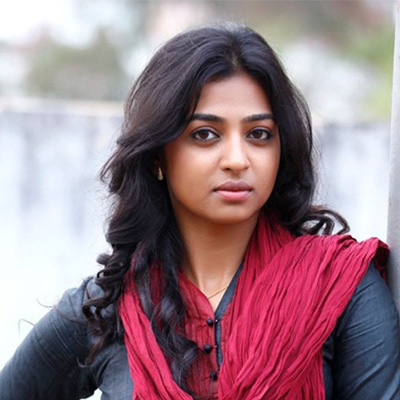
And then there are those, which not only touch us but leave us rattled and questioning. The recently released campaign by Anouk starring Radhika Apte is of the latter kind. Conceptualised by Ogilvy & Mather, the TVC talks about an issue we hardly hear ourselves addressing, even though it affects us pretty much uniformly throughout the country. That being the discrimination in workplace against expecting women.
The ad showcases Radhika Apte as an independent woman working as a senior architect who misses her chance of being promoted in a well known architectural firm, by virtue of her pregnancy. In spite of being reassured that her performance isn’t being questioned, Apte is met with strong views on how pregnancy can be a disadvantage at the workplace. The ad concludes with Apte raising a voice against the discrimination and moving on to start her own thing.
Anouk’s third chapter in ‘Bold Is Beautiful’ definitely treads away from the convention, into uncharted territories.
This isn’t the first time that advertising fraternity has tried its hand at a non cliche plot line for a campaign concept and broken stereotypes. Off late there has been a steep raise in campaigns with embedded social messages. Be it edgy and progressive storytelling that talk of non binary relationships, modern take on marriages and womanhood, or openly discussing Taboo subjects like sexual health and freedom.
Needless to mention, every time an unconventional ad is released, it not only sparks conversations over the internet, it also leaves a viral trail of debates. Something Sideways co-founder Abhijit Avasthi finds smart but easy way of advertising.
Though courting controversy for the sake of it doesn’t fit well with BBH India CEO Subhash Kamath either, he is all in for talking about issues that take us out of comfort zone if “the content of the ad should be strategically relevant to the brand it is talking about. If it’s relevant and connects with people, even though it may piss off a few, it’s totally worth it to take up the challenge,” he shares.
Given the buzz around the latest Anouk ad, Indiantelevision.com compiled a list of ten advertisements that broke stereotypes in recent times after speaking to several creatives in the industry. Here’s the list, though not in any particular order:
Anouk: Bold is Beautiful : Radhika Apte
The latest Anouk ad is simple and handles the issue directly instead of going for the ‘hinted’ approach. Not going deeper into the dos and don’ts of handling an issue like pregnant working women, and if the advertisement has done justice to it, it definitely starts a conversation on a topic we seldom shed light upon, even though there are many who are directly or indirectly affected by it,
Airtel, Boss
This Airtel ad that came out in 2014 sparked quite a controversy and left a trail of subsequent online debates amongst netizen. The advertisement showcased a modern day couple who work in the same company, with the wife being the husband’s boss. In office she asks him to work late and finish his pending work, while at home she reaches early to cook up a storm for her husband in the kitchen. While breaking a stereotype of work pay imbalance in India, the advertisement no doubt sent a confusing message. Going beyond the debate of the ‘right kind of message,’ this ad is still remembered for being different and addressing a non ‘black and white’ situation on gender equality.
Remarriage: Tanishq
Perhaps the most celebrated of them all when it comes to path breaking ideas, is the Tanishq jewellery advertisement that came out in 2013.
While the setting of a wedding with the bride donning shiny jewellery doesn’t seem anything original for a jewellery brand, the narrative throws viewers a googly as we see the would be bride addressed as ‘mama’ by a little girl. Captioning it as ‘a wedding to remember’ this ad film conceived by Lowe Lintas and Partners not only opened up conversation on remarriage. It also changed its perception from being a social stigma to a glamorous affair.
The Seatbelt Crew:
Sometimes a simple message needs to be delivered with a powerful impact, and that’s exactly what Ogilvy and Mather did for VithU’s public service initiative on road safety norms. This two-minute video shot at a traffic light in Mumbai went viral, garnering more than 3.4 million views on YouTube.
What makes the advertisement even more unique is that unlike most advertisements featuring transgenders, this one doesn’t ridicule them or weep over their pathos of everyday survival. Here, the transgender women we see on camera are means to an end, just like several celebrities or good looking models who are cast in advertisements to draw attention from a relevant target group.
Do The Rex:
At a time when condom ads are heavily layered with sexual innuendos, and cryptic ways of depicting sexual tension, Durex’s ‘Do the Rex’ campaign came as a breath of fresh air. It’s in your face and honest. And starts a much needed conversation amongst the youth, which directly affects their sexual health. And who better to spearhead the youth campaign than Bollywood actor and youth icon Ranvir Singh, known for his unapologetic attitude.
Add some catchy music and groovy visuals to the mix and you have the perfect concoction to sell condoms to the youth and 40 plus alike. Directed by Karan Kapadia, no sooner did the video release than it went viral across multiple digital platform, and giving rise to a long sustaining campaign.
Meglow: Fairness cream for men
If you are one of those who are tired of watching advertisements that put being fair as an essential for succeeding in life, be it women or men, you probably cheered Emraan Hashmi for delivering the punch line in this ad film. Shot like any other typical male fairness cream ad, the story follows your typical underdog, trying for a job and losing his ‘glow’ as he stresses over it.
Enter Emraan Hashmi with the solution to all his troubles: a fairness cream that will return his lost glow and lead him at the path of success… or not. The ad film ends with the anti-climatic disclaimer that fairness creams don’t land you job, but credentials do, even if you are dark.
Sofy #Iamnotdown
Sometimes we fail to realise that age old customs and habits that come to us naturally, might actually be a projection of social stigma. Such is the case with using phrases like ‘I am down,’ ‘I have got my chums’ etc, instead of directly addressing the topic of menstrual period. Sanitary napkin brand Sofy almost waged a war with their #SofyConversations campaign that went viral earlier this year. The campaign showcased young women from different walks of life urging women to start using the word ‘Periods’ instead of cryptic aliases, and accept what is natural to them with dignity.
FastTrack: Come Out Of The Closet
Recently the advertising world has made a huge progress when it comes to addressing non-binary relationships and same sex couples. While some approach it in a hilarious or heavier tone, Fast Track’s ‘Come Out Of The Closet’ campaign gave it a witty and humourous touch. Without being loud mouth about it, the ad showcases two young women with edgy fashion sense come out a closet, literally! It doesn’t take a scientist to figure out what the metaphorical reference is made with the closet.
Shaadi.com: My Conditions Apply
When it comes to breaking stereotypes there is an endless scope to deliver in the wedding scene in India, which, though went digital ages ago with matrimonial sites like Shaadi.com and BharatMatromony, it hardly shed away the conservative notions attached to it. Naturally it falls behind the rapidly progressing lifestyle of millennials who respects a woman’s choice and preferences when it comes to marriage. Shaadi.com’s latest ad campaign shows its attempt to transition from being just a marriage consultancy portal to reflection of the wants and aspirations of the country’s youth.
Whisper: Touch The Pickle
Yet another campaign about breaking taboos surrounding women’s menstrual cycle, this one deals with the dozens of Dos and Don’ts that are imposed upon women by society restricting them during periods. Starting from restrictions on what to wear, to superstitions on touching pickle, there are a whole stack of baseless superstitions and restrictions that make the experience harder for women in our society. Whisper’s #TouchThePickle campaign shouts out to all women who are fed up of these taboos, to break away and break taboos. Developed by P&G India and BBDO India this campaign was not only struck a chord with millions of women within the country, was also lauded internationally by winning the Glass Lion Grand Prix at Cannes International Festival of Creativity.
While these advertisements grabbed our attention, there are plenty others that have strayed from the tried and tested formula and attempted something out of the box. The list goes on…
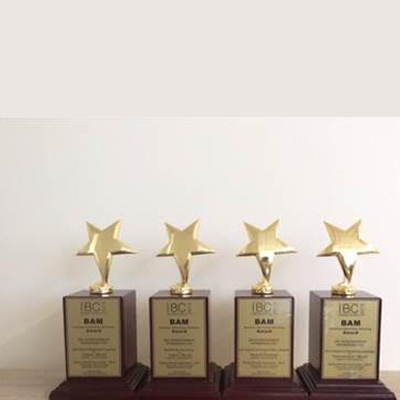
MUMBAI: Zee Cinema has recently bagged four awards at the Branding, Advertising, and Marketing (BAM) awards ceremony held by the Indian Brand Convention 2015 in New Delhi, for its constant innovative branding and communication efforts. The Convention was a learning, networking conference and an awards ceremony for branding, marketing, design, communications, advertising, sales and creative professionals in India.
Amongst many other brands that participated, Zee Cinema was a front runner at the convention and the awards won by the channel include best corporate social responsibility campaign for November 2014 Children’s’ day Masti Ki Paathshala’ activity. It also bagged the best integrated marketing campaign for October 2014 campaign for promoting world TV premiere of entertainment, the best mobile innovation for May 2015 for the mobile activity done on world TV premiere of Lingaa. The channel has also roped in the best digital marketing campaign for May 2015 for the digital & social media promotion for world TV premiere of Lingaa.
Masti ki Paathshala, was an initiative that the channel organized for the children of selected orphanages across Mumbai, Delhi and Ahmedabad to mark the celebrations of Children’s Day 2014. Over 300 children were engaged with fun activities like movie screening, antakshari and fun games with a view to give them a memorable special day and let them know that they are valued and loved.
The promotion campaign for the world television premiere of the film, Entertainment provided its viewers an exclusive opportunity to interact with Johnny Lever for the first time on Zee Cinema’s twitter handle. One of the comic actors from the film Krishna Abhishek was also made available for the media market visit in Lucknow which also ensured the visibility of the brand in the prime market. The channel also used a unique platform of airline branding (special branding inside the aircraft in Air-India) for marketing the movie innovatively. The film was extensively promoted via engaging and interactive activities conducted across social media platforms with the movie’s merchandise were given to winners.
The promotion campaign for Lingaa included an extensive digital campaign and also an exclusive mobile campaign Rajnikanth phone call ad wherein participants received a pre-recorded call from Rajnikanth urging them to watch Lingaa on Zee Cinema. The mobile campaign had a reach of a gigantic 8.2 million.
NEW DELHI: Even as the switch over to digital technology is beginning to show pace in India, digital video ad spend grew by 42 per cent over the past year to total $7.46 billion in 2015 in the United States for the sixth consecutive year.
Within the next four years, that number is expected to nearly double and reach over $13 billion by 2019, according to a report on 2015 US State of the Video Industry by Verizon’s AOLPlatforms.
According to the report, marketers are reprioritising traditional advertising budgets and adding dollars to digital video. TV budget growth is stagnating, with a sizeable portion of those dollars being reallocated to video advertising.
Mobile and video are converging, posing new opportunities and challenges to the industry. Overall mobile video advertising spend increased 18 per cent since 2014, but marketers say measurement remains a key pain point.
Almost 91 per cent of brands and agencies are buying video programmatically and continue to make larger investments into the technology year-over-year. Eighty-eight per cent of publishers claim they sell their video inventory programmatically, a noticeable 37 per cent leap from 2014.
Programmatic TV is gaining popularity as audience fragmentation hits an inflection point. Over the next year, 41 per cent of television buyers–a 3x increase since 2014–plan to rely on programmatic technology to make more strategic TV investments.
Advertisers and agencies devote over 30 per cent of their overall video budgets to branded video content. Brands intend to grow these investments 10 per cent in the next year.
AOL Platforms surveyed nearly 300 US brands, agencies and publishers to get a holistic view of the current state of video advertising.
In this era of digitisation, the advertisement ecosystem has taken a big leap with digital advertising entering the fray. There was a time when people used to read advertisements, and then with the advent of television came visual ads, which could only be shared by word of mouth. Now with access to internet, ads can be read, seen and shared with help of just one device.
With brands choosing the digital platform to announce launches of new products with help of email marketing, search engine marketing mobile and web marketing, have now given ads a new dimension to reach people. Digital advertising has broken the limitation of time slot for ads and has increased reach by leaps and bounds.
Amagi co-founder KA Srinvasan spoke to Indiantelevision.com about geo-targeted marketing, brands shifting towards digital marketing and much more.
Excerpts:
Many channels are tying up with Amagi for geo targeting. Property Now from Times Network is one of them. Do you think split broadcasting will be the way forward?
Hyper local advertising will be the future of broadcast and television; in general it is going to be more geo targeted. Customised content created as per consumer’s preference is going to have a lot of impact. With the concept of geo generic mass content, as content becomes more local, the ad’s visibility for viewers will increase. Nowadays, content is created based on country, city and regional level not just in India but across the globe. The original goal for over-the-top (OTT) in digital world is to personalise lifestyle and provide content depending on consumer’s interest, preferences and their past watching behavior.
What do you think will define the new era of effective advertisement?
The change that we have observed is the more local advertisements get, the more effective it will become. Many of our advertisers are targeting specific local audience. It is effective from both advertising and communications perspective. Viewers will identify the product and advertisers will have a much better brand name at regional levels. From a content owner’s perspective, more advertisers will be able to reach out and from a broadcaster’s perspective, the future is all about getting local in terms of content.
Now after installation of your technology in multiple system operators’ (MSO) headend, how do you plan to seize digital?
Keeping that in mind, we launched a product called Thunderstorm, which allows television content owners and television networks to provide personalised advertising in the digital space. Our customers will be able to deliver their content over mobiles, tablet, and television screens and on web. However, there is one problem with monetising the content as the ads, which are telecast on television and which go on the sites are the same. The same goes with handsets. Everyone is watching the same ad on mobile but it is not giving any revenue. We have built a platform that allows advertising networks to have completely different advertising depending on the targeted audience and geographical area.
Is Amagi focusing more on the digital space now?
We are enabling content on advertising for television and helping local network owners to ‘hyper local’ the ad content. As content viewing shifts more towards digital, we are trying to bring the product in a more personalised way in digital. Our aim is to personalise and localise cable, television and digital.
From many years the ten second ad slot has been ruling television and continues to do so. What more will the digital medium adapt?
Today, the digital media is used as a distribution platform by television networks. What we are trying to do is, using the same content in different versions and using the digital platform for distribution of these ads. In terms of distribution, digital can do much better experimentation and inter-activity than what traditional television offers. Many advertisers are not only creating one commercial but creating multiple versions of it. On the digital platform, attention time span is going to be very limited as compared to traditional television. And because of this broadcasters and advertisers are experimenting. They are trying to create content, which can get the brand name in just five seconds, so that the user does not skip it.
Digital allows fine grain targeting and that is the reason why we are able to do a lot more interesting stories. It is going to evolve and shift the platform from television to digital. We will then see more of digital specific content.
How many broadcasters do you have on board right now?
We have around 20 plus broadcasters and multiple television channels across many countries. And at the end of this financial year we will have 40 plus channels. And many of them are from traditional satellite and television that are shifting towards the digital platform.
You talked about the product Thunderstorm for creating personalising content for advertising. What are the new innovations that Amagi is currently focusing on?
We have partnered with television networks to conceptualise content better. Geo targeting is focusing on satellite to help advertisers in creating personal advertising. We aim to eliminate satellite completely and move to digital where they can use closed bar internet technology. By using that platform, they can deliver their content in fraction of the cost to operators and consumers not only in India but around the world. Many big platforms are leveraging ahead from traditional television and satellite. We see rapid growth in terms of digital advertising in future.
MUMBAI: With an aim to strengthen its top brass of management, the Gurgaon office of Ogilvy and Mather has made a number of additions to its senior management team – the prime one being the appointment of Alok Sinha as the president – planning.
“As our business gets more dynamic and interconnected every day, we are constantly looking for leaders who can join the dots effectively and enable a better, more integrated creative product,” said Ogilvy North executive creative director Ajay Gahlaut.
Sinha, who comes with over 20 years of experience across fields like research, advertising, media and digital, finds his new position at Ogilvy’s Gurgaon office as a “homecoming.”
“I’m quite excited at the prospect of bringing a ‘no boundaries’ approach to account planning for clients – having traversed the entire spectrum myself. The communication business is at the confluence of two tectonic forces – content and data. Ogilvy Delhi has some of the most prestigious clients and talent in the country and my job is to try help both our clients and our talent effectively navigate this confluence for business success,” adds Sinha.
Priot to this, Sinha led the strategic digital mandate for Mindshare in South Asia, where his focus was on strengthening Mindshare’s planning product and the strong integration of digital thinking on businesses including futuristic projects like the Loop Room. He has also had extensive experience across South East Asia, in a regional communications planning role at Aegis and subsequently as lead on the P&G businesses at Carat, Philippines.
This move was the first amongst a series of new appointments that Ogilgy and Mather’s Gugaon office has undergone. The other key addition to the team is Chandana Agarwal, who has taken up the role of managing partner of the advertising function.
Agarwal has been with Soho Square and Ogilvy Gurgaon for over four years now. In her role as managing partner, she will work with Ogilvy Gurgaon branch head Kapil Arora to steward the advertising business of Ogilvy.
This was followed by bringing Namrata Balwani on board as senior vice president and head of OgilvyOne, Gurgaon. Balwani moves in from Media2win, a digital agency she co-founded, where she was CEO.
“I am excited to lead an amazing OgilvyOne team in Gurgaon. Digital platforms and connectivity, especially mobile, are transforming India at a speed never seen before. This is the best time to not only be a part of the transformation but also lead the charge and OgilvyOne is well poised to do that for all its brand partners,” Balwani said.
Speaking on the new appointments, Arora said, “Over the last three years, the office has grown significantly across disciplines and we felt the need to bring in the right talent to help navigate our clients’ businesses through a rapidly changing environment. Between Alok, Chandana and Namrata, we have some of the best talent at hand, to fuel the creative product and to partner our clients in building their businesses.”
MUMBAI: From mid-February to the end of May, India saw cricket action aplenty this year. Between the ICC Cricket World Cup and the recently concluded Indian Premier League (IPL), a total of 109 matches were played, which gave brands ample ground to target maximum consumers in a cricket crazy nation. While many brands seized the opportunity to grab maximum eyeballs by taking up premium inventory, what lacked to an extent was creativity and uniqueness in the story telling.
While some brands ensured that they had an elaborate storyboard so that viewers had something new to watch every time, some others took monotony to another level by hammering the same ad throughout the tourney.
Leo Burnett chief creative officer Rajdeepak Das tells Indiantelevision.com about how Amazon.in went about advertising through the IPL. “In the case of Amazon.in, we wanted to tell people one message and that was ‘Aur Dikhao’, about the range that we had. Vodafone for example, had a lot of things to talk about, be it its speed, 3G or other services and hence communicated multiple messages. While Amazon.in was very clear that it wanted the nation to speak one message and that is ‘Aur Dikhao’.”
Das adds, “Sometimes repetition helps remember things, like how we used to mug up things to remember them during childhood. Similarly, for a consumer to remember Amazon.in as a brand, the repetition was a must. In a seven series film, Amazon.in communicated its message so that they do not reach consumer fatigue level. You have to see what the nation speaks and that’s what Amazon.in really wanted to do.”
On the other hand, direct to home (DTH) operator Tata Sky with its disruptive daily recharge offer of Rs 8 set out with a storyboard of 13 episodes, which revolved around a love story set in a small Kashmir town. The story unveiled how the product worked and cleverly amplified the benefits of a daily recharge, through its lead protagonists. Building on the curiosity to know ‘what happens next?,’ each TVC smoothly highlighted how the daily recharge enabled convenience and value for money.
Vodafone India, which has been showcasing different themes and offerings every IPL, seems to have hit the nail on the head. From coming up with as many as 27 new television commercials (TVCs) featuring the inimitable Zoo Zoos, this telecom brand has more often than not upped its creative ante.
Speaking to this website about the brand campaign, Vodafone India SVP brand communications and insights Ronita Mitra says, “IPL is the biggest sporting platform in the country designed to appeal to a wide audience with high clutter and frequency during a very compact period. It allows multiplicity of communications and offers an opportunity to reach out to a wider target audience and strengthen Vodafone’s brand connect.”
“The first IPL season with the Zoo Zoos saw us launching a series of 27 television spots talking about Vodafone’s VAS services. This approach continues in the eighth edition of IPL. Our ‘Speed is Good’ campaign is a series of short but charming and memorable stories where Vodafone customers use their fast 3G network to bring a smile to someone’s face. With our focus on digital, this year we partnered with Being Indian, a channel on YouTube, to produce engaging video in lines with our campaign objectives. The video has been well received on YouTube with close to 40,000 hits in three days,” she asserts.
From its learnings over the last seven years, Vodafone believes that if truly innovative and cutting edge things are done during the IPL, then the impact multiplier effect and bang for the buck is unmatchable.
Sharing insights about how the online wallet – PayTM – has been working on getting their share of pie through advertising via an event like IPL and the ICC World Cup, PayTM SVP Shankar Nath says, “Repetition is valuable for ad effectiveness. More exposure gives more visibility and increases liking and preference for that experience. It also ensures that that there is more recall for the ad. An ad that you do not recall cannot be effective and the more you recall it; the more you have processed its message. At the same time, one has to be careful that there is no excessive repetition, leading to viewer fatigue.”
Sharing his views on whether brands should look at a new approach, Nath says that ideally a brand crafts the right experience to engage with its audiences and evoke the desired emotional and behavioural response. “The approach towards the content must show a higher level of audience understanding to earn their engagement, which will, in turn, deliver deeper value as the brand experience is integrated into their lives,” he informs.
Nath is also of the opinion that after a level of consumer fatigue, consumers need to see fresh content, which will not only benefit the brand but also help them build a strong communication connect.
In today’s digital milieu, brands also have at their disposal multiple platforms like YouTube et al where they can hammer in varied messaging. When queried about whether brands were looking at more platforms for better consumer engagement with different ads, Nath says, “The market is evolving. New channels are coming up. There is fragmentation. Digital has become a very important medium, as certain audiences are spending more time on mobile and web. We see a lot of brands that are creating communication specifically for digital. Certain brands release their video campaign first on digital and subsequently move in with shorter edits on television.”
However Nath derides the fact that a brand, which does not launch multiple TVCs to offer creative variation, does so in order to cut costs. “Cost is not something that really bothers the brand. There is a possibility that the brand never thought of communicating that way,” he states as a matter of fact.
On the other hand, RK Swamy BBDO India creative director Rudra Sen says, “Honestly, I think the IPL is a very well integrated brand communication platform at various levels. With a supple dose of cricket spiced with Bollywood, it combines two very powerful genres.”
“The IPL provides brands with multiple communication platforms to engage, involve and reward viewers, fans and field spectators alike… be it on TV, digital, ambient, in-stadia, in-studio, on-ground contests, promos or activation like the Vodafone Fans Club or the Pepsi Viewing Gallery. The TVCs that stood out for me were that of Vodafone. Then comes Amazon but I think it’s more to do with the ‘Aur Dhikhao’ jingle, which hit the sweet spot. Magic Bricks too used an interesting storyline narrative that was engaging. The rest interrupted the action.”
Ogilvy & Mather executive creative director Sumanto Chattopadhyay says, “Most brands eventually end up having one communication strategy for a period and an event like the IPL because of various reasons like huge production cost and cost of airing the spots. So I think for most brands it becomes a matter of getting the time, effort and money into one communication and they tend to bombard it. For an avid viewer, who is watching all the matches, it is repetitive and also irritating to an extent.”
“A big brand like Vodafone, which has a large ad budget focuses on the IPL and prepares campaigns for an event like this. However, not every brand has these kinds of resources to do multiple ads. So too much repetition of anything is annoying, not only ads,” he adds.
According to Chattopadhyay, brands have certain limitations like budget constraints or even the time to make multiple creatives. “They can bring in some amount of variation within the same communication just to sustain the interest of the viewers,” he says.
While brands like Tata Sky, Amazon.in and Vodafone have managed to make different storyboards to engage the audiences and leverage the IPL platform, other brands, which bombarded viewers with the same storyboard, were at the risk of causing viewer fatigue.
For brands that do not come up with a storyboard, cost could be a concern. However, for pre-planned big ticket events like the IPL, creative agencies as well as brands need to churn out innovative ads that tickle the imagination and curiosity of the viewer and also keeps them engaged throughout the season.
MUMBAI: As many as five top media agencies are gearing up to pitch for Dabur India’s beefy media account, which is pegged in the range of Rs 350-400 crore.
According to highly placed industry sources, media giants like Dentsu, Starcom, Lodestar and Maxus are speculated to be a part of this multi-agency pitch.
Top level executives from two agencies that are going to take part in the pitch, confirmed the news to Indiantelevision.com.
Dabur India is looking at consolidating its media duties under one agency. Currently, Maxus and Starcom Mediavest handle the brand’s media planning duties, whereas media buying is handled by Dabur’s in-house agency Adbur.
The Rs 350-400 crore media business has opened up for a pitch across all categories of Dabur India and is expected to close in about a month or two.