Tag: advertising

  • CASBAA Convention: Focus on content, advertising & evolving business models on second day

    CASBAA Convention: Focus on content, advertising & evolving business models on second day

    Macau: Day two of the CASBAA began with nerves on edge as the world awaited the outcome of the US Election. The focus soon turned to the issues at hand for the cable and satellite industry from the new reality for TV on the advertising landscape, the challenges for operators across the region and also content, whether global or home grown.

    First order of the day was the topic of advertising. Dave Downey, CEO of INVIDI Technologies, illustrated how ‘addressable’ advertising could be used to predict viewing behaviors. Basil Chua, CEO from AsiaMX, talked about the need to understand viewer habits, flagging that they are watching content not devices. Both believed that the advertising formats would result in big wins for operators. Intrinsically linked to the advertising discussion is the subject of measurement and Craig Johnson, MD Media, South East Asia, Pacific and India, Nielsen highlighted some of the current challenges OTT has presented with measurement, suggesting that viewership on other devices could represent an additional 15%-20%of media usage that is not accurately measured yet. The introduction of smart-meters could help more accurately chart multi-device viewership and content sources.

    Content from Japan took the spotlight with Eriya Kawachi, Director Sales and Promotions, Club TV Japan, showcasing some platforms that have been winning in popularity outside of Japan with Club TV. Richard Woo, Consultant for WAKUWAKU JAPAN, discussed how Japanese content is well known for its creativity, uniqueness and a certain wackiness. Korean content also featured on the agenda with Miles Ki Young Choi, Founder & CEO of Bethel Group Media Contents, talking about how interactive content was key to the future, flagging interactive drama as something they were championing. Byeong-Joon Song,CEO Group 8, saw simultaneous distribution as important for Korean content, highlighting difficulties with penetrating the Chinese market and Tom Taehyun Kim, CEO & Executive Producer, K Production, confirmed that superb storytelling was of course essential for content to have wider appeal.

    Creating content that consumers are passionate about was paramount for Jo Parkinson, Managing Director, Love Nature International. The production of stunning, beautiful programming that consumers care about helps Love Nature achieve global reach. Caroline Cochaux, MD France and International, Lagardère Active TV, highlighted how multi-platform synchronized content with big name brands helped them appeal to a multi-market demographic while Rian Bester, CEO of INsight, flagged how the core essence to global appeal was having the scale to expand into new markets and increase viewership.

    On the flip side, Ang Hui Keng, SVP & GM, Sony Pictures Television Networks, Asia, discussed the localization of global content and what the company was doing to make global formatsmore relevant. Where there was a sizeable audience, resources are being ploughed into local original productions. In addition, social media production crews would film in parallel to the main show to create a wealth of social content for local audiences.

    Sports content and licensing rights are always hotly debated subjects in the pay-TV arena. Neil Smythe, Head of Sportat Shotglass Media, FMUK Interactive, illustrated how its Football Republic platform steered away from rights issues in the provision of football content that focused on conversations and debate from fans and influencers on the gamesthat complement existing sports broadcasts. Victor Cui, CEO of ONE Championship talked about how local heroes were helping to drive relevancy in Asia markets. Athletes serving as pillars of the local community helped to support this.

    Another interesting slant on the content front came from Zaid Mohseni, COO, MOBY Group, who discussed the challenges of bringing news and entertainment programming to emerging markets such as Afghanistan. Social and cultural issues have a real bearingboth the creation and accessibility of content. For example, foreign programming needs to be dubbed as the literacy rate is so low in Afghanistan.

    The challenges facing operators were raised in two panels featuring operators including Jeremy Kung, CEO of TMNet Malaysia, Jeon Yong-Ju, CEO of D’Live Korea and Ralph Siebenaler, Digicel in one, and Meena Adnani, Content & Marketing Director, First Media (Indonesia) and Jagdish Kumar, MD & Chief Executive, Hathway Cable (India) in the other.These included figuring out what consumers wanted and providing accessibility, the need for more viewership statistics and working with operators in the OTT landscape.Once the basics in terms of stability and speed had been covered, the next step would be to offer value-added services while building a strong relationship with the customer. The operators agreed that working with their channel providers was key to building a good offering, particularly in the new normal of OTT.

    Janice Lee, MD PCCW Media Group, took to the stage to discuss evolving business models in the current landscape. Whilst free TV is the engine of original production, PCCW has to balance revenues primarily with a subscription revenue model but supported by advertising. Monetization across regional markets continues to be a challenge. Taking the opposite approach, ITV, said Katherine Wen, Director of Pay TV, ITV plc & Channel Director, ITV Choice, said subscriptions only accounted for a small fraction of revenues, relying instead on advertising and revenues from original content. Both agreed that OTT presented a challenge but great opportunity for their brands.

    The agenda returned to piracy with Ron Wheeler, SVP Content Protection at Fox Entertainment Group, discussing how the issue remains a pertinent threat. He flagged some initiatives such as session-based forensic watermarks that are making some headway in the fight against the pirates. The watermarks allow uploaders of illegal content to be identified and their details given to the local authorities.Enforcement support from local authorities is of course key to success here.

    With CASBAA celebrating its 25th Anniversary this year, the closing panel looked at what the industry has achieved over the last quarter century, with a look to what the next five years might bring. Khush Kundi, Head of TV Solutions, APAC Ericsson, Mark Patterson, CEO APAC, GroupM, Jonathan Spink, CEO, HBO Asia, Ang Hui Keng, SVP & GM, Sony Pictures Television Networks, Asia and David Butorac raised the need to recruit younger talent to the industry and understand the millennial mindset as well as what consumers will pay for content and how to work with advances in data. Future threats to the industry such as Google and Facebook going into content production were also highlighted.

    “We are delighted that our delegates found the sessions useful and informative today. We continued to debate key issues facing our members today such as evolving business models, audience measurement and piracy. Content in all its glory and formats was widely discussed today and we hope that the best-practice sharing here will inspire our members. Content still is king in our industry after all.” says Christopher Slaughter, CEO of CASBAA.


  • CASBAA Convention: Focus on content, advertising & evolving business models on second day

    CASBAA Convention: Focus on content, advertising & evolving business models on second day

    Macau: Day two of the CASBAA began with nerves on edge as the world awaited the outcome of the US Election. The focus soon turned to the issues at hand for the cable and satellite industry from the new reality for TV on the advertising landscape, the challenges for operators across the region and also content, whether global or home grown.

    First order of the day was the topic of advertising. Dave Downey, CEO of INVIDI Technologies, illustrated how ‘addressable’ advertising could be used to predict viewing behaviors. Basil Chua, CEO from AsiaMX, talked about the need to understand viewer habits, flagging that they are watching content not devices. Both believed that the advertising formats would result in big wins for operators. Intrinsically linked to the advertising discussion is the subject of measurement and Craig Johnson, MD Media, South East Asia, Pacific and India, Nielsen highlighted some of the current challenges OTT has presented with measurement, suggesting that viewership on other devices could represent an additional 15%-20%of media usage that is not accurately measured yet. The introduction of smart-meters could help more accurately chart multi-device viewership and content sources.

    Content from Japan took the spotlight with Eriya Kawachi, Director Sales and Promotions, Club TV Japan, showcasing some platforms that have been winning in popularity outside of Japan with Club TV. Richard Woo, Consultant for WAKUWAKU JAPAN, discussed how Japanese content is well known for its creativity, uniqueness and a certain wackiness. Korean content also featured on the agenda with Miles Ki Young Choi, Founder & CEO of Bethel Group Media Contents, talking about how interactive content was key to the future, flagging interactive drama as something they were championing. Byeong-Joon Song,CEO Group 8, saw simultaneous distribution as important for Korean content, highlighting difficulties with penetrating the Chinese market and Tom Taehyun Kim, CEO & Executive Producer, K Production, confirmed that superb storytelling was of course essential for content to have wider appeal.

    Creating content that consumers are passionate about was paramount for Jo Parkinson, Managing Director, Love Nature International. The production of stunning, beautiful programming that consumers care about helps Love Nature achieve global reach. Caroline Cochaux, MD France and International, Lagardère Active TV, highlighted how multi-platform synchronized content with big name brands helped them appeal to a multi-market demographic while Rian Bester, CEO of INsight, flagged how the core essence to global appeal was having the scale to expand into new markets and increase viewership.

    On the flip side, Ang Hui Keng, SVP & GM, Sony Pictures Television Networks, Asia, discussed the localization of global content and what the company was doing to make global formatsmore relevant. Where there was a sizeable audience, resources are being ploughed into local original productions. In addition, social media production crews would film in parallel to the main show to create a wealth of social content for local audiences.

    Sports content and licensing rights are always hotly debated subjects in the pay-TV arena. Neil Smythe, Head of Sportat Shotglass Media, FMUK Interactive, illustrated how its Football Republic platform steered away from rights issues in the provision of football content that focused on conversations and debate from fans and influencers on the gamesthat complement existing sports broadcasts. Victor Cui, CEO of ONE Championship talked about how local heroes were helping to drive relevancy in Asia markets. Athletes serving as pillars of the local community helped to support this.

    Another interesting slant on the content front came from Zaid Mohseni, COO, MOBY Group, who discussed the challenges of bringing news and entertainment programming to emerging markets such as Afghanistan. Social and cultural issues have a real bearingboth the creation and accessibility of content. For example, foreign programming needs to be dubbed as the literacy rate is so low in Afghanistan.

    The challenges facing operators were raised in two panels featuring operators including Jeremy Kung, CEO of TMNet Malaysia, Jeon Yong-Ju, CEO of D’Live Korea and Ralph Siebenaler, Digicel in one, and Meena Adnani, Content & Marketing Director, First Media (Indonesia) and Jagdish Kumar, MD & Chief Executive, Hathway Cable (India) in the other.These included figuring out what consumers wanted and providing accessibility, the need for more viewership statistics and working with operators in the OTT landscape.Once the basics in terms of stability and speed had been covered, the next step would be to offer value-added services while building a strong relationship with the customer. The operators agreed that working with their channel providers was key to building a good offering, particularly in the new normal of OTT.

    Janice Lee, MD PCCW Media Group, took to the stage to discuss evolving business models in the current landscape. Whilst free TV is the engine of original production, PCCW has to balance revenues primarily with a subscription revenue model but supported by advertising. Monetization across regional markets continues to be a challenge. Taking the opposite approach, ITV, said Katherine Wen, Director of Pay TV, ITV plc & Channel Director, ITV Choice, said subscriptions only accounted for a small fraction of revenues, relying instead on advertising and revenues from original content. Both agreed that OTT presented a challenge but great opportunity for their brands.

    The agenda returned to piracy with Ron Wheeler, SVP Content Protection at Fox Entertainment Group, discussing how the issue remains a pertinent threat. He flagged some initiatives such as session-based forensic watermarks that are making some headway in the fight against the pirates. The watermarks allow uploaders of illegal content to be identified and their details given to the local authorities.Enforcement support from local authorities is of course key to success here.

    With CASBAA celebrating its 25th Anniversary this year, the closing panel looked at what the industry has achieved over the last quarter century, with a look to what the next five years might bring. Khush Kundi, Head of TV Solutions, APAC Ericsson, Mark Patterson, CEO APAC, GroupM, Jonathan Spink, CEO, HBO Asia, Ang Hui Keng, SVP & GM, Sony Pictures Television Networks, Asia and David Butorac raised the need to recruit younger talent to the industry and understand the millennial mindset as well as what consumers will pay for content and how to work with advances in data. Future threats to the industry such as Google and Facebook going into content production were also highlighted.

    “We are delighted that our delegates found the sessions useful and informative today. We continued to debate key issues facing our members today such as evolving business models, audience measurement and piracy. Content in all its glory and formats was widely discussed today and we hope that the best-practice sharing here will inspire our members. Content still is king in our industry after all.” says Christopher Slaughter, CEO of CASBAA.

  • Interactive Television’s Buzz Index to help advertisers make smart investment in movies

    Interactive Television’s Buzz Index to help advertisers make smart investment in movies

    MUMBAI: Interactive Television, a unit of WPP, has launched ‘Buzz index’- a revolutionary buzz measuring tool for helping advertisers to make informed decisions for cinema advertising.

    Buzz Index is a measuring tool that identifies, captures and quantifies the ‘buzz’ around a particular film across all social media platforms such as Twitter, Facebook, blogs, boards, forums, news websites, aggregation, YouTube etc. which are true enablers for an unbiased evaluation of Bollywood and arrives at a unique buzz score. The Buzz Index of a specific film is based on four identifiers – positive conversation index, star cast buzz, positive views and unique authors.

    Methodology:

    After combining information from all the data points mentioned above, Buzz Index arrives at a benchmark score once the model for the index is run through Interactive’s Movie Buzz Database (2015 and updated yearly).

    All new releases will automatically be compared to the indexed number of 100 which is the average score or the Gold Standard for all films, primarily films that have done more than 100 crore at the box office. A film’s Buzz Index will be calculated regularly – (Week 1) 31 days before the film release, (Week-2) 24 days before the film release, (Week-3) 17 days before the Movie release and (Week-4) 10 days prior to the release.

    Interactive Television CEO Ajay Mehta said “Cinema advertising peaks around 10-12 blockbuster movies and in the absence of any measure of a film’s buzz, advertisers miss out on movies which are being talked about by their consumers. Buzz Index aims to change that so that even a small movie which is creating buzz and has a possibility of opening well should come up on the radar of the advertiser. With the launch of the Buzz Index , we want to make cinema advertising data driven rather than based on subjectivities. We aim to broad base the number of movies which can attract advertisers.

    The two biggest impediments to the growth of cinema advertising is monitoring and measurement. Buzz Index is our second initiative in this direction after CAM and we will be launching a lot more such initiatives in the near future to ensure that cinema advertising is transparent and accountable by being data driven and tech enabled.”

    It is common knowledge that audience preferences, pre-release affinity towards certain actors and films and consumption of digital data under the guise of “fandom” are very perceptive and honest indicators of a film’s future. If campaigns can be tailor made to align perfectly with a film, it is a much stronger advertising message; one that does not fall victim to over exposure or force fit. Capturing cinema advertising by harnessing the two most important factors shaping our generation today – social media conversation and an exuberant sentiment attached to films – was essentially the need of the hour to ensure that cinema advertising gets its due.

  • Interactive Television’s Buzz Index to help advertisers make smart investment in movies

    Interactive Television’s Buzz Index to help advertisers make smart investment in movies

    MUMBAI: Interactive Television, a unit of WPP, has launched ‘Buzz index’- a revolutionary buzz measuring tool for helping advertisers to make informed decisions for cinema advertising.

    Buzz Index is a measuring tool that identifies, captures and quantifies the ‘buzz’ around a particular film across all social media platforms such as Twitter, Facebook, blogs, boards, forums, news websites, aggregation, YouTube etc. which are true enablers for an unbiased evaluation of Bollywood and arrives at a unique buzz score. The Buzz Index of a specific film is based on four identifiers – positive conversation index, star cast buzz, positive views and unique authors.

    Methodology:

    After combining information from all the data points mentioned above, Buzz Index arrives at a benchmark score once the model for the index is run through Interactive’s Movie Buzz Database (2015 and updated yearly).

    All new releases will automatically be compared to the indexed number of 100 which is the average score or the Gold Standard for all films, primarily films that have done more than 100 crore at the box office. A film’s Buzz Index will be calculated regularly – (Week 1) 31 days before the film release, (Week-2) 24 days before the film release, (Week-3) 17 days before the Movie release and (Week-4) 10 days prior to the release.

    Interactive Television CEO Ajay Mehta said “Cinema advertising peaks around 10-12 blockbuster movies and in the absence of any measure of a film’s buzz, advertisers miss out on movies which are being talked about by their consumers. Buzz Index aims to change that so that even a small movie which is creating buzz and has a possibility of opening well should come up on the radar of the advertiser. With the launch of the Buzz Index , we want to make cinema advertising data driven rather than based on subjectivities. We aim to broad base the number of movies which can attract advertisers.

    The two biggest impediments to the growth of cinema advertising is monitoring and measurement. Buzz Index is our second initiative in this direction after CAM and we will be launching a lot more such initiatives in the near future to ensure that cinema advertising is transparent and accountable by being data driven and tech enabled.”

    It is common knowledge that audience preferences, pre-release affinity towards certain actors and films and consumption of digital data under the guise of “fandom” are very perceptive and honest indicators of a film’s future. If campaigns can be tailor made to align perfectly with a film, it is a much stronger advertising message; one that does not fall victim to over exposure or force fit. Capturing cinema advertising by harnessing the two most important factors shaping our generation today – social media conversation and an exuberant sentiment attached to films – was essentially the need of the hour to ensure that cinema advertising gets its due.

  • Google renovates AdSense UI for publishers with Material Design

    Google renovates AdSense UI for publishers with Material Design

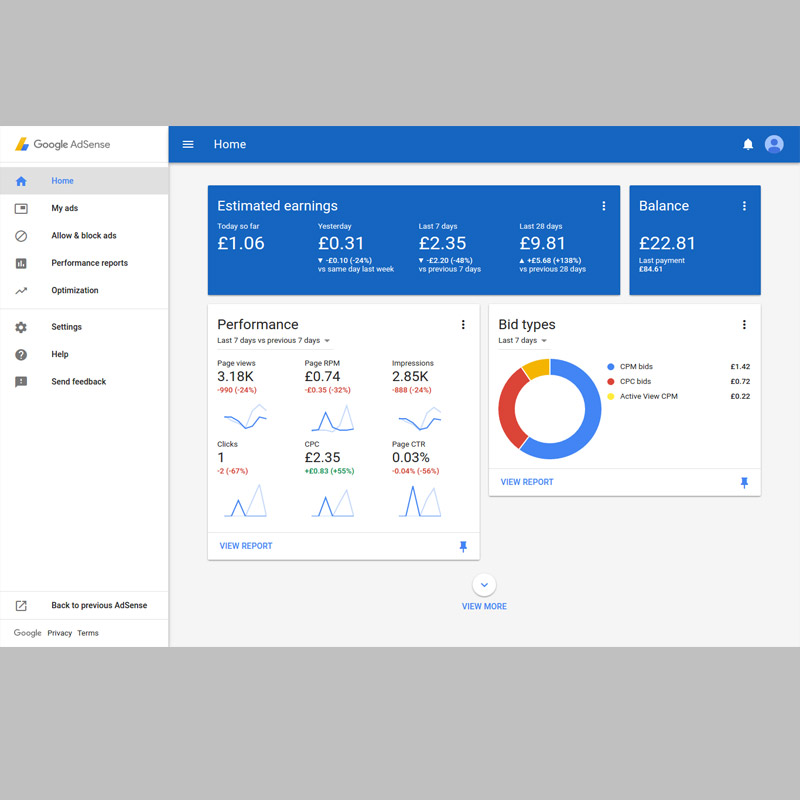
    MUMBAI: Google’s ad management platform for publishers, AdSense is to get a Material Design make-over much like their consumer-facing products like Google Maps, the tech giant recently announced.

    “This new UI highlights the information that’s relevant to you on a personalized homepage and streamlines navigation. This new UI highlights the information that’s relevant to you on a personalized homepage and streamlines navigation,” the AdSense Product Team blog post read.

    The new User Interface will also simplify and customize the homepage for the publishers, “We’ve organized your homepage into a stream of interactive cards. You can pin your favorites to the top of the stream, and arrange your homepage just the way you’d like,” the post further read.

    With the aim to streamline the new menu, Google has also brought everything together in a new left hand menu.

  • Google renovates AdSense UI for publishers with Material Design

    Google renovates AdSense UI for publishers with Material Design

    MUMBAI: Google’s ad management platform for publishers, AdSense is to get a Material Design make-over much like their consumer-facing products like Google Maps, the tech giant recently announced.

    “This new UI highlights the information that’s relevant to you on a personalized homepage and streamlines navigation. This new UI highlights the information that’s relevant to you on a personalized homepage and streamlines navigation,” the AdSense Product Team blog post read.

    The new User Interface will also simplify and customize the homepage for the publishers, “We’ve organized your homepage into a stream of interactive cards. You can pin your favorites to the top of the stream, and arrange your homepage just the way you’d like,” the post further read.

    With the aim to streamline the new menu, Google has also brought everything together in a new left hand menu.

  • ASCI upholds complaints against 134 advertisements

    ASCI upholds complaints against 134 advertisements

    MUMBAI: ASCI has upheld complaints against 134 advertisements. In July 2016, ASCI’s Consumer Complaints Council (CCC) upheld complaints against 134 out of 183 advertisements. Out of which, 44 belonged to the Healthcare category, 44 to the Education category, followed by 24 in the Food & Beverages category, 8 in Personal Care Category and 14 advertisements from other categories.

    Here is the complete list:

    Food & Beverages:

    Bonn Nutrients (Bonn Nu Health Bread):  The advertisement’s claim (in Hindi) as translated into English, “With calories low as 40 cal/slice” was not substantiated and was misleading by implication.

    Sonia Honey:  The claims in the advertisement “Sonia Honey scored the highest on the main parameters of honey purity in a recent analysis of all Indian branded and unbranded honey” and “Sonia Honey The perfect natural Sweetner is: Anti-Aging, Anti- Cancer”, were not substantiated and are misleading.

    KP Group (Kamla Pasand Pan Masala): The advertisement features Rajneesh Duggal – a celebrity from the field of entertainment for a product which has a health warning “Pan Masala is injurious to health” and which cannot be purchased or used by minors. Minors are very likely to be exposed to the advertisement. The celebrity in the advertisement would have a significant influence on minors who are likely to emulate the celebrity in using the product. The advertisement contravened Chapter III.2 (e) of the ASCI Code, which specifically states that Advertisements “Should not feature personalities from the field of sports and entertainment for products which, by law, require a health warning such as “Panmasala is injurious to health” in their advertising or packaging.”

    G. K. Tobacco Co. Pvt. Ltd. (Zafri Pan Masala): The visual of a “women pillion rider without a helmet” as depicted in the advertisement of Zafri Pan Masala shows violation of traffic rules and also is an unsafe practice.

    Health care:

    American Instrument: The Advertisement’s claims (in Hindi), as translated into English, “Are you disappointed with a small penis.  American penis enlarger free.  Get rid of small, thin crooked penis and make it thick, hard and firm.  Improve your sperm count, infertility, premature ejaculation, firmness, nightfall, childlessness can be cured and increase your sex time by 30-45 minutes with energetic oil, excitement capsule, 16GB memory card free.  Money back guarantee”, were not substantiated and are misleading by gross exaggeration.  Also, the claims related to the product benefit read in conjunction with the advertisement visual implies that the product is meant for enhancement of sexual pleasure and the claims related to treatment of infertility, childlessness’. This is in breach of the law as it violated The Drugs & Magic Remedies Act. 

    Japani Instrument: The advertisement’s claims (in Hindi), as translated into English, “Are you disappointed with a small penis?  Get Japanese penis enlargement instrument free.  As soon as you use Japanese penis enlargement instrument you can make your penis longer, thicker, weak topo firm and stronger. Increase your sex time from 30 to 45 minutes. Nightfall, premature ejaculation, infertility, impotency, low sperm count and childlessness can be cured.  45 days course for an artificial vagina and artificial penis.  100% guarantee.  No side effects”, were not substantiated and are misleading by gross exaggeration.  Also, the claims related to the product benefit read in conjunction with the advertisement visual implies that the product is meant for enhancement of sexual pleasure and the claims related to treatment of childlessness. This is in breach of the law as it violated The Drugs & Magic Remedies Act.

    Nurture Healthcare (Ayurex-S Vitality Capsules): The advertisement’s claim (in Hindi) as translated into English, “It’s the right of every Man, to lead a happy married life”,  “For Men only”,  “Vitality Capsule”,  “If you are worried about low, excessive weakness, then consume AYUREX-S capsule and with its help, do the work successfully with the capacity and power”,  “My Wife says I am more energetic than Before”,  “In some days my married life has become exciting and happy, thanks to Ayurex-S”,  were not substantiated with product efficacy data,  and are misleading by exaggeration. Also, these claims when read in conjunction with the advertisement visual implies that the product is meant for enhancement of sexual pleasure, which is in breach of the law as it violated The Drugs & Magic Remedies Act.

    Personal care:

    Himalaya Company (Himalaya Facewash): The advertisement’s claim in Hindi, “Isme hai neem aur haldi ki kudrati achchai Jo aapko har tarah ki skin problems se suraksha de” (“This has the goodness of neem and haldi that gives you protection from every skin problems”) was not substantiated with product efficacy data, and the claim is misleading by exaggeration.

    Gillette India Ltd. (Gillette Vector): The advertisement’s claim offers, “Save Rs. 30/- in comparison to Vector 2s pack”, is misleading by omission of a disclaimer to mention the exact price comparison with the post price increase of the product.

    Hindustan Unilever Ltd. (Axe Deodorants): The advertisement’s claim, “When it gets hot, the fragrance is boosted”, was not adequately substantiated with consumer perception data, and is misleading by implication. 

    Glaxosmithkline Consumer Healthcare Ltd. (Sensodyne Toothpaste): It was noted that the source and date of research and criteria for assessment for the claim, “Worlds No. 1 sensitivity toothpaste”, was not indicated in the TVC. In addition, the supers in the Hindi TVC were not in the same language as the audio of the TVC, they were not legible, and the hold duration of the supers was short. The TVC also contravened the ASCI Guidelines for Supers.

    Education:

    Guru Nanak Institute of Management: The advertisement’s claims, “Highest Salary Package: 8 Lakhs” and “Average Salary Package: 4.5 lakhs”, were not substantiated with evidence to prove that the students have availed the claimed salary packages, and the claims are considered to be misleading by exaggeration.

    Dhruva College of Management: The claims in the advertisement, “Highest Salary Package: 8 Lakhs” and “Average Salary Package: 4.5 lakhs”, were not substantiated and was misleading.

    Biju Patnaik Institute of Information Technology & Management Studies: The claims in the advertisement, “Placement Percentage- 2013: 95%, 2014: 96%, 2015: 97%”, were not substantiated with authentic supporting data (such as detailed list of students who have been placed through their Institute, contact details of students for verification, enrolment forms and appointment letters received by the students).  Also, the claims are considered to be misleading by omission of the details of batch size for which the claim would hold.

  • ASCI upholds complaints against 134 advertisements

    ASCI upholds complaints against 134 advertisements

    MUMBAI: ASCI has upheld complaints against 134 advertisements. In July 2016, ASCI’s Consumer Complaints Council (CCC) upheld complaints against 134 out of 183 advertisements. Out of which, 44 belonged to the Healthcare category, 44 to the Education category, followed by 24 in the Food & Beverages category, 8 in Personal Care Category and 14 advertisements from other categories.

    Here is the complete list:

    Food & Beverages:

    Bonn Nutrients (Bonn Nu Health Bread):  The advertisement’s claim (in Hindi) as translated into English, “With calories low as 40 cal/slice” was not substantiated and was misleading by implication.

    Sonia Honey:  The claims in the advertisement “Sonia Honey scored the highest on the main parameters of honey purity in a recent analysis of all Indian branded and unbranded honey” and “Sonia Honey The perfect natural Sweetner is: Anti-Aging, Anti- Cancer”, were not substantiated and are misleading.

    KP Group (Kamla Pasand Pan Masala): The advertisement features Rajneesh Duggal – a celebrity from the field of entertainment for a product which has a health warning “Pan Masala is injurious to health” and which cannot be purchased or used by minors. Minors are very likely to be exposed to the advertisement. The celebrity in the advertisement would have a significant influence on minors who are likely to emulate the celebrity in using the product. The advertisement contravened Chapter III.2 (e) of the ASCI Code, which specifically states that Advertisements “Should not feature personalities from the field of sports and entertainment for products which, by law, require a health warning such as “Panmasala is injurious to health” in their advertising or packaging.”

    G. K. Tobacco Co. Pvt. Ltd. (Zafri Pan Masala): The visual of a “women pillion rider without a helmet” as depicted in the advertisement of Zafri Pan Masala shows violation of traffic rules and also is an unsafe practice.

    Health care:

    American Instrument: The Advertisement’s claims (in Hindi), as translated into English, “Are you disappointed with a small penis.  American penis enlarger free.  Get rid of small, thin crooked penis and make it thick, hard and firm.  Improve your sperm count, infertility, premature ejaculation, firmness, nightfall, childlessness can be cured and increase your sex time by 30-45 minutes with energetic oil, excitement capsule, 16GB memory card free.  Money back guarantee”, were not substantiated and are misleading by gross exaggeration.  Also, the claims related to the product benefit read in conjunction with the advertisement visual implies that the product is meant for enhancement of sexual pleasure and the claims related to treatment of infertility, childlessness’. This is in breach of the law as it violated The Drugs & Magic Remedies Act. 

    Japani Instrument: The advertisement’s claims (in Hindi), as translated into English, “Are you disappointed with a small penis?  Get Japanese penis enlargement instrument free.  As soon as you use Japanese penis enlargement instrument you can make your penis longer, thicker, weak topo firm and stronger. Increase your sex time from 30 to 45 minutes. Nightfall, premature ejaculation, infertility, impotency, low sperm count and childlessness can be cured.  45 days course for an artificial vagina and artificial penis.  100% guarantee.  No side effects”, were not substantiated and are misleading by gross exaggeration.  Also, the claims related to the product benefit read in conjunction with the advertisement visual implies that the product is meant for enhancement of sexual pleasure and the claims related to treatment of childlessness. This is in breach of the law as it violated The Drugs & Magic Remedies Act.

    Nurture Healthcare (Ayurex-S Vitality Capsules): The advertisement’s claim (in Hindi) as translated into English, “It’s the right of every Man, to lead a happy married life”,  “For Men only”,  “Vitality Capsule”,  “If you are worried about low, excessive weakness, then consume AYUREX-S capsule and with its help, do the work successfully with the capacity and power”,  “My Wife says I am more energetic than Before”,  “In some days my married life has become exciting and happy, thanks to Ayurex-S”,  were not substantiated with product efficacy data,  and are misleading by exaggeration. Also, these claims when read in conjunction with the advertisement visual implies that the product is meant for enhancement of sexual pleasure, which is in breach of the law as it violated The Drugs & Magic Remedies Act.

    Personal care:

    Himalaya Company (Himalaya Facewash): The advertisement’s claim in Hindi, “Isme hai neem aur haldi ki kudrati achchai Jo aapko har tarah ki skin problems se suraksha de” (“This has the goodness of neem and haldi that gives you protection from every skin problems”) was not substantiated with product efficacy data, and the claim is misleading by exaggeration.

    Gillette India Ltd. (Gillette Vector): The advertisement’s claim offers, “Save Rs. 30/- in comparison to Vector 2s pack”, is misleading by omission of a disclaimer to mention the exact price comparison with the post price increase of the product.

    Hindustan Unilever Ltd. (Axe Deodorants): The advertisement’s claim, “When it gets hot, the fragrance is boosted”, was not adequately substantiated with consumer perception data, and is misleading by implication. 

    Glaxosmithkline Consumer Healthcare Ltd. (Sensodyne Toothpaste): It was noted that the source and date of research and criteria for assessment for the claim, “Worlds No. 1 sensitivity toothpaste”, was not indicated in the TVC. In addition, the supers in the Hindi TVC were not in the same language as the audio of the TVC, they were not legible, and the hold duration of the supers was short. The TVC also contravened the ASCI Guidelines for Supers.

    Education:

    Guru Nanak Institute of Management: The advertisement’s claims, “Highest Salary Package: 8 Lakhs” and “Average Salary Package: 4.5 lakhs”, were not substantiated with evidence to prove that the students have availed the claimed salary packages, and the claims are considered to be misleading by exaggeration.

    Dhruva College of Management: The claims in the advertisement, “Highest Salary Package: 8 Lakhs” and “Average Salary Package: 4.5 lakhs”, were not substantiated and was misleading.

    Biju Patnaik Institute of Information Technology & Management Studies: The claims in the advertisement, “Placement Percentage- 2013: 95%, 2014: 96%, 2015: 97%”, were not substantiated with authentic supporting data (such as detailed list of students who have been placed through their Institute, contact details of students for verification, enrolment forms and appointment letters received by the students).  Also, the claims are considered to be misleading by omission of the details of batch size for which the claim would hold.