Tag: advertising

  • Sorrell’s exit could lead to a breakup of the large agency structure says John Hegarty

    Sorrell’s exit could lead to a breakup of the large agency structure says John Hegarty

    MUMBAI: He’s seen it all – print, radio, TV and now digital. With over six decades of advertising industry under his belt, John Hegarty has had the privilege of being knighted by the UK for his services. With early days at Saatchi and Saatchi (then called Cramer Saatchi) to co-founding global media agency, Bartle Bogle Hegarty (BBH), the septuagenarian is still as youthful and optimistic as he was in the 1960s.

    After co-founding TBWA, he teamed up with partners John Bartle and Nigel Bogle to launch Bartle Bogle Hegarty in 1982. The agency swiftly became one of the most talked about and awarded advertising agencies in the world.

    The advertising mogul was in Mumbai, India recently where he spoke his heart out about creativity and advertising industry at large. The creator of acclaimed campaigns for brands such as Levi’s, Audi, BA and Johnnie Walker, Hegarty thinks that brainstorming as a concept at the modern workplace can kill creativity. According to him, just 10 per cent of the creativity today is good and advertisers inflict that tiny amount on the audience. For him, the advertising industry has a great responsibility to shoulder.

    He first came to India 25 years ago to meet Piyush Pandey. Admitting that he isn’t a hardcore follower of Indian advertising, he still believes that Indian creativity is far better than other parts of the world. 

    Hegarty warned of the danger of globalisation that has led to a bland advertising world where ad execs and brand managers from one part of the country want to target the entire world with global campaigns rather than creating local campaigns. One reason they resort to this mass targeting is their constant search for cost-effectiveness. But they don’t realise that they lose out on communication efficiency. Instead, all ad work should be more representative or reflective of the local culture. 

    Hegarty’s response to nineteenth century Philadelphia retailer John Wanamaker’s famous oft-stated quip – ‘Half the money I spend on advertising is wasted; the trouble is I don’t know which half’ –  is that those who exclaim this don’t know what they’re doing. “Brands need to go out and converse with people. Advertising is all about conversations,” he said.

    “A brand is made not just by the people who buy it but also for the people who know about it.  Agencies today have forgotten that brands need to persuade the consumer and not promote the product. We have confused persuasion and promotion, persuasion will yield long-term results whereas promotion will only last for a short term,” he said.

    While the world lauds the power of digital, Hegarty thinks that brands and agencies are still in the dark about the best way to approach the medium. Light heartedly cracking a joke at his age, Hegarty said that he won’t be around long to watch machines take over man, referring to artificial intelligence increasingly being used to help take advertising and creative decisions. “Machine-made ideas are easy to recognise and it can’t get the nuances correct all the time.”

    A writer from BBH London recently publicly accused sports television channels group Sky Sports and its agency, Sky Creative, of ripping off a recruitment video. Hegarty was not disturbed by this theft and responded by stating that plagiarism will always happen in the industry where an artist is inspired by another and has happened forever and will continue to take place ad infintum. He added, “Everything gets plagiarised today and I don’t think we need a body to regulate it.”

    He rubbished the concept of the word ‘content’ calling content marketing a boring topic. “What exactly is content? My garbage bin is full of content. I wonder who invents these words! They are completely meaningless. I think content should only be informative and useful,” he said.

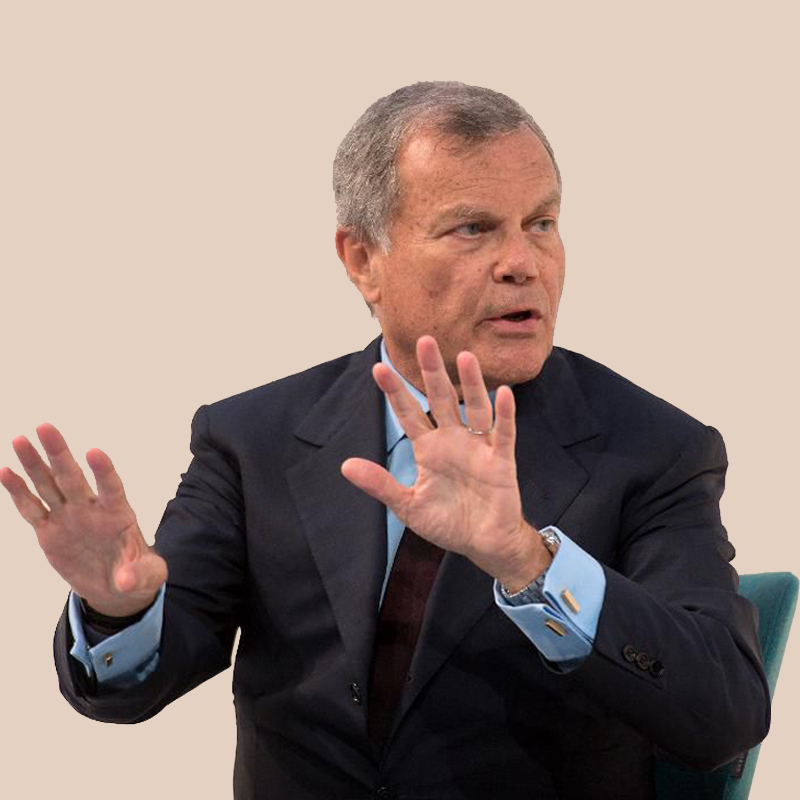
    A recent major shakeup in ad world was the departure of ad mogul Sir Martin Sorrell from WPP. Hegarty said that the legend’s eviction could be a harbinger of a fission of WPP and other ad behemoths.

    “With his exit, the talk is that the company will now be broken up and the groups are now also under threat because of the value they are giving clients. It could be a serious problem for them unless they get back to basics and the core of the advertising profession: focus on creativity.”

    Well said John!

  • OTT players see subscription revenue as India’s future

    OTT players see subscription revenue as India’s future

    MUMBAI: Most Indian over the top (OTT) and even traditional mediums have assumed that Indian audiences aren’t willing to pay for content. But of late, discussions have shown that monetisation is happening at a slow pace. Though the return on investment (RoI) is not for the foreseeable future, the business minds are highly optimistic that the scenario will change in the next five years.

    Eros Digital COO Ali Hussein, SonyLIV EVP Uday Sodhi, Syntropic Systems managing partner Alap Ghosh, Atechnos founder Apurv Modi and Hungama Digital Media VP Soumini Shridhara Paul delved on the future of the industry at an OTTv Mumbai session.

    The session started with the age-old debate that Indian people don’t want to pay for content. The scenario hasn’t changed since last year’s panel.

    Hussein said the main challenge is not that people don’t want to pay but whether the platforms are able to grow a habit among consumers to return. “The question is to allow the whole ecosystem to pave the way for a feasible experience for the consumers to pay,” he said.

    Sodhi backed Hussein’s statement saying that everyone is paying for content in some way but it isn’t enough to allow evolution. 10 or 15 years ago, similar questions were thrown for traditional TV. He is optimistic in that next five years the scenario of the OTT industry will change too.

    “In the last two to three years, significant consumption appetite has been seen. Penetration of smartphone, easy access to 4g has activated this. Now some of us are encouraged to create content as we believe that some sort monetisation is coming through,” he said.

    Paul said, “When we come to down monetisation challenges, one has to look at how we can build something which is scalable.” She also thinks the quality of production makes a difference. Everybody cannot have $2 billion for content but ensuring the best product within budget is important. In spite of making some content similar, finding something different can really help.

    The reasons that make consumers hesitate to pay have never been found. Ghosh mentioned three reasons. One of the reasons is that people stop paying when they finish watching what they wanted to watch. The doubt on the validity of the expense also restricts them to pay again as the consumers are habituated to pay Rs 200 for 300 channels where they don’t have to think what to watch next.

    Whenever it comes to monetisation, everyone discusses subscription but it is advertising through which significant money can come through and that depends on good content. Going forward, revenue from both subscription and advertising will increase as the market will mature. As advertising is itself a complex ecosystem, there are bigger challenges for AVOD model to make money.

    While Modi said that there is enthusiasm from advertisers to engage in OTT platforms, Ghosh thinks that in the urge to be across platforms they choose to be on one or two select platforms like YouTube, Hotstar to create interest among viewers.

    Moreover, strategic partnerships for distribution also leave an impact to reach more consumers leading to better scaling as well as subscriptions.

    While monetisation has been the key challenge to Indian OTT industry, there are new avenues which can help to overcome the challenge. It’s important for the ecosystem to be able to allow growth of both advertising and subscription based models. The increased attention on statistics from optimising data can help the players to understand what is working and what needs to be changed to retain consumers.

  • Jio partners Screenz for interactive TV solution

    Jio partners Screenz for interactive TV solution

    MUMBAI: Mukesh Ambani’s Reliance Jio is wanting to capture every pie of the media and entertainment business. Even as it charters new growth avenues in digital, Jio has announced a partnership with Screenz to launch Jio Screenz.

    It will be a solution for broadcasters to get digital interactivity and will convert passive TV viewing and advertising into an interactive and participative one. Screenz is used globally by broadcasters and format owners for entertainment-based interactivity.

    For starters, there will be two-way communication between broadcasters and viewers through quizzes, polls and votes during the show. There will be an easy content management system (CMS) for broadcasters to design, create and launch interactive engagements. It can be enabled on any digital app using SDK with support on Android, iOS and Jio Kai-OS. Jio Screenz supports various social networks namely Google, Facebook, Twitter etc.

    It also has a drooling proposition to advertisers – better customer profile. Jio Screenz will support a rich data reporting and create unique profiles for each user, hence enabling targeted advertisement.

    This partnership will be an add on to Jio’s existing platform for gamification. Jio Screenz claims to be the largest and probably the only platform to provide entertainment-based gamification. Some of its features are to allow live, real-time interaction between broadcasters and viewers for intense engagement and viewership.

    In a press release, Jio calls itself a ‘customer obsessed organisation and will continue to bring disproportionate value, innovative features and best-in-class services to its customers, always’.

    A few days ago Jio launched JioInteract, an AI-based brand engagement platform.

  • We are fundamentally changing storytelling: Hotstar CEO Ajit Mohan

    We are fundamentally changing storytelling: Hotstar CEO Ajit Mohan

    Ajit Mohan is not your flashy kind of guy. Quiet, unassuming normally, he opens up and the words flows easy when it comes to talking about his pet project—the fast-growing Star India-owned OTT service Hotstar. Over the past three years, he has gradually—with the support of Uday Shankar and Sanjay Gupta and, of course, the Murdochs—grown the service, setting new download, watch time and quality records.

    With huge money riding behind the cricket rights that Star India has acquired, Mohan is going to play a crucial role in helping monetise what some are calling very expensive acquisitions. Moreover, the global big boys are gearing up to carve out huge slices of India’s one-billion-plus mobile populace. Netflix, Amazon, Facebook, YouTube and JioTV are the majors with deep pockets that will pull out all the stops in terms of content—local and global originals—to gain traction. But Mohan, while respectful of the other players, is quite clear that he and his team will be digging in their heels and will battle without yielding any quarter.

    He was in Bali at APOS and he had a conversation with MPA’s Vivek Couto on stage. Excerpts from the interview:

    So, what’s the latest that has happened that has got the team excited?

    We crossed 7.1 million concurrent users last week. We are gunning for the largest number of concurrent users online. To the best that we know, it is eight million. And that is the number we are aiming for in this IPL. At 10 million, many elements of the internet ecosystem will be tested and challenged. We want to get to eight million before we get to 10 million. If I circle back three years ago when we launched Hotstar, 1.5 million was what was testing what the internet ecosystem could take. I think a lot of different parts of the networks are really geared up. I think we are a much better tech company than we were three years ago. I do believe there is a path to 10 million but I don’t want to jinx it.

    Tell us a little bit about your journey at Hotstar.

    A good friend of mine who works for one of the global tech companies told me in 2014 when I was about to take up the position: “Many broadcasters have gone down this path. You should try it. Because it’s good to try things in life. But in six months, you will probably figure out that this is probably not for a media company.”

    And, for me, if I step back and think about what’s happening in Asia, a few things stand out. I think the global tech majors have done an amazing job in shaping many markets. But I think they have also been quite successful in seeding this narrative that there is no future for old media companies. We are establishing that, especially at Hotstar, that the narrative is not true. That if you really build a service that has its DNA in storytelling and you build technological capabilities around it. I think, the future is very much for people who are grounded in stories but who have the aggression and forward-looking approach in building real technical capabilities. And I genuinely believe that one of the myths that has been broken is the belief that it would be short-form content that would work on the mobile. And most of the world is seeing the internet for the first time on a mobile. I think that has been turned on its head. The consumers’ appetite is for great stories; it’s for curated long-form content, the kind of stories that have worked for the last 40-50 or 400 years. And for me that is the big proof of concept that Hotstar has provided for the rest of the world that it is for us to shape this future. That we are very much at the centre of the story.

    What is the transformation that is taking place at Hotstar?

    While our DNA is in storytelling, we were quite conscious that we needed to become a technology company. Over the last three years, we have worked to build serious technological capabilities inside the company. I don’t think it is possible to outsource technology or to build a service by a patchwork of technology partners. Today, we have more than a 100 engineers who work at Hotstar. We are looking at doubling that in the next six to nine months. And, for me, even the scale that we are able to do today is because we have people inside the company, who are tuning technology to address the scale that’s being driven by the demand from consumers.

    I think the second point is I do believe that great stories shine, one way in which we have been different than even some of the pioneers in streaming is we did not look at stories from the lens of “it’s the same content and it is on a different screen. Or it’s the same content that’s on broadcast that is available on demand.” I think we have looked at it saying we can change the format of storytelling. We can create new experiences. As an example, in cricket, what we did was we created a new proposition where consumers could come and watch a match but they could also play a game while watching the match. And more than 20 million people who have taken part in the watch and play feature. So, all of a sudden, the proposition is not watching the same content, it’s fundamentally changing storytelling. That is core to what we are doing at Hotstar.

    Unlike other tech companies in the world, I don’t think we have the desire to do everything. We have not turned around and said look now we are really doing well in one genre, now let’s get into food; and let’s be a food app, an ecommerce app. We believe the biggest opportunity is in video. And it fundamentally is creating experiences around video, and we have obsessively been focused on doing that one thing really well.

    What kind of content is being consumed nowadays? Is it primarily sport?

    We have been more vocal about the sports numbers, but the reality is that most of our consumption is on TV shows and movies. Then there are days when there is a large cricket match, the scale is dramatic for that day. But if I look at it over a year, then 75-80 per cent of our watch time still comes from outside of sports. We’re not a sports platform. What’s special is that we are bringing together TV shows, movies, sports, news—all on a single platform. In less than one year of introducing news on our platform, we are already one of the largest video destinations for news in India.

    One of the interesting challenges we have is we have made the choice to put everything in a single service and I think that’s a challenge some of our peers may not have; we have a lot of diverse content. And as much as one of our objectives is to match the right content to the right users, one of the challenges we face every day is the risk of alienation. Because India is not a single country with the appetite for the same stories everywhere. For instance, if we serve a Tamil movie to someone whose language is Hindi, you are signalling to the user that you don’t understand him.

    So, we have an interesting technology challenge of leveraging the scale of bringing everything together and yet create a platform that a set of users feels is deeply personal and intuitive.

    We are finding that at the beginning of Hotstar a lot of people were coming in and looking at it as a catch-up destination. They would see an episode of a TV show if they did not watch it on TV. More and more people were introduced to the proposition of the platform, to start looking at it as a primary screen. Today, hardcore users are watching as much time in a month or more in a month as much as the core user of that television show on broadcast TV. It no longer is a catch-up destination. For a lot of people, it is the primary screen.

    What is the demographic of the user today?

    Maybe it is no longer conventional wisdom. There is a belief that content is for millennials, whoever they are, and in Asia almost every one is a millennial, it is a very young audience. The content on TV would be very different from what works for on demand or on the mobile. The average age in India is 26-27, they are young audiences. What works on TV works well on Hotstar as well.

    I think it is fundamentally about great stories. There is no format for millennials that anyone has cracked so far that stands out. The second thing that does stand out— maybe because we have cracked some of the classical streams of distribution in the cable and satellite industry—we are not seeing that people are consuming one set of content. We have consumers who are watching Game of Thrones as well as a Tamil movie or Homeland and a Hindi TV show. I think some of the stereotypes that have been created in broadcast television is that there are users for a certain kind of an Indian TV show; there are users for an American TV show.

    We are finding that those boundaries, those stereotypes don’t exist. People’s appetite does not seem to conform to the constraints we have set from a distribution point of view in the old world. We are seeing, on average, between 45 and 60 minutes a day in terms of people coming in and spending time. And that’s where I think of the constraints of three years ago when data costs were high especially relative to what they were used to paying for pay TV and the bandwidth was very patchy. That’s changed: there is no fear of data charges anymore. If you leave aside what we in India call masala content, our belief is that we are doing watch time every day on Hotstar maybe the same or more than what YouTube does in India. For me, it is a big shift from what the environment was three to four years ago.

    How’s the advertiser client looking at you following your direct to brand strategy, which has potentially cut out the agency?

    The proposition that we have offered to the advertisers for the past couple of years, we believe it works from a consumer point of view as well. Brands have been built on TV because consumers were paying attention. And in the transition from linear television to video-on-demand services, a lot of advertisers got excited about the great data that was available: you can slice and dice audiences, you could target specific audiences. But I think what was lost in that process and I think now there is consciousness of that: you had a lot of awareness about of your users, you could play around on dashboard, but those consumers are not paying enough attention. It is difficult to pay attention to a two-minute video when you are scrolling around stuff. 

    And, therefore, our big pitch to advertisers was this marries the best of what worked for TV, real engagement, with the audience understanding that comes with digital. And if I bring together the best of both worlds, we have a proposition for you as an advertiser that is fairly unique.

    It’s not been easy. I think the tech companies have done a fabulous job of building that— some of them only self-serving. It’s been our mission to tell people that it is possible to build brands on digital by bringing the power of engagement and data.

    We launched the Hotstar ad server a few weeks ago that allows smaller advertisers to connect with us directly. Our objective is not to cut out the agencies. Agencies have been great partners for us. They have had huge belief in what we are doing. But I believe Google and Facebook have done a phenomenal job; you do have to have a platform for smaller advertisers who may not have the scale of the marketing spend or even the capabilities to hire these types of agencies. It is early days and we are saying that a small advertiser in a small town of India or an early-stage start up should have the same access to Hotstar as the largest marketer, which is Unilever.  

    We have been successful in commanding a premium because of the advertiser proposition I spoke about. But I think as the market expands dramatically, I think it is an open question where will CPMs land.

    What is your view on subscription?

    On the subscription side, just as there was skepticism that India was ready for online streaming, there is skepticism whether Indians will pay for it. And we are taking on the mantle and as a leader we are saying: if you create differentiated content, we do believe subscription can take off in India. And I think that party started with American shows and movies. We do believe that we have the best English proposition in India. We believe that the best American films and TV shows, and live sports and local TV shows being made available to users before they watch on TV, I think we are going at it a lot more aggressively. The early focus of the first three years was on building the platform, getting tech right, building up the scale. We have 15 million users this month, that is massive scale.

  • Sorrell, people and Sorrell speak

    Sorrell, people and Sorrell speak

    MUMBAI: For many advertising and brand executives – especially the senior ones in India – Sir Martin Sorrell was a pretty familiar face. Sorrell probably visited India more than any other international advertising industry executive did.

    He was an indophile, knew many of his senior India professionals by first name. And he believed that the nation had depth of talent – both creative and business – like no other country did. He was so enamoured of the talent that he more often than not welcomed them into the higher executive corridors, giving them postings all over the world.  Several benefited: Ashutosh Shrivastas, Gowthaman Ranganathan, Vikram Sakhuja, Ranjan Kapur, Sonal Dabral, Piyush Panday, CVL Srinivas – the list is unending. Amongst the suitors he had wooed for many years was Sam Balsara of Madison Worldwide. But Balsara simply refused to yield to him. Amongst his good friends in India was Ranjan who passed away a couple of months ago.

    Over the years, Sorrell has spoken at many events and conferences making some radical statements at that time. Here’s some Sorrell speak over the years:

    “Client focus on the short term that is what is keeping me up late at night.…and as a result, they are not investing in innovation and indeed branding for the future. The future is tough…it’s a tough environment..it is a grind. Clients spend more in trade promotion..incentives, slotting allowance and getting visibility in the retail trade rather than on advertising. All this is good for the short term, but not for the long term.”

    –  B2B conference IBC 2016 in Amsterdam

    “To be a good CEO, you have to be totally committed. And that means a 24×7 commitment. You have to be optimistic. Obviously have intelligence. EQ (emotional intelligence) is as important as IQ – a balance between the two. You don’t have to be an Einstein in our business. A deep understanding of all the advertising and marketing and communication services and how they fit together. A global perspective, which means you can’t just have experience of one part of the world, you have to have experience of many parts of the world. Unilingual – we speak one language, need to speak more. Politically aware and also economically aware and how they are having an impact. You have to have a sensible strategy and be able to implement it.”

     – In an interview to The Drum

     “The rise of Amazon, Alibaba, Flipkart and Airtel have also raised questions on who has control over data and who will influence it. This is where we have a strong position in India and globally, and have tremendous opportunities to grow further. If you look forward to the next 15-25 years, the relative role and importance of India will increase. From WPP’s point of view, our Indian business is half the size of our Chinese business. The relative population is almost the same. In the next 15-25 years, India will become the most populous country on the planet…while China has an ageing issue that is likely to continue. So India, from an economic growth point of view over the next 15-25 years, is going to be an even more significant force. If you look at companies such as Reliance Industries, Tata Group, Mahindra and (Bharti) Airtel — these companies will become even more significant on the world stage.”

    – Interaction with the media in October 2017

    “Our biggest problem is the enemy within,” Sorrell concedes. “The challenge is to get people to operate as seamlessly as you can. I’m philosophical about it, but I get very upset when people don’t work together because I think the power of what we’ve got is so great when we put it together. You tear your hair out when people sit in their little box and refuse to co-operate or when they fight with one another. I do tend to focus on the bad bits. I have been described as a serial pessimist.”

    – To Campaign in 2001

    “The dogfight for content rights is going to intensify. You’re talking about some very big players becoming increasingly interested in sports rights. That will drive the price up for everyone and push rights holders to start selling them off piecemeal, fragmenting the market. Packaged goods top-line growth has been under pressure. They are looking much more rigorously at the sponsorship costs and activation costs, and they probably are less willing to invest than five or 10 years ago. The reverse is true of the technology companies. If the pricing of the bigger sports rights is sucked up by competition it means that all the sports with more limited audiences are going to become even more important and significant. There are a number of interesting opportunities for our clients.”

    – Speaking at CES 2018 in Las Vegas

     “For the past 33 years, I have spent every single day thinking about the future of WPP. Over those decades, our family has grown and prospered. As I look ahead, I see that the current disruption we are experiencing is simply putting too much unnecessary pressure on the business, our over 200,000 people and their 500,000 or so dependents, and the clients we serve in 112 countries. We have weathered difficult storms in the past. And our highly talented people have always won through, always. Nobody, either direct competitors or newly-minted ones can beat the WPP team, as long as you work closely together, whether by client and/or country or digitally. As a founder, I can say that WPP is not just a matter of life or death, it was, is and will be more important than that. Good fortune and Godspeed to all of you…now Back to the Future.”

    – His farewell note on quitting WPP

    His departure also raised some amount of angst amongst some senior executives who worked with him.

    “Martin had faults as do we all but he was entrepreneurial, client focused, knew importance of recruiting/retaining great talent, tireless, always there to help. WPP is a lot more resilient than people think but it’s a tragedy that things ended this way.”

    – Kantar CEO Eric Salama

    “Landmark story: after three decades Sorrell leaves WPP, the company he built deal by deal into a £15bn global titan; sad end to the story but plenty of people will be celebrating tonight.”

    – Campaign Global editor in chief Claire Beale

    Also:

    Sir Martin Sorrell says ta-ta to WPP, Roberta Quarta becomes exec chairman

    WPP board begins investigation of its CEO Sir Martin Sorrel, says WSJ

    Martin Sorrell bullish on India


  • Guest column: How chat-based ads are winning the marketing race

    Guest column: How chat-based ads are winning the marketing race

    ‘You talking to me?’ 

    The famous line of Travis Bickle, a lonely taxi driver in Martin Scorsese’s iconic film Taxi Driver, is known to cinephiles all over the world. In the world of advertising these days, this line is often being repeated by customers, thanks to the prominent rise of chat-based ads as the most effective medium of communication in the millennial world.

    Creating compelling brand engagements has become the need of the hour for brands today. While the digital world has opened up numerous possibilities for advertisers all over the world, this very same abundance of options is also driving them crazy. Brands are trying to create the optimum communication mix by employing multiple channels such as print, radio, TVCs, video ads, social media engagement etc. to connect better with their consumer bases and gain insights to help their marketing efforts. However, understanding the millennial customer’s mind with non-personalised advertising tools is like walking into a labyrinth with general directions, rather than a customised map. While the former will only result in you losing your way as you move further, a map, as is the case with chat-based ads, will ensure that you are able to navigate, control, and conquer it.  

    Chat-based vs. Video ads: Identifying the perfect ad mechanism for the millennial mind

    Imagine this: globally, the average consumer is exposed to 4,000-10,000 brands per day, with 56 per cent of digital ads and 86 per cent of TV ads not being seen – even once! In this era of over-saturation, the only way to keep your brand thriving is to shun the volume-driven approach and create personalised, engaging advertising efforts that make users an essential part of your brand’s conversation. This is where chat-based ads are most suited, for they do not inform, but engage users through a two-way communication. As chat-based ads are driven by the inputs of the users, there is no predefined message or conclusion and the chat ad takes a route as driven by the conversation. At one to two minutes, the user engagement on chats is also much higher when compared to the sub-10 seconds worth of engagement that video ads deliver. Even with the rapidly growing proliferation of social media, and its share of video-based content, in our lives, theengagement rate of 75 per centon personalised chatbot-based ads is much higher than the measly 10 per cent of audience interactions that video-based ads manage.

    public://grp1.jpg

    While video ads today offer an edgier style that also has a call-to-action embedded in the form of a link to the brand’s homepage, it can never be a help in the fundamental process of decision-making due to its inherent opacity. Chat-based ads, on the other hand, engage customers by distilling the rigid process of advertising into a simple and personal conversation. Perhaps, this is the reason why 90 per cent of users are reported to give a positive feedback to chat-based conversations, as compared to 45 per cent affirmative responses received by video ads. 

    public://grp2.jpg
     
    Furthermore, the recent technological developments in the field of machine learning and artificial intelligence have made it possible for chat-based ads to offer remarkably authentic conversational experience, while simultaneously collating data and solving a user’s problem. For business purposes, chatbot creators like us have developed numerous solutions that help organisations to conduct initial communication with customers. These chatbots then store the data, thus obtained, and analyse it. The information collated by chatbots presents a rich data source that enriches future conversations by human agents, invariably culminating in positive end-results for the business. In fact, 40 per cent of chat-initiated communication efforts result in task completion, a number that in videos still hovers at 10 per cent.

    Apart from the fact that it creates highly personalised experiences for the user, the alternative possibilities with chatbots, as opposed to video ads, is endless. Chat-based solutions are being used the world over to tackle a diverse range of problems, from helping out cyber harassment victims report incidents and file complaints to helping insomniacs get through the night without having to go through multiple re-readings of old WhatsApp conversations! For instance, Endurance, a chatbot specifically designed for dementia patients, apart from being a conversational companion to the users suffering from the ailment, also identifies deviations in conversational branches indicative of a problem with immediate recollection – quite a technical achievement for a natural language processing-based system.

    Every era has a generation-defining advertising medium that is preferred by consumers. The post-World War eras saw the epic rise of print-based ads, which was followed by the complete dominance of radio and TVCs. At the onset of the digital era, video ads and content ruled the roost. As the era of smartphones reaches its peak, it still hangs on to the throne. But chat-based ads, with their personalised, flexible, deeply engaging, and highly-efficient approach, are quietly making their way to the top, one conversation at a time. 

    public://ceo.jpg

    The author is the co-founder and CEO ofHaptik. The opinions expressed here are his own and Indiantelevision.com may not subscribe to them.

    Also Read :

    Guest column: Cybersecurity in the advertising sector

    Guest column: Digital outlook for 2018

  • KYOORIUS CREATIVE AWARDS ANNOUNCES ITS JURIES FOR ADVERTISING, DIGITAL AND MEDIA

    KYOORIUS CREATIVE AWARDS ANNOUNCES ITS JURIES FOR ADVERTISING, DIGITAL AND MEDIA

    MUMBAI: The Kyoorius Creative Awards is back in its 5th edition to recognize and award the best creative and innovative work in the advertising, digital and media industries. The entries will be open from 21st March 2018 to 23rd April 2018 across 20 main categories and 280 sub-categories. Advertising/digital agencies, brands, production houses, media houses, event management companies, freelancers, photographers, mobile agencies, corporates, NGOs or individuals can submit their entries. The Kyoorius Creative Awards night will be held on 1st June 2018 at The Dome, NSCI, Mumbai.

    The entries will be judged by four juries; two for advertising and one each for digital and media from 14th May – 16th May in Mumbai.

    The jury chairpersons are as follows:

    · Arun Iyer- Chairman & Chief Creative Officer, Lowe Lintas – Advertising

    · Santosh Padhi- Chief Creative Officer & Co-Founder, Taproot Denstu – Advertising

    · Torie Henderson – CEO, South East Asia & India, Omnicom Media Group Asia Pacific – Media

    · Kunal Jeswani- Chief Executive Officer, Ogilvy & Mather– Digital

    The confirmed Jurors so far are: Bobby Pawar – Chief Creative Officer and Managing Director South Asia, Publicis Worldwide, India, Deepa Geethakrishnan – National Creative Director (HUL), Lowe Lintas, Juhi Kalia – Head of Creative Shop India & Global Brands APAC, Facebook, Kainaz Karmakar – Chief Creative Officer – Ogilvy Mumbai, Ogilvy & Mather, Kartik Iyer – CEO, Happy McGarryBowen, Kyoko Yonezawa – Creative Technologist, Dentsu Inc., Neil Cooper – Group Creative Director, Publicis.Sapient, Pradyumna Chauhan –Creative Consultant, Preethi Mariappan – VP, Executive Creative Director Emerging Experiences, Publicis Sapient, Satbir Singh – Founder & Chief Creative Officer, Thinkstr, Sidharth Rao – CEO and Co-Founder, Dentsu Webchutney, Sumanto Chattopadhyay – Chairman & Chief Creative Officer, Soho Square, Ogilvy Group, India, Swati Bhattacharya – Chief Creative Officer , FCB Ulka and Tista Sen – National Creative Director & Senior Vice President, J. Walter Thompson India

    The bedrock of The Kyoorius Creative Awards has been the composition of the jury and the transparency of the jury process. With the 5th edition, Kyoorius Creative Awards will fortify its partnership with ‘The One Club For Creativity’. The jury chair for the awards is formed by leveraging One Club’s decades of expertise in the industry. The Awards will also incorporate One Club’s high-integrity judging process and proprietary back-end voting technology platform, to ensure credibility and fairness of The Award.”

    Speaking about the 5th edition Rajesh Kejriwal, Founder and CEO, Kyoorius said, “The jurors at The Kyoorius Creative Awards, with their innate knowledge and experience, will contribute to this vision of acknowledging the finest original and innovative work. We look forward to hosting an insightful and rewarding event that honours the best in advertising.”

    Among the many firsts globally, Kyoorius will continue with its tradition of hosting an ‘Open Jury Session,’ – the jury sessions will be open for the creative community and media professionals to attend and witness the session in process. Apart from making the entire process very transparent, the session will provide key takeaways and insights from the discussions and the entries displayed.

  • Guest column: How to leverage social media for advertising

    Guest column: How to leverage social media for advertising

    At a time when social media’s exact worth for most businesses continues to be hard to pin down, trying to comment on trends that will ‘make or break your business’ can sound like puffery.

    And yet, the last couple of years have shown that dominance of social media can shape the destiny of the world’s largest democracies, swing elections (even when not aided by Russian interference) and change the world quite literally.

    If it works for them, it just might work for you. It is therefore vital that you have the most updated maps of these ever-shifting but powerful forces. Here are the key drivers for the next few months:

    VIDEO (+ LIVE VIDEO)

    While there is a lot of action and froth in video (and mobile data), and consumers are reeling from the unprecedented oversupply of high-end content, the trend is undeniable. Brands have absolutely no reason to stay on the sidelines. This is the year to go all in with your DVCs, webisodes, video podcasts, guides, unboxings, ‘virals’ – just do it. And do it now, because live video is another growing in-demand feature on Instagram. It is still a bit more complex to work with, so use sparingly.

    NEW PLATFORMS: WHATSAPP AND MORE

    WhatsApp has become substantially more business-friendly, and even more change is around the corner. Ignore this behemoth at your own risk. It is time to look at all the presentations and plans you made for chatbots, Twitter, social CRM etc. because WhatsApp can be all those things and more.

    Meanwhile, Twitter continues to attempt doing push-ups while still in the ICU. It is getting harder to justify this in a marketing plan (apart from scoring brownie points with a trend). Snapchat is still an edge-case for the cool kids, who now seem just as comfortable with Instagram. The one dark horse to put money on this year may be Reddit. The strong community moderation makes it a much easier place to hang out, the interface is getting better, and the Indian early-adopters have already seen some success stories emerge.

    VOICE

    Indians traditionally do not like to speak to appliances – no voice mail, no answering machines, and definitely not those dreaded customer service voice portals. But Alexa and her counterparts are rapidly bringing us out of our shells. Formal opportunities for marketing are still emerging, but globally, brands have already started to guerrilla their way in. At the same time, listening to voice aka audio podcasts has grown from being a geek-and maven stronghold to a content form with legit commercial-grade numbers and mainstream hits. Not to be conflated with radio/digital radio, podcasts are a low-cost, high-engagement form of content. While the landscape is still relatively less crowded, it may be a good time to give a call to experts like IVM to evaluate opportunities.

    NEW CONTENT FORMATS: STORIES

    Even as we got used to the relaxed 280-character tweets that made things easier for content writers, we ran head-on into the ‘status update’ or ‘story’ (depending on which platform you were on). Disposable, time-limited updates that built for rapid consumption, restricted engagement and minimal intellectual overhead. This new weird creature, evolved from Snapchat, is here to stay on Instagram, on Facebook, and even WhatsApp. They are even selling ad inventory around it, for crying out loud. The challenge will be to rapidly create content for these, because it doesn’t fit into well-established content processes between clients and agencies. These stories need to be fresh, near real-time to be effective. Fortunately, you needn’t update this like clockwork, ‘sporadic’ and ‘irregular’ work just fine as posting intervals.

    SECURITY

    While you may not have to worry about Russian operatives infiltrating your company just yet, you can’t afford to ignore the other risks that have exponentially increased: comment spam is just an irritant now, but things rapidly get more sinister with malicious code injections into your blogs, social media impersonation, and debilitating ransomware blockades. The challenge is that these issues are black-swan events for most businesses, so there are no processes to address them quickly and effectively, especially when they can often fall into the canyon between client responsibility and agency scope.

    MOVEMENT

    Consumers are loving brands that take proactive stands and taking responsibility for improving the world. Burger King talking about net neutrality can’t have really sold many burgers, but it drew global respect for their gentle activism. Brands don’t have to grandstand, even small gestures like a no-creepiness ad targeting policy can build respect. The important thing is to do, not talk.

    BEST PRACTICES AND PROCESSES

    For a domain that goes through a sea-change every three months, benchmarking can be a moving goalpost. Recent structural changes like Facebook reducing organic reach for branded content may, ironically, help create a more stable world. As ‘hygiene’ posts lose their raison d’être, clients and businesses should consider how to best utilise their agency best. Here is a test structure for the coming future:

    • The agency becomes a content marketing brand custodian, handling ‘spikes’ and campaigns with analytics and listening, design/UX, plus media buying.

    • Taking a page from classic B2B practices, hygiene content becomes an in-house deliverable – hire smart creators who haven’t yet hit fame levels (example, talent from the ATKT college creator community, or the talent house network). With such talent, casual content like Instagram stories become easier, with faster turnarounds and more depth.

    • The corporate communication team can be the right strategic base for these.

    • Develop branded entertainment with publishers that have deep community roots (or sponsor it) and let it deploy from the creator/publisher pages rather than from your restricted reach brand pages.

    public://Saurabh-Kanwar_Co-founder-of-ATKT.jpg

    The author is the co-founder of ATKT.in. The views expressed here are his own and Indiantelevision.com may not subscribe to them.

    Also Read :

    Guest Column: Invest NOW in Indian TV industry

    Guest column: Remarketing and its significance for brands

  • Guest column: Remarketing and its significance for brands

    Guest column: Remarketing and its significance for brands

    MUMBAI: Remarketing is a smart marketing strategy that enables brands to identify and target those specific customers who have visited the brands’ website but may not have made an immediate inquiry or purchase. They do, however, present an opportunity for a possible conversion, as they have already shown interest in the products and services by visiting the website. Remarketing also includes reaching out to the existing customers and retaining them by promoting various offers. It is a widely used strategy and one of the most popular ones in e-commerce today.

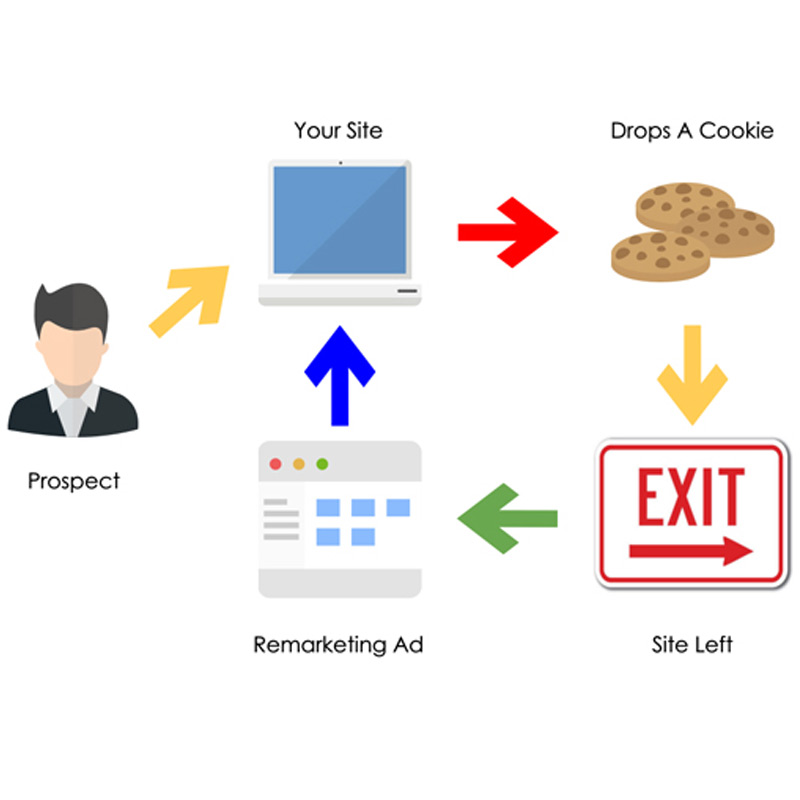
    For this, brands would have to place a remarketing tag on their website. Though it is possible to place these tags on each and every page of their website, it makes more sense to have these tags placed on certain specific pages to target a specific type of customers. For instance, the customers who have abandoned their carts, the ones who have saved the products for later or have had any sort of interaction with the website qualify better for retargeting, as compared to others. When the customers visit these pages, which have the remarketing tag, a cookie will be placed in their browser. This cookie will trigger the ads and display them on other sites where they browse.

    Brands can go a step further by using techniques such as dynamic remarketing and dynamic creative optimisation (DCO). Dynamic remarketing lets them dynamically target the customers as they browse the internet. Dynamically retargeted ads show content based on a customer’s profile, such as the product that has been viewed or added to the cart.

    DCO lets one dynamically change the elements of the ad creatives such as image, price, product description and call to action. It can also switch the ad copy that is being displayed. This increases the chances of customers zeroing in on that particular brand during the time of purchase, increasing the conversion rates.

    In addition to dynamic retargeting and DCO, there are various other techniques for retargeting. One can use cross-device retargeting, which enables displaying the ads to a specific user across multiple digital devices such as mobiles, tablets, laptops and desktops. It enables brands to retarget an ad on one device, knowing that the customer has seen an ad or visited their site on another device. Multi-channel retargeting can also be used for displaying ads via different channels like banner, video or text.

    Advertisers, however, have to be cautious. Retargeting involves the use of consumers’ data and, hence, advertisers have to consider the legal policies and data privacy regulations applicable in various regions across the globe. Thanks to recent developments, data privacy regulations are getting even more stringent in the European Union (EU) and this will affect the way and extent of retargeting that can be done in this region. The EU General Data Protection Regulation (GDPR) is all set to change the previous regulations and will impose more restrictions on companies for using the personal data without the consent of consumers residing in the EU. This can make the situation a bit tricky for advertisers. Brands will have to work their way around this cautiously.

    Remarketing has multiple advantages which will help to boost up the marketing strategy. For instance, a majority of the website visitors leave without converting. But these are valuable customers for the business, and letting them go is a huge blunder. This is where remarketing comes in. It lets brands follow these potential customers on other sites and re-engage with them. Remarketing lets brands display highly relevant ads to an interested audience.

    Instead of delivering ads to everyone, retargeting lets brands show ads only to the people for whom it is sensible. This actually helps to retain money in models like CPM, which are most commonly used. Also, remarketing is one of the best ways for customer retention. Acquiring new customers is always nice. But, it is important to bear in mind that it is also 7 times costlier than retaining the ones who are already aware of the brand.

    Remarketing also helps to create a better brand awareness and brand recall. On an average, one only gets a fraction of a second of the customers’ attention span. It is difficult to make an impact on their minds in such a tiny sliver of time. Therefore, it is crucial that brands retarget them in order to create lasting impressions in their minds. This increases the chances of them coming back to them while actually making the purchase and directly reflects on the brands’ conversion rates. It increases the campaign effectiveness and can also improve the RoI.

    Remarketing helps to target the visitors to a brand’s competitor sites as well. The ads are displayed when the customers are still in their search phase of the purchase cycle. The remarketing ads will be shown to the customers when they search a particular keyword. This also includes people who may visit a brand’s competitors’ websites that have returned results relevant to that brand’s products and services.

    Retargeting is a largely beneficial marketing technique and it is highly recommended that brands employ this in order to obtain the array advantages it brings along. This is a simple technique but offers multi-fold returns.

    public://Ashish-Shah,-Founder-&-CEO.jpg

    The author of the article is founder and CEO of Vertoz. The views expressed here are strictly his own and Indiantelevision.com may not subscribe to them.


    Also Read:

    GUEST COLUMN: From Juggle To Juggernaut: Localising content for India

    Guest column: Taking Indian content to the global market

    Guest Column: The comeback of full-service agencies in India

  • Vice India raring to break into a sprint

    Vice India raring to break into a sprint

    MUMBAI: Vice India is betting big on its creative agency Virtue Worldwide, which has helped provide solutions to brands in several markets.  Among the brands under its banner are ABInBev, Samsung, Uber, Airbnb and Google.

    Now, the agency within the Shane Smith, Suroosh Alvi-founded outfit is rolling out its suite of brand solutions in India.  Among the first partnerships, it has announced, is the one with PepsiCo’s Mountain Dew.

    The collaboration will see the Vice crew follow and explore the journey of a real-life hero Arjun Vajpai as he attempts to climb Mt Kangchenjunga – one of the most difficult summits to conquer.

    “We are excited to be the first to work with Vice India, that aims to be the vehicle and voice for the Indian youth. This partnership represents the convergence of two brands coming together to tell an inspiring story of courage to millions of young consumers across the country,” says Pepsico India associate director –Mountain Dew Naseeb Puri.

    Adds Vice India chief executive officer Chanpreet Arora:  “We are happy partnering with PepsiCo on one of our first content pieces in India so that the stories we want to tell reach out to the country with the help of one of India’s biggest and most recognisable brands.”

    Arora, along with head of content Samira Kanwar, has been working on roping in more than 40 young journalists, editors, producers and creatives in India to focus on content production, editorial, creative services and content distribution. The focus, according to a Vice India release has been to put in place “a local, young and experienced leadership team, deeply embedded in the culture of India.”

    She hopes that other brands will sign on with Vice India, which is being positioned as a full-scale media company with content at its centre and a multi-platform distribution plan – producing scripted, film, news and culture content from India for television, SVOD, OTT and digital platforms. The launch date is planned for April, and the teams in both the cities have been working at a frenetic pace to get things up and running by D-Day.

    Points out the Delhi-based Arora: “We are committed to building a company that speaks to a generation that is defining today’s cultural conversation in India and that is based on values of empathy, equality and inclusion. All our decisions, including choice of partners, must reflect this core belief.”

    Vice India’s planned local content will span conversations across topics like food, music, sex, identity, nightlife, arts, politics, literature, and comedy, showcasing the realities and diverse aspects of India without conforming to the boundaries set by multiple languages or cultures.

    Reveals the Mumbai-based Kanwar who is spearheading all the content offerings that Vice will dish out: “Content sits at the centre of everything we do. We hope to create content and experiences that matter to India’s youth irrespective of the language or regions we come from. Vice India will be a platform for young people to speak up, be heard and also feel at home about their own identities and ideas.”

    Adds Vice CEO Asia Pacific Hosi Simon: “Vice India’s goal is to be deeply locally relevant for youth across all parts and cultures of India. We are very thankful for our partnership with The Times of India, led by Times Bridge. Together, we have architected as ambitious a launch as Vice has put together anywhere in the world.”

    The Times Group investment arm Times Bridge CEO Rishi Jaitly, highlights that Vice India is poised to delight millennial and GenZ audiences across the country from day one. Says he: “The stories and experiences produced by Vice India will engage youth culture here in a manner not previously seen. We’re proud of our team and look forward to a breakthrough 2018.”

    For Vice globally, one of the big changes that happened earlier this month was the elevation of Shane Smith as executive chairman from CEO and the stepping in of former A+E Networks CEO Nancy Dubuc as his replacement. A&E was one of the earliest investors in Smith’s vision for Vice.  Smith was kicked upstairs to focus on content creation and forging strategic deals and partnerships to grow the company. 

    Also Read :

    Chanpreet Arora appointed CEO of Vice Media India

    Vice Media to launch Vice India on April 2

    Vice Media to build largest OTT platform, expand to 80 markets by early ’18