Tag: advertising

  • Covid19’s impact on the advertising & marketing world

    Covid19’s impact on the advertising & marketing world

    MUMBAI: The deadly Covid19 has put every country in an alarming situation with the economic impact of the pandemic disease being immediate for certain industries.

    To understand the effect of this global health crisis on the advertising, marketing, and consumer durables indiantelevision.com spoke to industry experts. They think that this crisis will have large-scale disruption in the coming months. They are of the opinion that the ad industry will be tremendously impacted as the two most important factors for advertising, product availability and consumer sentiment, are both headed south.

    “Large-scale disruption is coming and the real impact is to be seen in the coming months. For one, on a global scale, events are being cancelled as a precautionary measure and this will impact the B2B marketing space. The impact of events and conferences is big on the marketing services industry and not so much the mainstream advertising or social media advertising industry. However, from the mainstream perspective, it's an opportunity to magnify reach and brands will jump to use this to spread public service messages veiled with their brand connections,” says Socxo CMO and program head Ajit Narayan.

    According to Narayan, there will be supply shortage as many of the Asian suppliers and more Chinese suppliers have already started pulling back on raw material and other equipment needed to complete the product. Without products to supply, what will be advertised?

    Additionally, there will be buying postponement by consumers and a recession like behaviour which nobody anticipated will come so fast.  The sentiments are already echoing in the stock markets.

    Sharing the same views Godrej Appliances business head and executive vice president and CEAMA president Kamal Nandi said: “The coronavirus attack had a negative impact on consumer durables sector due to its dependency on imports from China – be it for finished goods or components. A price increase of up to 3 per cent for consumer durables, such as televisions sets, air conditioners, refrigerators, and microwaves is anticipated from March 2020 onwards. It mainly contributed to the short supply of components and finished goods due to Coronavirus outbreak, apart from the duty increase on certain components like compressors and motors and in some cases on finished goods.”

    The ad business may take a hit in the near future as any health-related problem always lowers the market sentiment. “The Coronavirus is a big one given the huge impact it has on China and its spread across many countries. It adversely impacts business given China has millions of dollars of exports and this affects the world markets The stock market dip has a negative impact on the market and businesses. The first thing that gets affected is brand advertising, still seen as an expenditure. In a low sentiment market mostly the essentials get purchased and indulgence has to wait for better times,” echoes Havas Media chief executive officer Anita Nayyar.

    With more than 4000 deaths, borderlines being shut and life at a halt there’s still so much we don’t know. In this scenario, media plays a pivotal role in providing correct information without blowing it out of proportion. This is the hype of panic which needs to be controlled.

    Meanwhile there are necessary steps brands can take to manage Coronavirus crisis. Narayan says, “Brands will get recognition for active steps they take as precautions and not the typical advertising at this juncture. The trend of remote work which was very slow is gaining momentum now. This could trigger a pivot in the real estate industry as the towers of offices could get impacted without physical office presence needed. This is especially true for the tech industry where it's already finding fast adoption.”

    He further adds, “If the businesses find their productive rhythms through remote work, the question that might arise would be one of reducing office space. Which is already a buzzing topic in global markets. Additionally, business owners need to proactively take steps to engage with mature information and fact dissemination among employees. Take action against false information and help employees get through this tough time.”

  • Are jingles still relevant in advertising?

    Are jingles still relevant in advertising?

    MUMBAI: Chances are high that one might not remember their partner’s phone number but have a by-heart recall of every single word of their favourite ad jingle. Music is an integral part of everyone’s life. It invokes both emotions and nostalgia. Probably that’s the reason that brands, since ever, have been leveraging music and background scores to make their adverts more appealing.

    They have given us some iconic jingles as well, filling a big part of our childhood memories.

    After all, who doesn’t remember the iconic Vicco ads, Airtel’s ‘Har Ek Friend Zaroori Hota Hai, or Pepsi’s ‘Yeh Dil Maange More’ anthem.

    “Music is the lubricant that allows hard-sell messaging to slip smoothly into public consciousness. It persuades, coaxes, cajoles and slips into you what it would otherwise have to say up front,” says Dentsu Aegis Network India creative chairperson and Taproot Dentsu co-founder Agnello Dias.

    Havas Media Group CEO India South East Asia Anita Nayyar adds, “Love for music is an age-old phenomenon especially given our Bollywood roots. Music had always played a big role whether it is in advertising, in films or in any other genre. India has a rich heritage of music gharanas. You will always find shows like Indian Idol or Sa Re Ga Ma or music concerts doing well. There is a soulful connection always and a lot of expressions. Music had always connected people across boundaries. Hence its presence adds to commercial success.”

    However, as time is progressing the relevance of jingles seems to be taking an exit from ads.

    The use of jingles and music in the ads is considerably declining, though there are few good ads that are recognizable through their music like Dream 11’s signature tune or Tinder’s ‘Jaan Pehchaan Ho’ commercial. But if one notices, the frequency of such ads is less.

    According to Logicserve Digital founder and CEO Prasad Shejale, “At least on digital mediums, brands are trying their best to quickly sell their proposition to the new-age audience whose attention spans are shrinking. Also, it’s a Herculean task to create a great jingle, which has an apt message and is hummable. Further, you must be aware that not every jingle can make the cut with the audience.”

    Speaking further on the issue Nayyar said, “The advertising environment and ecosystem is constantly evolving. There are different requirements by brands and advertising caters to those needs. However, music, if catchy, becomes a differentiator, be it as jingles or be it the Britannia -ting ting tring. These days, brands are doing a song and dance sequences e.g., Pepsi with Salman Khan. Brands are trying to keep themselves relevant to the environment and the audiences.”

    As per Jingles India co-founder CEO and chief of production and execution Amit Vishnoi, “Whenever a customer is going to an agency, they go for TVC, where they already have a theme. While radio stations are not outsourcing the work. So, when the radio stations are not outsourcing they have an in-house team. More importance is given to the money rather than giving value to the money. Radio stations are not capable of creating a jingle like Humara Bajaj. Jingles are expensive and radio ads are comparatively cheaper. Big brands generally go for jingles as it adds more value to the advert. I think people who are driving the advertisement world are not putting jingles forward.”

    Additionally, if online ads can be muted  how will it benefit the brand.

    According to Nayyar, audiences are evolving and it is no longer a one-way communication. Attention spans are reducing. Interruptions are not welcome. If one finds an ad intruding and there is an option to skip, one will do so. That’s why today the challenge for advertising is to deliver the brand message in three to five seconds especially online.

    “It’s definitely a challenge. Most of the time these days, the audience watch things putting in on mute wherein they are sneakingly smacking the content. With the mute mode, I believe, you lose the essence of the whole story. There are just a few things you can do by playing with subtitles, etc. It is important to shake the users from the slumber and make them unmute the videos in creative and engaging ways,”added Shejale.

    Relevant or not, brands are still trying their hand at creating jingles that resonate well with their brand identity. Here are some of the most catchy ones:

    Dream 11

    A cricket-based digital sports gaming platform Dream 11 is known for its quirky music.

    Tinder

    Tinder’s advert Jaan Pehchan Ho featuring a young girl will make you groove instantly. The ad created by advertising agency BBH India features actor Kavya Trehan. 

    Coke: Tum Jo Mil Gaye Ho

    This version of the Mohammad Rafi’s song was perfectly curated for Generation X. The campaign starring Bollywood actors Alia Bhatt and Siddharth Malhotra made it more impactful.

    Kingfisher

    In the year 1996, Kingfisher’s partnership with West Indies cricket team gave birth to the iconic jingle ‘Oo la lala le o’. Since then the tune is synonymous with the King of Good Times. 

    Idea Cellular

    Paving its way into the cluttered television advertisements, Idea Cellular’s “Hum Nahi Banege Ullu Aaj Se…” instantly became a singing anthem. The ad conceptualised by Lowe Lintas depicted how users can evade unfair situations and people in life. So, ‘Idea Internet lagoing, India ka no ullu banoing’.

    Seagram Imperial blue

    Imperial blue’s ‘slice of life’ advertising strikes a chord with everybody. The ‘Men will be men’ tagline is the brainchild of advertising biggie Ogilvy & Mather

    It is successfully winning our hearts for more than two decades. Adding to the charm is late Jagjit Singh’s beautiful rendition “Pyaar ki raah mein chalna seekh…” that echoes in the background.

    Airtel Har Ek Friend Zaroori Hota Hain’

    Airtel’s ‘Har Ek Friend Zaroori Hota Hain’ campaign released in 2011 was created by the advertising agency Taproot Dentsu.

    Humara Bajaj

    Bajaj’s ad campaign called “Hamara Bajaj” released in 1989 had set a new benchmark for the Indian advertising world.

    The ad made it clear that consumers can be a hero too. The lyrics ‘Buland Bharat ki Buland Tasveer’ shows how the brand highlighted the pre-liberalization state of India. The ad is conceptualized by Lowe Lintas.

    Nerolac’s Jab Ghar Ki Raunak Badhani Ho

    Shah Rukh Khan’s energy in this campaign is so infectious that you cannot resist singing along with him. The campaign is created by creative agency FCB Ulka.

    Lifebuoy’s Tandurusti

    While  Lifebuoy has significantly moved from its tagline tandurusti to kitaanu, the jingle still makes us nostalgic.

    “Imagine the popular ads like Cadbury’s “Kuch khaas hai zindagi” or Old Spice’s “The man your man could smell like” whistle or Amaron battery’s “Last long, really long” ad without music. Music is definitely the soul of ad films. When consumers hear it, they immediately bond with the brand message. Hence, next time when they see that brand’s product, there is a very high probability that they will buy it, giving you a higher chance of conversions,”concludes Shejale.

  • Sports, IPL and the game of advertising

    Sports, IPL and the game of advertising

    MUMBAI: Follow social conversations and you will be led to believe that it is politicians, Bollywood stars, movies, Indian fictional television shows and characters that create the most buzz online and offline. Clearly, fans are in abundance, and many go as far as to imitate their heroes and heroines on screen and TV. But that’s only on the surface.

    Dig deeper and you will discover that there’s another genre that draws as many conversations as all of them combined, and that is sports. Yes, arguments can be varied that we are not a sports-loving country; look at our decades-long abysmal performance in most competitive running sports the world over. Look at how we go overboard and celebrate when we win just a bronze medal at the Olympics by showering all kinds of national awards on the medal winner!

    And in sports, there’s one segment that occupies around 90 per cent of all social media chatter. And that is cricket. Love the game or not, you are instantly prompted to the online noise; there’s so much of it out there. Ignore it at your own peril.

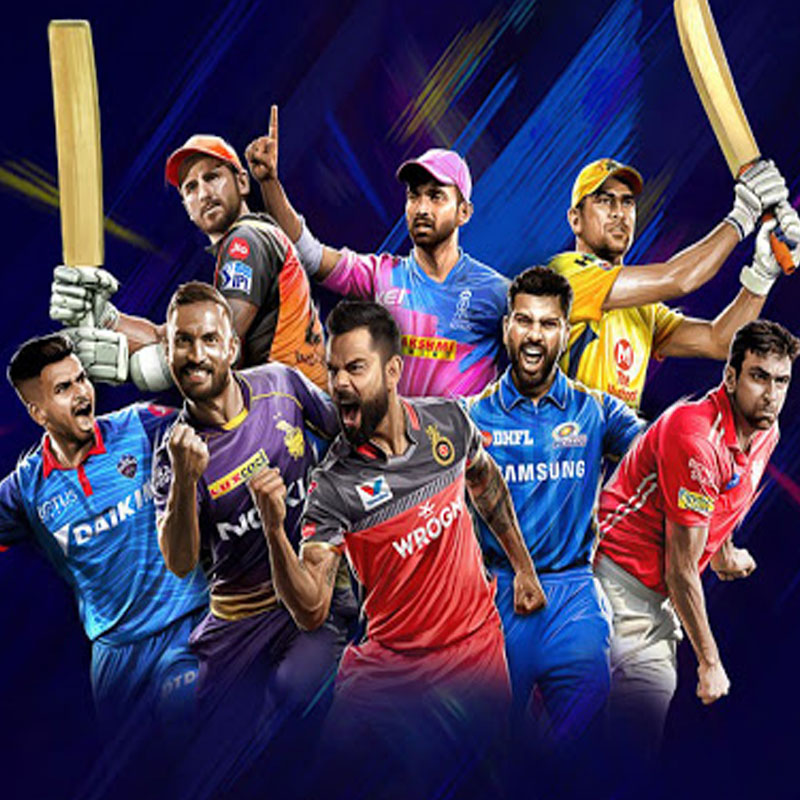
    It is difficult to deny that sports properties are extremely vital for advertisers. Media spend in sports has bloomed over the years, having been boosted by major cricket tournaments. IPL undoubtedly has transformed the business forever. On the other hand, non-cricket tournaments like Pro Kabaddi League, ISL, and Premier Badminton League are also witnessing slow but steady change.

    According to a report from ESP properties, over the three years from 2015 to 2018, advertising spends on TV have more than doubled on sports properties, from Rs crore ($270 million) to Rs crore ($556 million), at a CAGR of 29 percent. Although numbers are not available for 2019, industry experts have stated ad spends on sports grew thanks to ICC Cricket World Cup and the IPL.

    The report also added that 85 per cent of all adex in sports happened on TV in 2018. Hence, the winning combination of TV and live sports is prompting media planners to prefer sports compared to GEC, movie or news. One of the prime reasons here is definitely the high reach and the immediate impact. Although sports as a segment is an expensive proposition, the high viewership attracts the brands. Special product launches and brand campaigns around sport events are also critical for them. Multiple brand associations during IPL indicate advertisers’ love for premium sports events. 

    For IPL 2020, a large array of brands such as Vivo, Altroz, fbb, Dream11, Paytm, PhonePe, Amazon Prime, CocaCola, Asian Paints, Fortune, Maruti Suzuki, CEAT, KAMLA PASAND and Royal Challenge have jumped on the ‘brand wagon’. The variety in various categories of brands also breaks the myth that only deep-pocket players afford to buy premium sporting properties. Depending on their budget, brands can place their ads either on television or digital media platforms and associate in several ways.

    According to Pitch Madison Advertising Report 2020, total Adex is expected to move up to Rs 74,650 crore, an increase of Rs 7,048 crore. The report reaffirms the ability of pole events to attract advertisers even during a “not-so-high growth” year. The report expects IPL and ICC T20 World Cup to pull in substantial monies this year, too.

    Uncertainties still remain at the ecosystem level given the changes in new tariff order, overall economic condition which is likely to pick up in H2. The report adds as pole properties like the IPL, ICC T20 Cricket World Cup and Hindi GECs’ premium shows are likely to get a fair amount of advertiser attention even in difficult times; these programmes will command higher rates than last year.

    It may intrigue us why the industry is being so bullish on sports. For most of the Indians, sports, especially cricket events, bring the entire family and peer groups together in front of TV. The battle of remote within the family stops when an exciting match comes live on TV. There may be ten GEC channels with a number of shows and a large number of movie channels offering exciting content, making the risk of audience fragmentation higher. The audience is much more cluttered for premium sports events like IPL which unifies the fragmented demographic of the country.

    “In India, around 80 to 85 percent of money spent on sports is spent on cricket while many other leagues have come in a larger scheme that adds up to the other 15 per cent. So, their relevance is less. Therefore, in India when you say sports, unfortunately even now everything equals to cricket. And that’s a very high engagement medium which has got very huge involvement of the audience making it a great platform,” Dentsu Aegis Network APAC CEO and India chairman Ashish Bhasin says.

    With turns and twists in scripts, change in characters, the audience retention may become a challenge in the case of long-running shows on GEC. But live sports concentrates attention on exciting twists happening during a match in a limited time. During a long-running cricket match, as the audience are less diverted to elsewhere, brands are provided with more integration opportunities, a luxury no other sport event can offer. The 45-second, but frequent, breaks are bonanzas for brands as viewers don’t skip channels typically.

    “In India, sports, fortunately or unfortunately, is almost equal to cricket. Something like IPL stays with the nation for 40 days. It is probably the biggest property on Indian television. Brands that do great are those who manage to integrate various touch points with consumers together. It is not only about putting ad spots on television but having a digital strategy. You cannot expect people to have activities only on pubs or restaurants or bars. So, whoever does it in a well-synchronised manner sells best,” Bhasin adds. One of the senior executives from a leading brand also comments that awareness, audience engagement and brand recall go up immediately after IPL match.

    Asked about the properties they plan to buy in 2020, a media planner from a well-known media agency names IPL. While he mentions about a few reality shows like Big Boss and KBC, he also talks about other sporting tournaments such as ICC Women's T20 World Cup and Pro Kabaddi League. According to him, there is another reason to look at the sports genre than others. He asserts that media planners prefer sports for male target group as it garners higher men’s viewership compared to other genres. In addition to that, he adds, TV will be preferred while buying a sports property. 

    Another executive from a leading advertising agency also mentions ICC T20 World Cup and ICC Women's T20 World Cup while talking about the properties they are looking at for 2020. He also adds that other niche games like badminton and Kabaddi are emerging but cricket takes up most of the advertisers’ budget till now.

    “IPL particularly is a format which gets audiences across age groups, geographies and sectors. Earlier, sports mainly used to be male-dominated fiefdom. Now, IPL, because of its entertainment factor, has converted itself as a family programme. So, it is a great way for a brand to get national recognition overnight. That is why it is a good platform if you want a quick reach,” Bhasin adds.

    The year 2020 looks more exciting for marketers looking at sports. Cricket tournaments like IPL, Asia Cup, Women's World Cup and T20 Men's World Cup are leading the chart along with Olympics and Pro Kabaddi. 

  • The art of advertising – Things you can learn from ‘Bull’ TV series

    The art of advertising – Things you can learn from ‘Bull’ TV series

    Pictures have always been worth a 1000 words. Thus in an era where words are limited to the number of characters, content limitations and complexity in translation; advertising has become a powerful tool in establishing connect with the consumer. The ultimate goal of advertising is either promotion or awareness; what sounds like a simple task is a difficult challenge many brands face today – creating stickiness for the brand is not easy. Advertising doesn't lay in mere collaborations of words to create content but it lies in simple & bold creativity that is visually rhetoric and can make people think and relate to the brands/products.

    In my 23+ years of storytelling journey, I have come to a conclusion that the only way any brand would be able to establish a connection of any scale with the consumer is when they have stories which provoke emotions. Using a fusion of words and graphics without a story would only state the messaging without any meaningful impact. Advertising is art if mastered and has the potential to create valuable stories. Perhaps one can always refer to an advertising manual for better results but that’s not enough. It’s about looking differently at things that are routine. It’s about bringing alive the creativity from the mundane.

    Very recently I came across a TV series called Bull starring Michael Weatherlywhich largely highlights the results of combining human psychology, human intuition and high-tech data to learn and understand the thinking mechanism of jurors, attorneys, witnesses, and the accused to make them tick. This made me think that advertising can become a seamless tool if the method/techniques used in the show could be implemented in the current advertising environment. Listing down 3 rules that I think could do marvels if implemented right way in the Indian advertising industry.

    Rule #1: Your Consumer is Your Enemy

    It will sound awful but there is a science behind following this rule. Ever considered convincing your enemy to buy your product, the answer most-likely is never. So when you look at the toughest consumer as your target to crack, you need to create a pitch that is tempting enough even for your enemy. If a brand manages to convince the enemy to buy the product, that definitely speaks oodles about the idea’s strength. The secret lies beneath a 1000 failed approaches and 1 successful messaging.

    Rule #2: People Love Things That Are Relatable :

    Quite a few people complain about the media being too cautious and them showing similar content repeatedly. There is a very good reason for this. Bolder content increases the risk which could provide increased rewards or no rewards at all.  People who watch this show should be able to find quite a lot of faces as well as plenty of stories that feel familiar to them. Using a similar approach in advertising; creating advertisement which makes people comfortable making them recall a similar scenario would establish an immediate connect with the brand ensuring higher recall.

    Rule #3: Using Tech to Create Roadmap

    Bull is largely based on a premise where people can predict people with remarkable accuracy by using a combination of data, tech and a few other technologies. This results in a pinpoint roadmap of what will work and what will not work. Considering an approach like this will make brands understand consumers’ POV in a more refined manner which will later help them in creating products that will work with a large set of consumers.

    The communication would have become quite simple if there was Dr Bull in every agency. Dr.Bull would have helped the agencies in creating that out of the obvious idea that would penetrate the minds of the consumer establishing an instant connection. Although the Art of Advertising doesn’t come with the manual, these rules can always make the approach towards consumers better and the overall communication seamless.

    (The author is, co-founder and managing director, Makani Creatives. The views expressed are his own and Indiantelevision.com may not subscribe to them.)

  • The psychology behind the making of TV ads vs digital

    The psychology behind the making of TV ads vs digital

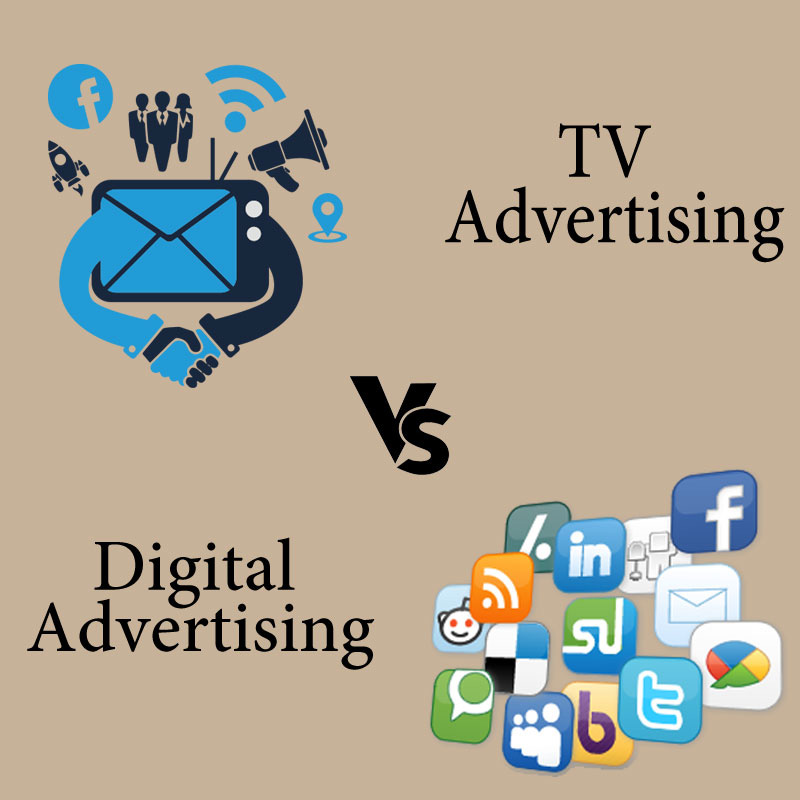
    MUMBAI: There was a time not so long ago when TV was the main medium to consume content. All that one had to do was create a TV commercial and voila! It was watched by millions. But recently, more and more youth and millenials are gravitating toward platforms like from Facebook to YouTube to Twitter to Whatsapp to Tiktok to Instagram to OTT, to consume video. How are brands engaging with them? What format of video ads are they creating to communicate their brand message?  And have TV commercials evolved in their journey from TV to OTT and digital?

    However, according to some industry experts, there is just a shift in the trend and format of advertising. In earlier days TVCs were the only content that was created but today it is much beyond that. Today it is more about creating ads for different platforms and of different durations rather than creating one single commercial.  Experts also believe that the slump in the economy has resulted in the decline of creating long format advertisements.

    Says Jigsaw Pictures founder and creative producer Rajnish Lall:  “I think there is a bit of similarity in creating both a TV and digital commercial. The difference is not about reach. Both are catering to a product or a brand and are done keeping in mind the brand proposition. People usually make a brand film which is 59 seconds so that it could also be put on Instagram. Content that we make is usually three and five minutes, depending upon client requirements.  Television costs a lot more. And to run on Facebook, WhatsApp or Instagram or any other digital platform it’s much more reasonable and people go for the longer version of it. Having said that, both the platforms are representing a brand and have more seriousness about it. When it comes to making a TVC the client is more precise about the output. The production quality cannot be down it has to be good, very good or great. However, in digital, people could make content in all sorts of budgets.”

    According to Havas Media Group CEO India and South East Asia Anita Nayyar, TVCs shot for television are normally for 30 seconds to 60 seconds and when they want to make an edit to run on television 60 sec is pretty long. Generally, ads are shot for 60 seconds so that it could run on cinema. When they run the campaign for other platforms they have the adaptation of 30 seconds to 20 seconds to 10 seconds depending upon the storyline.

    She adds: “There are two ways of putting a commercial on YouTube where you can do a long edit of a commercial that runs for one or half a minute but whereas when you look at advertising on digital media the ads are pretty short because according to reports the average attention span is three to five seconds. The creativity and the thinking in digital are done on that basis.”

    "Unlike a TVC which is based on a traditional story arc – beginning middle and end; the making of digital ads involves adapting to the media platform format and context,” points out Madison Media Sigma CEO Vanita Keswani. “The digital video creatives span from five to six seconds short format videos as well as long format 60-120 seconds storytelling ones. Tech innovative creatives on digital have a two-way communication with consumers" She adds.

    The advertising costs related to producing content for TV is expensive as compared to digital format. In fact, as per the reports of Magna, the research arm of  IPG Mediabrands, digital ad spending in 2017 reached $209 billion worldwide that is  41 per cent of the overall market. While television brought in $178 billion which tots up to 35 percent of the total market.

    If one were to estimate about 9 per cent of that going towards buying space and inventory on the different media platforms, that leaves us with digital ad production totting up to around $20 billion worldwide, whereas TV commercials production spend would be around $17 billion. The figures would be much lower for India, though as spends on creative and TV are much lower here compared to more developed markets in Europe, the US and Latin America.

    Says an ad industry veteran:  “A large part of the production budget is kept aside for paying celebrities as endorsers (even as high as 25 per cent sometimes) as lazy creative’s from advertising agencies and not savvy enough marketing executives look for short cuts to create their communication. My estimate is that almost 30 per cent of TVCs are relying on celebrity endorsements. What this means is that the quantum of TVCs being made by a brand is falling each year or if they want to produce the same number, they have to slash the production side of the budget,” says an industry expert. And this is being felt even more in these tough economic times where brands have slashed their spending. There is a huge squeeze on TV commercial makers.”

    Lall echoes this. “Before the digital era, they used to make two to three films in that budget. Now what is happening, the budget hasn’t gone up because economically we are a little down as a country so things are not taking off. The client has limited money, his expectation is not to make two or three films but to make eight films. So, the money you invested in making a television ad has gone low.”

    He also points out to another problem. According to him, advertisers are anyway even today more inclined towards putting aside higher budgets for making TV and cinema spots as compared to digital, though he would like this to change.“Normally you will not see a good quality digital film because of the lower budgets. Digital spots can be shot on any kind of camera, it could be on their phones as well. So basically it can be done at a very basic budget. So the output is not great. However, very established brands don’t mess around it because they are conscious and particular about every piece of communication they are providing to the brand. It should match the brand's personality, image and aura in the market and in the mind of the consumer also which the upcoming brands are not paying much attention to.”

    Says Nayyar:  “If you have a long format TVC they are normally done on a high budget which is done for Rs 1 crore to Rs 3 crore and Rs 5 crore. Whereas, in digital ad creation they usually don’t look for a long life piece of communication. While for television you produce one commercial for a longer period of time and for a digital you make multiple commercials. I don’t think so for digital money spend is as much as spent on creating TV or cinema commercials they are long format. TV spots also get adapted to suit digital. In digital you have to look at short duration, collaborations, what will grab the attention of audiences within the span three to five seconds as they have been provided with the option of skipping ads.”

    Keswani’s view is that brands and agency creatives should reduce their dependence on celebrities in TVCs. Says she: “Celebrity mass advertising is not as authentic, relevant and relatable today. The authenticity is being questioned. What works better is turning the spotlight on consumers in TVCs. Ad agency creative’s and brand managers could consider having real and relatable faces in TVCs, which will help the masses connect with the brand and its messaging.”

    “What it will also do is free up budgets towards creating a greater number of TVCs or putting in more VFX, animation, or a greater number of locations or better sets or bringing in better directors and videographers so that more impactful ads can be created for both digital and TV,” says the anonymous executive quoted earlier.

  • Feature-based advertising won’t work with tier 2, 3 consumers: itel mobile’s Goldee Patnaik

    Feature-based advertising won’t work with tier 2, 3 consumers: itel mobile’s Goldee Patnaik

    DELHI: Working towards democratising technology in India with its range of sub-5k smartphones with all the latest technology led to itel being named as the number 1 smartphone brand in the less than Rs 5K price segment for offline channels in the Counterpoint Research report for Q3 2019. The brand, which is just three years old in the Indian market recently touched the 5-crore user mark in the growing segment, as well.

    Indiantelevision.com got in touch with itel business unit head of marketing Goldee Patnaik to understand the strategy that is driving this magnificent growth of the brand, the prime TG for which resides in tier 2 and tier 3 cities.

    Patnaik shared that the brand diversifies its target audience in two major chunks—the minimalists, who are feature phone users and are looking towards buying their first smartphone, and the aspirers, the existing smartphone users willing to upgrade to a better version to have an advanced experience.

    “In both groups, the aspiration quotient is quite high. They want to look good when holding a mobile. It has become a status symbol,” he elaborated.

    The brand is trying to satisfy those aspirations of the new smartphone users who expect to enjoy the experience of HD screens and AI-enabled cameras within their budget.

    “The entire brand philosophy is based on democratising tech. For example, our A46 flagship model has a full HD screen, AI dual camera, text translation, etc., all premium features below Rs 5000. We are taking care of the trends and technological advancements at affordable prices,” Patnaik explained.

    But the brand is not using these features in its marketing collaterals to drive sales. Patnaik shares the target audience they are catering to do not always understand what the technical terms mean and therefore while creating ads, they focus on the benefits of these technologies.

    “Feature-driven communication is of no use. Our current tagline is ‘Har Haath Mein Jaadu’ (magic in each hand). For our consumers, AI is almost like magic. Facial recognition and fingerprint sensor are magical to them. That’s why we market the benefits of these features.”

    The brand is focusing on reaching out to the regional audiences in an emotional manner as well. itel is working on a robust localised marketing strategy. They are advertising in 9-10 regional languages including Marathi, Tamil, and Kannada. There is a keen interest in utilising all the regional festivals for promoting the brand.

    “At itel, the brand emotional quotient is very high. We invest in a lot of BTL and on-ground activations. We advertise during local festivals and events. For example, earlier this year, during the Kumbh Mela we created watch towers and kiosks. And this was done with not just the intent of branding. It was to help people and avoid stampedes,” Patnaik said.

    He added that all the festivals like Pongal, Ganesh Utsav, Bihu, Durga Puja, etc., are opportunities for itel to increase brand awareness as these are the times when people look for good products as well as value deals.

    itel is also very particular about its in-showroom experiences and out-of-home on-ground activities. Patnaik notes, “The consumer in our segment doesn’t come to a showroom with a brand or features in his mind. He is completely reliant on the experience. He looks at the models, the packaging, and also trusts the salesperson, maybe. So, it is important for us to maintain a strong presence within the showrooms.”

    Another important aspect of itel’s marketing strategy is its focus on sports and entertainment. It was the official sponsor for UP Yoddha in Pro Kabaddi League and has run two successful campaigns on TikTok that collectively gave the brand more than 11 billion video views and helped it reach more than 197 million people. Another campaign on content app Helo led to traffic of 3.5 lakh people landing on the official site within a day.

    Patnaik thinks that this is because consumers are attracted to content-driven marketing. “Consumers, irrespective of tiers, are looking out for differential content,” he said.

    He is looking forward to using the same trend to the brand’s benefit in the coming year as well. He sees his consumers as the next generation of influencers for itel. The brand will be running more consumer engagement programmes.

    Patnaik elaborated, “In 2018 when we came to the market, our messaging was ‘Full Hai Wonderful’ as we were equipping the user with all the latest technology. In 2019, we moved to enable them with ‘Har Haath Mein Jaadu’. In 2020, we are looking forward to moving a step further and give them the ambition to lead the change, use the magic in their hand to express themselves better.”

  • Hair care sector joins top 5 sectors advertising on TV in Q2’2019: TAM AdEx

    Hair care sector joins top 5 sectors advertising on TV in Q2’2019: TAM AdEx

    MUMBAI: Personal Care/Personal Hygiene products became the top sector to advertise on Indian television in the second quarter of 2019, recording a growth of 23 per cent in ad volumes, a latest TAM AdEx data reveals. It ranked second in the first quarter, commanding 18 per cent of the ad volumes, which grew to 21 per cent in the second quarter.

    Food & Beverages, despite recording a growth of 5 per cent in ad volumes, slipped a spot to rank second in the second quarter of 2019. It also recorded one per cent loss in ad volumes in the quarter.

    Hair care joined the list of top performers on number 5, with a 17 per cent increase in the ad volumes as compared to q1’2019. It had a six per cent share of the ad volumes.

    The top three categories to advertise on television during quarter 2 of 2019, from the personal care sector were toilet soaps (34 per cent), toothpastes (15 per cent), and perfumes (10 per cent).
    In food & beverages, the top three performing categories, based on ad volumes on TV, were milk beverages (12 per cent), chocolates (9 per cent), and aerated soft drinks (7 per cent).

  • Content choice drives Indians’ subscription to multiple OTT platforms

    Content choice drives Indians’ subscription to multiple OTT platforms

    MUMBAI: OTT subscription fatigue is a myth in India for now. While subscribing to multiple OTT services, Indian subscribers rely on content as the driving force. There are three primary reasons for this – demand for more content options (42 per cent), satisfying the content needs for an entire family (42 per cent) and all content not being available on one single OTT service (42 per cent).

    “Our research findings suggest that the online TV consumer in India sees the value in TV content whether they are paying with greater focus and attention, or with their money,” says Brightcove India sales director Janvi Morzaria.

    The study run by Brightcove polled 9,000 participants across nine countries in Asia, including 1,000 consumers in India. It also revealed that 79 per cent of respondents welcomed the hybrid model of OTT. The report said that 35 per cent of respondents are open to a reduced monthly subscription package that serves ads depending on the price, whereas 44 per cent said they would definitely sign up.

    25 per cent of Indian respondents wants to pay nothing and watch ads as a trade-off to consuming content while 25 per cent elected to pay a lower fee with limited ads. Just 14 per cent agreed to pay a higher fee to be free from ads and 14 per cent would like an option where they can customise their price and ad packages. 37 per cent of respondents wanted to pay less than $1 per month, 27 per cent would pay $1-$4 per month, and 16 per cent would pay $5-$9 per month.

    “Indian consumers do not mind seeing ads as part of their shows, especially if they are getting a deal. 79 per cent of Indian respondents stated that they are open to a hybrid plan of ad-funded SVOD that comes with a reduced price,” she added.

    It also emerged that offline downloads, access on mobile, and using less data on mobile were the top three OTT service features most wanted by Indian consumers. 22 per cent of Indian respondents found two ads as an acceptable advertising load per ad break and 13 per cent were open to three ads per break. In addition to that, 67 per cent of respondents were receptive to the idea of shoppable TV.

    “OTT service providers should take advantage of this preference and make the advertising experience engaging while limiting ad loads per break. Consumers are now willing to watch ads if they have the option to subscribe to a reduced price plan,” she commented.

  • Ad industry not kept pace with consumer and digital changes

    Ad industry not kept pace with consumer and digital changes

    MUMBAI: The last decade has been disruptive for media, advertising and marketing with the evolution of digital. However, Sam Balsara, the veteran in advertising industry, feels that media buying has not been able to keep pace with that change. He also said that the currency that really should be looked at from marketing point of view is cost per unit of brand outcome rather than CPRP or CPT.

    Throwing light on the magnitude of the change, Balsara said that the advertising market has tripled in size in the last ten years, moving up from Rs 20,000 crore to Rs 61,000 crore in 2018. He also added that the growth came on the back of digital while the share of the digital medium itself has reached 19 per cent from merely four per cent ten years back. According to him, digital will replace print as the second largest medium in the next two to three years.

    “The only thing that has not changed, I will say regretfully, is the way media buyers and media agencies buy media. It has, probably, not changed as dramatically as the media scene has,” Madison World chairman Sam Balsara commented in a session “Advertising, Media, Marketing: #10yearChallenge” on the third day of FICCI FRAMES 2019 while highlighting all the changes in the last decade.

    Ultratech joint executive president, marketing head Ajay Dang also expressed his concern on the same. Dang seemed sceptic about whether the industry, including creative agencies, marketers, content generators, has been able to keep pace with audience evolution. He also expressed his concern about the industry’s understanding of the needed change in storytelling and measuring the reach of the story to the final audience.

    “We are constantly in a phase of catch-up, we are falling behind. That’s my take. Because of our lack of putting it all together, at the end of the day our return on investment that we are supposed to deliver to our organisations is suffering,” he commented.

    Balsara also spoke on the “democratisation of advertising”. While the top 50 advertisers accounted for as high as 43 per cent of total adex in 2009, the number came down to 35 per cent last year thanks to the huge growth of regional brands.

    “We have to look at efficiency, effectiveness and innovation. I think today we are in a scenario where there is democratisation of data as well and data is threatening to become a deluge to drown companies if they do not do something about it. That’s largely becoming a priority for us to take up now,” Marico media and digital marketing head Ankit Desai said.

    BARC CEO Partho Dasgupta also pointed out the lack of talent in terms of media analytics tool. While sectors like BFSI and telecom have data analytics talent but in media finding people who understand the media domain and the big data tools of analytics is a big problem.

    It was also noted in the session that the FMCG brands are ever-inclined to TV despite the rapid growth of digital growth. On the issue of bias towards TV, experts think as the communication journey of many companies has been built around the medium over all these years, TV still plays the role for audience aggregator for these brands. However, it has also been said that the shift towards other mediums like digital has started.

    Viacom18 Hindi Mass Entertainment & Kids TV Network head Nina Elavia Jaipuria concluded the session calling for unity among all three parties including the media owner, advertiser and the media agency. She said that there is a need for all three to come together as the common goal is to drive market share for brands but sometimes a conflict of interest is good for the growth of the business.

  • Martin Sorrell eyes India’s untapped digital potential with S4 Capital launch

    Martin Sorrell eyes India’s untapped digital potential with S4 Capital launch

    MUMBAI: Advertising giant Martin Sorrell, who was made to leave WPP last year and later announced his next new venture S4 Capital, has made a new revelation. The company’s India operation is soon to be launched having found the country head. Sorrell made the announcement on the sidelines of the IAA World Congress 2019 that’s taking place in Kochi this year.

    The business will commence later this week starting off in the digital content side with MediaMonks, a company it acquired last year for $350 million. First offices here will open in Mumbai and Bengaluru. The country, according to Sorrell, has a vast untapped potential because of its inclination to traditional media and still growing digital side. “With the growth of fake news and political debates on platforms like Facebook and Twitter, there’s an issue of privacy which has worried the customers. Transparency in data is important in India,” said Sorrell.

    Though lagging in digital media, Sorrell said, “India will be the most populous business because of the talent, quality of people and high tech capabilities.” Media industries today are in a much better place than 10 years ago. “Our biggest clients are tech. Our recruits are really excited about technology. We are more attractive to the population than ever before,” he added.

    40 per cent of client budget today is in the digital medium with Facebook, Google and Amazon being dominant players. In India, WPP has close to 50 per cent of market share.

    S4 Capital’s focus is on data, digital content and programmatic media buying.