Tag: advertising

  • Network Advertising bags creative mandate for Essilor India

    Network Advertising bags creative mandate for Essilor India

    NEW DELHI: Among India’s leading independent advertising agencies, Network Advertising has won the above-the-line creative mandate for Essilor India, a world leader in prescription lenses, following a multi-agency pitch. The account will be serviced out of Network's Mumbai office; the mandate includes all consumer-facing and partner communication across India for Essilor India. Network Advertising is best known for its path-breaking campaigns for HDFC, Jet Airways, Henko, Mahindra Lifespaces, Goa Tourism, i-Pill, Vijay Sales, Charagh Din, Vinod Cookware, among others.

    Commenting on the win, Network Advertising managing director Vinod Nair said, "Essilor India is a strategic addition to our growing clientele and this is a responsibility we feel proud to own. It was basis our ability to understand their business challenges and our sound strategic thinking that has helped us won this mandate. The win is sweeter because a global organization, with global alignments has chosen us, a 100% Indian agency, for their India business."

    Network Advertising chief creative officer Shayondeep Pal has an interesting take, "From an advertising standpoint, Essilor is unlike many other categories. Because you are communicating with the end consumer indirectly through her optician, knowing very well that the buyer is more interested in the frame, than in the lens. Having said that, both strategically and creatively, we are working on new-world insights as Indians embrace a new work culture where our exposure to screens is maximum. We hope to create excitement in a category which for some reason has believed in functional advertising."

    Speaking on the partnership, Essilor South Asia Head – Marketing Neha Sharma said, “We have decided to associate with Network’s seasoned team due to their long standing exposure to the changing advertising landscape, their creative consumer mind-set, and a good strategic approach. This will help Essilor strengthen its brand presence further. We are delighted to have Network on board with us and look forward to an enriching association.”

    Essilor is the world leader in the ophthalmic industry and prescription lenses. Globally, Essilor is committed to providing solutions to correct and protect the visual health of people. Essilor India, with its headquarters in Bangalore, was founded in 1998 and since then has been providing solutions to correct vision of Indians through their various brands like Crizal, Varilux, among others. They are the leaders in their category and have been maintaining this position in the post-Covid world with a lot of product innovations and trade programs.

    Follow Tellychakkar for the consumer facing news & entertainment

  • Chimp&z Inc announces key leadership elevations

    Chimp&z Inc announces key leadership elevations

    NEW DELHI: Chimp&z Inc, the 360-degree global marketing agency has announced two senior-level promotions. Sean Pereira was elevated to associate creative director – from creative supervisor. Aarti Maghnani has been promoted from director, finance to head of accounts & finance.

    Pereira has been with Chimp&z Inc for 5 years. In his expanded role for the agency, he will lead and guide the design team on all projects and campaigns. Majorly, his responsibilities include providing design solutions to cater to the clients' needs. With over 10 years of experience in communication design, his expertise lies in advertising, Brand Identity design, branding, print, web UI, and motion design, and is also well-versed with sound design. He has worked with brands like Mondelez, Tata Sky, DHL India, Godrej Expert, Discovery Network, UNICEF, Eurosport, PVR pictures, and Romedy Now.

    Speaking of his association with Chimp&z Inc, Pereira said, “It's been 5 years since I joined Chimp&z Inc and the journey has been very enlightening under the leadership of Angad Singh Manchanda & Lavinn Rajpal and all the talented folk I've had a chance to work with, especially my skilled and versatile team of designers. It's been a great experience to be part of an ever-growing company catering to clients from various sectors. Now with the extended scope of work, I see more opportunity to create and innovate!” 

    Maghnani has been with the agency since its inception, that is, for the last 7 years. She will now lead the finance team of the agency. She joined the company in 2013, initially only to manage accounts but has now grown to manage the end-to-end finance of the group agencies. Using her experience with Corporate Finance, Risk Management, and Strategic Planning, she has helped develop the complete financial framework of the organization.

    Sharing thoughts about her elevation, Maghnani said, “I have been a part of Chimp&z since the year of its inception and I have seen the organization grow in strength. I feel immensely proud to be a part of this incredible journey. The team’s determination and resolve has not wavered at all and I am excited to witness our upcoming collective growth. As the Finance head, I am grateful to be working with a hardworking and motivated group of individuals. Handling the finance needs of a rapidly-growing organization is never easy but the support of the team and especially the directors has been invaluable in overcoming any challenges.”

    On the announcement, Chimp&z Inc co-founder and managing director Lavinn Rajpal, said, "Sean and Aarti are amongst the strongest pillars of Chimp&z Inc and their respective departments. Sean is a creative prodigy who can never stop experimenting and curating something exceptional. Over the years he has been with us, he has successfully trained and assembled a team of designers that elevate the work Chimp&z Inc does. Aarti is a thorough professional who has been with us since our inception. Both Angad Singh Manchanda and I believe, Chimp&z Inc is powered by the passion of its people who choose to give beyond their limitations every time. We are currently transitioning to a globally vested firm and we can only do that when we value our employees and recognize their hunger for newer challenges."

    Follow Tellychakkar for the consumer facing news & entertainment

  • Why storytelling is crucial in content marketing

    Why storytelling is crucial in content marketing

    NEW DELHI: Storytelling in content marketing is a vital tool to connect with the audience. Content marketing has always been used in a more personal manner. However, in today’s digital era, brands are eager to not only be creative in their advertising but also using content to sell, connect and engage.

    Madison Media Digital creative director Anuradha Agarwal says, “Content marketing can be the most cost-effective way for a new entrant to make a mark in a highly competitive market or for more established brands to play a larger role in the consumer’s life. Storytelling is a tried and tested means to create stickiness in an era where audiences are constantly distracted.”

    22feet Tribal Worldwide president Preetham Venkky also opines that content marketing has a significant role to play in establishing trust towards a brand. However, the main challenge marketers face is that they don’t have the relevant KPIs in place to justify spends on content marketing.

    According to him, “Brand marketers have short-term KPIs and look at monthly or quarterly KPIs linked to TOMA / SOV or equivalent. For content marketing to play a key role, the KPIs to marketers need to go beyond short-term and focus on the long-term.”

    Venkky also explains that marketing saturation has made consumers distrust content that comes directly from the brands because it seems too sales-y. “Brands have to learn to be more benevolent and not look at directly measuring the business impact of every piece of content produced,” he says.

    In the post-digital world, Venkky says that there is a shift in trust from brands to aggregator platforms. “With plenty of aggregator players in each industry investing heavily in content marketing (their primary source to grow their offering), brands will find it difficult to compete with them,” he adds.

    Kumar Deb Sinha, executive VP, Dentsu Aegis Network and country head, The Story Lab India explains that advertising is based on fabricating brand stories to amplify the features of the product and their usage to stand out. This model worked until the volume of advertising became overwhelming for a consumer.

    He says, “Content marketing starts playing a larger leadership role when marketers evolve to this realisation and use marketing as a tool to tell relevant consumer stories rather than brand stories. Some of the best examples of content marketing happen today in B2B marketing, where brands share content (whitepaper, research, latest trends, etc.) proactively with their prospective and existing consumers and initiate a conversation with him/her. A B2B marketer understands the significance of content marketing as the primary tool of engagement with their consumers. For a B2C marketer, unfortunately, it is still lagging behind the traditional routes which help reach a mass audience at low cost with minimal engagement.”

    If used right, it can play a leadership role in the broader marketing planning of a brand. “For any effective content marketing approach, brands should focus on seamless storytelling across platforms to keep an audience engaged over time. A content-first, platform-specific approach is the need of the hour,” shares YAAP partner Manan Kapur.

    Agarwal shares, “Brands need to find their place in this new world and connect with audiences through content that adds value to their life. The more authentic, credible and humane brands become, the better chances they have of building a loyal audience base."

    Sinha explains that trust is dependent on many things. Foremost amongst them is product experience. If the product doesn’t live up to the experience promised or expected by the consumer, no amount of content marketing or advertising will ever deliver trust.

    “It should be measured against parameters like relevant conversations it has driven for the brand (which is linked to brand marketing objective), engagement score vis-à-vis competition, sentiment analysis leading to the word of mouth and brand advocacy by their consumers and followers. It is the journey of falling in love with a brand,” he says.

    With other forms of engagement taking importance, such as influencer and social media marketing, brands may think content marketing is outdated. Sinha believes that influencer and social media marketing is the easiest entry point but content marketing isn’t limited to this.

    “I feel marketers/agencies miss the larger picture. We leave our content marketing effort limited to influencers and digital films only. We don’t take the conversation forward with our consumers that we have initiated through these initiatives. Content marketing can’t be a start and stop engagement through few initiatives a year. It has to be sustained engagement generating conversations around the year. And once you have sustained engagement, you will drive strong and meaningful conversations with consumers,” he says.

    Indiantelevision.com founder, CEO and editor in chief Anil Wanvari says that there’s a lot of promotion happening in terms of TVCs, digital content and messaging by brands asking consumers to buy their respective products; which works contrary to the communication's objective. Because of the barrage of communications, consumers develop a blind spot to it when it is being served to them.

    “To get the consumer's attention, a piece of communication needs to stand out . One way is to tell an engaging story, with different messaging. It tends to get larger traction if targeted right. It’s important that the messaging goes to the right set of audience. A consumer enjoys engagement with which he is able to resonate. A brand can sell a product by talking about its benefits or by weaving it into a piece of content well told but it needs to have a connection with its consumer,” he says.

    “We recently partnered with ZEE5 and created content around Sushant Singh Rajput on which we got millions of impressions on Indiantelevision.com's sister  brand TellyChakkar.com. Zee5 wanted to communicate to its subscribers and potential subscribers that they could watch Suhshant's shows on the streaming service. We produced a piece of native content which talked about Sushant's greeat attributes, his life, his charm, and his shows. Fans loved it. It was shared, it created a lot of buzz, and conversations. It was a more effective way of communication; as it was very sticky too. Engagment, virality, go to a different level if a piece of communication has a story which is told well,” Wanvari adds.

    If there is a long-term vision in place, content marketing can help humanise the brand, build authority trust and credibility, create awareness, generate organic sales and gradually, build loyalty.


  • HONOR collaborates with ZEE5 to reach Indian consumers for its latest smartphones

    HONOR collaborates with ZEE5 to reach Indian consumers for its latest smartphones

    KOLKATA: The leading OTT platform ZEE5 continues to be a brand favourite, when it comes to reaching out to a diverse set of audiences across the country in the most targeted and effective manner. The newest one to join the bandwagon and choose ZEE5 as one of its preferred OTT advertising platforms is HONOR, a global leading tech brand for the youth.

    HONOR India, with the collaboration with ZEE5, aims at educating Indian consumes about its latest smartphones – HONOR 9A and HONOR 9S and at the same time, reach out to people looking for an enhanced smartphone experience, at a pocket-friendly price.

    As part of its stated 1+8+N strategy, HONOR introduced its affordable smartphone range – HONOR 9A and HONOR 9S in under Rs 10K segment, along with the brand’s first laptop for the market – HONOR MagicBook 15, featuring India’s first laptop with three breakthrough innovations – Pop-up Webcam, 2-in-1 Fingerprint Power Button and 65W Type-C Compact multi-device fast charging, at a price of under Rs 50K range, and powered with Microsoft Windows 10 Home, AMD Ryzen™ 5 3500U and RadeonTM Vega 8 Graphics processor. The latest offerings are a testimony to HONOR’s commitment of bringing innovative and progressive products for Indian consumers, while meeting the varied requirements of the users.

    With a surge in viewership post lockdown, ZEE5 has fast tracked its vision of democratising access to bespoke content and enhanced user experience through various initiatives to keep India entertained 24×7. HONOR’s latest launches align with this vision as it aims to offer the latest offerings to a larger base of consumers without them having to compromise on technology and quality. 

  • “India is not yet developed to venture into TV pay model”: Sri Adhikari Brothers’ Markand Adhikari

    “India is not yet developed to venture into TV pay model”: Sri Adhikari Brothers’ Markand Adhikari

    15 September 1959 saw a small transmitter and a makeshift studio in a corner of Delhi give birth to terrestrial television. Decades later in 1990, India saw the arrival of private television channels. When saas-bahu dramas ruled, SAB TV is credited for putting a smile on the face of the Indian audience with the launch of India’s first and only comedy channel. After acquiring relevant experience in the fields of advertising, marketing and media publicity, Markand Adhikari, along with his late brother Gautam Adhikari, started Sri Adhikari Brothers (SAB) Group – in 1985 as a partnership firm. Later, it went on to become the first publicly-listed television production company in India when it was listed on the BSE in 1995.

    The company initially created regional language programs in Marathi and Gujarati and then moved on to producing Hindi programs on the Doordarshan. With the advent of satellite channels in India, SAB started producing serials for Zee TV. The group had numerous channels like SAB TV (now owned by Sony Networks), Mi Marathi & Mastii. The group made regional channels for rural parts of India like Dabangg, Dhamaal and Dillagi. The duo further forayed into films.

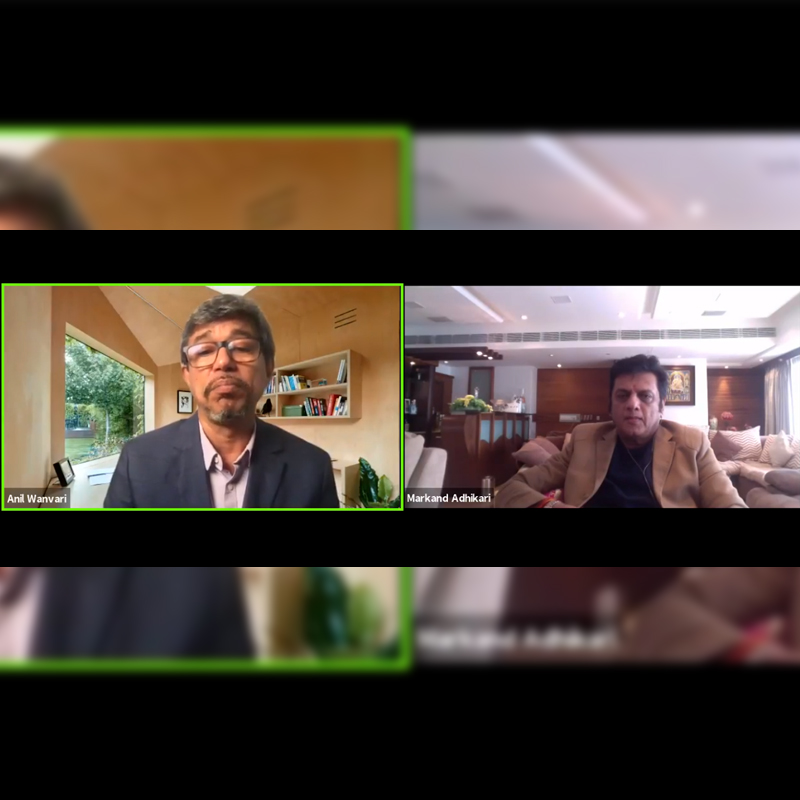
    Sri Adhikari Brothers co-founder Markand Adhikari, in an insightful fireside chat with indiantelevision.com founder, CEO and editor in chief Anil Wanvari, got candid about his journey, plan going forward, advertising and subscription model in television and more.

    Edited Excerpts:

    You have been a part of television industry for 40 decades; can you tell us more about your journey?

    When Doordarshan started in India, it only used to telecast an infotainment show called Krishi Darshan. When I was just a teenager, I met then information and broadcasting minister Vasant Sathe to discuss the chances of bringing commercial shows in India just like the west. At that time, he only asked me to look outside the window and asked me what do you see, I said I could see green trees and a colourful world. He explained to me about vision to bring colour television in India which was heavily criticised back then. Somehow, he accepted my proposal to create a show with Shashi Sharma. It started the era of sponsorship programs on television. We did sponsorship programs on Doordarshan for quite a few years then we ventured into regional space with LPTS (Low Power Transmission). We connected to the regional centres of Mumbai and Ahmedabad. Bandini became the first serial for Bombay Doordarshan. We carried a lot of shows for Doordarshan from the mid 80s to 1991.

    My late brother Gautam Adhikari’s name was registered in Limca book of world records for directing the maximum number of shows. I made Commander with Essel Group chairman Dr Subhash Chandra and I learned a lot from him. With the help of Jeetendra Kapoor (veteran Bollywood actor), I met Ketan Somaiya, a Nairobi-based entrepreneur who used to run an Asia channel in London with Amitabh Bachchan. We created a show called Waqt for him for $11,000 per episode and at that time import and export were free. The show had 52 episodes but due to some non-payment issues, the show was stalled at 26 episodes. After this, I again switched back to Doordarshan because Zee never used to give rights to the shows. DD Metro was recently launched where I did popular shows like Shriman Shrimati and All The Best. At that time, it was Rs 1,20,000 for 10-second spots on DD Metro. Doordarshan wanted us to make an afternoon soap within 15 days. I spoke to TV Asia about my 52 episodes out of which I was only paid for 26 episodes. I imported the pending episodes on half of the rate. Starting with 52 episodes I made Waqt Ki Raftaar which eventually had 600 episodes.

    What happened after you listed your company in 1995?

    Due to the Harshad Mehta Scam, the entire stock market suffered until 1998. Finally, in 1999 the economy was witnessing a boom then I realised it is the perfect time to start our own channel. The main challenge was we were always in production. Broadcasting was altogether a new experience. Our financial adviser only gave the plan of Rs 115 crore for the channel but to launch a channel it was too less. Then with the limited amount at my disposal, I started SAB TV in 2000. Again, due to Ketan Parikh’s scam, the economy was in shambles still we managed to run the channel for five years. We were a trend-setter by bringing a niche comedy channel. Sony Networks took over SAB in 2005, which till date is my biggest regret. However, I am happy that SAB is a big brand. After SAB TV we started two news channels Janmat and Mi Marathi which later I sold at a good price.

    What do you think about the future of television?

    Television in India is not going to die so soon, it will at least stay for another ten years. In the typical Indian household, it is still a culture to watch TV together. Most of the people are not aware of the multi-set concept or firesticks. However, one of the benefits with digital channels is that it is moving whereas television is static. Television is appointment viewing, on the other hand, digital is infinite. But digital requires a lot of capital investment. One cannot enter the digital market with a three-year plan.

    Are you looking at OTT content production?

    Our next-generation has already ventured to digital space with a series called Dheet Patangey that was uploaded on Disney+ Hotstar. It is directed by Gautam Adhikari’s son Ravi. My son Kailashnath and Ravi already have close to five shows which are almost done.

    Television is heavily dependent on advertisers; do you think subscription-based models will be a viable option in the long run?

    As far as television is concerned, I think in India most of the channels will be dependent on ad revenue. Also, I believe India is not yet developed to sustain on a pay model. There are broadcasters, MSO, semi-MSOs and then cable operators who collect money from individual households. So it has a lot of loopholes and layers in between which needs to be identified. There is a lack of transparency. At the same time advertising models will not work on digital platforms because audiences are now used to watching OTT content ad-free.

    What are your thoughts on IPL which is expected to happen during Diwali? Also, will it benefit all the channels or only sports channels?

    I believe it is good news; it is creating a moment with the advertising world and advertisers. IPL or any other cricket forms were running in the same manner as it was before Covid2019. Advertising spends were created keeping all the channels in mind; it was just not for sports channels. I don’t think so IPL will impact the revenue of any other channel.

    According to media planners, 30 per cent of advertising spends are kept for IPL, so do you think it will impact other channels?

    It is not a new scenario. In fact, it is a testing time for other channels, where we will get to see how they perform when IPL arrives.

  • TV advertising sees revival in June 2020

    TV advertising sees revival in June 2020

    NEW DELHI: BARC India and Nielsen Media's tenth edition report on the ‘Impact Of COVID-19 On TV Viewership and Smartphone showed that with the onset of ‘unlock’ in June 2020, there is a revival of advertising on TV – a significant increase in the presence of ‘top 10’ and ‘next 40’ in June 2020.

    There has been exponential growth across sectors like Hindustan Unilever, Reckitt Benckiser, Procter & Gamble, Godrej group, ITC Ltd and many others.

    Category wise, corporate, education, banking and e-commerce saw growth compared to the year 2019.

    The total number of advertisers on TV in H1 2020 is 10 per cent lower than H1 2019.

    The total advertisers on television from the month of January to June has been 10 per cent lower as compared to June 2019.

    Interestingly, in the same month, there is a consumption increase among the top 10 advertisers. Last year it was reported 34 percent which has increased to 39 per cent in 2020.

    Ad volumes in June 2020 show similar trends as last year June (excluding world cup inventory) but net value is lower this year.

    The findings of the report state that ad volumes in April and June among GEC, news and movies are operating at higher ad volumes, though music and kids’ genre impacted the most in the month from January to June.

    Comparing the news genre, June 2020 vs June 2019 Hindi, Tamil, Kannada, English & Malayalam have seen growth in ad volumes.

    The data also states that Covid2019 message commercial began in March, while April recorded 22 per cent, the highest contribution in terms of the messages. However, there has been decline in June and recorded only seven percent.

  • India loves advertising more than any other country: Piyush Pandey

    India loves advertising more than any other country: Piyush Pandey

    NEW DELHI: The past few years have generated a heated discussion on the role of creativity v/s the role of technology in advertising and marketing. With machines dominating almost every aspect of the functioning of an agency, there have been debates on understanding the role of human touch and sensibility in the future of communications and how technology can or cannot be a substitute for human emotions. 

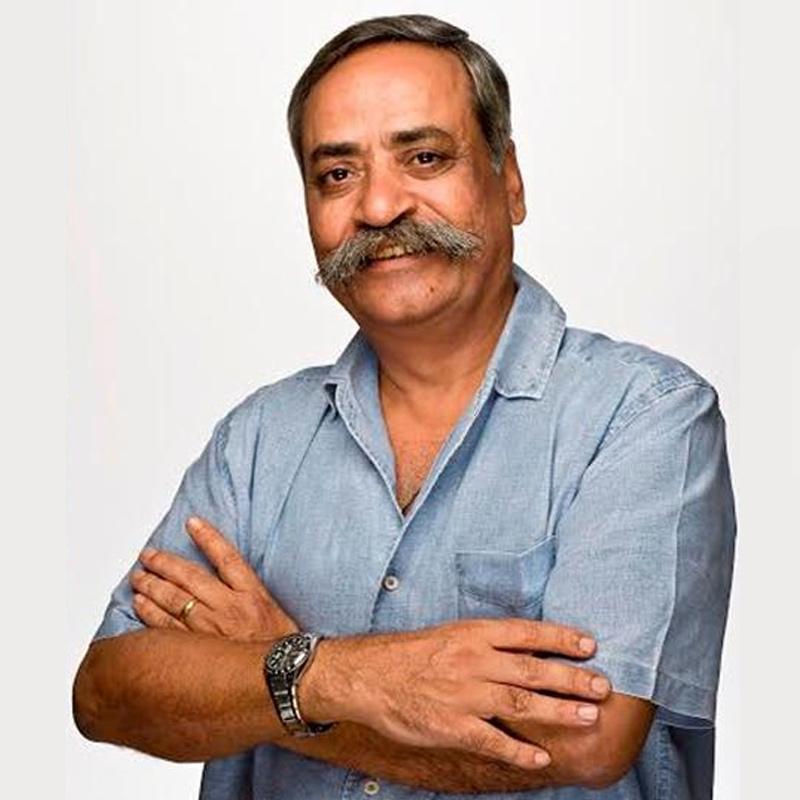
    Addressing the same in a free-wheeling fireside chat with Indiantelevision.com founder, CEO and editor in chief Anil Wanvari, Ogilvy chief creative officer worldwide and executive chairman India, Piyush Pandey said that technology is there to help the advertisers in creating different creative stories. “Technology is not the story,” he quipped. He elaborated the role of human emotions and sensibilities will never go out of advertising and the agencies will have to learn how to strike a fine balance between the two. 

    Speaking about India’s stand when it comes to creative trends in advertising, he said, “‘Trends' is a strange word. I will never compare Indian advertising with any other country. More people in India love advertising than any other country in the world. The cynicism is not there. We might not win Oscars but people appreciate our good movies.”

    However, Pandey also noted that communication, as we know today, has to change for the better. “It has to be more sensitive as communication is not only about transactions, it is also about relationship building. It is not the time to sell, it is the time to build relationships.” 

    He added, “I feel today, a fruit vendor has more sense of communication and tone than most people in the advertising industry.”

    Does it mean that advertising shouldn’t be focussing on delivering ROIs?

    Pandey disagreed. “ Which client ever, and sensibly so, would not want sales? You can do a bad piece and run it 50 times a day and you can do something impactful and run it 10 times a day only, to deliver similar sales. That’s what the differentiator is.” 

    He continued, “You have to know the consumer to understand what is the aspect of your brand that the consumer will appreciate. If we can engage a consumer and touch hearts, that always works well (for a brand).”

    The thespian also lauded the good world that many agencies have done during the Covid2019 lockdown with limited resources and lots of constraints. Be it the work for Asian Paints, which he wrote and did the voiceover for, or the work to promote the Aarogya Setu app, Pandey thinks there was a lot of creativity that was unleashed during the lockdown across agencies. 

    “I think agencies everywhere have done a good job during the pandemic, given the constraints. It is a testing time for everybody; much more testing time for communicators than anybody else. Yes, our feet are tied but not our hands, not our pens or computers. My personal favourite piece of work is “Family”, which my brother (Prasoon Pandey) created with Bollywood celebrities like Amitabh Bachchan and Rajnikanth.”

    The one ad that did not make the cut for him was Memec Ogilvy’s #StayHome for Honda. “You will have to see what the ad was for instead of what the ad was. Instead of showing something remarkable, like shooting with a mini car, and making people wonder how they did it, they just put it out there in the video. When you show how fantastic a director you are, what a fantastic editor you are, then I am looking at you and not the car,” he explained. 

    Pandey, who is not just a globally-celebrated advertising industry champion, but also a cricketer (has played CK Naidu Cup and Ranji in his younger days,) a lyricist (he has contributed to the iconic Mile Sur Mera Tumhara), a scriptwriter (Bhopal Express), a voiceover artist (a number of ads including the latest Asian Paints’ Har Ghar Kuch Kehta Hai), and an actor (Madras Cafe and a few ads), also touched upon his life and experiences during the chat. 

    Chuckling about the mention of his work outside his home industry, Pandey said, “I am a hardcore advertiser. I am not a voiceover artist not an actor. In fact, I am a terrible actor. I did Madras Cafe for my friend Shoojit Sircar. R Balki also tried a few times to get me into movies, but after testing me for several times, he understood that I can’t do it.” 

    On being asked about his retirement plans, Pandey mentioned that he has never seriously thought about it as he is loving what he is doing currently. He did mention that he will continue writing. 

  • Missing brands must restart marketing to catch rising demand across categories

    Missing brands must restart marketing to catch rising demand across categories

    NEW DELHI: After a lull of more than two months, businesses in India are slowly getting back on track as lockdown restrictions ease. There is a positive sentiment among most brands and agencies that things will only get better from here on and there seems to be a plethora of opportunities waiting.

    According to FCB India group chairman and CEO Rohit Ohri and Havas Group India CEO Rana Barua, a lot of their clients have started getting positive responses from consumers in areas that fall under the green zone.

    Barua had told us in an earlier interview that one of its major clients, Hyundai, recorded 500 bookings in just two days of opening up of a limited number of showrooms. Ohri said that brands functioning in the essentials category, like food and hygiene, are getting a splendid rise in demand.

    Recently, Siyaram’s, one of the most prominent players in the Indian textile industry, said that the retailers in the green zones have started recording two-thirds of normal daily sales number already, indicating a positive sentiment amongst consumers. McDonald’s, too, had talked to Indiantelevision.com about an impending pent-up demand across industries.

    With a further change in lockdown rules, the industry is taking cognisance of several other possible trends. Barua now added, “I think (do not have data to back this) a lot of urgent categories would have opened up as many consumers would require change/service/repair of electronics, white goods, mobile accessories, home/kitchen accessories and appliances, etc. I say this because, with a, close to, 60-day lockdown and everyone at home using all the mentioned above more than ever, I am quite sure that this will be the need of the hour.”

    Madison Media chief analytics officer Nagaraj Krishnamurthy shared Bain & Company’s survey results that show demand for staples, household hygiene, food ordering-in, toys and even beauty products are improving in green zones.

    He said, “I do not foresee any issues concerning the demand for essentials. There is a lot of talk about revenge shopping of consumer discretionary items. My personal feeling is revenge shopping at best will provide a blip in the first week after easing is announced. On a medium-term basis, there will be demand contraction for luxury and discretionary products.”

    Dentsu One president Harjot Singh Narang elaborated that while essentials will surely be growing in sales; the fate of products and services like the purchase of automobiles and personal transport, new food experiences, travel and tourism will depend largely on consumer sentiment depending on how fast a vaccine is found and distributed, amongst other factors.

    He said, “There can be two broad scenarios on this. As we come out of it the sentiment could be of “fear and worry” which would lead to safety behaviour, putting off any non-essential expenditure, more investments in insurance products etc., or the sentiment could be that of “we dodged a bullet” leading to more of the YOLO (you only live once) behaviour of spending and enjoyment of experiences to celebrate the survival and resilience that led us out.”

    Whatever the case may be from the demand-side, advertisers suggest that it is high time that brands, which were missing from the public glare for the past two months or so, restart their advertising activities.

    Wunderman Thompson South Asia chairman and group CEO Tarun Rai shared, “The crisis took everyone by surprise. It is unprecedented and without any playbook. Some brands, sensibly, have been present through this crisis – whether in terms of communication or by actually doing positive things to help mitigate the crisis. The brands that have missed out should start getting visible now.”

    Krishnamurthy added, “Marketing and more specifically advertising is an investment. The golden rule to maximise return is to invest when costs are low. Marketers who did not invest in previous phases of lockdown missed a great opportunity to build brand love on a very cost-effective basis. I would urge all brands, especially those in FMCG business, where the top-of-the-funnel activation is critical to invest more. You rarely see an increase in media consumption that is accompanied by lower media cost.”

    About what should be the approach of brands to restart marketing, Rai said, “They still have to be empathetic and recognise that the crisis is not over. But after two months they can open up their marketing budgets as there are definite signs of consumers getting back to spending in many parts of the country. This could be a very important phase as there has to be a lot of pent-up demand. Marketers don’t want to miss out on it.”

    Barua highlighted that authenticity should be a key factor in brand communication today. “Brands and businesses have a huge and potentially vital role to play. But they must do so with authenticity because it is the right thing to do, not for themselves, not even just for their customers, but for society as a whole. In line with this, getting back to relevance and creating a compelling, engaging story to fit back into the consumer’s life is integral. Be meaningful for the consumer so that they clearly understand the void and reach out to buy the brand.”

    Narang further elaborated on a suitable strategy for brands to make a comeback in the marketing world through a two-pronged approach: first from the marketing impact on business perspective and second from the brand’s relationship with its consumers’ perspective.

    From an impact on the business perspective, he shared, “Teams would need to track sentiments very closely and pivot quickly to the changed needs of their consumers given these abnormal times. Responses could be different for different individual businesses and categories – from a changed product design perspective, a pricing/ SKU need matching perspective or even a new approach to distribution channel dynamics etc,., or a combination of such elements.”

    He insisted that brands go “deeply human” to address the situation from the relationship with consumers perspective. “Adapt as a brand to the new paradigm exactly like human relationships adapt and grow in uncertain times. This is the time that separates the wheat from the chaff for people at large and consumer segments in particular and relationships and brands that do not have a deep enough link will be left behind or even forgotten. Just see the personal relationships that will survive and even grow for your consumer segment and evolve your brand to be in sync with those patterns. At the very base level – out of sight and out of mind would be a big factor for people in what relationships survive and which ones fall behind as unimportant – the same will play out with brands.”

  • New language of advertising, more collaboration within brands on rise post-Covid2019

    New language of advertising, more collaboration within brands on rise post-Covid2019

    MUMBAI: Wunderman Thompson Intelligence has pinpointed the trends and behaviours that define the new world, as business and consumers respond to the Covid2019 pandemic. Wunderman Thompson’s new report, ‘The Future 100 2.0.20,’ is a follow-up to its ‘The Future 100’ report released in January and highlights 20 key trends that have been fast-tracked by the outbreak, as well as five new trends that have come to light. 

    The global lockdown has given people time to reflect on their values, highlighting the importance of community, the need for better public health regulations, and the drive to protect future generations. In order to thrive in this new landscape, brands and marketers must address these new consumer attitudes.

    Optimism on the rise: The report finds that despite the rise of anxiety levels, consumers are also seeking hope and positivity in the form of uplifting stories and programs to inspire future generations.

    The new language of advertising: Regulations around flattening the COVID-19 curve have led to a less touch-oriented world. Brands and advertisers are rethinking communication strategies in order to bring people together without the need to congregate physically. 

    The gaming multiverse: The report also highlights the popularity of gaming and its versatility, providing an outlet for companionship, education and stress-relief.

    Brands move from competing to collaborating: Competitive brands are increasingly putting aside old rivalries and working together for the greater good. There has been increased investment in vital services, with Apple and Google collaborating on a contact-tracking app, while GSK and Sanofi join forces in the search for a Covid2019 vaccine.

    Other emerging trends include the rise of gamescape travel as the tourism industry taps into new virtual worlds in search of escapism, and novel dining formats as restaurants rethink the dining experience.

    We will also see the rise of anti-consumerism, with shoppers focusing on essentials and becoming more mindful in their purchasing habits. In addition, new payment gestures will grow with the acceleration of frictionless payments and contactless throughout the entire purchase process, including delivery. 

  • When pandemic strikes, trust keeps brands, agencies going

    When pandemic strikes, trust keeps brands, agencies going

    MUMBAI: Trust plays an important factor when you can’t see the other person, and now the whole world is running on trust, as the whole world remains engulfed by the Covid-19 pandemic. Never has trust between advertisers and agencies been more apparent than now.

    Dentsu Aegis Network India CEO Anand Bhadkamkar says that trust builds if one acts responsibly and delivers in time. “Trust, definitely, is quite critical during this time. Clients or colleagues need comfort in regular interaction, which builds trust amongst teams. Yes, the challenge remains of not being able to see the person physically but, the current phase is a passing phase. Thus, as long as the deadlines are met, commitments delivered and there is constant engagement, the trust keeps on building,” he says.

    While most of us have always seen work from home as a convenient way of working, it has its challenges and limitations, too. It comes true for the advertising industry, where agencies and brands were used to physical meetings either in offices, coffee shops, board rooms, etc., which has now been converted into virtual meetings. According to industry experts, in these difficult times, teams have adopted the new way of working quite effortlessly via virtual meetings and teleconferences, etc.

    Bhadkamkar says that DAN had already planned this out. “For the work to continue smoothly, we provided alternative sharing sites and a secured VPN line for better communications and data access. There are some small challenges but that’s all part of the teething and learning process. Efficiency has not dropped that much. Yes, the work is slow but not hampered completely. As a daily practice, teams have regular check-ins – daily/weekly as per agreed duration to plan, review and execute. The working pattern also varies from team to team. Frankly, people are responsible and all the more support each other in these times.”

    Socxo CMO and program head Ajit Narayan says, “Business friendship is one of the most powerful drivers of the business, so educate them, help them and over service them. Forget the inane content of handwashing (they are already getting bombarded by it.) They would appreciate if you stepped back on the sales pitches to them and helped in whatever you do for them. They will remember you and do more business with you once they get their side of the business going well.” 

    The Mavericks founder and CEO Chetan Mahajan think that COVID-19 has impacted every human being and every brand globally. Agencies now have become geography-agnostic and are doing everything possible to support the brand's communication needs. Trust is derived from the transparency of relationship and commitment to the outcome and during these trying times, one has to have 200 per cent commitment. “Our teams are separated by corona yet together with purpose with unprecedented resilience, commitment, camaraderie, and focus to be solution-oriented and be together in spirit as well as action. Our clients have been appreciative of our efforts so far and the show must go on.”

    Adding to this, RED FM national marketing head Rajat Uppal says that he has always considered a brand-agency relationship as a partnership based on trust and faith in each other’s abilities and alignment to a common objective of delivering work par excellence.

    One of the major challenges of working from remote locations like home is the brand-agency team co-ordination issues and delays in work. This can be addressed with advance timeline planning. If one is more considerate about the limitations of the current setup of WFH, brands can actually get more quality work out of the agencies.

    Uppal adds, “For us at RED FM, last one week has been pretty productive and we have been able to get some good work going with our creative, PR and digital agencies. Briefs have gone out on time and agencies have delivered work with greater responsibility. With most brands prioritising work effectively, work has not really got affected. In fact, being away from the workplace and not getting occupied with the routine and hygiene work only, has given our brand team the time to think strategically and take on jobs and projects which were part of the wish list and never got the time to be taken up. On the flip side, WFH has surely extended the work hours for everyone, as everyone is accessible anytime and there are no stringently scheduled work hours. The need of the hour is for the brands and agencies to collaborate well and deliver quality work till we all move back to our workplaces and I am sure we all will do it well.”

    WATConsult VP – account planning and strategy Sabiha Khan  feels that the most important thing to do to ensure trust is to communicate with each other and be honest in communication, which means – be frank about the good, the bad and the ugly.

    Agencies should proactively keep clients abreast of trends and how the situation will impact and change behaviour among the audience and for the respective sectors/ industries.  They should seek to work towards the next quarter keeping in mind the presence of consumer fears and the change in behaviour and possibly even preempt an indoor summer and work towards campaigns accordingly.

    Brands on the other hand should consider agencies as partners whom they can trust in such turbulent times. Brands can keep an agency in the loop about their ongoing situation and the business operations to enable the agency to make informed plans and suggestions that can benefit the brand not just in the immediate term but for the long run.

    Technology has been a big enabler during this time. Brands and agencies are communication via platforms like Zoom Cloud Meetings, Google Hangout, Slack, Google Duo for both internal and client meetings. If things go fine, maybe we are looking at a future where more companies will provide work from home options.