Tag: advertising

  • TAM report: LIC was the leading brand during Jan-Jun’23

    TAM report: LIC was the leading brand during Jan-Jun’23

    Mumbai: TAM India has released a half-yearly report for advertising in Banking Finance Investments(BFSI).

    Ad volumes’ trend for BFSI on TV:

    The BFSI sector’s ad volumes on television increased by four per cent during Jan-Jun’23 compared to Jan-Jun’22.

    The top 10 categories together accounted for 85 per cent share of ad volumes in TV during Jan-Jun’23. Life insurance & mortgage loans retained their first & second positions in Jan-Jun’23 over Jan-Jun’22. Housing/construction loans, multiple loans & retail banking were the new entrants in the top ten list of categories in Jan-Jun’23

    compared to Jan-Jun’22. During Jan-Jun’23, the top ten advertisers accounted for 58 per cent of total ad volumes. LIC of India & Muthoot Financial Enterprises retained their first & second positions during H1’23 over H1’22. Piramal Capital & Housing Finance was an exclusive advertiser with five per cent share of ad volume in H1’23 over H1’22.

    Top 10 brands accounted for 42 per cent share of ad volumes in H1’23 over H1’22

    with Muthoot Finance Loan against gold leading the list. LIC New Pension Plus & Piramal Finance Home Loan were exclusive brands during Jan-Jun’23 over Jan-Jun’22.

    The top two TV channel genres accounted for 82 per cent of ad volumes share for BFSI sector during H1’23. The news channel genre was most preferred by BFSI players in Jan-Jun’23.

    News bulletin was the most preferred program genre to promote brands in the BFSI sector on television. The top two program genres i.e. news bulletin and feature films together added 61 per cent of the sector’s ad volumes.

    Prime time garnered the highest advertising on TV followed by afternoon and morning time bands. In terms of ad volumes, the prime time, afternoon, and morning time bands collectively accounted for 73 per cent share.

    Advertisers of the BFSI sector preferred 20 – 40 sec ad size on TV during H1’23. 20-40 seconds and less than 20 seconds ads together covered 92 per cent share.

    Ad space for BFSI sector in Print:

    Ad space of the BFSI sector witnessed a degrowth of seven per cent in Jan-Jun’23 compared to Jan-Jun’22.

    Public issues & life insurance retained their first and second positions in H1’23 over H1’22 with public issues leading the list. Fixed deposits & retail banking were the only new entrants in the top 10 list of categories during H1’23 over H1’22. During H1’23, the top 10 categories together added 88 per cent share of ad space. LIC of India retained its first position in Jan-Jun’23 with 19 per cent share of ad space. Adani Enterprises was an exclusive advertiser during Jan-Jun’23 with two per cent share of ad space. In print medium, the top 10 advertisers of the BFSI sector together added 38 per cent share of ad space in Jan-Jun’23.

    Out of the top 10 brands, five of them belonged to LIC of India in H1’23.

    The top 10 brands accounted for 25 per cent share of the total ad space in print.

    LIC Dhan Varsha, Adani Enterprise-IPO, HDFC Systematic Investment

    Plan & LIC New Pension Plus were exclusive brands present in Jan-Jun’23

    over Jan-Jun’22.

    The English language has the highest share of ad space, i.e., 51 per cent. The top five publication languages together added 88 per cent share of the sector’s ad space. General interest dominates ad space in general newspaper with 59 per cent.

    South zone was the leading territory with 34 per cent share of BFSI advertising in Print in Jan-Jun’23. Mumbai & New Delhi were the top cities in the West zone and North zone respectively. Also, they were the top two cities in PAN India during H1’23.

    Ad volumes’ trend for BFSI sector on radio:

    Index ad volume growth of BFSI sector witnessed surge of 32 per cent during Jan-Jun’23 compared to Jan-Jun’22.

    Life Insurance dominated the category list with 28 per cent of the total BFSI ad volumes. The top 10 categories added 91 per cent ad volume share of the sector on radio. The top four brands retained their respective positions in Jan-Jun’23 compared to Jan-Jun’22. The top 10 advertisers added 81 per cent share of ad volumes during H1’23, among which LIC of India was the leading advertiser. AMFI was an exclusive advertiser during Jan-Jun’23 compared to Jan-Jun’22.

    Top 10 brands accounted for 58 per cent share of ad volumes in Jan-Jun’23, in which LIC Housing Finance retained its first position. Five out of the top 10 brands belonged to LIC of India during H1’23. LIC Dhan Varsha, LIC Pension Plus & AMFI were exclusive brands present in the top 10 list in H1’23 over H1’22.

    The top three states occupied 47 per cent share of ad volumes for the BFSI sector. Maharashtra was the leading state for advertising on radio with 20 per cent share of the sector’s ad volumes in Jan-Jun’23.

    Advertising for BFSI was preferred in the evening closely followed by morning timeband on radio. 87 per cent share of the BFSI ad volumes were in evening and morning time-bands in Jan-Jun’23.

    Ad impressions trend for BFSI sector on digital:

    On Digital medium, ad impressions observed a massive surge of 91 per cent

    during the H1’23 compared to H1’22.

    Mutual Funds ascended to first position with 18 per cent share of ad impressions in H1’23. Also, the top 10 categories together accounted for 92 per cent share of ad impressions. Credit cards and retail banking were the new entrants in the top 10 list of categories during Jan-Jun’23. The top 10 advertisers collectively added 47 per cent share of ad impressions during H1’23 with AMFI leading the list of advertisers.

    Top 10 brands accounted for 41 per cent share of ad impressions in Jan-Jun’23.

    AMFI retained its first position with 11 per cent share of ad impressions in H1’23

    over H1’22.

    Programmatic was the leading transaction method for digital advertising of the BFSI sector in Jan-Jun’23 with 61 per cent share. Programmatic and programmatic/ad network transaction methods together captured 80 per cent share of BFSI ad impressions on digital.

  • “It’s a journey I wouldn’t trade for anything else”: Filmmaker Niddhish Puuzhakkal

    “It’s a journey I wouldn’t trade for anything else”: Filmmaker Niddhish Puuzhakkal

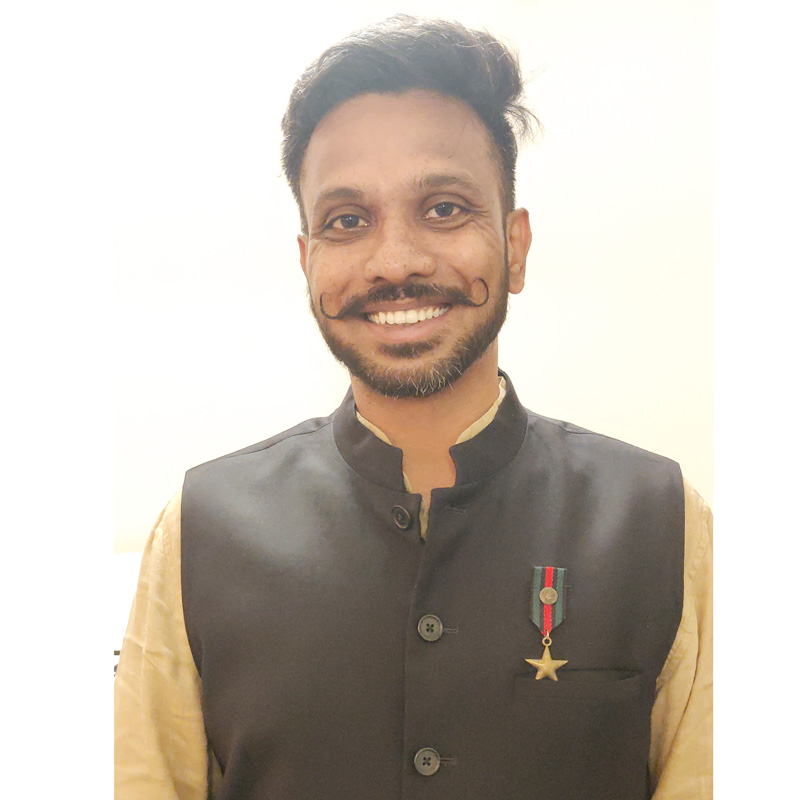
    Mumbai: Niddhish Puuzhakkal, a creative dynamo hailing from Mumbai, has carved an inspiring path in the world of filmmaking that speaks volumes about the power of experience-driven education. While his journey took him through renowned institutions like NYFA, ZIMA, and Washington Film Institute, DC, Niddhish’s true mastery stems from the richness of his hands-on encounters with the art of storytelling, his profound understanding of human psychology and absolutely child-like curiosity.

    With a diverse portfolio spanning TV series, music videos, advertising, and Bollywood, Niddhish is making waves with his gripping narratives. Beyond filmmaking, he’s a thought leader in creativity, performance coaching, and a boundary-pushing contemporary artist.

    In an insightful conversation with multi-faceted Niddhish Puuzhakkal, Indiantelevision.com had a chat on his recent directorial achievement, upcoming projects and more…

    Edited Excerpts:

    On your recent directorial achievement in the Vivo mobile ad film and your upcoming Sprint ad project

    Vivo Mobile Ad Project: The Vivo mobile ad project was an exhilarating opportunity for me as a director. The central product feature of this film is photography, and I wanted to do justice to it. My creative treatment focused on crafting visually stunning imagery that would not only capture the audience’s attention but also leave a profound and lasting impression.

    To achieve this, I delved deep into the details of photography, playing with elements like light, shadow, depth, and composition in each frame. The result was a narrative that transcended the ordinary realm of advertising. Every shot was meticulously curated to evoke emotions and tell a compelling story. I produced this under my banner Light Seeker Films, and it was an absolute pleasure to work on this project, with the great team at FCB Ulka and I’m incredibly proud of the final product.

    Upcoming Sprint Energy Drink Project: Sprint Energy Drink project, is equally exciting. For this endeavor, I took a highly technical approach. I’ve completely embraced virtual production techniques for this one, leveraging my background in 3D and unreal engine.

    The entire project was shot within the virtual production environment. We’ve harnessed the power of VFX to enhance the visuals, and what’s particularly unique is that I’ve personally handled the execution of these visual effects and unreal engine details. This hands-on approach has allowed us to create a visual that pushes the boundaries of traditional advertising.

    While I can’t divulge all the specifics just yet, I can assure you that our creative approach for the project goes beyond the conventional. We’re not merely promoting a product; we’re crafting a narrative that tells a visually distinctive story. Look out for this one – it’s going to be something truly exceptional!

    On approaching different mediums such as TV series, feature films, and advertising within your filmmaking journey in terms of storytelling

    When it comes to feature films, it’s all about my vision as a filmmaker. It’s an opportunity to tell a compelling story where I have complete creative control over every minute detail. As a writer-director, the film is a canvas for my aesthetics and storytelling abilities. I can shape every aspect to reflect my unique style and narrative vision. It’s a deeply personal and immersive experience.

    Whereas TV series offer a different dynamic. Here, I have the luxury of time to develop complex characters and intricate plotlines. It’s an opportunity to delve deeper into the nuances of storytelling, allowing characters to evolve over multiple episodes. The challenge is to keep the audience engaged and invested in the long-term journey of the narrative.

    Advertising: Advertising presents a unique challenge. It requires the ability to distill a message into a short, compelling narrative. It’s a collaborative effort where the creative team conceives ideas based on the brand’s needs. The priority is to meet and exceed the brand’s expectations while delivering a concise and persuasive story.

    On your background in psychology and your specialisation in creativity and performance coaching and this psychological knowledge influencing your approach to filmmaking

    Psychology has truly been a game-changer in my journey as a filmmaker. It’s not just a background; it’s a lens through which I view the world of storytelling. This understanding of human behavior, emotions, and motivations has a profound impact on my approach to filmmaking.

    First and foremost, it allows me to create characters that feel remarkably authentic and relatable. I can delve deep into their psyche, exploring the intricacies of their thoughts and feelings. This depth and complexity make the characters come alive on screen, connecting with the audience on a profound level. It’s about more than just telling a story; it’s about making the audience truly empathize with the characters.

    Moreover, my psychological knowledge becomes a powerful tool on set. When working with actors, it’s not just about giving them lines to recite; it’s about helping them become the character. I use psychological and even hypnotic methods to immerse actors in the character’s mindset and emotional state. It’s a transformative process that brings out genuine and captivating performances. I don’t get to use it as much in advertising as most scripts don’t need such depth of character – I use that more in long form content – I always look forward to doing advertising content with stronger character sketches and emotions as well .

    Beyond the actors, it influences how I foster a collaborative and creative environment on set. Understanding the psychology of teamwork and motivation allows me to lead a crew that is passionate, dedicated, and inspired. It’s about creating an atmosphere where everyone feels valued and invested in the project. You will find that energy of creative focus in my set, you will never find loud screaming matches or other such conflicts in my set no matter what challenges, or exhausting and how long a schedule may be. I ensure everyone is engaged and driven as a team.

    So,yeah, psychology is not just a part of my background – it’s a driving force that shapes the way I approach storytelling, character development, and the entire filmmaking process. It’s the secret ingredient that adds depth, authenticity, and impact to my work as a filmmaker.

    On your debut as a writer-director in Bollywood and your upcoming projects, including a web series and Bollywood and Malayalam films, and what can the audiences anticipate from these projects

    My journey into Bollywood as a writer-director was nothing short of exhilarating. It was a project that allowed me to collaborate with an exceptionally talented ensemble cast, including Arshad Warsi, Juhi Chawla, Divya Dutta, Anirudh Tanwar, Jitendra Joshi, Prakash Belawadi and Gauhar Khan, in a psychological thriller. This film delves deep into the fascinating realms of psychology and guilt, delivering a narrative that’s both distinctive and gripping. Viewers can brace themselves for an intellectually stimulating and emotionally charged cinematic experience. Arshad Warsi’s portrayal of a character like never before in Bollywood is a standout performance that will leave audiences in awe.

    As for what lies ahead, I’m currently immersed in the creation of a web series that promises to be a rollercoaster ride of emotions, sprinkled with humor and a unique slice of life. It’s a project close to my heart, and I can’t wait to share it with the world.

    In addition, I am also working on an exciting one of its kind Malayalam cinema. While I can’t reveal too much at this stage, I can assure audiences that these films will continue to push boundaries, challenge conventions, and offer a fresh take on storytelling. Expect the unexpected!

    On your approach to contemporary, abstract, and digital art as an accomplished artist alongside your filmmaking career and the intersection of your artistry your work in filmmaking

    My artistic journey began much like many others, as an outlet for expressing abstract inner feelings. Over the years, it has taken various forms, including filmmaking, design, and traditional art. I’ve even dabbled in music, so you might see something exciting on that front in the near future.

    My artistry and filmmaking often intersect in intriguing ways. They both rely on storytelling, albeit through different mediums. My experiences as an artist inform my visual style as a filmmaker, giving my work a distinct and captivating aesthetic. It’s all about finding new ways to engage audiences, whether through a canvas or a screen.

    On balancing roles as a filmmaker, psychologist, author, and artist and finding any common threads or influences that connect these diverse aspects of your career

    Well, the journey doesn’t stop there; I’ve recently ventured into e-commerce with a contemporary clothing brand, Just Younger, where I personally design the captivating collections. I’ve also launched a wellness organics store, VibeVeda, and I’m on the cusp of launching a creative community app in the coming month. And in the process of publishing my third book.  So, yes, it’s quite a balancing act, but it’s incredibly fulfilling.

    What ties all these roles together is the thread of creativity and human connection.

    It’s about resonating with their thoughts, feelings, and aspirations. And most importantly it also enriches my creativity in the process, constantly opening more creative neural pathways – allowing me to think in interesting ways.

    My background in psychology plays a pivotal role in understanding human behavior and emotions, which is crucial in all my endeavors. Ultimately, my diverse career allows me to explore different facets of creativity and storytelling, enriching each aspect along the way. It’s a journey I wouldn’t trade for anything else.

  • TAM report: Top 10 sectors contributed 95 per cent of Jan-Jun’23 music genre ads

    TAM report: Top 10 sectors contributed 95 per cent of Jan-Jun’23 music genre ads

    Mumbai: TAM India has released a report on advertising on music genre for the period Jan-Jun 2023.

    Both H1 2023 observed nine per cent growth compared to H1 2022, but while comparing with Jan-Jun’21, the ad volumes dropped by two per cent in H1 2023 in the music genre.

    Food & beverages, personal care/personal hygiene & household products retained their first, second & third positions respectively during Jan-Jun’23 compared to Jan-Jun’22.

    ‘Auto’ was the only newly entered sector in the top 10 list of sectors during Jan-Jun’23.

    The top 10 sectors together contributed 95 per cent share of ad volumes in music genre during Jan-Jun’23.

    Toilet/floor cleaners ascended to first position during Jan-Jun’23 compared to Jan-Jun’22. Antiseptic creams/liquids & hair removers were the only new entrants in Jan-Jun’23 over Jan-Jun’22. Three out of the top 10 categories belonged to the food & beverages sector in Jan-Jun’23.

    Reckitt Benckiser (India) & Hindustan Unilever switched their positions during Jan-Jun’23 with Reckitt Benckiser (India) leading the list and had 27 per cent share of ad volumes. The top 10 advertisers together added 70 per cent share of ad volumes during Jan-Jun’23. Wipro & Colgate Palmolive India were the only new entrants in Jan-Jun’23 over Jan-Jun’22. Apart from Hindustan Lever, Pepsi Co & ITC all the advertisers in the top 10 list observed positive rank shift in Jan-Jun’23.

    Apart from Maaza, all the brands mentioned in the top 10 list belonged to Reckitt Benckiser (India). The top 10 Brands contributed 18 per cent share of television ad volumes.

    During Jan-Jun’23, the toilet soaps category experienced the most substantial increase in ad seconds, doubling its growth, followed by toilet/floor cleaners with a 77 per cent growth compared to Jan-Jun’22. Among the top 10 growing categories, Home Insecticides recorded a remarkable surge, growing by six times, while antiseptic creams/liquids and condoms each saw their growth triple, with a three-fold increase.

    During Jan-Jun’23, (Hindi + English) music was the leading subgenre for advertising with 34 per cent share of ad volumes. The top five channel subgenres accounted 80 per cent share of ad volumes during Jan-Jun’23.

  • Palasa Creative House: Crafting success through 360° creative brilliance

    Palasa Creative House: Crafting success through 360° creative brilliance

    Mumbai: Palasa Creative House is an energetic hot shop with a clear focus on doing winning creative for our clients. As Raymond Rubicam once said, “The only purpose of advertising is to sell; it has no other justification worth mentioning.”

    The legend goes that Palasa is one of the seven most sacred trees with great cult powers in Indian mythology and a favourite flower of Goddess Durga. Palasa was set up in 2004 by Sandeep Bomble with a desire to work without limitations and explore new horizons. And we are definitely on one rocking trip!

    The company has successfully cultivated a breeding ground for young talent and has created the perfect mix of experience and energy for our clients to fly high. Palasa has been instrumental in the journey of brands from scratch to success.

    The agency has displayed its abilities across a wide spectrum of clients, ranging from technology to healthcare, fashion and lifestyle, service and consulting.

    The agency’s cutting-edge communication solutions have carved out a unique space for Palasa in the advertising arena. The agency has won numerous awards including New York Festival, ABBYs and significant features in ‘The Archive’. Palasa has won awards across categories such as Best TVC, Best Radio, Best Print, Best Corporate Identity, Best Activation and Best Packaging.

    A 360°communications agency with expertise in Brand Identity, ATL, BTL, Design, Activation, Packaging, Digital marketing, website development, and Brand Development Consultancy.

    Indiantelevision.com in an email interaction spoke to the founder & director of Palasa Creative Place Sandeep Bomble

    Edited excerpts

    On  Palasa Creative House standing out as a 360-degree communications agency

    Palasa Creative is based on a solid communication strategy that is implemented throughout from corporate identity brand positioning to digital to television communication and other mediums. Palasa Creative House distinguishes itself as a 360-degree communications agency through its comprehensive and integrated approach to servicing clients’ needs. The agency offers a full spectrum of services, covering branding, advertising, digital marketing, public relations, and more. This enables clients to access a cohesive suite of solutions under one roof, ensuring seamless consistency across all communication channels. Palasa’s ability to provide end-to-end solutions streamlines the process for clients and facilitates effective cross-channel strategies that deliver impactful results.    

    On Palasa striking a balance between strategic planning and creative innovation in its advertising solutions

     Palasa is extremely strong in creativity which is based on a strategic plan which in turn is result oriented. Palasa excels at finding the equilibrium between strategic planning and creative innovation by intertwining data-driven insights with artistic ingenuity. The agency starts by deeply understanding a client’s goals, target audience, and industry landscape. With this foundation, Palasa’s creative team crafts advertising solutions that not only captivate audiences with their originality but also align with the strategic objectives. Regular collaboration between the strategists and creatives ensures that each campaign resonates creatively while remaining strategically aligned, resulting in solutions that are both captivating and effective.

    On factors that Palasa considers when designing packaging solutions that resonate with consumers and convey the brand’s essence

    Palasa Creative is based on strong consumer insights therefore every design aspect of packing is based on logic, emotion, differentiation, and finally attractiveness. When designing packaging solutions, Palasa considers various critical factors to resonate with consumers and convey the brand’s essence. These factors include the target audience’s preferences, market trends, brand identity, and the product’s unique value proposition. Palasa carefully selects colours, typography, imagery, and materials that evoke the desired emotions and perceptions in consumers. The agency also ensures that the packaging design is functional, aligns with the brand’s messaging, and stands out on retail shelves. By combining aesthetics with functionality and brand storytelling, Palasa creates packaging that leaves a lasting impact on consumers.

    On Palasa embracing digital channels to effectively reach and engage target audiences in today’s digital landscape

    Digital communication is not about creating posts and bombarding them it still needs a strong communication strategy which is different from regular communication but it should fall under one brand umbrella whether it’s digital or non-digital. Palasa has adeptly embraced digital channels to reach and engage target audiences in the modern digital landscape. The agency recognises the prevalence of online platforms and tailors its strategies accordingly. Palasa employs data analytics to understand online behaviour and preferences, optimising content and campaigns for maximum engagement. The agency leverages social media, content marketing, email marketing, and search engine optimisation to create a comprehensive digital presence. By staying current with emerging technologies and platforms, Palasa ensures its clients remain visible and engaging across various digital touchpoints.

    On Palasa cultivating a breeding ground for young talent in the advertising industry

    Sandeep Bomble from Palasa comes from an experience from the best advertising agency Ogilvy and jwt, therefore, the training and exposure that the young talent gets is equivalent to the top company. Palasa has effectively cultivated a nurturing environment for young talent in the advertising industry through a combination of strategies and initiatives that prioritise learning, creativity, and professional growth.

    Mentorship Programs: Palasa offers structured mentorship programs that pair experienced professionals with young talents. This mentorship provides guidance, advice, and skill development opportunities, allowing newcomers to learn from industry veterans and gain insights into successful advertising practices.

    Internship Opportunities: The agency provides internships to students and recent graduates, offering hands-on experience in real-world advertising projects. Interns work closely with seasoned professionals, participating in brainstorming sessions, campaign execution, and client interactions. This exposure helps them understand the industry’s dynamics and apply theoretical knowledge to practical situations.    

    On Palasa helping clients understand and leverage the importance of branding in their marketing strategies

    Palasa excels at guiding clients through the intricacies of branding’s role in marketing strategies. The process starts with a comprehensive analysis of the client’s target audience, industry trends, and competition. By connecting these insights to branding principles, Palasa demonstrates how strong brand identity can differentiate a business and create emotional connections with customers. This understanding is leveraged to craft compelling brand stories, visuals, and messaging that resonate with the intended audience. Through workshops, presentations, and collaborative sessions, Palasa educates clients about how branding can enhance recognition, loyalty, and perceived value, leading to more effective marketing strategies.

    On investing in effective advertising positively impacts a company’s expansion and revenue generation

    Investing in effective advertising is a key driver of a company’s expansion and revenue generation. Well-designed and strategically placed advertisements increase a brand’s visibility, reaching a wider audience and boosting brand awareness. This heightened exposure often translates to increased sales and customer acquisition. Moreover, advertising can position a company as an industry leader, instilling trust and credibility among potential customers. By consistently engaging with target audiences through advertising channels, companies remain top-of-mind and experience higher customer retention rates, ultimately contributing to sustainable growth and revenue generation.

    On the advantages of incorporating advertising into the initial stages of operation to establish a strong brand foundation

    Incorporating advertising in the initial stages establishes a strong brand foundation by jumpstarting brand recognition and credibility. At this stage, businesses are competing for attention and establishing their place in the market. Strategic advertising introduces the brand’s unique value proposition, helping it stand out amidst the competition. Early exposure helps build a loyal customer base, enabling the company to gain traction quickly. By embedding the brand identity into the target audience’s consciousness from the outset, businesses can create lasting impressions that continue to pay dividends as they grow.

    On Palasa leveraging its established reputation to attract and retain clients across various industries

    Palasa’s established reputation serves as a testament to its expertise and track record, which significantly contributes to attracting and retaining clients across industries. The agency showcases its past successes through case studies and testimonials, demonstrating its ability to deliver tangible results. Additionally, Palasa’s reputation fosters word-of-mouth referrals from satisfied clients, further enhancing its credibility. By consistently staying updated on industry trends and adopting innovative approaches, Palasa reinforces its reputation as a dynamic and adaptable partner, capable of meeting the unique needs of diverse industries.

    On Palasa approaching the challenges of branding and identity in today’s competitive market

    In today’s competitive market, Palasa tackles branding challenges by prioritising research, innovation, and holistic strategies. The agency conducts thorough market research to identify trends and consumer preferences, ensuring that branding efforts remain relevant and impactful. Palasa’s creative team then focuses on developing unique and memorable brand identities that resonate with modern audiences. The agency also emphasises storytelling and emotional connections to cut through the noise of the competitive landscape. By staying agile and embracing emerging technologies, Palasa adapts its strategies to effectively address the evolving challenges of branding in today’s market.

    On the difficulties faced during his entrepreneurial career while setting up Palasa Creative House

    During its entrepreneurial journey, Palasa Creative House likely encountered challenges such as initial resource constraints, establishing a client base, building a talented team, and managing cash flow. Navigating the complexities of the competitive agency landscape and maintaining a consistent stream of projects can be demanding. Additionally, striking the right balance between creativity and client expectations, especially in the early stages, could have posed challenges. Overcoming these hurdles likely required careful financial planning, effective networking, continuous skill development, and a resilient mindset.

    On Palasa helping startups understanding the importance of investing in advertising from the beginning to fuel their growth

    Palasa educates startups about the vital role of early-stage advertising in fueling growth by emphasising its impact on brand awareness, customer acquisition, and market positioning. The agency showcases how a well-executed advertising strategy can help startups swiftly enter the market, gain recognition, and attract their target audience. Through workshops, consultations, and data-driven presentations, Palasa highlights how startups can maximise their limited resources to create a strong initial impact. By sharing success stories of startups that benefited from early advertising, Palasa encourages startups to view advertising as an essential investment rather than an optional expense.

    On techniques or approaches  that Palasa recommends to individuals or teams facing creative blocks during the brainstorming and ideation process

    Embrace Learning: As creators, we thrive on fresh insights and information. Learning is a never-ending journey. Attend workshops, take part in webinars, or read insightful books in your field. When it comes time to get creative, the more you know, the more resources you will have at your disposal.  Seek Feedback and Collaboration: As much as we enjoy working alone, working with other creatives can be incredibly rewarding. Bounce ideas off each other, brainstorm together, and be open to constructive criticism. Feedback not only improves your work but also helps you grow as a creative professional

  • GUEST ARTICLE: Why advertising industry is the best tool to fight against raging inflation?

    GUEST ARTICLE: Why advertising industry is the best tool to fight against raging inflation?

    Mumbai: Everyone is talking about inflation these days. The cost of living is rising, and people are struggling to make ends meet. In such an unstable economic climate, it’s more important than ever for businesses to stay afloat. And one of the best ways to do that is through advertising.

    Advertising helps businesses by creating demand for their products and services. It also educates consumers about what’s available on the market and how to make informed purchase decisions.

    Inflation can be a daunting challenge, but with the right advertising strategy, your business can weather the storm. Advertising plays a key role in fighting inflation by creating demand for goods and services. When people are aware of new products and services, they are more likely to purchase them, which increases demand and ultimately helps to keep prices stable.

    Advertising also helps businesses promote special sales or discounts that can help reduce the cost of goods and services.

    How does advertising help fight inflation?

    Advertising is not just a powerful tool to sell products and services; it is also an effective weapon to fight inflation. By keeping demand high and stimulating competition, advertising can help keep prices in check and prevent them from spiralling out of control.

    When inflation is high, advertising can encourage people to shop around for the best deals on items they need. This helps keep overall prices down as businesses compete for customers. Advertising can also help businesses keep their prices in check. By publicising special offers and discounts, businesses can entice customers without having to raise their prices. It can also inform consumers about special offers and discounts that may be available, helping them to save money on purchase prices.

    Advertising can also help bring new products and services to market quickly, which can help break the cycle of inflation by offering consumers more choices and driving down prices.

    Ultimately, advertising is a key part of any economy and plays an important role in keeping inflation under control. When used correctly, it can be a powerful tool for businesses and consumers alike.

    What are some examples of successful advertising campaigns that fought inflation?

    Inflation is a major problem in many countries around the world, and advertising can be an effective tool to help fight it. There are a number of successful advertising campaigns that have been used to fight inflation, and here are just a few examples:

        The “I Defy Inflation” campaign by Coca-Cola in 1974 was a very successful way to fight against rising prices. The company placed ads featuring a can of Coke with the words “I Defy Inflation” printed on them, and this helped to increase sales and combat inflationary pressures.

        Another great example is Procter & Gamble’s “P&G Cares” campaign from 1985. This campaign featured ads that showed how P&G products were helping families save money on their grocery bills. The campaign was very effective in combating inflationary pressures and helping people save money.

        A third example is Nike’s “Just Do It” campaign from 1988. This famous slogan helped inspire people to get up and take action, even in the face of adversity or tough economic times. The slogan was very effective in combating inflationary pressures and helping people stay positive during tough economic times.

    These are just a few examples of successful advertising campaigns that have been used to fight against inflation. Advertising can be a powerful tool to help combat this problem, and there are many more examples out there of companies and brands that have used it effectively.

    Conclusion

    In the current day and age, inflation is a huge problem that many countries face. Advertising can be used as a powerful tool to help fight inflation. By using advertising, businesses can increase consumer demand, which in turn will help stabilise prices.

    Additionally, advertising can help promote products and services that are new or on sale, which can encourage people to spend more money. Overall, the advertising industry is a great way to help combat inflation and should be used more often.

    The author of this article is Wing Communications CEO & founder Shiva Bhavani.

  • Earlier, there was a creative courage to be roughly right, rather than precisely wrong: CII The Big Picture Summit 2022

    Earlier, there was a creative courage to be roughly right, rather than precisely wrong: CII The Big Picture Summit 2022

    Mumbai: The Big Picture Summit 2022, organised by the Confederation of Indian Industry (CII) on 16 & 17 November saw the presence of various senior executives and officials from the advertising, film, TV, marketing, and OTT fraternities.

    On a panel discussion on 17 November, Madison World chairman and managing director Sam Balsara brought to the fore that advertising has been through a lot of changes. Opening the conversation, he said, “I started work in 1972, and advertising was a few thousand crores, and there was a time advertising was merely about announcing product availability and making a manufacturer’s statement – that I am the best – this was considered a good advertising approach probably for decades.”

    He added that everything has changed, but on another level, you can argue that not much has changed. He looks back at his favourite definition of advertising, which was given by a humorist – called Stephen Leacock – “Advertising is the science of arresting human intelligence long enough to get money from it.”

    Balsara goes on, “I haven’t come across any definition that, ideally, more accurately describes advertising. The fundamentals of what we try to achieve in advertising haven’t changed all that much. Sure, volumes have changed. Advertising cost a few hundred crores, which was the total outlay of AdEx. It is currently worth around Rs 90,000 crore. Global AdEx, just for perspective, is now $880 billion. So surely advertising works for marketers, and I think there is widespread acceptance that advertising is indeed the gas that fuels the entire economy or the machinery that keeps the wheels of the economy moving.”

    Taking the discussion further about how advertising has changed, columnist and Counselage India founder and managing partner Suhel Seth expressed, “I think advertising has changed for the worse. Earlier advertising was about civility and about creating things in partnership with clients, and the relationship was both mutually beneficial and one of respect. Sadly, nowadays, agencies are treated by clients like vendors, and the relationship by and large has become unequal.”

    He understands that previously, there were times in advertising when they sat and co-created campaigns, but those were created on the basis of deep consumer insight and a rigorous approach to consumer behaviour learnings and insights that one could then weave and work into the narrative of the creativity that was produced.

    He discussed, “We don’t get the kind of people we used to get in advertising in the good old days, and the reason is we don’t pay enough. When you pay peanuts, you get monkeys – and the tragedy is that advertising agencies are paying peanuts because clients are monkeying around with advertising agencies who don’t have the courage to tell the clients that they don’t know what they’re talking about.”

    “In the good old days, when the client asked us to jump, you would say ‘why’- today you ask ‘how high’. When the relationship dramatically alters and changes and becomes a master-servant or a master-slave relationship, advertising and creativity suffer,” pointed out Seth.

    He also reminisced about how earlier liberal arts people also staffed client offices. “I have no grouse against MBAs, but MBA has been the worst disaster for advertising agencies because people who have done management by rote, who have no idea of Shakespeare or Tagore, who have no idea about the sensitivities of music, are asked to produce advertising that is bereft of sensitivity,” he states.

    Seth went on to say that he has a different definition of advertising. For him, the purpose of advertising is to invent desire. “It is not to inform – for that you got to go to Google, Yellow Pages or Wikipedia. What I think advertising was all about – is that it was all about creating magic. It was about engaging the consumer with the brand through the medium of creativity.”

    He also shed light on the proliferation of media. In the previous days, the clients would ask about hoardings, TV, and cinema – that’s about it. Today’s spread is massive—it’s digital. India has changed dramatically. It is no longer consuming advertising that is English-speaking; it is consuming advertising that is vernacular. It is regional to the point where the regional influxes are actually carried forward pan India.

    Expressing his views, Seth said, one of the dramatic changes is that, due to the rush that everybody seems to be in, less time is spent on strategy and agencies are becoming more tactical. That’s not advertising; that’s salesmanship.

    “They also don’t prepare for brands with the rigour that we used to. For example, there were partnerships between Madison’s creative and media agencies. “Now, rather than partnering communication, I see media agencies as a post box or an amplifier for disseminating communication,” he said.

    Seth also put forth his concern, saying that the advertising industry has stopped being inventive and innovative. “We have become more and more risk averse. Because you are talking about billions of dollars being spent, and no one wants to take the risk,” he said.

    “Another thing is that people are wanting to manage not the consumer, but the client. When you start managing the client, you immediately forget the consumer. Nowadays, it’s very important for the CEO and his wife to be happy, rather than the other way round,” he said.

    “Today, we are also fraught with a lot of social tensions in our society. Religion, which was in the background, is now in the foreground. You have discrimination; you have political grandstanding. People using social media are bullying and trolling clients and companies to withdraw advertising, which is actually an attempt at conveying something creatively,” Seth went on to say.

    Ogilvy India head of strategic planning Rohitash Srivastava feels that in an ideal scenario, advertising has become complete. “Earlier we were worried about changing people’s thoughts and beliefs. And the behaviour part was kind of missing, you change a person’s mindset and then you leave him to behave the way he wants to. Now with digital and technology coming in, the promise of technology was that we are going to change behaviour, we are going to drive behaviour change. So that was the ideal scenario. And that’s why I’m saying that now advertising in an ideal world is not just about thinking and feeling; it’s also about thinking, feeling, and doing,” he pointed out.

    He goes on to explain that, in reality, the advertising industry has become more schizophrenic than ever. And there is a lot of speed, but there is no velocity.

    Srivastava adds, “There’s no sense of direction; you’re trying to do a lot, but there is no bigger plan. And this whole short-termism thing is really killing the industry. And I’ve seen so many marketers behave like salespeople. Now, marketing’s role is to create a facilitated environment, so that the scalability of the product goes up, not the sales themselves. But today’s marketers are so worried about that very moment. And when sales happen, they forget the larger tasks of marketing and advertising to create conditions for scalability over weeks of marketing. That is exactly what I mean by ‘short-termism.’”

    Also, information is being confused with knowledge, he said. “There’s a lot of data out there, and it’s called dumb data because you have to look for the right meaning to make sense of it. And then within that, there is data that is readily available, and then there is long-term data, equity studies, and all of that amounts to a lot of hard work. This whole desire to go through spreadsheets and excel sheets is blinding us to the human stories that are happening and what people are really thinking. So whatever data comes in, you want to react to it,” he said.

    Srivastava revealed, “The discernment is going away. And this whole thing about people being more precisely wrong than roughly right—before, being roughly right was such a big gift—In fact, we were paid so much because we could make decisions in grey areas, and there was a creative courage to be roughly right. But this whole obsession, to be precise, is making us precisely wrong.”

    TAM Media Research CEO LV Krishnan commented on the creative aspect of advertising, “The things have changed so much in the last 50 years that we’ve seen advertising kick start in India. And the interesting thing is the fact that the one thing that hasn’t changed between the first year of advertising and today is that nobody knows that the 50 per cent that I spend on advertising is a complete waste.”

    He explained further that until and unless the whole industry puts a finger on it, testing in terms of advertising will continue.

    Krishnan added, “Earlier, for every piece of communication, there was a brand and an advertising positioning strategy, and once they were done, one would know exactly what kind of execution needed to be done. But today, even if those two definitions are not thought through, execution is already happening on the ground to create communication effectively.”

    He is of the opinion that, now that everything is digital, it’s no longer a strategy. There is simply a local influencer using a brand and attempting to showcase it to his or her followers in order to demonstrate that this is the brand that they use. These influencer and social media marketing campaigns are not aligned with the national campaign that is run on television or in national print. So it’s becoming more tactical. Most of the campaigns we’re seeing now are more tactical sweatshop in nature.

    Balsara went on to reveal that out of the $880 billion, 60 percent of all advertising money today is spent on digital, and not on print, television, or any other medium. He believes that the arrival of digital has actually killed the big idea, which we all used to crave, and big production budgets are now a thing of the past.

    Srivastava agreed that digital is a big part of the clients’ spends, and even within digital, the performance part, which is called performance marketing, is really becoming significant. And to that extent, the role of the big idea sometimes gets compromised.

    Seth said, “Clients and agencies want one particular campaign idea and then try to force potential into several other media options, whether it is YouTube or Twitter.”

    “It is tactical; advertising is no longer about the consumer. It’s about the client. And when advertising becomes about the client, advertising suffers because the consumer is sidestepped and disregarded,” he wraps up.

  • Complaints against ads up 14% in half year period in FY23: ASCI report

    Complaints against ads up 14% in half year period in FY23: ASCI report

    Mumbai: The Advertising Standards Council of India (ASCI) released its half-yearly complaints report, which consists of data from April to September 2022.

    During the period, it processed 3,340 complaints against 2,764 advertisements that were in potential violation of the ASCI code. About 55 per cent of these ads were spotted across the digital domain, followed by 39 per cent in print and five per cent on television.

    As compared to 2021-22, ASCI saw a 14 per cent rise in the number of complaints while witnessing a 35 per cent increase in the number of ads processed. Education remained the most violative sector, with 27 per cent of the complaints related to it; 22 per cent belonged to the classical education category, while five per cent were from the ed tech sector.

    These were followed by personal care (14 per cent), food & beverages (13 per cent), healthcare (13 per cent) and gaming (4 per cent). ASCI’s surveillance remains strong, picking up 65 per cent of the ads processed suo motu.

    98 per cent of consumers’ complaints were received by the artificial-intelligence-based complaints management system TARA. The introduction of TARA has given consumers a comprehensive, hassle-free redressal process. About 16 per cent of the total complaints recorded were from consumers, followed by 15 per cent from the government, while intra-industry complaints comprised three per cent. Of the 2,764 potentially objectionable ads processed, 32 per cent were not contested by the advertisers, 59 per cent were found to be in violation of the ASCI code, and eight per cent were found not to be violating the code.

    Speaking about the survey, ASCI CEO and secretary general Manisha Kapoor said: “Looking at the rapid growth of digital advertising, we have invested heavily in ad-surveillance technology. We will continue to upgrade and streamline our processes to provide a more responsive platform to all stakeholders, including consumers, brands, and government bodies. In our constant pursuit of transparency, we have released a comprehensive report about the kinds of complaints and outcomes that ASCI has looked into during the first six months of the financial year.”

    Of the total complaints received by ASCI, 28 per cent of the violations were by influencers. Of the 781 complaints processed against influencers, 34 per cent were from the personal care category, followed by food and beverage at 17 per cent, and virtual digital assets at 10 per cent.

    As part of the report, ASCI also published a list of cases handled as well as non-compliant influencers and brands.

    Check the full report here:


  • Omnicom Media Group India bags integrated media mandate for Electrolux

    Omnicom Media Group India bags integrated media mandate for Electrolux

    Mumbai: Omnicom Media Group (OMG) India has been appointed to manage the integrated media mandate for Electrolux to strengthen their footprint in the country. The directive will involve creating end-to-end media solutions for the business and accelerating its growth journey in the market.

    Leveraging the agency’s analytics and insight-driven tools, the Swedish powerhouse is set to make waves with its range of premium products in the Indian market.

    Electrolux has shaped living for the better for more than 100 years with its elegant Scandinavian design coupled with innovative technology across a range of care, taste, and well-being appliances.

    The brand has ambitious growth targets in India, complemented by its cohesive omnichannel approach and optimism for sustainable and better living experiences for its customers.

    Electrolux’s sustainable product portfolio is designed to meet the dynamic demands of modern consumers and includes air purifiers, air conditioners, washing machines, vacuum cleaners, refrigerators, dishwashers, dryers, coffee machines, warming drawers, cooker hoods, hobs, and ovens.

    Team OMG is excited to help Electrolux scale to new heights by drawing on its talent, strategic capabilities, and data-driven approach as the brand ramps up its proposition and presence in India to achieve sustainable growth.

  • Advertising on TV continues to flourish, reveals GroupM’s Consumer Eye Research

    Advertising on TV continues to flourish, reveals GroupM’s Consumer Eye Research

    Mumbai: GroupM has launched Consumer Eye Research, which seeks to uncover insights related to the impact of media-related technologies on brands and society. The latest edition of the report, titled “Advertising on TV: Flagging or Flourishing,” analysed the potential of advertising on television.

    The findings of the survey reveal that television continues to be the most beneficial and demanding medium for advertising.

    The past two decades have seen rapid transformations in the media landscape, with the number of options available to advertisers significantly increasing. Many of these options offer excellent opportunities for brands to reach audiences with high levels of precision, customization, and measurability.

    While this transformation is beneficial for many advertisers, TV continues to retain a power that can be leveraged by advertisers, according to the report.

    Additionally, the digital extensions of TV have not only given rise to new ways for people to consume content but have also created a myriad of opportunities for brands to engage with audiences through TV.

    TV makes the world a better place

    60 per cent of the surveyed respondents agreed that free TV channels make the world a better place. Hence, TV remains a very important medium for influencing mindsets and shaping cultural behaviour. The second most preferable medium to make the world a better place is the newspaper, according to 56 per cent of the survey respondents.

    TV retains a unique strength in building brand equity

    The report reveals that television is still the most popular channel that conveys the most positive impression of brands. In APAC, TV ads are ranked No. 1 for conveying a positive impression of brands. In fact, TV ads (39 per cent) received equal weightage alongside the recommendations of friends (39 per cent).

    TV offers a brand-safe environment 

    73 per cent of audiences believe it is a brand’s responsibility to control where their advertising appears. 45 per cent will have a negative opinion of the brand if it appears next to inappropriate or offensive content. The report demonstrates that TV is still one of the safest environments that allow for brands to be seen next to premium, high quality content.

    TV is still a tremendous entertainment platform for consumers worldwide. The verdant environment also offers many opportunities for creative innovation and impactful campaigns. More than ever before, brands can take advantage of TV’s addressable transformation by considering new formats like shoppable ads and dynamic creative ads that dangle bespoke offers in front of the target audience.

  • Scale is important; has to be focused right: Fox executive chair & CEO Lachlan Murdoch

    Scale is important; has to be focused right: Fox executive chair & CEO Lachlan Murdoch

    Mumbai: Addressing analysts during a conference call to announce the company’s Q1’23 results, Fox executive chair & CEO Lachlan Murdoch spoke about the importance of scale. Fox’s assets include the juggernaut Fox News. Fox posted revenue of $3.19 billion, up 5 per cent a year ago.

    “Look, I think you know the scale; it has to be focused right. Scale is important, and what we’ve seen amongst our media peers over the last few years is that our peers are getting bigger through mergers and acquisitions (M&A), and so I think scale lends flexibility in many ways. So, we continue to grow our business, we continue to look at M&A and be very disciplined in how we look at it, but we also do look at the importance of scale, particularly over the next couple of years when, I think, opportunities in the marketplace will emerge. They have the scale to be flexible, and how we deal with them will be important,” he said.

    In terms of a potential reunion of Fox and News Corporation, Murdoch declined to take questions. “As has been made public, both Fox and News Corporation have formed separate special committees to explore a potential combination following letters received from my father, Rupert Murdoch, and the Murdoch Family Trust. For a combination transaction to proceed, it will need the approval of both special committees and a supportive vote by the majority of the minority non-affiliated shareholders of each company.”

    He added, “The special committee has not made any determination at this time, and there can be no certainty that the company will engage in such a transaction. Given the importance of the work of the special committees, I’m not in a position to take any questions on the proposed transaction at this time.” 

    Murdoch pointed out that the company’s fiscal year is off to a good start. “The September quarter results once again highlight the strength of our leadership brands, and we are just getting started on what promises to be a banner year for Fox. We are encouraged by the operating trends across the portfolio and the early returns on our digital investments. When paired with our strong balance sheet and low leverage, the Fox story remains a differentiated one amongst its media peers. And while we continue to be mindful of how the macroeconomic environment evolves during the months ahead, Fox remains well positioned to navigate and outperform through any potential uncertainty.”

    Talking about the ad scene, he said that the ad growth in the quarter was driven by strong pricing at Fox News and Fox Sports. “Record first quarter political revenues at the local stations, and in a quarter where industry-wide digital advertising revenues appear to have been under pressure, to post standout revenue growth of almost 30 per cent.”

    He added, however, that the company recognises that there is a lot of commentary around advertising headwinds as the macro environment evolves. “Yes, the broader national advertising market is looking more fluid compared to the time of our last earnings call. However, the macro impact is not uniform across our verticals.”

    “We have observed some softness in the linear entertainment scatter marketplace. Remember that Fox does not over-index to network entertainment. So, any impact there is, is nominal to us and has been more than offset by the digital entertainment strength delivered by Tubi,” he went on.

    Murdoch said, “Additionally, despite the economic headwinds, we are seeing continued strength across our linear news and sports portfolios, led by the pharmaceutical, restaurant, and streaming categories. These dynamics underscore a flight to quality, and the importance of our focus on live content, with over two-thirds of our advertising revenue generated by live sports and news.”

    Fox News, he noted, turned in another stellar performance, finishing the fiscal first quarter as the number one channel on cable and the third most viewed network in Weekday Prime in all of television, behind only NBC and CBS.