Tag: advertising

  • Dettol partners Govt of Manipur to launch programme for adolescents

    Dettol partners Govt of Manipur to launch programme for adolescents

    IMPHAL: RB, under its flagship Dettol ‘Banega Swasth India’ in partnership with Primus Partners has launched a unique life skills program for kids, 'Birds and Bees Talk' (BBT). The curriculum was launched for children between the ages of 10-to-19 in Manipur in the presence of chief minister N. Biren Singh and chief secretary Rajesh Kumar.

    This comprehensive sexuality education curriculum will help to make children informed with the help of accurate, fact-based and age-appropriate information on growing up, sexuality and life skills amongst adolescent kids.

    Manipur chief minister N. Biren Singh said, “We are proud to introduce one of its kind, life skill training modules for adolescent children in partnership with RB’s Dettol ‘Banega Swasth India’ campaign. It is heartening to witness organizations responsibly taking the lead towards contributing to the growth of young minds. Our vision is to work towards transforming the lives of people in India, and this program is a testament of a better and brighter future for the leaders of tomorrow.”

    The 'Birds and Bees Talk' program will be executed and implemented across Manipur in government and recognized private schools to ensure maximum reach and beneficiaries. The Manipur government is making sure that apart from its various healthcare and public benefiting programs education should also reach all sections of the society. The state of Manipur is an ideal state to kickstart a program in northeast as the education policy in the state is reformative and has emerged as the education hub in the region. It will reach out to two million children across seven north east states of India.

    Commenting on the partnership initiative, Reckitt Benckiser Health AMESA director external affairs and partnerships Ravi Bhatnagar said, “Education is the catalyst to social change and one of the most critical areas of empowerment for children. India needs to focus on comprehensive education which includes life skills as an important part of the holistic curriculum. Currently, it is not a part of the usual school curriculum and most schools, teachers and parents are not qualified to provide the required information to children. With the focus towards betterment of children, we are proud & honored to embark on this partnership with the Government of Manipur to launch BBT, a comprehensive life skill program for adolescent children. Through this curriculum, we aim at creating awareness around the importance of life skills so that every adolescent grows up in a protected environment.”

    Read more news on Dettol

    As stated by UNICEF, the life skills program is an important instrument in shaping the social, economic, physical, and mental well-being of adolescents. To help children with life skills, schools and supporting government bodies should believe in a “growth mindset”. They understand that progress takes time and they keep trying until they succeed.

    Addressing the issue, a group of organizations led by Primus Partners has designed a comprehensive curriculum aimed at improving knowledge, awareness, and behaviour among children. Interestingly, the curriculum is in alignment with the National Curriculum Framework and the recently announced New Education Policy 2020, as it follows the guiding principles of the Adolescence Education Program framework.

    Under this curriculum, teachers from the enrolled schools will be appointed & equipped with full program essentials including teaching methods & lessons. The training of these teachers will begin shortly to help them better train kids.

    The unique design of the program comprises of 27-hour lessons allowing the schools to teach in a staggered format, spread over the year. The program will help in developing key skills like critical thinking, decision-making, and analytics, amongst children.

    The 27 lesson plans and student workbooks comprise of animated characters, storytelling, poems, real-life scenario studies, group discussions, simulations, brainstorming and reflective learning. They especially focus on imparting knowledge in an engaging and interactive way to help students understand the physical and emotional changes taking place in their adolescent years.

  • ASCI upheld complaints against 257 misleading ads in June & July

    ASCI upheld complaints against 257 misleading ads in June & July

    MUMBAI: In the months of June and July 2020, the Advertising Standards Council of India (Asci) investigated complaints against 363 advertisements, of which 76 were promptly withdrawn by advertisers. The independent Consumer Complaints Council (CCC) of Asci evaluated the remaining 287 advertisements, of which complaints against 257 advertisements were upheld. Of these, 150 belonged to the healthcare sector, 40 to education, 20 to food and beverages, four to GAMA complaints, 12 to personal care and 31 to the other category.

    Covid2019, continued to be the biggest fight which in turn led to a rise in the false claims of cure and prevention from Coronavirus. Holding hands with the Ministry of AYUSH, Asci is continuously working towards eliminating such false claims for the betterment of the society. In the month of May – June 97 such cases were flagged to the regulator.

    Read more news on Asci

    Asci chairman Subhash Kamath says, “There has been a flood of advertisements with dubious claims about COVID-19 cures and preventions. Especially at this time when consumers are feeling more vulnerable about the virus, it becomes more important for us as regulators to ensure that these ads don’t exploit the consumer’s anxiety.  We understand that such claims can adversely affect consumers and we are committed to work closely with the Ministry of Ayush to help eliminate such malpractices from society.”

  • Dailyhunt forges content partnership with Chennai Super Kings

    Dailyhunt forges content partnership with Chennai Super Kings

    NEW DELHI: Dailyhunt, a local language content discovery platform for Bharat, today announced CSK Originals – an exclusive and exciting content partnership with IPL favorites’ Chennai Super Kings. This partnership manifests as an exclusive hub on the Dailyhunt platform, giving users access to original CSK content packed with team photos, vignettes and videos. CSK Originals went live on Dailyhunt on 19 September 2020 and will continue to entertain through a six-month duration until 30 March 2021.

    Dailyhunt co-founder Umang Bedi said, “Sweet first victories deserve their attention and due. With spirits soaring high after their first game, we can’t think of a better way to salute Chennai Super Kings’ passion and never-say-die attitude – than bringing the best of cricket to the best in content.  This first-in-an-IPL opportunity is sure to be a fan favourite keeping users absolutely up to date and entertained.”

    Read more news on Dailyhunt

    Earlier this month, Dailyhunt also launched its made-in-India, short-video app. Josh, rich and diverse representation of India’s youth and the content that drives them, will allow short-video consumers and creators across Bharat to enjoy this collaboration too. The app (has) also launched a CSK contest on 28th September 2020 to keep the user josh running high and wide. Winners of this contest stand the chance to win authentic CSK merchandise worth INR 1 lakh.

    CSK CEO KS Viswanathan said, “This exciting partnership with Dailyhunt will enable exclusive CSK content reach far and wide. Being a franchise that values its fan base, we want our supporters to be up to date about the team.”

  • GoDaddy launches second phase Bijness Bhai campaign in India

    GoDaddy launches second phase Bijness Bhai campaign in India

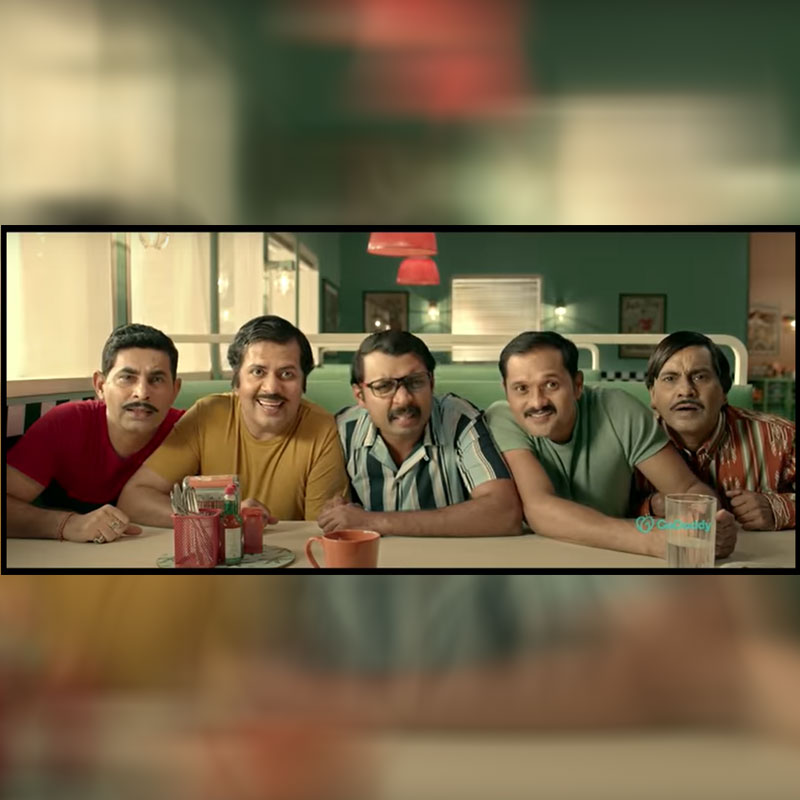
    NEW DELHI: GoDaddy Inc, a company that empowers everyday entrepreneurs, has launched the second phase of its marketing campaign for India – Bijness Bhai. This campaign continues the focus on encouraging small businesses in India to build a complete, integrated online business, and creates awareness about how GoDaddy’s online products and services can help them unlock success.

    GoDaddy’s current brand ambassador in India and one of the world’s most renowned cricketers, MS Dhoni, returns as the mentor Bijness Bhai, with twice the groove and charm. He will be seen encouraging small business owners, entrepreneurs and individuals across the country to take full advantage of owning a domain name by using it to create a website and getting a professional email, while maintaining a diverse social media presence to help achieve business success online. 

    In line with the company’s commitment to offer support in local languages, the marketing campaign will be available in seven Indian languages, including Hindi, Gujarati, Kannada, Malayalam, Marathi, Tamil and Telugu, to help spread the message to Indian small business owners and entrepreneurs across multiple geographies in the country.

    “As an aspiring entrepreneur myself, I understand the importance of being online to be able to sustain and grow amidst challenging and uncertain times, like we are experiencing right now. I’m super excited to be working with GoDaddy again as Bijness Bhai and help encourage more entrepreneurs, from across the country, to build a complete online solution for their businesses,” said MS Dhoni.

    Conceptualized by Tilt Brand Solutions, the campaign features two quirky television commercials (TVCs) with Dhoni as “Bijness Bhai”, a role model for entrepreneurs, makers and independent doers, who advises them to further advance their online journeys and grow their business by using GoDaddy’s online products and services. Through a fun, engaging narrative, the commercials bring alive GoDaddy’s proposition of being the ideal partner of the new India’s driven and advanced entrepreneurial and small business ecosystem.

    "We are extremely excited to again partner with MS Dhoni. Known for his 'cool' approach to complex and high-pressure situations, Mahi has been the perfect 'Bijness Bhai', guiding our customers on how to make their online businesses grow. By working with Dhoni, we wish to continue guiding and inspiring Indian entrepreneurs to follow their dreams and transform their business ideas into reality online,” said GoDaddy India MD and VP Nikhil Arora.

    “As businesses around the world are experiencing unprecedented impacts of COVID-19, we at GoDaddy stand committed to extend our support by helping them thrive online. Through this campaign and our association with Dhoni, we want to educate Indian entrepreneurs and small business owners about the benefits of going online especially during this current crisis, while demonstrating the power of our integrated suite of online products and services to help them create and grow their businesses online," Arora added.

    Currently. the two TVCs have been released on GoDaddy’s official online and social channels, and will be live across various channels including TV and other digital platforms, in the coming few days.

  • ITC urges consumers to munch on Bingo! during Dream11 IPL

    ITC urges consumers to munch on Bingo! during Dream11 IPL

    DELHI: Snacking enhances everyday moments and cricket fans love to munch on something while they are watching their favourite sport. Bingo! is the preferred snacking choice of millions of Indians, elevating their experience while they are glued to their screens from the comfort of their homes.

    The brand has crafted a new campaign which captures the association of Bingo! with match time in a fun and quirky way while reminding the consumers to grab a pack of their favourite snack as the match ‘starts’.

    Known for its distinct, clutter-breaking, youth-centric, witty communication, the new campaign ‘Match Start, Bingo! Start’ takes the consumers on an enthralling journey of a cricket fan who would drop whatever they are doing, the moment they hear a match ‘start’ to be glued to their screens while munching on Bingo!. Be it a romantic proposal, a youthful flirting moment, a friendly shoulder lent to clean the fan at home or a dentist ready to work on his patient’s teeth, everything takes a back seat when the match ‘starts’.  With the start of every match, munching on their favourite Bingo! snack has to start.

    Commenting on the campaign, ITC Foods spokesperson said, "Cricket in India is an extravaganza that brings individuals together from all walks of life to enjoy and experience an exciting game. At Bingo! our focus is to keep the fun and quirk alive in the lives of consumers. We hope that fans and consumers would enjoy the line-up of enlivening and fun-filled communication Bingo! has in store for the upcoming cricketing season. This year, fans will experience cricket differently, where their homes will turn into a virtual stadium while they enjoy every moment of the match on their screens. We, at Bingo! wanted to remind them of the lip-smacking experience they can enjoy within the safe confines of their homes, without losing out on their spirits, snacks or fun.”

    The campaign will be broadcast across television and digital media.

  • Why Zee Bangla’s Samrat Ghosh is looking forward to Durga Puja

    Why Zee Bangla’s Samrat Ghosh is looking forward to Durga Puja

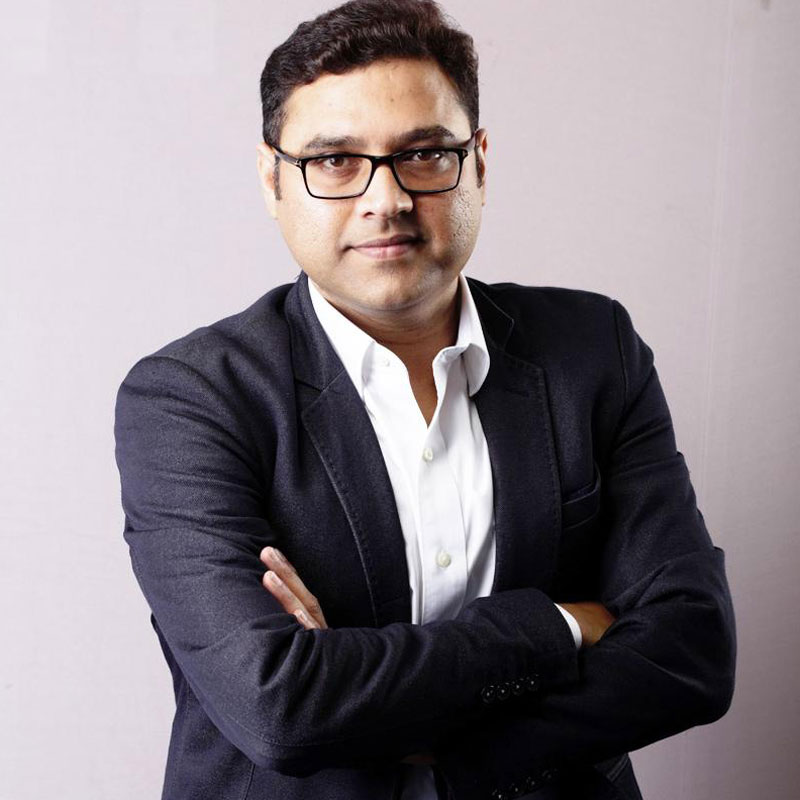
    MUMBAI: Zee Bangla and Zee Bangla Cinema cluster business head Samrat Ghosh is really looking forward to the next couple of months, like almost everyone in the industry. A large part of 2020 has been a bit of a washout for the channels that he runs, at least in terms of the topline. But with west Bengal gearing up for Durga Puja, he is hoping to get his charges back on track.

    “The sentiment is quite upbeat as viewership is definitely soaring and brand spends are beginning to pick up,” says he with an encouraging smile. “I am hopeful that during the festive season advertisers will start spending to encourage consumption. Apart from the usual categories which advertise, we will see lot of automobile, consumer durable brands also opening their wallets. The local retail brands are also reviving and have started advertising.”

    For west Bengal, Odisha, Assam, Tripura, Bihar and Jharkhand, Durga Puja is the time for denizens to do pooja in their homes, go on a spending spree buying new clothes, visit the pandals that pop up all over east India with kith and kin. Additionally it is also a time for gifting near and dear ones.

    Held over 10 days, it marks the victory of goddess Durga over the shape shifting asura, Mahishasura. Observers opine that Durga Puja has become a consumerist social carnival with brands going all out advertising as well as sponsoring local community events and pandals, as well spending big on television. A 2013 Assocham report estimated the Durga Puja festival pumps in close Rs 25,000 crore into the economy of the various states in which it is celebrated.

    Read more news on Zee Bangla

    Ghosh discloses that Bengali TV generate close to Rs 1,200 crore in ad spends annually; a large chunk of that comes during Durga Puja, especially for general entertainment channels (GECs).

    “If the advertiser wants to reach out to a consumer who is based out in Bengal, the local vernacular channels turn out to be much more effective in terms of reach,” he explains. “Hence, the GECs turn out to be reach builders in any of the media campaigns for the clients.”

    Thanks to the lockdown, the reach of GEC channels has further increased with male audiences also starting to spend more time in front of the television. Ghosh and team studied home bound viewers tastes and introduced content that kept them even more engaged with TV.

    “In the absence of original shows we came up with innovative content like comedy shows, and celebrity programs. We conducted various surveys to understand consumer sentiment and how their lives changed during pandemic. Later, we captured all those real-life stories and capsulated them in a show called Lockdown Diaries."

    However, with productions being allowed a couple of months ago, a fresh stream of content was churned out by production teams, who continue working in full swing with strict Covid2019 protocols in place, rolling out series that are keeping viewers glued to their TV sets.

    Pre-pandemic, he reveals, viewership was growing five to seven per cent in the state, whereas adex was swelling by 10-12 per cent. "I think it is a very healthy growth keeping in mind that many Bengali channels have been in existence for more than a decade," he states.

    Since the festivities are held with great pomp even in the neighbouring states of Bihar and Odisha, advertisers have been expressing keen their interest in reaching out to viewers in those markets too, he says.

    “What we have seen from the viewership perspective is that the spillover of Hindi in the states is not as high as it is Maharashtra,” adds Ghosh. Bengalis, according to him, love watching shows in their language and about their culture.

    The 14-day-long Pitru Paksh Shradh – a period when one pays obeisance to one’s dead relatives and ancestors – ended on 17 September with Mahalaya Amavasya. Unlike earlier years, when the gap between Mahalaya Amavasya and Maha Sasthi (the start of Durga puja) is hardly six days, this year the gap is about a month with the latter falling on 22 October. Bengalis are therefore really looking to celebrate Durga Puja, explains Ghosh. And the long gap has given brands a lot of time to prepare for the festival season, which could well be a good omen for him and the rest of the Bengali broadcasters.

  • IAA appoints Megha Tata as president

    IAA appoints Megha Tata as president

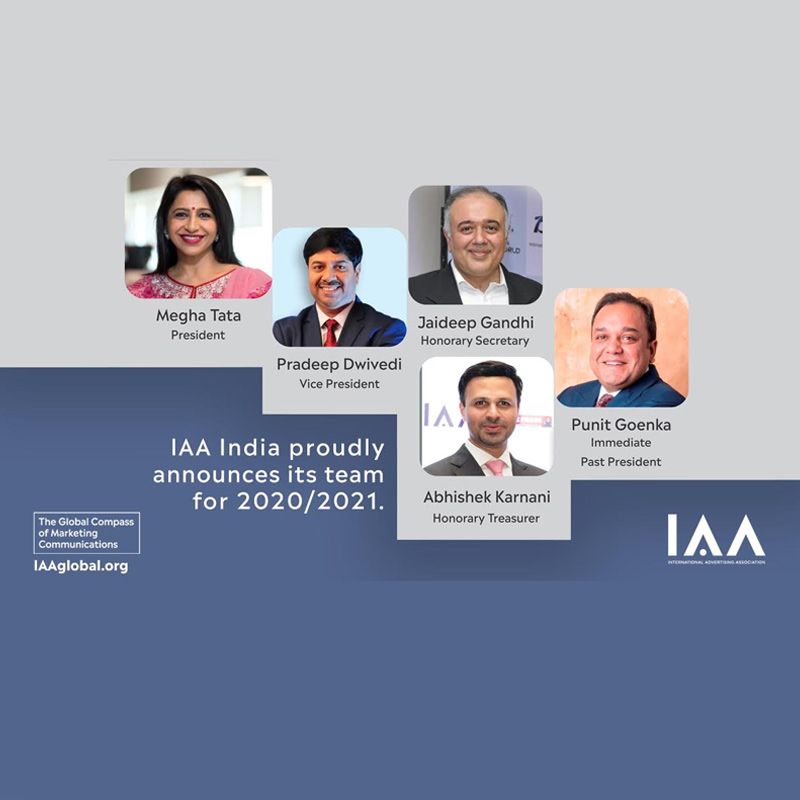
    The India Chapter of the International Advertising Association (IAA) has appointed Megha Tata as its new president. She is the MD of Discovery South Asia and was elected as vice president of the association last year.

    The association announced the appointment in a tweet congratulating Tata on her new role.

    She is an industry veteran with nearly three decades of experience. Tata joined Discovery Communications in 2019 and has been spearheading the operations there. Prior to joining Discovery, Tata was serving as the chief operating officer at Business Television India (BTVI).

    Tata has held senior positions at Star India, HBO India, and Turner International. She has received many industry accolades and has had an illustrious career.

  • Linc Pen spent Rs 44 crores in advertising & promotion in last 5 years

    Linc Pen spent Rs 44 crores in advertising & promotion in last 5 years

    Linc Pen, a leading stationery player in India, in its twenty-fifth annual general meeting disclosed that the brand had spent nearly Rs 44 crores in advertising and promotions in the last five years.

    Linc Pen MD & CEO Deepak Jalan stated that the company achieved the best ever result in FY20 despite the loss of sales in the last few weeks.  “Revenue grew by 9 per cent to close at almost Rs. 400 crore. EBIDTA margin was in double-digit at 10.3 per cent. PAT of Rs. 19.25 crore registered a healthy jump of 273.8 per cent over a lower base of Rs.5.15 Crore in the previous year. The board recommended a dividend of Rs. 1.50 per share, same as last year, in view of unprecedented challenges ahead in FY21.”

    However, Jalan stated that going by the current scenario, the brand may witness at least 70-80 per cent of FY20 sales by the end of FY21.

    “Turnover at Rs. 27.52 crore, was about one further of normal levels. For the first time ever, we registered a negative PAT of Rs  3.99 crore. Company’s April and May sales were washed out because of the nationwide lockdown. Our factories were closed for 28 days, and thereafter, gradual resumption started once the lockdown was lifted in a phased manner,” adds Jalan.

    Jalan further mentioned that the company saw sales come back to more than 50 per cent levels of what it reported in the same month last fiscal (June 2019).

    He also cited that the writing instruments industry has been severely affected by the Covid2019 as it has resulted in the closure of educational institutions and commercial establishments operating with lower physical attendance, which has clearly impacted the demand for writing instruments. The situation is similar all over the globe, with trade disruptions and lockdowns in several countries.

    Linc Pens has an aggressive plan to enhance the organizations retail footprints from 65000 retail touchpoints to about half a million, helping the brand to embark upon a multi-year growth journey.

    The stationery brand in past has launched several campaigns and even did ad films with Bollywood actor Shah Rukh Khan.

    The stationery products market garnered revenue of 109.5 billion dollars in the year 2019 globally and has been foreseen to yield USD 154.1 billion by the year 2027 at a CAGR of 4.6 per cent over the forecast period. 

  • BARC is not keen to take part in industry rivalry: Sunil Lulla

    BARC is not keen to take part in industry rivalry: Sunil Lulla

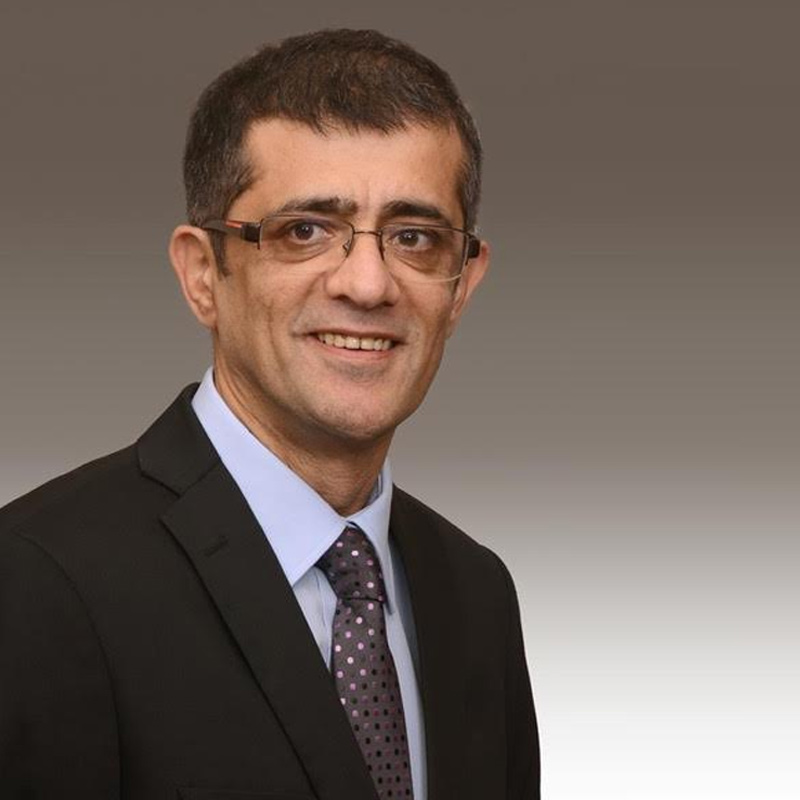
    MUMBAI: Eight years ago India’s viewership monitoring agency Broadcast Audience Research Council (BARC) was born. Its conception was the result of an unhappy industry and several Telecom Regulatory Authority of India (TRAI) interventions that resulted in the  shutting down of viewership ratings as an industry currency by Tam Media Research. 

    Since its launch, BARC has done a commendable job of building the world’s largest audience measurement system in one of the most fragmented markets. Last year, the affable veteran media industry executive Sunil Lulla was brought in to lead the organisation after the departure of its CEO Partho Dasgupta.

    Lulla,a well-rounded professional, has had around three decades of work experience in advertising, music, the internet, youth and news broadcasting, production and OTT companies.  He could not have come in at a more challenging time: TRAI has been making noises about bringing in another viewership monitoring agency. Then some member or the other from time to time has been raising a stink about his channel’s viewership. Also, hardly six months of his joining, the pandemic hit, and Sunil and team BARC had to turn to working from home.

    Lulla got into a fireside chat with indiantelevision.com founder, CEO and editor-in-chief Anil Wanvari on all things related to the organisation he heads. He spoke at length about his vision for BARC 2.0, challenges faced during pandemic, controversies revolving around the company and much more insightful details. Excerpts from the interview as written by Shikha Singh.

    Watch our fireside chat with Sunil Lulla

    How are you guys working now?

    At the start of the epidemic, we were not equipped to do work from home. We got ready when we had to. We pick up people and drop them. We had to resize our company in terms of cost structure because we knew revenues were going to fall, and I was successful at doing that. I think the team has done a brilliant job of making sure BARC delivers output and stays relevant. We made sure that we ran at a commercial value that the industry warrants us to. I think it's all about how you approach things.

    We have got back to the office.  We are working with 83 employees across locations. Our productivity has gone up. People enjoy coming to the office. For a lot of people work from home is not easy in India, because of space or other constraints. Work from office is a professional space. There is enough social distancing. We have field operations in every state. In some places, they can’t travel in every city, because there may be a containment zone. But in many places they are. If I remember correctly, the stats for this week are that 97 per cent of people are on the road.

    Was there any impact on people who were having meters at their home?

    There is a people meter box in a particular home, and then there's a people meter box in a retail outlets, restaurants, bars and cafes. So the HoReCa (hotel, restaurant and café) business is shut because there is no out of home consumption of food, spirit beverages or any kind, no restaurant is open no coffee shop. We have access to those places but we are not utilising them as there is nobody there to measure television content.

    The home panel, as we closed in March, is continuing at the same pace. We have not added new homes until now, because in many places there were restrictions. But we will add new homes in the next few months as the restrictions open up. Some of the homes did move out,  some came back. We had to do routine maintenance of the box. During May and June some of the homes did not recharge their SIM cards, cable bills, DTH. But right now, relatively speaking, we are much better off and almost as good as before the lockdown happened. 

    The good part is that most of the people have watched television and TV viewing went up by 43 per cent. January 2020 is what we call the pre-Covid2019 period. We are now 15 percent higher in viewing, six per cent higher in daily reach,  nine  per cent higher in daily viewing, and 18 per cent higher in ad volumes as compared to January. July and August 2020 have done better than July and August of 2019. In September we are trending higher. All parameters of engagement are on the positive side.

    Read more news on BARC

    Was it an individual decision to invite you or was it a collective decision to have you onboard?

    A large part of my life has been representing the audiovisual industry directly or indirectly. TV networks have taken a large part of my professional existence. BARC represents the stakeholders of advertising, marketing, and audiences. It basically is a currency of  where the audience is and marketers and sellers, that is broadcasters, exchange that value. It is a big privilege for me to represent the stakeholder body. We help provide the information, for them to understand what India watches

    It was a board-based decision, the chairman of the company then and even now is Punit Goenka. Many people have known  me because I was involved in the TV and advertising business. So, they reached out to me and it was a good opportunity to build what we are building. It has lived upto the expectation and  I have set myself a calendar, and an agenda for all of us to build BARC 2.0. We are stretching and pushing harder with some constraints in this particular environment. But I think we will build a much stronger measurement system.

    What BARC 2.0 is going to look like?

    Measurement science is the heart of the company.  We have been able to build or reinforce that in terms of processes of measurement as well as in processes of validation. We have invested very heavily in terms of validation of  what we do. And there is that every day correction. It is not something that you dial up or down, but something you statistically wade in and out of. Because when we say that this is what India watches, we better be sure of that statement. Yes, it is a sample, it’s an extrapolation of that sample within a reasonable range that you can look from an estimate point of view. So there will always be those statistical errors, which are statistically validated. For us, it will be some amount of expansion that we will do in sample homes, the continuous corrections that we do, the processes we bring in, the volume of data that we generate is humungous and people tend to think of it in terms of audience measurement. But it is also picking up and hauling that data, storing it and being secure about it. It’s the ethics of the organisation that are really important – the standards that we set out over there.

    Also, if there is one big takeaway from this pandemic it is that there has been a huge adoption of digital consumption. We are working very closely with the industry to build something which can offer a ‘one video view.’ You may watch TV, you may watch the TV show on your telephone or you may watch an OTT content which is not coming on TV. We would like to bring that measure to bear and that’s what we are working towards. We will begin that process next year of being able to share that data in 2021.

    BARC’s previous attempts to monitor digital video consumption were ambitious. What you need to understand is that the currency starts with advertising. Television was estimated to be a Rs 32,000 crore industry. It is going to be a little less this year because of the pandemic. It’s going to bounce back pretty much. What is going to accelerate it is the advertising investment happening in digital.

    So you start from where the marketing money is being spent, because marketing drives consumption, consumption drives the economy.

    That’s where I see BARC’s role playing out in benchmarking, measuring, projecting or stating out on how the consumption is happening and how that economy is being driven. We already have had conversations with the stakeholders. We will now to have to build proof of concept, build pilots, though it could take a year. Everybody need not participate.  On TV all channels get watermarked, all channels want to get measured. In digital many players may or may not participate. But we will navigate this as we go along. I do believe that if we have a good successful commercial model, then there is one neutral entity called BARC that measures television and if we can bring other components that bring digital, give it time, then we should be able to deliver on both accounts. We are open to partnerships. At the end of the day, it is not about a number. Any independent streaming platform can give you a number. It's a demographic relationship that you need which comes from the audience. And that information is not easily available. That information is available at the TV end. We can link in those two and that’s a conversation for 2021. The right tool will come in place. We will all work together, learn together – both locally and globally how to build it.

    Read more news on BARC

    What about expanding the sample of TV?

    We are at 44,000 boxes today. We will get to 50,000. Expansion is a moot point given what’s happened within the industry. These things cost money. The industry pays for it. And we have to also be allowed to do the processes and measures we can do. So we have to wait for a little more unlock, a little less scare and then be able to progress this. Our repair centre has been working two shifts a day and we have started replacing repaired boxes.

    You took over BARC in end of 2019, what have you been doing since then?

    The big part of the exercise that we did was to report the data as is where is. And consistency is not a simple act. You need to sort that data and be consistent with your processes. You need to make sure you have all the safeguards in place, it’s not an easy act. The pandemic made it a lot more difficult as we were not able to move out, getting the data around, and getting the boxes going, not being able in expand in May, June and July.

    Installations were not happening as you are dealing with fear – both at the sample end and at the organisation end. We  made very big steps in data validation. The board appointed an oversight committee that validates every single thing we do. We brought back trust into the industry.

    I spent a lot of time from December to March, going from city to city and town to town talking to our stakeholders over there and explaining to them about what we were trying to do. The algorithm we were trying to do. One of the big demands which was coming in from the industry was to address the inflated viewership that sometimes comes due to the forced viewing due to landing pages. We took a long time to address that. It is a large scale technological and statistical project.

    We have got our company far more ingrained in deep processes, and the culture of measurement. For me that has been the changeover, that we have made within the company. I think the industry recognises it, the board too does, the stakeholder body too. We have continued to run our techcom measurement, oversight meetings in the same rigour that we did. The data goes out there. The same time every Thursday.

    Despite all this there was News Broadcast Association (NBA) writing to you about TV9 Networks' spiking viewership?

    The best part of doing something is to know that somebody is always  unhappy in the world. They are unhappy because everybody wants to be number one. Our job is for the marketing industry to give them credible evidence, that those people who are watching TV, we can report on that with accuracy.That’s what we do.  Which channel people choose to watch or how much time they want to spend is their choice. We have to make sure the sampling and representation of that sample is accurate. Competitive rivalry is part of the industry, we don't  partake   in that. There has been a shift in people's choices. Men have started watching a lot more television in non-prime time. Similarly kids got exposed to a lot of news. There was no original content for the first few months. A lot of habits changed over there. If you look today and compare it to a year back, there are significant changes in preference. And there are always changes, channel preferences change from year to year. There is a resettling back to where we were in January now. Some consumers may have started watching digital content. We are going to have live with these changes. 

    There have been departures in the past few months. Have we seen the last of that?

    BARC's functioning organisation is eight years old. The operations and release of data started five years back in 2015. On an average, over the last many years our average attrition of 10 per cent, and it is not a surprising number in this market. People who have worked for seven to eight years want to do other things and are justified. I am grateful for their contribution. Also I don't think you need to replace senior people with other experienced people, we have given a lot of younger people an opportunity to grow and redesign the organisation a bit so there is greater participation.We have given a lot more people a lot more say in the management of BARC. It’s not as pyramidic  as it used to be. When you start a company you start with a pyramid, then it starts expanding. We are at that part where we have started expanding. The natural evolution of BARC has been good. Apart from that the functioning of the company remains the same.

    Measurement science team has got stronger, more robust. Dr. Derrick Gray runs that.  Data and product team sit together. This was not as aligned over the last five years but because of I believe that data measurement is at the heart of the business and it will be consolidated. Technology which is a very important aspect of securing the data and churning the data as well as transporting that data has a very strong role to play in the day to day management of the company. Our commercial function is centric within our CFO. We have given other functions like HR, legal a lot of new leaders. I think the management is more robust, it is wider, it is less centric and more participative of the company.

    I would also like to have many more advertisers buying our products and services. We have a lot of broadcasters and agencies buying; we would like to have a lot more advertisers. Some have really shown confidence and faith, our large customers, and I would like to grow that pie. Because I would also like to have many more advertisers buying our products and services. We have a lot of broadcasters and agencies currently. We would like to have a lot more advertisers. Our large customers have really shown confidence and faith and I would like to grow that pie. there is a lot in the TV data that many marketers can benefit from and it's just not ratings. It’s the habit of buying; the way you plan your spots. There are some agencies who are doing a phenomenal job of planning. Advertisers have started spending a lot of money on TV and they are challenged to spend a lot of money on digital. I believe they can understand the TV data better. And as the economy starts unlocking and marketers will want to bring back their volumes, their market shares, their numbers back on the table. They will start spending more both on TV and now digital. Marketers can participate in that data pool and then use the expert partners – the agencies – to build a better proposition for their advertising.  I think there is a great opportunity in terms of the tools we are developing – both for broadcasters as well as marketers. 
  • Cadbury introduces two new flavours

    Cadbury introduces two new flavours

    INDIA: The sweet battle of Cadbury inventors has finally come to an end.

    Mondelez India, the makers and bakers of some of India’s leading snacking brands like Cadbury Dairy Milk, 5Star, Oreo, Bournvita, etc. has announced the winning flavours of the ‘go Madbury for Cadbury’ campaign.

    Introducing Cadbury Dairy Milk Hint O’Mint, made with Cadbury Bournville flavour and Mint crystals, and Cadbury Dairy Milk Paanjeer, combination of Paan flavor and Anjeer bites, created by Cadbury lovers Apoorva Rajan (Bengaluru) and Prabhjot Anand (Punjab), respectively. With the resounding success of Madbury’s debut edition – with more than 800k entries, the company is all set to launch Madbury 2.0, asking consumers “Kahaan Se Aayegi Hamari Agli Cadbury?”.

    Mondelez India senior director – marketing (chocolates), insights and analytics Anil Viswanathan said “Cadbury Dairy Milk’s ubiquity has been melted into unique versions to fulfil the various snacking needs of the nation, which reiterates its entrenchment in the lives of our consumers, as a household ingredient. Therefore, we launched Madbury to give all the chocolate lovers a chance to create their ‘Home Wala’ Cadbury, by experimenting with flavours and ingredients of their choice. As a result, further strengthening our consumer connect. It was elating to see such creative and unique ideas and combinations of flavours that people wanted to amalgamate with the taste of their favourite chocolate bar and brought out the love Indians have for desi/ localized flavours. Considering the incredible response that the first edition generated, we are now thrilled to roll out Madbury 2.0 and expect greater participation across the country.

    Read more news about Cadbury

    As a company, Mondelez India is always looking for ways to innovate and excite consumers, and Madbury is yet another attempt to further strengthen our connection through an engaging campaign curated ‘of the people, by the people and for the people’. We can’t wait to see what other exciting flavours will be introduced to the world of Cadbury!”

    The first edition of Madbury garnered more than 823 million impressions across platforms, 205 million views, and engaged with 1.7 crore consumers. As a result, the love for local flavours came to the fore with suggestions of Cadbury versions like- Chai and Elaichi, Paan and Mixed Berries, Kulfi and Badam, Cashew and Mishtidoi, etc. amidst an array of other ingredients. This is truly a consumer-centric initiative – special chocolate bars made by consumers, for consumers. The consumers finally voted for the Top 2 winning flavours. Supporting this consumer-centric launch, the brand will associate with Indian Celebrity Chef Kunal Kapoor, to create some special digital engagement for the winners and the winning flavours. These limited-edition bars – Cadbury Dairy Milk Hint O’Mint and Cadbury Dairy Milk Paanjeer, are all set to hit the shelves and delight consumers, by the first week of October 2020.

    Comprehending the enthusiasm and rigor with which the consumers participated to showcase their culinary creativity, Mondelez India is now all set to launch the second edition of the campaign- Madbury 2.0, asking consumers “Kahaan Se Aayegi Hamari Agli Cadbury”. This year, the brand will take it a notch higher by inducing a sense of competition across different parts of the country. They will also introduce a white chocolate mass in addition to the milk chocolate mass that was available in the previous edition, presenting the consumer with a whole new avenue to experiment and come up with exciting new combinations. Madbury 2.0 will witness 3 winners and will go live from 28 September, till 30 October.