Tag: advertising

  • Mathrubhumi delivers a special Diwali edition to its readers

    Mathrubhumi delivers a special Diwali edition to its readers

    NEW DELHI: Always delivering something different to its readers and clients, Mathrubhumi conceptualised yet another special edition, this time for Diwali 2020. Despite Diwali not being a big festival in Kerala, the publisher tried something different to stand out in the market by creating a hugely successful additional 10-page supplement and delivering it on 12 November. 

    The paper was curated with enriching content and advertising support, in addition to also ensuring the main issue of the day itself looks great. It covered ads from a variety of categories such as consumer goods, mobiles, local retailers, hospitality segment, OTC medicines, and educational institutions. 

    Mathrubhumi Group MD Shreyams Kumar said, “This is in line with the various innovations the group is embarking on, all with a view to offer our readers richer content in every aspect and the advertisers with relevant environment to connect with our readers. We have created history by inventing a new season after Onam.  I congratulate our entire team behind this for the stupendous success.  Taking the opportunity to also thank all our advertisers who saw the merit in being part of the special issue.”

    The publisher claimed in a press statement that the initial reactions from the market seem to suggest that this has indeed worked towards providing a sudden boost of energy and confidence to both the consumers as well as the merchants in Kerala.

  • Walt Disney Co witnesses slow recovery in Q4

    Walt Disney Co witnesses slow recovery in Q4

    NEW DELHI: The Walt Disney Company reported total revenue of $14,707 million in Q4, witnessing a decline of 23 per cent year-on-year (y-o-y). While parks, entertainment, products, studio entertainment business continued to register a dip, direct-to-consumer & international and media revenue saw an upsurge.

    The media revenues for the quarter stood at $7213 million, up 11 per cent year on year. The d2c & international revenue stood at $4853 million for the quarter and witnessed an upsurge of 41 per cent y-o-y. 

    Diluted earnings per share (EPS) from continuing operations for the fourth quarter was a loss of $0.39 compared to income of $0.43 in the prior-year quarter. Excluding  certain items affecting comparability, diluted EPS for the quarter was a loss of $0.20 compared to  income of $1.07 in the prior-year quarter. EPS from continuing operations for the year was a loss of $1.57 compared to income of $6.26 in the prior year. Excluding certain items affecting comparability, EPS for  the year decreased to $2.02 from $5.76 in the prior year. 

    The most significant adverse impact in the current quarter and year from Covid2019 was approximately $2.4 billion and $6.9 billion, respectively, on operating income at parks, experiences and products segment due to revenue lost as a result of the closures or reduced operating capacities. 

    Media Networks revenues for the quarter increased 11 per cent to $7.2 billion, and segment operating  income increased 5 per cent to $1.9 billion. 

    Cable Networks revenues for the quarter increased 11 per cent to $4.7 billion and operating income  decreased 7 per cent to $1.2 billion. The decrease in operating income was due to lower results at ESPN,  partially offset by increases at FX Networks and the domestic Disney channels. 

    Broadcasting revenues for the quarter increased 10 per cent to $2.5 billion and operating income increased  47 per cent to $553 million. The increase in operating income was due to affiliate revenue growth and lower  network programming and production costs and decreased marketing expenses, partially offset by a timing  impact from new accounting guidance. 

    Advertising revenues were comparable to the prior-year quarter as lower average network viewership was offset by the benefit of an additional week in the current quarter, higher network rates and an increase  in political advertising at the owned television stations. 

    Parks, Experiences and Products revenues for the quarter decreased 61 per cent to $2.6 billion, and segment  operating results decreased $2.5 billion to a loss of $1.1 billion. Lower operating results for the quarter  were due to decreases at both the domestic and international parks and experiences businesses. 

    Studio Entertainment revenues for the quarter decreased 52 per cent to $1.6 billion and segment operating  income decreased 61 per cent to $419 million. The decrease in operating income was due to lower theatrical and  home entertainment results. 

    Direct-to-Consumer & international revenues for the quarter increased 41 per cent to $4.9 billion and  segment operating loss decreased from $751 million to $580 million. The decrease in operating loss was  primarily due to improved results at Hulu and ESPN+, partially offset by higher costs at Disney+, driven  by the ongoing rollout and a decrease at our international channels. 

    The improvement at Hulu was due to subscriber growth and increased advertising revenues driven by  higher impressions, partially offset by an increase in programming and production costs due to higher  subscriber-based fees for programming the live television service. 

    Higher results at ESPN+ were driven by subscriber growth and higher income from Ultimate Fighting  Championship pay-per-view events. 

    The Walt Disney Co CEO Bob Chapek said, “Even with the disruption caused by Covid2019, we’ve been able to effectively manage our  businesses while also taking bold, deliberate steps to position our company for greater long-term growth. The real bright spot has been our  direct-to-consumer business, which is key to the future of our company, and on this anniversary of the  launch of Disney+ we’re pleased to report that, as of the end of the fourth quarter, the service had more  than 73 million paid subscribers – far surpassing our expectations in just its first year.” 

  • How Covid2019 impacted ad rates & consumption of news genre

    How Covid2019 impacted ad rates & consumption of news genre

    NEW DELHI: Covid2019 impacted every category of the television business. In the news genre, ad volumes, as well as ad rates, were hit initially, but have since regained momentum. There was a massive surge in viewership, which is now beginning to stabilise. And with more and more people getting onto the digital platform, the news consumption pattern has witnessed a slight change.

    In a session titled – ‘Advertising on News’ at Indiantelevision.com’s News Television Summit, co-powered by TVU Networks, eminent advertisers and agency heads discussed how stakeholders in this business are analysing the rapid changes and adjusting their strategies to it. The panellists included FBB, Future Group CMO Prachi Mohapatra, Policy Bazaar head of brand marketing Samir Sethi, Wavemaker CEO – south Asia Ajay Gupte, Essence SVP & MD – India Anand Chakravarthy, ITV group CEO Varun Kohli. It was moderated by E&Y partner M&E Ashish Pherwani.

    Pherwani began by asking Kohli how he sees the ad rates at news channels in the current scenario. Kohli mentioned that Covid2019 had hit everyone adversely big time. “The FMCG brands that were operating on the other genre started coming to the news genre because the latter was growing. All other genres were lacking fresh content, except movies where the channels just played their libraries. Overall, the news genre was impacted for the first two months of the financial year but then it regained,” added Kohli.

    He elaborated that in the post-Covid scenario, especially during the festive season and election times, the frequency news channels will be able to get their old rates back. “So maybe the leaders might not have gained it yet but the frequency channels have started getting their rates back in some order because they are making a lot of sense to the agencies and advertisers in terms of CPRP mix.”

    Adding to this Gupte from Wavemaker shared that Covid was a big blessing for the news genre. “GEC was not launching fresh content and newspapers also suffered during that time, which led to news on television doing really well. During that time, there was a high viewership throughout the day and the viewership among women also went up. Interestingly, we are also seeing a lot of appointment viewing coming into play, which was not there earlier. Previously, the news channels sold on the basis of TRPs or day parts, but now it’s also selling some shows that command a premium,” explained Gupte.

    He went on to add that during this time a lot of extended family viewed news channels, so it will be interesting for the latter to think about creating content that works for other family members too.

    Pherwani then touched upon changes in consumption of news on the digital front, especially more after the Covid period, to which Chakravarthy from Essence responded that people are fast moving towards digital consumption.

    “I think with English news genre, building a product which is completely differentiated and is able to add value over and above what a digital platform to my mind will determine how long this genre will exist. If we do not change the nature of how English news channels position themselves and their content and what they offer, I fear that they may be over indexed today and will start witnessing a decline in ad revenue before it starts moving to digital very quickly – especially in a country like India, which is rapidly becoming digital. On the other hand, in the language news sector, the content and consumption of news is picking up slowly. It is happening but there is a possibility of a longer run,” he outlined.

    Seeking a marketers point of view, Pherwani called upon Mohapatra, who mentioned that the digital consumption has rapidly increased especially from the start of the lockdown. However, her mantra regarding spends on digital news is that she seeks a brand-safe environment to operate and a clear RoI on it.

    On the other hand, Sethi from PolicyBazaar stated that his brand continues to stay bullish on TV as it is extremely RoI focussed. Moreover, television offers the consumer freedom to surf the internet. He mentioned that whenever a PolicyBazaar spot runs on television, a simultaneous surge within 10 seconds is observed by the brand while it is mapping the data. People can watch the spot and engage with the brand on the website but when a similar set of audience is watching news on OTT, they hold back from exploring the internet.

  • dentsu X & Mindshare dominate Indian market: Recma report

    dentsu X & Mindshare dominate Indian market: Recma report

    NEW DELHI: Recma, the independent research firm that evaluates media agencies, has named dentsu X, the integrated media specialist from the house of dentsu international, and Mindshare India as the most ‘dominant agencies’ in the country. Some of the other agencies that made the list include Madison, Lodestar, Zenith, Initiative and Starcom.

    dentsu X India has also been ranked the undisputed number one agency on vitality in Recma's latest ‘Dominant agencies: where are the champions?’ report.

    With the maximum scores earned on both competitive pitch wins and momentum in the last three years, this is the third consecutive year for dentsu X to be acknowledged as the much-coveted number one agency on vitality.

    For the record, the report was released on September 30, 2020. Out of 700 agencies evaluated globally in the report, only 27 agencies are dominant in the top 16 countries. Carried in 47 countries totally, it’s an audit of media agency performances and competences based on 19 criteria. This in-depth report captured the last three-year track record based on competitive pitches, agency momentum, resources, and the client profile of each agency.

    dentsuX India CEO Divya Karani said, “Building an organisation brick-by-brick takes sustained effort and patience but does make for a solid foundation. Our stature and growth trajectory are a result of our data-driven design, our ‘experience beyond exposure’ thinking, and deep client partnership in effecting business outcomes. When our clients succeed, we succeed!”

  • ASCI investigates surrogate ads in liquor category appearing during IPL

    ASCI investigates surrogate ads in liquor category appearing during IPL

    MUMBAI: The Advertising Standards Council of India (Asci) has, for the past few weeks, intensely monitoring possible surrogate advertising during the ongoing Indian Premier League (IPL). Asci has put in place daily updates on the monitoring of alcohol brand extension advertising, instead of its regular weekly feeds, for immediate processing of complaints. Complaints against eight such advertisements, which are in potential violation of the Asci code,  have been registered over the past one month.  These include whisky, beer and white liquor brands. In all these cases, Asci has written to the advertisers within 24-48 hours of airing of the commercials, seeking a response.

    The advertisements picked up range from those selling music CDs to packaged water, non-alcoholic beverages, and merchandising. The key to Asci's investigation is determining what are surrogates for liquor and what constitutes genuine brand extensions.

    Asci’s codes and guidelines are clear about what qualifies as a genuine brand extension:

    ·   For a brand extension of a product (liquor, tobacco, etc) to be considered genuine, it must be registered with an appropriate government authority such as the Food and Drug Administration and the Food Safety and Standards Authority of India etc.

    ·   In-store availability must be at least 10% of that of the leading brand in the category that the product competes, or sales turnover must exceed Rs 5 crore per annum or Rs 1 crore per annum in each state it is distributed in

    ·   It must have a valid certificate from an independent organisation for such turnover and distribution data

    Advertising for such brand extensions cannot feature what is prohibited by law or banned products. Neither can the advertising allude to or hint at products that cannot be advertised. 

    As per the law, advertisements for liquor brand extensions can run on TV if they have a CBFC certificate. The IPL broadcaster for TV has confirmed to Asci that all advertisements are checked for CBFC clearance so that they are not in violation of the Cable TV and Network Act. Keeping that in mind, Asci has processed complaints on advertisements appearing in OTT, digital and print media.

    Asci secretary general Manisha Kapoor said: “We are being extra vigilant because the IPL is one of the biggest marketing platforms in India. We are looking at advertising across media – print, OTT, digital. When we spot potential violations, we ask advertisers to substantiate their claims of their product or service being a genuine brand extension within seven days. This includes sales, distribution and market share data that must be certified by an independent body. Only if they fulfil the criteria for a genuine extension, is the advertisement allowed to continue.  If the advertiser fails to respond within the allotted time, the complaint is taken up ex-parte by Asci’s independent consumer complaints council.”

    Asci is the self-regulatory body of the advertising industry that has as its members, agencies, advertisers, media houses and other stakeholders. Its mission is to increase consumer trust in advertising by ensuring honesty and adherence to ethics in all marketing claims. 

  • Shah Rukh Khan: King of Bollywood & brands

    Shah Rukh Khan: King of Bollywood & brands

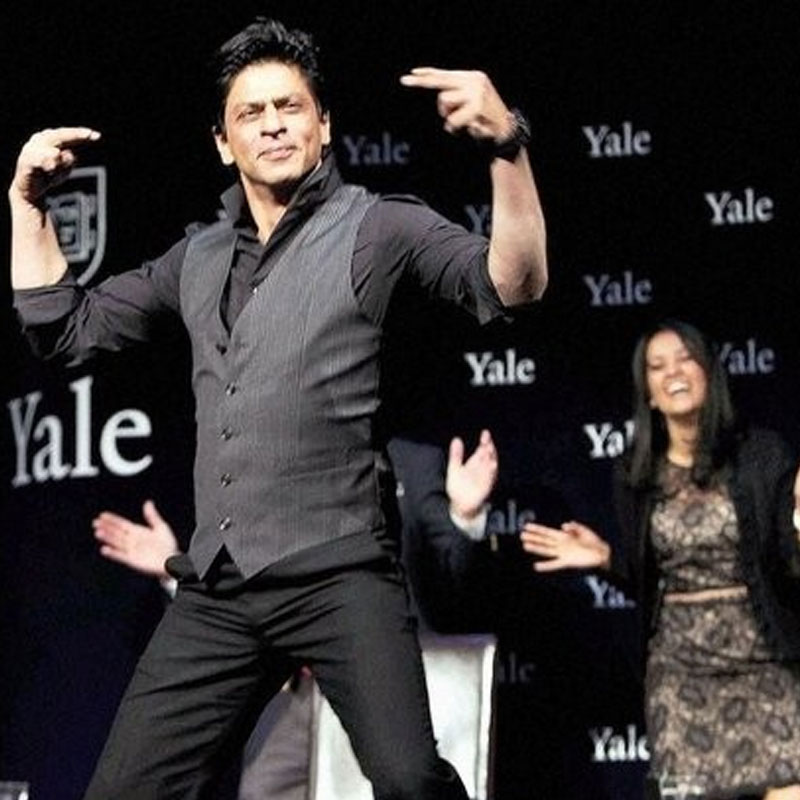
    MUMBAI: That boyish charm, that dimpled smile, that romantic effervescence – Shah Rukh Khan has effortlessly won viewers' hearts, be it on the silver screen with his movie personas, or on the small screen with his brand endorsements.

    to the golden days of advertising.

    Here’s a look at the King of Bollywood’s journey as one of the most dynamic and bankable faces in ad campaigns:

    Videocon

    The young Indian side under the leadership of MS Dhoni won the ICC World T20 in 2007, and Videocon came up with this droll commercial featuring the Indian captain and SRK. The duo played long-lost brothers in childhood and have their real-life roles reversed. While Dhoni plays an actor, SRK is a cricketer!

    Byju’s

    Ed-tech company Byju’s has partnered with Khan to unveil their new offering – Byju’s Classes to parents across the country. In the campaign, Khan is seen essaying the role of a teacher to a group of parents and discusses the common worries they have regarding their children’s after-school tutoring needs.

    D’Decor

    Home furnishings brand D’Decor memorable campaign ‘Beautiful Homes tell Beautiful Stories’ was a series of short films featuring Gauri and Shah Rukh Khan. The brand marked 10 years of association with the couple with this campaign. The film transported viewers straight into Gauri and Shah Rukh’s living room where they’re celebrating their 22nd wedding anniversary.

    Hyundai

    Shah Rukh Khan has played an instrumental role in building brand Hyundai in a competitive market like India. He had a contract with the auto company from 21 April 2017 to 20 April 2019. This was his longest association with a brand. Here’s a look at King Khan’s ad for the auto company:

    LUX

    LUX has featured Shah Rukh Khan in their creatives for a long time. Among all the ads he has done with LUX, the most love he got from the audience was when actresses were seen assisting him into a bathtub.

    DISH TV

    DISH TV signed Shah Rukh Khan in 2007 for the first time. Since then, he is the face of the brand. During their decade-long association, he has played a key role in delivering DISH TV’s communication strategy.

    Denver

    Denver is another brand that has used the image of Shah Rukh Khan to promote its range of fragrances for men. He has been seen endorsing Denver deodorant in various marketing and promotional campaigns.

    Pepsi

    The Oye-Bubbly ad featuring Shah Rukh Khan, Sachin and Amitabh Bachchan created a storm in 2014. Ye Dil Maange More campaign is another example where Khan has successfully conveyed the beverage brand’s messaging in his signature style.

  • Bajaj Auto clocks 11% sales growth in October 2020

    Bajaj Auto clocks 11% sales growth in October 2020

    NEW DELHI: Bajaj Auto registered 11 per cent year-on-year growth in the overall sales of its vehicles (across portfolio) in October 2020. It sold 512,038 vehicles in October 2020 against 463,208 vehicles in the same month last year.

    Two-wheelers drove numbers, recording unit sales of 4,70,290 in October 2020 for an overall growth of 18 per cent. 2,68,631 vehicles were sold in the domestic market, clocking 11 per cent growth, while another 2,01,659 vehicles were exported, registering 29 per cent growth. Notably, Pulsar alone sold 1,70,000 units – a record high for the brand.

    On the commercial vehicle front, Bajaj Auto sold only 12,529 vehicles domestically, witnessing a negative growth of 65 per cent and exported 29,219 vehicles registering a growth of four per cent. The company sold 41,478 commercial vehicles in October 2020 and recorded a slowdown of 35 per cent.

    The overall domestic sales saw a marginal growth of one per cent and exports saw a growth of 25 per cent.

  • Nivea, Taapsee Pannu say ‘Don’t Face Wash, Milk Wash!’

    Nivea, Taapsee Pannu say ‘Don’t Face Wash, Milk Wash!’

    NEW DELHI: Nivea has launched a video campaign Taapsee Pannu to promote the revamped Nivea Milk Delights Face Wash, which encourages consumers to not just “face wash” but “milk wash” instead for a natural, healthy glow.  

    The digital film showcases the importance of milk as an ingredient that is more beneficial than a regular face wash in a fun tête-à-tête between two friends. Taapsee and her friend are hanging out together, when the latter asks the actor the secret behind her healthy glowing skin.  

    The 360-degree campaign conceptualised by FCB will be launched on digital platforms and will be further amplified through various other mediums.

    FCB Interface ECD – Mumbai Rakesh Menon said, “Most face washes cleanse well but take moisture away from the skin, leaving it feeling dry. But Nivea Milk Delights adds nourishment and moisture to the skin, thanks to the milk. Through this campaign, we simply wanted to urge people to upgrade to this ‘Milkwash’ that is so much better for their face.”

    Nivea marketing director Sachin Killawala said, “Friends are one of the biggest influencers in our lives while choosing personal care products and this campaign brings that alive in a playful manner. Through this communication, both visually and verbally, we wanted to showcase how Milk Delights facewash brings together the goodness of milk & home remedies for a natural, healthy glow.”

  • HUL’s Axe takes a ticket to the IPL

    HUL’s Axe takes a ticket to the IPL

    MUMBAI: Sachet pricing. That’s a tack that’s worked like wildfire amongst India’s masses who lie at the lower end of the customer pyramid. Shampoos, soft drinks, detergents – almost every category and brand has tried it – with much success. They have scaled their offerings to mini sizes to make products affordable and usable by those in the hinterlands and those short on money.

    India’s savviest marketing company, the giant HUL, has been using the IPL to promote Axe Ticket, a miniaturisation of the famed Axe perfume which it launched in February 2018.

    The 2018 version came in a 17 ml size and was priced at Rs 65. A concentrated perfume, it could be used for 250 sprays, but required three or four pumps to give the wearer odour protection and make them attractive to the opposite sex. The Axe mini-ticket followed in late 2019 in a 10 ml size priced at Rs 35, but promotion was suspended on account of the Covid2019 pandemic.

    Read  more news on HUL

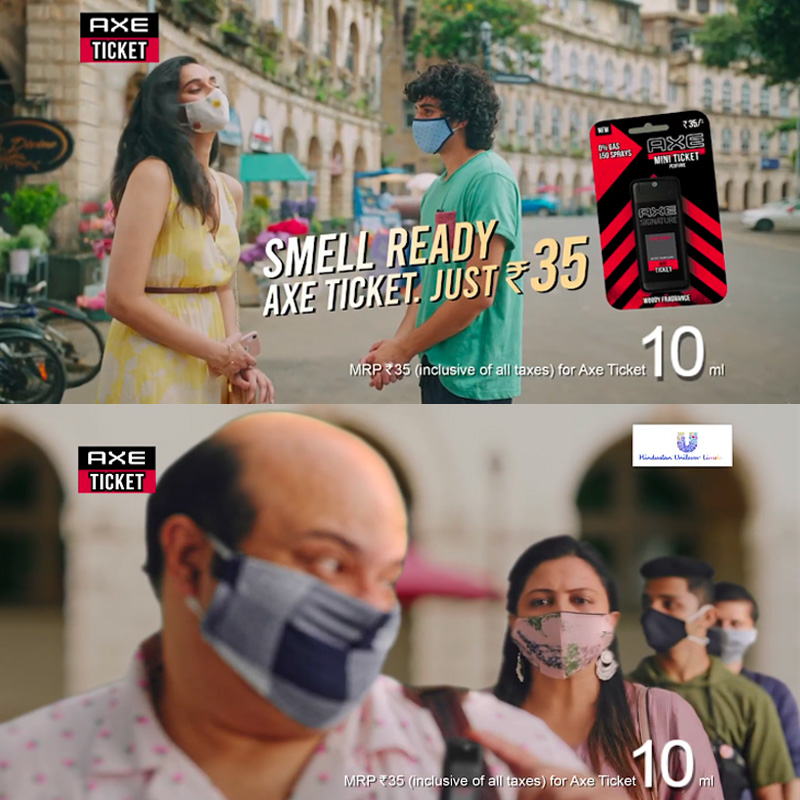
    For the past two months, the mini-version has been back, but with the sobriquet Axe Ticket. A humorous campaign which is airing during the IPL telecast shows folks in an ATM queue all masked up and keeping socially distanced from each other. One of them brings out his Axe ticket and sprays himself. Presto, the perfume gets to a pretty young thing who is immediately drawn towards him and turns around and parks herself in a demarcated space just before him. Pop comes the message: “Smell ready. Axe Ticket at Rs 35 only. “

    The TVC ends with an older bald man, bringing out his Axe Ticket, hinting that he will spray himself with it, in the hope of luring the lady behind him in the queue.

    Why does HUL need to promote a smaller pack under the Ticket brand and at a lower price? The reasons are obvious: the pandemic has resulted in incomes getting clipped, jobs being lost, and the mood getting pretty sombre amongst the target audience for the perfume: the young Indians.

    Hence, HUL is attempting to induce purchases of an item considered a luxury by most – at a time of cash paucity. At Rs 35 for 10 ml, it comes within the reach of many who buy adulterated duplicate perfumes from the roadside at prices double that. And with the promise of longer lasting fragrances such as wood and chocolate, Axe Ticket thus looks attractive. 

  • Here’s why news genre works for advertisers

    Here’s why news genre works for advertisers

    NEW DELHI: Covid2019 impacted brands across the board and as a result, ad volumes on television also took a hit. At that point, businesses were forced to realign their advertising budgets with an eye on future projections. However, advertising is once again on a roll and there is a year-on-year growth in ad volumes across some product categories. 

    In a session titled – ‘Advertising on News’ at Indiantelevision.com’s News Television Summit, co-powered by TVU Networks, eminent advertisers and agency heads conferred on the importance of news genre in a media plan for a CMO. They discussed why advertisers continue to reach out to their audiences via the news space. The panellists included FBB, Future Group CMO Prachi Mohapatra, Policy Bazaar head of brand marketing Samir Sethi, Wavemaker CEO – south Asia Ajay Gupte, Essence SVP & MD – India Anand Chakravarthy, ITV group CEO Varun Kohli. It was moderated by E&Y partner M&E Ashish Pherwani.

    Pherwani started off by asking Mohapatra how the brand looks at news genre and why they advertise on it. “We have been actively using this platform for a long time. I think it’s not a new category for us. For our campaigns, we have given our due respect to this genre as one of the highest reach provider for us. We are a young brand and reach out to the right kind of customer segment and news has worked for us. We have seen results,” said Mohapatra.

    She further added that the brand has been able to use both FCT and non-FCT space effectively. “It’s not about platform anymore but the content that you are associating with it. Of course it became a very pertinent place for us in the pre-Covid time but post-Covid it has definitely skewed a little more towards the digital platform but news is right up there for us,” explained Mohapatra.

    Echoing the sentiment, Sethi stated that news is the anchor genre on which Policy Bazaar advertises throughout the year. “News takes approximately one third of our TV spends. During the slump of Covid, when most categories were pulling out of their advertising plan, we were extremely bullish because insurance was one of the categories that were positively impacted by the pandemic. So, during the slump as well when the overall ad volumes were down, our share of voice also increased without spending extra on that. And we will continue to be extremely bullish on news because insurance is an extremely male dominated category in terms of shoppers and the audiences we find there is very relevant.”

    Next, Pherwani asked for the panellists’ take on the impact of the impending legislation on ad-cap in the news genre. Kohli shared his view that Covid2019 was a blessing for news channels in the sense that since people were not very clear whether the information in the digital space was right or not, they came back to the news channels.  Many channels also reinvented themselves during this period and that is why the reach of the genre went up considerably. “It is the cheapest way to reach out to the audience because it is FTA. I do not see the legislation happening for news cap on news channels in the next two-three years,” he added.

    But what do agencies think about advertising on news genre? To answer this question, Pherwani turned to Gupte from Wavemaker and Chakravarthy from Essence.

    Gupte shared that rates are effectively a function of viewership. “If you put more ads in a break, the viewership tends to drop in the middle of it, but if you shorten the break, the viewership is a lot higher, there is higher TVRs and eventually one gets better rates.”

    Chakravarthy pointed out that three Cs – clutter, context and cost – determine whether the platform is going to do a good job for the client or not. “Today on FTA channels we see advertisers ranging from all kinds of products – from high end cars to the ones speaking to the last mile audiences. I believe that context will be important because there are advertisers who for the right value of the right audiences will be willing to pay a premium price,” he said.

    He went on to add that people are not on news channels to watch advertising and a 15 minute ad-break will be too long because people will switch off and move to another genre; plus there is also the ever-present distraction of the smartphone. “So, I think it is important that our advertising environment becomes consumer friendly. Yes, consumers want ads but how much advertising and how you place it and what kind of breaks you have is very critical to give the right kind of experiences and value to the entire ecosystem,” concluded Chakravarthy.