Tag: advertising

  • upGrad’s new campaign brings back the donkey in a new ‘kick-ass’ avatar

    upGrad’s new campaign brings back the donkey in a new ‘kick-ass’ avatar

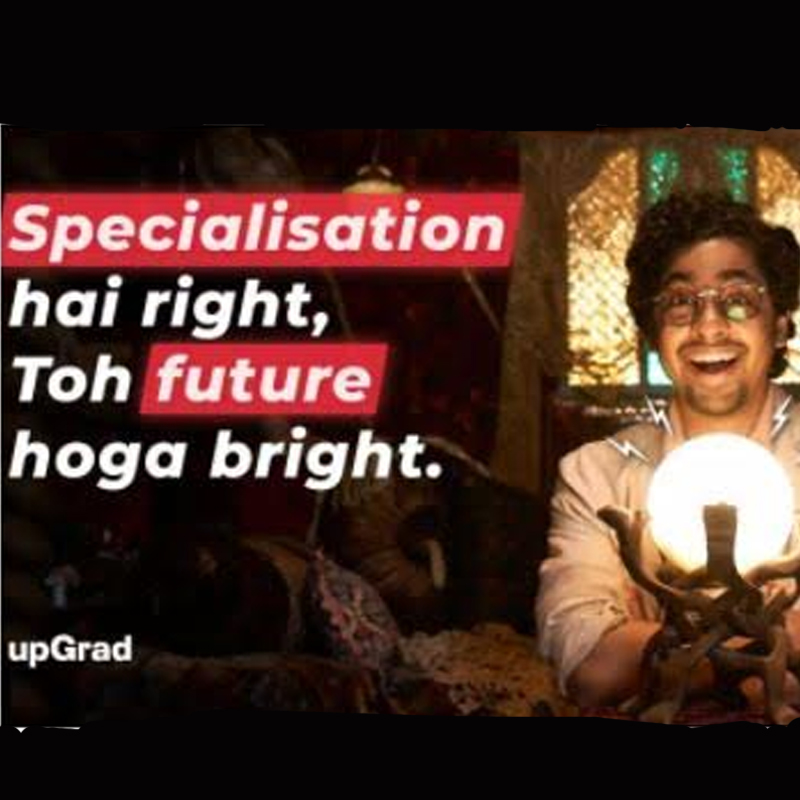
    MUMBAI: After the success of its #DontLickAssKickAss campaign last year featuring a donkey, edtech platform upGrad has come out with another campaign which sees the animal in a fresh avatar. The second leg of the 'Sirf Naam ki Nahi, Kaam Ki Degree' campaign sees the donkey as an animated, feisty fortune-teller. 

    Conceptualised by The Womb, the film reminds working professionals how the right specialisation can lead to one getting salary increments, as high as 50 per cent.

    Previously in 2020 the ed-tech firm, via its campaign, had offered an alternative to licking ass in order to progress in one’s career- It told one to get a specialised degree from its many offerings that would make one’s boss take notice of your skillset. In its new ad film, it takes the 'Sirf Naam Ki Nahin, Kaam Ki Degree’ messaging further, using the fortune-teller donkey. The animal predicts the person’s success and bright future after he has acquired a specialisation certificate from upGrad saying, “Specialisation hain right, toh future hoga bright (If the specialisation’s right, the future is bright).”

    The Womb founding partner Navin Talreja said, “With the success of #KaamKiDegree we had to find a message that would showcase the value of upGrad specialisations to the fence sitters. Given the success of the donkey as a device we just felt what could be better than getting our donkey deliver this wisdom, albeit in its own feisty manner. Embarking on this journey with Varmdea was reassuring as he is awesome with performances. A charmingly intricate set up, brilliant animation, and the perfect soundtrack have all come together to bring this spectacularly to life."

    upGrad chief executive officer Arjun Mohan said, “The campaign is a wake-up call for the youth and working professionals to invest in real value-adding, outcome-oriented education that can result in employability and career progression. We received an overwhelming response in our first leg, as the Donkey, quite literally became a talk of the town."

  • In memoriam: Anil ‘Billy’ Kapoor

    In memoriam: Anil ‘Billy’ Kapoor

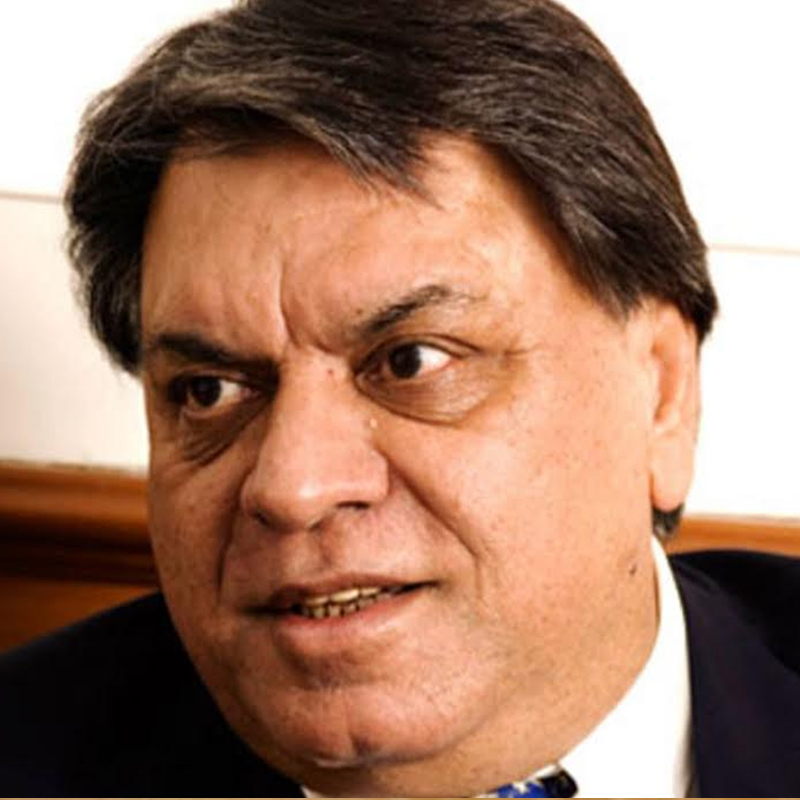
    MUMBAI: Billy Kapoor. A feisty manager. An advertising legend. A man who brought management to what was an entrepreneur driven ad agency at that time.

    My memory of him was a man who loved his suits, but was more than open to taking off his jacket, rolling up his sleeves and getting his hands dirty to do any job. Not that he had to do it often: he had built a fabulous team of young managers – all MBA types – at a time when advertising agencies did not really look at recruiting them in the numbers he did – in the late eighties-early nineties.

    And he deeply believed that advertising was not just about great copy or breathtaking visuals – you had to bring marketing thinking to your client’s brands and products. Wear a marketer’s hat all the time was his constant urging to his team. Find strategic or other solutions to move product off the shelves and generate sales. Once you do that, the brand and marketing manager will see in you a partner, not an agency chasing billing. You will build that trust, where he knows his interest is your interest. And the partnership can only grow and grow from there.

    Another memory of him is that he could get gruff and tough when he wanted to. At BusinessWorld magazine in the nineties, I was in charge of the advertising and marketing section, and I was assigned to write a story on Ulka Advertising, which was reportedly looking shaky – and was on the verge of closure – but Billy had showed signs of turning around. I met him in the Nirmal building office (if I remember correctly) – and he spoke  to me about the agency, his teams, and how it functioned. He then called in his musketeers – Shashi Sinha, MG Parameswaran, Niteen Bagwat, Nagesh Alai, and Arvind Wable – into the boardroom and introduced me to them. For the next 15 minutes they spoke to me, while Billy watched them narrate what had lured them into his orbit, and the agency’s philosophy.

    Billy brooked no nonsense from any one including clients and even me. When I slipped up in some of my information about the agency, he got visibly upset and growled. I squirmed, almost visualising what if this bulky man were to thump me one. But he immediately smiled and told me: “You should get your facts right.”

    The article was published and I called him to have his feedback. He pointed out to a couple of errors – which I was not responsible for, it was probably the desk. But later on I learned that he had proudly shared the feature on Ulka with his colleagues.

    From then we would be in regular touch. I would call him up frequently. And he would too. I remember once when he barked at me in relation to a feature on advertising agencies I had written. He called me and told me: “There are many who want to write on advertising and marketing. I want you to be the best. I will not tolerate any mediocrity in your work.”

    Remember, Billy  was only an advertising executive on whom I had done a feature. Like Mike Khanna and Ravi Gupta, he took a special interest in seeing me develop into a better professional, he often scolded and chided me when he thought I was going wrong.

    I lost touch with him at the turn of the century as I moved on to being an entrepreneur and setting up the Indiantelevision.com group. However, I did stay in touch with Shashi and Ambi. And I happened to interact with actor Ram Kapoor when he had been hired to host The Indian Telly Awards. He told me Billy is his dad, and he was not keeping well. I called him once and spoke to him. Billy was happy with my progress, congratulating me. He once again told me not to stoop to or accept mediocrity. That’s the only way to succeed, he told me. We did not talk about his cancer. But he was fighting it well, Ram told me.

    And now when I read about Billy passing on after staring cancer in the face, battling it well, I can only applaud a life lived to the fullest.

  • FCB Ulka chairman emeritus Anil Kapoor passes away

    FCB Ulka chairman emeritus Anil Kapoor passes away

    New Delhi: DraftFCB+ Ulka chairman emeritus Anil Kapoor I had passed away.

    Kapoor served as managing director and chief executive officer of DraftFCB+ Ulka until 2006, when he was appointed as Draftfcb president with responsibility for the Asia-Pacific region and Africa. In 2010, he was made the chairman emeritus after a 22-year stint with the organisation and its other associated agencies. 

    With nearly 33 years of advertising experience, Kapoor was a highly regarded and respected figure in advertising and marketing circles. He also remained the president of the Advertising Agencies Association of India (AAAI) and the chairman of the Audit Bureau of Circulation of 2007-08.

    An industry veteran, Kapoor was also credited for launching a string of brands, during his 14-year tenure as Boots Company India marketing director. In 2013, the AdvertisingAAAI conferred him the Lifetime Achievement Award, which is the highest honour given to an individual in India for his/her outstanding contribution to the advertising industry.

  • Pay-TV revenue to grow at 7 per cent CAGR over 2020-25: MPA report

    Pay-TV revenue to grow at 7 per cent CAGR over 2020-25: MPA report

    New Delhi: India is among a handful of countries where there is great scope for further penetration of television. Since the turn of the millennium, pay-TV connections have more than doubled in Indian households, though data in the public domain indicates there still remain an additional 100 million homes to penetrate.

    Now, a new report published by Media Partners Asia (MPA) forecasts India’s pay-TV industry will grow at roughly seven per cent CAGR between 2020-25. The growth will be accompanied by a significant uptick in the total industry revenues, including subscription and advertising which will reach $12.3 billion by 2025, said the industry analysts.

    The report, entitled India Pay-TV Distribution 2021 released on Monday, predicts that more than 96 per cent of India’s pay-TV homes will be digitalised by 2025.  The total pay-TV subscribers will further expand from 127 million in 2020 to 134 million during the period.

    Distribution dynamics

    The MPA has pegged India’s active DTH homes to grow from 58 million in 2020 to more than 68 million in 2025. Meanwhile, cable’s share of pay-TV subscribers will decline from 54 per cent in 2020 to 46 per cent by 2025; IPTV will pick up a small share after rolling out later in 2021.

    MPA India vice president Mihir Shah said, “Robust backend systems, the ability to offer consumers flexibility in choosing channel packages under NTO and the exit of leading private channels from DD Free Dish helped the DTH pay-TV sector grow even after the new TRAI tariff regulations came into effect.”

    Going forward, DTH will be the key driver of growth fulfilling the needs of the majority of new TV households entering into the pay-TV ecosystem. “Premium cable subscribers in urban centers remain vulnerable to churn as uptake of quality fiber-based broadband services including IPTV grows in affluent pockets of urban India,” he added.

    Monetisation, investment and the outlook for broadcasters

    The total pay-TV industry revenue, including subscription and advertising, had declined 10 per cent year-on-year in 2020 to $8.9 billion as the economic downturn post-Covid eroded advertising. The projections show that the recommencing of fresh content and live sports together with improvements in consumer and economic sentiment will lead to a sharp recovery in 2021. Pay-TV advertising will grow at 12 per cent CAGR over 2020-25 after a 25 per cent contraction last year.

    During 2020, pay-TV broadcasters generated $4.4 billion in total revenue (62 per cent from advertising and 38 per cent from subscription), down 17 per cent year-on-year. A sharp recovery is expected over the next two fiscals with the channel business and advertising primarily driving this expansion.

    According to Shah, TRAI’s heavy spate of regulations in recent years depressed investment in pay-TV content, which could have a detrimental impact on the quality of content available for the mass market.

    “We expect that more consolidation will play out in the broadcasting industry as recent tariff amendments force incumbent broadcast networks to recalibrate existing channel portfolios. The economics of less popular channels and several niche channels are no longer viable. A new and less draconian regulatory framework will help revitalise content creation in the pay-TV industry while also helping to bolster pricing power for pay-TV platforms,” he stated.

  • One day to go: Are marketers excited to cash in on the IPL 2021 craze?

    One day to go: Are marketers excited to cash in on the IPL 2021 craze?

    KOLKATA: As the country slowly descends into the second wave of the pandemic, a sudden sense of bleakness is on the rise among the populace. More and more people are trying to stay at home because of partial lockdowns, night curfews. Against this gloomy backdrop, the Indian Premier League (IPL 2021) is a cause for cheer. With just one day left, the tournament is exciting brand marketers as well.

    For IPL 2021, official broadcaster Star Sports has already onboarded 18 sponsors and 100 plus advertisers. According to media reports, the network has hiked ad rates for both TV and OTT this year looking at a cool Rs 3,200 crore in revenue. While the IPL has always been considered an expensive property, industry heads from advertising agencies and brands believe it should be looked at from a value proposition rather than a cost point of view.

    The insight emerged during a virtual roundtable IPL 2021: Brand marketers’ delight? hosted by Indiantelevision.com, and moderated by its founder, CEO and editor-in-chief Anil Wanvari. Mediacom national buying head Srinivas Rao, Initiative India EVP & head of south Priya Iyer, Byju’s marketing head Atit Mehta, Amplifi India (dentsu) group trading director Sujata Dwibedy took part in the engaging session.

    “IPL gives us a platform like no other. It is a long event that keeps the audience engaged, it gives us the highest mass viewership, it is not only a cricket event, but an entertainment package. It is one of the events which has a very high co-viewership – meaning it is for the entire household to watch,” Dwibedy said.

    The annual extravaganza also gives the highest ratings and no other GEC programme comes close, she added. Most importantly, IPL gives brands a spike in the top of mind awareness (TOMA) which is the immediate awareness a brand looks for. Hence, emerging categories lineup every year as it drives up awareness in a short span.

    Moreover, one of the key reasons IPL sees interest from brands is it has moved from catering to specific cohorts to multiple cohorts long back, Iyer explained. Starting as a metro phenomenon, it has travelled across tier-2 and tier-3 cities to reach deeper with regionalisation efforts from Star Sports. Regional feeds have helped brands foray further into the heartland.

    Globally, any sporting property is expensive. If a brand does not opt for the cash-rich league or a sporting event, it might go for multiple other options at a lower price. But if they choose a music reality show, ten other channels will have such shows but the IPL is a unique property on one channel, Mehta stated. If a brand plans well and looks at long term ROI, enough value can be created from a business angle.

    Echoing the sentiment, Mediacom’s Rao also agreed to Mehta emphasising the value proposition of IPL. “You just need to be there through various elements. If I look from an advertiser point of view, you would want to have all aspects being in place. If you are doing an association with a smaller property and smaller pockets, you don’t get to ride on a campaign through Virat Kohli,” he explained.

    It is a well-documented fact that viewership switches to the IPL when it’s taking place, resulting in a significant decline in other genres. Hence, it becomes difficult for seasonal brands to avoid the league. If they have to choose another genre, they will have to plan very carefully. So, despite being expensive, the tournament brings out value for those brands as well.

    While the 13th edition of the IPL was like a welcome deluge after a drought of live sports, there have been two power-packed international cricket series since then. However, panelists played down fears of over-saturation and contended that Indian audiences can never get tired of cricket. Moreover, any victory of Indian team tends to boost viewership further, Iyer added. Dwibedy also reminded that the IPL has a more mass consumer appeal compared to other cricket properties, which have a more loyal and slightly male-skewed fan base.

    This segued into a discussion on female oriented brands being scarce on the IPL advertisers list. According to Dwibedy, many food and beverage and FMCG brands are now coming on board which was not the trend a few years ago. For instance, Reckitt came on board for IPL 2020. But she acknowledged the fact that female targeted brands are mostly efficiency oriented. Along with that, the high price could act as a deterrent as these brands need to be present in other genres too.

    Iyer highlighted that women-led FMCG brands are present on the event but they may not fall in the top 20 categories, their participation might be different in nature compared to big categories. On the other hand, Rao noted that more FMCG brands spent money on IPL 2020 as consumer demand was not back to track and those brands wanted to bet big. Now with demand coming back, supply chain issues solved, they have taken a step back again.

    In terms of overall expectation, the viewership this time around will be higher as more people would need to stay at home during night curfews and weekend lockdowns, opined Rao.

    By contrast, Mehta stated: “My expectation from IPL 2021 is somewhat lower than 2020. The excitement isn't as high as it was last year. But, I think it should deliver as much as it delivered last year, though it could be some percentage points behind compared to last year.”

    For this season, open competition will build up the excitement and the first three days of the tournament being close to the weekend will add to it. If games are played in all fairness, enough buzz will be created around it, giving brands recall value. The first 10-15 matches will set the tone of the entire season, Iyer noted.
  • M&E sector witnessed 24% degrowth in 2020: FICCI & EY report

    M&E sector witnessed 24% degrowth in 2020: FICCI & EY report

    KOLKATA: Following a pandemic hit year, the Indian media and entertainment (M&E) sector declined by 24 per cent to Rs 1.38 trillion in 2020, compared to Rs 1.82 trillion in 2019. However, the allied sector is already seeing recovery with improvement in revenues for most segments in the last quarter of 2020. It is expected to recover 25 per cent to reach Rs 1.73 trillion in 2021, touching almost pre-Covid level scale, according to a report by FICCI and E&Y.

    The report titled ‘Playing by New Rules: India’s M&E sector reboots in 2020’ states digital and online gaming were the only segments which grew in 2020, adding an aggregate of Rs 26 billion and consequently, their contribution to the M&E sector increased from 16 per cent in 2019 to 23 per cent in 2020.

    Other segments dropped by an aggregate of Rs 465 billion. Largest absolute contributors to the fall were the filmed entertainment segment (Rs 119 billion), print (Rs 106 billion) and television (Rs 102 billion). The share of traditional media (television, print, filmed entertainment, OOH, radio, music) stood at 72 per cent of M&E sector revenues in 2020.

    However, television stood as the largest sector despite a 22 per cent downturn in advertising revenues on account of highly discounted ad rates during the lockdown months. Moreover, the sector also witnessed a seven per cent fall in subscription income, led by the continued growth of free television, reverse migration and a reduction in ARPUs due to part implementation of NTO 2.0.

    On the other side, digital advertising did not see much impact, led by increased allocation from traditional advertisers who accelerated their investments in digital sales channels. SME advertisers continued to spend on the medium and experimented more with e-commerce platforms like Amazon and Flipkart.

    For the first time ever, OTT subscriptions surpassed the 50 million mark. From 28 million paid subscriptions, it went up to 53 million in 2020 leading to a 49 per cent growth in digital subscription revenues. Growth has been attributed largely to Disney+ Hotstar, which put the IPL behind a paywall during the year. Increased content investments by Netflix and Amazon Prime Video and launch of several regional language products also catalysed the growth, the report added.

    Online gaming crossed all the marks with 18 per cent growth helped by work from home, school from home and increased trial of online multi-player games during the lockdown. Online gamers grew 20 per cent to reach 360 million in 2020.

    Among the pandemic hit sectors, print’s revenue declines were led by a 41 per cent fall in advertising and a 24 per cent fall in circulation revenues. Theatrical revenues plummeted to less than a quarter of their 2019 levels, partly offset by direct-to-digital releases.

    “While the M&E sector usually grows faster than GDP, it also falls more than GDP degrowth, given the discretionary nature of advertising. In 2020, when the GDP fell by eight per cent advertising fell over 25 per cent while the sector overall fell by 24 per cent,” the report read.

    The M&E sector is expected to rebound in 2021 and double to around Rs 2.68 trillion by 2025, the recovery of various segments will vary albeit. TV, film, music will take one to two years, animation and VFX will take two to three years; print, radio, OOH will take the longest time, even more than three years.

  • As podcasts take off in India, how can the medium win more consumers & brands?

    As podcasts take off in India, how can the medium win more consumers & brands?

    KOLKATA: There are stories to listen to, lessons to learn, advice to follow – podcasts have all sorts of content in store. The plethora of genres, the intrusive experience are among many reasons that have made the audio format fairly popular all across the world, especially with millennials. Though podcasts kicked off the block in the Indian market relatively later, they have nevertheless amassed a loyal following here. India has emerged as the third largest podcast listening market, after the US and China, according to reports.

    Podcasts might be relatively novel and known to a fewer number of people here, but the country has a long history of listening to content disseminated through the spoken word. Audio has been widely accepted by the Indian audience as well as brands at large. But are businesses showing interest in the podcast trend? Aawaz.com CEO Sreeraman Thiagarajan believes the medium offers an interesting avenue to reach consumers.

    “Every single person loves anything audio whether its podcast, whether its audio stories, audio shows, they are really committed to listening to those,” said Thiagarajan during a panel at Pixels 2021, hosted by IAMAI and moderated by Hubhopper CEO & founder Gautam Raj Anand.

    “It may not be as big as video. Podcast definitely appeals to an affectionate audience. It is longer in format and can be curated by the users as per their own choice. You need to think of telling an audio story, creating compelling audio experiences, living your brand into it and not just think of it as ad insertions, not equate it with a display campaign, performance campaign,” he added.

    Gaana podcasts & monetisation products VP Vipul Bathwal noted that when music streaming platforms introduce podcasts, there is some sort of captive audience available to leverage the medium. It may not be as large as the user base that turns up solely for music, but there is an overlap that can be leveraged. The role a platform like Gaana has to play, he said, is of taking this format to a larger audience.

    Although a small portion of music listeners engage through podcasts but those who do, they engage very deeply, shared Bathwal, basing this nugget off of the trends they have witnessed. Hence, the metric brands should look at advertising via podcast should be more related to a very strong brand recall from the audience which is highly engaged but may not have the same sort of volume as music. It is more about quality of the audience rather than the quantity, he explained.

    “If I am an advertiser, my goal is to reach the audience. Most of our targeted campaigns are across formats. Music is bigger than any format. But each format offers some sort of advantages in exposing the brand to a certain set of audience but does the brand care through which format I am reaching? Not till now,” he highlighted.

    Opportunity for creators has also increased as podcasts are easier to produce. Hungama senior vice president Soumini Sridhara Paul mentions that good storytelling and authenticity are extremely important for this format. It is also important to build a community and good content library for small podcasters to monetise their content. Moreover, they should look at collaborations as well.

    At the initial stage, podcasts are going to need some popular faces to get more attention from consumers as well as to give ideas about what can be created. From a business point of view, and platform point of view, there is a need to have content with popular faces whether that is from Bollywood or other fraternities. While creativity and uniqueness are mandatory, there is no harm in a novelty value, be it face or a name, opined Paul.

    While all other online content is gradually marching towards interactivity with the audience, interactive podcasts are still a tough nut to crack, mentioned Thiagarajan. Either there is synchronous communication like Clubhouse or asynchronous communication like podcasts. Anything that comes in between should look at features like polls, Q&A, comments for interactive experience, he suggested. Another way to do this is creating a podcast by getting people to offer ideas on what they want to hear. However, podcast as a content format is meant to be heard uninterruptedly, she emphasised.

  • Wonder Women 100: Mindset needs to change first for more inclusion, diversity

    Wonder Women 100: Mindset needs to change first for more inclusion, diversity

    KOLKATA: Women are increasingly coming out and taking up more challenging roles against all odds. The media, entertainment and advertising industry is no exception. Despite the great strides made over recent years, there are still issues like fewer women leaders in upper management positions and salary gaps that need to be addressed for a better tomorrow.

    In a panel discussion, ‘Women, inclusivity and change’, industry leaders shared their views on the existing gaps and how that can be tackled to bring about positive change. Zee5 head-customer strategy and relationships Anita Nayyar, ABD CMO Anupam Bokey, Lodestar UM CEO Nandini Dias, NXTDigital group chief technology officer Ru Ediriwira, Madison Media Sigma – Madison World CEO Vanita Keswani, Hollywood actress and producer Rashaana Shah and Indiantelevision.com founder and editor-in-chief Anil Wanvari were part of the discussion. The session was moderated by Indiantelevision.com editorial lead Srishti Choudhary and online lead Arunima Bhattacharya.

    First off, the panelists expressed their opinions on whether corporate India has finally adjusted itself to bring more women professionals into leadership roles. Nayyar said we are miles away from where we actually should be given the kind of women leaders that are there in any industry, not only in advertising and marketing. Women have taken leadership roles in sectors like manufacturing, banking, and automobile; which most people considered no space for a woman.

    Dias brought up another important aspect of addressing the issue. While organisations across the board are hiring more women, these recruitments are happening mostly at the starting level. As time passes, the women get into different life stages, some of them even drop off. Corporates, governments do not enable their female employees to stay in the workforce, there are not enough policies to ensure they don’t quit midway because of changes like marriage and pregnancies.  

    Not everything is grey though. According to Keswani, there is not any gender if looked at from the perspective of microenvironment of media. She added that the industry believes in a person’s capability and does not uphold any bias. Moreover, it is about the individualistic approach. She also highlighted an issue that even some women don’t prefer working with women. “A lot of spirited action and ambition to move up the ladder,” she emphasised. The drive to work and climb up the ladder depends not just on an organisation’s policies, but the person’s family, upbringing, and education.

    Bokey, who works in the liquor industry where gender disparity has been prevalent, said that he joined his current organisation because it had a very transformative agenda. The agenda was not only about market share and sales but also internal management. He asserted that there is no option to not have this diversity because business or brands will suffer otherwise. Equal the numbers better would be the work, he stated.

    Hollywood actor and entrepreneur Shah said women are more well accepted in Hollywood, compared to the Indian film industry. Hollywood is much more inclusive too. She had to go through a great deal of unlearning after moving to Los Angeles. There are more women on sets these days, and there is no code of conduct expected from women particularly, making the experience more liberating. However, she faced a unique problem when she was pitching to venture capitalists to invest in her production house. The investors did not trust women with so much money, making the overall pitching much harder for her.

    The issue with such a mindset is also a big reason for the wage gap among male and female leaders. Nayyar said that everyone, including women, should stop seeing things in terms of gender. There is a wrong perception across industries that female resources can be hired at a cheaper cost. Most of the industries are not equating capability with remuneration, she pointed out. The salaries are not at par because these organisations are, by and large, headed by men. Dias shared a similar view, adding that women don’t negotiate often because they get overwhelmed after breaking the glass ceiling. Experts opined that belief in self can give them a place at the negotiation table.

    Ediriwira highlighted the lack of mentorship in many organisations is another reason for many women just stopping at middle management. “We have the responsibility to mentor and help other women who are coming up behind us,” she shared.

    “Diversity, inclusion – these are not words. These are facilities to be done, things to be done. We don’t want clones of men. A woman will think differently, she will behave in another way, her bodily function will be in a certain way. We want diversity, inclusion in the real sense of the word and that will bring nuances which are different and organisations need to facilitate that,” Dias emphasised.

    Most importantly, being true to yourself, taking care of yourself, empowering and encouraging other women, asking for help rather than going it on your own, are mandatory to bring the change from within.

  • TV Today’s Amit Sinha joins India TV

    TV Today’s Amit Sinha joins India TV

    NEW DELHI: TV Today GM strategy planning and research Amit Sinha has moved on from the organisation and is set to join India TV in the capacity of VP strategy and research.

    He worked at TV Today for over five years and was responsible for reviewing and analysing weekly numbers, providing strategic inputs and handling programming, strategy and content, weekly analysis of chrome and RWP distribution data.

    Additionally, he provided inputs to the distribution team, and was also involved in promo planning, performance analysis, analysing weekly advertiser trends, monitoring field marketing budgets, implementing a suitable merchandising strategy for the trade, budget planning, market research, as well as developing and maintaining P&L.

    Sinha has over 15 years of industry experience in the media industry and has worked at Total TV, SITV, Teammate Media Research content and communication India. 

  • Soumitra Karnik quits dentsu India

    Soumitra Karnik quits dentsu India

    NEW DELHI: Dentsu India chief creative officer Soumitra Karnik has moved on from the agency, six months after taking on the new role.

    Karnik was leading the agency’s creative output nationally and was responsible for maintaining client-agency relationships for the agency across its offices in Bangalore, Mumbai, Chennai and Kochi. He was handed the additional responsibility of dentsu India CCO in July 2020.

    Karnik has been associated with the network since 2012, and was previously the chief creative officer at Dentsu Impact and mcgarrybowen India. He has worked with leading creative agencies like JWT, Lowe and Percept in the past.

    Some of his memorable campaigns include Pepsi – Yeh Hai Youngistaan Meri Jaan, Slice – Aamsutra, and the ‘What Makes Us Click’ campaign for Canon, to name a few.