Tag: advertising

  • Throwback Thursdays: The Dirt Devil vacuum cleaner ad that gave the devil its due

    MUMBAI: In continuation of our Throwback Thursday series featuring brilliant ad campaigns from the past, we revisit an ad that sent shivers down viewers’ spines. And that’s not just because the brand it endorsed was called the Dirt Devil.

    The TV commercial for the German vacuum cleaner brand was a brilliant spoof on the 1973 cult classic horror The Exorcist –  which is touted as the ‘scariest horror film of all time’. The creative recreated in a 90-second spot is based on one of the most iconic scenes from the film. It showcases the seemingly supernatural cleaning power of a Dirt Devil vacuum cleaner, with a hysterical twist in the end!

    Client: Dirt Devil
    Product: Centrino Cleancontrol Vacuum cleaner
    Year released: 2011          
    Country: German
    Production Company: Filmakademie Baden-Württemberg
    Copywriter/Art director: Andre Price
    Producer: Christian Hergenröther, Andreas Roth
    Director: Andreas Roth                  
    Director of Photography: Roland Stuprich
    Music/Sound Design: The German Wahnsinn            

    The brilliance of the advert lies in how the creators manage to link the cleaning accessory brand with The Exorcist. And therein resides the genius of creative brainstorming. Featuring a priest, a possessed girl, and some fantastic atmospheric cinematography, this German commercial is a brilliant ode to the classic film. Plus, the twist in the tale is perfect to a fault- adding the contrasting dose of humour to the terrifying build-up.

    Check out the ad below, and even if you have seen it before, it’s sure to make one smile – if not break out into a guffaw – while marvelling at the imagination of its makers. It may even make you want to watch the horror classic again. You have been warned!

    The makers later released an extended version of the 90-second ad in 2013. True to its brand name- as they say, the devil lies in the details. The vacuum cleaner commercial reconstructs the sequence with spine-tingling detail, hitting a nerve with generations of horror genre fans. The detailing is so excruciatingly built up with the theatrical atmospherics, the foggy night ambience, the compelling visuals with the spooky house – all accompanied by hauntingly eerie music that develops into a dramatic crescendo- which many viewers felt even surpassed the original!  

    Just as in the film, the TVC depicts a pastor on a cold night standing in front of an old house bathed in a ghostly light. An old woman opens the door and leads him up a creaky flight of stairs to a room from where blood-curdling screams of a girl can be heard. He hesitantly enters the room, alongside heart-thumping music, and looks at the bed only to find it empty. In a petrifying moment, the camera pans to the ceiling to show the girl stuck to the ceiling. As the horrified man looks on, she is rocked back and forth across the ceiling, seemingly by some unknown paranormal force. The suspenseful sequence lasts for a few terror-filled seconds before the mystery behind it is revealed to the viewers.

    In a hilarious twist, the creepy events are followed by a complete reversal of setting: The camera then pans to the floor above, where a jolly old woman with her hair set in curlers is merrily vacuum-cleaning her carpeted floor – resulting in the ‘suction’ of the young lady in the room downstairs to the ceiling. The TVC throws in the cheeky reminder at the viewer “You know when it’s the devil”, underlining the ‘powerful suction capacity of the vacuum cleaner. The ad comically ends with the cleaner’s power being unplugged, and the woman downstairs is heard falling back onto the bed.

    The Dirt Devil The Exorcist commercial has been produced with creative and technical finesse that scores high on the entertainment quotient. The product’s power is implemented humorously with a dramatic film showing the young woman being possessed by a different kind of ‘devil’.

    The creative, produced by German film school Filmakademie Baden-Württemberg has top-notch camera work, lighting, visual and audio effects, accompanied by good acting, which isn’t something you can say about most commercials. The ad manages to spoof one of the scariest films of all time and get its brand message across, even as it not only catches the attention of the viewer but manages to hold it for over three minutes. If that isn’t an advertising win, then pray what is?

    You can watch the extended version of the Dirt Devil – The Exorcist commercial here:
  • Telewise Bangla: Why West Bengal’s local brands prefer TV as a medium

    KOLKATA: Behemoths like Hindustan Unilever, Godrej, Procter & Gamble, and others of their ilk, may be lording it over product categories nationally, but in regional markets, they more often than not come up against sprightly, nimble, scrappy local players who give them more than a run for their money.  Not only for space in shop shelves but even as far as media spends on TV, print and digital are concerned. The scenario is no different in west Bengal.

    The sentiment and proclivity of local entrepreneur-led brands to use TV as a communication medium and brand builder was the topic of discussion in a virtual session ‘New Bastions of Growth’ at indiantelevision.com’s  Tele-wise Bangla- the Power of Television summit.  Prestige Ice Creams (owner of Rollick) managing director Gaurav Khemani, Ajanta Shoe, managing director Sagnik Banik, Keya Seth Aromatherapy founder Keya Seth, Initiative Media executive vice president Mahesh Motwani got into conversation with Indiantelevision.com founder, CEO & editor-in-chief Anil Wanvari and senior reporter Gargi Sarkar to give their perspectives.

    Khemani, who took over the company five years ago, is a big believer in television as a medium. The company that was growing 23 per cent year-on-year pre-pandemic started expanding the moment it went on TV, albeit improving product quality and distribution also played important roles, he said. Even this year, Rollick launched a campaign in February which ran till March. As Khemani shared, the campaign led to sales reaching levels never reached before in March.

    “The reach of TV is far ahead in Bengal, compared to print or any other medium. If you take TV, you can get around 75-80 per cent reach, whereas for print it is 30-35 per cent at best. If you look at the rural segment, print almost does not reach there,” Motwani stated, noting that Bengal is almost 68 per cent rural.

    However, the reach of digital still stands at around 50 per cent at best in urban areas of West Bengal. While everyone gets excited about digital, TV is extremely important for any advertiser in the state. Moreover, the brands need to plump for Bengali  TV channels which have the highest reach amongst TV viewers,  Motwani added. For premium programmes like SaReGaMaPa, Dadagiri, advertisers start booking slots way ahead.

    Ajanta Shoes’ Banik said it has only been two years since it signed Sourav Ganguly as a  brand ambassador for its sports shoes  as it pivots the company towards being a complete footwear provider from being a manufacturer of slippers alone. And its constant bombardment of the TVC with Ganguly and his dog on Bengali TV channels, has seen its sports shoes kick in sales of Rs 20 crore, Banik claimed. He added that there is no doubt that  TV is important to reach the masses but digital plays a role in  showcasing the technology that goes into the making of a sports shoe.

    Keya Seth Aromatherapy takes a different marketing tack.  Rather than jumping on to celebrity endorsements, the beauty brand’s founder Keya Seth and her daughter are  the faces in its promotions. The company was compelled to pull back media spends since filming stopped in March 2020. Seth explained that the company was compelled to do so as Keya Seth Aromatherapy used to produce a half-an hour programme for TV rather than buying spots.

    For the past year, it has not opened the lock it has put on its media spend chest  as yet. According to Seth, that has not had much of an impact on its growth with sales rising four-five per cent in the past one year. She asserted that she might opt for ad spends again, but the focus would be on digital.

    One of the major issues that some of the local brands are facing is being “outbid” by national advertisers, Seth highlighted. Earlier, regional channels used to treat local and national clients  differently. Some local brands used to spend even Rs 25-30 crore in a year for TV advertising, she noted. And the sales team would stand by them and give them enough priority. But now TV channels are selling slots to any brand which  is willing to fork out more.

     Hence, many of the local brands are not being able to match up their ad budgets with larger brands and gradually shifting to digital. Most of the local brands ink year long deals while many of the national brands just spend for a few premium properties, for a limited period of one -two months. Seth noted that the TV channels are on the verge of losing those long-term investments of local clients prioritising short-term  gains from national brands. While Seth is still keen on coming back to TV, she is of the view that the channels will have to look at how they can add more value.

    According to Motwani, most clients in Bengal work closely with agencies on their branding and media strategies, with owners getting on top of even negotiating ad rates. ”Sometimes, because of their relationships, the entrepreneurs get a better buy,” he said. “If the clients don’t feel like they are getting the right rate, they hold back their TVCs. Their thinking is that if they accept a higher quote, it will become the benchmark for future deals.”

    What about local Bengal brands spreading their wings nationally? Ajanta Shoes has already started moving beyond the eastern market to enter Punjab, Rajasthan, Uttar Pradesh. Keya Seth Aromatherapy already has a  presence in  Delhi, Jharkhand, Tripura, Assam, Jaipur, Bangladesh, Nepal. As Bengali consumers across the world have emotional attachment to homegrown brands, the beauty brand has some customers in the US and  London too.

    Banik stated that he will depend largely on TV to popularise his brand in new states to which it is spreading out. And he will go for a mix of both regional channels there as well as those with a national footprint. But the weightage will be more towards regional channels.

    However, Khemani pointed out that he would rather concentrate on building Rollick in east India for now. “Covid has given us opportunities to think through new opportunities. Pre-covid, I was interested in going national straightway. At this point of time, we want to stay in the east at least for three years and  take a leadership position here,” he said.

    Motwani in closing pointed out that West Bengal has oodles of entrepreneurial spirit pointing to brands like ITC, Gestetner, tea companies, plywood producers like Century and Green Ply which have come to define and dominate product categories. “They are ambitious and they are great believers of TV as a brand building medium,” he said. “Both locally and nationwide. And that will stand TV in good stead.”

  • Pride Month: Chimp&z Inc celebrates with workplace coming-out stories

    Mumbai: Ad agency Chimp&z Inc celebrated the LGBTQIA+ members of the advertising community by bringing them together for its digital Pride parade, #PrideOfAdvertising, all through the month of June. Conceptualised and executed by the integrated digital agency, the campaign was initiated to understand, support, and celebrate the culture of inclusivity and acceptance at workplaces. The agency collaborated with other agency professionals, brand managers, and freelancers who are out, proud & successful.

    The #PrideOfAdvertising brings out the perspective of people who identify as queer from various facets of advertising and media through a candid yet meaningful ‘Q&A’ series on the agency’s social media pages. The responses beautifully captured their coming-out emotions, reaction to homo/transphobic comments, and some heartening tips for others to come out.

    https://www.instagram.com/chimpandzinc/guide/pride-of-advertising/17950009009463873/

    “Coming out is a challenge for the LGBTQIA+ community, not just personally but professionally and psychologically as well,” Chimp&z Inc CEO & co-founder Angad Singh Manchanda said. “The urban LGBTQIA+ activism has created space for individuals to defy societal norms and perceptions and choose to live as per their will. With awareness of LGBTQIA+ rights rising, the list of Pride-themed campaigns taking over the internet in June keeps getting longer and more meaningful. We wanted to do more than just tell stories. We brought out the perspective of each individual and their experience in the industry after coming out professionally. This digital campaign sets out a virtual pride parade that honors LGBTQIA+ members of the advertising community. I trust it will evolve and adapt to the changing society in the coming years.”

    The campaign featured agency-smiths: Chimp&z Inc group account manager Sumitro Sircar, AdGlobal 360 associate creative director  Dev Mitra Roy, Schbang’s design lead Krina Satra, Gozoop account planner Romario Fernandes, WATConsult’s lead copywriter Mansi Shanbag, and Sugar Rush Media House’s talent & creative head Tanya Nagrani.

    The agency also partnered with media and brand mavens: The Red Pen marketing manager  Archit Ambekar, Humans of Queer founder Yash Sharma, Beunic’s co-founder Ashish Chopra, Amaltas Apparel & Accessories brand manager Anish Prasad, and make-up trainer Saikat Chakraborty. The agency also collaborated with creative freelancers: social media manager & content creator Priyesha Nair, celebrity makeup & hair artist Abhijit Chanda, queer artist Suvajit Mandal, content strategist & e-commerce content marketing expert Sunny Pandey, and social media influencer Gaurav Pandey.

    The agency summed up the campaign by featuring the national award-winning filmmaker, Onir, also known for being one of the earliest advocates for LGBTQIA+ rights in India.

  • National brands gauge the Bangla TV market on Tele-wise Bangla summit

    Mumbai: There is little doubt about television as a far-reaching instrument of viewership connecting masses pan India. It remains the medium of choice to build reach and brand salience. However, as the second wave of the pandemic swept through the country, it also impacted the overall TV viewership across regions. This, in turn led the advertisers and brands to reflect on the way they leveraged TV to reach out to their target audience.

    As a part of the inaugural edition of the Tele-wise Bangla Summit 2021 organised by Indiantelevision.com in partnership with Zee Bangla, industry experts and stakeholders from across sectors weighed in on the strength of the West Bengal TV market and the disruption caused by Covid-19 on people’s lives, their consumer spending, and TV viewing habits.

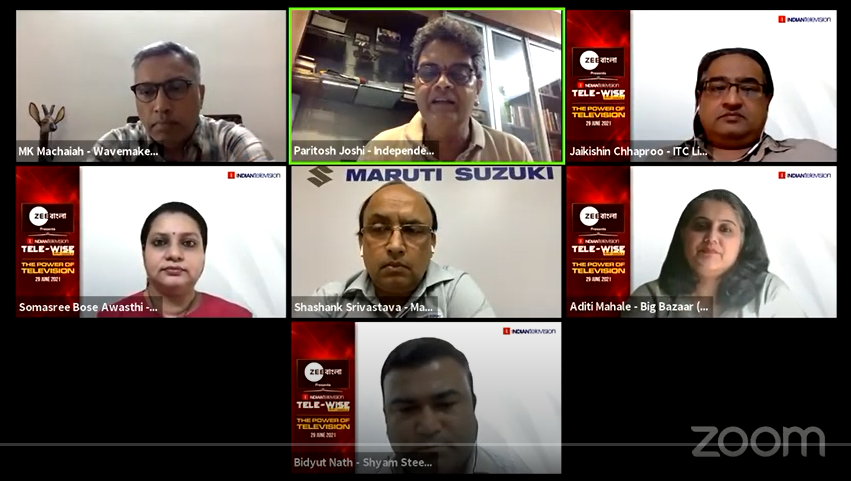
    In an informative discussion ‘Gauging the Might of the Market’ –  moderated by independent media consultant Paritosh Joshi, marketers debated on how the Bangla market remains highly relevant for national brands looking to make their presence felt in the state when it comes to TV ad spends.

    The session kicked off with Joshi observing that, although the pandemic has largely resulted in an overall bleak economic environment, FMCG remained the sole bright spot. Godrej Consumer Products Limited marketing head (homecare category) Somasree Bose Awasthi pitched in that it was true specifically with regards to essential items, which have been driving the growth in the sector. The premium or discretionary categories like grooming or hygiene products have suffered a setback in the last year. She added, however, that the reverse migration due to the pandemic had led to a revival in the rural economy across the country, including West Bengal.

    Shyam Steel India, head of brand marketing, Bidyut Nath corroborated this by saying that, while the pandemic had brought most large-scale construction activity in the cities to a standstill, with workers going back to their villages, it had continued almost uninterrupted in the rural areas as people did not cease to build houses for themselves, irrespective of the pandemic. So while there was little positive growth in the sector, it did reflect a steady growth with nearly 69 per cent of the populace constructing homes, he said.
    The panellists discussed how the pandemic also caused people to become risk-averse when it came to buying decisions, due to which market leaders in a particular sector and trusted brands gained.

    According to Maruti Suzuki India’s marketing & sales executive director Shashank Srivastava in such times, the trusted brands become the anchor for consumers. “That trust helped us, and our market share went up in most segments, despite Automobiles being a discretionary, high-value purchase. In general, the retail sales were better in 2020 than the previous year for Maruti, mainly because of the change in consumer perception towards public transport, resulting in more people becoming inclined towards owning private vehicles,” he said.

    However, the fall in incomes did show in the “telescoping of demand”, whereby the demand for a higher segment shifted towards a lower segment vehicle, he added.

    Future Group’s Big Bazaar marketing head Aditi Mahale shared that while the group had 15 to 20 stores across the state, nearly eight to ten of them were based out of Kolkata.

    “We had to cut back on TV ad-spend last year, mainly due to lack of fresh content, and we focused more on the news genre and digital,” said Mahale, but the group continues to use television as part of its marketing strategy, especially during regional festivals, for “retail is, by nature, always local” with even their competition being largely local in the genre.

    For ITC, which has its roots in West Bengal, the state is “priority #1 market”, said ITC’s Media & PR head Jaikishin Chhaproo, largely because of the unparalleled distribution strength that it provides.

    When it came to the media mix in the state, panellists shared that television had a regional reach of more than 70 per cent in the state. Hence brands try to capitalize on the richness of the regional content by preparing creatives with local flavour and by going “hyper-local”.

    “Becoming hyper-local is the need of the hour. Doing local TVCs with local actors really pays off. But brands face challenges in terms of talent & cost,” said Wavemaker India’s ITC lead and special initiatives president MK Machaiah.

    In West Bengal, like most other markets- there is an innate attachment to sports. So while Shyam Steel India did see great brand engagement post onboarding Virat Kohli and Anushka Sharma as brand ambassadors, Bidyuth Nath agreed that going hyper-local by engaging with local celebrities is also indispensable. All panellists agreed on the value that localised content brings to brand promotions in the state, regardless of the medium – print, television, or digital.

  • Zupee appoints Gaurav Mehta as CMO

    New Delhi: Zupee has announced Gaurav Mehta as the company’s new chief marketing officer. He was previously associated with GirnarSoft – the name behind the automotive market, Cardekho.com.

    A post-graduate in Brand Management and Media Planning from Mudra Institute of Communications (MICA), Ahmedabad, Mehta has diverse experience spanning 19 years, which includes 13 years as a digital business expert in a number of leading companies. “An analytics and research-driven marketer, Gaurav has been in the mobile marketing space since 2008,” said the company in a social media post.

    Mehta also shared the update in a LinkedIn post and added that he would be working alongside Zupee, founder and CEO Dilsher Malhi to enhance the skill-based gaming platform. He also thanked CarDekho’s chief executive officer and co-founder Amit Jain for the support he received from the company during his stint.

    In his career spanning over 19 years, Mehta has worked with OLX South Asia as chief marketing officer for four years and as chief manager at Yahoo.

  • Tele-wise Bangla to bring together top names from media and advertising

    KOLKATA: Several players including big broadcasters have a strong presence in the West Bengal market. Zee Entertainment and Star TV Network were among the fast movers in the Bengali entertainment industry, followed by Sony, Viacom18, and Sun TV. Over the years, the market has grown to be one of the most important ones for those planning to expand their national footprint.

    The increase of original content, viewership, and advertisers also led the industry to turn its eyes towards the market. Several local brands, pan-India advertisers also began investing in the market. Even amid the pandemic, Bengali GEC and Bengali News continued to contribute three per cent of total volumes each in 2020. Regional growth is here to stay, at least for some time now.

    This Tuesday, 29 June, Indiantelevision.com is all set to bring together some of the industry’s biggest names from the world of advertising, advertising, broadcasting, and production to understand the potential of the market. The leading b2b publication will host the inaugural edition of Tele-Wise Bangla, presented by Zee Bangla.

    The day-long virtual summit will open with a welcome note by Indiantelevision.com founder, CEO, and editor-in-chief Anil Wanvari. BARC India client partnership and revenue function head Aaditya Pathak will share insights on the viewership trends in the market. Kantar Insights Division director Puneet Avasthi will give a glimpse into the consumer profile in West Bengal.

    EMBED PIC 1

    In the session ‘Gauging the Might of the market’, representatives from Big Bazar, Godrej, ITC, Maruti Suzuki, Shyam Steel, Wavemaker India will discuss questions like what are the opportunities leveraged by brands on Bengali channels, how different are the approaches to strike a chord with Bengali audience, what are the most lucrative genres to invest in along with many other pertinent issues.

    As the regionalisation of TV channels has made it easier for the local brands to reach a specific audience, advertising spends on the channels have also risen. Leaders from Rollick Ice Cream, Ajanta Shoes, Initiative Media, Keya Seth Aromatherapy will deliberate on the growth of media spends in the last few years, challenges post-Covid, media spend ratio of local to national brands in the session ‘New Bastions for Growth’.

    EMBED PIC 2

    From a content perspective, the market has always seen progressive shows and experimentation with new concepts. With more formats of content now available, the audience has grown to accept content that is pushing the boundary of creativity. The panel will focus on the evolving content consumption trends, innovations, content investment in the West Bengal market in presence of spokespersons from Zee Bangla, Colors Bangla, Shashi Sumeet Productions, Acropolis Entertainment.

    To register: https://www.indiantelevision.com/events/telewise-bangla/

    The virtual event will begin at 3:00 pm on 29 June and will be live-streamed on YouTube, Facebook, and Twitter. 

    Join us for an insightful discussion! 

  • Cannes Lion 2021: Dentsu Webchutney walks home with seven Lions

    New Delhi: Dentsu Webchutney, the digital-led creative agency from the house of dentsu India, has continued its run as the highest-scoring Indian agency at 2021 Cannes Lions International Festival of Creativity second year in a row. 

    In 2019, the agency topped the charts with seven metals and 16 shortlists. This time, they have beaten their previous record with 20 shortlists and seven Lions.  

    The agency has won three Silver and two Bronze for ‘The 8-Bit Journo’ campaign in the Direct Lion, Creative Strategy, Mobile Lions and Digital Craft categories. For the ‘World’s Most Reported Trailer’ campaign, the agency has bagged one Silver in the Entertainment category. Additionally, Dentsu Webchutney has also grabbed a Bronze for ‘The Better Half Recipes’ campaign in the Creative eCommerce category. 

    Commenting on the achievement, Dentsu Webchutney, NCD, PG Aditiya said, “This year’s Cannes Lions is probably our most meaningful one yet. A huge round of applause for our teams across the country, both past and present, & gratitude to our clients who’ve shape-shifted the status-quo of Indian creativity at a global level, with us.” 

    dentsumcgarrybowen (dentsuMB) India, CEO, Sidharth Rao said, “2019 showed us Webchutney was capable of creative excellence at the highest level. 2021 showed it was about doing it consistently – the wins this year have firmly planted the ‘new normal’ of what Webchutney’s north star as an agency is. The agency is home to some incredible talent and is a shining example of what the dentsuMB group of agencies and dentsu India itself wants to stand for.” 

    For the record, dentsu India has secured an overall 22 shortlists and seven Lions at Cannes Lions 2021. Dentsu Webchutney has 20 shortlists in the Creative Strategy Lions, Direct Lion, Media, Digital Craft, Entertainment, Brand Experience & Activation, Creative eCommerce Lions and Mobile Lions categories. Meanwhile, Taproot Dentsu has secured two shortlists for its heart-warming Pooja Didi Campaign for Facebook in the Film Craft and Film Lions categories. 

    dentsu India, CEO Anand Bhadkamkar said, “This recognition is only a testament to the fact that dentsu India is steadily emerging into becoming one of India’s greatest creative powerhouses. Dentsu Webchutney and Taproot Dentsu have already established a massive benchmark for everyone within the network and for many across the industry with their superlative and consistent performance. I am extremely proud of how our teams have shown such powerful resilience and stayed strong even in these challenging times.”
     

  • Cannes Lions 2021: India’s metal tally touches 21 on day 4

    Mumbai: Dentsu Webchutney continued its winning spree on day four of the Cannes Lions International Festival of Creativity 2021, winning two Silver Lions and two Bronze Lions, taking its total metal tally to seven.

    Cheil India picked up its first Silver Lion on day four, FCB Interface a Bronze, and Ogilvy India won a Bronze Lion rounding off day four with 21 Lions for India.

    Here’s the detailed list of the wins on days three and four of the fest:

    Dentsu Webchutney

    The 8-bit journo for Vice Media

    The 8-bit Journo campaign continued its winning spree by adding Bronze Lion under the Mobile Lions category on day four. Created by Dentsu Webchutney for Vice Media, it also took home a Silver in the Digital Craft (real-time contextual content) category on the previous day. The campaign had earlier won two Silver Lions and one Bronze Lion, taking its total winning tally to a cool five Lions. It won a Silver Lion in Creative Strategy (media/entertainment), another Silver Lion in Direct (market disruption), and a Bronze Lion in Direct (media/entertainment) categories.

    The campaign was a one-of-its-kind, unique initiative to inform the Jammu & Kashmir public of what transpired in the world when they were under a 100+ day internet and telecom blackout after the scrapping of Article 370 in August 2019.

    ‘The World’s Most Reported Trailer’ for Trigger Happy Entertainment

    In the Entertainment category, it bagged the silver for ‘The World’s Most Reported Trailer’ for Trigger Happy Entertainment to promote the Bollywood movie Thappad. The win was in the audience engagement/distribution strategy sub-category. The campaign aimed to sensitise the public around domestic violence, which was the core theme of the film. It made smart use of the built-in ‘report’ feature on YouTube app and websites and prompted the viewers to report the second trailer of the film, which included the scene from the movie wherein the male lead slaps his wife, played by Taapsee Pannu during a party. Having been reported over 400,000 times, the trailer was ultimately taken down by YouTube within 26 hours, proving the success of the campaign.

    ‘The Better Half Recipes’ campaign for Swiggy Instamart

    Dentsu Webchutney continued its winning spree at the ongoing Cannes Lions Festival of Creativity by picking a Bronze Lion for Swiggy Instamart’s ‘The Better Half Recipes’ campaign under the Creative eCommerce (cultural insight) category.

    The e-comm brand launched an innovative cookbook to bring more gender equality into the kitchen. It did this by splitting the recipes into two halves to give both partners an equal responsibility to cook the meal. Each partner had to follow only their side of the instructions to see their meal to completion, together. The ingredients from the cookbook could be ordered directly with a simple QR scan and the order was delivered by Swiggy Instamart. The food delivery platform asked the users to send a picture of them and their better halves in the kitchen, to get their hands on the cookbook. A barrage of entries poured in to claim a copy of #TheBetterHalfCookBook, making the campaign a triumph.

    Cheil India

    ‘Now, Words Aren’t Just Heard’ campaign for Samsung

    The agency picked up its first Cannes Lions 2021 metal in the form of a Silver Lion for its ‘Now, Words Aren’t Just Heard’ campaign for Samsung on day four.

    The campaign was designed for Samsung Good Vibes smartphone communication, which has two interfaces: one regular, and the other for the deafblind. It translates voice and text messages into Morse Code vibrations, and vice versa, helping the deafblind community. Supported by a robust digital campaign and nationwide training workshops, the campaign is bringing inclusivity to over 500,000 people who have been disregarded by modern social media technologies.

    FCB Interface

    ‘The Punishing Signal’ campaign for Mumbai Police

    The no-honking campaign for the Mumbai police by FCB Interface continued its winning run, adding one more Bronze Lion to its metal tally. ‘The Punishing Signal’ campaign picked the Lion in Brand & Activation (not-for-profit/charity/ government) category.

    One of the most successful campaigns at Cannes Lions this year, the campaign, thus far, has won seven metals, including one Gold, three Silver, and two Bronze Lions under Health & Wellness, Outdoor, PR, and Brand & Activation Lions.

    Ogilvy India

    #NotJustACadburyAd for Mondelez

    Ogilvy Mumbai’s work titled #NotJustACadburyAd campaign won a Bronze Lion under Creative Data (data-driven targeting) category. The Creative Data Lions category celebrates the intersection of creativity and data. Created for Mondelez’s ‘Cadbury Celebration’ on Diwali last year, the campaign managed to advertise not just the brand, but thousands of small businesses across India.

  • Throwback Thursdays: A look back at game-changer ad campaigns over the years

    Mumbai: IndianTelevision.com kicks off its Throwback Thursdays series where we go into flashback mode to revisit brilliant ad campaigns created over the years – one campaign at a time. Be it in Print, Television, or Digital (in the recent past)- the medium is irrelevant so long as the messaging was crystal clear and the execution fantastic.

    And what better campaign to kickstart with, than one considered by many ad gurus as one of the greatest ad campaigns of all times – and one that broke new ground and changed the rules of the game.

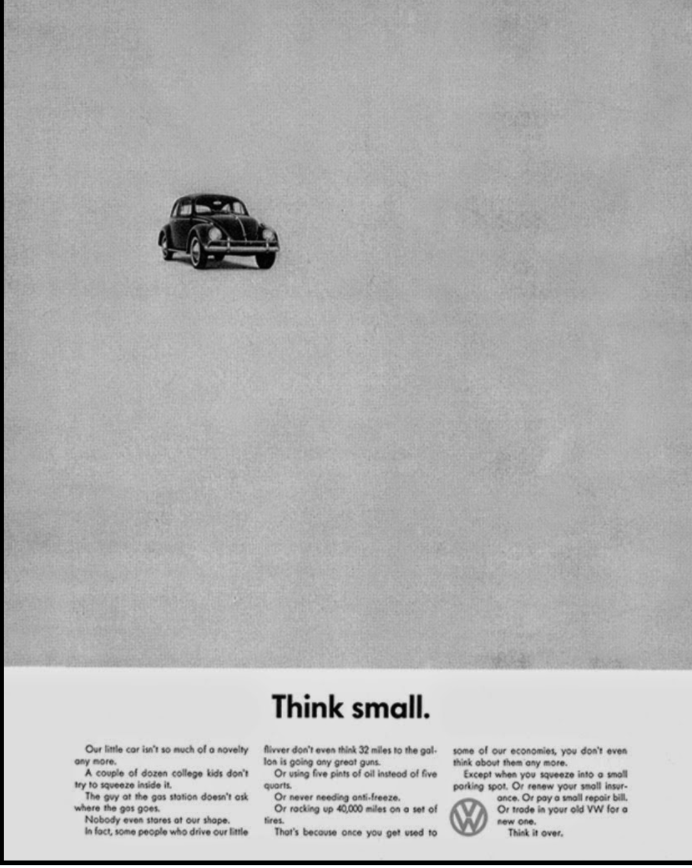
    It’s the 1960s ‘Think Small‘ ad campaign for the Volkswagen Beetle.

    Product: Volkswagen Beetle car

    Agency: Doyle Dane Bernbach (DDB)

    Country: United States

    Year: 1959

    Think Small was one of the most famous ads in the advertising campaign for the Volkswagen Beetle, art-directed by Helmut Krone, the copy written by Julian Koenig.

    However, there was nothing small about the campaign’s aspirations!

    Consider this. The first Beetles arrived in the United States in the 1950s. Volkswagen had hired the Doyle Dane Bernbach (DDB) ad agency to create a campaign that would introduce the German car to the US market.

    A lot was working against the Beetle. It was small and plain in comparison to the big, flashy cars that Americans were obsessed with, at the time. Also, it was awkwardly shaped (which later led to it being dubbed the “Beetle”). And to make matters worse for its sellers, this was at a time when following World War II the anti-German sentiment was at a high. The initial reception to the car was expectedly lukewarm.

    Here’s how an ad agency changed the car’s fate.

    In 1960, DDB launched a game-changing campaign called “Think Small”, that promoted the car’s diminutive size as a distinct advantage to consumers.

    The black & white campaign encouraged drivers to “Think Small.” DDB revolved the print campaigns around the car’s ‘small’ form and focussed on minimalism. It contradicted the traditional association of automobiles with luxury and big size, keeping simplicity at its core.

    This is why most of the print ads from this campaign and others that followed had a lot of empty white space with a small, stark picture of a Beetle, followed by a copy that matter-of-factly listed the compact car’s advantages in an irreverent, even self-deprecating manner.

    Each ad that followed in the series stood on its own, highlighting the car’s strengths while not trying to hide its possible weakness. And they were so cleverly done that they left the readers keen to watch out for the next one.

    Even more notably, the ads were modestly unpretentious and emphasised as much on the intelligence, frugality, and essence of the Beetle’s buyer as they did on the car itself. The smart copy asking ‘Do you earn too much to afford one’, is a case in point- implying that don’t let your money (or its excess thereof) come in the way of buying a good car!

    This tone of dry humour became a hallmark of Volkswagen Beetle ads, even later in its Television commercials. The ads effectively made the case for why owning a small, oddly-shaped car (in other words: thinking small) actually made sense, managing to show the consumer the bigger picture.

    And the rest, as they say, is history or rather the stuff that advertising lore is made up of.

    The Volkswagen Beetle Print Ads shook the automobile industry and the marketing landscape of the 1960s and over the next several years, VW became the top-selling auto-import in the US.     

    Doyle Dane Bernbach’s Volkswagen Beetle campaign was ranked as the best advertising campaign of the twentieth century by Ad Age, in a survey of North American advertisements.

    The distinctive but simple print campaign and the equally brilliant ones that followed it, brought widespread attention to the car, imbibing the Beetle in pop culture for years to come.

    It did much more than boost sales and build a lifetime of brand loyalty. The ad, and the work of the creative minds behind it, changed the very nature of advertising, becoming known as one of the most legendary campaigns of all time.

  • AcneStar face wash collaborates with music streaming platforms

    New Delhi: AcneStar face wash from the house of Mankind Pharma has collaborated with music streaming platforms- Gaana, Wynk, Spotify, and Saavan to engage with music lovers from different demographics and create high recall value for the brand.

    The new campaign is based on the #ThankYouHaters campaign, which was rolled out last year to fight against the rise in online trolling on social media. 

    The brand said it has come up with this month-long campaign, keeping in mind the current situation and growing popularity of audio streaming platforms. “This will help us to create high recall value amongst the people who are multi-tasking, switching between household chores and professional engagements, to the sound of music,” it said in a statement.

    As part of the campaign, it has roped in 50 influencers from different demographics to engage including Sanjana Singh, Shezali Sharma, Hashneen Chauhan, and Rehmat Rattan.

    Mankind Pharma, general manager- sales and marketing, Joy Chatterjee said, “Recoiled out of everyday drives, music has now arisen as the favoured stress buster for the large numbers of people who are working from home and playing a therapeutic role for these multi-tasking times. We all have observed how individuals prefer to stay active on audio platforms while relaxing, sleeping, or other activities. Audio streaming has grown to 30-40 per cent in India in 2020-21 and with the rise of internet connection there has been a rise of regional language music which now contributes 39 per cent of all streams.”