Tag: advertising

  • Guest Column: ‘Cancel culture’ or ‘mob culture’ – a thin line of difference

    Guest Column: ‘Cancel culture’ or ‘mob culture’ – a thin line of difference

    Mumbai:  What is cancel culture? “Cancel culture is a way of expressing dissent or the practice of withdrawing support for (cancelling) any offensive or objectionable content or action of that person.”

    Cancel culture could actually champion pro-social movements like the fight against gender discrimination or racism.

    Yes, expressing disapproval and freedom of speech is our right, however, this particular culture in India has taken a malicious turn fueled by the political climate breeding intolerance.

    Social media’s penetrating gaze seems like a modern form of mob rule that is bound to have major implications for brands and marketers. The internet, (in particular, social media) provides a platform to share views and offers an outlet for groups excluded from traditional institutions – such as politics, education, economy, and media – to have a say. Every citizen with access to the internet can now write an opinion piece, share their story or behave like a self-appointed member of a jury who rips apart anything that is slightly pointed or uncomfortable. This is making creatives and brands cautious about the choices they make. In fact, anything from the story to the people we use as cast, the names in the story, background setups, and even clothes can cause unrest. But the fact is if someone has to find faults, they will. You can never please everyone.

    We must also remember that internet trolling is time-bound. It will fade almost as soon as the hype it creates. Ideally, brands should just wait until the dust settles. What would be even better is if a brand decides to stick to its ground because it makes a better impact and is looked at as an authentic voice as compared to a brand defending its case or actually listening to faceless trolls and pulling down a communication. Because when brands retract, then it feels as if they didn’t have conviction in what they have put out there. It also makes these trollers and haters stronger and brands weaker. Why? Well HATE is a more powerful emotion than LOVE. And that’s why for Love to win, it needs to work harder. Hate comes easy.

    And brands need to understand that in today’s public viewing people feel compelled to post a response to anything and everything they see. It could be a show, an interview, or an ad.

    Ever since the physical world went into lockdown, people have been spending a serious amount of time online. And this has increased the cultural impact of the internet on society and is bound to have major implications not just for brands but content in general. A single post or a tweet has the power to bring change- from forcing celebs to apologise, to bringing down the market, or holding service brands accountable, and even stirring in a big political debate. Put another way, ‘cancel culture’ represents the voice of the voiceless. But when cancel culture is used negatively, it prevents open debate which is the basis of democracy. After all, different perspectives create social progress.  In an age where you comment first and think later, agencies would do better only when they think through every possible scenario before hitting the share button.

    But to specifically talk about, what happened with Fabindia- it is a clear case of being brainwashed to believe that a language is being marginalised., which it isn’t.  I’m sorry but this is advertising. What looks good is what sells. That’s why we use good-looking people or design things in a particular manner. Similarly, writers choose their styles. Some like hard-hitting, some poetic, and some factual. Doesn’t make any one of them right or wrong.  And popular culture influences advertising, taglines. Why did Hinglish happen? Yahi hai right choice baby. Or No Ullu-Banaoing. Or Ye Dil Mange More…..What are these? Memorable, engaging and effective communication. How come we never said it was the denigration of English or Hindi? We would love to believe that this has nothing to do with the basic grain of our society but it does. We are gradually becoming haters. We all know that Hindi and Urdu have coexisted beautifully over the years. Why is it that we have a problem now? Ever given that a thought? What has changed? Who has changed? And why have we changed? We know languages evolve because of the ease of use, the sonic nature of words, or popular culture influencing the use of a mix of languages.

    We must also remember that the expression – ‘Jashn-e-Riwaaz’ is meaningless. The word is ‘Riwaj’ and not ‘Riwaz’. Replacing the ‘j’ with the ‘z’ sound because someone likes the sonic feel of it is actually not cool but wrong.  Riwaj means ‘ritual’ or ‘repetitive action’ which technically all festivals are. But the point is, if you as a brand believe in communication, stick to it, grow a spine, and don’t get pushed by haters and trollers to change it. Consumer activism is on the rise and brands cannot hide from it. So accept it, move on, and if need be have a crisis management process to fix it. Simple.

    (Anupama Ramaswamy is the managing partner and national creative director, Dentsu Impact. The views expressed in the column are personal and Indiantelevision.com may not subscribe to them.)
  • HUL is top advertiser in week 41: Barc

    HUL is top advertiser in week 41: Barc

    Mumbai: FMCG major Hindustan Lever Ltd was the top advertiser in Broadcast Audience Research Council (Barc) week 41 (from 9-15 October) delivering ad volumes of 5025.96 (‘000s), higher than last week’s 4779.73. With 3501.67 (‘000s) Reckitt Benckiser (India) Ltd was at the second position and Cadbury India Ltd (960.27) latched on to the third spot.

    Godrej Consumer Products Ltd, Brooke Bond Lipton India Ltd, Amazon Online India Pvt Ltd, Ponds India, ITC Ltd, TVS Motor Company, and Procter & Gamble bagged the remaining positions.

    Among the brands, HUL’s Horlicks with 489.37 (‘000s) was most advertised in week 41. It was followed by Amazon.in, Dettol Toilet Soaps, Harpic Power Plus 10X Max Clean, Lalithaa Jewellery, Dettol Antiseptic Liquid, Clinic Plus Shampoo, Lizol, Nykaa, and Moov Pain Balm, in that order.

    Lalithaa Jewellery and Nykaa were new entrants to the list.

  • July-Sept TV ad volumes show highest spurt in 2021: Barc

    July-Sept TV ad volumes show highest spurt in 2021: Barc

    Mumbai: Ad volumes on television continue to post healthy growth, with the July-September quarter registering 461 million seconds of advertising – which is the highest this year, as per Broadcast Audience Research Council (Barc) India’s July-September 2021 Ad Volumes – Special Festival Edition Think Report. 

    The growth registered in the quarter is broad-based, with channels across all languages reporting higher ad volumes over the corresponding period in previous years.

    With the festive season well and truly underway, the September Think Report also takes a closer look at advertising on TV during the Ganesh Chaturthi week. Ad volumes on TV in the week grew four per cent compared to the previous four-week average and posted a healthy 28 per cent growth over 2019.

    “The momentum of more and more brands banking on television advertising continues to be visible with 3397 new brands entering the medium in the July-Sept quarter of 2021, and that too with a 51 per cent share of total brands advertising. The number of advertisers on TV is also the highest for the quarter at 4226,” stated Barc India head of client partnership & revenue Aaditya Pathak. “As we have seen in earlier years, marketers are clearly leveraging the reach and power of TV to raise the visibility of their brands this festive season. The strong growth of ad volumes in Q3 – which is 40 million seconds higher than in Q2 – also points to the positive sentiment regarding the improving economic and business environment.”

    Ad volumes on TV for September 2021 is the highest since 2019, registering a 15 per cent growth over the same period in the previous year. While FMCG continued to maintain its leadership position with a 29 per cent growth in ad volumes against the same period in 2019, the e-commerce industry has also shown a healthy 26 per cent jump over 2020.

    While the strong upward trend in TV advertising is seen at the overall level as well as across all languages, the highest spurt was observed for Bhojpuri language channels, where ad volumes were more than double that of 2019, and 38 per cent higher than in 2020. Hindi language channels account for the largest share of TV advertising. Tamil and Telugu language channels witnessed robust growth over 2020.

  • Majority of ads are replete with gender stereotypes, shows new Asci study

    Majority of ads are replete with gender stereotypes, shows new Asci study

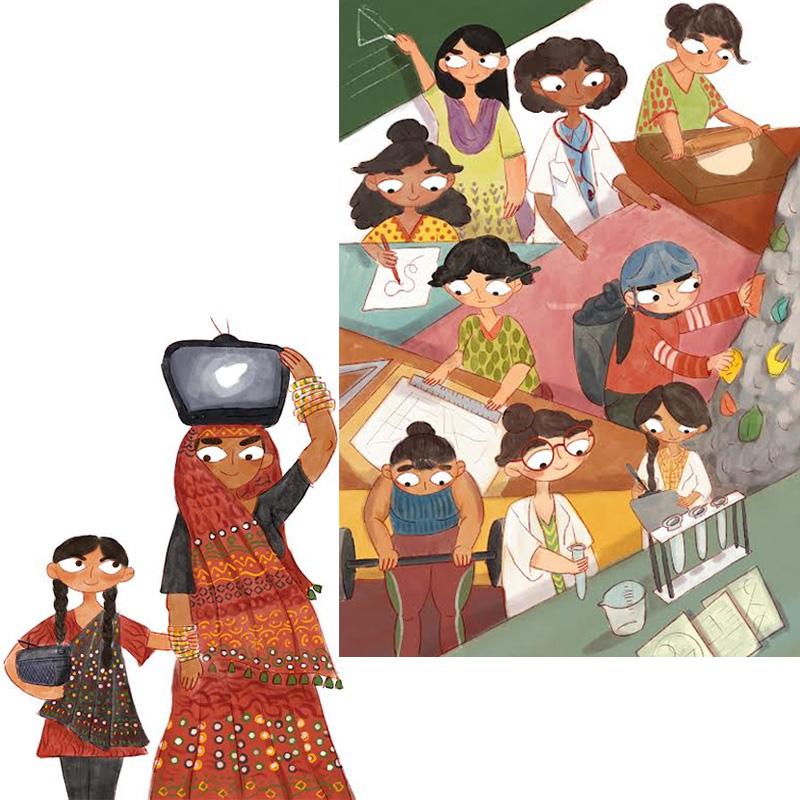
    Mumbai: Majority of the advertisements shown across media channels are replete with problematic and stereotypical depictions of gender, shows the latest study of over six hundred advertisements conducted by the Advertising Standards Council of India (Asci) in association with Futurebrands.

    There are ads, which sensualise the act of eating by women, while others show them working around the house as other family members lounge around, or probably show male celebrities challenging and instructing women. “While there are some positive moves, mainstream advertising still heavily borrows from an inventory of overused, and sometimes harmful stereotypical tropes,” said lead author of GenderNext, Lipika Kumaran.

    “Advertising has historically been a significant source for the propagation of gender stereotypes. While things are changing, what this study uncovers, is that gender continues to be represented in a skewed and discriminatory manner. Some obvious ways of stereotypes are less visible, but there are many other ways, both subtle and not-so-subtle, in which gender portrayals continue to be skewed,” said Futurebrands Consulting MD Santosh Desai.

    Experts studied patterns of portrayals across multiple categories, such as personal care, fashion, beauty, home and hearth, gadgets and wheels, money, and education. The study touches upon how advertising portrays women versus how they see themselves and want to be seen. Women interviewed across different life stages and town classes pointed out that it is not ‘them’ but others in their sphere who lag behind and are the ones in need of empowerment. They feel that advertising can be their ally in this journey.

    The study found that common stereotypes used in advertising such as women joyfully undertaking the drudgery of work was not aspirational at all for young unmarried women. Typical Women’s day ads that show women emerge victorious after significant struggle were not considered particularly empowering. Women are tired of ads showing young women being bestowed with freedoms only after putting up a fight.

    “GenderNext acts as a guide for stakeholders – brand owners, marketers, advertising professionals – to aid the creation of more progressive depictions of women in advertising,” said ASCI chairman Subhash Kamath. “The deep insights on women, and what they feel about advertising is a fantastic input into advertising creation, and we hope that brands and advertisers will be motivated by the findings to depict women in more progressive ways. We also intend to set up a task force to evaluate advertising guidelines on harmful stereotypes.”

    The study identifies some common patterns of discrimination and creates a framework that enables marketers to identify and eliminate such undesirable representations. The study proposes a category agnostic framework “The SEA (Self-Esteemed-Empowered-Allied) Framework” that aims to guide stakeholders in imagining as well as evaluating portrayals of women in their advertising by building empathy and aiding evaluation. It also proposes a 3S screener for scripts/storyboards, casting, styling to identify stereotype red flags: subordination, service, and standardisation.

    Calling it a continuing conversation, ASCI secretary-general Manisha Kapoor said that the report is only the first of the many initiatives ASCI will put together in this space.

    The study was sponsored by Rio Pads as the principal sponsor; co-sponsors included Vivel, Eureka Forbes Ltd, Kellogg’s, Colgate-Palmolive, Diageo India, Mondelez India Foods Pvt Ltd, and Procter & Gamble Home Products Pvt Ltd; while Kotak Silk and Mahindra & Mahindra Ltd were onboarded as associate sponsors.

    “We are privileged to participate in this seminal study on our culture’s perspective on femininity and womanhood,” said Nobel Hygiene Pvt Ltd (makers of Rio pads) VP of marketing and commerce Kartik Johari. “Advertising has the responsibility to take the lead on cultural conversations and to affect change. With this study, we hope to really create a guideline for lasting change which advertisers can use to authentically represent women across communication, and hopefully, with it, start a national conversation around equality and humanity.”

    For the study, the primary research involved ad clinics with 160 respondents and 20 focus group discussions across 10 centres, in addition to tapping into Futurebrand’s proprietary study Bharat Darshan, stated the industry body. More than 300 people were spoken to via social media, and all stakeholders such as national and regional advertisers, agency and creative heads, agender domain experts, policymakers, and advocacy groups were consulted as part of the study enquiry, the agency said.

  • HUL remains unchallenged in week 40: Barc

    HUL remains unchallenged in week 40: Barc

    Mumbai: FMCG giant Hindustan Lever Ltd (HUL) was the top advertiser in Broadcast Audience Research Council (Barc) week 40 (2 to 8 October 2021) delivering ad volumes of 4779.73 (‘000s). With 3267.96 (‘000s) Reckitt Benckiser (India) Ltd was at the second position. Amazon Online India Pvt Ltd (1002.43) stood third.

    Cadburys India Ltd, Brooke Bond Lipton India Ltd, Godrej Consumer Products Ltd, Ponds India, Flipkart.com (new entrant), Procter & Gamble, and Coca-Cola India Ltd bagged the remaining spots.

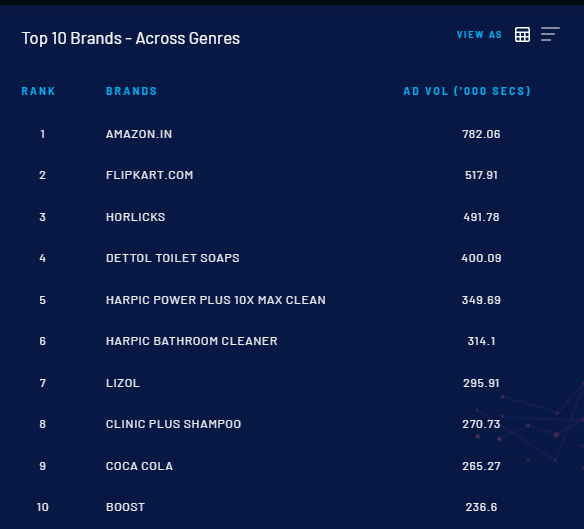
    With 782.06 (‘000s) Amazon India maintained the lead as the most advertised brand for the third consecutive week. Flipkart.com (517.91) was the new entrant in the brands’ list as well, albeit at the second position.

    Horlicks, Dettol Toilet Soap, Harpic Power Plus 10X Max Clean, Harpic Bathroom Cleaner, Lizol, Clinic Plus Shampoo, Coca Cola and Boost followed, in that order.

    After a short stint lasting three weeks, Disney+ Hotstar dropped out of the brands’ list in week 40. Riding the IPL wave, the OTT brand debuted at the sixth spot in week 37.

  • HUL becomes top advertiser in week 39: Barc data

    HUL becomes top advertiser in week 39: Barc data

    Mumbai: Hindustan Lever Ltd (HUL) was the most prolific advertiser across genres, according to the data shared by Broadcast Audience Research Council (Barc) for week 39 (from 25 September to 1 October). The FMCG major recorded an increase in ad volumes which stood at 5240.17 (‘000 secs), against 5097.68 (‘000s) last week. 

    Reckitt Benckiser (India) Ltd followed with 3229.9 (‘000s) and with ad volumes of 1039.32 (‘000s), Amazon Online India Pvt Ltd moved up two positions to bag the third spot in week 39.

    Brooke Bond Lipton India Ltd, Cadburys India Ltd, Colgate Palmolive India Ltd, ITC Ltd, Coca Cola India Ltd, Ponds India, and Procter & Gamble bagged the remaining positions.

    There were as many as four digital brands in the most advertised brands list this week, with Amazon India leading the tally. Stepping up the game as it gets closer to the festive season, the e-tailer delivered ad volumes of 843.11 (‘000s). It was the top performer in week 38 with 651.4 (‘000s).

    Meesho App, BYJU’S Classes, and Disney+ Hotstar were at the fifth, sixth, and seventh positions respctively. While Disney+ Hotstar entered the race in week 37, Meesho App and BYJU’S Classes were the new entrants.

    The rest of the spots were occupied by FMCG brands such as Horlicks, Dettol Toilet Soap, Lizol, Dettol Antiseptic Liquid, Dettol, and Clinic Plus Shampoo.

  • Leader Batteries ropes in Ajay Devgan for new campaign

    Leader Batteries ropes in Ajay Devgan for new campaign

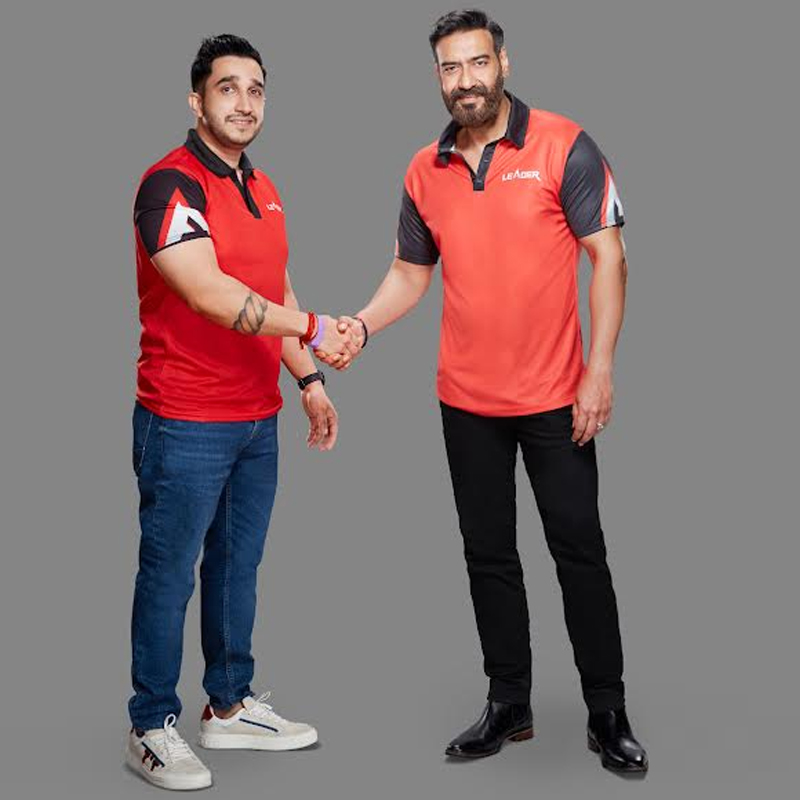
    Mumbai: Leader Batteries, a part of the Pilot Industry group has launched a new brand campaign announcing the new avatar Leader 2.0 to strengthen its pan India presence. The campaign features brand ambassador Ajay Devgn who showcasing the brand’s values of ‘performance, commitment, innovation, and trust.’

    “We are excited to announce the new transformed version of Leader Batteries -Leader 2.0 with this new campaign. We are charting new skies, setting ambitious milestones, and paving our growth trajectory with the all-new Leader 2.0,” said Pilot Group of Companies MD Sanjeev Aggarwal said. “There is no one better than Ajay Devgn to showcase what our brand stands for – a perfect amalgamation of Power, Performance, Commitment, Innovation, and Trust”.

    Leader Batteries director Chetan Ranjan said the campaign comes at an opportune time when we the Company is expanding our network with our innovative product range. “We truly believe a leader like Ajay Devgn will help us establish a better connect with our consumers,” added Ranjan.

    The company has expanded its entire product range, features, and offerings in the Inverter, E-rickshaw, and Solar Battery segment. The innovative products feature higher backup, longer life, and an ultra-low maintenance cost, it stated further. The brand has also introduced 12X7 service on the entire range of its products.

    “Leader 2.0, a Made-In-India brand, in its new avatar is all about things that matter to me personally. With their products that match global standards and energy-efficient solutions, I am confident that they will be able to meet consumer needs in India,” brand ambassador Ajay Devgn said.

    The campaign was developed by Offbeet Media Group. “We have a long-standing partnership with Leader Batteries that have helped us understand the brand and its ethos. Keeping the brand ethos in mind, our talent, production, creative and digital teams developed the campaign with superstar Ajay Devgn at the heart of it,” said Offbeet Media Group founder Jaideep Singh.

  • Haier celebrates outstanding women achievers with new campaign

    Haier celebrates outstanding women achievers with new campaign

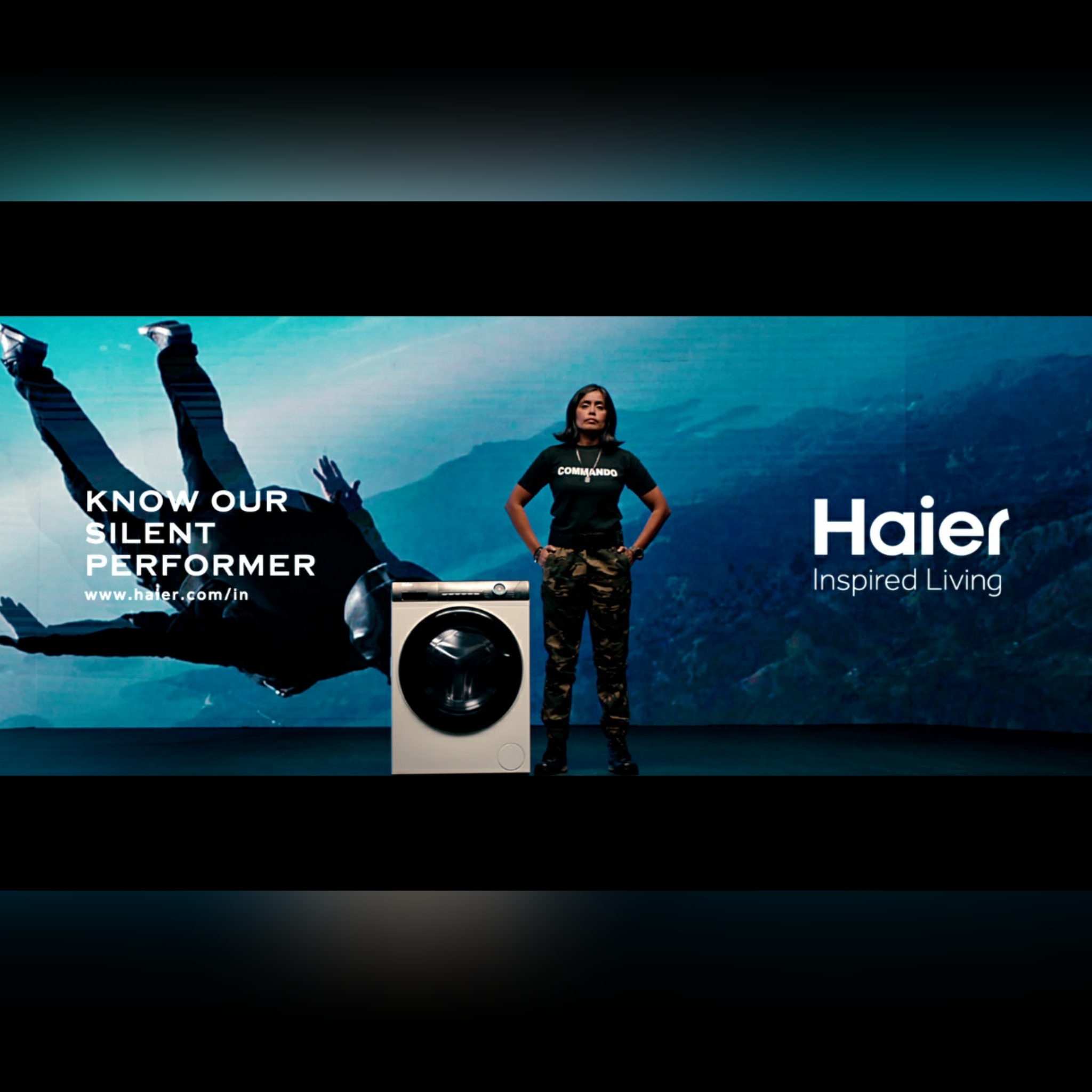
    New Delhi: Home appliances and consumer electronics major Haier has launched a series of new TVCs titled ‘Perform Big, Silently’ featuring notable women achievers who pushed boundaries to make a mark.

    The new TVCs feature Indian mountain climber Dr Arunima Sinha, India’s first woman commando trainer Dr Seema Rao, Indian Female Chess Grandmaster Harika Dronavalli, and female mountain biker Anissa Lamare. The campaign celebrates the power of being a silent performer and gives a peek into the challenges, conviction, and strength of each of the woman achievers.

    An extension to its ‘Silent Performers’ campaign, the new TVCs acknowledges the determination and efforts of Indian women achievers and athletes who continue to ‘Perform Big, Silently,’ letting their work speak for everything and have made India proud at the global stage with their triumphs.

    Haier Appliances India senior VP sales & marketing NS Satish said, “Our latest campaign takes another leap towards our efforts to recognise the success of Indian women. Striving silently in their respective fields they have made our nation proud and our campaign lauds their accomplishments. Similarly, our new range of washing machines champions performance in the background without making any noise. Haier salutes the spirit and achievements of these performers who made it big without making noise.”

    The campaign gives center stage to women achievers and highlights how they have pushed boundaries to bring pride to India on an international platform. Their commitment and hard work coincide with Haier’s philosophy of ‘Inspired Living,’ said the brand.

    The TVC created in collaboration with Famous Innovations will premiere across all leading national and regional TV channels. For a wider reach, the TVC will be aired in Hindi and English.

    Famous Innovation founder and CCO Raj Kamble said, “The consumer durables category is cluttered with celebrity-driven communication, relying on Bollywood and Cricket’s fame to sell products. However, we believe that the Indian consumer has been ready to move forward with new idols – people who perform big, silently. That’s why we are celebrating personalities from various fields like mountain climbing, combat training, chess, and downhill mountain biking.”

    This is the second series of TVCs launched by Haier under the larger campaign theme of ‘Silent Performers,’ first introduced by the brand in 2019 with India’s ace sportswomen – Dipa Karmakar, Hima Das, and Simranjit Kaur. The campaign is dedicated to highlighting Haier’s latest ‘Super Drum’ series of front-load fully automatic washing machines which are designed to function super silently.

  • HUL top advertiser, Amazon India most advertised brand in week 38: Barc

    HUL top advertiser, Amazon India most advertised brand in week 38: Barc

    Mumbai: Hindustan Lever Ltd led the top-ten advertisers list in Barc week 38 (between 18 and 24 September). The FMCG major recorded total ad volume of 5097.68 (‘000s). Reckitt Benckiser India Ltd stood second at 3912.86 (‘000s).

    Brooke Bond Lipton India Ltd replaced Cadbury India Ltd at the third position, registering ad volume of 966.61(‘000s). Amazon Online India Pvt Ltd was the only digital and non-FMCG brand on the list, featuring at the fifth spot.

    ITC Ltd, Colgate Palmolive India Ltd, Coca Cola India Ltd, Godrej Consumer Products Ltd, and Ponds India followed at the remaining five slots.

    Among the brands, the ad blitz launched by online marketplace Amazon India to encash the festive season landed the e-tailer at the top spot in the most advertised brands list of week 38 with ad volume of 651.4 (‘000s).

    Horlicks and Dettol Toilet Soap grabbed the second and third positions respectively. Disney+ Hotstar moved up two positions after debuting last week. The OTT platform stood fourth at 373.64 (‘000s). Dettol, Lizol, Dettol Antiseptic Liquid, and Harpic Power Plus 10X Max Clean followed at the next four spots.

    Moov Strong Diclofenac Gel and Moov Pain Balm were the new entrants at the last two positions.

  • ICICI Lombard urges customers to track their calories in new campaign

    ICICI Lombard urges customers to track their calories in new campaign

    New Delhi: 2021 saw a sea shift of people changing their lifestyles and adopting healthy life choices due to the ongoing pandemic. This gave birth to a new cohort of consumers who are proactive in staying healthy through wellness-oriented products and apps. It is this spirit of a healthy lifestyle that ICICI Lombard has emphasised upon in its new campaign which unveils its new feature ‘Cal Scan’ on the company’s health and wellness app ‘IL TakeCare’.

    The campaign consists of two ad films that encapsulate the significance of eating the right amount of calories on the backdrop of a busy lifestyle characterised by faulty food habits, high-calorie intake, partially aggravated by the pandemic lockdown.   

    The first ad film opens with a scene from a typical halwai shop where a person is buying samosas. Upon packing the samosas, the shopkeeper tells the customer the calorie count instead of the price of the food items. He then goes on to suggest making the calorie count a round figure by adding two more samosas. To this, the customer declared a specific calorie count, took the samosa, and walked away happily.

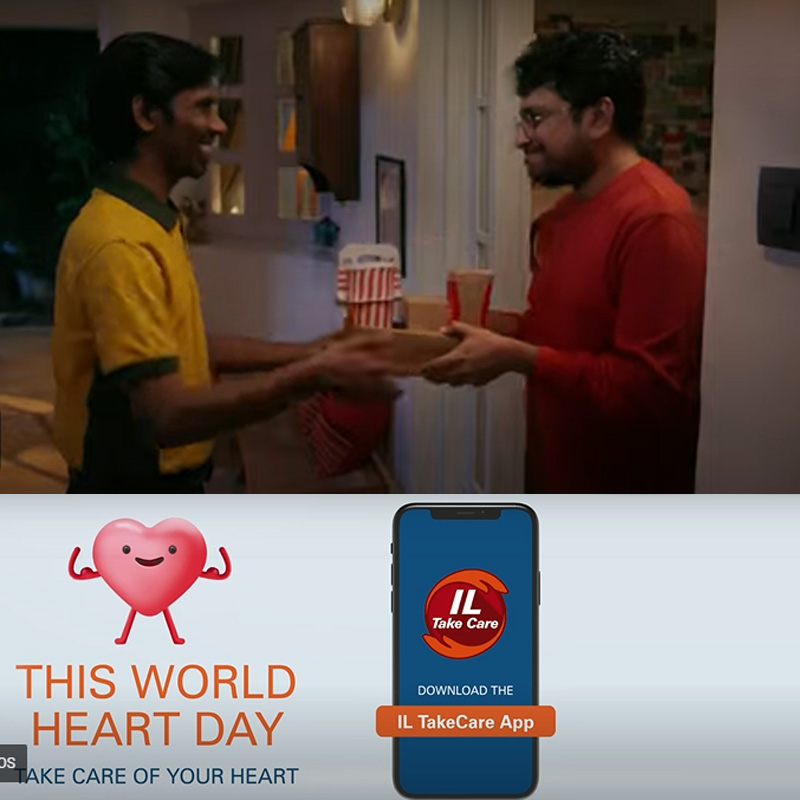
    The second ad shows a food delivery guy delivering food and affirming the accurate calorie score to the customer according to his food order. Both the ad films end with the thought that our food vendors will not be able to tell us the exact calorie count of the food consumed, hence with the IL TakeCare app’s new feature ‘Calorie Scan’, consumers can now get a personalised recommendation of their calorie intake and the tips to burn those extra calories. Through these films, the insurerattempts to guide the audience towards a behavioural change wherein they see the value of the food not in terms of money, but also the number of calories consumed.

    ICICI Lombard General Insurance executive director Sanjeet Mantri said, “While the pandemic has turned people towards a holistically healthy lifestyle, it is equally important to add the element of measurement to all our health endeavours. Considering the significant increase in the usage of wellness and health-oriented apps recently, we have introduced this new feature of ‘Calorie Scan’, which will act as a counter and encourage the user to stick to their recommended calorie budget.”

    The campaign centered on the World Heart Federation’s theme for 2021 focuses on harnessing the power of digital health to improve awareness, prevention, and management of cardiovascular diseases. Conceptualised by Ogilvy, ICICI Lombard’s Creative agency, the ad films are being promoted across ICICI Lombard’s social media assets and digital platforms.  

    Ogilvy Mumbai, executive creative directors Talha Bin Mohsin & Mahesh Parab said, “The ICICI Lombard World Heart Day campaign has had a long history of great work aimed at making people conscious of the challenges to their good health. This year, we sought to open a new chapter by going a step further and joining them in their journey towards holistic wellness. Not just by helping them count their calories, but giving them tips on how to burn them and stay fit on a regular basis too.”