Tag: advertising

  • GUEST COLUMN: Five game-changing Indian ad trends to watch out for in 2022

    GUEST COLUMN: Five game-changing Indian ad trends to watch out for in 2022

    Mumbai: The pandemic came as a sudden blow to every industry, with the Indian advertising industry being no exception. But this industry turned a challenge into an opportunity and is now on its path to recovery with a 12.4 per cent growth rate predicted by 2022. Advertising spends on digital media are expected to reach Rs 58,550 crore by the end of 2025. With the market dynamics changing constantly, brands and marketers are tapping into new advertising avenues and adapting their marketing strategies to align with the evolved consumer habits.

    Going forward in 2022, the Indian advertising industry will witness a major surge in digital advertising. It is important for brands to understand the top trends that will shape the future of Indian advertising to be on top of the game. Listed below are some key trends to watch out for in 2022.

    1.      Vernacular content is the future

    Vernacular content consumption is on the rise in India especially with the increased participation from tier-2 and tier-3 cities. Brands are now expanding digital advertising to include regional languages with the rural and semi-urban populations consuming digital content in large numbers. Regional language advertising has emerged as a key technique to tap into a diverse consumer base hailing from different social and economic backgrounds. With increased digital activity from the tier-2 and tier-3 cities, vernacular content will continue to dominate the Indian advertising landscape in the coming years.

    2.      Influencer marketing is here to stay

    India is witnessing a surge in the number of quality content creators, pushing brands to capitalise on influencer marketing. Consumers today are inclined towards video content more than ever resulting in huge followership for social media creators. In fact, we are now living in an era where even venture capitalists are willing to invest huge sums of money in creators. Brand partnerships and collaborations with influencers, or rather, micro-influencers, will continue to be a trend in the coming year as influencer marketing presents high engagement opportunities at a competitive price. Influencer-driven ad content powered by predictive AI will assure ROI for brands, giving more impetus to influencer marketing spend.

    3.      Growth in video commerce will continue

    Internet connectivity in India has drastically improved compared to a few years ago. People can now consume online content at high internet speeds, opening doors for advertisers to effortlessly reach the audience where they spend most of their time. Video commerce refers to shopping during live video streaming of events. Video is one of the most popular ad formats in India and mobile video ad spending is projected at $596 million in the year 2022. Going forward, brands will exploit video advertising in many ways to motivate purchases from consumers. Indian consumers’ purchases are no longer just price-driven. They are experience-driven and videos help humanise a brand, raking in more sales and brand loyalists. The video-watching user base increased by 25 per cent in India in the past year alone with the number of users touching 350–400 million and this stat alone is a testament to the rising popularity of video content in the country.

    4.      Shift towards CTV and OTT platforms is imminent

    The CTV and OTT market is growing at a faster pace opening monetization opportunities for advertisers within the video realm. Connected television advertising now presents an incredible opportunity for advertisers to deliver content to the audience. CTV advertising enables advertisers to engage advertisers in a linear TV-like environment, encouraging co-viewing and one-to-many relationships. With the increasing adoption of casting devices in India, advertisers are expected to allocate a substantial budget for CTV and OTT advertising.CTV’s ability to provide incremental reach to linear TV has enabled advertisers to grab the attention of young adults.

    5.      Cookie less advertising will be in vogue

    The push for consent-driven data has forced advertisers to find alternatives to third-party cookies. Advertisers will have to rely on first-party data and rethink their advertising and marketing tactics. Retargeting consumers may not be possible like before as the use of data in the name of hyper-personalisation has raised huge privacy concerns. Instead, the coming year will see advertisers using first-party sources to align their campaign planning and customer segmentation, staying compliant with the consumer data privacy guidelines.

    In conclusion

    India is the fifth fastest-growing ad market in the world with the industry bouncing back to normalcy to touch pre-pandemic levels. Brands vying for consumer attention must capitalise on the above-mentioned critical trends to ride the wave of success. With digital advertising penetrating into tier-2 and tier-3 cities like never before, the ad industry is set to witness some interesting developments going forward in the future.

    (Arun Fernandes is the founder-CEO of Hotstuff Medialabs. The views expressed in this column are personal and Indiantelevision.com may not subscribe to them.)
  • India advertising market to see 15% growth in 2022: Magna advertising forecast

    India advertising market to see 15% growth in 2022: Magna advertising forecast

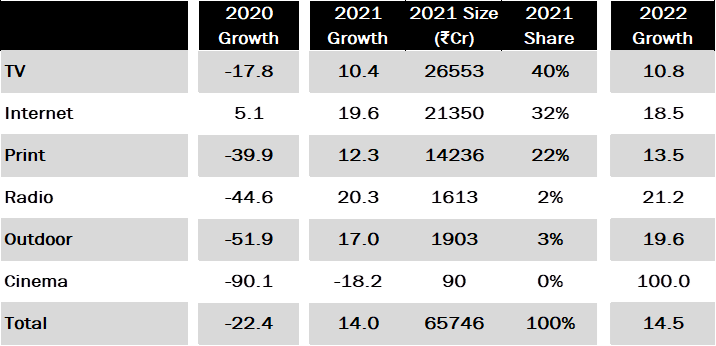
    New Delhi: Advertising revenues swung back to a healthy growth rate of 14 per cent in 2021, rising from Rs 577 billion to Rs 657 billion. The growth is likely to accelerate further in 2022, with a 15 per cent rise in advertising revenue according to the Magna Global Forecasting Report released on Thursday.

    While the digital ad formats grew by 20 per cent to Rs 214 billion this year, the traditional media rose 12 per cent. Ecommerce, Retail, Durables, Beverages, Pharma, Real estate, Finance, and Education remained the most active categories while automobile, government, personal care, and communication brands continued to hold back their spending.

    TV to grow by 11 per cent to reach Rs 294 billion by 2022 end 

    Despite the Covid-led disruptions, television performed well in 2021 with original programming and Live sports events including the IPL and ICC T20 World Cup which boosted its revenue growth. With IPL media rights coming up in 2022, valuation this time is going to be even higher with the increase in the number of teams and the number of matches. With this factor, coupled with a few critical state elections, TV is expected to maintain momentum and grow by +11 per cent to reach Rs 294 billion by the end of 2022, according to the forecast.

    Video and Social Media to lead Digital ad-spends

    Digital advertising is currently the second-largest segment at 33 per cent market share. As per the forecast, Video and social platforms are likely to gain significant advertising share followed by audio and display. Overall, digital advertising revenues are expected to grow 18.5 per cent next year to top Rs 250 billion, as per the forecast.

    Growth of print to be broad-based

    In 2021, overall print grew +12 per cent from a low base (2020: -40 per cent), despite the slowdown in business. Growth has come from Retail, Durables, Finance, Real Estate, and Government spending. 2022 growth is expected to be broad-based, with most categories increasing spends and elections in a few large states helping to drive an increase of +14 per cent. With all Covid-19 restrictions lifted, the wedding season (which typically begins in October and lasts through March/April) will present another opportunity for print to thrive.

    Radio to witness growth of 21 per cent in 2022. 

    Radio is expected to gain back the transit audience listeners lost during the lockdowns. Growth in both listenership and revenue is expected to come from tier 2 and tier 3 markets. Overall, radio advertising revenues grew +20 per cent in 2021 to reach ₹16 billion, nearly 70 per cent of the pre-Covid market size.  Growth was driven by e-commerce, food, pharma, and retail advertising. Growth of +21 per cent is expected for 2022. 

    OOH growth to accelerate

    OOH traffic numbers are already reaching pre-Covid levels, with passenger footfall in airports and the metro increasing rapidly. OOH, (digital & static, not including cinema) revenues rebounded by +17 per cent in 2021 and an acceleration (+20 per cent) is expected in 2022, with revenues reaching 67 per cent of 2019 pre-Covid market size at the end of the year. Automobile, real estate, OTT and finance are a few categories driving OOH advertising growth.

    Major Sectors

    According to the forecast, travel & hospitality will see a resurgence in 2022, with the relaxation in travel regulations. The automobile and handset sectors that experienced supply-side issues will bounce back, too, along with education, realty, retail, and fashion sectors. Traditionally TV-heavy categories, like FMCG, personal products, and food are expected to increase their share of digital advertising. Advertisers will also pursue every shoppable moment to offer “anywhere commerce” to their consumers. With local players in Reliance and Tata e-commerce platforms gaining more traction, the sector will further increase its share of advertising. 

    IPG Mediabrands India CEO Shashi Sinha said, “Waning fear of the virus, along with the opening of economic and leisure activities, has given a boost to demand and improved business sentiment. The Indian advertising marketplace is experiencing recovery and accelerated adoption of non-conventional methods by all forms of media to engage consumers is helping along the recovery path. Though the second Covid wave in 2021Q2 disrupted the momentum, ad revenue in 2021 will grow at a healthy rate after contracting -22 per cent in 2020

  • 71 per cent of Indian marketers’ budgets to increase in 2022: DCMN Growth Guide

    71 per cent of Indian marketers’ budgets to increase in 2022: DCMN Growth Guide

    Mumbai: At least 66 per cent of global marketers expect their budgets to increase next year, with this figure rising to 71 per cent for Indian marketers alone, showed a new analysis published by DCMN, the growth marketing partner for digital brands.

    The ‘Growth Guide’ released on Thursday looks at marketers’ goals, strategies and challenges going into 2022, and points to a new period of growth for the industry.

    While, in India, 71 per cent of Indian marketers surveyed expect an increase in their budgets in 2022, it was 75 per cent in France and 68 per cent in the US. It’s good news for marketing and advertising agencies with the vast majority of Indian respondents – 93 per cent – planning to increase their spending on agencies in the next 12 months.

    Aside from spending on agencies, budgets will go towards experimenting with new formats and advertising channels. Outside of digital advertising, the three channels Indian marketers plan to focus on and invest in the most are mobile advertising, podcasts and linear TV.

    The research also shows that 62 per cent of Indian marketers are more focused on long-term branding efforts, versus 33 per cent for performance-oriented goals. This is remarkably in-line with global figures, at 65 per cent versus 31 per cent.

    The new year also comes with its own challenges. As advertising campaigns grow ever more complex, marketers in India are most concerned about managing and reconciling large amounts of data across channels. Keeping up with privacy regulations comes in second place, as policies targeting iOS and the future of cookies are set to dramatically reshape the marketing world.

    The research conducted by Censuswide on behalf of DCMN surveyed 600 in-house marketers in the US, the UK, France, the Netherlands, Germany and India. The results offer an understanding of how the marketing landscape has changed after a tumultuous few years and how optimistic brands are heading into 2022.

    “At DCMN, we wanted to take a closer look at where the marketing industry stands right now, and the impact of a disrupted 2020 and 2021. The results are impressive, and point to a marketing rebound in the coming year – both in India and in other countries around the world. Overall, we’re seeing that branding efforts remain top of mind for marketers. It’s also clear that brands still have huge faith in linear TV, with mobile advertising and TV set to be some of the most popular channels for marketers to invest in next year,” said DCMN country head – India Bindu Balakrishnan.

  • TV Brand Fest 2021: Brands share mantras for enhancing market share through TV.

    TV Brand Fest 2021: Brands share mantras for enhancing market share through TV.

    Mumbai: Day two of the five-day TV Brand Fest summit being organised by IndianTelevision.com saw brands discuss their experience, with regards to increasing the market share while using Television as a communication tool.  

    Ernst & Young partner & leader – Consulting Markets Monesh Dange, who was moderating the discussion set the ball rolling by asking Lenskart media head Anupam Tripathi about the brand’s transition from a D2C brand to a house of brands model.

    “As a consumer you don’t just buy a product, you buy a brand,” asserted Tripathi. “So, having the entire control on the product- from production to the end user- eradicates the middle men which saves cost and gives value-for-money to the consumer. It was a carefully thought-of year-long strategy.”

    Matrimony.com GM – marketing communications Akhil Jain talked about how the brand replicated its urban success in rural areas. The brand has recently launched the website in Tamil version. “In the last five to six years, internet penetration has grown exponentially & led to a rise in vernacular users,” he noted. “Our overall learning is that if you can break the barrier of language then you will see tremendous success.”

    Syska Group’s head of marketing Amit Sethiya encapsulated the marketing-led growth of the over 30 years old SSK Group. For the Syska brand’s communication, the company did not go into product-driven promotions, but rather ventured to educate the masses on why they need to buy LEDs. “For almost five to six years we supported the entire category. And today Syska has become synonymous with the LED category,” he said, while adding that the brand has now expanded into wires, cables, as well as mobile accessories.

    “Marketing is both an assailant and a victim of its own creation,” said Upstox senior director, Marketing Kunal Bhardwaj, adding that a year and a half ago nobody even knew this category existed, much less the brand, but they came up with a mix of traditional and non-traditional marketing media, using them to their maximum potency. “Nothing beats Television when you want to create awareness and nothing beats digital when you want to create Call-to-actions or a reminder medium,” said Bhardwaj, adding that the Media mix, along with a “190 per cent effort on retention and user experience” were the three things the start-up focused on the most”. He also added that the English-first app is also looking to expand its language boundaries.

    The pandemic hit every business sector and category. Talking about the specific marketing strategies during the prevalence of the pandemic, Amit Sethiya of Syska Group shared that the first thing that the brand did was to remain completely agile and optimise the distribution channel.

    The government mandate that personal care appliances were considered semi-essentials helped the brand and they placed their products across all the medical and kirana shops which were the only ones operational during lockdowns. “That’s also when we saw the uptake of contactless lighting and smart home products as people were at home 24/7, so we quickly tapped into that,” added Sethiya.

    Tripathi shared Lenkskart started the digital revolution in spectacles buying in India and with time many new features have been introduced based on consumer behaviour and needs. Having started with 3-D trial more than four years back, the brand has now moved on to AR (augmented reality) & HTO (home try on) on the app.

    The panellists unanimously agreed on the importance of Television in carrying the brand message to masses. “The moment we stop TV, we see a downfall in traffic, app installations, social media interactions and even calls. So there’s no competition,” said Tripathi.

    Marketeers realised that when push comes to shove with disruptions such as the one caused by the pandemic or else technological disruptions, the key is to be very agile and help brands reach their objectives, agreed the participants on the panel.

    The five-day event is being organised by IndianTelevision.com, and co-powered by Star India.

  • TV Brand Fest 2021: Marketers relook at TV ad spends in times of disruption

    TV Brand Fest 2021: Marketers relook at TV ad spends in times of disruption

    Mumbai: The media industry and the economy saw an unprecedented level of disruption post-lockdown phase. As marketers went back to the drawing board to scrutinise their media spend, TV advertising moved from strength to strength commanding the highest share of advertising spends.

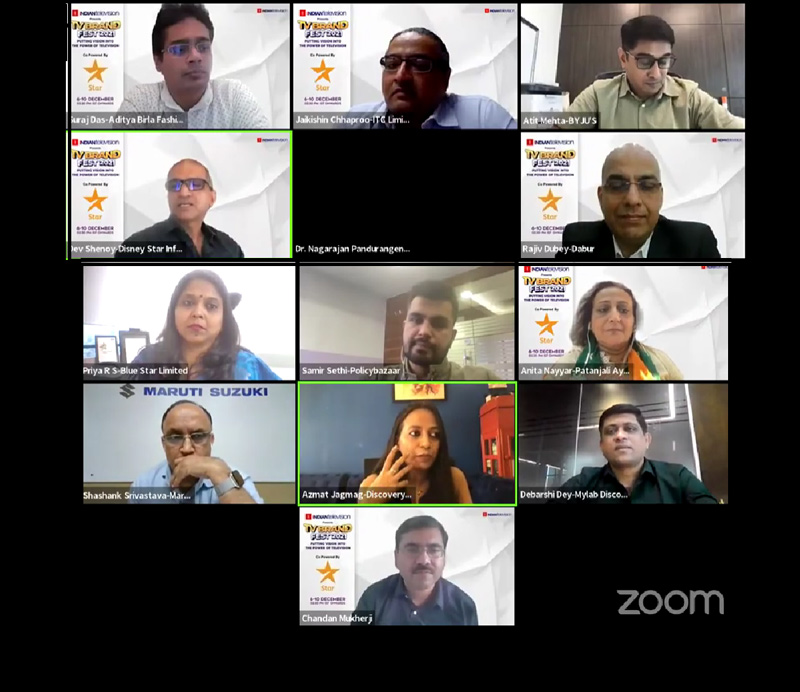
    “Television will continue to command the majority share of ad-spends in the next five to seven years,” asserted ITC head of media Jaikishin Chhaproo, as he began the discussion at the ‘TV Brand Fest 2021’ – a five-day event being organised by Indiantelevision.com, and co-powered by Star India. Day one of the event saw marketers and prominent TV advertisers discuss ‘The power of television in times of disruption’ and ways of ‘Using TV + digital strategy’.

    Maruti Suzuki India executive director – marketing and sales Shashank Srivastava noted that out of the Rs 700 crore spent on advertising, the brand spent 34 per cent on TV and 27 per cent on digital. “In terms of building brand imagery, especially in the auto category, there’s no substitute for TV,” he noted.

    Most industries were impacted by the pandemic. However, the edtech sector was one of the few that saw an increase in demand during the lockdown. Byju’s head of marketing Atit Mehta observed that this was an important moment for the edtech industry to build top of the funnel awareness. “One of the categories that increased their advertising spends during lockdown was edtech,” he said.

    The fast-moving-consumer-goods (FMCG) category remains the largest advertiser on TV. Despite the impact of the pandemic on the bottom line of most consumer goods companies, this category remained visible on TV. “FMCG cannot do without TV because you need the reach, frequency and eyeballs,” said ITC’s Chhaproo.

    “A significant number of categories operate around the magic price point of Rs 10. Due to the impact of the pandemic on the supply chain, continuing to offer this price point to consumers became a challenge”, said Chhaproo. “We had to constantly communicate to consumers to drive them to our products.”

    The category which usually invests on general entertainment channels, shifted media spends on other genres on TV. “We shifted our spends on TV to the news genre because consumption had gone up significantly,” remarked Dabur head of media Rajiv Dubey.

    Covid was a timeout for the entire world and when the normal choices were unavailable to consumers they began experimenting with different modes of consumption. When fresh content returned to GECs last year, Dubey observed that there was a significant consolidation of viewership in the eight regional markets that Dabur looked at including South (Karnataka, Andhra Pradesh/Telangana, Tamil Nadu and Kerala), West Bengal, Maharashtra, Orissa and Bihar.

    “The viewership has been on the upswing in these regional markets with consolidation of viewership in fewer programs and channels,” said Dubey. “We’ve seen that if you speak to a consumer in Maharashtra, in Marathi, using a Star of his choice, it works better.”

    There are 40-50 million homes that watch only free-to-air channels on Prasar Bharati’s free DTH platform DD Free Dish, Dubey said. “The FTA channels work like magic if you want to advertise products with smaller price points. Unfortunately, the major FTA channels only cater to Hindi-speaking audiences and no other language audiences.”

    In terms of consumer behaviour, there is a key overlap in terms of audiences on TV and digital. Audiences are watching both these media at different points in time. For Policybazaar.com’s vice president and head of brand marketing Samir Sethi it became important to map these audiences to optimise ad spends.

    He said, “The attention is now divided between a TV and mobile phone. Earlier, people watched TV undivided but now they’re also multitasking on a mobile phone. We’ve seen that there are times when people are influenced enough by your communication on TV that they respond by checking out your website or downloading your app on mobile.”

    A lot of digital and direct-to-consumer brands have understood and leveraged this behaviour. When it comes to achieving their growth targets, “all the major D2C brands have come on our platform (TV) to reach audiences at scale,” remarked Disney and Star India head of sales for infotainment, kids and regional cluster Dev Shenoy.

    In the last 18 months, ad spends have inevitably shifted to digital media platforms. For example, with retail spaces closed, certain category spends have completely moved to e-commerce. Maruti Suzuki’s Srivastava said, “At the top end of the funnel there is no substitute for TV. Digital becomes more important at the lower end. In the consideration stage of the brand, there’s an overlap.”

  • Sebamed takes on tall claims of shampoo brands in new ad

    Sebamed takes on tall claims of shampoo brands in new ad

    Mumbai: German personal care brand Sebamed has unveiled its latest campaign- a satirical, tongue-in-cheek take on the tall claims peddled by hair care brands under the garb of the “Conditions Apply” disclaimer.

    The commercial urges consumers to switch to its ‘scientifically superior’ shampoo that comes with “No Conditions Apply”, unlike the claims made by its rival shampoo brands.

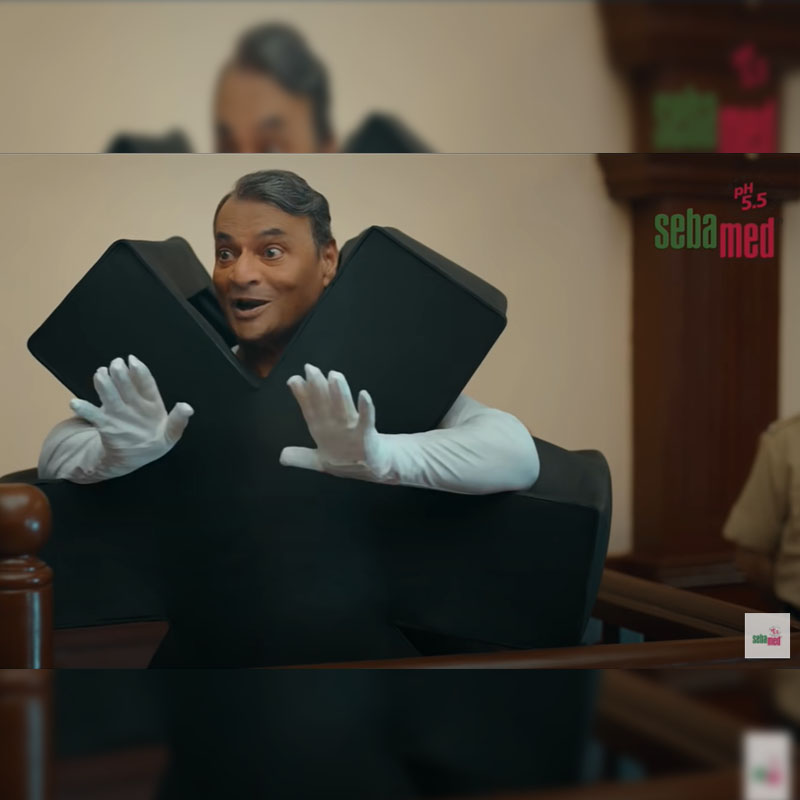
    Conceptualised by The Womb, the ad has been shot in a courtroom, where the personification of the commonly misused ‘Conditions Apply’ (personified by the actor, Liliput) is on trial. The judge portrayed by actor Ratna Pathak questions ‘Conditions Apply’, and the accused pleads not guilty to all the charges and puts the onus squarely on the hair care brands for hiding the truth from consumers under its facade.

    “This campaign has the perfect recipe of How Not To Make A Shampoo Commercial. Jokes aside, we have no beauty shots, no product demo and no false claim. The truth is that most shampoo brands hide in the garb of a tiny little ‘Condition Apply’ asterix. So, we just wanted to communicate that in an interesting way. With Ratna Pathak Shah and Lilliput ji under Rensil’s direction, we are confident the consumers will know this Sach,” shared The Womb creative head Suyash Khabya.

    The brand is known for taking on other brands earlier too, through its series of ads and campaigns such as #PrathamSnanSe, #FilmstarsKiNahiSciencekiSuno, #SirfScienceKiSuno which targeted its rival brands directly, while nudging consumers to ask unasked questions regarding the popular brands’ products.

    Commenting on the latest campaign, head- Consumer Business, Shashi Ranjan shared, “Hair loss is one of the biggest concerns for both male and female consumers. Sebamed continuously conducts consumer studies to understand hair concerns and formulates efficacious solutions with pH5.5 benefits. Through “#NoConditionsApply” campaign we are addressing the need of discerning consumers by unravelling the truth behind anti hairloss product claims. We are confident that our honest and differentiated messaging around hair loss will resonate with our audience.”

  • Kerovit launches new TVC with Ranveer-Anushka

    Kerovit launches new TVC with Ranveer-Anushka

    Mumbai: Faucets & sanitaryware brand Kerovit, from the house of Kajaria, has launched a new television ad campaign featuring actors Ranveer Singh and Anushka Sharma.

    The commercial, titled ‘Freedom 3.0’ carries forward the brand’s expression ‘Kerovit is Freedom’ showcasing a bathroom as a space to express, and unwind.

    “Both these superstars are inspiring, dazzling, stylish and certainly unique. They also exhibit incredible versatility and that just goes to show that they have the feeling of “freedom” deeply rooted within. This coincides with our brand strategy and hence made our association like peas in a pod,” said MD Kajaria Bathware and JMD of Kajaria Ceramics Rishi Kajaria.

    The company has previously released campaigns starring Anushka Sharma, dubbed 2.0. To take it a step further, the new campaign has been dubbed 3.0 in an effort to revamp the brand’s style quotient while also hammering the brand expression of ‘Freedom.’

    “We believe that Ranveer Singh has always embodied the feeling of ‘freedom,’ and the common thread of craziness, style, and uniqueness. This makes us the perfect match. As a prominent figure in the Indian film industry, Anushka Sharma has always been a fan favourite and has delivered nothing but brilliance in her craft. We saw her as an inspiring icon and felt that she perfectly fits our brand’s narrative of freedom,” said Kajaria on the choice of brand ambassadors.

  • Rajendra Gupta joins Rediffusion as chief growth officer

    Rajendra Gupta joins Rediffusion as chief growth officer

    Mumbai: Rediffusion has announced the appointment of Rajendra Gupta as chief growth officer, based at its corporate office here.

    An engineer from BHU-IT and an MBA from FMS Delhi, Gupta has been in advertising, industrial solutioning and telecom for well over 35 years. This will be his second stint at Rediffusion. He earlier worked at Rediffusion Delhi and Mumbai from 1994 to 2002. “Rediffusion is my home. I have had some of my biggest professional successes and victories here. I hope that track record remains intact and unblemished in this innings too,” said Gupta.

    Gupta will be a group resource with growth and business development responsibilities across Rediffusion, Everest, Rediffusion Healthcare, Rediffusion Direct (recently rechristened Rediffusion FutureTech), Rediffusion SmartMedia, Mogae Media and the Indian Institute of Human Brands (IIHB), said the agency in a statement.

    Gupta had worked at Dunlop and Wipro before joining Rediffusion in the mid-’90s. He was seconded to Bharti twice by Rediffusion – first to Airtel Delhi and then to Bharti Madhya Pradesh to work as an expert implant in then growing, new company. He has also worked in telecom with Reliance for over a decade.

    In his earlier tenure at Rediffusion, Gupta was instrumental in bringing the coveted Bharti group business to the agency. He was part of the team that launched Airtel in 1995. During his previous stint, Rajendra led successful pitches to bring in Casio, Sony, Panasonic, Canon, Atlas cycles, Singer sewing machines, BPL, and many more accounts to the agency, said the statement.

    “Rajendra is special. He is also Rediffusion’s lucky mascot for new business and new horizons. He combines the aggressiveness of a good salesman with a very good understanding of technology. And over the years he has become excellent advertising professional. Such a combination of virtues and talent is rare,” stated Rediffusion managing director Sandeep Goyal.

  • Vim paves way for a new perspective in its latest campaign

    Vim paves way for a new perspective in its latest campaign

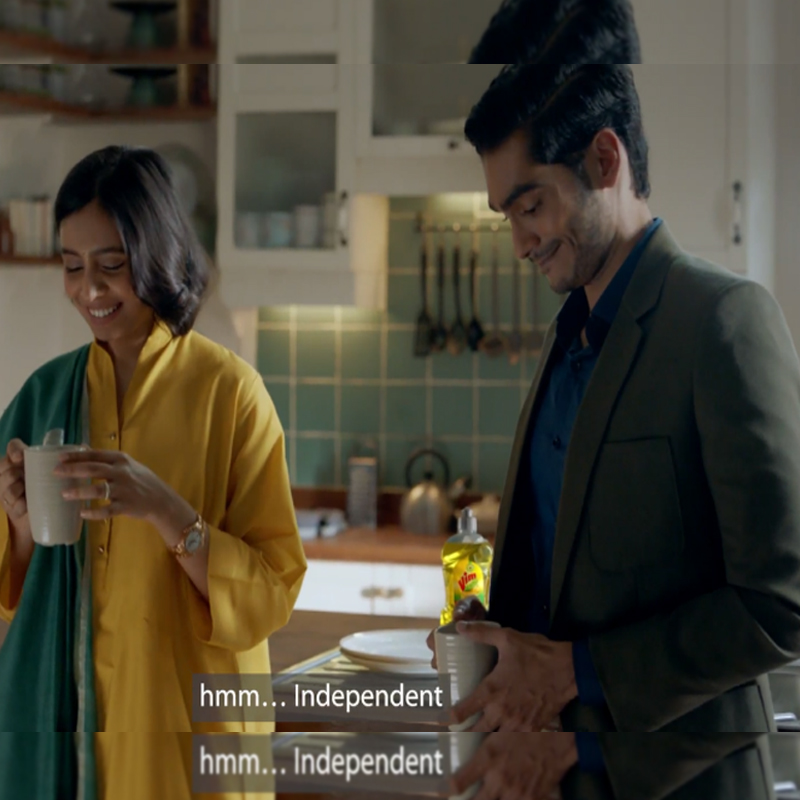
    Mumbai: Women are successful thriving in numerous fields. They have big dreams and take pride in expressing themselves – as homemakers, artists, or as CEOs. Caregiving and household chores are only a part of their responsibilities, but societal limitations of defining them only through chores, obstruct them. Vim’s latest ad campaign – ‘Nazariya Badlo, Dekho Bartano Se Aage’ is a nudge to society to see women beyond archaic roles.

    The TVC is a story of a prospective matrimonial arrangement, where the ‘independent guy’ under the implicit assumption that it is the wife’s job to cook and clean, tries to impress the girl by offering to ‘help’ her with cooking. The girl immediately offers to ‘help’ him with dishes, gently nudging him to be independent in household chores as well, as she could get late from work. The boy’s initial shock and eventual change of perspective drives home the campaign message of ‘Nazariya Badlo, Dekho Bartano Se Aage’. The girl in the ad is not only ‘more than her chores’ but also a change-maker who calls for equal partnership.

    Home Care South Asia – executive director and VP Prabha Narasimhan said, “Vim has helped make the dishwashing process easier and hassle-free over the ages. We are inspired by the successful women around us who excel in whatever they do, being homemakers and decision-makers. They are already way more than chores, but sometimes get limited by society’s definition of chores being a woman’s primary responsibility. If we offload them from these societal stereotypes and the stress caused by them, there is so much more they can and will be. At Vim, that is precisely going to be our endeavour with ‘Nazariya Badlo, Dekho Bartano Se Aage’.

    Lowe Lintas chief creative officer Prateek Bhardwaj said, “This campaign speaks to the mindset that when a man does the dishes, he’s ‘helping’ the woman of the house. An act for which society applauds him, when in fact it’s something that he should be doing as a member of the household. Nudging the society to realize this double standard that exists was at the heart of this campaign. “

  • The world survives on creativity: Piyush Pandey at Ad Asia 2021

    The world survives on creativity: Piyush Pandey at Ad Asia 2021

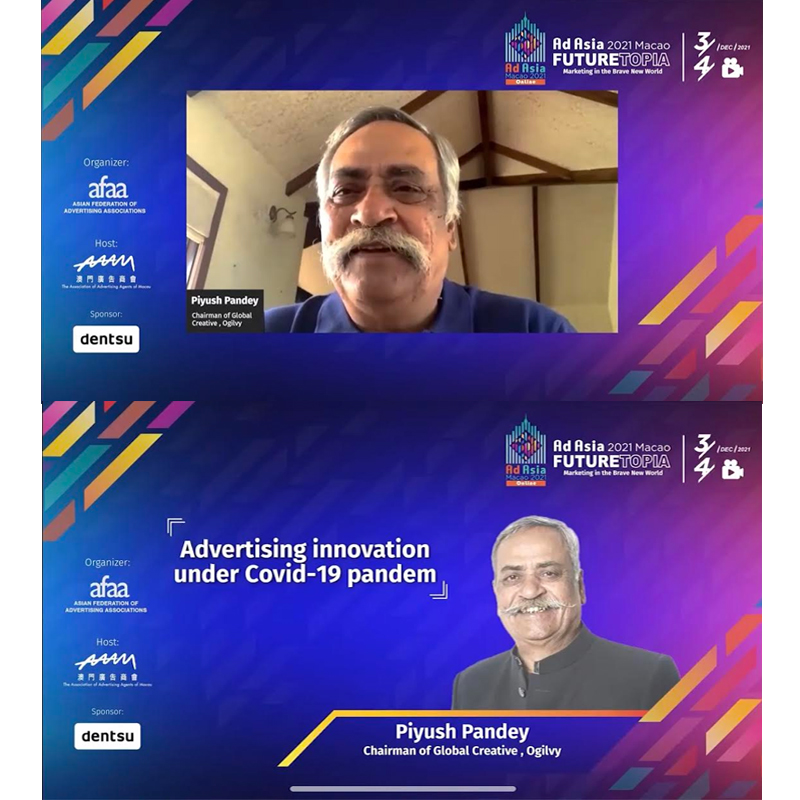
    Mumbai: The pandemic took a heavy toll on people, and constrained activities across industries. So much so that it made the advertising industry apprehensive of its deleterious effects on the creativity of its workforce. But according to Ogilvy chairman of global creative Piyush Pandey, ‘creativity is still alive and kicking’ and fuelling the industry in the post-pandemic world.

    Sharing his views on the ‘Advertising innovation under Covid-19 pandemic’, Pandey said that he is frequently asked whether the pandemic has killed the creativity of the advertising industry.

    “The world survives on creativity,” responded the industry veteran while allaying any such concerns. “In fact, the pandemic has taught us that lives can be saved through creativity. Right from scientists who brought vaccines at unprecedented speeds to governments who found new solutions to administer those vaccines to millions, and to common people who remained confined in their homes, every one of us had to get creative with their lives to survive and thrive,” he said emphatically.

    Pandey also lauded the work done by several advertising agencies during the lockdown, and cited three examples of great creativity that stood out for him.

    The first, a made-at-home short film ‘Family’ launched in April 2020 which carried the message of ‘Stay Home, Stay Safe’ while also raising funds for the daily wage workers and technicians of film industries across the country hit by the pandemic. The film featuring several top actors was virtually directed by Prasoon Pandey, without any of the actors stepping out of their homes. Sponsored by Sony Pictures & Kalyan Jewellers, the film helped in collecting $3 million a because of a little creativity in the most terrible of times.

    The second film Pandey named was Savlon India’s campaign promoting handwashing, released in October 2020. The campaign “Hand Hygiene for all” executed in partnership with Mouth and Foot Painting Artists (MFPA) highlighted the message of handwashing effectively. The story was told through a day in the life of Swapna, a talented foot artist, who by her own example shows how handwashing is the easiest way to prevent Covid and other infections and why we should all be doing it. “Think of solutions executed with both your hands tied behind your back,” said Pandey.

    He also made a special mention of the Cadburys’ Dairy milk Diwali campaign, ‘Not just a Cadbury ad’ where the confectionary major batted for the small shop owners by getting ‘India’s biggest brand ambassador’, Shah Rukh Khan to be the brand ambassador for each of the local stores. Retailers and small local stores were shut due to pandemic, as people ordered even essential, everyday items online. So the brand used machine learning & AI to help retailers create their own ads, which were promoted by Khan as per the pin code of the viewer.