Tag: advertising

  • Sumit Vyas goes on an epic rant in Wakefit.co’s new campaign

    Sumit Vyas goes on an epic rant in Wakefit.co’s new campaign

    Mumbai: “Yeh Covid na…2020 ghar mein, aur 2021 darr mein!”

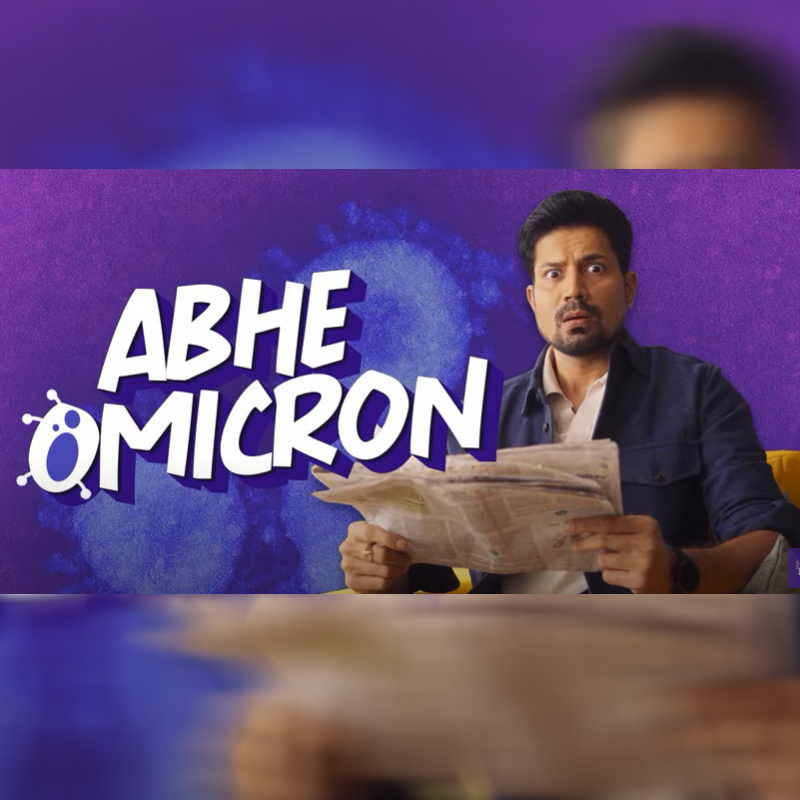
    From uncertainty about going back to work to worrying about a new variant of Covid-19 that might wreak havoc, 2021 has been a challenging year for everyone. And, this is exactly what Wakefit.co- the D2C home, and sleep solutions company is highlighting in its latest campaign- ‘The Honest Office-goer’s Rant’.

    The new campaign video features Sumeet Vyas as the protagonist, who encapsulates the emotional turbulence people have been going through in the past year, in a light-hearted manner. As several months passed and people transformed their homes into office-like environments, the relationship and the bond with homes and home furnishings have increased. ‘The Honest Office-goer’ Rant’ (which follows the viral Bartan Dho Liye video that was introduced as part of the Open Letters campaign by Wakefit.co) highlights how the new normal and WFH has fostered a close relationship between people and their homes.

    Wakefit.co head of brand Prateek Malpani said, “In the last two years, people have reoriented their way of living between the four walls of their homes. While doing so many people have naturally channelled their energies into livening up their surroundings, leading to an increasing interest in the home furniture segment. Through quirky and witty initiatives like these, we try and echo each other’s sentiments, while also addressing the importance of investing in their homes.”

    Spring Marketing Capital partner-branded content Sandeep Balan said, “The campaigns we collaborate with Wakefit.co on always have a dash of wit and humor, to go with the core brand messages. The Honest Office-goer’s rant is another out-of-the-box attempt to showcase the pulse of the average Indian citizen and build brand resonance”

    In 2020, when the first wave of Covid-19 broke out, Wakefit.co launched the Open Letters Campaign which attempted to evoke a sense of empathy and assure people that we are in this together, as a community, and will come out of it stronger, if we stand together. The videos were hosted on Wakefit.co’s branded content channel, Home Time. 

  • HUL top advertiser in week 50: Barc

    HUL top advertiser in week 50: Barc

    Mumbai: Hindustan Lever (HUL) has emerged as the top advertiser in week 50 (11 December to 17 December) in the recently released weekly Barc data. The FMCG giant delivered ad volumes of 3466.83 (‘000s), slightly less than last week’s 3975.65. Reckitt Benckiser (India) was second with 3439.56 (‘000s). At 1100.13 Ponds India finished third.

    The top three firms were followed by Cadbury’s India, Godrej Consumer Products, and Marico. Facebook Inc – the only digital brand in the FMCG-dominated list which was at the tenth position last week was at number seven in week 50. The remaining three spots were grabbed by Brooke Bond Lipton India Glaxo SmithKline and Procter & Gamble.

    Harpic Power Plus 10X Max Clean led the brands’ list with ad volumes of 593.78. Lizol and Ultratech Cement jumped to the second and third slots from their last week’s positions at number four and five respectively.

    They were followed by Dettol Antiseptic Liquid, Harpic Bathroom Cleaner, Instagram Reels (No.10 in week 49), Clinic Plus Shampoo, Veet Men Hair Removal Cream, and Dettol Disinfectant Spray. The consistent top-performer Horlicks finished last this week.

  • GUEST COLUMN: One accurate measurement is worth a thousand expert opinions

    GUEST COLUMN: One accurate measurement is worth a thousand expert opinions

    MUMBAI: Management guru Peter Drucker once said, “Because its purpose is to create a customer, the business enterprise has two — and only these two – basic functions: marketing and innovation.”

    Marketing is more important today than ever before as it leads to brand creation, which is the growth driver of the business. A brand is the biggest moat and one of the most powerful intangible assets a business has. Today around 11 per cent of a company’s revenue is spent on marketing. The second most important quote of Peter Drucker was, “If you can’t measure it, you can’t improve it.” And, how true is this even today in this age of data overload.

    Around 70 per cent of marketing spends are on media. Advertisers have never been under more pressure to prove ROI. TV has been leading and digital has been growing over the years. Together they contribute to around 80 per cent of spending. Measurement of both remains important, but it’s critical to focus on the right metrics which can drive action.

    TV viewership has undergone changes over the years, especially with digitisation, NTO & OTT. The pandemic has led to increasing the overall TV viewership with rural growing faster. If one has to look at genre level, then News, FTA & Regional has been on a continuous growth & Niche has been facing challenges. The good part about TV is that it has an industry-accepted third-party measurement system which drives most of the decisions on planning and investment. However, the industry needs to sort the recent ambiguity on news measurement.

    The consumer looks at TV and digital as a continuum. The majority of OTT content is TV shows, acting as catch-up TV. Growth of connected TV has been fast, though on a smaller base and with NTO 2.0 closer, it’s an indication that TV might keep tilting the balance towards rural & OTT will emerge as new Urban TV. The question is “When”? The audience being the key, can TV take a step further towards digital with improving targeting capabilities at a geo level as well as consumer interest and affinity?

    Digital has been growing and the launch of 4G and Jio has accelerated the growth. Specific measurement is possible at the customer level due to the availability of large data sets; however, digital comes with the challenge of a common currency and a heavy reliance on self-claimed platform level data.

    Platforms do not talk to each other leading to higher inefficiencies in planning. Over the last 18 months, digital spending has been moving to lower-funnel actions driving purchase and conversion. Evolved businesses do understand the need to balance the spending across the funnel (TOF) to get more efficiency on performance marketing without compromising on brand building.

    One of the major changes over the last few years is the advent of the creator economy. Scale is a challenge here and the industry needs to enable this. There is a need to move beyond views and likes. Coupon codes and affiliate links are solving the attribution question. However, the focus should also be to measure brand advocacy.

    With large data sets and extremely sharper targeting capabilities, digital also faces the wrath of privacy which is now being spoken at various industry forums and is at a cusp of change with regards to customer opt-in and usage of data.

    Hence TV & digital will have to come closer and there is a need for standardisation of the measurement mechanics, for improving the investment decisions. While the basic measures like monitoring reach, frequency, views, etc. are important to track, other outcomes remain critical like brand searches including marketplace, direct traffic, time spent, footfalls, etc. Tracking customer satisfaction, mind metrics, and NPS is also a key measure of brand health.

    While today’s consumer is multiscreen, measurement of media is operating in silos and the absence of single-source data adds to the woes. The industry has to take steps to arrive at a cross-media third-party measurement currency that helps measure effectiveness as well as efficiency of marketing spending.

    And finally, brand metrics across the marketing funnel, like awareness, consideration, and purchase intent will remain critical varying from business to business depending on customer engagement. The power of the brand will be determined by the ability to charge a price premium, loyalty, and advocacy, and it is imperative to measure these continuously.

    (Rahul K Shah is general manager, Motivator at GroupM. The views expressed in this column are personal and Indiantelevision.com may not subscribe to them.)

  • Tata Studi shows the correct way to study in latest film

    Tata Studi shows the correct way to study in latest film

    Mumbai: Parents undergo immense stress while preparing their kids for school and often end up putting their children under undue pressure. It is this thought, that drives Tata Studi’s new campaign, which conveys the message, that true success depends on effective planning and not undue pressure.

    The campaign ‘Padhne Ka Sahi Tareeka’ conceptualised and executed by Mullen India, focuses on the correct way to learn by planning one’s studies efficiently. It is based on insights drawn from how invested parents are in the studies of their children. Through a series of films, the campaign conveys the point that planning their studies will help students to be better prepared, avoid anxiety and perform well in their exams.

    “The category is flooded with multiple brands, so the idea was to create clutter-breaking work that’s also insightful and relevant to parents and students. The insight into how parents put pressure on children unknowingly, especially during exams gave us an opportunity to tell stories that parents can connect to. The idea – ‘Pressure Nahi, Plan’ – also puts the key differentiator benefit of Tata Studi, which is to plan one’s studies to reduce last-minute exam stress, right at the centre of the campaign,” said Mullen Lintas chief creative officers Azazul Haque & Garima Khandelwal.

    First introduced in early 2021, Tata Studi is an after-school learning app designed around the principles of Science of Learning – a multidisciplinary approach that combines research from neuroscience, psychology, and cognitive science.

    Tata ClassEdge chief B2C Sachin Torne said, “We want children to plan their studies and learn for understanding so that they can use their learning in real life. Planning for any activity helps reduce pressure and it is true even for studying. Through Tata Studi, we want to inculcate good learning habits in students. Once the child learns how to learn, it’s a skill that will stay with them for life.”

  • vivo India urges parents to #SwitchOff, and connect with kids

    vivo India urges parents to #SwitchOff, and connect with kids

    Mumbai: Smartphones have become an integral part of our day-to-day lives. But, the excessive use of smartphones post-pandemic has also impacted human relationships. It is this thought that inspires vivo’s new ad film.

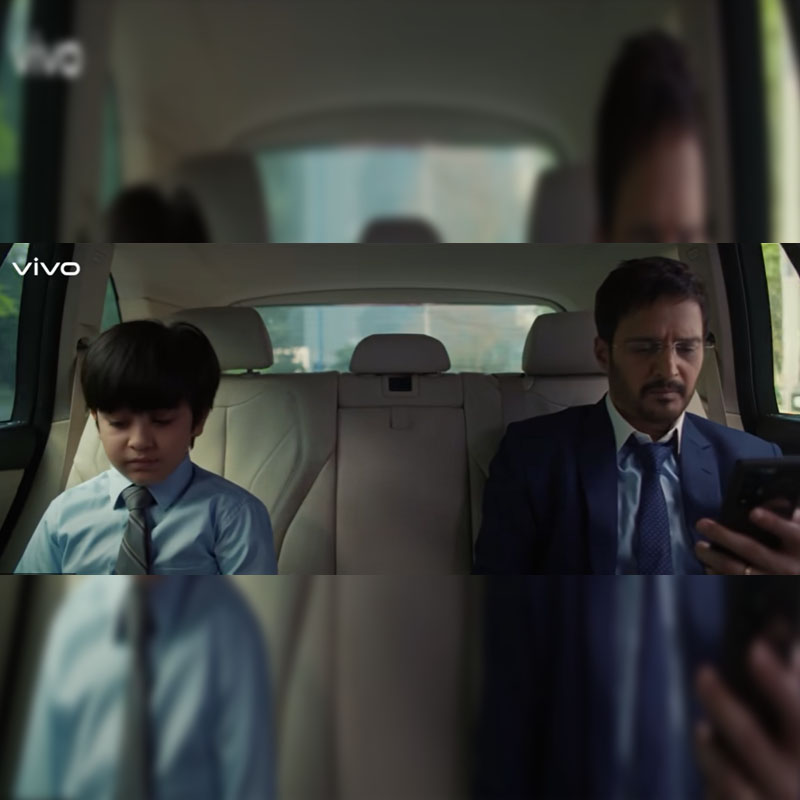
    The global smartphone brand has launched the third edition of the #SwitchOff campaign with a thought-provoking film that showcases how parents are missing out on being fully present in their children’s lives.

    Conceptualised by Lowe Lintas, the film has a heart-warming storyline that showcases a father-son relationship before the smartphone became indispensable. The character of the father, in the end, realises the need to disconnect and recapture the relationship he shared with his son.

    Lowe Lintas regional creative officer Amar Singh said, “Children are very quick to pick up on the signals we send out. And a child’s mind is a very fertile place. This film conceptualiSed by Rajat, Vishal, Stuti, and Kushal, explores what may be going through a child’s mind as he sees his parents obsessing with their phone. What inferences his little mind might draw? And how it’s imperative for adults to find it within themselves, to stop.”

    The campaign is founded on the observation from vivo-CyberMedia Research (CMR) study ‘Impact of Smartphones on Human Relationships 2021’ that underlines that 74 per cent of parents say that their excessive usage of smartphones has hurt their relationship with their children. The study focuses on the relationship dynamics of parents and children with respect to the omnipresence of smartphones in families.

    vivo India director brand strategy Yogendra Sriramula said, “The pandemic has made digital technology and smartphone devices an indispensable need for all of us. But, this excessive usage of these devices is also impacting the young and naïve minds around us. We might be around our children, but the quality of the time spent with them is something that we don’t pay much attention to. Hence, this year, we thought of focusing on driving awareness and realisation of excessive smartphone usage by adults that is impacting their relationship with their kids. We believe the film delivers an eye-opening and thought-provoking message to all of us.”

    The smartphone brand recently announced the findings of the third edition of the study titled ‘Impact of Smartphones on Human Relationships 2021’, which showcases the impact of smartphones on users and their effect on relationships. The study highlights that while the time that is spent with kids and family, in general, has gone up, the quality of time spent has deteriorated.

  • GUEST COLUMN: Digital marketing trends that reigned supreme in 2021

    GUEST COLUMN: Digital marketing trends that reigned supreme in 2021

    Mumbai: 2021 was coined as the year of the ‘New Normal’ and it did turn out to be one in many ways. The second wave of the Covid-19 pandemic this year not only affected every aspect of our lives but also impacted how companies further realigned their operations all over the world.

    Strengthening the migration to a digital environment in 2020 became the only viable option to stay on the map for many businesses, which in turn greatly impacted their digital marketing strategies. 

    The ‘New Normal’ kept alive the status of digital marketing as the need of the hour for businesses to stay afloat, gain new customers, retain current ones and generate revenue. Staying ahead of the digital marketing game is beyond just understanding and applying basic industry principles.

    As we bid goodbye to 2021, it’s time to analyse trends that reigned supreme. By analysing past trends and staying aware of ongoing changes, marketers in India will be better prepared for what’s next for the coming year.

    Marketing automation:

    Automation stood at the top of every marketer’s strategic pyramid this year and played a pivotal role in providing brands with more detailed insights into behavioral patterns of their users. Our research estimates that some brands even saw a 30-35 per cent increase in leads generated after implementing automation software. With each channel working together, brands were able to create a unified customer experience, thereby facilitating a seamless journey.

    AI-powered personalised marketing strategies:

    As per industry research, 70 per cent of companies observed that AI-powered personalised marketing strategies generated around 200 per cent ROI while 86 per cent of brands noticed a spike in business after integration. Thanks to AI, marketers were able to make product recommendations to users, hyper-personalisation of messages, optimisation of display and search ads, email marketing, and even content marketing by discovering what works better and what type of content is more effective. All in all, it empowered brands to have a better engagement with their customers and gave a boost to customer loyalty and retention.

    Live streaming

    The number of live streaming platforms and streamers has increased mainly since the onset of the pandemic in late 2019. With the use of live streaming this year, consumers got yet another opportunity to acquire better information about brands, products & discover the character of brands. Thanks to real-time interaction, Live streaming emerged as a strong medium for brands to create a better relationship with their consumers and expand the viewership for their marquee events and new launches.

    Continuous visibility on different live streams enabled brands to experience better engagements. The community of live streamers is just starting to get bigger and live streaming will continue to play an exceptional role in 2022 as well. 

    Vernacular content

    According to a Google KPMG report, 70 per cent of Indians find local language digital content more reliable; 88 per cent of Indian language internet users are more likely to respond to a digital advertisement in their local language as compared to English.

    We saw digital marketing moving towards vernacular in a holistic way. Brands actively began transcending into literacy agnostic content across formats – audio and video to target consumers across the spectrum. For example, if you look at the latest brand video for Baidyanath Chyawanprash, the entire communication is primarily in Hindi as North India is their target location. Even the media banners and communication on the social media handles follow the same route. In this year, there have been multiple examples of brands like Britannia Good Day (Tamil), Ola Autovin Home Delivery (Tamil), Goodknight Fabric Roll-On (in Bengali), Sunfeast YiPPee (in Malayalam) which were some of the most viewed YouTube Ads in the regional language.

    Nano influencers and creators

    Nano influencers were one of the core facets of all major ongoing campaigns and helped in providing brands with valuable awareness and recall amongst a niche audience. They often see the highest percentage of engagement, as they have a small and more closely linked community of followers. According to the INCA report, the average engagement rate of nano-influencers in India is 30 per cent, while for micro-influencers it is 14.5 per cent. For mega and macro, it stands at 18.2 per cent and 12.7 per cent, respectively. We observed major brands dedicating about 20–25 per cent of their brand promotion budget to influencer marketing and primarily focus on nano-influencers that can reach their target group.

    Voice Search

    emerged as a new market for marketers. According to research estimates, 65 per cent of smart speaker owners don’t want to go back to a life without a voice-controlled assistant. Smart speakers will continue to change the ways users interact and spend.

    Tech will continue to take the lead in the new year with robust advancements in technology, marketing tools, and forward-thinking strategies. 2022 will be the year to further seize opportunities, take charge from the front and take necessary steps to leverage customer behavioural trends to get the maximum out of digital marketing.

    (Shreyansh Bhandari is COO and co-founder at Lyxel & Flamingo, while Shikha Abrol is a media strategist at the same company. The views expressed in the column are personal, and Indiantelevision.com may not subscribe to them.) 
  • HUL top advertiser in week 49: Barc

    HUL top advertiser in week 49: Barc

    Mumbai: According to recently released Broadcast Audience Research Council (Barc) data, Hindustan Lever Ltd was the top advertiser in week 49 (4 December to 10 December). The FMCG giant delivered ad volumes of 3975.65 (‘000s). Reckitt Benckiser (India) Ltd was second with 3289.84 (‘000s). At 1142.54 Ponds India finished third.

    The top three firms were followed by Cadbury’s India Ltd, Brooke Bond Lipton India Ltd, Godrej Consumer Products Ltd, Procter & Gamble, and Colgate Palmolive India Ltd and Marico Ltd.

    Facebook Inc, the only exception to the FMCG-dominated list, finished last with ad volumes of 451.31 (‘000s).

    Harpic Power Plus 10X Max Clean led the brands’ list at 523.82 (‘000s). Horlicks and Dettol Antiseptic Liquid were in the second and third positions. Lizol, Ultratech Cement, Clinic Plus Shampoo, Harpic Bathroom Cleaner, Surf Excel Easy Wash, and Brooke Bond Bru Instant followed in that order.

    Instagram Reels was the new entrant in the tenth position.

  • #Retrace2021: Advertising campaigns that struck a chord in 2021

    #Retrace2021: Advertising campaigns that struck a chord in 2021

    Mumbai: The pandemic has changed the way businesses function all around the world. As organisations start limping back to the new normal, they also had to find ways to adapt to the changing dynamics of the market- from consumer behaviour to the way brands communicate to their consumers.

    2021 year saw brands and advertisers experimenting with new trends, and taking a detour from their original marketing strategies. A lot of them embraced empathy and compassion to connect with their consumers, who too were learning to adapt to the new normal. From Savlon to Byju’s and from Coca Cola to Dove, let’s look at some of these brand campaigns that struck a chord with the masses, as the year draws to a close.

    Savlon- #NoHandUnwashed by Ogilvy

    Regular hand washing became a norm during the pandemic. Savlon launched the campaign ‘No Hand Unwashed’ in association with Ogilvy. The campaign featured a video that depicts the story of an artist without arms who paints with her legs and can sanitise her limbs. “If she could, why can’t you?” was the inspiration behind.

    Dove- #StopTheBeautyTest by Oglivy

    The empathetic advertising continued even after the Covid wave subsided. Dove took this approach to address other issues of Indian society. In its ad campaign #StopTheBeatuyTest Dove addressed body shaming and skin colour biases in the Indian matrimony space. Dove has always been vocal about such negative norms of society. In 2021, it came up with its ad film #StopTheBeautyTest by Ogilvy.

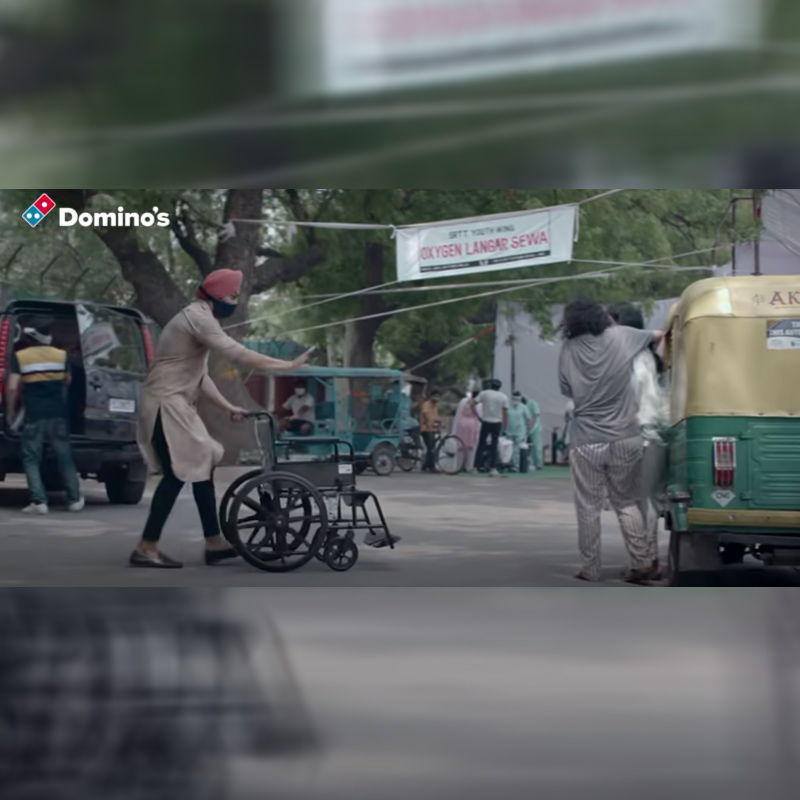
    Domino’s ke Saath #HaathBadhaoIndia #VaccineLagaoIndia by FCB

    The empathetic ad film by Domino’s takes a look back at the struggles that people went through during the pandemic. Domino’s tells people to extend their hands once again and get vaccinated together through its ad film. FCB India conceptualised the campaign. The ad film was directed by Amit Roy of Love Aaj Kal fame, and lyrics penned by Swanand Kirkire.

    Unacademy- #TeachThemYoung by Lowe Lintas

    This ad campaign by Unacademy and Lowe Lintas, Made by Lowe Lintas, tells how a brother opening her sister’s bag is nothing but an invasion of her privacy and boundaries. It talks about empowering women and teaching gender equality to boys at a young age.

    Cadbury- Not just a Cadbury ad by Ogilvy

    Undoubtedly the pandemic has shaken the spine of the Indian economy. While the big brands managed to bring back their business quickly, the local ones couldn’t do much due to the lack of resources. The spot by Ogilvy features Shah Rukh Khan, who is seen promoting local cloth merchants, shoe shops, electronic stores and the nearby Kirana shop. The ad showcased 7000+ stores across 34mn consumers in two weeks.

    Facebook- Pooja Didi by Taproot Dentsu

    The ad campaign designed by Taproot Dentsu ignites hope among the users. The ad highlighted how we could reach out to the many unorganised sector workers who had lost their livelihoods.

  • Skybags celebrates ‘New Normal’ with Gen Z in new campaign video

    Skybags celebrates ‘New Normal’ with Gen Z in new campaign video

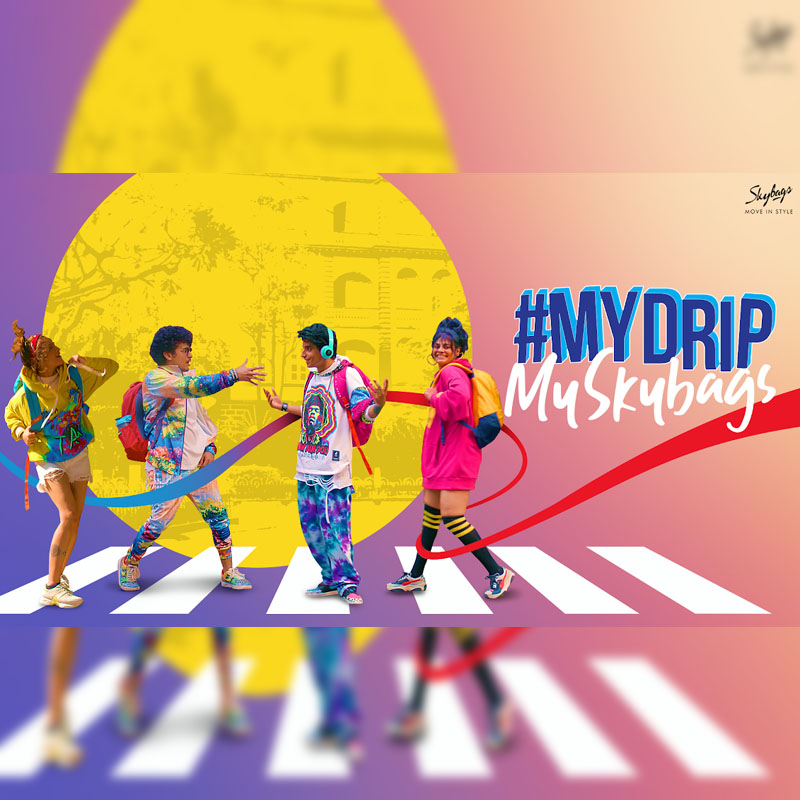
    Mumbai: Skybags, the brand from the house of VIP Industries has come out with its latest campaign titled #MyDripMySkybags targeting Gen Z. The campaign shows some youngsters celebrating the reunion of friends after more than a year and a half of online classes.

    The music video, choreographed by Shashank Dogra, is created keeping in mind the GenZ lingo like ‘What’s your drip Yo!’, and aims to connect with the brand’s target audience. ‘Drip’ which implies a cool sense of style refers to the way someone carries themselves.

    Directed by Keith Gomes and produced by Prime Focus Limited, it shows four buddies celebrating together after a long time. The campaign aims to emphasise the way the youth is celebrating the transition from #NewNormal to #BackToNormal highlighting the excitement felt by youth, who have been locked up at home due to the pandemic concerns. The hook line of the song ‘whats your drip yo’ strikes an exuberant expression of joy and optimism; for the youth preparing to reunite in the new normal.

    The video shows them sharing their excitement by slinging their college backpacks, jumping on the streets, dancing their hearts out. Through this campaign, the brand has tried to bring this imaginary story to life through music, choreography and catchy lyrics that goes with the flow of irreverent youth and their lingo.

    “We believe in the philosophy of ‘Move in Style’. To turn this thought into action, we are launching a brand anthem, #MyDripMySkybags across all our channels. The idea is to get our Gen Z audience to own their style and flex it,” said VIP Industries Limited vice-president marketing Praful Gupta. “We witness a massive potential in the backpack category that is emerging as the go-to piece of accessory for every youngster. With our new campaign we are looking at establishing a stronger presence in this space.”

  • HUL leads top advertiser tally in week 48: Barc

    HUL leads top advertiser tally in week 48: Barc

    Mumbai: Hindustan Lever Ltd (HUL) was the most prolific advertiser once again in week 48 (27 November to 3 December) according to the data released Broadcast Audience Research Council (Barc). The FMCG major delivered ad volumes of 4347.97 (‘000s). Reckitt Benckiser (India) Ltd was at number two with 2537.84. At 1125.73, Ponds India stood in the third position.

    Brooke Bond Lipton India Ltd, Cadbury’s India Ltd, Godrej Consumer Products Ltd, Procter & Gamble, and Colgate Palmolive India Ltd were in the fourth to eighth positions respectively. Facebook Inc was the new entrant at the ninth spot. Life Insurance Corp of India stood last.

    Harpic Power Plus 10X Max Clean continued to lead the brands’ list with ad volumes of 461.72. Horlicks, Clinic Plus Shampoo, and Dettol Antiseptic Liquid were at number two to four, respectively. Amazon Prime Video at the fifth spot was the only exception in the FMCG-dominated list.

    They were followed by CloseUp Ever Fresh, Brooke Bond Bru Instant, Lizol, Surf Excel Easy Wash, and Pepsodent Germi Check.