Tag: Advertising Standards Council of India

  • ASCI Board appoints Partha Sinha as new chairman

    ASCI Board appoints Partha Sinha as new chairman

    Mumbai: Post the board meeting held today following the 38th Annual General Meeting, the Advertising Standards Council of India (ASCI) appointed Bennett Coleman & Company Ltd chief brand officer & president, Partha Sinha as the chairman of the ASCI Board of Governors for 2024-25. Pidilite Industries Ltd managing director Sudhanshu Vats, was appointed vice-chairman, and Lintas India Private Ltd Group CEO & chief strategy officer-APAC, S. Subramanyeswar was appointed hon. Treasurer.

    Sinha comes with a rich and vast experience with top organisations such as Bennet Coleman, Ogilvy, Publicis, BBH, McCann, and Citibank, along with his stronghold of brand marketing, media, and communications.

    Sinha expressed a compelling vision for ASCI. “Being the chairperson of ASCI is both an honour and a profound responsibility, especially as our industry is under greater scrutiny by our stakeholders. With rapid changes in the digital environment and the emergence of new challenges. ASCI is committed to not just keeping up but to staying ahead. Deploying technology and AI to monitor errant advertising as well as putting our might behind preventive measures will be our focus in the days to come. This will ensure that creativity and responsibility coexist, creating an ecosystem that values consumers and encourages innovation.”

    Reflecting on his term, outgoing chairman Saugata Gupta said, “Leading ASCI through a period that witnessed significant development and change has been a privilege. This year has been marked by historic milestones, including the formation of the ASCI Academy, which has become a cornerstone in promoting responsible and progressive advertising. Our commitment to training and capacity building, creating new direction via our thought leadership work, reflects a culture of responsibility from the ground up.”

    ASCI has made great progress in terms of its achievements and strategic initiatives during the year, reinforcing its commitment to the proactive work since the start of ASCI Academy. The Academy’s expansion is an important aspect of ASCI’s initiatives, and it is quickly becoming an active proponent of industry training and education. Since its inception, the Academy has expanded to encompass over 75 alliances and, through its training and education, successfully impacted 33,300 new and emerging professionals, firmly anchoring ethical principles deeply within the advertising community.

    ASCI has also actively engaged in research and thought leadership through collaborative projects. Notable among these were partnerships with Khaitan & Co. on a white paper on the influence of generative AI on advertising, with the UN Women- led Unstereotype Alliance and lead research agency Kantar on D&I in India, as well as with Lexplosion for an in-depth understanding of privacy and data protection.”

    In the past year, ASCI actively co-hosted and participated in several stakeholder and government consultations to address and discuss issues like dark patterns, green claims, and surrogate advertising.

    ASCI updated and introduced new guidelines on an array of categories this year, including deceptive patterns, charitable cause marketing, and green claims ads, among others. These changes keep the ASCI Code current in the face of the changing industry dynamics and consumer expectations.

    ASCI’s rigorous complaint redressal and monitoring operations this year included processing over 10,000 complaints and reviewing over 8,200 advertisements, affirming its role as a vigilant guardian of the advertising industry.

    ASCI remains dedicated to advancing ethical, inclusive, and transparent advertising.

  • Self-certification of ads: A deeper legal perspective

    Self-certification of ads: A deeper legal perspective

    Mumbai: The Indian advertising industry, like any other market of the world, plays a significant role in shaping consumer sentiment towards products and services available in the market. Correspondingly, it is essential to have adequate regulation and supervision of the sector for ensuring that advertisements do not result in manipulation of consumer behaviour based on fallacious claims. The supreme court recently in Indian Medical Association vs Union of India addressed concerns surrounding misleading advertisements in the case where Indian Medical Association (IMA) filed a petition accusing Patanjali Ayurveda of issuing misleading advertisements and passing critical remarks against allopathy. The court highlighted the responsibility of both advertisers and endorsers in instances of misleading advertisements.

    Advertisements, misleading advertisements, related terms and concerns

    Advertisements: An advertisement, under Advertising Standards Council of India (“ASCI”) code for self-regulation of advertising content in India, is defined as a paid-for communication, addressed to the public or a section of it, the purpose of which is to promote, directly or indirectly, the sale or use of goods and services to whom it is addressed. Any communication which in the normal course may or may not be recognised as advertisement by the general public, but is paid for, or owned or authorised by the advertiser or their advertising agency would be included in the definition.

    The Consumer Protection Act, 2019 (“CPA”) defines an advertisement as any audio or visual publicity, representation, endorsement or pronouncement made by means of light, sound, smoke, gas, print, electronic media, internet or website and includes any notice, circular, label, wrapper, invoice or such other documents.

    According to the Central Consumer Protection Authority’s  (“CCPA”) Notification dated June 2022:

    a. “advertiser” means a person who designs, produces and publishes advertisements either by his own effort or by entrusting it to others in order to promote the sale of his goods, products or services and includes a manufacturer and service provider of such goods, products or services.

    b. “advertising agency” means a person or an establishment providing services in designing and production of advertisements or other related services for a commission or fee;

    Misleading advertisements: A ‘misleading advertisement’ is an advertisement that contains false, inaccurate and deceptive claims and representations about the product/service being represented, in a manner that is likely to accord to a potential buyer/consumer incorrect understanding about the product/service, thereby wrongfully influencing their purchase and usage decisions. Section 2(28) of the CPA defines misleading advertisement as any product or service which—

    (i) falsely describes such product or service; or

    (ii) gives a false guarantee to, or is likely to mislead the consumers as to the nature, substance, quantity or quality of such product or service; or

    (iii) conveys an express or implied representation which, if made by the manufacturer or seller or service provider thereof, would constitute an unfair trade practice; or

    (iv) deliberately conceals important information

    Celebrities and endorsers: ASCI defines a celebrity as anyone who (a) gets compensated Rs 40 lakh or equivalent value annually for appearing in advertisements or campaigns on any medium and any format; or (b) has a social media followership of 500,000 or more on any single social media handle. Celebrities or influencers (an individual or a group or an institution) who make endorsement of any goods, product or service can be  defined as endorsers. An endorser has the power to affect/influence their audiences’ purchasing decisions or opinions about a product, service, brand or experience, because of their authority, knowledge, position, or relationship with their audience, and also accord credibility and reliability to the brand in view of their association therewith.

    Under the current legal framework, the penalties for taking part in creation and publication of misleading advertisements are:

    1.  A first offence under the Drug and Magic Remedies (Objectionable Advertisements) Act (DOMA), 1954 could lead to imprisonment for six months and/or a fine. For subsequent offences, the punishment may extend to one year.

    2.  The CPA imposes stricter consequences, with a potential imprisonment term of upto two years and a fine of around Rs 10 lakh for violations. Repeat offences escalate to a five-year imprisonment term and a fine of approximately Rs 50 lakh.

    In view of the alarming rise in misleading advertisements in the market, the supreme court as well as various governmental and private bodies have issued regulations and guidelines directed towards endorsers/influencers, advertisers and advertisement agencies in relation to publication to advertisements. A glimpse of such directions, guidelines and regulations have been provided below.

    A.  Guidelines issued by courts for endorsers concerning misleading advertisements:

    The bench of Justices Hima Kohli and Ahsanuddin Amanullah in the aforementioned Patanjali case stated that “advertisers/advertising agencies and endorsers are equally responsible for issuing false and misleading advertisements. Such endorsements that are routinely made by public figures, influencers, celebrities etc. go a long way in promoting a product. It is imperative for them to act with a sense of responsibility when endorsing any product and take responsibility for the same …”.

    The bench further stated that persons who endorse a product should have adequate information or experience with such specific product to be endorsed, and it must be ensured that it must not be deceptive. Celebrities and social media influencers will be equally liable for misleading advertisements, if they endorse any deceptive product or service.

    Concerning misleading advertisements, the court issued the following directions:

    1  Broadcasters or print media have to file a self-declaration form before carrying any advertisements, assuring that the advertisement to be carried on its platform complies with Cable Network Rules, Advertising Code etc.

    2  Ministries were directed to set up a specific procedure which will encourage the consumer to lodge a complaint and for the said complaint to be taken to a logical conclusion instead of simply being endorsed or marked.

    3  Persons who endorse a product should have adequate information or experience with specific product to be endorsed, and it must be ensured that it is must not be deceptive.

    4  Celebrities and social media influencers will be equally liable for misleading advertisements, if they endorse any deceptive product or service.

    5  The ministry of consumer affairs, was ordered to file a fresh affidavit on action taken by CCPA on false or misleading advertisements,

    B.  Guidelines under various statutes and governmental and private bodies

    1.  ASCI self-regulation guidelines for endorsers and advertisers

    ASCI, established in 1985, is committed to the cause of self-regulation in advertising, ensuring  protection of the interests of consumers. It seeks to ensure that advertisements conform to its code for self-regulation, which requires these to be legal, decent, honest and truthful, and not hazardous or harmful, while observing fairness in competition. Some core tenets of ASCI guidelines with reference to celebrities in advertising are–

    1    Advertisements with celebrities should not violate any guideline of the ASCI code.

    2    It is an obligation of the advertiser to make a celebrity aware of the code.

    3    Representations by a celebrity must be genuine and must be based on adequate information or experience.

    4    Due diligence necessary by the celebrity to ensure that representations made in the advertisements are objectively true and are not misleading or deceptive.

    5    Celebrities should not participate in any advertisement of products that are prohibited for advertising under the law. Examples include products under the Drugs and Cosmetic Act 1940.

    6    A celebrity should not endorse a product for which a health warning is required to be issued.

    7    A celebrity may seek ‘advertising advice’ from ASCI on potential violations by an ad.

    In a bid to address misleading advertisements and safeguard consumers from unfair trade practices, especially arising out of celebrity endorsements, ASCI has laid out certain guidelines for celebrities/ influencers listing out their responsibilities while involving themselves in such marketing campaigns.

    The guidelines (dated July 13th, 2023) lay down the following –

    1  Celebrities endorsing products must adhere to the ASCI codes. Testimonials and endorsements should genuinely reflect the individual’s current opinion, grounded in sufficient knowledge or experience with the advertised product or service.

    2  It’s upon the advertisers and agencies to ensure that celebrities are well-informed about these codes. Celebrities must rigorously verify the accuracy of claims and comparisons in advertisements they endorse, ensuring they’re objectively substantiated and not misleading.

    3  They must abstain from endorsing products prohibited under the Drugs & Magic Remedies Act or requiring health warnings, as mandated by the Drugs & Cosmetics Act.

    4  Celebrities have the option to seek endorser due diligence (EDD) from ASCI to be compliant with the ASCI code and other relevant legal statutes, to protect themselves from any potential violations or litigations down the line.

    However, ASCI being a private self-regulating body, lacks the authority to compel businesses to adhere to the ASCI guidelines in a meaningful manner.

    2.  Central Consumer Protection Authority (CCPA)’s guidelines on false or misleading advertisements

    CCPA, unlike ASCI does have that power to compel businesses to adhere to their guidelines and their guidelines for misleading advertisements and endorsements, 2022 (“guidelines”), state the following-

    1  These guidelines obligated, inter alia, businesses to comply with stringent regulations governing misleading advertisements.

    2  The guidelines require that the endorsement in an ad must reflect the genuine and reasonably current opinion of the endorser, that includes celebrity or influencer, and must be based on adequate information about, or experience with, the identified goods or service and should not be deceptive.

    3  Adherence to the guidelines is essential for celebrities and influencers to maintain transparency and authenticity with their audience. Not only is this supposed to hold the endorsers responsible but also helps the consumers make informed decisions.

    The guidelines state that individuals or groups who have access to an audience and the power to affect their audiences’ purchasing decisions or opinions about a product, service, brand, or experience, because of the influencer’s or celebrity’s authority, knowledge, position, or relationship with their audience must disclose to the audience if the endorsement is a result of benefit or incentive from the advertiser. That is, if the endorser (including celebrities and influencers) is endorsing a product for which they have received some monetary/non-monetary compensation or any other form of sponsorship from the advertiser, the endorsement must clearly and prominently disclose the same. Following are the specific requirements and mandates to be followed by endorsers and influencers:

    i With respect to different formats used for endorsement, the guidelines stipulate the following rules for disclosure:

    1. For images: disclosures should be superimposed over the image enough for viewers to notice. 
    2. For videos: disclosures should be placed in the video and be made in both audio and video format.
    3. For live streams: disclosures should be displayed continuously and prominently during the entire stream.

    ii The disclosure must be made in simple and clear language.

    The disclosure must be made in simple and clear language. Terms such as “advertisement”, “sponsored”, “collaboration” or “paid promotion” can be used. Further, the disclosure should be made in the same language as the endorsement. Also, disclosures should not be mixed with a group of hashtags or links. The Guidelines specify that individuals must not endorse any product or service that they have not personally used or experienced or in which due diligence has not been done by them.

    iii Endorsers are liable for legal action if they do not disclose endorsement.

    The endorsers will be liable for legal consequences if they fail to disclose any material connection and/or upon non-compliance with the CPA and the associated rules. A material connection is any connection between an advertiser and endorser that may affect the weight or credibility of the representation made by the endorser. Material connection could include but is not limited to benefits and incentives, such as monetary or other compensation, free products with or without any conditions attached including those received unsolicited, discounts, gifts, contest and sweepstakes entries, trips or hotel stays, media barters, coverage, awards or any family or employment relationship, etc. According to Section 21 of the Act–

    (2) Notwithstanding the order passed under sub-section (1), if the Central Authority is of the opinion that it is necessary to impose a penalty in respect of such false or misleading advertisement, by a manufacturer or an endorser, it may, by order, impose on manufacturer or endorser a penalty which may extend to ten lakh rupees: Provided that the Central Authority may, for every subsequent contravention by a manufacturer or endorser, impose a penalty, which may extend to fifty lakh rupees.

    (3) Notwithstanding any order under sub-sections (1) and (2), where the Central Authority deems it necessary, it may, by order, prohibit the endorser of a false or misleading advertisement from making endorsement of any product or service for a period which may extend to one year: Provided that the Central Authority may, for every subsequent contravention, prohibit such endorser from making endorsement in respect of any product or service for a period which may extend to three years.

    3. The ministry of consumer affairs’, guidelines – endorsements know-hows!’ for celebrities, influencers and virtual influencers on social media platforms)

    The ministry of consumer affairs on 20 Jan, 2023, issued its guidelines (titled endorsements know-hows!’ for celebrities, influencers and virtual influencers on social media platforms) specifically pertaining to celebrity/ influencer endorsements.

    1  It emphasizes on the requirement of providing clear disclosures of any material connection with advertisers and straightforward language in endorsements; whereby, ‘material connection’ is deemed to be any connection between an advertiser and endorser that may affect the weight or credibility of the representation made by the endorser; and could include without being limited to benefits and incentives, such as monetary or other compensation, free products with or without any conditions attached including those received unsolicited, discounts, gifts, contest and sweepstakes entries, trips or hotel stays, media barters, coverage, awards or any family or employment relationship, etc.

    2  Terms like “advertisement” or “sponsored” should denote paid promotions. Endorsers must avoid promoting products they haven’t personally used.

    3  Aligned with the CPA, the guidelines prohibit misleading advertisements and outlines responsibilities for manufacturers, service providers, advertisers, and agencies.

    4  It reinforces guidelines for valid advertisements and addresses celebrity and endorser responsibilities.

    4.  The ministry of information & broadcasting’s advisory to endorsers on restriction on promoting, advertising, endorsing, even through surrogate marketing, offshore betting and gambling

    The ministry of information and broadcasting, on 21 March, 2024, issued an advisory directed towards endorsers and online influencers, restricting them from promoting, advertising, endorsing, even though surrogate marketing, offshore betting and gambling to the consumers, especially the youth. It states that –

    1  Emphasizing the significant financial and socio-economic implications, particularly on youth, the advisory also warns online advertisement intermediaries against targeting Indian audiences with such content.

    2  Social media platforms are urged to sensitize users and abstain from hosting such promotions.

    3  Non-compliance may result in actions under the CPA, including removal of the impugned post or account as well as penal measures.

    4  While Section 79 of the IT Act, 2000 exempts intermediaries from liability, failure to promptly remove unlawful content upon notification can restrict application of this exemption.

    5  The directive aligns with the CCPA’s previous guidelines, expressing concerns over endorsements of betting/gambling platforms by celebrities and influencers, subjecting such advertisements to stringent scrutiny.

    Not only in recent times, but celebrities have been under the scanner even in the past for being part of misleading advertisements. For instance, in 2015, a resident of Delhi filed a complaint in the District Consumer Disputes Redressal Forum of Central Delhi about the ‘Fair and Handsome Cream’, (world’s number one Fairness Cream for Men) being manufactured by Emami.  

    The complainant contended that he had used the product as per directions for use mentioned on the labelling and packaging of the product, but it had failed to show any results as claimed. He also argued that Emami had been using Shahrukh Khan as its brand ambassador for the promotion of the product and made false claims and promises that the product provides fairness in just three weeks.  The court ruled that the advertisements by Shahrukh Khan were misleading and directed Emami to pay an amount of Rs. 15 lakhs as punitive damages to the consumer welfare fund. It also directed the company to pay the complainant a sum of Rs.10,000 and withdrawal of the advertisement.

    Apart from this, there have also been many media reports of cases filed against celebrities like Amitabh Bachchan, Madhuri Dixit, and Preity Zinta for promoting Nestle’s Maggi Noodles when the product was banned when found to contain taste enhancer MSG and the chemical lead beyond permissible limits, which are harmful to humans.

    A controversy regarding a pan masala advertisement occurred in 2016 when the former James Bond actor, Pierce Brosnan, appeared in an advertisement for Pan Bahar, a pan masala brand popular in India. Pan masala is a mixture of specific kinds of nuts, seeds, and spices, often chewed for its stimulating effects, but it has been associated with health risks, including oral cancer. Pierce Brosnan was severely criticized for endorsing a product that adversely affected health. Brosnan later clarified that he was misled about the nature of the product, believing it to be a breath freshener or tooth whitener rather than a tobacco product. He also stated that his contract specified that he was promoting a “breath freshener/tooth whitener,” and he felt betrayed by the company’s use of his image to promote a pan masala product. The celebrities and media agencies were requested not be a part of surrogate advertisements of tobacco in the name of pan masala, tea, elaichi or other goods as these are prohibited under section 5 of the Cigarettes and Other Tobacco Products Act (COTPA), 2003 (“COPTA”). COPTA bans all kinds of direct and indirect advertisements of tobacco products. The controversy sparked discussions about celebrity endorsements and ethical considerations regarding the endorsement of Indian products that could be harmful to health, irrespective of the nationality of the endorser.

    5  Ministry of information & broadcasting (MIB) mandate to advertisers/advertising agencies to furnish a ‘self-declaration certificate’  before airing or publishing any advertisement

    The Supreme Court, in furtherance to abovementioned guidelines for the endorsers, has issued a directive in its order dated 7 May 2024 whereby all advertisers and advertising agencies are mandated to furnish a ‘self-declaration certificate’ before airing or publishing any advertisement. The MIB has published a press release announcing a new feature facilitating self-declaration by advertisers and advertising agencies from print, broadcast as well as digital media starting 18 June  2024 (“Press Release”).

    This certificate, signed by an authorized representative of the advertiser or advertising agency, must be submitted through designated portals, as stated by MIB in an official recent press release. The supreme court took note of the absence of a “robust mechanism” to oversee whether advertisers are fulfilling the obligations stipulated under the guidelines released by the CCPA. The supreme court further clarified that these directions were to be treated as the law declared under Article 141 of the Constitution of India. The supreme court in Sahara India Real Estate Corp Ltd. v. SEBI stated that the Constitution of India contemplates, that law declared by it, is binding on all courts within the territory of India. It also mandates, that an order made by the supreme court, is enforceable throughout the territory of India.

    Such self-declaration certificate shall be submitted through a designated portal activated on 4 June, 2024. The MIB  has introduced a new feature on the Broadcast Seva Portal of the MIB for TV and Radio Advertisements and on Press Council of India’s portal for print and digital/internet advertisements. The self-declaration certificate is mandatory for all advertisers/advertising agencies for all advertisements going live 18 June 2024 onwards, to be provided before broadcasting/publishing of such advertisement. For sake of clarity, the directive by Supreme Court and the following press release is not retrospective in nature and shall not be applicable on the advertisements that are already live. The salient aspects and observations in relation to the mechanism of self-declaration are provided hereinbelow:

    i Roadmap to Self-Declaration Certificate

    a. An authorized representative of the advertiser/advertising agency must sign and submit the self-declaration certificate, ensuring accountability and authenticity of the certificate.

    b. The authorized representative is required to provide comprehensive information about the advertised product or service, including advertisement title, description, script, and proposed date of first broadcast/publishing.

    c. The said submission of the certificate necessitates a letter of authorization, full advertisement script, video/audio file, and, if available and applicable, GST details and a CBFC certificate. The letter of authorization shall mandatorily be on the company letterhead of the advertiser/advertising agency and should be signed by the head of the company along with company seal.

    d. The certification includes affirmation of compliance with relevant regulatory guidelines, including those in Rule 7 of the Cable Television Networks Rules, 1994, and the Norms of Journalistic Conduct of Press Council of India and aims to ensure that advertisements do not contain any misleading claims.

    e. The Advertisers are required to ensure accuracy and completeness of the details, before uploading the self-declaration certificate.

    f. The successful submission of the details generates an acknowledgment receipt.

    g. Advertiser shall be required to provide proof of uploading the self-declaration certificate to the relevant broadcaster, printer, publisher, or electronic media platform for their records. As per the supreme court’s directive and the press release, no advertisement will be permitted to run on television, print media, or the internet without a valid self-declaration certificate.

    ii Elucidation required by MIB on the Self-Declaration requirement:

    Among several obscurities in the Press Release, listed below are few major concerns:

    a.  Ambiguity on terms used in the press release by MIB:

    No clarity has been given either in the order or the press release, as to who will be considered as an ‘advertiser’ or an ‘advertising agency’. However, in the absence of clarifications, reliance is being laid on the definitions given under the guidelines. Furthermore, MIB requires a self-Declaration certificate to certify that the advertisement does not contain “misleading claims”, but the press release lacks clarity on what is considered as a “misleading claim”. Reference could be drawn from the CPA, and the definition of “misleading advertisement” included therein as mentioned hereinabove. However, based on assumptions, one cannot be certain if avoiding a “misleading advertisement” would fulfil the criteria of not being considered as a “misleading claim”.

    b. Ambiguity on requirement of  separate certificates for uploading one advertisement in different languages:

    There is no clarity on this aspect, however, drawing an analogy with CBFC certification, where a different CBFC certification is required when a movie is to be released in a different language, so that the committee can examine if any translated dialogue would fall foul of its earlier criteria for certification, it would be prudent for advertisers to procure separate self-declaration certificates for different languages of the same advertisement.

    c. Ambit of the MIB press release and question over inclusion of social media

    According to the order and the press release, digital/internet-based advertisements would also require a self-declaration certificate. Digital media is defined as a means of communication that can be transmitted over the internet or digital networks and includes communication received, stored, transmitted, edited or processed by a digital media platform. Digital Media includes but not limited to (i) internet (advergames, sponsored posts, branded content, promotional blogs, paid-for links, gamification, in-game advertising, teasers, viral advertising, augmented reality, native advertising, connected devices, influencers, etc.); (ii) On-demand across platforms including near video on demand, subscription video-on-demand, near movie on-demand, free video. On-demand, transactional video on demand, advertising video on demand, video on demand, pay per view, etc.; (iii) Mobile broadcast, mobile, communications content, websites, blogs, apps, etc. / Digital TV (including digital video broadcasting handheld and terrestrial), etc.; (iv) NSTV (non-standard television); (v) DDHE (digital delivery home entertainment); (vi) DTT (digital terrestrial television)

    Although the MIB press release is not free from ambiguity on its applicability to social media such as Instagram, Facebook, X, YouTube, etc., it would be sagacious to adhere to the directives and the Press Release to avoid potential legal repercussions in future, and ensure that there is no scope for claims to arise, in instances where the content so created and exploited constitutes an advertisement as per the foregoing definitions.

    iii Exclusions and Exceptions to the Self Declaration Requirement

    It was directed by the supreme court that no advertisements would be permitted on relevant channels (assuming channels on TV and radio), print media, or the internet without a self-declaration certificate. However, the MIB carves out exceptions for classifieds, personal advertisements, statutory advertisements, public information notices, tenders, and advertisements related to public functions. However, with respect to classifieds, classified advertisements directly related to consumer products and services will come under the ambit of self-declaration certification. Additionally, the MIB press release is not retrospective in nature and shall not be applicable to ongoing advertisements currently. The new advertisements (which are to be published after 18 June, 2024 whether made prior to 18 June or made after 18 June) would require a self-declaration certificate.

    Conclusion

    Celebrity endorsements offer increased brand visibility, credibility, and influence over consumer behaviour, often affecting sales and revenue of the brand in relation to the product/service advertised. However, legal liabilities arise if endorsements are misleading, as per several guidelines, statutes and judicial precedents. The recent Patanjali judgment highlights the responsibility of both advertisers and endorsers in combating misleading advertisements. The court’s stance on the liability of celebrities and social media influencers for endorsing misleading ads underscores the importance of ethical advertising practices and prioritizes consumer welfare. The order in this case, therefore, may widen the ambit of liability for endorsers such as celebrities or influencers, and thereby, result in greater due diligence required by such endorsers, to avoid falling foul of the law. The supreme court’s directive requiring self-declaration certificates from advertisers and advertising agency before airing advertisements on all modes is a measure to combat misleading advertisements and safeguard consumer interest, however, it shall increase the burden of compliance for various companies and brands engaging in advertisements. Lack of proper monitoring mechanism for such compliance especially for a vast space like digital media, it would be interesting to see how the ministries would ensure adherence of the directives by the advertisers and advertising agencies.

    Mukherjee is a senior associate and Verma is an associate with law firm ANM Global. The views expressed in this article are entirely their own and Indiantelevision.com need not subscribe to them.


  • “Being a woman and an entrepreneur itself is a challenge in Indian society”: Diksha Jodhani

    “Being a woman and an entrepreneur itself is a challenge in Indian society”: Diksha Jodhani

    Mumbai: Familio is more than just a skincare brand—it’s a testament to its unwavering commitment to redefining the standards of family skincare. Driven by a deep-seated passion for children and a relentless pursuit of excellence, Familio is a one-stop destination for families seeking safe, natural, and cruelty-free skincare solutions for every age group.

    The brand’s journey began with a simple yet profound realization—parents were often left grappling with the dilemma of finding suitable skincare products for their little ones. With a background in finance and a keen understanding of market dynamics, Diksha identified this gap as an opportunity to make a meaningful impact. Thus, Familio was born—a brand built on the pillars of trust, transparency, and innovation.

    Familio CEO & founder Diksha Jodhani, possesses a fusion of business brilliance and profound empathy for children’s well-being. With a master’s degree in Finance and a tenure in tax consultancy, her journey from corporate corridors to entrepreneurial heights was triggered by a moving moment in a supermarket aisle. Witnessing a mother’s struggle to find suitable skincare for her teenage daughter sparked a revelation – a gaping void in the market for trustworthy, age-appropriate products. Determined to bridge this gap, she embarked on a mission to redefine family skincare, envisioning a brand rooted in safety, quality, and compassion.

    Indiantelevision.com had the opportunity to engage with Jodhani, who generously divulged significant insights into her brand and offered valuable perspectives on the skincare industry.

    Edited excerpts

    On sharing some pivotal moment in the supermarket aisle that inspired you to start Familio

    It started when I went to the supermarket to buy hair shampoo for my little niece and was surprised about the fact that there is no specific brand for children above the age of five. And parents in India are highly dependent on commercials brands or still using those baby soaps till years.  Familio India was born out of the need for trustable products for babies, preschoolers, and teens, which are often unavailable in the market. We aim to provide derma tested, natural, cruelty-free products for every age group and to be a one-stop shop for all family skin care needs.

    On balancing your background in finance with your passion for children’s well-being in leading your brand

    Honestly, when you work in one field for example Finance, you become a master of one. But when you are an entrepreneur, you have to be the jack of all.  It’s not enough to be good in one area, you need to know each and every core part of business and lead it in the right direction else your time and money both go to waste. My finance experience helps me a lot in understanding the financial part of my work but it isn’t sufficient to lead an organization. While leading the brand, I learn each and every day. I go out of my comfort zone to learn marketing and other skills. We also learn interpersonal skills while dealing with people. Familio gives me the opportunity just not to grow the brand itself but me as a person too. Balancing is hard, but my passion and determination overpowers it.

    On the specific challenges you encounter when first establishing your brand, and how did you overcome them

    Being a woman and an entrepreneur itself is a challenge in Indian society as we as Indians are not accustomed to see women leading organizations and making something of their own. That was the first challenge and the hardest one. While establishing a brand, there are so many self doubts and confusion in taking the major decisions which will shape your brand in the long run. Having the clarity of mind and right research really helps you to save yourself from a lot of troubles while entering a new field. Secondly, a focused mind and strong determination can be two deciding factors while you have to go through the process. If you have technical knowledge of your industry, you have brownie points, else you need to start from the scratch and work harder than other people.

    On ensuring that your products are not only safe and natural but also effective for different age groups

    First and foremost, we decide what we will put into our end product. The right natural and safe ingredients ensure the product is absolutely safe for children. For better proofing, we get our formulations tested from certified labs to ensure the safety measures are cross checked twice before launching any product in the market.

    On ⁠your thoughts on the skincare, beauty, and personal care product category accounted for over 30 per cent of advertisements that violated the Advertising Standards Council of India (ASCI) code last year

    Advertising is quite a biased concept. Brands have to test the advertisement which suits the likeability of a larger audience. It’s a very thin line violating the standards that’s why it becomes easier. But fairly, brands know the policies very well but the execution is very difficult on a day to day basis. In due course of time, Indian brands will become more responsible.

    On future innovations can we expect from Familio to continue redefining family skincare

    Familio India will be working on the prenatal and postnatal moms as its more neglected area. There are very few brands which provide effective products. And there are a lot of needs of mothers which are not addressed by Indian brands yet. So, hopefully, at the end of the year, we will be ready with our new category.

  • ASCI joins hands with Lexplosion on whitepaper, “Privacy &  Progress: Pillars of Digital Bharat”

    ASCI joins hands with Lexplosion on whitepaper, “Privacy & Progress: Pillars of Digital Bharat”

    Mumbai: To understand the implications of Digital Personal Data Protection  Act (DPDPA) in advertising, the Advertising Standards Council of India (ASCI) in collaboration  with legal firm Lexplosion released a whitepaper, titled “Privacy & Progress: Pillars of Digital  Bharat,” at an event in Mumbai. The whitepaper aims to empower stakeholders with  actionable knowledge to thrive in the evolving digital landscape.

    The event also featured insightful panel discussions with experts aimed at addressing the  implications of the DPDPA and its impact on businesses, consumers, and the internet  ecosystem at large.  

    The whitepaper, “Privacy & Progress: Pillars of Digital Bharat” articulates the stupendous  growth and opportunities that the internet has provided for business and individual growth  across town class and social strata while reflecting on the growing privacy concerns amongst  consumers. The whitepaper is based on insights gleaned from diverse perspectives, offering  a holistic understanding of the DPDP Act’s implications for advertisers.

    Advertising is the fuel that allows for low/no-cost internet access and is an integral part of  this ecosystem. The paper delves into the aspects of preparedness of Indian advertisers for  the new Act and articulates the challenges and opportunities ahead. It provides stakeholders  with guidance on navigating the labyrinth of compliance requirements while fostering a  culture of privacy-sensitive innovation. The white paper sheds light on the need for consent  which is informed, but also meaningful. To navigate issues such as consent fatigue, and ease  of use, and to provide personalised and more meaningful experiences, the white paper  suggests that privacy needs to be an integral part of design and advocates for privacy enhancing technologies to be adopted. This would ensure that advertisers not only comply  with regulatory mandates but also cultivate trust and credibility among consumers. The  paper highlights the need for an approach that balances privacy and progress, both of which  are fundamental to a vibrant and sustainable internet economy.  

    The White Paper also encapsulates insights on this complex issue, gathered from a cross section of businesses across sectors including organisations such as HUL, Google, Dream11,  Pepsico, MakeMyTrip, White Rivers Media, Pidilite, UB and Leadsquared.

    ASCI CEO & secretary general Manisha Kapoor said, “The DPDP Act is a significant  milestone in India’s digital landscape, underlining the critical importance of data  protection and consumer rights. For a thriving internet-based economy, advertising is a  huge enabler, and we need to provide solutions that respect consumer privacy without  creating friction for end users and businesses. All stakeholders need to be in constant  dialogue to collaborate on approaches that are native, transparent and fair, even as the  internet and its uses rapidly multiply. ASCI is committed to facilitating discussions and  providing guidance on advertising-related matters to ensure a fair and vibrant digital  future for India.”

    Lexplosion founder Indranil Choudhury said “We are delighted to have collaborated  with ASCI on bringing this very important and timely whitepaper. We have been working  with our clients for the past few months in fine tuning the strategies that go into DPDP  compliance. We have shared insights and understanding from our work with various  advertisers that can guide the industry in this regard. Such conversations and  whitepapers go a long way in building dialogue, supporting compliance, and  collaboratively paving a way for the future.”  

  • ASCI reveals dark patterns used by digital platforms that cause consumer harm

    ASCI reveals dark patterns used by digital platforms that cause consumer harm

    Mumbai: An extensive discussion paper released by the Advertising Standards Council of India (ASCI), the self-regulatory body of the advertising industry, has highlighted how UI/UX deployed by digital platforms could manipulate consumer choices and consumption patterns.

    According to the paper, these manipulative tactics or dark patterns come in many forms and are present across multiple platforms. Practices like drip pricing, trick questions, nagging, disguised ads, bait and switch, among others, are just some of the commonly found dark patterns on the internet.

    With online commerce growing rapidly, consumers’ vulnerability to such practices is increasing. In FY 2021-22, 29 per cent of the advertisements processed by ASCI were disguised by influencers as regular content, which is also a part of dark patterns in advertising. Categories found to be major violators were cryptocurrency, personal care, fashion and e-commerce.

    Taking note of the growing global concerns around such practices, ASCI formed a 12-member task force comprising stakeholders from different tech platforms, legal experts, civil society and domain experts. The task force examined key issues related to dark patterns to understand which of these practices potentially violate the ASCI code which inter-alia states: “Advertisements shall not be framed so as to abuse the trust of consumers or exploit their lack of experience or knowledge.”

    Not all dark patterns fall under the domain of advertising and hence may be out of ASCI’s remit, however, they could amount to unfair trade practices which compromise consumer interest. ASCI hopes that in the near future, such dark patterns will be addressed by the regulators as they see appropriate in the interest of consumer protection.

    ASCI has outlined 4 key practices that it intends to address through expanding its code: namely drip pricing, bait and switch, false urgency and disguised advertising. ASCI has invited comments from all stakeholders and the members of the public on this proposed expansion of the ASCI code. One could send their comments to contact@ascionline.in; the last date to receive these comments is 31 December.

    ASCI CEO and secretary general Manisha Kapoor said, “There is a thin line between dark patterns and legitimate targeting and persuasion tactics. Dark patterns cause consumer harm and with the ever-increasing presence of advertising on digital platforms, these are now under sharp scrutiny of ad-regulators around the world. Eventually dark patterns ruin consumer experience and increase abandonments, and make the consumer suspicious of the online space. By choosing fair practices that enhance both consumer and shareholder value, brands can develop sustainable ways of consumer engagement. ASCI continues its investment in technology to track and monitor digital advertising to help keep the online experience safe for consumers.”

    The paper cites examples provided by UX experts of alternative practices that are fair to consumers and that can be adopted by brands. These alternatives can clean up the online space of malicious patterns and build consumer confidence in the digital world.

  • Smriti Irani releases ASCI’s guidelines on harmful gender stereotypes

    Smriti Irani releases ASCI’s guidelines on harmful gender stereotypes

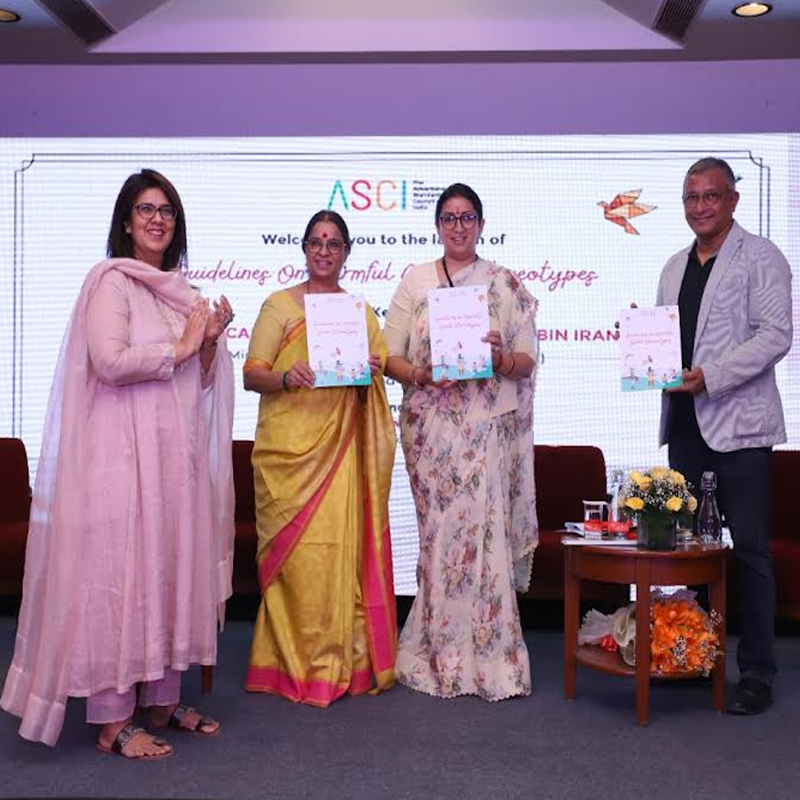
    Mumbai: Seeing gender stereotypes in advertising has become so common that now people take harmful gender differences as social norms. Unfortunately! The gender stereotypes are so deep-rooted in our minds that we hardly stop and think, why should an ideal family in any ad have an older boy and a younger girl, why not a family with two girls? Why should a typical Indian brand’s ad start with a man reading a newspaper and the woman making him a cup of tea? Why do terms like “men will be men” strike our minds?

    Taking into consideration the deep-seated gender stereotypes in our minds, the Advertising Standards Council of India (ASCI) has launched a set of eight guidelines on harmful gender stereotypes. The new guidelines aim to focus not just on the bigger violations but on the ones that the audience might not even register, at once.

    The guidelines come as a follow up for its GenderNext report released by ASCI and Futurebrands in October 2021. It was released by the minister for women and child development Smriti Irani at an event held in Delhi.

    Just a few days after the Layer’r shot advertisements were taken down, the guidelines seem like a timely intervention from ASCI. The advertisements from the perfume brand didn’t go well with the audience and were accused of promoting rape culture in the country.

    Sharing his thoughts on ASCI chairman Subhash Kamath added, “Advertising has the power to influence mindsets and decision making and bring about behavioural changes. Hence, we need to help shape the narrative. The recent controversy implies that there is a need for sensitisation, in terms of how we portray genders in advertising.”

    Gender portrayal is a complex and nuanced issue and the guidelines provide an interpretation of ASCI’s Chapter III (related to harmful situations), which deals with ads that can cause harm to individuals or society. Gender stereotypes are harmful because they lock individuals in certain roles and perpetuate certain dynamics that are harmful to society. Advertising, through subtle and implicit depictions, reinforces certain harmful stereotypes and overlooks the aspirations of individuals and groups. A recent study by Kantar shows that 64 per cent of consumers believe that advertising reinforces rather than helps eradicate harmful gender stereotypes.

    While the guidelines focus on women, they also provide guardrails for the depiction of other genders.

    The guidelines, encourage advertisers and creators to deploy the SEA (Self-esteemed – Empowered – Allied) framework that guides stakeholders in imagining as well as evaluating portrayals of gender in their advertising by building empathy and aiding evaluation, as well as the 3S framework, which provides a checklist to guard against tropes and implicit stereotypes that creep into advertising.

    These frameworks can prove to be extremely useful for marketing and advertising professionals to improve their advertising ROIs.

    Speaking at the launch of the guidelines on harmful gender stereotypes, the minister for women and child development, Smriti Zubin Irani said, “While there are women who are happy with the incremental change that has been made in the advertising industry, women of my generation are a bit more impatient. It is time not only for the men but also for the women in the advertising industry to step up. This is a very important move, and I believe that there is a long journey to be undertaken to turn the thinking but it’s required now. Work in this area must move with more and more speed and organisations like ASCI should lead this, the action beginning with its member base”

    She also pointed out how we just end up blaming and boycotting actors who are playing the sexiest roles instead of lashing out at each stakeholder included in the production of a particular advertisement. Irani feels that the real change will only come when each stakeholder will take the responsibility to bridge the gender gap.

    ASCI chairman Subhash Kamath added, “The new guidelines were created after extensive consultation with many partners- both from industry, as well as civil society organisations, including the Unstereotype Alliance and UNICEF. These guidelines are a big step forward in strengthening ASCI’s agenda to shape a more responsible and progressive narrative. We are grateful to the government and Shrimati Smriti Irani for supporting these guidelines, and to the many partners who have been with us on this journey.”

    Social activist and writer Ranjana Kumari reiterated that such guidelines are an attempt to start a discussion and debate around subtle messaging that may go unnoticed. “It is also important to push for laws that will appropriately penalise offenders,” she added.

    ASCI’s Guidelines on harmful gender stereotypes in advertising are as follows:

        1. ASCI will consider an ad’s likely impact when taken as a whole and in context.
        2. ASCI will consider stereotypes from the perspective of the group of individuals being stereotyped.
        3. The use of humour or banter is not likely to overcome the underlying issue of such harmful stereotypes.
        4. The guidelines do not intend to prevent ads from featuring:
            a. glamorous, attractive, successful, aspirational or healthy people or lifestyles;
            b. one gender only, including in advertisements for products developed for and aimed at a particular gender;
            c. gender stereotypes as a means to challenge their harmful effects.

    Advertisements must not include gender stereotypes that are likely to cause harm or widespread offence.

       1.  While advertisements may feature people undertaking gender-stereotypical roles e.g., a woman cleaning the house or a man going to an office, or displaying gender-stereotypical characteristics, or for, e.g., a man being assertive or a woman being sensitive to others’ needs, they must not suggest that stereotypical roles or characteristics are:

    •  always uniquely associated with a particular gender;
    •  the only options available to a particular gender; or
    •  never carried out or displayed by another gender(s).

    1.1 Advertisements that are aimed at / depict children may target and feature a specific gender but should not convey that a particular children’s product, pursuit, behaviour, or activity, including choice of play or career, is inappropriate for one or another gender(s). For example, ads suggesting that a boy’s stereotypical personality should be “daring” or that a girl’s stereotypical personality should be “caring”, or someone chiding a boy playing with dolls or girls from jumping around because it is not the typical activity associated with the gender, are likely to be problematic.

    2. While advertisements may feature glamorous and attractive people, they must not suggest that an individual’s happiness or emotional wellbeing depends on conforming to these idealised gender-stereotypical body shapes or physical features.   

    3. Advertisements should not mock people for not conforming to gender stereotypes, their sexual orientation or gender identity, including in a context that is intended to be humorous, hyperbolic or exaggerated. For example, an ad may not belittle a man for carrying out stereotypically female roles or tasks or make fun of a same-sex relationship.

    4. Advertisements should not reinforce unrealistic and undesirable gender ideals or expectations. For example, an advertisement must not depict a man with his feet up and family members creating a mess around a home, while a woman is solely responsible for cleaning up the mess, or a woman overly grateful for the man helping her in everyday chores. Similarly, a woman returning from work may not be shown as solely responsible for doing household duties while others around her are at leisure.

    5. An advertisement may not suggest that a person fails to achieve a task specifically because of their gender e.g., a man’s inability to change nappies; or a woman’s inability to park a car. In categories that usually target a particular gender, care must be taken to not depict condescension towards any other gender or show them as incapable of understanding the product or unable to make decisions. This does not prevent the advertisement from showing these stereotypes as a means to challenge them.

    6. Where an advertisement features a person with a physique or physical characteristics that do not match an ideal stereotype associated with their gender, the advertisement should not imply that their physique or physical characteristics are a significant reason for them not being successful, for example in their romantic, social or professional lives. For example, an ad may not suggest that a man who is short, a woman who is dark, or any individual who is overweight has difficulty finding a job or a partner due to this aspect of their physique.

    7. Advertisements should not indulge in the sexual objectification of characters of any gender or depict people in a sexualised and objectified way for titillating viewers. This would include the use of language or visual treatments in contexts wholly irrelevant to the product. For example, an online takeaway service featuring an image of a woman wearing lingerie lying back in a provocative pose behind various fast-food items would be considered problematic. Even though the image may not be sexually explicit, by using a suggestive image of a woman that bears no relevance to the advertised product, the ad would be considered objectifying women by presenting them as sexual objects, and therefore is a gender stereotype that is likely to cause harm.

    8. No gender should be encouraged to exert domination or authority over the other(s) by means of overt or implied threats, actual force or through the use of demeaning language or tone. Advertisements cannot provoke or trivialise violence (physical or emotional), unlawful or anti-social behaviour based on gender. Additionally, advertisements should not encourage or normalise voyeurism, eve-teasing, stalking, emotional or physical harassment or any similar offences. This does not prevent the advertisement from showing these depictions as a means to challenge them.

  • ASCI appoints Manisha Kapoor as CEO

    ASCI appoints Manisha Kapoor as CEO

    Mumbai: Manisha Kapoor has been elevated as the new chief executive officer of the Advertising Standards Council of India (ASCI), according to her Linkedin profile.

    Kapoor has been serving as secretary general at ASCI since 2020. “I’m happy to share that I’m starting a new position as Chief Executive Officer (CEO) at The Advertising Standards Council of India!,” reads her LinkedIn post.

    Kapoor has been working in the industry for 25 years now. Over the years, she has worked with many notable brands such as Hindustan Unilever, Johnson & Johnson India and Kotak Mahindra Bank.  

    She has helped many companies to establish their brand. Her expertise includes brand building, new product development, marketing and strategy development.

    She said in her post,  “It is my absolute privilege to lead a rocking team that has relentlessly pushed itself to deliver better, and adapted itself to the transformation we are in the midst of at ASCI.”

  • ASCI, FSSAI join hands to curb misleading claims in F&B ads

    ASCI, FSSAI join hands to curb misleading claims in F&B ads

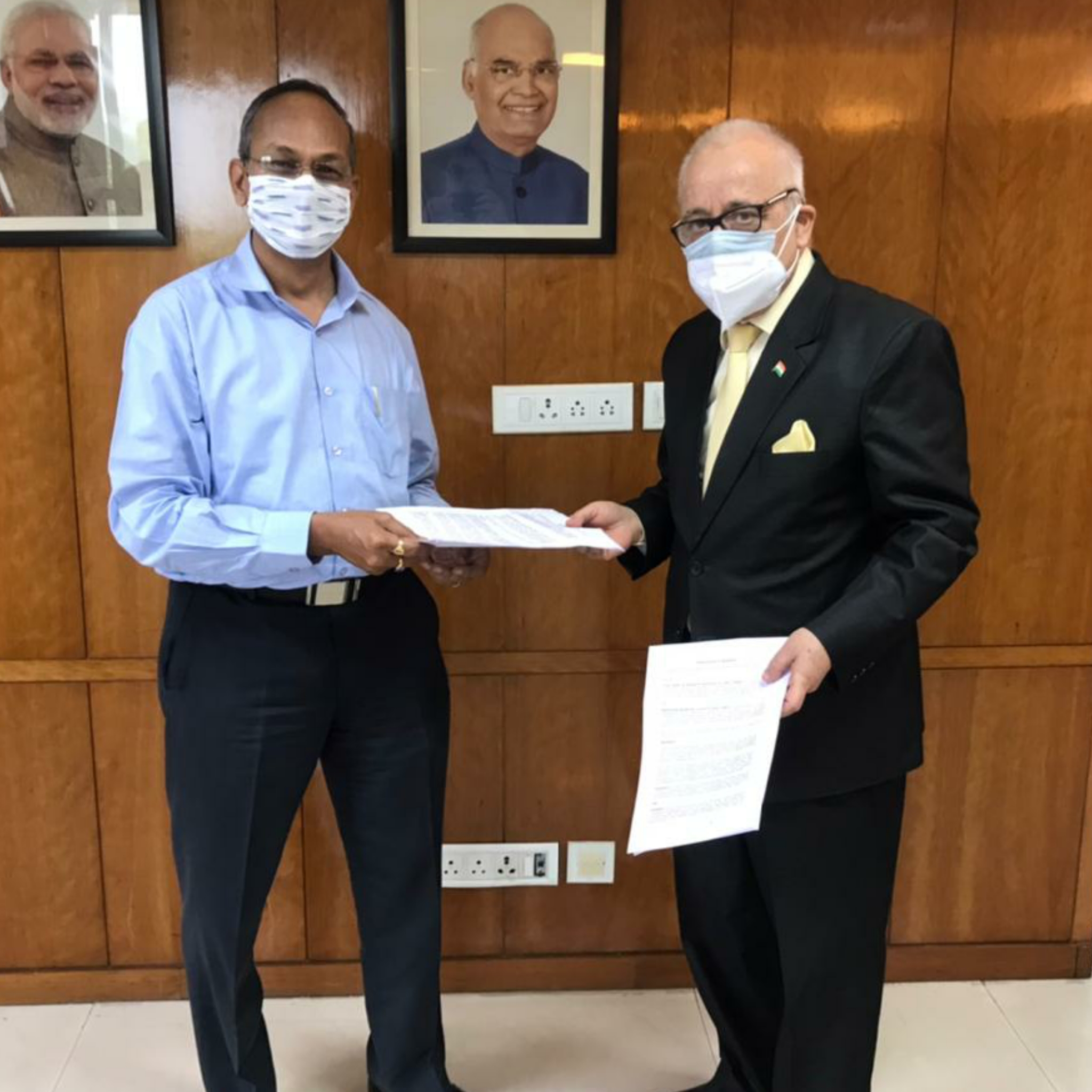
    Mumbai: In order to curb the spike in the number of misleading claims made in food and beverage (F&B) ads seen during the COVID-19 pandemic, the Advertising Standards Council of India (ASCI) has signed an agreement with the Food Safety and Standards Authority of India (FSSAI) to safeguard consumers against such advertisements.

    The agreement was signed in the presence of FSSAI CEO Arun Singhal and ASCI adviser- public affairs professor Bejon Misra on 1 July. As per the agreement, ASCI will identify advertisements that prima facie violate provisions of Food Safety and Standards (advertising and claims) Regulations, 2018, and FSSAI would further investigate these. Under the agreement, ASCI will set up a three-member expert panel to evaluate F&B advertising identified by the ASCI monitoring team.

    In the last financial year (FY) ASCI has processed a total number of 284 complaints compared to 175 in FY 2019-20. So, claims by F&B brands, particularly those related to health and nutrition, are under greater scrutiny. With this association, ASCI further strengthens its 360-degree approach of protecting consumers as well as guiding brands, agencies, and influencers towards greater responsibility. As per a report published by media agency Zenith, India will be the fastest-growing market for FMCG brands’ F&B advertising over the next three years with spending rising 14 per cent a year. This further necessitates the monitoring of F&B advertisements.
    ASCI secretary-general Manisha Kapoor said, “With this agreement, ASCI will intensify its scrutiny of the F&B sector. We will tap our National Advertising Monitoring Service, which monitors over 900 TV channels and publications, and over 3,000 websites. Besides national brands, we will examine regional and local ones. Our experts, with decades of experience in the F&B sector, will shortlist those advertisements that require further scrutiny by FSSAI.”

    ASCI chairman Subhash Kamath said, “This is a significant collaboration. The common goal of consumer protection drives us all to share skills, expertise, and resources in the most effective way to curb the menace of misleading advertising.”

  • Complaints against 789 ads upheld in Jan-March period: ASCI

    MUMBAI: The Advertising Standards Council of India (ASCI) processed 1,064 complaints against advertisements in the January-March quarter. Of these, 200 ads were withdrawn by advertisers on receiving intimation from the industry body. Of the remaining 862 that required further investigation, the self-regulatory body’s independent Consumer Complaints Council (CCC) upheld complaints against 789 advertisements.


    Education remains on top of the category of violations leaderboard with 337 cases, followed by healthcare with 250 cases, as per the latest complaints report released by ASCI for Q1 2021. A large number of complaints were also processed from the online gaming, food and beverages, and electronics & durables categories this quarter.


    The maximum number of complaints processed- 337 –from the education sector- were related to misleading claims where students were promised 100 per cent placements or of the advertiser claiming to be India’s top-ranked college/ institute.


    Expectedly, in healthcare, the majority of the 250 complaints against ads were mostly about fake claims of COVID cures or prevention.


    To make the online gaming space safer, the industry body had introduced guidelines for the e-gaming segment for Real Money Winnings last December. Subsequently, ASCI received 61 complaints mostly related to cricket gaming and rummy, including those against established brands.


    There were 47 complaints processed against food and beverage ads, many of them against claims around milk, milk products, bread, green tea, fish oil, as well as edible oils like sunflower.


    In the electronics, durable, and construction category, ASCI processed 32 complaints against ads across a range of brands, from air-conditioners to paints. The automotive category received 14 complaints, many of them related to two-wheelers as well as e-rickshaw advertisements.


    Complaints against 73 advertisements were not upheld as they were found to be adhering to the ASCI code.


    Consumer vigilance around gaming has increased after the release of related guidelines, noted ASCI secretary-general, Manisha Kapoor.

    “ASCI is working on more initiatives to ensure that advertising remains honest and decent and that consumers’ confidence in advertising is sustained. We also aim to raise consumer awareness to motivate them to report misleading claims. This would help safeguard their interests and encourage ethical advertising that benefits not just consumers but also honest advertisers”, Kapoor added.

  • How do Influencers perceive the ASCI code on Influencer advertising

    Mumbai:  The 14 June deadline for the Advertising Standards Council of India (ASCI) code on influencer advertising to be implemented is just around the corner, even as we reach out to some of the primary stakeholders- the social media influencers themselves. We share their take on the rules that will govern all their future branded collaborations (and already too), with creative content creators being popular and credible voices of society.

    While most agree that the Influencer advertising guidelines released last month has transparency at its core to help customers discriminate between a paid content and an organic post, the underlying concern that emerged was whether the new code proposes to shift the onus (of falling foul of the law) on the content creators more than the brand.

    To fully understand the implications of the guidelines on the fledgling Influencer marketing industry, it is only fair that we listen in to the influencer’s side- especially now that the deadline to implement the code looms large.

    Indiantelevision.com spoke to some of the leading influencers from disparate genres like Fashion, Tech & Social satire to understand their thoughts on how they perceive the guidelines, whether they have started implementing them, and if they have noticed any changes in their traction or engagement.

    Fashion & Beauty content creator Sakshi Sindwani, owner of the Instagram handle @stylemeupwithsakshi with over four lakh followers believes the guidelines will enable content creators to make an informed decision on the ‘what’ and ‘how’ of branded content, and relevance of collaborations. “However, there is a rider in terms of engagement,” she says, “It impacts the numbers. So, content creators and brands will have to go the extra mile to ensure that content is creative and integrated, rather than exclusive. Furthermore, creators will need to identify what makes their audience remain loyal.”

    Comedy content creator & popular Social satirist Saloni Gaur @salonayyy aka Naazma Aapi aka ‘pados wali aunty’ and a plethora of other satirical characters, with 5.5 lakhs followers on Instagram says: “A few brands don’t like to put labels like paid promotion on your content, it reduces engagement and people don’t like to consume branded content.”

    Known for her biting, humorous take on everyday issues and for calling a spade a spade, Saloni agrees that it makes sense from a consumer point of view as it is important to maintain transparency and authenticity. “While the labels might impact the viewership/ engagement, creators need to believe that at the core of creation lies relevant and organic content. And content is king! Creators hold the power in their hands to make it engaging and entertaining for the audience,” she adds.

    According to Tech Blogger Shlok Srivastava aka Techburner, with 4.78 lakh followers on Instagram it is a step in the right direction, however, “the nuances of guidelines are not thought through for different platforms or genres.”

    The guidelines define ‘influencers’ as those having access to an audience with the power to affect the purchasing opinion and decisions of the consumers. “Social media is a vast pool with so many creators. Some of them are sceptical about the implementation of these guidelines for the kind of content that they create. For instance, in a space like Tech or Auto, 90 per cent of the products are given by the brands for reviews owing to the credibility that we hold. So, if we label such content as paid or branded, it’ll create confusion amongst the audience and they’ll doubt our authenticity which will destroy the whole purpose of establishing regulations,” says Srivasatava.

    Pulp Strategy founder & MD Ambika Sharma says, the reception to the reining in by ASCI has been a mixed bucket. While most Influencers understand that the move is a positive one, they have concerns around the impact it would have.

    “We are currently working with over three dozen influencers for different campaigns, the sentiment is mostly positive. There is a lack of awareness and we are building compliance alongside campaign execution,” she says.

    IPLIX Media co-founder Neel Gogia states that as with every new initiative a debate is necessary to create a sustainable solution.

    “The lines are a little blurred. For instance, a non-monetary association under which an influencer shares an unbiased product review will be labelled as an Ad, leaving consumers in a tough spot. This will be difficult to implement for a tech or an auto influencer as they cannot buy every product for review as they are of high monetary value, and in fact, not all the reviews are positive as well so they cannot be labelled as an Ad,” he says.

    Furthermore, Gogia says that the current recommendations might not be aligned with the objective of organic and value-added content creation with genuine product integration. “For a YouTube content creator with long-format vlogs labeling the entire integration section as an Ad will lead the audience to ignore the content even if it is adding value to them”, he adds, saying that we will just have to wait and watch how this unfolds.

    In recent times, a significant portion of the marketing budget of brands or businesses is allocated to social media advertising. Influencer marketing has witnessed a surge in India, especially in the pandemic period. Nielsen studies have shown that home-bound consumers during the pandemic have led to a 60 per cent spike in the amount of video content watched globally.