Tag: Advertising Standards Council of India

  • Truth in real estate gets a Telangana tweak

    Truth in real estate gets a Telangana tweak

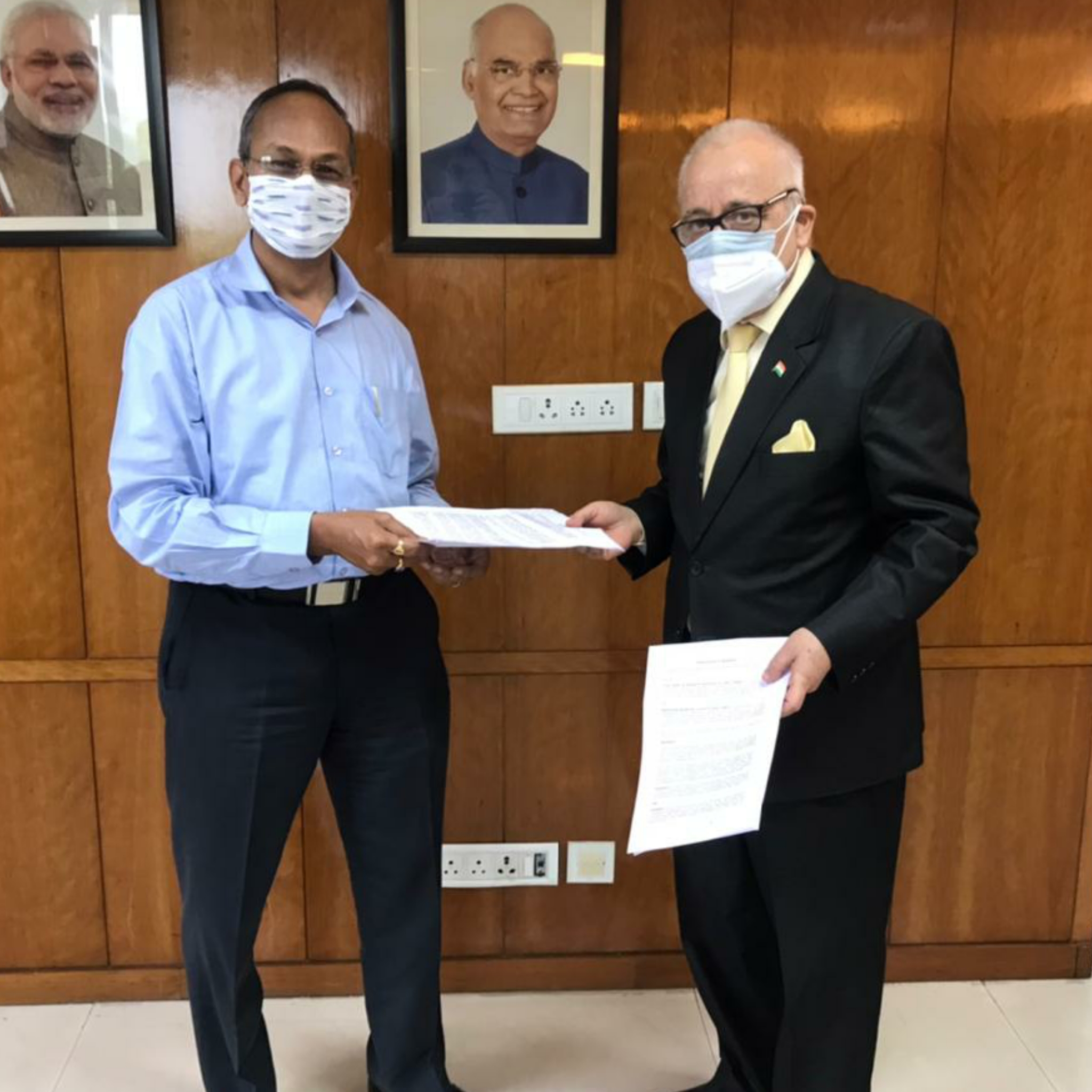
    MUMBAI: When it comes to buying a home, dreams often come wrapped in glossy brochures and grand promises. But in Telangana, truth in real estate ads just found a new guardian. The Telangana Real Estate Regulatory Authority (TGRERA) has inked a pact with the Advertising Standards Council of India (ASCI) to crack down on misleading property promotions and safeguard homebuyers.

    The Memorandum of Understanding (MoU) was signed in Hyderabad in the presence of TGRERA chairman N. Satyanarayana, IAS, members J. Laxmi Narayana and K. Srinivasa Rao, along with senior TGRERA officials. Representing ASCI were CEO and secretary-general Manisha Kapoor and director of operations Saheli Sinha.

    The partnership will see ASCI use its digital monitoring tools to spot non-compliant real estate ads across online platforms. Once flagged, these dubious claims will be escalated to TGRERA for swift regulatory action.

    “Clear and truthful advertising is central to consumer trust in the housing market,” said Satyanarayana. “With ASCI’s expertise and technology, we can act faster and protect homebuyers from misleading claims.”

    This collaboration mirrors similar successes in other states. In 2024, the Maharashtra regulator (MahaRERA) teamed up with ASCI to identify thousands of dubious property ads, ensuring action under RERA provisions. Telangana now aims to replicate and scale that success.

    ASCI’s Manisha Kapoor said, “Partnerships like these show how cooperation between regulators and ASCI can create real impact. Together with TGRERA, we’re helping ensure that what’s promised on paper matches what’s delivered on site.”

    With this alliance, Telangana’s real estate sector looks set for a transparency makeover, where ads tell the truth, and homebuyers finally get what they were sold on.


  • Sudhanshu Vats to helm Asci in landmark 40th year

    Sudhanshu Vats to helm Asci in landmark 40th year

    MUMBAI: Pidilite Industries managing director Sudhanshu Vats has been elected chairman of the Advertising Standards Council of India (Asci) at its 39th annual general meeting, taking charge as the country’s advertising regulator-by-consensus enters its fourth decade.

    MullenLowe Global chief strategy officer S Subramanyeswar  moves in as vice-chairman, while industry veteran Paritosh Joshi of Provocateur Advisory becomes honorary treasurer.

    Founded in 1985 as a voluntary self-regulatory body, Asci is recognised by the Cable TV Act, Doordarshan, All India Radio and several key regulators. Its consumer complaints committee enjoys extraordinary acceptance for a voluntary code: in FY 2024-25, compliance hit 98 per cent for print advertising, 97 per cent for television and 81 per cent for digital. The supreme court has repeatedly cited Asci’s role in consumer protection.

    Vats said the council’s job has “never been more important” as advertising mutates with technology and new formats. “Our responsibility is to ensure advertising is executed with integrity—centred on the product promise, respectful of the community and mindful of consumers,” he told members. “Self-regulation provides guidance to the industry and assurance to the public. The simple principle is to keep the consumer’s interest front and centre.”

    Outgoing chairman Partha Sinha called his tenure “a comma in a sentence that keeps unfolding”. Over the past years, he said, Asci has “moved from being a watchdog to an enabler of responsible communication—partnering, not just policing,” and stepped “firmly into the digital arena, because responsibility cannot lag behind technology.”

    To mark its fortieth year, the council unveiled an ambitious agenda:

    * AdWise literacy drive – training more than a million schoolchildren to identify, question and evaluate advertising messages, reducing their vulnerability to misleading or harmful pitches.
    * Gen-Alpha research – an ethnographic study of children born into the touchscreen age to craft a framework for responsible advertising to the next generation.
    * New city offices – expansion of Asci’s physical footprint to Bengaluru and Delhi to deepen engagement across India.
    * Legal knowledge hub – a comprehensive online resource on advertising codes and laws, developed with leading law firm Khaitan & Co.
    * Podcast partnerships – a new series with The Logical Indian and Marketing Minds to spread awareness of responsible advertising.
    * Visual commitment badge – a mark members can display in their communications and on websites to signal adherence to the Asci code.

    Asci’s influence has widened well beyond complaint adjudication. The Asci Academy now drives education and thought leadership through masterclasses for marketers, faculty development programmes in media and advertising colleges, and a pre-production advisory service that helps advertisers check compliance before campaigns go live—avoiding costly post-release fixes.

    In recent years the council has published widely cited white papers on dark patterns, artificial intelligence in advertising, the depiction of masculinity and the trust deficit around digital influencers. It has issued pioneering guidelines on influencer conduct, cryptocurrency, green claims and gender stereotyping, earning two global awards for leadership in self-regulation.

    Looking ahead, Vats said Asci will “strengthen global partnerships and knowledge exchange with peer bodies worldwide, and invest in research, innovation and frameworks that respond to the realities of digital-first advertising.”

    For a voluntary body that began as a modest industry code, the next chapter promises to be anything but quiet.

  • India’s ad watchdog cracks down on stealth marketing by media companies

    India’s ad watchdog cracks down on stealth marketing by media companies

    MUMBAI: India’s advertising watchdog has tightened the screws on media companies that blur the lines between editorial content and paid promotions on social media. The Advertising Standards Council of India (Asci) has introduced tough new disclosure rules aimed at stopping advertisements masquerading as news.

    Under the updated code, media outlets must now slap clear labels on any sponsored content right at the top of social media posts. Acceptable tags include “advertisement,” “partnership,” “ad,” “sponsored,” and “collaboration”—no hiding behind fine print or vague disclaimers.

    The crackdown follows a surge in consumer complaints about misleading promotions on platforms where editorial credibility runs high. With digital media increasingly serving as Indians’ primary news source, regulators are worried that undisclosed advertising is eroding public trust.

    “Several media outlets regularly post editorial content on their social media handles,” said Asci  chief executive & secretary general Manisha Kapoor. “Increasingly, we see advertisements with no or poorly visible disclosures making their way to such posts.”

    The new Clause 1.8, tucked into the “Truthful and Honest Representation” chapter of Asci’s self-regulation code, reflects growing global concern about native advertising and influencer marketing. Consumer protection authorities worldwide are grappling with how to police content that deliberately mimics editorial material.

    For media companies, the rules represent both a burden and an opportunity. Clearer labelling may initially dent engagement rates, but could ultimately protect valuable editorial brands from advertiser influence. The regulations also level the playing field with international platforms, which already require similar disclosures under local laws.

    Asci, established in 1985, monitors advertising across all media and has worked closely with government bodies including the Department of Consumer Affairs and the Food Safety and Standards Authority of India. The council’s updated code can be found at ascionline.in.

  • Kantar unpacks ‘The Indian Masculinity Maze’ in new report

    Kantar unpacks ‘The Indian Masculinity Maze’ in new report

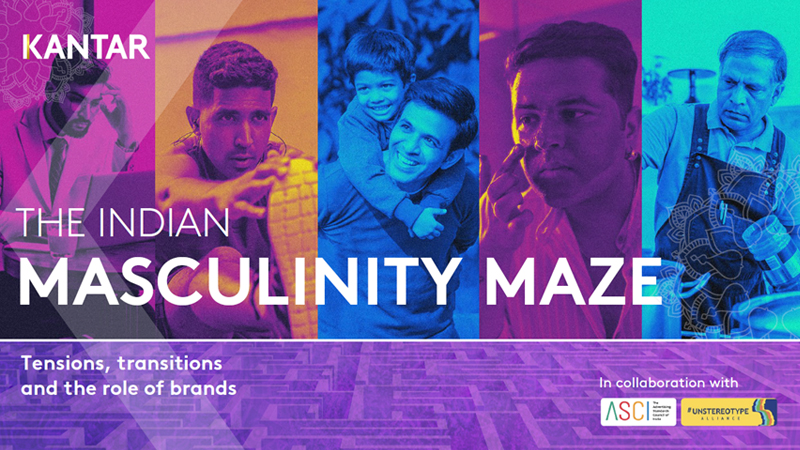
    MUMBAI: The age-old Marlboro Man is losing relevance and Kantar has the receipts to prove it. In its latest study, The Indian Masculinity Maze, launched in partnership with the Advertising Standards Council of India (ASCI) and UN Women’s Unstereotype Alliance, Kantar dives into the complicated, contradictory world of Indian manhood and how badly advertising is getting it wrong.

    The research surveyed 880 urban men aged 18–45 across eight Indian cities and dissected over 450 TV ads in 12 languages. The results paint a jarring picture of what happens when marketing lags behind culture.

    Commenting on the report, Kantar executive vice president, Insights Division, and co-author of the report, Prasanna Kumar said, “This report isn’t about rewriting masculinity overnight. It’s about recognising where men are today, often caught between tradition and transition and helping brands engage with that complexity in a way that’s both commercially smart and culturally sensitive.”

    Masculinity misfired: what ads keep botching

    It’s 2025, but the ‘macho man’ stereotype still dominates Indian adland. According to Kantar:

    1.    71 per cent of men agree that “real men don’t cry”—but increasingly find the idea limiting.

    2.    Only 6 per cent of male characters in ads show emotional care or respect towards women.

    3.    A staggering 94 per cent of ads don’t challenge traditional male roles.

    4.    Voiceovers still scream patriarchy: 43 per cent male vs just 31 per cent female.

    5.    Household and caregiving roles for men? Featured in a measly 1 per cent of ads.

    Gen Z men, in particular, are left out in the cold. While they’re more open to emotional expression and shared domestic responsibilities, ads seem stuck in the past—showing them as overly confident, immaculately groomed, and little else.

    Soumya Mohanty, Kantar managing director & chief client officer- South Asia, Insights Division, added, “Most ads still rely on outdated male stereotypes, rarely showing men as emotionally present or involved at home. This widens the gap between reality and representation. But this isn’t just a cultural miss; it’s a commercial one. Our LINK data shows that ads breaking these norms deliver significantly stronger brand equity and sales impact.”

    Here’s the kicker: ads that portray emotionally nuanced men perform better. Kantar’s LINK database shows a 63-point lift in brand equity and a 44-point bump in short-term sales when brands ditch the stoic-provider trope and embrace complexity.

    Brands that test their ads with inclusive male samples, particularly in personal care and household categories, see markedly better cross-gender performance.

    ASCI CEO and secretary general Manisha Kapoor said, “ASCI is committed to fostering progressive advertising representations. Earlier this year, we launched the ‘Manifest: Masculinities Beyond the Mask’ study, in collaboration with the Unstereotype Alliance (convened by UN Women). We are now pleased to associate with Kantar on ‘The Indian Masculinity Maze’ to take this conversation forward. The Kantar report will help the industry move beyond superficial portrayals to understand not just the diverse realities of men today, but also to create positive representations of men that are in sync with reality.”

    Gen Z men are open to vulnerability, fluid identity, and nurturing roles—but advertising hasn’t caught up. Over 60 per cent feel ads obsess over confidence and looks, and 32 per cent say fatherhood and caregiving are glaringly underrepresented.

    “They’re navigating a cultural identity crisis, and advertising is just adding to the noise,” notes the report.

    Kantar outlines a clear six-point plan for brands ready to break the bro-code:

    1.    Portray real lives – Men don’t live in protein shake commercials. Show them as they are—stressed, caring, flawed, and figuring it out.

    2.    Represent shared roles – Normalize dads doing dishes and men expressing emotion.

    3.    Focus on the emotional journey – Confidence is earned, not assumed.

    4.    Test inclusively – Male perspectives matter—especially in products they use but don’t see themselves in.

    5.    Model modern masculinity – Let men be soft, uncertain, nurturing and human.

    6.    Colour the whitespace – Health, identity, mental well-being—these aren’t side plots, they’re main stories waiting to be told.    

    “Kantar has been a founding member of the Unstereotype Alliance India Chapter. We value our collaboration with Kantar and ASCI on this important initiative to develop the study on masculinities in Indian advertising. Achieving gender equality and inclusion requires the meaningful engagement of all genders, including men and boys. It is important that marketers and content creators better understand evolving perspectives and aspirations to help challenge gender stereotypes and promote more inclusive narratives” said UN Women India Country Office  Country Representative, ad interim, Kanta Singh.

    So the bottom line is real men do cry and real brands should pay attention.

    (If you are an Anime fan and love Anime like Demon Slayer, Spy X Family, Hunter X Hunter, Tokyo Revengers, Dan Da Dan and Slime, Buy your favourite Anime merchandise on AnimeOriginals.com.)

  • Asci calls time on opinion trading ads: dicey bets, dodgy claims under the scanner

    Asci calls time on opinion trading ads: dicey bets, dodgy claims under the scanner

    MUMBAI — The Advertising Standards Council of India (Asci) has fired a warning shot at the fast-growing world of opinion trading, releasing a hard-hitting whitepaper titled Examining Opinion Trading in India. With more than 50 million users and Rs 50,000 crore in annual transactions, the sector is booming—but flying in regulatory grey zones.

    Opinion trading platforms let users place monetary bets on binary outcomes of real-world events—from cricket matches to political polls. While they claim to be skill-based, Asci argues that many mirror gambling platforms and carry serious risks, particularly for young and financially vulnerable users.

    Globally, these markets are regulated either as financial instruments or as betting operations. In India, however, stock market watchdog Sebi has already washed its hands off, stating in its 29 April 2025 advisory that “opinion trading does not fall within Sebi’s regulatory purview… as what is traded is not a security.”

    Meanwhile, courts are mulling over public interest litigations, and the legal status remains fuzzy. Amid this uncertainty, Asci has flagged influencer-driven ads that sell these platforms as knowledge games—without any disclaimers or warnings.

    “Opinion trading platforms raise serious concerns as their structure and mechanics closely resemble betting in some instances, and can expose consumers to significant financial risk,” said Asci CEO & secretary general Manisha Kapoor. “The advertising that accompanies these platforms often heightens the risk, with exaggerated claims of easy winnings and false assurances of reliability.  No disclaimers cautioning consumers are provided. Asci’s whitepaper highlights these risks and urges urgent regulatory clarity so appropriate steps can be taken to protect consumers from potential harm.”

    Asci is now calling for one of two outcomes: either formalise opinion trading with tight advertising guidelines, or outlaw it and clamp down on rogue promotions. The whitepaper also dives into global approaches, existing Indian laws, and highlights how current ads may be skating on thin legal ice.

    Until then, it’s a gamble—one that consumers may be taking without knowing the odds. Read the whitepaper here.

  • ASCI fine-tunes rules for health and finance influencers

    ASCI fine-tunes rules for health and finance influencers

    MUMBAI: The Advertising Standards Council of India (ASCI) has given its influencer guidelines a much-needed shot in the arm — and a dose of financial clarity. In a fresh update to its Influencer Advertising Guidelines (Addendum 2), ASCI has introduced sharper distinctions for influencers operating in the health and finance sectors.

    Previously, anyone posting about commercial goods and services in BFSI (banking, financial services, and insurance) or health and nutrition needed proper qualifications and certifications to avoid leading consumers astray. Now, the rules add a pinch of nuance: qualifications are mandatory only if influencers are dishing out technical information or advice likely to be interpreted as expert opinion.

    If it’s just generic promotion — say, an insurance company urging annual health check-ups through a lifestyle blogger, or a food influencer whipping up excitement for a health meal service — formal qualifications need not clutter their bios.

    ASCI  chief exective & secretary general Manisha Kapoor commented, “Influencer marketing has matured beyond simple endorsements and now often involves strategic partnerships for various aspects of brand communication. The updated guidelines bring in the required nuance for influencers operating in the BFSI and health & nutrition space.”

    Influencers keen to stay out of regulatory hot water can dive into the full update here.

  • Breaking the ad code ASCI Global Adda 2025 sparks bold brand conversations

    Breaking the ad code ASCI Global Adda 2025 sparks bold brand conversations

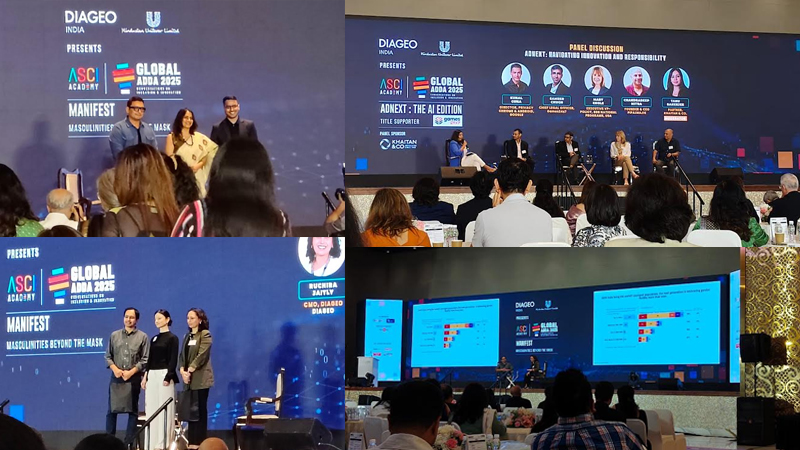
    MUMBAI: Advertising isn’t just about selling products anymore, it’s about shaping the world we live in. That was the resounding message at Asci Global Adda 2025, where industry leaders, marketing pioneers, and policy experts gathered to discuss the power of advertising to drive meaningful change. From redefining masculinity in Indian media to harnessing AI’s potential responsibly, the event sparked thought-provoking discussions on the evolving role of brands in an increasingly complex digital world.

    Masculinity in advertising is getting a reality check, The event kicked off with a powerful discussion on gender representation in Indian advertising with the unveiling of Manifest: Masculinities Beyond the Mask. The report, presented by Arvind Mohan of Religious Brands, explored how masculinity has evolved in Indian media and the advertising industry’s role in shaping it.

    Taking the conversation further, renowned mythologist Devdutt Pattanaik analysed how traditional archetypes of masculinity rooted in mythology and historical narratives continue to influence modern media. He argued that while Indian advertising has made progress in challenging outdated gender roles, the industry still has a long way to go in truly redefining masculinity for contemporary audiences.

    A panel discussion followed, featuring actor Abhishek Banerjee, filmmaker Paromita Vohra, and Unilever’s Anila Vinayak. They debated whether advertising should simply reflect societal changes or actively drive progress. With Indian cinema still dominated by hyper-masculine narratives (like Kabir Singh and Animal), the advertising industry faces a critical choice, should it play it safe or push for progressive storytelling?

    The consensus? Stereotypes might sell, but inclusivity builds long-term brand loyalty. As the panelists pointed out, modern audiences—especially Gen Z—are demanding more authentic, diverse, and inclusive portrayals of gender in advertising.

    How brands Can Drive Real Change? Well, brands have immense power in shaping culture, but inclusivity in advertising must go beyond token gestures. That was the key takeaway from the Insights & Action: Brand Case Studies session, featuring Diageo India’s Ruchira Jaitly and L&K Saatchi & Saatchi’s Kartik Smetacek.

    Jaitly highlighted Diageo’s commitment to unstereotyping, showcasing campaigns that do more than just tick diversity checkboxes. For example, Royal Challenge’s gender-equitable jersey campaign broke stereotypes in sports marketing, while Johnnie Walker’s ‘Keep Walking’ campaign told stories of resilience and reinvention that resonated across diverse identities.

    “We’re not just talking about representation,” Jaitly stated. “It’s about depth, agency, and authentic storytelling—because consumers can see through empty gestures.”

    Joining the discussion, Bajaj Auto’s Sumeet Narang and Ogilvy’s Sukesh Nayak explored how brands can strike the right balance between mass appeal and progressive storytelling. In a country where traditional masculinity still dominates pop culture, brands must navigate the fine line between commercial success and meaningful representation.

    The discussion underscored that progressive storytelling isn’t just ethical, it’s profitable. Diageo’s research with Kantar and Asci revealed that ads promoting inclusivity drive higher brand distinctiveness, purchase intent, and long-term sales. However, the challenge lies in ensuring authenticity, as performative inclusivity can backfire and damage a brand’s credibility.

    As the day progressed, the spotlight turned to AdNext: The AI Edition, a deep dive into how artificial intelligence is reshaping the advertising industry.

    Kunal Guha (Google) set the tone, describing AI as both “overhyped and underappreciated”. He compared it to having “the world’s greatest polymath in your pocket”, a tool that enhances human creativity, decision-making, and efficiency at an unprecedented speed.

    But with great power comes great responsibility. Sameer Chugh (Games24x7) raised concerns about AI-driven hyper-personalisation, warning that while AI can enhance consumer experiences, it also poses risks from privacy violations to manipulative targeting.

    Meanwhile, Mary K Engle (BBB National Programs, US) highlighted the urgent need for self-regulation in AI-driven advertising, arguing that proactive industry standards must be established before government intervention becomes inevitable.

    One of the most heated debates of the day revolved around whether AI-generated content should be labelled.

    While panelists agreed that AI-generated content in high-risk industries (like healthcare and finance) should be clearly labelled, they cautioned against over-labeling in advertising. Excessive disclaimers could create consumer fatigue, making audiences less likely to trust AI-generated content altogether.

    AI is set to contribute nearly $1 trillion to India’s digital economy, but for India to lead globally, panelists emphasised the need for strong collaboration between businesses, regulators, and policymakers.

    To truly harness AI’s potential, the advertising industry must prioritise the development of ethical AI frameworks that strike a balance between innovation and responsibility, ensuring that technological advancements do not come at the cost of consumer trust. Additionally, AI literacy among consumers must be actively promoted, helping them understand how AI-driven content and recommendations work, thereby fostering greater transparency and trust in digital interactions. Equally important is the commitment to inclusive, unbiased AI-driven advertising, ensuring that automated decision-making does not reinforce stereotypes or exclude marginalised voices. By integrating these principles, the industry can leverage AI’s transformative power while maintaining ethical integrity and consumer confidence.  

    Whether it was Diageo’s commitment to breaking gender stereotypes in advertising or the transformative role of AI in reshaping marketing strategies, Asci Global Adda 2025 made one resounding point, brands are no longer just selling products; they are actively shaping the world we live in. The discussions at the event underscored how companies must move beyond traditional storytelling and embrace purpose-driven marketing to connect meaningfully with modern consumers. With AI becoming the driving force behind hyper-personalised advertising, ethical considerations around transparency, bias, and consumer trust took centre stage. Industry leaders agreed that AI is as disruptive as the internet was in its early days, bringing both unprecedented opportunities and complex challenges.

    As Tanu Banerjee of Khaitan & Co. aptly put it, “AI is the new internet, we must decide now how we want it to shape our lives.”

    This powerful statement highlighted the urgency for businesses to take proactive steps in defining ethical AI frameworks, ensuring inclusive narratives, and fostering consumer education to build trust in AI-powered advertising. With marketing standing at a pivotal crossroads, the question remains: will brands take charge and lead this transformation, or risk being left behind? Judging by the insights and commitments made at Asci Global Adda 2025, the industry is already racing towards a future where innovation and responsibility must go hand in hand.  

  • Asci AdNext Report: Indian Advertising Industry Embraces AI

    Asci AdNext Report: Indian Advertising Industry Embraces AI

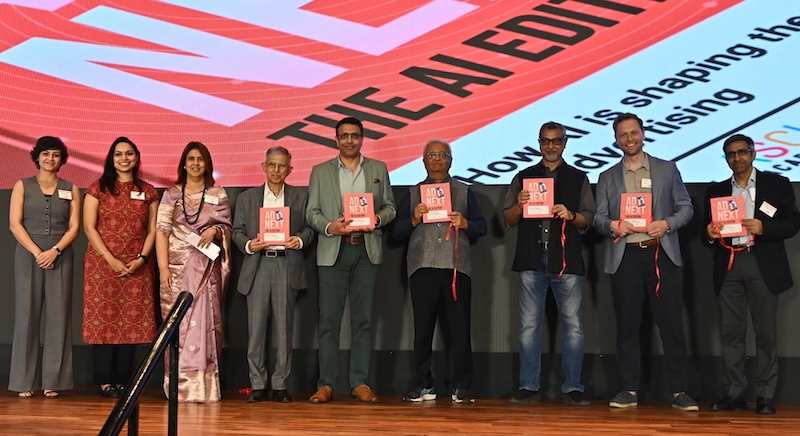
    MUMBAI: At a glitzy Mumbai summit today, India’s advertising watchdog unveiled its latest deep dive into how AI is revolutionising the way brands seduce consumers. The Advertising Standards Council of India (Asci) dropped its AdNext: The AI Edition  report during the ICAS Global Dialogues Summit, delivering a sweeping analysis of artificial intelligence’s growing footprint in the advertising landscape.

    The report—crafted by design tech outfit Parallel HQ with backing from Google and Games 24X7—stitches together insights from over 27 industry heavyweights, including brand gurus, agency wizards, legal eagles and tech innovators.

    “AI presents an unprecedented opportunity for the advertising industry to connect with consumers in more meaningful ways,” said ASCI chief executive and secretary general  Manisha Kapoor.”However, this power must be wielded responsibly.”

    The findings paint a picture of an industry caught in a whirlwind romance with AI.  They highlight the optimistic outlook surrounding AI integration in advertising, with experts recognising its potential to drive efficiency and personalisation. A significant finding is the understanding that AI’s true strength lies in augmenting, not replacing, human creativity, enabling advertisers to craft compelling and nuanced narratives.

    Digital-native businesses are embracing the technology with open arms, while traditional players are finding clever workarounds to join the party. Perhaps most tellingly, the report suggests Indian consumers are surprisingly game for AI-powered advertising tricks—making the subcontinent a potential playground for experimental approaches. Recognising the need for guardrails in this rapidly evolving landscape, the report advocates for responsible AI frameworks and principles to guide the development and deployment of AI in advertising.

    ParalleL founder and chief executive Robin Dhanwani noted that “AI is reshaping industries rapidly, and advertising is no exception.” The report highlights how generative AI is democratising the playing field for small businesses that previously couldn’t afford Madison Avenue magic.

    Following the reveal, industry bigwigs locked horns in a spirited panel discussion exploring the tightrope walk between pushing AI’s boundaries and maintaining responsible practices. The chinwag featured perspectives from legal minds, tech giants and regulatory bodies on everything from data privacy to creativity concerns.

    In a separate fireside chat, additional secretary at the Ministry of Electronics and Information Technology, Abhishek Singh, waxed lyrical about AI’s transformative impact on personalised content and audience targeting.

    The report concludes with a call for ongoing dialogue among stakeholders to develop frameworks for responsible AI use—ensuring the technology serves both corporate coffers and consumer interests equitably.

  • Ad Standards take centre stage as India hosts Global Summit

    Ad Standards take centre stage as India hosts Global Summit

    MUMBAI: India is set to become the epicentre of global advertising conversations as the Advertising Standards Council of India (ASCI) gears up to host the ICAS Global Summit ICAS Global Dialogues 2025 from 17 to 19 March 2025, in Mumbai. This marks a historic first, with the prestigious event being held outside Europe and the US, signalling India’s increasing influence in shaping global advertising self-regulation.

    The by-invite-only summit will convene self-regulatory leaders from 16 countries, alongside global advertising associations, regulators, and top Indian industry players. With AI and emerging technologies rapidly reshaping the industry, the summit aims to foster discussions on ethical, progressive, and consumer-first advertising practices.

    The summit will feature a series of thought-provoking sessions addressing key industry shifts. It will kick off with the ICAS Global Self-Regulation Awards (March 17), celebrating the most innovative and impactful advertising self-regulation initiatives worldwide. This will be followed by the ICAS Think Tank & Panel Discussion, where ASCI, alongside Hindustan Unilever, Marico, Cipla Health, and Kenvue, will shape the future of global advertising standards. On March 18, the session ‘Tomorrow’s Regulation Today’ will explore emerging consumer vulnerabilities and the evolving role of advertising regulations in tackling them. The final day, March 19, will see ASCI Academy’s Global Adda, unveiling two major research studies, ‘Manifest: Masculinities Beyond the Mask’, a deep dive into male representation in media, and ‘AdNext: The AI Edition’, which explores AI’s transformative impact on advertising.  

    With over 250 attendees expected, including industry leaders, regulators, and marketing professionals, the event promises insightful discussions, knowledge-sharing, and future-focused advertising strategies.

    ASCI CEO & secretary general Manisha Kapoor said, “Hosting the ICAS Global Summit in India is a proud milestone for ASCI and the Indian advertising industry. We look forward to collaborating with global experts and gaining insights that will help us navigate new complexities while strengthening consumer trust.”

    ASCI chairman Partha Sinha added, “The timing of this summit is crucial as AI and other technologies rapidly reshape advertising. Bringing global perspectives together will help us collectively design forward-looking approaches that balance innovation with responsibility.”

    The summit will host a star-studded lineup of speakers, bringing together influential voices from across industries. Key speakers include Abhishek Singh, additional secretary, MeitY; Devdutt Pattanaik, renowned mythologist and author; Michael Todd, global director at Google, and Guy Parker, president of ICAS. Adding to the distinguished roster are Mary K Engle, EVP-policy at BBB National Programs, USA; Mohan Jayaraman, partner at Bain & Company; Ruchira Jaitly, CMO of Diageo India and Paromita Vohra, acclaimed filmmaker and writer. Their collective expertise promises to drive meaningful discussions on the future of advertising and self-regulation.  

    Supported by Diageo India, Hindustan Unilever, Google, United Breweries, Makemytrip, Games24x7, Khaitan & Co., and Lexplosion, the ICAS Global Summit 2025 is poised to drive progressive, ethical, and future-ready advertising practices with India leading the charge.

  • ASCI, PSA Legal, & Tsaaro Consulting release white paper on cookie strategy for businesses

    ASCI, PSA Legal, & Tsaaro Consulting release white paper on cookie strategy for businesses

    MUMBAI: On Data Privacy Day, the Advertising Standards Council of India (ASCI) Academy, in collaboration with PSA Legal and Tsaaro Consulting, released a white paper titled Navigating Cookies: Recalibrating Your Cookie Strategy in Light of the DPDPA.

    The report offers actionable insights for businesses preparing to comply with India’s Digital Personal Data Protection Act (DPDPA) and aims to promote transparency and user trust.

    Building on ASCI’s 2023 paper Privacy and Progress: Pillars of Digital Bharat, this latest publication delves into best practices for cookie consent, data privacy compliance, and stakeholder engagement.

    A dipstick analysis conducted by Tsaaro Consulting found that only six per cent  of India’s top 50 websites, accounting for 30 billion visits in December 2024, were ready for specific consent as mandated by the DPDPA and draft DPDP rules issued on 3 January 2025.

    Key Highlights of the White Paper:

    * Compliance Gaps: Only six per cent  of major websites meet cookie consent requirements, underscoring the need for readiness efforts.

    * Granular Consent Requirements: The DPDPA calls for explicit, informed, and revocable consent for cookie use.

    * Global Lessons: Insights drawn from GDPR and international standards emphasise the importance of transparency and user control.

    * Industry Impact: The paper examines cookie practices across sectors such as e-commerce, social media, and healthcare.

    * Opportunities for Advertisers: Compliance is positioned as a competitive advantage, fostering consumer trust.

    ASCI CEO & secretary-general Manisha Kapoor noted: “On this Data Privacy Day, we are pleased to present this collaborative white paper with PSA Legal and Tsaaro Consulting. The paper aims to help advertisers understand and prepare for cookie consent practices that are both compliant with the new DPDPA as well as build consumer trust and transparency. The paper provides practical knowledge and insights to create effective cookie practices in a privacy-conscious world.”

    PSA Legal  partner Dhruv Suri remarked: “With the final DPDPA Rules on the horizon, advertisers are at a crossroads where privacy, technology, and the law converge. Once the law is better understood, the technology, i.e., cookies, will no longer be mere marketing tools but will serve as a means to strengthen customer loyalty. Global precedents can serve as the perfect roadmap to tailor strategies and navigate cookie consent management in a country that is just beginning its data privacy journey.”

    Tsaaro Consulting  CEO Akarsh Singh added: “Cookie consent is no longer a checkbox exercise; it’s a strategic element of modern advertising. The first step to creating a privacy-centric ecosystem that values the customer’s data rights when deploying cookies is to acknowledge that a gap exists between existing marketing tactics and the privacy laws and then to actively work towards bridging the gap between practicality and compliance.”

    The white paper is available for download on the ASCI website. click here