Tag: advertising revenue

  • Harshit Sahni steps up as senior director at Warner Bros. Discovery

    Harshit Sahni steps up as senior director at Warner Bros. Discovery

    MUMBAI: Big moves, bigger responsibilities—Harshit Sahni has taken on a new leadership role as senior director – cluster revenue head for factual & lifestyle, eurosport, international business – south Asia at Warner Bros. Discovery. With over two decades of experience in media, advertising, and revenue strategy, Sahni is all set to steer the business into new territories of growth and innovation.

    Having already made an impact as cluster revenue head since September 2024, Sahni now takes the reins at a crucial time for the industry. With advertising dynamics shifting and digital transformation accelerating, he aims to push the boundaries of content monetisation and strategic partnerships in south Asia’s evolving media ecosystem.

    His track record speaks volumes. At Warner Bros. Discovery and previously at Discovery Inc., Sony Pictures Networks, and Star News, Sahni has consistently driven advertising revenue, built strategic partnerships, and spearheaded innovative sales models. From launching ad-sales operations in Bangladesh, Sri Lanka, and the Maldives to securing 80 per cent market share in key partnerships, he has been a key player in shaping the industry’s revenue streams.

    A results-driven leader, Sahni has a history of crafting integrated advertising solutions, establishing new revenue streams, and pioneering business models that redefine commercial success. His ability to forecast trends, optimise advertising strategies, and execute high-impact campaigns makes him a force to reckon with in the world of factual entertainment and lifestyle content.

    The future of factual & lifestyle media in south Asia looks promising, and with Sahni leading the charge, expect innovative advertising models, strategic brand partnerships, and bold revenue strategies that redefine content monetisation.

  • Sun TV Q3 profits plunge to Rs. 347 crore-Has the network lost Its signal?

    Sun TV Q3 profits plunge to Rs. 347 crore-Has the network lost Its signal?

    MUMBAI: Sun TV Network, once the prime-time champion of regional television, is now facing more reruns than fresh hits. The third quarter of FY25 has been less ‘superhit serial’ and more ‘filler episode’—with revenue, EBITDA, and profits all taking dramatic dives. While audiences may still be watching, advertisers have clearly flipped the channel, leaving Sun TV’s earnings on mute.

    Is this a brief ad break before the comeback, or is Sun TV headed for a season finale?

    Standalone Results

    Sun TV’s Q3 FY25 numbers resemble an ageing sitcom—still on air, but struggling for ratings. The company reported total income of Rs 927.66 crore, a decline from Rs 1,014.81 crore in Q3 FY24. The advertisement revenue stood at Rs 332.17 crore, sliding from Rs 355.43 crore last year. Clearly, advertisers are swiping right on digital and left on traditional TV.

    Subscription revenue, however, managed a 2.03 per cent growth, reaching Rs 434.51 crore—a small consolation prize in a sea of red ink. Meanwhile, EBITDA took a nosedive to Rs 432.13 crore, down from Rs 573.76 crore in Q3 FY24, reflecting higher operational costs and the ever-shrinking TV margins.

    Profit before tax (PBT) slipped to Rs 454.61 crore, down from Rs 591.31 crore last year. The real kicker? Profit after tax (PAT) dropped to Rs 347.17 crore, a steep decline from Rs 437.34 crore in Q3 FY24. A 20.6 per cent drop in net profits is enough to make any investor reach for the remote control.

    Consolidated Results

    On a consolidated level, total income stood at Rs 967.56 crore, marking a drop from Rs 1,058.66 crore in Q3 FY24. Revenues from operations were Rs 827.56 crore, a slump compared to Rs 923.15 crore in the corresponding quarter last year.

    The profit before tax on a consolidated basis stood at Rs 473.87 crore, down from Rs 611.85 crore in Q3 FY24. The after-tax profits also followed the downward trend, clocking in at Rs 363.26 crore, compared to Rs 453.09 crore in the previous year’s Q3.

    While cricket franchise revenues from Sunrisers Hyderabad and Sunrisers Eastern Cape offered some cushion, their combined contribution stood at a modest Rs 0.11 crore this quarter, a stark contrast to Rs 8.98 crore in Q3 FY24. The cost of maintaining these franchises remains high at Rs 1.09 crore this quarter, squeezing margins further.

    Sun TV Network’s board has approved an interim dividend of Rs 2.50 per share, a 50 per cent payout on a face value of Rs 5.00 per share—a small consolation prize for investors watching their returns shrink faster than a bad soap opera plot twist. While this cash giveaway might sweeten the deal, will it be enough to distract from the sinking profits?

    Meanwhile, ad revenue has taken a nosedive, as brands shift their budgets towards digital darlings like YouTube and OTT platforms. Is Sun TV stuck in an old-school rerun while the world streams ahead? Or does it have one last prime-time comeback left in its script?

    With advertising dollars migrating to digital, subscription revenues becoming the lifeline, and cricket franchise earnings proving inconsistent, Sun TV has its work cut out. Will it manage to reinvent itself, or are we witnessing the beginning of a long-term fade-out? 

  • Pocket FM’s Rs 1,000 crore revenue milestone: Growth soars 500 per cent YoY

    Pocket FM’s Rs 1,000 crore revenue milestone: Growth soars 500 per cent YoY

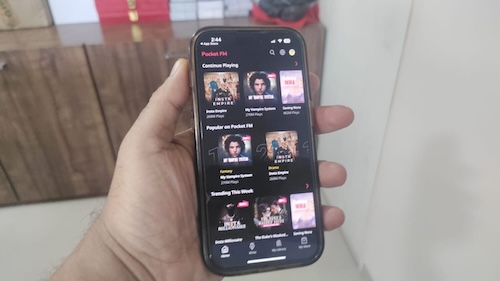
    Mumbai: Imagine a world where your favorite stories come alive—not on screens, but in your ears, whispering adventures and drama as you multitask through life. When binge-watching wasn’t an option, Pocket FM became your storytelling savior, transforming mundane chores and long commutes into thrilling escapades. Today, the platform that brought you gripping audio series at the tap of a finger is basking in the spotlight, shattering records with its meteoric rise.

    In an extraordinary leap, Pocket FM has surged past the Rs 1,000 crore revenue milestone in FY 2024, marking an awe-inspiring 496 per cent year-on-year growth from Rs 176.36 crore in FY 2023. This groundbreaking success cements the company’s status as a trailblazer, combining innovative storytelling, microtransactions, and global ambition to rewrite the rules of entertainment. As it inches closer to profitability, Pocket FM’s journey serves as an inspiring masterclass in turning sound waves into success stories.

    Pocket FM reported a global revenue of Rs 1,051.97 crore, bolstered by significant growth in subscription and advertising revenue. This rapid expansion comes alongside a 21 per cent reduction in global losses, from Rs 208 crore in FY 2023 to Rs 165 crore in FY 2024, highlighting its strategic push towards operational efficiency.

    Financial highlights: A year of remarkable transformation

    Subscription Revenue Growth:
    The platform’s subscription revenue skyrocketed, increasing nearly sixfold from Rs 160.05 crore in FY 2023 to Rs 934.73 crore in FY 2024. This growth reflects the platform’s ability to build a thriving community of paid users, largely driven by its innovative microtransaction model.

    Advertising Revenue Expansion:
    Advertising revenue increased over seven times, from Rs 12.5 crore to Rs 89.34 crore, underscoring the platform’s growing attractiveness for advertisers.

    Enhanced Operational Efficiency:
    Pocket FM’s expense-to-earnings ratio improved significantly, from 2.18 in FY 2023 to 1.16 in FY 2024, illustrating the company’s disciplined approach to cost optimisation.

    Loss Reduction:
    Losses decreased by Rs 43 crore, down from Rs 208 crore in FY 2023 to Rs 165 crore in FY 2024, reinforcing the company’s commitment to profitability.

    Pocket FM

    Pocket FM has reshaped entertainment through its serialised audio storytelling model. Over 30 audio series have each surpassed the Rs 10 crore revenue milestone, with seven series crossing Rs 100 crore—a testament to the platform’s robust content pipeline. Additionally, the platform leveraged artificial intelligence (AI) to produce over 40,000 audio series, contributing Rs 25 crore to its revenue.

    With over 100 billion minutes of streaming powered by its 200-million-strong listener community, the platform has also recorded 45 million transactions through its microtransactions model.

    While India remains a core market, Pocket FM is making aggressive strides in global markets like the United States, Europe, and Latin America. The company’s investments in localised content, advanced technology, and strategic user acquisition have bolstered its international footprint, positioning it as a global leader in entertainment innovation.

    “This growth reflects our relentless efforts to redefine the entertainment landscape. With a sharp focus on leveraging AI, we are not only enhancing operational efficiency but also creating smarter processes that optimise content delivery and monetisation. Our vision remains clear: to establish Pocket FM as a global entertainment platform that consistently pushes the boundaries of content experiences.” said Pocket FM, CFO, Anurag Sharma.

    Anurag sharma

    Pocket FM’s success is an inspiring example of a tech-driven company prioritising scalability while staying on the path to profitability. As it continues to redefine the entertainment landscape, the company’s disciplined growth strategy, innovative storytelling approach, and global ambitions place it on an upward trajectory in the ever-evolving world of digital content.

  • India Today Group sees revenue fall amid challenging market conditions

    India Today Group sees revenue fall amid challenging market conditions

    Mumbai: When a titan stumbles, the tremors are felt far beyond its own walls. Investor confidence wavers, markets shift uneasily, and a once-unshakeable reputation finds itself on thin ice. Such is the case for the India Today Group, which, in a jarring Q2 FY25 performance, posted steep declines in both revenue and profits. This downturn isn’t just a dip in the numbers; it’s a stark reminder that even the most formidable institutions can struggle against economic forces and the relentless pressure of an ever-changing media landscape. Despite efforts to trim costs and adapt, India Today’s latest results signal not progress, but troubling stagnation.

    For the quarter ending September 2024, the Group’s revenue plummeted to Rs 206.77 crores from Rs 311.79 crores in the preceding quarter, marking a sharp 33.7 per cent drop. This contraction becomes more severe when juxtaposed with the Rs 213.86 crores reported in the same quarter last year. Despite moderate operational adjustments, production costs grew by over 3 per cent, reaching Rs 24.35 crores compared to Rs 23.62 crores a year ago. Employee expenses also remained stubbornly high at Rs 81.41 crores, reflecting a challenging balance between workforce retention and profitability.

    Net profit for the quarter dwindled to Rs 8.35 crores, representing a staggering decline from Rs 51.43 crores reported in Q1 FY25. This downward spiral in profitability is exacerbated by a combination of rising costs and a limited revenue base, suggesting that the current strategic approach may lack the flexibility needed to weather industry-wide upheaval. Even more concerning is the dwindling cash flow, with net cash inflows from operations at a mere Rs 88.78 crores, down significantly from previous levels, limiting future investments and expansion.

    Television and media operations, traditionally a strong revenue stream, reported Rs 202.85 crores, down from Rs 309.22 crores in the previous quarter, reinforcing an overall industry-wide struggle to maintain viewership and advertiser interest. Radio broadcasting, a secondary but growing segment, failed to offset this decline, posting a minor increase to Rs 3.92 crores in Q2 FY25, underscoring limited diversification.

    While India Today Group continues to hold a respected position within the media industry, these financial indicators highlight urgent structural and strategic reevaluation. Moving forward, the Group must navigate the intricate dance of cost control and technological investments, all while addressing audience shifts in an age of digital-first content.

  • DB Corp Q2 profit plunges 17.6 per cent; Radio segment shows resilience

    DB Corp Q2 profit plunges 17.6 per cent; Radio segment shows resilience

    Mumbai: DB Corp Ltd (DBCL) announced its financial results for the quarter and half-year ended 30 September 2024. DB Corp reported a 17.6 per cent year-on-year decline in net profit for Q2 FY2025, dropping to Rs 825.36 million from Rs 1,002.45 million a year earlier. The company attributed the weak performance to a high base effect and sluggish market activity exacerbated by an extended monsoon season.

    In the first half of FY2025, DB Corp’s total revenue grew by a modest 2 per cent year-on-year to Rs 11,988 million, supported by a high base effect from the previous year, where state elections had significantly boosted ad revenues. Advertising revenue showed minimal growth, rising just 1 per cent to Rs 8,291 million, as the impact of state elections in H1 FY2024 and national elections in H2 FY2024 continued to skew year-on-year comparisons.

    Total revenue for the quarter fell by 3.2 per cent to Rs 5,824.75 million compared to Rs 6,019.19 million in Q2 FY2024, primarily driven by a dip in advertising revenue, which slid 6.7 per cent to Rs 4,014 million. Circulation revenue also saw a slight decline, dropping 2.5 per cent to Rs 1,175 million.

    DB Corp MD, Sudhir Agarwal, remarked, “In Q2 FY25, we did not meet our revenue growth targets due to the extended monsoon season, which slowed market activity and consumer spending, coupled with a high base effect from Q2 FY24, an exceptionally strong quarter driven by state election advertising. However, we are confident in our growth trajectory as we adapt to current market conditions. Our Digital Business is thriving, with MAUs nearing 20 million as of August 2024, despite pilot monetisation. Our foundation for future success remains strong, backed by editorial excellence and robust advertiser support. As India’s economic landscape evolves post-elections, we are well-positioned to enhance stakeholder value and further cement our market leadership.”

    The company’s EBITDA also suffered, shrinking by 13.9 per cent to Rs 1,442 million, resulting in a 25 per cent EBITDA margin, down from 27.8 per cent last year. The decline in profitability signals challenges within the print media sector, where soft newsprint prices were not enough to offset the revenue slump.

    The radio segment emerged as a bright spot, with advertising revenue growing 16.3 per cent to Rs 414 million this Q2 FY2025. EBITDA in this segment increased by 22.3 per cent to Rs 132 million, demonstrating resilience despite broader market headwinds. DB Corp business recorded an 11 per cent year-on-year increase in advertising revenue to Rs 801 million, with EBITDA margins rising by 250 basis points to 33 per cent in H1 FY2025.

    Performance highlights for H1 FY2025:  

    – Total revenue increased by 2 per cent to Rs 11,988 million, compared to Rs 11,755 million.  

    – Advertising revenue grew by 1 per cent to Rs 8,291 million, up from Rs 8,247 million.  

    – Circulation revenue stands at Rs 2,367 million, compared to Rs 2,404 million.  

    – EBITDA rose by 10 per cent to Rs 3,351 million, aided by advertising revenue growth and effective cost control measures.  

    – Net profit increased by 12 per cent year-on-year to Rs 2,004 million, compared to Rs 1,790 million.  

    – Radio business revenue grew by 11 per cent year-on-year to Rs 801 million versus Rs 720 million.  

    Performance highlights for Q2 FY2025:  

    – Total revenue reached Rs 5,825 million, down from Rs 6,019 million due to a high growth base last year.  

    – Advertising revenue stood at Rs 4,014 million, down from Rs 4,301 million.  

    – Circulation revenue decreased to Rs 1,175 million from Rs 1,205 million.  

    – EBITDA fell to Rs 1,442 million with a margin of 25 per cent, compared to Rs 1,676 million.  

    – Net profit decreased to Rs 825.36 million from Rs 1,002.45 million.  

    – Radio business revenue grew by 16.3 per cent year-on-year at Rs 414 million versus Rs 356 million.  

  • Netflix recovers with 2.4 mn subscriber gain in Q3

    Netflix recovers with 2.4 mn subscriber gain in Q3

    Mumbai: In the third quarter ending September 30, 2022, Netflix reported 2.41 million net new paid subscribers. It now has 223.1 million paid subscribers globally. Earlier, the expectation was to gain one million subscribers. The expectation for Q4 is 4.5 million paid net additions versus 8.3 million in Q4 2021.

    The company said that after a challenging first half, it believes that it is on a path to reaccelerate growth. The key, it says, lies in pleasing members. Its focus has always rested on winning the competition for viewing every day. When its series and movies excite members, they tell their friends, and then more people watch, join, and stay with the platform.

    Speaking about competition, it said that while competitors are investing heavily to drive subscribers and engagement, building a large, successful streaming business is hard. Netflix estimates that they are all losing money, with combined 2022 operating losses of well over $10 billion, versus Netflix’s five to six billion dollars annual operating profit.

    For incumbent entertainment companies, this high level of investment is understandable given the accelerating decline of linear TV, which currently generates the bulk of their profit. Ultimately, though, Netflix believes that some of its competitors will seek to build sustainable, profitable businesses in streaming—either on their own or through continued industry consolidation. While it’s early days, we are starting to see this increased profit focus—with some raising prices for their streaming services, some reigning in content spending, and some retrenching around traditional operating models which may dilute their direct-to-consumer offering. Amidst this formidable and diverse set of competitors, it believes that its focus as a pure-play streaming business is an advantage. Netflix explains that its aim remains to be the first choice in entertainment and to continue to build an amazingly successful and profitable business.

    Netflix said that it operates in a highly competitive industry where people have many different entertainment choices—from linear TV to streaming, YouTube to TikTok, and gaming to social media. The silver lining is that the opportunity is very large and growing, and Netflix is still very small relative to that opportunity (for example, eight per cent of total TV time in the US and the UK, two of its most established countries). Its annual revenue of $30 billion or more in the 190 countries in which it operates is roughly five per cent of the combined estimated $300 billion pay TV/streaming industry, $180 billion branded advertising market, and $130 billion consumers spend annually on gaming. So, Netflix believes that it has a long runway for growth if it can continue to improve its offering steadily over time.

    Netflix also stated that its six per cent year-over-year revenue growth in Q3 was driven by a five per cent increase in average paid memberships and a one per cent increase in average revenue per membership (ARM). Excluding the impact of foreign exchange (F/X), revenue and ARM grew 13 per cent and eight per cent year-over-year, respectively. The sequential decline in revenue was entirely due to F/X.

    In the third quarter of the fiscal year in the Asia Pacific region, revenue grew by 19 per cent, excluding F/X, as average paid memberships rose 23 per cent year-over-year. ARM fell three per cent year on year, excluding F/X, owing in part to lower ARM in India. This was somewhat offset by higher ARM in Australia and Korea. It added 1.4 million paid memberships in the region (versus 2.2 million in the last Q3).

    Excluding F/X, EMEA revenue and ARM grew 13 per cent and seven per cent, respectively. Paid net additions totaled 0.6 million, down from 1.8 million in the previous quarter. In Latin America, revenue increased 19 per cent year-over-year, supported by ARM growth of 16 per cent vs. the year ago quarter excluding F/X. It added 0.3 million paid memberships, in line with membership growth in Q3’21. ARM and revenue grew by 12 per cent and 11 per cent, respectively, in the US and Canada, which is its most penetrated market. Paid net adds totalled 0.1 million (similar to the 0.1 million in Q3’21).

    For Q4 of 2022, it is expecting revenue of $7.8 billion, with the sequential decline entirely due to the continued strengthening of the US dollar vs. other currencies. On a constant currency basis, this equates to nine per cent year-over-year revenue growth. The revenue growth forecast is driven by the expectation of 4.5 million paid net ads (vs. 8.3 million in Q4 ’21) and ARM growth of six per cent year-over-year, excluding F/X. The paid net adds forecast assumes that it experiences its usual seasonality as well as the impact of a strong content slate, counterbalanced by macroeconomic weakness, which leads to less-than-normal visibility. While it is very optimistic about the new advertising business, the company does not expect a material contribution in Q4 2022 as it is launching its Basic with Ads plan intra-quarter and anticipates gradually growing its membership in that plan. Its aim is to give prospective new members more choice—not switch members off from their current plans.

    Members who don’t want to change will remain on their current plan, without ads, at the current price, the company explains. It has forecasted a Q4 2022 operating margin of four per cent compared to eight per cent in the year-ago period. The fourth quarter is typically its lowest operating margin quarter of the year as it is usually its largest quarter in terms of content and marketing spend.

  • Zee Media’s Q1 FY23 revenues up by 21.6 per cent and ad revenues soars 23.7 per cent YoY

    Zee Media’s Q1 FY23 revenues up by 21.6 per cent and ad revenues soars 23.7 per cent YoY

    Mumbai: Zee Media Corp Ltd (ZMCL) announced its first quarter financial results for the financial year 2023 on 29 July. The company reported total revenues of Rs 206.96 crore compared to Rs 170.18 crore during the corresponding quarter last year up by 21.6 per cent.

    ZMCL’s advertising revenues for the quarter stood at Rs 196.53 crore, up by 23.7 per cent YoY. Subscription revenue declined by 10.2 per cent to Rs 8.93 crore.

    ZMCL’s earnings before interest tax depreciation and amortization (EBIDTA) dipped marginally to Rs 39.84 crore from Rs 45.32 crore year-on-year (YoY).

    The company reported profit after tax of Rs 8.19 crore compared to a loss of Rs 9.04 crore YoY.

    The news broadcasting company’s operating expenditure increased by 33.8 per cent to Rs 167.12 crore versus Rs 124.86 crore in the corresponding quarter last year. The company’s operating costs went up by 58.2 per cent to reach Rs 36.02 crore and employee benefit expenses went up by 35.6 per cent to reach Rs 66.92 crore. Its other expenses increased by 29.8 per cent to reach Rs 44.84 crore.

    ZMCL operates 14 TV news channels comprising one global, four national and nine regional language channels, together with five digital channels, 17 digital brands and is one of the largest news networks in the country.

    Its flagship Hindi news channel Zee News had 9.2 per cent market share as per Broadcast Audience Research Council (Barc) data for Week 26 2022 (four week rolling average), Hindi-speaking market (HSM) 15+ audience, 0600-2400 hours. It recorded 15 minutes ATSV (average time spent per viewer).

    Zee News YouTube channel garnered 660 million video views during the April-May-June quarter and reached over 60.1 million viewers through continued focus on innovative programming.

    Its global channel Wion was awarded 13 prestigious News Television (NT) awards recognising the channel’s unbiased and non-cluttered approach towards news. The channel enjoyed 7.9 minutes ATSV and is the No. 1 English news channel on YouTube based on video views.

    Source: BARC, All 22+ Male AB, India Urban, 0600-2400 hrs, WK 26’22 (4 weeks rolling average)

    The network’s Hindi business channel Zee Business has 58.6 per cent market share, an average weekly reach of 1.32 million and 25.6 minutes ATSV as per Barc data, All 22+, Male ABC, HSM, 0600-2400 hrs WK 26’22 (4 weeks rolling average).

  • Uptake of free DTH has come down since major broadcasters left: Punit Goenka

    Uptake of free DTH has come down since major broadcasters left: Punit Goenka

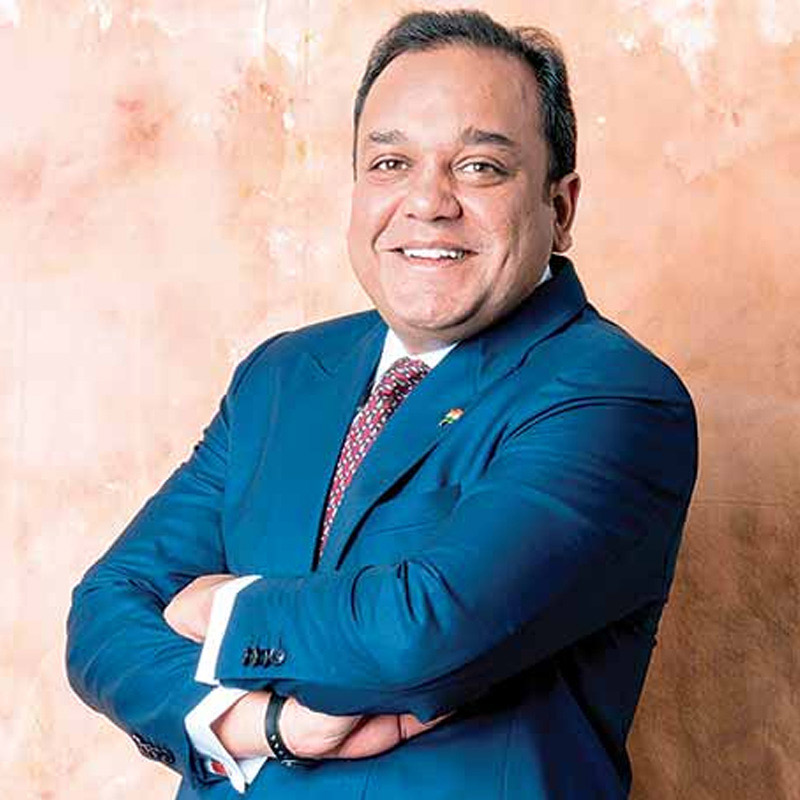
    Mumbai: The uptake of free direct-to-home services has come down since the major broadcaster networks collectively left the platform on 1 April, stated Zee Entertainment Enterprises Limited managing director and chief executive officer Punit Goenka during an earnings call.

    The company reported its fourth quarter and yearly results for the financial year ended 31 March. Goenka said, “Cord-cutting has slowed down now that GECs (general entertainment channels) have come out of the Free Dish platform. So far, the decline in subscription revenues has been because we were losing subscribers. The good thing is we’re not losing subscribers to digital but rather subscribers are migrating from pay linear to free linear TV.”

    On merger with Sony Pictures

    Goenka also shared an update on the merger process between Zee and Sony Pictures Networks India. The two companies had signed a definitive agreement in December 2021 and submitted key documents with the stock exchanges for the necessary approval. Analysts queried Goenka whether the timeline for completion of the merger would remain at eight to nine months as the company was still awaiting approval from the exchanges.

    “My speculation is that because this is a large merger there have been a significant number of queries by the stock exchanges that we have been answering. It has been two weeks or ten days since we last got any query from the exchange and I am still positive towards the eight to nine months timeline,” replied Goenka.

    Zee is expected to be one of the major contenders for the Indian Premier League (IPL) media rights auction that is set to begin on 12 June. With the merger process still underway, analysts asked Goenka whether Zee was in a position to bid for the media rights without the capital infusion of $1.57 billion (~Rs 12,000 crore) from Sony.

    “We have a healthy balance sheet and we can participate (in the IPL media rights) on our own,” said Goenka. He also noted that the TV and digital rights package being sold separately “doesn’t preclude us from bidding for either part of all of the rights packages being sold.”

    Goenka stated that the company is still evaluating its strategy concerning IPL media rights.

    Zee expects its advertising revenues to face pressure in the coming quarter due to the inflationary situation that has impacted FMCG advertisers who account for up to 53 per cent of ad spend on the network.

    The company also expects to see a short-term impact on ad revenues after pulling its GECs from the Free Dish platform. “This will be a transitional impact and we expect to recover as intended benefits accrue on the pay side of the business,” remarked Zeel chief financial officer Rohit Gupta.

    He added, “In FY23 from a quarter-on-quarter progression perspective we expect the margins to improve as we progress through the year.

    The first quarter will have the most immediate impact in terms of inflationary dynamics. FTA drop, accelerated investments and seasonal expenses such as increments etc., will have an impact on revenues. As revenues scale up in subsequent quarters, we expect margins to start inching up in the later part of the year.”

    The embargo on NTO (New Tariff Order) 2.0 continues to impact the broadcast industry in terms of subscription revenues. However, the management of Zee expects to see a positive quantum in terms of revenue growth for FY23 now that the pandemic has subsided.

    Zee reiterated its commitment to scale investments in content, technology and product. The company is particularly increasing investments on OTT content with more regional content in the pipeline and partnering with global studios, independent creators and premium content production houses. Zee5 saw 31 per cent growth in revenues for FY22 and its global monthly active users (MAUs) stood at 104.8 million. Average watch time on the platform increased to 214 minutes.

    Following the success of “Kashmir Files” that grossed Rs 200 crore in the box office, Zee Studios is gearing up to release 20-25 movies this year.

    On the linear TV side, the company plans to increase investments in its Hindi, Marathi and Tamil portfolio of channels to grow market share.

    Linear TV market

    Zee’s linear TV market share declined to 17.1 per cent in Q4 2022. Zee has also considerably brought down its debt to Dish TV India from Rs 5.8 billion in March 2020 to Rs 2.4 billion in March 2022.

    The company reported operating revenue of Rs 8189.3 crore up by 14.1 per cent year-on-year. Its profit after tax increased by 31.7 per cent and stood at Rs 964.4 crore. Advertising revenue stood at Rs 4396.5 crore in FY22 up by 18 per cent year-on-year. Subscription revenue remained stable at Rs 3246.6 crore. The company’s expenditure for the year came up to Rs 6467.3 crore out of which operating expenses stood at Rs 4044.9 crore. The company’s programming and technology costs increased year-on-year driven by higher theatrical revenue, continued investments in Zee5 and new launches across the market.

  • Zee Media’s consolidated revenue up 33.6 percent at Rs 866.86 crore for FY22

    Zee Media’s consolidated revenue up 33.6 percent at Rs 866.86 crore for FY22

    Mumbai: Zee Media Corporation has announced its fourth quarter and yearly results for the financial year ended 31 March 2022. The company reported audited consolidated revenues of Rs 866.86 crore for FY 2022 as compared to FY 2021, which was at Rs 649.07 crore. The company witnessed 33.6 percent growth during the same period.

    The network incurred expenditure of Rs 613.2 crore and its operating revenue stood at Rs 247.73 crore up by 35.4 per cent as compared to the corresponding quarter FY 2021. The company’s operating expenditure stood at Rs 189.13 crore up by 54.1 per cent year-on-year (YoY). The company’s earnings before interest, tax, depreciation and amortization (EBIDTA) stood at Rs 58.60 crore during the Q4 FY 2022.

    The company’s advertising revenue for the quarter stood at Rs 237.1 crore up by 39.4 per cent and subscription revenue stood at Rs 9.2 crore. Its advertising revenue for the year stood at Rs 822.6 crore up by 36.4 per cent and subscription revenue stood at Rs 38.49 crore.

    After including exceptional items, Zee Media reported loss of Rs 51.45 crore for the quarter and consolidated loss of Rs 117.72 crore for the year ended 31 March 2022.

    Zee Media operates 14 TV news channels including four national, nine regional languages and one global. It also operates four digital channels and 17 digital properties.


  • Disney reports 174 million paid subscribers at the end of third quarter 2021

    Disney reports 174 million paid subscribers at the end of third quarter 2021

    Mumbai: The Walt Disney Company reported 174 million paid subscribers across Disney+, Hulu, and ESPN+ at the end of the third quarter 2021. Direct-to-consumer revenues for the quarter increased 57 per cent to $4.3 billion, the entertainment conglomerate said.

    The company noted that the average monthly revenue per paid subscriber for Disney+ decreased from $4.62 to $4.16 due to a higher mix of Disney+ Hotstar subscribers in the current quarter compared to the same quarter last year.

    Disney+ reported a higher operating loss due to programming, production, marketing and technology costs which was offset by the increase in subscription revenue. The higher subscription revenue reflected subscriber growth and increases in retail pricing. The increases in costs and subscribers reflected the ongoing expansion of Disney+ including launches in additional markets.

    The international channel revenues for the quarter increased by 29 per cent to $1.4 billion and operating income decreased 23 per cent to $169 million. The decrease in operating income was due to higher programming and production costs which were offset by advertising revenue growth due to increases in average viewership and rates. The return of live sports events, primarily Indian Premier League cricket matches, drove increases in average viewership, programming, and production costs.

    “We ended the third quarter in a strong position, and are pleased with the company’s trajectory as we grow our businesses amidst the ongoing challenges of the pandemic,” said The Walt Disney Company, chief executive officer, Bob Chapek. “Our direct-to-consumer business is performing very well, with a total of nearly 174 million subscriptions across Disney+, ESPN+ and Hulu at the end of the quarter, and a host of new content coming to the platforms.”

    “Although most film and television production resumed beginning in the fourth quarter of 2020, we continue to see disruption of film and television production,” Chapek added.