Tag: Advertising industry

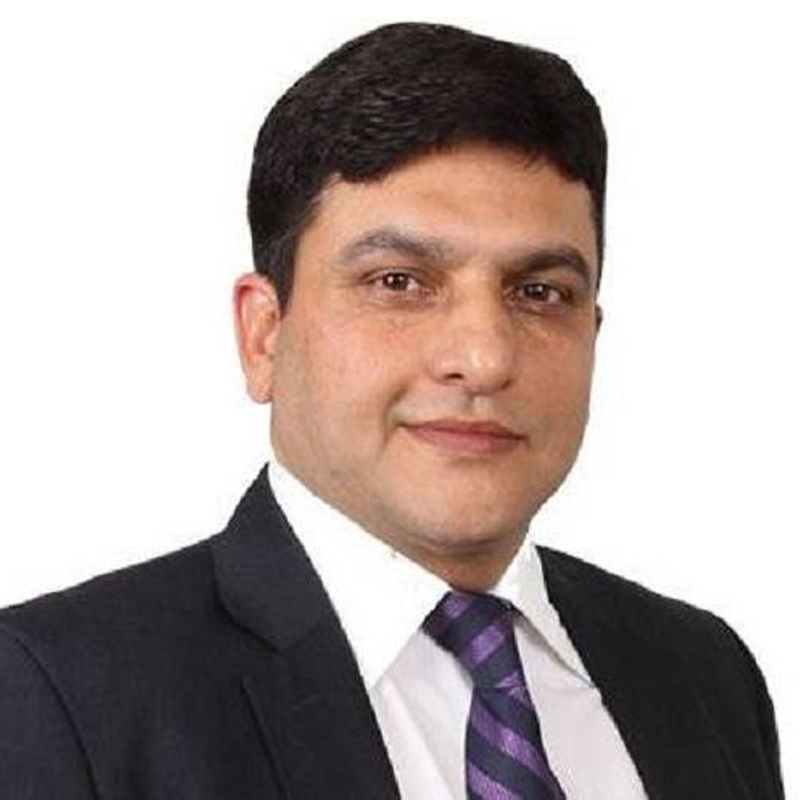
  • TV Adex likely to grow by 13% in 2022, says ZEEL ad sales chief Ashish Sehgal

    TV Adex likely to grow by 13% in 2022, says ZEEL ad sales chief Ashish Sehgal

    Mumbai: Despite the threat of inflation, which is already hurting the fast-moving consumer goods (FMCG) category, which accounts for around 40 per cent of the television advertising market, Zee Entertainment Enterprises (ZEEL) chief growth officer – ad sales, Ashish Sehgal expects the TV Adex (TV advertising exchange) to grow by 13 per cent in 2022.

    He said that so far this year, due to the declining impact of Covid-19, the growth stood at 10 per cent. However, this was not the case last year due to the pandemic restrictions. He expects local brands, which were absent from the market for the last couple of years because of Covid-19, to make a strong comeback.

    “In January due to Covid-19 the TV Adex went down a bit, but from February the Adex started to grow. Due to the IPL, things have been good since February. Entertainment, cinema and even news have enjoyed a good run. Elections benefit the news industry in the first quarter,” he added. “The TV Adex should have grown by 10 per cent over the previous year so far. By 2022, it should grow by 13 per cent.”
    He proceeds further by adding that inflation is mainly hurting FMCGs. “Even in auto, the activity is growing now. New launches will happen. Telecom is advertising. BFSI has been quite active over the past six months. BFSI may slow down in July and August but in the upcoming festive season it should pick up. When the LIC IPO came, LIC advertised. I see other companies in insurance and banking following suit in terms of the same activity. The new D2C startups are bringing in a lot of money. E-commerce ad spends from the likes of Flipkart and Amazon will only grow in 2022.”

    When asked about startups experiencing funding slowdown and potential impact on ad spending he said that they will shift money from cricket to less expensive avenues like entertainment. “Companies will pump in money into the entertainment category. Earlier, they were putting money into cricket but now they are diverting money into cheaper genres like entertainment. Of course by the time the funding slowdown hit startups the IPL ad deals had already been done. Also, the IPL ratings were down but the deals are signed now. IPL made more revenue than last year.”

    Speaking about the same, he added, “but cricket might get impacted by startups shifting track going forward. These startups are also advertising in print. You have to remember that D2C startups cannot stop advertising otherwise their customer acquisition strategy will get affected. They are looking at cheaper options and are aiming to rationalise their ad spends better.”

    Sehgal feels that the English genre is likely to benefit from the New Tariff Order (NTO) because the ad pie is small. The subscription revenues now are important for them. “As far as music is concerned the genre is benefiting from free-to-air (FTA) viewership. Infotainment is in the same boat as English but it is slightly better off because there is not much content on OTT. So their ad revenue situation is better.”

    According to ZEEL, from his perspective, entertainment accounts for around 65 per cent of revenue, but cinema is also growing. “We have the largest cinema library as well as the largest number of cinema channels. Tentpole properties are very important for the topline. In cinemas, a lot of movie premieres are lined up, which was not the case last year. This will propel ad revenue.”

    Talking about the importance of regional channels, Sehgal said that the major ad revenue growth for ZEEL is happening here, whether it is in the South, Punjabi, Oriya, Bangla or Marathi. “They all are contributing to the growth. They can tap into the local retail brands. Their contribution was subdued for the last two years due to Covid-19. Now, they are back in business and so they are advertising now.”
    Simultaneously, he mentioned the OTT as an addition to TV not eating the TV’s pie. “Today advertisers use the TV for reach and OTT for re-targeting. The AVOD (advertising-based video on demand) consumers are similar viewers to TV. The kind of content being watched on OTT AVOD is the same that airs on TV first.

    Explaining ZEEL’s strategy for ad solutions, he said that the company’s branded solution team has created an Ad funded program. “In some shows, brands get integrated which allows them to be present within the content. In addition, ZEEL helps brands through influencer marketing where characters from shows become influencers for brands. Commercials are created.”

    Sehgal believes the number of pay television channels consolidation will stay the same, as the number of non-premium channels is not growing. The only new channels are in the FTA space. “Everybody has their space. In an unexplored market, a new pay channel might be launched which we did in Punjab two years back, but not otherwise, channels will sustain. FTA will also sustain as the viewership is different. Advertisers use FTA channels as there is no other medium to reach that consumer.”

    He also noted that news will do well as it has a wide reach from pay to FTA. “In metros, event development led people to switch to news channels even on direct-to-home (DTH). News is a unique genre, from metros to rural the audience is available, for advertisers news has separate FTA space. Also, for the upcoming 2024 general elections, the government (in the next four to six months) will start pumping in money. The news genre will certainly fetch the majority of this fund. The state elections are an addition to this genre.”

    “The four big networks including ZEEL adhere to the ad cap guidelines and they do not violate them. For ZEEL it tends to be 12+2,” he concluded.
  • Journalist, author and A&M industry thought leader Anant Rangaswami no more

    Journalist, author and A&M industry thought leader Anant Rangaswami no more

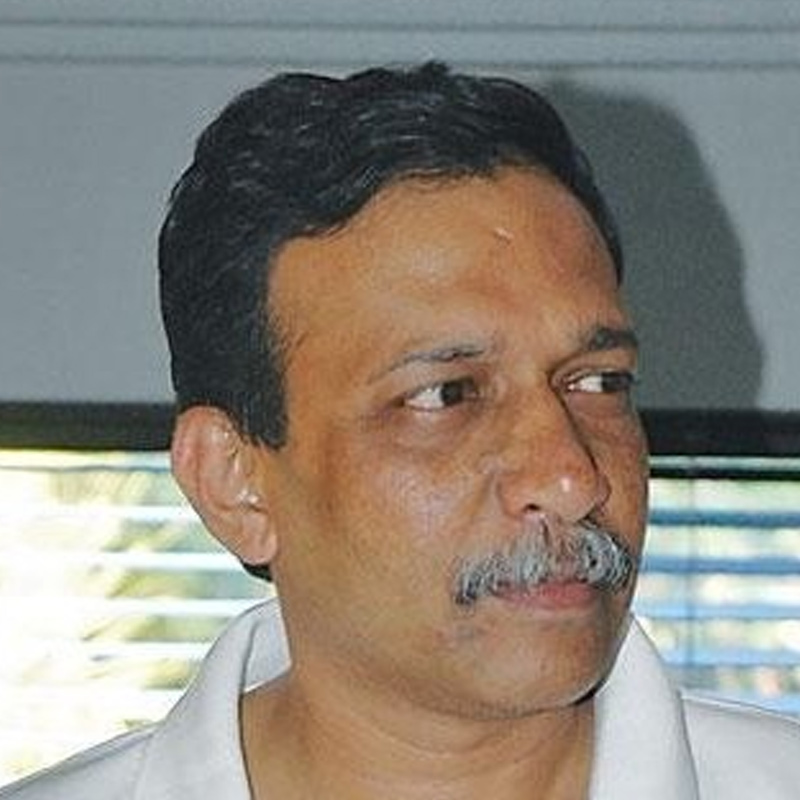
    Mumbai: Journalist, author and keen observer of the media and advertising industry Anant Rangaswami has passed away on Tuesday morning in Bengaluru.

    Rangaswami wore many hats during his career. He was editor of Storyboard, the advertising, media and marketing show on CNBC-TV18. Previously, he was the founding editor of Campaign India and senior editor at Firstpost.com. A lifetime spent in the industry Rangaswami was associated with leading media companies including Star TV, Sony, and BCCL’s Times Television and Times FM. He also served as vice president at TBWA India.

    Rangaswami has authored two books ‘Watching from the Sidelines’ and ‘The Elephants in the Room: The Future of Advertising in India’.

    Most recently, Rangaswami was working with close friend Rajesh Kejriwal as editor and curator of the flagship industry event Zee Melt organised by the Kyoorius Group.

    Those who followed Rangaswami on his social media handles know him for his incisive and witty takes on the latest advertisements shaping our culture. He was also a vocal advocate for the issues that shaped the moral and social fabric of the times we live in. Rangaswami had changed his Twitter name to Don’tLetHateWin@AnantRangaswami in recent times, which says a lot about how strongly he felt about the state of affairs in the country.

    Rangaswami was a dear friend to many in the media and advertising industry. This publication does not mourn his passing but rather celebrates the legacy he left behind.


  • GUEST COLUMN: Digital innovation in the advertising industry

    GUEST COLUMN: Digital innovation in the advertising industry

    Mumbai: While the age-old basic tenets of advertising (4Ps) remain the same, digital innovations have opened more channels than ever before. Back in the day digital innovations ran speedily and dynamically changed how marketeers approached these basic tenets. But, today there are no drastic innovations, only steady transformation. New technologies have now become an integral part of marketing strategies and their ecosystems. 

    Having said that, are we future-proofing our marketing strategies? No, but there are a few innovations that will grow on us and become fundamental to how we are going to develop marketing concepts.

    Amalgamation:

    Gone are the days of linear model. Today, technological innovation and consumer behavior have created a complex reality. The key to combat this challenge is to amalgamate creativity with data to maximise consumer experience. While storytelling will remain fundamental to the process but data will give the marketing strategies an impactful edge. Art and science have always sat on different silos in the traditional method but in the new world they will converge and we will have to think holistically.

    Decentralisation:

    Many agencies have a centralised marketing structure, but nearly half of them plan to decentralise their operations in the near future. As data hacking becomes more common, demand for decentralisation will rise, and decentralisation is a solution since it places a greater emphasis on privacy and security. 

    Here are a few more advantages of decentralisation:

    1. It has a higher level of customisation for brand-specific campaigns.
    2. Content is distributed much more quickly.
    3. It will enable agencies to be more innovative and work more quickly for their clients.
    4. It will assist you in making quicker decisions.

    AI, ML, IoT, and NFT:

    When we talk about the future of going digital, we’re talking about AI, machine learning, and the Internet of Things (IoT). The new world would not exist without it, because these technologies provide us with the dynamism of what our future can be and how we can shape it. Personalisation at scale requires AI, which collects enough consumer data to see trends and offer more relevant communications to their target audience. It can learn new information as it comes in using machine learning, and then make modifications to increase performance without having to be programmed to do so. IoT improves performance across the board, from content to interactive advertising. In the year 2021, the globe will also witness a recent innovation known as NFT. A digital asset, such as a patent, can now be owned by anybody.

    CTV advertising:

    TV advertising will work harder as a result of smart TV and the entire web and connected devices ecosystem. People are already replacing their televisions with Smart TVs, which is causing a significant increase in the Indian market share for TVs. It will play a major role in the commercial experience as the traditional linear TV format loses its relevance. Connected to the internet platforms it is paving the way for selective, targeted, and flexible advertising formats. The CTV evolution has already entered India and has made significant inroads (growing in double digits month on month), as the web ecosystem is enabling connectivity through smart TVs, dongles, gaming consoles, etc.

    Just when we thought that we have mastered Facebook, metaverse caused unimaginable disruption. The treadmill of innovation doesn’t show any sign of slowing down in the near future. In such a scenario how creativity will pan across devices, experiences and platforms, how you will tell your story effectively through voice-enabled, geo-tagging, and wearable chatbots will now become crucial to us dream merchants. We will have to adapt fast and adapt with humility as we break down silos and embrace the new world order.

    (About Author: Arun Fernandes is the Hotstuff Medialabs founder and CEO)

  • Goafest 2022: Times Network comes on board as presenting sponsor

    Goafest 2022: Times Network comes on board as presenting sponsor

    Mumbai: Times Network has come on board as presenting sponsor for the fifteenth edition of Goafest, announced the Goafest 2022 Organising Committee on Friday. The three-day industry event will be held between 5-7 May at Grand Hyatt, Goa.

    Goafest is a definitive annual festival that celebrates milestones in the Indian advertising, marketing, and media industry. The event is back on-ground for its latest edition, after a gap of two years. The grand festival will be helmed by Jaideep Gandhi as chairman of the Goafest 2022 Organising Committee, along with Rana Barua as chairman of the Awards Governing Council for the Abby Awards 2022.

    As per the earlier announcement, Goafest 2022 was scheduled to be held from 7-9 April. The orgainising committee is optimistic that the agencies and organisations will be more enthusiastic to participate in the festival as the number of Omicron cases has started receding.

    “We are truly excited that after a gap of a couple of years Goafest is coming back. And I’m sure it will be the biggest yet, considering the fact that most of us have been restrained by the pandemic all this while and are literally straining at the leash to be let out,” stated Times Network MD and CEO MK Anand. “I am particularly looking forward to the event as Times Network is once again returning as presenting sponsor of this most awaited advertising festival in South Asia.”

    “Times Network has been associated with almost every edition of Goafest from its inception, in some way or the other,” remarked Goafest 2022 organising committee chairman Jaideep Gandhi. “It is our pleasure to welcome back Times Network as presenting sponsor in the 15th year of the festival,” he added.  

    The event is jointly organised by two industry bodies – Advertising Agencies Association of India (AAAI) and The Advertising Club (TAC).

    “It is wonderful to have Times Network as presenting sponsor yet again,” said AAAI vice president and GroupM Media South Asia CEO Prasanth Kumar. “Goafest is a platform where great work is reflected and thought leadership is demonstrated. Having such an opportunity to be inspired and learn is incredibly valuable to all of us. We look forward to having yet another wonderful Goafest.”

    According to the statement, the delegate registrations and Abby Award entries are now open and more details are available on www.goafest.com.

  • ASCI launches ‘Advertising Advice’ service to help brands track potential violations in ads

    ASCI launches ‘Advertising Advice’ service to help brands track potential violations in ads

    Mumbai: In order to aid responsible advertising practices and help brands be more mindful of the claims they make in their campaigns, the Advertising Standards Council of India (ASCI) has launched an “Advertising Advice” service. The paid service is open to all members and non-members of ASCI, the advertising industry body announced on Wednesday.

    It will point out to advertisers and marketers at the campaign planning stage, if their claims could potentially violate any ASCI code or guideline. This will help them to take corrective action at the pre-production phase and will guide them to substantiate the claim and align the creative, basis the ASCI code, the self-regulatory body said in a statement.

    For the advertisers, it provides confidential quick expertise to help them make more responsible advertising.  Advertisers will be able to modify claims and depictions at the pre-production stage itself, thus saving them effort, money as well as possible loss of reputation once the advertisement is already in the marketplace. The service aims to help advertisers balance creativity with responsibility and is being offered in line with best global practices followed by different self-regulatory organizations, ASCI said.

    The Advertising Advice panel will also include technical experts in different specialties who can examine the claim and evidence for technical claim support. It is important to note that this non-binding service is not intended to be a pre-clearance, and advertisers may use the advice to better their ads in a manner they deem fit, said ASCI.

    “As ASCI steps into its next phase, the Advertising Advice service will be a crucial element in the cause of self-regulation. The service gives brands a chance to better prepare their campaigns and mitigate reputational risks,” said ASCI chairman Subhash Kamath. “While there is no guarantee that consumers will not raise a claim against a brand, the advisory does help brands take steps to ensure that their campaigns don’t violate any norms formulated to protect consumer interest. We believe that this advisory service will provide the necessary support to the advertising ecosystem to create more responsible ads without affecting creativity.”

    ASCI secretary-general Manisha Kapoor said: “The advisory can be used by brands to great effect while planning their campaigns. Brands wish to be competitive and push the boundaries of claims. With this service, we can support advertisers to make strong claims while not crossing the all-important lines of honesty, decency, fairness and safety.”

    Kapoor further added that external scrutiny by experts at the pre-production stage can add tremendous value to campaign development, as post release of the campaign, any stoppage can cause significant disruption and cost for an organization. “But by making this a part of the way advertisers think of campaigns at an early stage, such risks can be mitigated. We see this as a win-win for advertisers and consumers, who then get exposed to fewer problematic ads,” she said.

    The names of technical experts on the advisory panel include Prof Jayesh Bellare (chemical, FMCG), Prof Smita Lele (food and nutrition), Dr Punit Saraogi (dermatology), Dr Rohinton Bilimoria (dentistry) and Dr. D.B. A. Narayana (Ayurveda), shared ASCI.

  • Limited workforce in office, copy fatigue: Immediate challenges facing ad industry

    Limited workforce in office, copy fatigue: Immediate challenges facing ad industry

    NEW DELHI: The past two months have been nothing short of a rollercoaster for industries across categories and nationalities. With most of the world under a strict lockdown, production halted, supply-chains blocked, and consumer demand shifting to only essentials, the economy went through a whirlwind of issues. Also greatly impacted was the marketing and advertising industry, as a result of the dwindling cash liquidity and many brands going silent in the time of crisis.

    However, things seem to be moving towards the better now. Lockdown restrictions have been eased greatly, green zones are already attracting consumers, and there is a lot of supposed pent-up demand to address. As brands start moving and earning, a lot of benefits will slowly be transferred to the advertising industry.

    Wunderman Thompson South Asia chairman and group CEO Tarun Rai said, “While the crisis in India is still far from over, the relaxation is a sign of hope. It is also a reflection on the strikingly varied impact the crisis has had on different regions of the country. While there are still issues regarding both production and distribution, the clients I have spoken to are finding innovative ways of getting around them. For many categories, this is the time to dust off their marketing campaigns and start getting ready for the beginnings of positive consumer sentiment. Like the crisis came upon us suddenly the rebound may surprise us too. Marketers and brands should be ready.”

    Dentsu One president Harjot Singh Narang added, “Investments in brand and marketing are sadly the first to go in a downturn but luckily come back really fast as soon as the businesses start seeing growth potential coming back. The relaxations are the first steps to inching back for now and so would be welcome by everyone. The real question would be how long before this inching ahead gathers some speed and opportunity to use brand and marketing as business drivers returns.”

     There, however, are still some impending challenges that await the industry. Havas Group CEO Rana Barua argues that the next few months will be more testing. “There will be numerous challenges going forward; going back to work poses more challenges than working from home. We cannot jump the gun and start behaving as normal. We need to collectively behave and act responsibly which will ensure compliance while we are planning to go back to work, safety for all employees, managing both offices and also working from home, balancing client needs and expectations.”

    Madison Media chief analytics officer Nagraj Krishnamurthy noted, “The industry is continuing to find it difficult to ensure supply chain continuity between the designated red, orange and green zones. Latest relaxation has eased the problem but not eliminated it.  It will be at least a quarter before the last mile link to the consumer becomes operational pan India.”

    Putting emphasis on the issues that the advertising industry will have to cater to, he added, “Usually, new copies are rolled out in the first quarter. However, this year, there are no new copies that are ready. Some clients are in a dilemma as to whether they can invest behind older copies. My suggestion to them is that they should unless the message is no more relevant. Analytics has proved that copy fatigue is a very rare phenomenon.”

    “Secondly, the situation on the ground is not uniform across the country. Marketers are wondering whether they should go on mass media like television. If the campaign is to activate top-funnel metrics, they should advertise on TV. However, brands advertising to activate lower-funnel metrics like retail or auto can look at geo-targeted digital approaches.”

    Rai highlighted that the safety and health of the agency’s employees are going to be of paramount importance. “We want to get back to our physical offices but want to be very sure that all the health protocols are in place. We are working effectively  from home but getting back to work will give everyone a sense of normalcy. We will start slow, in one city first, with around 30 per cent of our staff and move forward from there. The other important aspect is going to be when video production is permitted. We are managing even now but it is difficult.”

    Narang added, “Extended work from home, deeper thinking on brand relationships, strategies to navigate the months/full year of acute slowdown, strategies to tackle the adverse P&L impacts, and so many more immediate challenges face all of us in the industry. If change is the only constant then evolution and adaptation are the only necessities. Going ahead relaxations and new rules and ways will affect even more – how things change for the industry. However, the key will be to see how the industry and individual players in it evolve and adapt. In the next 18 months, leadership and thinking that enables pivoting to adapt to new realities will be the biggest need of this industry.”

  • Learning and unlearning from working from home during COVID-19

    Learning and unlearning from working from home during COVID-19

    MUMBAI: The COVID-19 pandemic has changed the way our world functions. The outbreak has spurred the growth of the work-from-home model. This swift transition from the traditional office set up to work from your own home comfort has many pros and cons. While it brings flexibility, it also requires self-motivation, self- discipline and availability of resources.

    According to industry experts, efficient remote working will become the new normal in the media and advertising industry. Illiteracy in the 21st century will not be those who cannot read and write but those who cannot learn, unlearn and relearn.

    Indiantelevision.com spoke to industry experts to understand what are some learnings and unlearning during pandemic situations while working remotely.

    WATConsult West and South VP operations Manika Juneja says that adapting to the newness in the most empathetic and agile manner will be the greatest learning during this time. “While the advertising and digital industries are considered to be remote, that’s still far from reality. This pandemic situation is going to break a lot of myths about remote working by giving a firsthand experience to people who were never comfortable with this option,” she adds.

    According to Juneja, unlearning prejudices and learning to prioritise the basics is necessary for creativity, audience understanding and communication. This will help in establishing a better connect between brands and consumers.

    ELSA Corp Country head India Manit Parikh says that the learnings are very clear – supreme flexibility and independence in your work life.  However, he is of the view that discipline and commitment are the most important aspects of work from home culture. So, cultivating strict routines or working hours is necessary so as to not impact productivity.

    “You get the liberty to work from anywhere and as per your convenience, which I believe is the most obvious and positive factor of working remotely. Also, efficiency is better as one can focus on tasks without getting stuck in day to day office hurdles. It also gives you an opportunity to improve your work-life balance,” he points out.

    Saving commute time is one of the biggest advantages of working from home. With the advancement in technology, team meetings or client meetings can happen online, which helps in utilising the time more effectively.

    On the flip side, Parikh believes that in the work-from-home structure it is not easy for managers to monitor their staff’s progress and performance. He says, “There is no way for an employer to know with 100 per cent certainty that their charges are working to the best of their abilities. In-office, employees are connected in a tangible way but at home, you might not have full access to technology platforms. Other than this, I feel at home there are many distractions that drop your concentration level.”

    Squadk.in founder Krina Gindra finds that remote working or work from home is not quite the same for large teams where teamwork is not just a strong quality and ethic, but part of a process for success. Gindra suggests keeping the working hours just as it is on a regular day at work to increase efficiency. “To stay more focused, take short breaks, spark conversations with family, friends and with your teams. Be on video mode whenever possible as it makes us feel closer and more connected,” she suggests.

    Experts are of the opinion that this is a time where our values and culture are being tested; a time where empathy and kindness run hand in hand with innovativeness.

  • ‘Ad sector will see a double digit growth this year’ : Havas Media India & South Asia CEO Anita Nayyar

    ‘Ad sector will see a double digit growth this year’ : Havas Media India & South Asia CEO Anita Nayyar

    As the advertising industry prepares to come out of the slowdown clutter, Havas Media has found proper representation in India‘s two high-growth sectors: telecom and automobiles.


    While Maxx Mobiles came into the fold in 2009, the big catch this year has been Hyundai.


    Havas has almost 50 per cent of its revenues coming from the top five clients – Reckitt Benckiser, Jockey, Bank of Baroda, Max Mobiles and MTS. With Hyundai falling into the net, the top six are in a position to power the media agency‘s growth story in India.


    Havas will stay Delhi and Mumbai focussed while posting slow growth from its three southern offices – Bangalore, Chennai and Hyderabad.


    The big push will come from its integrated funtions – sports, digital and out-of-home.


    In an interview with Indiantelevision.com‘s Anindita Sarkar, Havas Media India & South Asia CEO Anita Nayyar speaks about her company‘s growth plans at large.


    Excerpts:


    How has the first half of the year fared for MPG India?

    We are on track as far as revenues and billings are concerned. On a percentage basis, we have met out targets quite in line with last year and the growth has come from both existing and new businesses. While our existing clients have fared better for us this year, the new businesses have also helped in pumping up the growth.

     
    But are you implying that 2010 has been similar to 2009 in terms of growth?

    Yes. We won MTS and Maxx Mobiles last year and Hyundai this year, all large and prestigious clients. And both telecom/handsets and automobiles are considered as categories doing well with minimal recessionary impact. We also won Dixcy, News X and M3M this year.

     
    As far as revenues are concerned, which clients and categories are the largest contributors?

    We have a client list that is upwards of 50 and across categories which include FMCG, telecom, automobiles, banking, mobile hand sets, beauty and wellness, media and real estate. About 40-50 per cent of our revenues come from our top five clients – Reckitt Benckiser, Jockey, Bank of Baroda, Maxx Mobiles and MTS.

     
    What are your expectations for 2010?

    We foresee a decent growth in 2010, given that 2009 was a recessionary year. Percentage growth in our integrated functions – sports, digital, and out-of-home – will be better as margins in offline business is pretty low.
     
     
    But has not out-of-home taken a hit this year?

    I don‘t think so. In fact, out-of-home has been doing very well for our clients and though it has not increased dramatically, it has surely not taken a dip.

     
    ‘About 40-50 per cent of our revenues come from our top five clients – Reckitt Benckiser, Jockey, Bank of Baroda, Maxx Mobiles and MTS‘

     
    Which are the geographical areas that show potential in terms of advertising?

    As far as we are concerned, we have five offices across India – Delhi, Mumbai, Bangalore, Hyderabad and Chennai and we expect our growth to come in primarily from Delhi and Mumbai. Growth from the southern market is slow for us.

    Overall, from the consumer‘s point of view, the potential surely lies in the semi-urban and rural areas.

     
    How are the other divisions faring – Havas Sports & Ent, Media Contacts and MPG active?

    All three are doing well and on an upswing. Havas Sports took up interesting projects during IPL like the strategic sponsorship deal and the Dhoni endorsement with Max. We are in the process of finalising some more deals. Digital is seeing an interesting growth and Media Contacts is encashing on the situation. MPG Active has been in the news for executing interesting campaigns including the one on INQ Mobiles where they executed the country‘s tallest billboard.

     
    How do you predict the 2010 advertising scenario to be like?

    We should hit double digit growth in 2010. It should be somewhere in the region of 10-12 per cent, though the pace is a bit slow.

     
    According to Tam, the first half of the year has seen a 36 per cent rise in TV ad volumes. Revenue, however, is not growing at the same speed. Why?

    There is too much of a fragmentation today and this is making it difficult to attract the consumer. There are multiple touch points today to capture consumer attention and you never know when and where the consumer will spot the advertisement. And though the ad volumes are increasing, we are not seeing much increase in ad rates.

     
    How much of a change has recession brought into the functioning methods of an advertising strategy?

    When recession‘s not around, we tend to work more liberally. However, recession always teaches businesses to get more from less and our business is no exception. This time around, it taught us to keep a tight watch on our purse string. It told us that we can do with lesser inputs, work, people and resources. Also, while there was a bit of retrenchment as far as our industry is concerned, it was more about not giving increments during the period.

     
    Which advertising platform is expected to show the maximum growth?

    Digital for sure. This is because the medium is progressing towards accountability and efficiency. The platform is seeing about 40 per cent growth year-on-year as advertisers are increasingly getting into the digital and media space.

  • Reuters Television expands Teletrax agreement

    Reuters Television expands Teletrax agreement

    MUMBAI: Global broadcast intelligence company Teletrax has reached agreement with news agency Reuters Television to expand its monitoring footprint in key strategic worldwide regions.

    Teletrax says that it offers the first and only digital video monitoring and content tracking service that provides vital television intelligence on a global scale to video providers such as entertainment studios, news organisations, TV syndicators, and the advertising industry.

    Teletrax is a joint venture between Phillips and Medialink.

    At NewsXchange, the international news industry conference attended by more than 400 delegates from news organisations, Teletrax executives outlined the expansion of services to be provided to Reuters and Teletrax’s development of an array of new services: software tools to watermark content in both standard-definition and high-definition formats; software upgrades for watermarking digital, broadcast-quality MPEG-2 video files and for facilitating network integration into existing production systems; an easier- to-use interface; and an enhanced underlying technology that inserts a more robust, yet still imperceptible, watermark.

    Teletrax will add more than 30 new channels to its current global monitoring capability beginning in January 2007. To service Reuters’ needs, Teletrax will build monitoring sites in Dubai, Taipei, Taiwan; Seoul, South Korea; and Istanbul, the Turkish capital. Reuters requested the additional channels to track its news broadcasts more comprehensively across the globe, with these geographic areas becoming increasingly important to its activities.

    Reuters has been using the Teletrax suite of broadcast verification services to track ssubscribers’ actual usage of its news video across the world for more than four years.

    Reuters Television MD Tony Donovan says, “We have been very pleased with the intelligence Teletrax has been providing us on the use of our news coverage, and appreciate the way that Teletrax has evolved to meet our changing needs.

    “The data we receive provides us with very valuable editorial, marketing and developmental information, and has become central to our broadcast operations. In a logical progression of our partnership, we wish to expand the territories in which we monitor video so we are able to build a more detailed, complete, and ultimately,more global picture of how broadcasters use our news content.”

    Teletrax’s technology embeds an imperceptible and indelible digital watermark into video whenever it is edited, transmitted, broadcast or duplicated. A global network of decoders, or “detectors,” then captures all occurrences of the embedded video being transmitted via satellite, cable or terrestrially and generates tracking reports for the content owners.

    Reports of individual broadcast airings are delivered online in near real-time to each client’s custom-designed portal or in data file transfers. Each client’s broadcast activity is updated dynamically, 24 hours a day, enabling clients to respond immediately to reported results such as changes in end-user preferences or detections of unauthourised use.