Tag: Advertising industry

  • India’s Ad market to add nearly Rs.10,000 crore in 2025 surge: Magna report

    India’s Ad market to add nearly Rs.10,000 crore in 2025 surge: Magna report

    MUMBAI: India’s advertising industry is on track for another year of robust expansion, with new projections from Magna forecasting total ad spend to reach Rs1.37 lakh crore in 2025—a healthy 7.8 percent jump over last year. The near-Rs 10,000 crore increase keeps India among the world’s fastest-growing major ad markets, despite global economic headwinds.

    Digital platforms are driving the surge. Magna’s report estimates digital will account for more than 44 percent of all ad spends in 2025, fuelled by rapid growth in video, social, and e-commerce advertising. While TV will retain a major share of budgets, its growth is expected to be steadier as Indian audiences increasingly split their time across screens.

    Several factors are credited with powering the upward trend: brands are doubling down on digital campaigns, key state elections and a rebound in consumer sentiment are boosting traditional and online ad activity, and high-growth sectors like FMCG, e-commerce, fintech, and automotive are leading the way in campaign spending. This momentum is helping offset continued sluggishness in categories such as real estate and durables.

    Industry leaders highlight that India’s unique demographics, rapid smartphone adoption, and expanding high-speed internet access are the underlying forces reshaping the ad landscape. For marketers, the direction is clear: digital is the growth engine, but television and outdoor continue to deliver reach at a scale few other media can match.

    The upbeat outlook for 2025 follows a strong recovery in 2024, as ad spending rebounded from pandemic-era disruptions. With the market now set to break fresh records, India’s advertising ecosystem is poised for another year of innovation—redefining how brands connect with consumers nationwide.  

  • Nikhil Kamath invests in One Hand Clap to support new-age brand storytelling in India

    Nikhil Kamath invests in One Hand Clap to support new-age brand storytelling in India

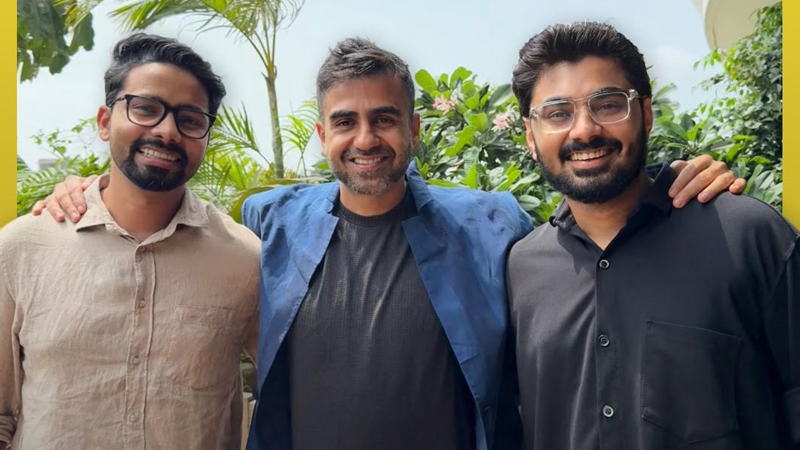
    MUMBAI: In a fresh twist to the Indian advertising playbook, Zerodha co-founder and a prominent investor Nikhil Kamath has put his weight behind One Hand Clap Media — a rising creative agency founded by former AIB heads Aakash Shah and Naveed Manakkodan.

    Kamath’s investment marks a vote of confidence in the agency’s mission to build content-first, digital-native storytelling that moves at the speed of the internet. In a marketplace where traditional campaigns are losing steam, One Hand Clap’s high-impact narratives and lightning-fast execution have made it a go-to name for Indian brands that want relevance and recall.

    Known for their campaigns for Swiggy, BGMI, Netflix India, Bumble, Cred, Ather, Emotorad, and Prime Video India, the agency has carved a reputation for weaving story with speed. From writing and producing ad films to running influencer and digital mandates, One Hand Clap offers end-to-end creative firepower.

    “Nikhil gets our DNA, and our visions align,” said One Hand Clap co-founder Shah. “We both never cared for the status quo; we have always aimed to disrupt it, defy the metrics and algorithms to tell stories, not just campaigns for our clients”.

    Co-founder Manakkodan added, “Nikhil’s investment validates our thesis that in today’s rapidly evolving digital landscape, speed and authentic storytelling are paramount. This partnership fuels our ambition to redefine the agency model, delivering impactful creative solutions with unparalleled agility”.

    For Kamath, the deal is part of a wider plan to back India’s rising creative and entrepreneurial talent. “Through this partnership, Kamath is betting not just on content but on the creators driving the next wave of Indian brand-building”, the company noted.

    The creative agency space is seeing a churn, with speed, relatability and innovation becoming non-negotiables. One Hand Clap’s sharp creative engine, coupled with Kamath’s entrepreneurial acumen, signals a new wave in adland where business meets culture, and memes could be just as powerful as media buys.
     

  • Dentsu appoints Jeff Greenspoon as first-ever global chief client officer

    Dentsu appoints Jeff Greenspoon as first-ever global chief client officer

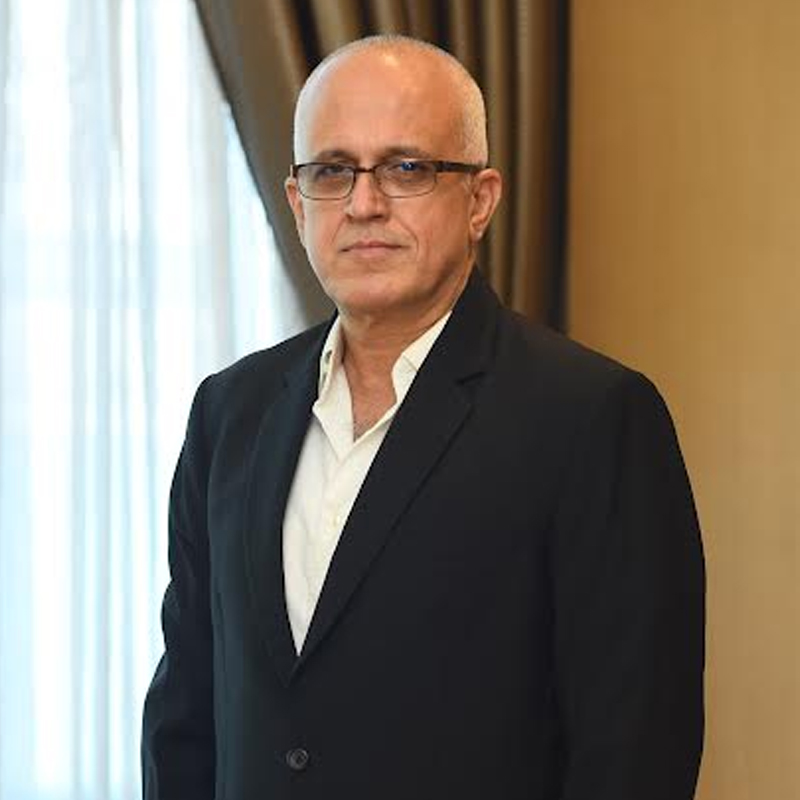
    MUMBAI: Leadership shake-ups at Dentsu just got more interesting. In a bold move, the agency has appointed Jeff Greenspoon as its first-ever standalone global chief client officer (CCO), marking a significant shift in its leadership structure. Greenspoon, a Dentsu veteran of over a decade, will continue serving as chief business officer, Americas, while taking on this expanded role.

    Reporting directly to Dentsu president and global CEO Hiroshi Igarashi, Greenspoon will spearhead client-centric global solutions, ensuring the agency delivers cohesive and strategic services across its international portfolio. His new mandate includes developing long-term strategies, fostering client relationships, and overseeing the global vision for Dentsu’s top-tier accounts.

    This appointment represents a first for Dentsu, which previously had a dual leadership model. Jacki Kelley, the last executive to hold the global CCO role, also served as CEO, Americas, before her departure in 2023. Greenspoon’s elevation signals Dentsu’s renewed focus on enhancing client services at a global scale.

    Having played an instrumental role in shaping Dentsu’s business strategy, Greenspoon previously led Dentsu Canada as CEO and was co-founder and CEO of digital creative agency Spoke, which Dentsu acquired in 2014. His track record in merging innovation, technology, and creative solutions makes him the right fit to lead Dentsu’s next evolution in global client strategy.

    With Greenspoon at the helm, Dentsu aims to strengthen its global service capabilities, optimise client engagement, and set new standards for client-focused innovation. The agency is betting big on its future—and with Greenspoon leading the charge, that bet looks like a smart one.


  • Advertising Club Madras launches 27th PGDA program to empower creatives

    Advertising Club Madras launches 27th PGDA program to empower creatives

    MUMBAI: Ever wondered how the masterminds behind the most iconic ads cracked the code of grabbing your attention? From billboards that dominate cityscapes to campaigns you just can’t get out of your head, these advertising wizards didn’t stumble upon their craft overnight.

    Well, the modern world is here, and now you can study something far beyond traditional textbooks—something that promises a thrilling creative journey.

    If you’ve ever dreamed of becoming the next advertising guru, with your campaigns taking over every billboard and social media feed, here’s your golden ticket.

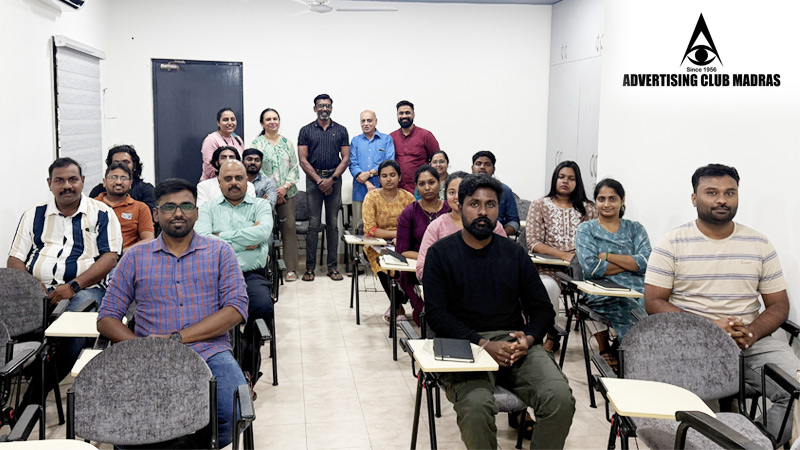
    The Advertising Club Madras is back, launching its 27th Post Graduate Diploma in Advertising (PGDA) program. A dynamic weekend course crafted for ambitious minds, it blends creativity and strategy to transform you into an industry-ready professional. It’s not just a course; it’s a gateway to a world where your ideas define the future of advertising.

    The event, hosted in Chennai, was graced by notable dignitaries, including Advertising Club Madras president, Balasubramanian S.; PGDA Sub-committee, joint secretary & chair, Kavitha Srinivasan; Executive committee member, Rakesh; and Advertising Club Madras, former president & a program tutor, Jagannath Ramasamy.

    This year’s 75-hour weekend program has enrolled over 25 enthusiastic students, offering a hands-on curriculum that covers diverse aspects of advertising, media, and creativity. With a focus on equipping students with real-world knowledge and skills, the program continues its legacy of producing over 500 successful alumni from its previous 26 batches.

    Expressing his pride in the initiative, Balasubramanian remarked, “This program is a flagship initiative of the Advertising Club Madras and is one of the most unique in the Indian advertising fraternity. With 27 batches and over 500 alumni, the PGDA program continues to inspire and shape the next generation of advertising professionals. This year, we’ve also offered scholarships to deserving students, making this opportunity accessible to all.”

    Adding to this, Advertising Club Madras secretary, Surej Salim Kumar said, “The PGDA program is a testament to the legacy of Advertising Club Madras. Each year, it evolves to reflect the changing dynamics of the industry, ensuring students receive top-notch training from some of the most accomplished leaders in advertising and media. I’m excited to see this batch embark on their journey toward professional success.”

    Highlighting the program’s mission, Srinivasan stated, “This program represents our club’s core mission of fostering knowledge, creativity, and growth in advertising. The overwhelming response and enthusiasm from this year’s students are heartening, and I am deeply grateful to the tutors and mentors who bring unmatched value to this program.”

    The PGDA program brings together an impressive roster of mentors, including:

    .  Blue Noodles, consultant, K. AnbuChezhian

    Printers Forum India president, Narayanan

    .  The Hindu Group, CEO, L.V. Navaneeth

    .  Kaybase director, Poornima Bhaskaran

    .  Catalyst Public Relations Pvt Ltd, founder & director, Ramkumar Singaram among others.

    The esteemed faculty promises to guide students through practical insights and industry best practices, offering an unparalleled learning experience.

    The Advertising Club Madras continues to set benchmarks in advertising education with its innovative and inclusive approach. By merging academic excellence with real-world industry exposure, the PGDA program empowers aspiring creatives to navigate and excel in the fast-paced world of advertising.

  • Palasa Creative House: Crafting success through 360° creative brilliance

    Palasa Creative House: Crafting success through 360° creative brilliance

    Mumbai: Palasa Creative House is an energetic hot shop with a clear focus on doing winning creative for our clients. As Raymond Rubicam once said, “The only purpose of advertising is to sell; it has no other justification worth mentioning.”

    The legend goes that Palasa is one of the seven most sacred trees with great cult powers in Indian mythology and a favourite flower of Goddess Durga. Palasa was set up in 2004 by Sandeep Bomble with a desire to work without limitations and explore new horizons. And we are definitely on one rocking trip!

    The company has successfully cultivated a breeding ground for young talent and has created the perfect mix of experience and energy for our clients to fly high. Palasa has been instrumental in the journey of brands from scratch to success.

    The agency has displayed its abilities across a wide spectrum of clients, ranging from technology to healthcare, fashion and lifestyle, service and consulting.

    The agency’s cutting-edge communication solutions have carved out a unique space for Palasa in the advertising arena. The agency has won numerous awards including New York Festival, ABBYs and significant features in ‘The Archive’. Palasa has won awards across categories such as Best TVC, Best Radio, Best Print, Best Corporate Identity, Best Activation and Best Packaging.

    A 360°communications agency with expertise in Brand Identity, ATL, BTL, Design, Activation, Packaging, Digital marketing, website development, and Brand Development Consultancy.

    Indiantelevision.com in an email interaction spoke to the founder & director of Palasa Creative Place Sandeep Bomble

    Edited excerpts

    On  Palasa Creative House standing out as a 360-degree communications agency

    Palasa Creative is based on a solid communication strategy that is implemented throughout from corporate identity brand positioning to digital to television communication and other mediums. Palasa Creative House distinguishes itself as a 360-degree communications agency through its comprehensive and integrated approach to servicing clients’ needs. The agency offers a full spectrum of services, covering branding, advertising, digital marketing, public relations, and more. This enables clients to access a cohesive suite of solutions under one roof, ensuring seamless consistency across all communication channels. Palasa’s ability to provide end-to-end solutions streamlines the process for clients and facilitates effective cross-channel strategies that deliver impactful results.    

    On Palasa striking a balance between strategic planning and creative innovation in its advertising solutions

     Palasa is extremely strong in creativity which is based on a strategic plan which in turn is result oriented. Palasa excels at finding the equilibrium between strategic planning and creative innovation by intertwining data-driven insights with artistic ingenuity. The agency starts by deeply understanding a client’s goals, target audience, and industry landscape. With this foundation, Palasa’s creative team crafts advertising solutions that not only captivate audiences with their originality but also align with the strategic objectives. Regular collaboration between the strategists and creatives ensures that each campaign resonates creatively while remaining strategically aligned, resulting in solutions that are both captivating and effective.

    On factors that Palasa considers when designing packaging solutions that resonate with consumers and convey the brand’s essence

    Palasa Creative is based on strong consumer insights therefore every design aspect of packing is based on logic, emotion, differentiation, and finally attractiveness. When designing packaging solutions, Palasa considers various critical factors to resonate with consumers and convey the brand’s essence. These factors include the target audience’s preferences, market trends, brand identity, and the product’s unique value proposition. Palasa carefully selects colours, typography, imagery, and materials that evoke the desired emotions and perceptions in consumers. The agency also ensures that the packaging design is functional, aligns with the brand’s messaging, and stands out on retail shelves. By combining aesthetics with functionality and brand storytelling, Palasa creates packaging that leaves a lasting impact on consumers.

    On Palasa embracing digital channels to effectively reach and engage target audiences in today’s digital landscape

    Digital communication is not about creating posts and bombarding them it still needs a strong communication strategy which is different from regular communication but it should fall under one brand umbrella whether it’s digital or non-digital. Palasa has adeptly embraced digital channels to reach and engage target audiences in the modern digital landscape. The agency recognises the prevalence of online platforms and tailors its strategies accordingly. Palasa employs data analytics to understand online behaviour and preferences, optimising content and campaigns for maximum engagement. The agency leverages social media, content marketing, email marketing, and search engine optimisation to create a comprehensive digital presence. By staying current with emerging technologies and platforms, Palasa ensures its clients remain visible and engaging across various digital touchpoints.

    On Palasa cultivating a breeding ground for young talent in the advertising industry

    Sandeep Bomble from Palasa comes from an experience from the best advertising agency Ogilvy and jwt, therefore, the training and exposure that the young talent gets is equivalent to the top company. Palasa has effectively cultivated a nurturing environment for young talent in the advertising industry through a combination of strategies and initiatives that prioritise learning, creativity, and professional growth.

    Mentorship Programs: Palasa offers structured mentorship programs that pair experienced professionals with young talents. This mentorship provides guidance, advice, and skill development opportunities, allowing newcomers to learn from industry veterans and gain insights into successful advertising practices.

    Internship Opportunities: The agency provides internships to students and recent graduates, offering hands-on experience in real-world advertising projects. Interns work closely with seasoned professionals, participating in brainstorming sessions, campaign execution, and client interactions. This exposure helps them understand the industry’s dynamics and apply theoretical knowledge to practical situations.    

    On Palasa helping clients understand and leverage the importance of branding in their marketing strategies

    Palasa excels at guiding clients through the intricacies of branding’s role in marketing strategies. The process starts with a comprehensive analysis of the client’s target audience, industry trends, and competition. By connecting these insights to branding principles, Palasa demonstrates how strong brand identity can differentiate a business and create emotional connections with customers. This understanding is leveraged to craft compelling brand stories, visuals, and messaging that resonate with the intended audience. Through workshops, presentations, and collaborative sessions, Palasa educates clients about how branding can enhance recognition, loyalty, and perceived value, leading to more effective marketing strategies.

    On investing in effective advertising positively impacts a company’s expansion and revenue generation

    Investing in effective advertising is a key driver of a company’s expansion and revenue generation. Well-designed and strategically placed advertisements increase a brand’s visibility, reaching a wider audience and boosting brand awareness. This heightened exposure often translates to increased sales and customer acquisition. Moreover, advertising can position a company as an industry leader, instilling trust and credibility among potential customers. By consistently engaging with target audiences through advertising channels, companies remain top-of-mind and experience higher customer retention rates, ultimately contributing to sustainable growth and revenue generation.

    On the advantages of incorporating advertising into the initial stages of operation to establish a strong brand foundation

    Incorporating advertising in the initial stages establishes a strong brand foundation by jumpstarting brand recognition and credibility. At this stage, businesses are competing for attention and establishing their place in the market. Strategic advertising introduces the brand’s unique value proposition, helping it stand out amidst the competition. Early exposure helps build a loyal customer base, enabling the company to gain traction quickly. By embedding the brand identity into the target audience’s consciousness from the outset, businesses can create lasting impressions that continue to pay dividends as they grow.

    On Palasa leveraging its established reputation to attract and retain clients across various industries

    Palasa’s established reputation serves as a testament to its expertise and track record, which significantly contributes to attracting and retaining clients across industries. The agency showcases its past successes through case studies and testimonials, demonstrating its ability to deliver tangible results. Additionally, Palasa’s reputation fosters word-of-mouth referrals from satisfied clients, further enhancing its credibility. By consistently staying updated on industry trends and adopting innovative approaches, Palasa reinforces its reputation as a dynamic and adaptable partner, capable of meeting the unique needs of diverse industries.

    On Palasa approaching the challenges of branding and identity in today’s competitive market

    In today’s competitive market, Palasa tackles branding challenges by prioritising research, innovation, and holistic strategies. The agency conducts thorough market research to identify trends and consumer preferences, ensuring that branding efforts remain relevant and impactful. Palasa’s creative team then focuses on developing unique and memorable brand identities that resonate with modern audiences. The agency also emphasises storytelling and emotional connections to cut through the noise of the competitive landscape. By staying agile and embracing emerging technologies, Palasa adapts its strategies to effectively address the evolving challenges of branding in today’s market.

    On the difficulties faced during his entrepreneurial career while setting up Palasa Creative House

    During its entrepreneurial journey, Palasa Creative House likely encountered challenges such as initial resource constraints, establishing a client base, building a talented team, and managing cash flow. Navigating the complexities of the competitive agency landscape and maintaining a consistent stream of projects can be demanding. Additionally, striking the right balance between creativity and client expectations, especially in the early stages, could have posed challenges. Overcoming these hurdles likely required careful financial planning, effective networking, continuous skill development, and a resilient mindset.

    On Palasa helping startups understanding the importance of investing in advertising from the beginning to fuel their growth

    Palasa educates startups about the vital role of early-stage advertising in fueling growth by emphasising its impact on brand awareness, customer acquisition, and market positioning. The agency showcases how a well-executed advertising strategy can help startups swiftly enter the market, gain recognition, and attract their target audience. Through workshops, consultations, and data-driven presentations, Palasa highlights how startups can maximise their limited resources to create a strong initial impact. By sharing success stories of startups that benefited from early advertising, Palasa encourages startups to view advertising as an essential investment rather than an optional expense.

    On techniques or approaches  that Palasa recommends to individuals or teams facing creative blocks during the brainstorming and ideation process

    Embrace Learning: As creators, we thrive on fresh insights and information. Learning is a never-ending journey. Attend workshops, take part in webinars, or read insightful books in your field. When it comes time to get creative, the more you know, the more resources you will have at your disposal.  Seek Feedback and Collaboration: As much as we enjoy working alone, working with other creatives can be incredibly rewarding. Bounce ideas off each other, brainstorm together, and be open to constructive criticism. Feedback not only improves your work but also helps you grow as a creative professional

  • GUEST ARTICLE: Artificial intelligence: The key ingredient to boost the growth of the advertising industry

    GUEST ARTICLE: Artificial intelligence: The key ingredient to boost the growth of the advertising industry

    Mumbai: For a layman, the term “artificial intelligence” is usually associated with robots and voice assistant software like Alexa and Siri or Elon Musk’s self-driving cars. Many people don’t think about the scope of AI beyond these concepts. However, the aforementioned use cases of AI are just the tip of the iceberg.

    In reality, the power of AI cannot be summarised in a few words or applications, as an infinite number of AI-enabled tools and interfaces are working behind the scenes to make the lives of consumers and other stakeholders a lot easier.

    This is especially true in the business world. AI has played a pivotal role in putting products and services in front of potential customers through social media or other means, even though it wasn’t widely recognised or understood. An impactful form of marketing, AI-enabled advertisements present themselves before customers only after learning and assessing their online preferences, shopping behaviour, and other necessary inputs.

    And soon, the fast-emerging advertising industry realised that the days of manually asking for customer inputs are behind us, as AI can do this job in the background. This was just the beginning of an AI hurricane that swept the advertising world off its feet. Automation technology evolved, and so did its applications.

    Against this backdrop, we will discuss AI’s role in the advertising industry and its advantages in-depth. Without further ado, let’s dive in!

    The emergence of adtech: A comprehensive overview

    If there’s one industry with a genuine case of AI fever, that is advertising, aka adtech. From the desktop sidebar ads in the 1990s to mobile advertising and the user recognition capabilities of CTV marketing, the advertising industry has evolved dramatically over the past two decades. Everywhere the eye can see today is likely an advertisement. One can thank the internet and new technologies like AI and ML (machine learning) for this drastic change.

    Gradually, as remote access to stable internet connections and the widespread distribution of smartphones and smart televisions increased, the pathway to video and online ads became clearer. Some significant industry experts believe that the launch of the iPhone and the consequent smartphone market growth played a considerable role in augmenting the acceleration of adtech, specifically online advertising.

    A 2021 InMobi report revealed that programmatic mobile video ads had registered a 194 per cent increase in India. This proves the widespread adoption of video ads as a more effective source of advertising than others, as they are better at connecting and engaging with the audience. But this is just one example of the new wave that enveloped the advertising industry and pushed it toward the path of unprecedented success.

    The latest tools and approaches are taking the adtech world by storm

    Interactive ads: Going over and beyond

    Interactive advertising is a contemporary marketing technique that enhances customer participation. The primary focus is to ensure that consumers engage with and interact with the ad, directly or indirectly, and provide real-time feedback on the relevant campaign. The idea is to not limit the audience from viewing the ad but to make them feel its presence and relevance. There are different ways to implement interactive advertising. Here are a few pioneering examples:

    1. 3D impact: A solution that offers immersive experiences to consumers by leveraging advanced animations to deliver multiple messages in one video. Utilising this, advertisers can improve customer brand recall, enhance the ROI, and make a high impact.

    2. 3D wobble: A solution that delivers compact and efficient information through a comprehensive UX powerhouse. It adds a noteworthy twist to ads and increases user engagement, brand conversion ratio, and click through rate (CTR).

    3. Shoppable unit: A solution that appears as a deck inside a conversational flow. It allows customers to swipe and check out the sequence of product images. This is an effective solution for brands gearing up to streamline their sales and marketing strategies.

    CTV advertising: Think bigger

    Connected TV advertising (CTV) is a type of advertising approach placed on any smart TV with the facility to connect to the internet. CTV essentially depends on a large TV screen, which enables advertisers to engage audiences in a linear TV-like environment.

    It allows advertisers to create a one-to-many relationship with the audience (propelled by co-viewing) compared to other advertising methods where advertisers establish a one-on-one relationship with their target customer base. There are several ways to implement CTV advertising. Here are a few suggestions:

    1. Split screen: The split screen technology offers viewers a non-disruptive, non-intrusive, side-by-side creative display. This ensures that consumers don’t miss any key details or pay attention to the content they are consuming while consciously or subconsciously watching the display ad.

    2. Brand assimilation: By harnessing the power of mighty brand assimilation, advertisers can manipulate visual effects and place brands in a place where they get seen by customers seamlessly and effortlessly.

    3. Persuasive overlay: This approach includes a contextualised and commercial interactive video that connects with the audience through powerful content. The video is created in such a fashion that consumers can quickly connect the display with the brand.

    Wrapping up

    The use cases, solutions, and approaches mentioned above clearly demonstrate that AI is not the distant future of adtech but its present. This remarkable technology plays a crucial role in helping advertisers deliver highly engaging and non-intrusive ads while providing incremental revenue to publishers. Additionally, given that AI can automatically generate the ad while keeping customer preference in mind, advertisers don’t need to engage their manual workforce for such tasks and can easily concoct their next ad campaign.

    AI has made it incredibly easy for advertisers to leverage its many benefits while simultaneously saving money and optimising efficiency to a noteworthy extent. Adequately handling this can improve the overall effectiveness and ROI of ad campaigns, making the entire concept more rewarding.

    The author of this article is VDO.AI founder and CEO Amitt Sharma.

  • GUEST ARTICLE: What are the advantages of the advertising industry with the new 5G technology

    GUEST ARTICLE: What are the advantages of the advertising industry with the new 5G technology

    Mumbai: In the recently ended spectrum sale, India auctioned 51,236 MHz of spectrum to incumbent operators for Rs 1,50,173 crore across several 5G networks. This implies a speedier experience for customers, with mobile devices interacting with wireless networks significantly faster and users seeing enhanced download and upload speeds. According to a Deloitte analysis, India’s digital economy is expected to reach one trillion dollars by 2025 as a result of growing smartphone use, fast internet penetration, and the acceleration of mobile broadband and data connectivity. However, 5G is expected to be the primary driver of this expansion.

    5G, like the radio, the internet, and other disruptive technologies before it, will allow advertisers to better engage customers by sending enormous amounts of data at speeds significantly quicker than current 4G technologies allow. Although 78 per cent believe 5G technology will be superior to 4G, 95 per cent are unaware of which 4G features are currently available on their devices. More than 70 per cent are prepared to pay for new technologies (with payment used as a proxy for perceived value). Faster downloads are significant for 71 per cent of 5G users. Respondents do not grasp the phrases “connectivity,” “capacity,” and “latency” and place a low value on these benefits. Here are the advantages for the advertising industry with the new 5G technology:

        Making your creatives suitable for 5G users.

    5G users interact with gadgets in a unique way, which can assist in personalising advertisements to what they’re most interested in. 5G has several concrete benefits, such as downloading a two-hour HD movie in roughly 18 minutes, live streaming a concert or live event to friends or family in HD, and low-latency gaming with 30-50 millisecond ping. However, tailoring your ads to fit consumers’ preferences is extremely critical for 5G over 4G. Users that have a strong interest in gaming, entertainment, and live streaming are more likely (92 per cent) to pay for 5G technology and purchase a 5G enabled phone early on, compared to the overall average (81 per cent). With all of the new 5G updates, there is also a huge opportunity to get creative with brand advertisements and innovate with new benefits.

        5G technology unlocks AR/VR advertising

    Because of 5G’s low latency and rapid download rates, advertisers and publishers will have more options to build new streaming media formats with better capabilities. As customers spend more time on 5G phones, they want new experiences to justify the higher cost. Therefore, advertising must capitalise on this. AR and VR have several applications. Over the next year, it is predicted that 100 million consumers will utilise augmented reality for purchasing. Creating increasingly meaningful, immersive experiences is the future of online engagement, and 5G will usher in those capabilities more naturally.

        Analytics will go real-time

    Already, a fraction of the data we can handle and analyse is considered real-time data. 5G will enable the integration of a broader variety of activities and impressions in real time. If a consumer makes a purchase in the future, they may no longer get any advertising connected to that product or product category. Fundamentally, this will improve targeting, segmentation, customer experience, and customer journey, as well as brand and consumer efficiencies.

        Serve advertisements that leverage 5G advantages

    Users may interact with adverts in novel ways thanks to the ability of 5G for advertisers to create more creative and original immersive content. Real, realistic on-device advertising experiences may be made possible in various ways with minimal latency. Advertisers may display full-screen commercials that let viewers see how a character or product appears in various settings that they can design and modify right from the creative. Additionally, brands may employ VR to present a 360-degree image of the gaming or social environment. Greater capacity also allows for the production of advertisements in a wide variety of audio and video formats. 5G technology has a tonne of unrealized potential, so businesses should be committed to coming up with fresh approaches to interacting with consumers through advertising.

    As with previous technological breakthroughs, advertisers will need to have their fingers on the pulse in order to fully capitalise on the new opportunities presented by 5G and avoid falling behind. Fundamentally, it’s fantastic for innovation that our most imaginative ideas may now confront fewer technological constraints. However, adapting our strategy to the new digital context will be a problem.

    The author of this article is Hotstuff Medialabs founder and CEO Arun Fernandes.

  • Global advertising spend to grow over 15 per cent in 2023-2024, forecasts Dentsu

    Global advertising spend to grow over 15 per cent in 2023-2024, forecasts Dentsu

    Mumbai: Dentsu global ad spend forecasts indicated that advertising spending would increase globally by 8.7 per cent in 2022. Ad spending in Asia Pacific is anticipated to reach $250 billion.

    The advertising spending growth rate is predicted to be 16 per cent this year and is expected to increase 15.2 per cent in 2023 and 15.7 per cent in 2024.

    The reforecast of media investment is released in the context of escalating media price inflation, geopolitical tension, upcoming key elections, and one of the most anticipated global sports events of the year, the FIFA World Cup. Due to continued uncertainty, the current and historical comparison data has also been adjusted to remove Russian investment from the forecast, to better reflect the rest of the international ad spend trends and predictions.

    According to the forecast, spending on advertising in China is expected to rise by 4.0 per cent in 2023 and 5.4 per cent the following year.

    Speaking in this context, Dentsu international CEO media APAC Prerna Mehrotra said, “The latest Dentsu Ad Spend July 2022 points to a continued recovery despite another year of economic uncertainty, with APAC 2022 ad spend of $250 billion, based on a growth forecast at 5.1 per cent. However, continued lockdowns in key markets, geo-political tension and ongoing supply logistics issues could add pressure on businesses with a cascading impact on marketing spends.”

    Looking ahead, Dentsu expects the 2023 global advertising market to increase by 5.4 per cent to reach $778.6 billion followed by a further 5.1 per cent increase in 2024.

    Mehrotra added, “This year, India (+16.0 per cent), Malaysia (+11.0 per cent) and Hong Kong (+10.1 per cent) have all achieved double-digit growth. Digital continues to drive growth accounting for 60.7 per cent of all spending in the Asia Pacific with social, video and search predicted to lead to digital growth. Advertisers increase focus and resources into e-commerce, display, and search budgets to respond to the new consumption habits. Marketers need to better understand their audiences and meet their needs with relevant messaging as online behaviour surges in Asia. Use of first-party data to identify the most profitable customers, combined with third-party data to target the prospects in the most efficient channels will help drive efficiency and manage costs.”

    Dentsu International CEO- media and global clients Peter Huijboom said, “Even with everything which has happened in recent months, not least the protracted war in Ukraine and its international repercussions, the advertising recovery remains strong on a global scale. And, despite factors such as inflation putting pressure on household budgets, combined with 2021 being a tough comparative year, we have only marginally revised our 2022 global growth forecast by just 0.4 percentage points.

    “Despite global economic uncertainty, brands are continuing to prioritise their spend in channels which will give them both the digital flexibility and return they seek. It is through our clear and robust insight and understanding of the market we can work with clients to navigate what’s next and partner with them on their future investment,” he added.

    Overall ad spends growth in Asia Pacific is boosted by key sporting events such as Indian Premier League, FIFA World Cup, Beijing 2022 Winter Olympics and Paralympics, and country elections in Australia and India. Digital continues to be the powerhouse driving APAC ad spend, as the fastest growing medium at 11.5 per cent to reach $151.7 billion, a 60.7 per cent share of total ad spend. Fuelling this is the double-digit growth of programmatic (32.3 per cent), paid social (27.4 per cent), and digital display (13.3 per cent) in 2022. In Southeast Asia (SEA), TV spend is still significant, with the largest share (57.2 per cent) of total SEA spend (Indonesia, Singapore, Malaysia, Philippines, Thailand and Vietnam), and a growth rate of 4.6 per cent.

    Globally, out-of-home (OOH) and cinema will both see encouraging double-digit growth in 2022 (respectively 11.5 per cent and 19.6 per cent). Radio is also forecast to grow, much faster than initially considered with a new reforecast of 5.0 per cent for the year, up from 2.0 per cent in the January predictions – which is mainly due to faster return to office working. As with previous predictions, ad spend in newspapers and magazines will continue to decline.

    In 2022, America will be the top ad spend region at $329.6 billion and the most dynamic with spending increasing by 13.1 per cent. India at 16 per cent growth will stay ahead of the US at 12.8 per cent and Brazil at 9 per cent as the fastest growing market.

    Globally, industry-wise, the greatest growth is forecast for the technology sector (+11.3 per cent), which has benefited from people’s greater reliance on digital devices. Retail is one of the key sectors of spend growth at a rate of 11 per cent in 2022. The sector is driven by several factors including the significant growth of e-commerce, the entry of new players, and the introduction of emerging retail platforms. In Asia Pacific, technology, automotive and cosmetics and personal care are among the fastest growing sectors.

    This dentsu Global Ad Spend Forecast not only looks at the data from 58 markets, but also examines some of the key factors impacting ad spend shift, such as inflation increases, sustainability regulation, acceleration of gaming as an ad medium, doubling down on addressable media and also the importance of buying attention as core metric

  • Infectious Advertising bags creative mandate of Independence Brewing Company

    Infectious Advertising bags creative mandate of Independence Brewing Company

    Mumbai: Infectious Advertising has won the creative mandate for Independence Brewing Company (IBC). The mandate for Infectious Advertising is to manage brand creative development and brand planning and strategy for all four locations.

    Commenting on the appointment of Infectious Advertising as its creative agency, Brewing Company promoter – independence Anirudh Khanna said, “Choosing the right communication partner wasn’t easy! We were looking for that perfect balance between creativity and digital know-how. Infectious fit the bill perfectly with their experience.”

    Infectious Advertising managing director and co-founder Nisha Singhania said, “We had our 9th-anniversary celebrations at IBC, and fell in love with the place. Both their food and craft beer are brilliant. We are delighted that they have chosen us as their communication partner. Who better than fans to work on your business.”

  • GUEST COLUMN: Marketing in the metaverse – A giant leap for the advertising world

    GUEST COLUMN: Marketing in the metaverse – A giant leap for the advertising world

    Mumbai: The pandemic made digital engagement very mainstream. Nowadays, people are up for exploring the variety of tech innovations available in the virtual space. During the pandemic, they switched from offline engagement to online engagement, whether in the field of shopping, eating, gaming, lifestyle, etc. This switch resulted in wide online social traffic, especially in the immersive gaming experiences through the use of augmented reality (AR) and virtual reality (VR).

    With 4.8 billion active internet users worldwide, the online social sphere is growing to accommodate new kinds of communication, engagement, and entertainment for a tech-savvy generation. A recent concept that has come alive in the online social sphere is metaverse. It is backed by a fully working virtual economy, much based on cryptocurrencies and digital items and assets such as nonfungible tokens (NFTs).

    Metaverse, the internet’s evolution, is emerging as a potential tech innovation in the spheres of marketing and social connection. It encapsulates a set of immersive virtual experiences where people can exist and engage with each other on virtual platforms. It builds rich user engaging virtual spaces using augmented reality (AR), virtual reality (VR), blockchain, and digital media principles. Merging the virtual, physical and augmented reality in real-time, metaverse allows interaction in a virtual 3D environment through avatars.

    The worldwide metaverse market is worth $63.83 billion in 2021 and is expected to be worth $1,527.55 billion by 2029. It implies growth at a CAGR (compound annual growth rate) of 47.6 per cent between 2022-2029. Prodigious companies are eagerly investing in the metaverse market. Therefore the marketing and advertising companies have found their newly developed fondness for the metaverse. And true enough, the newly developed concept projects ample opportunities for tech-savvy entrepreneurs and brands to advertise themselves through it.

    Metaverse creating value in advertisement wold

    Marketing space has continuously evolved in time from radio to television to the internet and now metaverse. The early days of social media saw a rise of social marketing agencies likewise for metaverse, these agencies will have to, urgently, explore virtual and metaverse practices lest new metaverse dedicated companies prop up to better engage customers.

    Marketers constantly seek out customers, whether in person or online, therefore, the expansion of metaverse will undoubtedly be one of the primary future playgrounds for the digital advertising sector. Experiments through influencer marketing are also being undertaken in the metaverse for engaging customers in metacommunities. Virtual reality will revolutionise business and marketing attitudes by serving as a medium for invention, discovery, identification, expression, connection, and socialisation.

    Some companies have already taken a lead. Big brands like Google, Facebook, Microsoft, Puma, Gucci, Nike, etc are making their way into the metaverse. For e.g Nike’s Nikeland, a virtual universe that offers sports venues, digital showrooms where people can dress their avatars, etc. Or M.A.C cosmetics that provide virtual make-up facilities or Fortnite, which introduced in-game concerts for its players. These moves will strengthen their digital foundation more.

    Some apparent benefits make it clear why the companies must explore the metaverse to create value in the advertisement world. Metaverse is believed to have a high engagement rate. Tech-savvy gen-z and millennials who engage in it are the future customers. They spend their significant time on the internet. Companies and brands must step into the world of metaverse to advertise and capture this expansive lot of audience. Furthermore, because it is a novel concept in the market, it is less expensive than standard advertising modes. Therefore, the first-mover advantage will have a cost-benefit for the businesses.

    The data-driven interaction is another benefit. The data collected in the virtual 3D environment will come from real people that are operating as avatars. This data can be analysed and used to forecast or make business scaling strategies both for the online and offline market. Not only tech companies and business industries, but even government entities are keen on investing in the multiverse. Several innovative advertising methods have been explored so far. Use of non-fungible tokens, collectibles, cryptocurrencies, in-game activities, and virtual billboards are some to name.

    Direct to avatar sales values at $54 billion and innovative entrepreneurs are already envisaging the ways for new income streams. From real estate purchases to online AR / VR-based offices to gaming, all is happening in the metaverse. Silicon Valley sees it as the next generation of the internet. Facebook has made a significant investment in its growth. Snapchat has incorporated augmented reality components into its services. Thus, it is bound to become a parallel reality because technological innovation is here to stay.

    Data privacy, security and copyright issues are challenges that will prevail for now, but that must not prevent companies from exploring. Smart advertisers will succeed in any reality if they focus on matching their needs with the needs of their customers to produce useful experiences.

    The author is Wing Communications CEO and founder Shiva Bhavani