Tag: advertising expenditure

  • “Brand leaders are only brand leaders by heavy expenditure”: Willpower Group’s Jayant Bhat

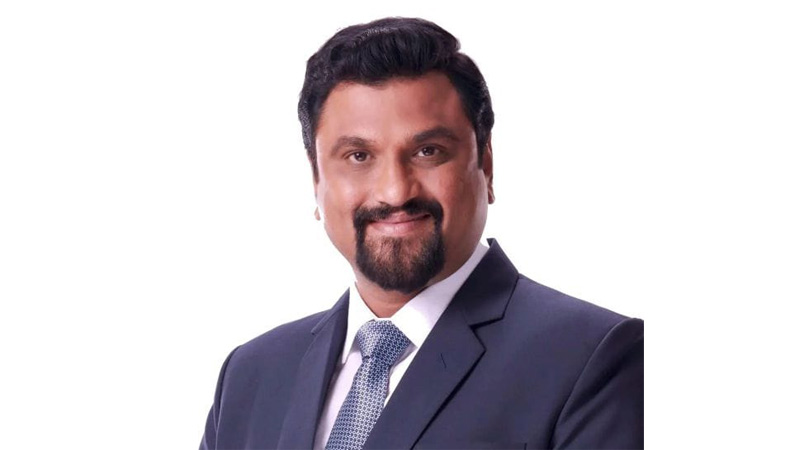
    “Brand leaders are only brand leaders by heavy expenditure”: Willpower Group’s Jayant Bhat

    Mumbai: The advertising industry is gaining momentum after COVID-19 due to large exposure to digital platforms. Large conglomerates are spending heavily on advertising consumers and also prefer quality products. In the current scenario to meet equilibrium companies are meeting their working capital needs. Hence revenue generation of the company is facilitated by rising cost of production and spending on marketing and advertising brands especially in the FMCG sector (Fast Moving Consumer Goods) increased advertisement costs almost by 10 % or more.

    Artificial Intelligence (AI) tools and the introduction of Chat GPT bring ads closer to the target audience. It is helping consumers to make the right decisions to buy a product. Collective market information and intelligence consumers are getting on one click. However, it is not sufficient for brands to collect information depending on AI. It cannot assure arithmetic and qualitative accuracy but it helps brands to identify consumer purchasing behaviour.

    As per a report by GroupM advertising expenditures of Indian companies are expected to grow by 15.5% on a year-on-year basis. In 2022 the FMCG sector had 38 % percent itself in overall digital advertising expenditure. According to this year’s GroupM’s ‘ This year, Next Year’ 2023 Global End of the Year Forecast, Indian adex (Advertising Expenditure) grew by 11.2 per cent anticipated to generate Rs 16.9 billion. In FY24 adex is expected to grow by 12.1 per cent to reach Rs 152740 crores. Increasing digital spending on the plate is allowing brands to maintain profit margins. Spending heavily on R&D (Research and Development) causes companies to raise prices along with advertisement costs.

    Marketer’s eye on D2C (Direct to Consumers) – With rising costs marketers are concentrating more on product offering directly to the consumers without any intermediaries, channels, or middlemen. Companies want to omit variable costs. The rising patterns of Affiliate marketing, and direct sales taking shape in the FMCG Industry.

    On this issue, Indiantelevision.com exclusively had interaction with Willpower Group of Companies chairman and CEO Jayant Bhat.

    Edited excerpts

    On Big Private FMCG players spending heavily on advertising budgets

    Large Private FMCG leaders have been into heavy advertising for decades now. They are brand leaders only due to heavy advertising and the ability to hold on to heavy marketing expenses along with scalability factors. Smaller start-ups have tried to scale based on burning money without sufficient reach. It would be a killer attempt to spend money heavily on marketing as FMCG is a low margin if attempted to scale on the basis of a distribution model. With changing times modes of advertising have changed and so have the psyche of consumers. So one must have a deep thought process to reach people.

    On finding the future of small retail businesses in rapidly changing technology

    Small retail businesses won’t be majorly affected as most of the smaller outlets are doing business on need-based requirements. This means as and when requirements arise customers visit them as they have been doing for since long time. There is space for everyone in the FMCG business arena. With the advent of DMART, everyone shouted that Kirana stores would be finished. With the advent of ‘ Big Basket’ ‘ Zepto’ etc, all thought Kirana stores will be killed. But nothing of that sort happened nor will happen. We are seeing Kirana stores are now taking orders on WhatsApp and delivering products at no extra cost.

    On looking at the current market segmentation of FMCG when it comes to revenue generation

    CMS (Current Market Segmentation) of FMCG varies business models and factors. Needless to say, FMCG will continue to grow by about 10 per cent to 12 per cent per annum. Newer categories and product variants will be introduced with a customer mindset ready to accept new concepts easily.

    On Willpower entering into a new concept of business structuring

    Willpower Group by design is into multiple businesses and multiple concepts. As our core business is consulting for scalability and mentoring to improve revenues as well as processes, we get good companies who are more than willing to tie up with Willpower and join with us.

    Our last venture is Dropservicing and we are launching the same in January 2024. We firmly believe that the Dropservicing business model is going to rule 2024 till 2034. Till now, we have focused on setting up manufacturing units and investing heavily in businesses that would give returns years later. Now we have decided to be an intermediary between service providers and service seekers.

    What typically happens is those who want services from freelancers are afraid that they will not get services as promised. We are building a network of freelancers who would get projects from us and will ensure that work is completed as promised. In case one freelancer fails to deliver we will get it done from someone else. It will be responsible for projects we take in hand.

    On people’s lack of awareness about organic and your take on spending on marketing

    Emphasising natural products is one thing and its reach is another. Pricing plays a major role for most Indians and keeping pricing as per the expectations of the majority of Indians. It is due to the price sensitivity of the Indian market the addition of chemicals and other ingredients to the maximum possible.

    But our business model is sustainable only under the direct-to-consumer business model. Our experience in the retail business has not been good. Our policy is against the heavy burning of money for customer acquisitions. Today companies burn about Rs 5 to earn one rupee revenue, forget profitability. We don’t spend anything on marketing other than direct marketing as well as free sources on FM, Instagram, etc. I have seen many brands coming and dying every year in the name of brand building only because of heavy spending.

    On the essence of your philosophy for the product and its marketing

    • If it’s not unique and different, it’s just not Willpower

    • Give a purity report to every customer and create awareness that they need to ask for a purity report from any company that sells it’s consumable products to them

    • Avoid chemicals or use chemicals to the minimum possible

    • Honouring commitments, showing transparency, and admitting mistakes

    • Focusing on the Direct to Consumers business model, using minimum expense on customer acquisition.

    • Promote the subscription-based model and acquire advance revenue through a subscription model.

    • This model helps in retaining customers for a longer duration

    • Let the quality speak than discounts

    On predicting something in the FMCG sector instead of e-commerce

    – E-commerce would switch over to M-Commerce i,e Mobile Commerce. In effect, it is e-commerce only. Customers today are used to convenience. Customers visit large format stores only for convenience. We are going to start our own e-commerce website www.sirfsale.com in January 2024. That is going to be our extension of the direct-to-consumer business model.

    The future would be with the ones who offer more convenience to consumers. Offering convenience is the key to success for every entrepreneur. Deep discounts are just fake whitewash and should not be considered a success because the customer is never loyal to brands that offer discounts. They keep rolling from one brand to another in search of discounts. So the burnt money to acquire such customers is often lost.

  • Adex to surge 20 per cent to reach ₹89,285 crore in 2022: Pitch Madison report

    Adex to surge 20 per cent to reach ₹89,285 crore in 2022: Pitch Madison report

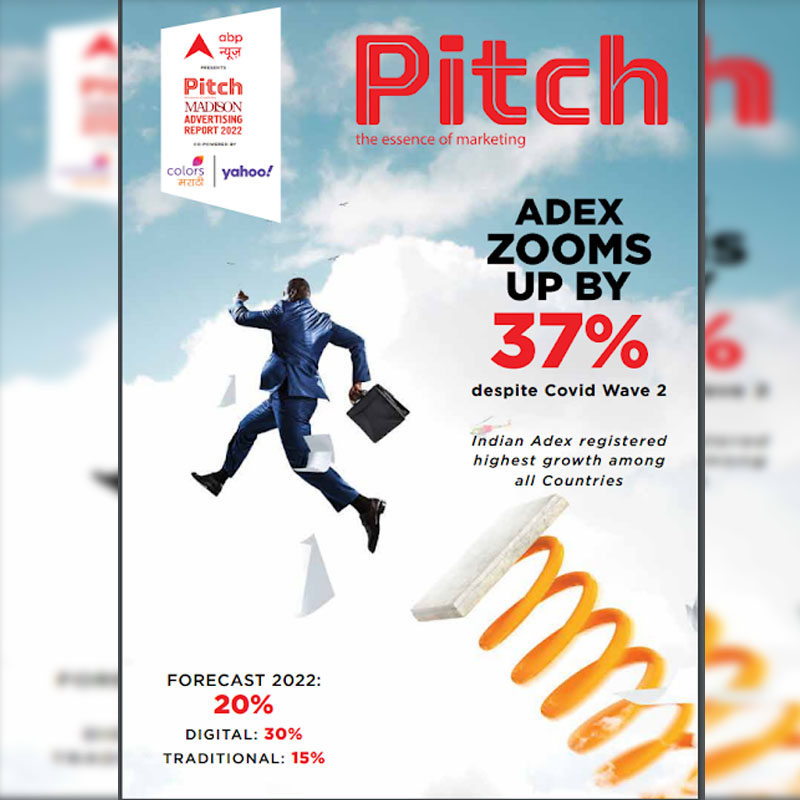
    Mumbai: Despite the lingering impacts of the pandemic, advertising expenditure is set to surge by 20 per cent to reach nearly Rs. 90,000 crore, according to the Pitch Madison Advertising Report 2022 (PMAR) unveiled on Wednesday.

    Launched by Pitch in partnership with Madison World, the report forecasted a robust recovery for the industry in 2022, with the traditional media, expected to grow at 15 per cent while digital to grow at 2X of traditional, and eventually overtaking Television in 2022.

    According to the report, India will continue to be the fastest-growing ad market in the world. The Indian Adex registered an unprecedented 37 per cent growth rising to almost Rs 74,000 crore – the highest growth that Adex has registered in nearly the last two decades. The AdEx figures in 2021, according to the PMAR report, surpassed those in 2020 by Rs 20,000 crore and was over Rs 6,500 crore higher than 2019, bettering it by 10 per cent.

    Television remained the only traditional medium that surpassed the pre-Covid revenues, recording a 25 per cent increase over 2020 and an 11 per cent increase over 2019. Print, the second-largest traditional medium registered a growth of 39 per cent in 2021, but could not cross its 2019 levels, having fallen short by as much as 17 per cent, as per the report. Similarly, OOH and Radio also grew significantly by 69 per cent and 36 per cent respectively, but were nowhere near the 2019 levels. Cinema, expectedly, was the only medium that could not even reach its 2020 level, with theatres shut across most states.

    TV and Digital now contribute 72 per cent of overall Adex. Digital Adex rose significantly by 50 per cent to make up for the lower than average 10 per cent growth in 2020.

    Madison World chairman and managing director Sam Balsara said advertisers should take advantage of the evolved digital infrastructure for distribution and advertising to prepare for future growth and invest in building their own D2C channels.

    [[{“fid”:”1061749″,”view_mode”:”default”,”fields”:{“format”:”default”,”alignment”:””,”field_file_image_alt_text[und][0][value]”:false,”field_file_image_title_text[und][0][value]”:false},”link_text”:null,”type”:”media”,”field_deltas”:{“1”:{“format”:”default”,”alignment”:””,”field_file_image_alt_text[und][0][value]”:false,”field_file_image_title_text[und][0][value]”:false}},”attributes”:{“height”:763,”width”:700,”class”:”media-element file-default”,”data-delta”:”1″}}]]

    Despite a large number of viewers moving to OTT and Connected TV, TV Adex put in a spectacular performance, registering a high spend of Rs. 28,151 crore. Advertisers’ faith in TV, Covid, or No-Covid continued and the medium commanded strong loyalty amongst both large and medium-size advertisers. In fact, with its 38 per cent share in 2021, India shared the credit of one of the top TV advertising countries along with Brazil (46 per cent), Italy (42 per cent) and Japan (34 per cent), as per the report.

    Whilst Q1 started softly with a de-growth of minus six per cent over 2019, each subsequent quarter gained steam with TV Adex growing in size with Q4 of 2021 registering a sharp increase over respective quarters of 2019- thanks to IPL- which started in Q2 but got suspended and resumed in Q4.

    Emerging categories : Ecommerce and ed-tech

    Ecommerce ad spend almost doubled from Rs 3,000 crore to Rs 6,000 crore taking its share up from 8.5 per cent to 13 per cent and making it the second-biggest category of Adex, as per the PMAR report. Ed-tech sector also doubled its volume on the back of brands like Byju’s, WhiteHat Jr, Vedantu and Unacademy. BFSI also increased its share from two per cent to three percent on the back of new age Fintech Companies and CryptoCurrency players. For the first time in many years, BFSI showed a massive growth of 70 per cent in TV Adex, said the report. FMCG, the most dominant sector with a share of 51 per cent in 2020, lost as much as five percentage points and was down to 46 per cent. Ecommerce increased its share from 11 per cent to 18 per cent and Education from four per cent to six per cent. Telecom dropped its share substantially from eight per cent to four per cent.

    [[{“fid”:”1061759″,”view_mode”:”default”,”fields”:{“format”:”default”,”alignment”:””,”field_file_image_alt_text[und][0][value]”:false,”field_file_image_title_text[und][0][value]”:false},”link_text”:null,”type”:”media”,”field_deltas”:{“2”:{“format”:”default”,”alignment”:””,”field_file_image_alt_text[und][0][value]”:false,”field_file_image_title_text[und][0][value]”:false}},”attributes”:{“height”:511,”width”:700,”class”:”media-element file-default”,”data-delta”:”2″}}]]

    TV AdEx by genre

    An analysis of ad volume beamed by various genres shows that all genres have grown significantly in 2021 versus a year ago with the exception of English movies which registered a de-growth for the second consecutive year. Hindi GEC continued to be the largest segment amongst all genres followed by Sports and then News, which came a distant third Sports genre on account of IPL, T20 WC and many bilateral cricketing tournaments across the globe, is 2nd in the pack in terms of absolute revenue. Despite the absence of Barc India ratings for the News genre, it registered a high growth of 19 per cent over 2019 and 29 per cent over 2020.

    The Digital Juggernaut

    The Digital Adex juggernaut moved ahead unabated, and grew by a phenomenal 50 per cent in 2021, taking Digital Adex to Rs. 25,438 crore. It even showed growth of 10 per cent in 2020, when all other mediums showed degrowth. Digital Adex has now reached a share of 34 per cent and is within striking distance of the largest medium TV. What helped Digital Adex grow, according to the report, is that it is firing on several verticals – Ecommerce, Search, Social and Video. With online sales galloping, the intense competition now has extended to online. Ecommerce advertising on brands such as Amazon and Flipkart have spiked. Traditional brands are also adopting Ecommerce and many of these brands in addition to using the E-commerce platforms are setting up their own online systems. D2C is expected to take off in a big way in the coming years.

    [[{“fid”:”1061769″,”view_mode”:”default”,”fields”:{“format”:”default”,”alignment”:””,”field_file_image_alt_text[und][0][value]”:false,”field_file_image_title_text[und][0][value]”:false},”link_text”:null,”type”:”media”,”field_deltas”:{“3”:{“format”:”default”,”alignment”:””,”field_file_image_alt_text[und][0][value]”:false,”field_file_image_title_text[und][0][value]”:false}},”attributes”:{“height”:483,”width”:700,”class”:”media-element file-default”,”data-delta”:”3″}}]]

    Top Advertisers in 2021

    In keeping with the technology boom, 15 new-age Companies/start-ups entered the top 50 list, altering the composition of the list. These are Dream 11 at third position, BYJU’s at five, Phone Pe at 12, Upstox at 13, My 11 Circle at 14, and many others including CRED, Netmed, MPL, Policybazaar, Unacademy, WhiteHat Jr, Swiggy, Netflix, Coin Switch Kuber and Coin DCX, coming lower in the pecking order. The report shows as many as 14 new Advertisers in the list this year compared to ten last year. Six out of the top 10 are FMCG Advertisers, Hindustan Unilever, Reckitt, P&G, Reliance, Mondelez and ITC. FMCG still dominates the list with 15 players all with high ranks, but their dominance is decreasing.


  • Indian ad spends to grow by 11.3% in 2016; digital to lead way: Carat

    Indian ad spends to grow by 11.3% in 2016; digital to lead way: Carat

    MUMBAI: Global media network Carat’s first forecast for worldwide advertising expenditure in 2016 shows that Indian advertising spend is poised to grow by 11.3 per cent in 2016.

    Following the formation of a stable government in 2014 led by Narendra Modi, the economic prospects look bright in India.While Indian advertising spends increased by +8.7 per cent in 2014, as per the agency’s forecast, it is poised to leap by double digits of +11 per cent in 2015.

    Carat’s also released its latest forecasts for 2015 and actual figures for 2014, with all markets ring-fencing digital media spending, even when faced with negative economic headwinds.

    Asia Pacific

    In the Asia Pacific market, advertising spend is forecast to grow by a solid +5.2 per cent in 2015. This has however been revised down from the +5.9 per cent previously forecast in September 2014, with its major market Japan moderating forecasts from +1.7 per cent to +0.9 per cent, alongside a number of other markets including Hong Kong, Taiwan, Malaysia and Vietnam. Growth is expected to pick up pace in 12 out of the 14 markets in 2016 with growth overall of+5.8 per cent in 2016. 

    Based on data received from 59 markets across the Americas, Asia Pacific and EMEA, Carat’s global advertising expenditure forecast showsthat digital media, with a predicted $17.1 billion or +15.7 per cent increase in spend in 2015, is outpacing previous Carat predictions from September 2014. Powered by a dramatic rise in mobile ad spending globally of +50 per cent and online video of +21.1 per cent predicted in 2015, Carat forecasts that digital will, for the first time, account for more than a quarter of all advertising spend in 2016 with a market share of 25.9 per cent.

    From a global perspective, Carat forecasts that in 2015, advertising spend across all media will increase by $23.8 billion to reach $540 billion, accounting for a +4.6 per cent year-on-year increase. Market optimism continues into 2016 with Carat’s first forecast for the year predicting a year-on-year global advertising growth of +5.0 per cent.

    Carat Advertising spend forecast -March 2015

    Digital media spend continues to be the star driver of growth in the global advertising market, with a predicted $17.1 billion increase in spend in 2015 corresponding to a 15.7 per cent year-on-year growth rate, outpacing previous Carat predictions from the September 2014 report.New predictions for 2016 highlight that digital will continue to grow at double-digit levels, at 13.8 per cent, and will account for more than a quarter of all advertising spend globally.

    Trend Highlights from the report:

    ·Digital’s unwavering positive trajectory is being powered by a dramatic rise in mobile, online video, social media and programmatic spending. Carat predicts that in 2015, global mobile spend will increase +50 per cent, and online video will be up +21.6 per cent. US programmatic display advertising spending is predicted to grow +137 per cent to reach $10 billion this year, accounting for 45 per cent of the US digital display ad market.

    ·Digital media spend is being ring-fenced by advertisers even in markets with significant negative economic headwinds.In Central & Eastern Europe for instance, while total advertising spend is predicted to decrease by 2.2 per cent this year, digital media will see a double-digit growth of +12.9 per cent. Digital media is the only media expected to grow in this region this year.

    ·Carat’s first advertising expenditure forecasts for 2016 show elevated confidence in the advertising market, a robust +5 per centgrowth despite a still-recovering economic climate boosted by a year of events- the UEFA European Football Championships, Rio 2016 Olympic Games and US presidential elections.

    ·Global forecasts for 2015 have been revised down from the +5.0 per cent previously forecast in the September 2014 report, to +4.6 per cent. This is due to a reduction in advertising spend predictions in key markets including Russia, Japan and Brazil.

    ·The recovery in Western Europe has driven a second consecutive year of growth in 2015, predicted at +2.8 per cent. This follows a +2.3 per cent increase in advertising spend in the region in 2014. Growth is driven by the UK market, which is predicted to grow strongly by +6.4 per cent, and Spain by +6.8 per cent following the improved economic climate and consumer sentiment there. Greece (+8.0 per cent), Ireland (+5.7 per cent) and Portugal (+9.4 per cent) are also showing relatively high growth rates this year recovering after suffering severely from the global economic recession. Growth of advertising spend in Western Europe in 2016 is forecast to continue at the predicted level for 2015 of +2.8 per cent.

    By media, whilst Digital is the star performer in terms of growth, achieving higher that predicted levels in 2014 of +17.4 per cent and accounting for 21.7 per cent of market share, TV will continue to command the majority of market share for the foreseeable future, reaching 42.7 per cent in 2014, and is predicted to grow by more than +3 per cent year-on-year in 2015 and 2016. The steady decline in Print is expected to continue, however Out-of-Home is now positioned as the second fastest growth media, behind Digital, with a global market share of spend of 7.1 per cent. For the first time, Out-of-Home is predicted to outpace Magazines global share of advertising spend, with Magazines forecast to achieve 6.9 per cent market share in 2015, and with continuing declines for this media, it is predicted to fall behind Radio for the first time in 2016.

    Commenting on the Carat Advertising Expenditure forecasts, Dentsu Aegis Network, CEO Jerry Buhlmann said, “The strength of Digital continues to dominate discussions and the new distribution of spending. With a quarter of the global population now owning and relying on their smartphones daily, they are our second brain in our hands. Mobile dominates the way consumers access information, view content, browse products and purchase goods and this is reflected in the innovative services and approach we are discussing with our clients.

    By media:

    Globally,digital media spend is forecast to increase by $17.1 billion this year to reach 23.9 per cent of total global media spend in 2015.Digital’s growth far outpaces all other media types with a forecast increase of +15.7 per cent in 2015 and +13.8 per cent in 2016.

    Growth in digital spend is high in all regions. The highest in Asia Pacific at +20.1 per cent in 2015, followed by an impressive +16.4 per cent in North America and +16.2 per cent in Latin America. Even in Central & Eastern Europe, which is showing overall sluggish ad market growth, digital spending is predicted to achieve double digit growth this year of +12.9 per cent. In Western Europe growth is in high single digits (+9.8 per cent) this year.

    Mobile spend is notably rising dramatically at +49.7 per cent in 2015 with circa 50 per cent growth in each of the regions – Western Europe, Asia Pacific, North America and double digit growth in Latin America and C&EE. With the rise in smartphone ownership rates and data usage, mobile is playing a huge role in the way consumers access information, view content, browse products and purchase services and goods.

    Carat is seeing a major shift in behaviour with internet usage on mobile devices catching up with PC usage and exceeding it in some markets yet at an investment level, there is still a significant discrepancy with the amount of time spent with mobile media disproportionate to the advertising share mobile attracts.A factor, which is holding back investment in mobile is the difficulty in proving the ROI for more traditional businesses. Much of the early investment in mobile advertising has been amongst pure-play, app economy brands and business for whom there is an easily demonstrable ROI for investing in mobile.

    Mobility is the primary reason behind social’s explosive growth. Facebook and Twitter will continue to be the big winners in the mobile social space. Facebook leads the way in mobile advertising investment with their cost effective solution to advertisers, non-intrusive native advertising experience to audiences, targeting capabilities and selection of ad formats. Twitter is moving up with an increase in spending behind promoted tweets, its Amplify pitches and improvements to its targeting options such as the development of its TV targeting offering. One of its big plays this year is the introduction of Promoted Video for advertisers – a new way for brands to post videos that users can play in their timelines with a single tap.

    Online Video demonstrates continuing strong growth, +21.6 per cent forecast for 2015, with growth partly driven by a shift of investment away from TV. Expectations are particularly high for original content. In the US, nearly half (48 per cent) of online video budgets will go to ’made for digital’ video.

    Display spends including Video and Social is forecast to increase by 15.8 per cent in 2015. However it is ‘Search’ that continues to command the highest share of total Digital spend at 45 per cent, with growth of+12.6 per cent this year and +11.5 per cent in 2016.

    TV continues to command the highest share of spend, 42.2 per cent globally in 2015, remaining popular particularly in Latin America and the Middle East with share of spend above the global average in APAC and C&EE.

    There are indications, however, of TV’s share slowly eroding as it has decreased by 1.2 per cent points over the past five years. Growth was boosted last year by a slew of events with +4.4 per cent growth. TV spend is predicted to increase by +3.6 per cent this year, picking up in 2016 a quadrennial year – to +3.9 per cent.

  • Online ad revenue projected to reach $143 bn by 2017

    Online ad revenue projected to reach $143 bn by 2017

    MUMBAI: Global online advertising revenues will reach $143 billion in 2017, double the $66 billion recorded in 2010 and considerably up from the $92 billion predicted for 2012, according to a new report from Digital TV Research.

    According to Online Advertising Forecasts report, the US will remain the dominant territory for online advertising expenditure. Its share of online advertising revenues
    stay at 40 per cent of the global total, although its online ad spend will grow from $26 billion in 2010 to $58.13 billion in 2017.

    The report covering 40 countries takes into account the advertising expenditure of fixed broadband. Online advertising is defined in net terms (rate card prices less discounts, agency commissions and production costs).

    The UK is projected to retain second place, recording $11.7 billion in 2017 while China is expected to overtake Japan to take third place in 2014. China’s online
    advertising revenues will grow from $2.6 billion in 2010 to $10.8 billion in 2017.

    This impressive global online advertising growth will be helped as more and more households covert to fixed broadband, the study noted.

    By 2017, 745 million homes in 40 countries will subscribe to fixed broadband, up from 473 million in 2010. The 2017 total represents 49.2 per cent of total households, up from 33.5 per cent at end-2010. So online advertising per fixed broadband household will increase from $165 in 2012 to $197 by 2017.