Tag: advertising and marketing

  • Prash Dalvi and Saloni Surti launch punctuate productions in Mumbai

    Prash Dalvi and Saloni Surti launch punctuate productions in Mumbai

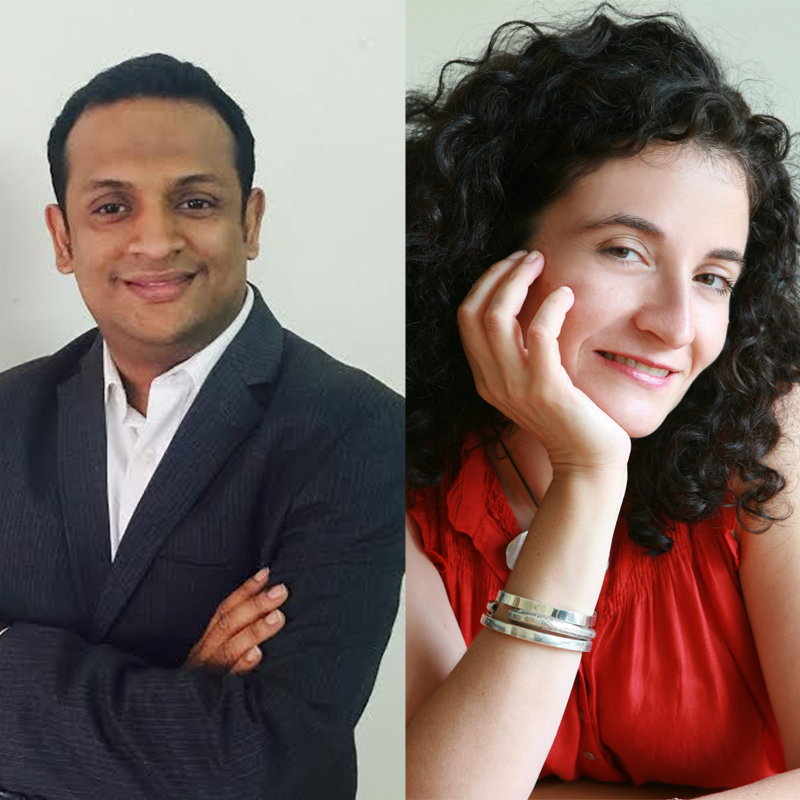
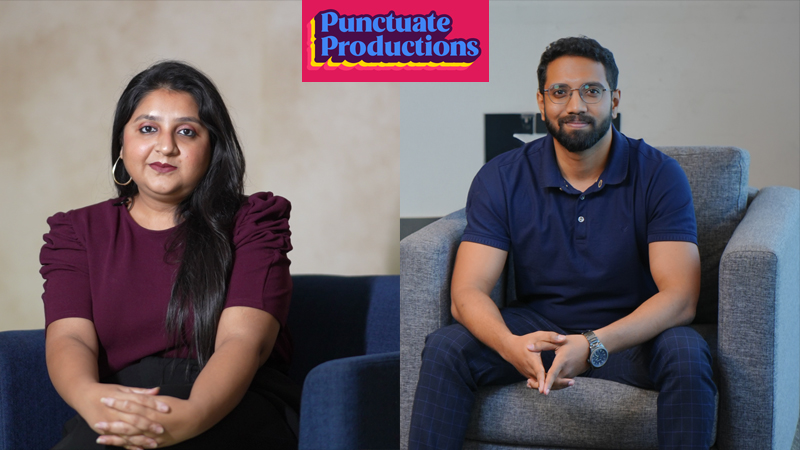
    Mumbai: Prash Dalvi and Saloni Surti have launched Punctuate Productions, a new content studio aimed at revolutionising the video solutions market. Based in Mumbai, the studio brings a fresh approach to content creation, focusing on short video production, digital video films, TVCs, branded content, and more. With over 25 years of combined experience, Prash and Saloni are committed to crafting videos that deeply resonate with audiences, tapping into cultural insights and evoking emotions that drive action.

    Launched earlier this year, Punctuate Productions started with just two people and has now grown to a dynamic team of over 10. Prash brings over 12 years of experience, having worked with industry giants like Pepper Content, Stonks Studios, and Social Samosa. His expertise in short-form content includes viral campaigns for brands such as Swiggy and Google. Saloni, with 13+ years of experience in journalism and content marketing, has collaborated with multiple prestigious publications, shaping the studio’s vision for impactful, authentic content.

    Punctuate Productions is known for its Emotive Content Strategy (ECS), which aims to create videos that evoke a wide range of emotions. From curiosity to envy, every video is designed to resonate with viewers and spark action. The studio’s work spans a variety of brands, including Bill & Melinda Gates Foundation, Motilal Oswal AMC, Swiggy, Google India, Prime Video India, and others.

    Some of their key campaigns include:


    Punctuate Productions is also the creator of the popular ‘A&M Interview Series – Human Behind the Marketer’, which features prominent figures from the advertising, marketing, and digital industries. Season one included notable industry names such as Piyush Pandey and Krishnarao Buddha.

    Punctuate Productions co-founder, Dalvi said, “With just a swipe of the thumb, consumers can skip any content. At Punctuate Productions, we see this as our challenge – and our commitment. We create videos that people don’t just see; but seek out. By crafting content that aligns with what consumers genuinely want, rather than simply pushing what we want to show, we ensure every frame resonates, captures, and holds attention.”

    Punctuate Productions co-founder, Surti shared, “My 12+ years in Advertising & Marketing journalism were like a master’s degree in the industry. The campaigns that have stayed with me weren’t just great stories—they were built on real, resonant insights. At Punctuate Productions, we are driven by the same commitment to authenticity and impact, collaborating with brands and agencies alike to create videos that seamlessly weave into the fabric of consumers’ daily lives.”

  • Big Bang Awards 2021 set for offline event on 8 April

    Big Bang Awards 2021 set for offline event on 8 April

    Mumbai: After skipping the 2020 edition due to the Covid-19 pandemic, Ad Club Bangalore has announced that it will be holding the Big Bang Awards 2021 in an offline event on 8 April. The award ceremony will celebrate the Indian advertising and marketing fraternity and honor excellence in creative, media, digital and marketing.

    The Big Bang Awards are sponsored by Meta and supported by Manorama Max, Manorama News, The Hindu, and some other media houses. The event will take place at Hotel Ritz Carlton in Bangalore. 

    Ad Club Bangalore is a three-decade-old advertising club, known as one of the oldest ad clubs in the country. The ad club started the Big Bang Awards two decades ago. Every year it includes a jury from the advertising, media, and marketing industry. However, this year the entire judging process was online due to the pandemic restrictions.

    Sharing inside details, Ad Club Bangalore president Laeeq Ali told, “We received over 400 entries this year from agencies and clients across the country and decided to wait till April so we could kick-start our activities for the year with an offline event.”

    The awards have separate categories for consumer, B2B, media, entertainment and sports, brand and corporate communication and social causes. There is a separate category for healthcare and wellness covering Rx and OTC products.

    “I have been involved with the Big Bang Awards for the last 20 years,” said Big Bang Awards chairperson Malavika Harita. “This year, we saw a lot of emerging creative, media and digital agencies with innovative and exciting ideas. Adding a category for marketing excellence rounded off the entire gamut of marketing activities covered.”

    In order to pay homage to its late executive director Arvind Kumar, this year they have two special prizes for the best young media professional below 30 years and the best media team in his name. The MAA Group will be presenting the Ayaz Peerbhoy Award for the ‘Creative Agency of the Year’ as they do every year, said the statement.

  • Brands eager to be part of the story today

    Brands eager to be part of the story today

    MUMBAI: The content industry is in a massive flux. Norms and rules turn redundant in months now and the need for good quality content that can attract a global audience is at an all-time high, thanks to the advent and massive growth of OTT platforms like Netflix and Amazon Prime. Brands and marketers have rolled up their sleeves to cash in on this boom.

    The Story Lab, a global content specialist from Dentsu Aegis Network, started its Indian operations just a few years back and is considering to support this highly creative ecosphere in expanding further with its excellence backed by learning from the many international markets including the US, the UK, Russia, and Australia. Its global head of formats Fotini Paraskakis, who was recently in India to meet the team, joined by India head Kumar Deb Sinha had an exclusive chat with the Indiantelevision.com, highlighting the aspirations of the team and some of its strategies.

    Fotini, who had joined the team just a few months back, in September, after a long stint with Endemol Shine, mentions that working with The Story Lab is very exciting for her because it is platform-and client-agnostic. She adds, “I have been working in the Asian region, including India, for the past 20 years and I am very familiar with the content. When I was previously coming to India, it was very traditional for me. We had three or four shows that we pitched to the top GECs but now, it is the creator’s game. I always thought that India was extremely creative and that creativity is coming out now.”

    She added, “Working with The Story Lab, I think we are able to support these creators and producers helping them create forward-thinking innovative ideas and take them to partners and platforms that we already have the leverage of and have strong relationships with. It is interesting for me to see how we can build this strong kind of premium content house.”

    Echoing her thoughts, Kumar says, “At this point in time there is a huge opportunity for content in India. Most of it is OTT but traditional television is also changing its programming in a big way. It is because platforms like Netflix have changed the consumption patterns of the audience. With global content in global language at easy reach, people want more from the content industry. So, being an international network, we can easily execute newer trends in India. It is also faster to grow in India as people are just hungry for content right now.”

    Coming from the head of a content team that is a part of an agency framework, many would like to believe that this zeal is towards creating branded content only, but Kumar contends, “That’s exactly where The Story Lab is extremely different from other players in the market. While others are talking branded content, we are talking about a big content play, not limited to whether a brand funds it or not.”

    While branded content might not be at the core of The Story Lab philosophy, the leadership still believes that brands can anyway benefit from this boom of creative content in the industry. Kumar mentions, “When you talk about brands leveraging on content, it is not today’s thing. In fact, it started several decades back with P&G when they started sponsoring the whole afternoon soap band. It’s called ‘soap’ because P&G started it.”

    He added, “Probably, earlier they were more focussed on brand visibility. But today, they have taken a leap and want their brands to play a role in the story. I would say, in the last one or two years, there has been cutting-edge work done by the brands in digital content space. Interestingly, most of this has been done by start-up brands. Pepperfry, Epigamia, and Furlenco are a few examples.”

    Fotini shares an interesting insight into the global scenario saying, “In other territories, we are seeing brands going a step ahead, in fact. They just want to be associated with good stories. They don’t necessarily need their products in something. The brands now have a better foresight of associating with content that can create talking points for them. And that’s where The Story Lab, again, can play an important role by connecting brands who just want to support a good story with the right content.”

    On being quizzed whether this whole new paradigm will affect the traditional advertising industry in the long run, Kumar denies any such possibility. “The reason being the roles of both are very different. While traditional advertising has a clear role of reach and awareness, content is more about engagement.”

    He further notes, “The budgets, obviously, are very different for both. What might happen is clients start earmarking a certain part of their marketing budget as content budget. Whether that money will come from the advertising budget; I am not very sure about.”

    While both Kumar and Fotini are very eloquent about their plans to support the content market in India, they are still not revealing much about their own marketing strategies. While Kumar notes that it’s still very early to disclose the strategies, Fotini gives some scoop into what the action plan of The Story Lab has been in the global market.

    She elaborates, “So what we do in the UK; we go looking out for talent. We have started a creative programme where we, for example, invite a few people from the industry to share, learn, and work with other creators. There are no strings attached but we develop a good network of potential talent, people who we would like to work with. Also, sometimes we do pitching sessions regarding particular resources we have been looking for. Sometimes, we just support the industry. In the UK we also have a separate fund, purely to shore up production.

    “Basically, what I am saying is that Dentsu as a company is invested in content. They have different funds and a kind of creative collaboration that we fund directly. Or we pitch creators, producers, and writers together to talk about ideas, and share knowledge.  So, these are the kind of things that we want to start replicating in our key territories including India.”

    Fotini sees the Indian market as a highly creative space, which is also willing to spend more on production and distribution. She shares, “Most people might not think like that, but there’s a quite lot of money in the production space in India. It is far ahead of other Asian markets except China. If you look at other Asian territories, their budgets are much lower because the markets there are very ad-driven. Sure, the entry of platforms like Amazon and Netflix is now plowing in a lot of money, so that trend is changing. But they are still behind India.”

    On being asked where does India stand globally in its willingness to allocate funds, Fotini mentiones that there is no comparison because the models across are quite different. “The UK and the US are completely different markets because they have restrictions on advertising. In the US, traditionally there has been no branding and all the money comes from broadcasters. And there has been a lot of money. In the UK, there has been a lot of content and it is very creative as well. But what’s happening there recently is that the broadcasters' budgets have been cut. They are now looking for partners to make up this deficit. Sometimes it’s The Story Lab, sometimes someone else. They are not allowed to do branded content.”

    “In India, on the other hand, quite often the money is made out of brands. We are used to working with limited budgets. And also the people are very creative in terms of thinking alternates; if we can’t do this then let’s try doing that. The way creators and producers think is very different here.”

    Both Fotini and Kumar are very positive about the opportunities that the Indian market has for them right now. Fotini, with extreme confidence, wraps up the conversation saying, “The Story Lab is here to stay. We want to create long-term partnerships with creators, producers, and distributors. We already have long-term partnerships with different platforms and we want to bring them a good lot of content opportunities. Everything is in place already and we are going to build it strong and take it forward.”