Tag: advertisers

  • Advertisers target rural north & south zone on serials & film-based content: BARC

    Advertisers target rural north & south zone on serials & film-based content: BARC

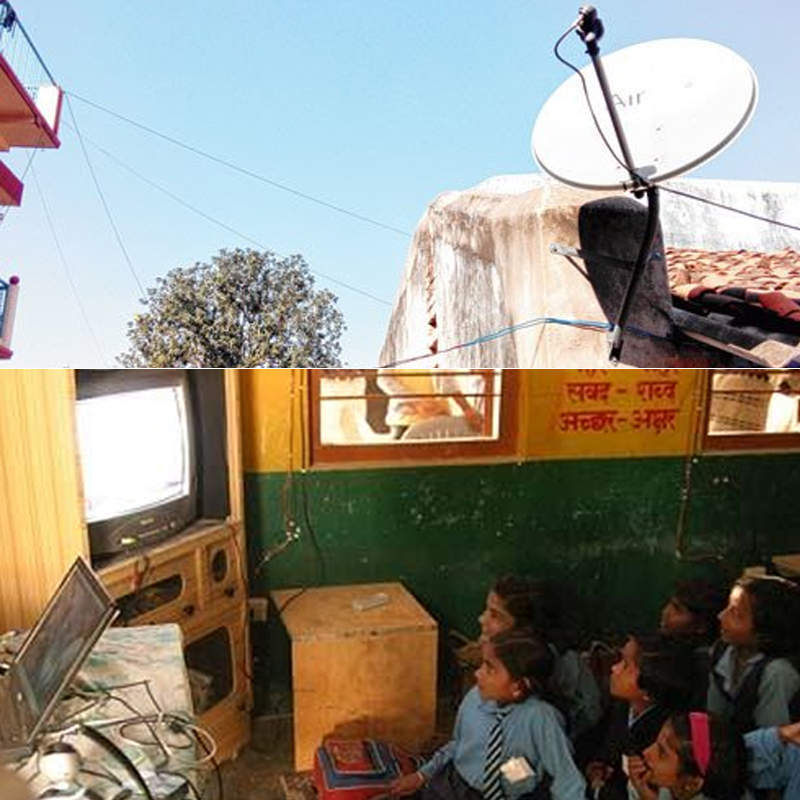
    MUMBAI: None realised the importance of rural market until BARC India started monitoring viewing habits in the countryside. After the TV audience measurement system gave its ratings, the industry woke up to the potential of this market.

    A recent newsletter released by BARC India emphasises on the viewing habits of the viewers on different fronts.

    From one front,  this research explores the advertisers and marketers targeting north and south zone on serials and film-based content to reach their respective audience.

    On an overall level for rural India, serial-based programmes secure the highest share, followed by film-based programmes. This pattern is consistent across zones with the exception of south India. Viewership for serials is driven majorly by the north zone while film-based programmes have maximum viewership in the south zone, which does not come as a surprise.

    public://barc6_0.jpg

    Most of the programme themes are driven by south zone. The only exception is music which is driven almost entirely by the north zone. For broadcasters in the serials and music genre, north rural market is the key.

    For advertisers and marketers targeting north and south zone, serials and film-based content will be the ‘Holy Grail’ to reach their audience respectively as over 30 per cent of the viewership is attributed to each of these content types across zones.

    For marketers targeting west or east zone, frequency-based plans yield results easily. On the other hand, for those targeting north, reach-based plans may be more achievable.

    On an overall level, the south zone registers the highest reach and ATS ( Average Time Spent) among the four zones in rural market. Looking at the west zone, ATS is the second highest after south zone. However, it has relatively lower reach. This shows that audience in the western rural market has lower reach but they spend a high amount of time consuming television content. Conversely, the north zone has the lowest ATS but has a comparatively better reach. One can infer that audience in the north zone does not stick to television viewing for as long as those in other zones.

    The rural viewership pattern

    Urban and rural India follow distinctly different viewing patterns across the day. Rural India starts its day much earlier than urban India around 5am, and continues to have higher viewership until 9am.

    Post 9am, urban India’s viewership catches up and has higher viewership than the rural India throughout the afternoon and evening. Both, urban and rural India see a marginal peak during 2-230pm. However, rural India sees an early spike for prime time as compared to urban India. The highest viewership in rural India is generated during the time-band 830-9pm followed by the time-band 8-830pm.

    Viewership starts declining around 1030pm hinting at an early wrap-up for the day for the rural audience.

    If one compares all the four zones in the rural market, it seems like the viewership is driven by southern rural market followed by the west zone. The lowest viewership in rural market can be observed in the north zone which has the lowest average rating percentage for the entire day.

    public://barc10_0.jpg

    public://barc9_0.jpg

    If one looks at the zone-wise viewership, both weekdays and weekends are driven by the south zone followed by west zone. Overall viewership for weekends is marginally higher than weekdays for rural India. At the zone level, this increase for weekend viewership is the maximum for the west zone and the least for the east zone.

    public://barc8_0.jpg

    public://barc7.jpg

    Viewership differs during prime time

    Millennials in rural India could be the next big target for broadcasters and advertisers to hold on to.

    Viewership in India during prime time is equally divided among both the genders. However, if compared by the four zones, north and west zone have a higher percentage of male viewers (51 per cent  and 52 per cent, respectively) and Millennials (age-group 15-30) form the largest percentage of audience in rural India. The pattern is the same among all the four zones with the exception of south where Gen X (age group 31-50) forms the largest percentage of the audience.

    NCCS C (New Consumer Classification System) has the highest share of viewership among all zones in rural India. While the west zone and the east zone display a composition similar to rural India, the north zone and south zone have some variations. The north zone has a substantially higher composition of NCCS A & NCCS B, while the contribution of NCCS C is lower than the rural India average. Conversely, in the south zone, the contribution of NCCS A is low.

    public://barc5_0.jpg

    Surprisingly, film-based programmes, which have the maximum reach during prime time, have one of the lowest stickiness across rural India for all the four zones. Game/talk/quiz and lifestyle-based programmes can hold the audience for long as they have a healthy ratio for reach to fidelity. In rural India, stickiness for serial-based programs is the highest across programme themes.

    Surprisingly, it is driven mostly by south zone, which had the lowest reach among all zones for this content. Interestingly, if one compares this to the audience composition analysed above, north zone and west zone, which have a higher percentage of male audience, also see higher stickiness for sports programmes. Lifestyle-based content in terms of stickiness has much better ratio of reach to fidelity across zones.

    public://barc4_0.jpg

    public://barc3_0.jpg

    Ad sector popularity

    The top ad sectors by viewership during prime time in rural India are personal care/hygiene, food & beverages, hair care and services etc.

    Personal care/hygiene and hair care sector have a higher share in the north zone. This can also be seen while comparing all the zones for the ‘personal healthcare’ category, where again the north zone takes the lead.

    On the other hand, the south zone is more inclined towards categories such as food and beverages, auto, durables and personal accessories.

    public://barc2_1.jpg

    Switching pattern for GEC & movie genre

    Since most of the TV viewership is generated by GEC and the movie genre, it would be interesting to understand the switching pattern of rural India on a day-part level.

    public://barc1_1.jpg

    As observed in the paragraphs above, throughout the day, most of the switching to or from a channel genre happens due to audience switching the TV on or not. However, it declines during the later time-bands. The only exception is 6pm to 12 midnight where switching between movies and GEC is higher than viewers switching TV on during that time-band (with movies as reference). On comparing switching from movies to GEC genre, switching percentage remains almost comparable throughout the day.

    On the other hand, switching from GEC to movies declines during later time-bands. On an overall level, switching from GEC to movies is seen more often that the switching from movies to GEC.

  • Which TV content grabs south India’s eyeballs?

    Which TV content grabs south India’s eyeballs?

    MUMBAI: When we talk about the television industry, everyone is aware that the Hindi-speaking market is vast. However, a significant part of the industry is concentrated in another part of India — the southern market. Its a highly influential market for advertisers.

    A recent newsletter released by the television ratings body Broadcast Audience Research Council (BARC) India ‘South Special Edition’ seeks to answer all the questions as to how the southern India is different from HSM w.r.t. important audience metrics? How southern states differ from each other in terms of programme theme preferences.

    Avg. Time Spent (ATS) vs Opportunity to See (OTS) and performance of product categories? How does the popular Hindi content dubbed in southern languages perform? And, most importantly, what the southern market watches on its television sets?

    As per the BARC study, south India has a lower share in the movies genre as compared to GEC. On the other hand, its share in GEC and news channels is higher than HSM. Also, within the regions, the relative ranking for most genres remains constant across HSM and South.

    public://barc3.jpg

    Surprisingly, programme themes and channel genres do not show the same trends across HSM and South. Serials, which are the staple of GEC channels (which saw the highest share in terms of channel genre), sees a drop in share for South as compared to the share for channel genre.

    Similarly, while movie channels are viewed lesser than HSM, in South, the trend is reversed when it comes to film-based programs i.e. South has a higher share compared to HSM.

    public://barc4.jpg

    The study also shows that South Indian viewership seems to begin earlier in the day than HSM and also end up earlier. South has a higher viewership than HSM only during  early morning hours (05:00-08:00).

    public://barc1.jpg

    Tile the gap between HSM and South reduces marginally during 18:00-21:00  hrs. South seems to have an earlier prime¬ time than HSM. It is clear that South and HSM do not have the same viewership trends.

    public://barc2.jpg

    BARC studies showed that the Southern Market shows the highest inclination towards film-based content followed by serials driven by AP/Telangana and Kerala, respectively. Kerala watches less movies as compared to other markets.

    public://barc5.jpg

    On the other hand, AP/Telangana watches less serials and more of news than other southern markets. In most of the markets, the most watched TV content is film-based followed by serials. Content based on music and tourism is the least popular in southern markets.

    How different are southern states in terms of rural and urban?

    The urban and rural viewership is comparable throughout the day with both seeing a peak during the prime-time. However, as opposed to the rest of the day, during prime-time hours, it is mainly the rural markets which seem to be driving the viewership and not urban markets.

    public://barc8.jpg

    When we look at states within urban and rural markets,  while rural markets have similar viewership trends across states, it is not the same case with urban markets. In urban markets, the viewership among markets differs between prime time hours and non-prime time hours. During non-prime time hours, AP/Telangana has a maximum viewership. After AP/Telangana, the maximum viewership alternates between TN/Pondicherry and Karnataka markets with Kerala having the lowest viewership for most day parts.

    public://barc9.jpg

    However, during prime time hours, this order is completely changed. Urban Karnataka has the maximum viewership post 21:00 hrs and this lead continues into late night  hours as well.

    What is interesting is that even among the rural markets, Karnataka displays similar behaviour with respect to prime time viewership. During late night  hours, Kerala, which is a relatively smaller market, sees the highest viewership.

    public://barc10.jpg

    Conversely, TN/Pondicherry, which is one of the bigger markets during non-primetime hours, shows the least viewership during prime time hours in both rural and urban markets.

    How is Hindi content dubbed in south languages performing?

    Popular content from Hindi GECs is now being dubbed and shown on southern GECs. This phenomenon is seen across all southern states with the exception of Karnataka. Shows from leading channels such as Star Plus (Diya Aur Baati Hum. Siya Ke Ram. etc.), Colors (Naagin. Sasural Simar Ka, Balika Vadhu, etc.), Zee TV (Gangaa, Kumkum Bhagya, Ek Mutthi Aasman, etc.) and Sony (CID, Bade Achhe Lagte Hai, etc.), have been dubbed.

    Interestingly, in AP/Telangana market, none of the channels sees an increase in viewership for Hindi dubbed content. In the other two markets, viz. Kerala and TN/Pondicherry, Hindi dubbed content sees a mixed response with some channels seeing a higher viewership than the original content in regional language.

    In the Kerala market, the highest spike is seen by Asianet Plus. Similarly, in TN/Pondicherry market, maximum growth is seen by Polimer, where the viewership for Hindi dubbed content is more than double that of the original content. This is on the back of several popular shows.

    public://barc11.jpg


  • Which TV content grabs south India’s eyeballs?

    Which TV content grabs south India’s eyeballs?

    MUMBAI: When we talk about the television industry, everyone is aware that the Hindi-speaking market is vast. However, a significant part of the industry is concentrated in another part of India — the southern market. Its a highly influential market for advertisers.

    A recent newsletter released by the television ratings body Broadcast Audience Research Council (BARC) India ‘South Special Edition’ seeks to answer all the questions as to how the southern India is different from HSM w.r.t. important audience metrics? How southern states differ from each other in terms of programme theme preferences.

    Avg. Time Spent (ATS) vs Opportunity to See (OTS) and performance of product categories? How does the popular Hindi content dubbed in southern languages perform? And, most importantly, what the southern market watches on its television sets?

    As per the BARC study, south India has a lower share in the movies genre as compared to GEC. On the other hand, its share in GEC and news channels is higher than HSM. Also, within the regions, the relative ranking for most genres remains constant across HSM and South.

    public://barc3.jpg

    Surprisingly, programme themes and channel genres do not show the same trends across HSM and South. Serials, which are the staple of GEC channels (which saw the highest share in terms of channel genre), sees a drop in share for South as compared to the share for channel genre.

    Similarly, while movie channels are viewed lesser than HSM, in South, the trend is reversed when it comes to film-based programs i.e. South has a higher share compared to HSM.

    public://barc4.jpg

    The study also shows that South Indian viewership seems to begin earlier in the day than HSM and also end up earlier. South has a higher viewership than HSM only during  early morning hours (05:00-08:00).

    public://barc1.jpg

    Tile the gap between HSM and South reduces marginally during 18:00-21:00  hrs. South seems to have an earlier prime¬ time than HSM. It is clear that South and HSM do not have the same viewership trends.

    public://barc2.jpg

    BARC studies showed that the Southern Market shows the highest inclination towards film-based content followed by serials driven by AP/Telangana and Kerala, respectively. Kerala watches less movies as compared to other markets.

    public://barc5.jpg

    On the other hand, AP/Telangana watches less serials and more of news than other southern markets. In most of the markets, the most watched TV content is film-based followed by serials. Content based on music and tourism is the least popular in southern markets.

    How different are southern states in terms of rural and urban?

    The urban and rural viewership is comparable throughout the day with both seeing a peak during the prime-time. However, as opposed to the rest of the day, during prime-time hours, it is mainly the rural markets which seem to be driving the viewership and not urban markets.

    public://barc8.jpg

    When we look at states within urban and rural markets,  while rural markets have similar viewership trends across states, it is not the same case with urban markets. In urban markets, the viewership among markets differs between prime time hours and non-prime time hours. During non-prime time hours, AP/Telangana has a maximum viewership. After AP/Telangana, the maximum viewership alternates between TN/Pondicherry and Karnataka markets with Kerala having the lowest viewership for most day parts.

    public://barc9.jpg

    However, during prime time hours, this order is completely changed. Urban Karnataka has the maximum viewership post 21:00 hrs and this lead continues into late night  hours as well.

    What is interesting is that even among the rural markets, Karnataka displays similar behaviour with respect to prime time viewership. During late night  hours, Kerala, which is a relatively smaller market, sees the highest viewership.

    public://barc10.jpg

    Conversely, TN/Pondicherry, which is one of the bigger markets during non-primetime hours, shows the least viewership during prime time hours in both rural and urban markets.

    How is Hindi content dubbed in south languages performing?

    Popular content from Hindi GECs is now being dubbed and shown on southern GECs. This phenomenon is seen across all southern states with the exception of Karnataka. Shows from leading channels such as Star Plus (Diya Aur Baati Hum. Siya Ke Ram. etc.), Colors (Naagin. Sasural Simar Ka, Balika Vadhu, etc.), Zee TV (Gangaa, Kumkum Bhagya, Ek Mutthi Aasman, etc.) and Sony (CID, Bade Achhe Lagte Hai, etc.), have been dubbed.

    Interestingly, in AP/Telangana market, none of the channels sees an increase in viewership for Hindi dubbed content. In the other two markets, viz. Kerala and TN/Pondicherry, Hindi dubbed content sees a mixed response with some channels seeing a higher viewership than the original content in regional language.

    In the Kerala market, the highest spike is seen by Asianet Plus. Similarly, in TN/Pondicherry market, maximum growth is seen by Polimer, where the viewership for Hindi dubbed content is more than double that of the original content. This is on the back of several popular shows.

    public://barc11.jpg


  • Lycos extends deal with Yahoo! for enhanced search advertising, expects 10 per cent higher topline

    Lycos extends deal with Yahoo! for enhanced search advertising, expects 10 per cent higher topline

    New Delhi: Global Internet brand Lycos today announced the extension of its deal with Yahoo! for enhanced search advertising by one more year. The contract leverages Lycos; services to increase the reach of Yahoo! search and content offerings. Contextual advertising offerings of Lycos will in turn increase.

    This relationship – that allows LYCOS to serve globally on all platforms including search, mobile and other contextual advertising – is expected to increase LYCOS’ turnover by 10% in FY2016-2017.  

    The enhanced form of search advertising is a type of contextually targeted platform which allows online search advertisers to buy keyword-targeted traffic from sources other than search engine results pages.

    Lycos Internet Limited had reported consolidated revenue from operations of Rs 1957 crore  and a net profit after tax and minority interest of Rs 342.22 crore for the year ended March 31, 2015 (FY-2015). For the nine month period ended December 31, 2015, the company reported revenue of Rs 1782 crore reflecting a growth of about 18 per cent over the corresponding year ago period, and a net profit after tax and minority interest of Rs 321 crore.

  • Lycos extends deal with Yahoo! for enhanced search advertising, expects 10 per cent higher topline

    Lycos extends deal with Yahoo! for enhanced search advertising, expects 10 per cent higher topline

    New Delhi: Global Internet brand Lycos today announced the extension of its deal with Yahoo! for enhanced search advertising by one more year. The contract leverages Lycos; services to increase the reach of Yahoo! search and content offerings. Contextual advertising offerings of Lycos will in turn increase.

    This relationship – that allows LYCOS to serve globally on all platforms including search, mobile and other contextual advertising – is expected to increase LYCOS’ turnover by 10% in FY2016-2017.  

    The enhanced form of search advertising is a type of contextually targeted platform which allows online search advertisers to buy keyword-targeted traffic from sources other than search engine results pages.

    Lycos Internet Limited had reported consolidated revenue from operations of Rs 1957 crore  and a net profit after tax and minority interest of Rs 342.22 crore for the year ended March 31, 2015 (FY-2015). For the nine month period ended December 31, 2015, the company reported revenue of Rs 1782 crore reflecting a growth of about 18 per cent over the corresponding year ago period, and a net profit after tax and minority interest of Rs 321 crore.

  • How advertisers have ‘reacted’ to Facebook Reactions

    How advertisers have ‘reacted’ to Facebook Reactions

    MUMBAI: So, the social media giant Facebook has rolled out a whole new range of emoticons for users to ‘react’ with. This has come after the long standing legacy of the ‘like’ button. The new reactions, namely ‘Haha’, ‘Wow’, ‘Love’, ‘Sad, and ‘Angry’, were highly anticipated by the advertising fraternity until  Facebook  revealed that it won’t be letting advertisers use these new reactions as a way to create targeted ads. For now, reactions would only be counted as additional ‘likes’, meaning that an “angry” reaction would be treated the same as a “wow”.

    Though initially put off by Facebook’s decision to keep the new reactions out of their reach, advertisers and digital marketers have found ways around this. What makes these new reactions such a lucrative tool for digital marketers is its immense power to look into consumer insights.

    “There is a lot of learning from it on a broader scale, but since Facebook as of now isn’t revealing the exact numbers of ‘angry’ or ‘wow’, advertisers are having a hard time in making the most of it. But, you can actually can see who has liked it or ‘loved’ it if you hover over the new emoticons. Once you physically count that list, you can put a number of it. Though tedious, but not impossible,” points out Isobar India MD Shamsuddin Jasani Aka Shams.

    Now why would a marketer go through the trouble of physically counting these reactions? What’s in it for her or him?

    “It’s a great tool to understand, learn your consumers for a brand. You can see what tonality and emotions consumers have for content. We can figure out what kind of posts, communication and content that are working with a brand’s TG. Beyond that, the use is still limited and it will take some time before people start using it extensively,” Shams shares, adding that the new offering is all about analytics.

    PnB Metlife digital marketing, ecommerce and digitization head Abhishek Rathi too feels that the new reactions can prove to be a powerful tool for marketers like him. Especially for re-targeting of campaigns. The net adoption of these features is what marketers are closely paying attention to, Rathi says. “Right now we have to wait and watch if people are actually using it or not to make a significant difference. Currently the majority of what we can work with on Facebook are likes and shares. Comments can give you some consumer insight but isn’t a huge help. Similarly we need to wait and see exactly how we can use these features in marketing.”

    “The first thing that I predict is the number of engagements on the posts going up,” Shams observes, “ It’s not always that you like something, you might really like it, love it, or dislike it. Having more to the spectrum to react with also makes people interact with the site more. Earlier people were restricted by only the dislike button, but now the new emoticons are making engagements go up.”

    Given its potential use for brands, media planners especially on the digital front, are contemplating on how to incorporate these reactions under their bouquet of services. Shams feels that reactions have a huge scope when it comes to accentuating data and analytics further.

    “Of course the planners, who need to buy the right kind of inventory for their client will have to take the new reactions into consideration. It is still difficult to correlate who liked it or loved it and accordingly bought it, as the analytics are not in place right now,” shared another well-known media planner who wished to remain anonymous.

    But it is the creatives or the content creators who can make the most of this new feature. Content creators will be able to gauge what reactions their work is getting and where they need to tweak to get the desired result.

    “When we are talking about corporate social responsibility or a social cause, it helps to know how our viewers and consumers are reacting to the campaigns; the emotions behind their likes. It’s the next level of engagement,” says Rathi.

    Brands which are most likely to jump on this bandwagon and try out the new Facebook reactions for their campaigns are the youth oriented brands, brands with brand language that lets them experiment and try new things. Citing an example from his own client base, Shams says, “Myntra’s brand Anouk, which we handle, has a communication that many like while others may also dislike. It is very clear in what it wants to say to its audience. These reactions can be a help to the brand. Brands which are steadier in their brand communication will wait and watch first.”

    Ecommerce and digital start-up companies will be the next to take the new feature seriously for their marketing. “Then you have the likes of Coke and Pepsi who will soon follow,” Rathi adds. The sport leagues can also be big takers for this new feature, Rathi feels. “The IPLs, ISLs, kabaddi leagues and tennis leagues of the world can make a huge advantage from these as it is an association of pride and entertainment. Anything which involves a whole community will try to make the most of this tool,” he adds.

    Another advertiser who wants to stay ahead of the curve is United Beverages Limited. UBL has started to look at how these new reactions can affect its marketing strategy. Not only that, UBL, Marketing SVP Samar Singh Sheikhawat shares that UBL is also keeping the ‘angry’ reaction in mind.

    “Brands need to be more responsible and responsive now. We need to be more on the ball, because unlike earlier, the ‘angry’ button can become the new ‘dislike’. Not that it has never happened before. In the real world, there are consumers who like one product, others love the same and there are few who can even hate it. Earlier that emotion seldom got reflected to the brands, but now the game is changing,” he says.

    With so much excitement among brands in making use of Facebook reactions in marketing, one has to wonder if it’s ethical to use such data at all. “That’s true. We need to be careful how the information is used and it needs to be monitored well. As a marketer I am thrilled about the opportunities this gives us but personally I am not comfortable with my personal data, likes and dislikes being shared with companies who can make use of such data. But if it is an aggregate that you are sharing, it will not be so much of an issue. Suppose 50 per cent of ‘love’ or 20 percent of ‘angry, etc. From a privacy standpoint I don’t think it’s in the interest of customers to share individual data points.”

    Sheikhawat on the other hand has a slightly different perspective. “I don’t see how it can become unethical. The fact of the matter is when you sign up for Facebook. you share your personal data.  When you get a new app or service, you let it access your Facebook data, including your preference. When you make any of your reactions public, you are sharing it with the rest of the world. It is already happening and consumers are aware of it.

    On a positive note, many marketers also observe that NGOs and campaigns for social causes can get a huge help from the added feature. Several marketers are of the view that if the data is readily available to marketers, consumers who are aware will not adopt the feature as much and therefore its effectiveness even from an aggregate standpoint will go down.

  • How advertisers have ‘reacted’ to Facebook Reactions

    How advertisers have ‘reacted’ to Facebook Reactions

    MUMBAI: So, the social media giant Facebook has rolled out a whole new range of emoticons for users to ‘react’ with. This has come after the long standing legacy of the ‘like’ button. The new reactions, namely ‘Haha’, ‘Wow’, ‘Love’, ‘Sad, and ‘Angry’, were highly anticipated by the advertising fraternity until  Facebook  revealed that it won’t be letting advertisers use these new reactions as a way to create targeted ads. For now, reactions would only be counted as additional ‘likes’, meaning that an “angry” reaction would be treated the same as a “wow”.

    Though initially put off by Facebook’s decision to keep the new reactions out of their reach, advertisers and digital marketers have found ways around this. What makes these new reactions such a lucrative tool for digital marketers is its immense power to look into consumer insights.

    “There is a lot of learning from it on a broader scale, but since Facebook as of now isn’t revealing the exact numbers of ‘angry’ or ‘wow’, advertisers are having a hard time in making the most of it. But, you can actually can see who has liked it or ‘loved’ it if you hover over the new emoticons. Once you physically count that list, you can put a number of it. Though tedious, but not impossible,” points out Isobar India MD Shamsuddin Jasani Aka Shams.

    Now why would a marketer go through the trouble of physically counting these reactions? What’s in it for her or him?

    “It’s a great tool to understand, learn your consumers for a brand. You can see what tonality and emotions consumers have for content. We can figure out what kind of posts, communication and content that are working with a brand’s TG. Beyond that, the use is still limited and it will take some time before people start using it extensively,” Shams shares, adding that the new offering is all about analytics.

    PnB Metlife digital marketing, ecommerce and digitization head Abhishek Rathi too feels that the new reactions can prove to be a powerful tool for marketers like him. Especially for re-targeting of campaigns. The net adoption of these features is what marketers are closely paying attention to, Rathi says. “Right now we have to wait and watch if people are actually using it or not to make a significant difference. Currently the majority of what we can work with on Facebook are likes and shares. Comments can give you some consumer insight but isn’t a huge help. Similarly we need to wait and see exactly how we can use these features in marketing.”

    “The first thing that I predict is the number of engagements on the posts going up,” Shams observes, “ It’s not always that you like something, you might really like it, love it, or dislike it. Having more to the spectrum to react with also makes people interact with the site more. Earlier people were restricted by only the dislike button, but now the new emoticons are making engagements go up.”

    Given its potential use for brands, media planners especially on the digital front, are contemplating on how to incorporate these reactions under their bouquet of services. Shams feels that reactions have a huge scope when it comes to accentuating data and analytics further.

    “Of course the planners, who need to buy the right kind of inventory for their client will have to take the new reactions into consideration. It is still difficult to correlate who liked it or loved it and accordingly bought it, as the analytics are not in place right now,” shared another well-known media planner who wished to remain anonymous.

    But it is the creatives or the content creators who can make the most of this new feature. Content creators will be able to gauge what reactions their work is getting and where they need to tweak to get the desired result.

    “When we are talking about corporate social responsibility or a social cause, it helps to know how our viewers and consumers are reacting to the campaigns; the emotions behind their likes. It’s the next level of engagement,” says Rathi.

    Brands which are most likely to jump on this bandwagon and try out the new Facebook reactions for their campaigns are the youth oriented brands, brands with brand language that lets them experiment and try new things. Citing an example from his own client base, Shams says, “Myntra’s brand Anouk, which we handle, has a communication that many like while others may also dislike. It is very clear in what it wants to say to its audience. These reactions can be a help to the brand. Brands which are steadier in their brand communication will wait and watch first.”

    Ecommerce and digital start-up companies will be the next to take the new feature seriously for their marketing. “Then you have the likes of Coke and Pepsi who will soon follow,” Rathi adds. The sport leagues can also be big takers for this new feature, Rathi feels. “The IPLs, ISLs, kabaddi leagues and tennis leagues of the world can make a huge advantage from these as it is an association of pride and entertainment. Anything which involves a whole community will try to make the most of this tool,” he adds.

    Another advertiser who wants to stay ahead of the curve is United Beverages Limited. UBL has started to look at how these new reactions can affect its marketing strategy. Not only that, UBL, Marketing SVP Samar Singh Sheikhawat shares that UBL is also keeping the ‘angry’ reaction in mind.

    “Brands need to be more responsible and responsive now. We need to be more on the ball, because unlike earlier, the ‘angry’ button can become the new ‘dislike’. Not that it has never happened before. In the real world, there are consumers who like one product, others love the same and there are few who can even hate it. Earlier that emotion seldom got reflected to the brands, but now the game is changing,” he says.

    With so much excitement among brands in making use of Facebook reactions in marketing, one has to wonder if it’s ethical to use such data at all. “That’s true. We need to be careful how the information is used and it needs to be monitored well. As a marketer I am thrilled about the opportunities this gives us but personally I am not comfortable with my personal data, likes and dislikes being shared with companies who can make use of such data. But if it is an aggregate that you are sharing, it will not be so much of an issue. Suppose 50 per cent of ‘love’ or 20 percent of ‘angry, etc. From a privacy standpoint I don’t think it’s in the interest of customers to share individual data points.”

    Sheikhawat on the other hand has a slightly different perspective. “I don’t see how it can become unethical. The fact of the matter is when you sign up for Facebook. you share your personal data.  When you get a new app or service, you let it access your Facebook data, including your preference. When you make any of your reactions public, you are sharing it with the rest of the world. It is already happening and consumers are aware of it.

    On a positive note, many marketers also observe that NGOs and campaigns for social causes can get a huge help from the added feature. Several marketers are of the view that if the data is readily available to marketers, consumers who are aware will not adopt the feature as much and therefore its effectiveness even from an aggregate standpoint will go down.

  • Who defines prime time – Advertisers or viewers?

    Who defines prime time – Advertisers or viewers?

    MUMBAI: For those who have wondered and often cribbed about why popular channels have mostly nothing original to offer in the afternoon, and later had reluctantly resigned to watch re-runs of shows, The Content Hub 2016’s session on ‘Redefining Primetime’ was the place to be.


    The question of the hour was whether there is a need to redefine what we call ‘prime time’ on television. And who better to answer it than those who dabble in the general entertainment channels’ (GEC) prime time of Indian television i.e, Doordarshan ADG Mukesh Sharma, Colors CEO Raj Nayak, Balaji Telefilms CEO Sameer Nair, Reliance Broadcast Network CEO Tarun Katial and Havas Media Group CEO – India and South Asia Anita Nayyar.


    Moderator for the session and Indiantelevision.com founder, editor-in-chief and CEO Anil Wanvari struck at the nerve of the issue by posing the pertinent question — What defines the prime time of a Hindi GEC channel? 


    While most viewers are oblivious to it, there is a whole science — or as Nayak had pointed out during the discussion — ‘pure economics’ to it. 


    “The phrase ‘Kill for prime time’ is what we broadcasters are often heard using. As we don’t have the budget to program for all 24 hours of the day, we prepare content for five to six hours and that becomes our prime time. If we can get good traction for a new show during that time, it may also get an equally good viewership ratings for its reruns as well,” said Nayak.


    “There isn’t anything fixed called prime time. It is how broadcasters define it. When we started off, 8 pm to 10 pm was prime time, then we stretched it to 8 pm to 11 pm, and now 6.30 pm to almost 11.30 pm is what we define as prime time. It is a question of content and the availability of a large section of the audience in front of the television. Therefore, by definition it is post evening hours,” he added.


    With the advent of digital however, this staple idea of prime time is changing as the audience has access to entertainment media almost all hours of the day at their own convenience via the second screen. “The prime time we are talking about is a very TV thing. OTT audience is not defined by prime time although there are surges in viewership at certain times of a day. For them, anytime is prime time. But that ‘anytime’ isn’t a feasible option for advertisers,” opined Nair.


    Getting into the crux of the matter, it is the advertiser who defines the prime time. Because depending on whether a show is coming on prime time or not, the advertising rates are decided. Throwing light on how premium rates for ad slots are determined, Nayyar shared, “The logical way an advertiser defines the prime is when there is content and there is an audience for it. A cricket tournament for example, which can happen at 4 pm in the afternoon will have traction and therefore will attract advertisers as well. So prime time is basically where the eyeballs are. From an agency perspective as well, we look at where and when content is viewed the most and that becomes prime time.”


    On the prospect of growing the time band of ‘prime’ shows, Nayak retrospected, “There was a time when Doordarshan used to air only India cricket matches. When ESPN and Star Sports launched, none of the advertisers initially were willing to pay for the non-India matches and test matches. Until in 1996, during the Safari India South Africa series, we decided we will not sell any slots until advertisers are willing to buy it all in a package. For the first three days of the tournaments there were no advertisers. But things have changed now, haven’t they?”


    One would think that going by the same logic of ‘viewers will lap up any good content,’ if creativity is not a hindrance with several content creators and writers waiting to get exposure, broadcasters can find reason in allowing relatively small budget shows to redefine a new prime time band with day part programming.


    Television being an advertiser dependent medium where a 3 rating in the evening is worth 10 times that of the same rating in the afternoon, broadcasters, especially that of Hindi GECs find the stakes to be too high to take the risk.


    “At Star TV there were some original shows in the afternoon time band, which got even better ratings than the evening prime time shows. While the shows worked, its return on investment did not because irrespective of viewership ratings, advertisers were attracted to only to shows aired from 6 pm onwards. The fact remains that the same advertisers, for the same rating at two different times of the day were not willing to pay the same price for the ad slots,” Nayak stated. 


    This also paints a sad picture of the broadcast business in south India where there is an ongoing trend of remaking Hindi TV shows into regional languages. Producers are asked to create the same content for half, or even one fourth of the production cost that the same Hindi GEC show had incurred as advertisers are not willing to pay for that region, observed Nair.


    “Down south they are remaking Hindi shows at approximately Rs 1 – 1.5 lakh per episode. In the Bengal and Marathi regional markets, it’s even lesser. All this brings me to the advertisement driven industry we have, which eggs on this unfair practice. This in turn makes me wonder how advertisers categorise their consumers in the market and where they place them in terms of ad spends,” said Nair.


    Bringing a whole new perspective to it was RBNL’s Katial, whose comedy channel Big Magic is largely dependent on kids for viewership and ratings and therefore the channel’s definition of prime time also varies. 


    “We have two channels, which are both very unique in their target audiences. One targets Bihar and Jharkhand, which are mostly dominated by semi urban and rural landscapes. People essentially wake up early and go to bed early, therefore 70 per cent of our GRPs comes from the morning programming. While infrastructure too plays a role, I feel it is our viewers who ultimately define our prime time,” Katial informed.


    Citing another example of a non-traditional concept of prime time, Katial added, “On our comedy channel our entry point is kids. We feel it is a good way to expand visibility with mothers and other family members. Therefore we have to build a prime time where there are more kids available than others. Therefore once you define your audience and geography, you have your prime time.”


    Taking a queue from Katial and concurring, Nayyar said that from a media planner’s perspective, there are times when it’s more efficient to buy an afternoon ad slot for an advertiser at a lower rate than prime time slots.


    “For a client of ours, McDonald’s, we used to buy afternoon time slots because it was far more cost efficient. We were catering to the housewives and mothers, who watched TV shows with their kids. I feel that it rides a lot more on how broadcasters pitch or sell shows. I feel the media industry needs to come together and give the products what they deserve,” quipped Nayyar.


    As the panelists dived deeper into the issue, several varying perspectives ruled the discussion, each leading to a different conclusion. However, media heads present on the panel unanimously agreed that even though Indian television was one of the cheapest markets for advertisers to operate in, it was undervalued, be it from talent or financial standpoint. 


    The consensus was that rather than thinking of how to get production costs down, the way to bring a change was by coming up with ways to increase ad rates as well as by investing more in original content leading to more hours of it on television, which in turn would lead to a redefined prime time.

  • Who defines prime time – Advertisers or viewers?

    Who defines prime time – Advertisers or viewers?

    MUMBAI: For those who have wondered and often cribbed about why popular channels have mostly nothing original to offer in the afternoon, and later had reluctantly resigned to watch re-runs of shows, The Content Hub 2016’s session on ‘Redefining Primetime’ was the place to be.


    The question of the hour was whether there is a need to redefine what we call ‘prime time’ on television. And who better to answer it than those who dabble in the general entertainment channels’ (GEC) prime time of Indian television i.e, Doordarshan ADG Mukesh Sharma, Colors CEO Raj Nayak, Balaji Telefilms CEO Sameer Nair, Reliance Broadcast Network CEO Tarun Katial and Havas Media Group CEO – India and South Asia Anita Nayyar.


    Moderator for the session and Indiantelevision.com founder, editor-in-chief and CEO Anil Wanvari struck at the nerve of the issue by posing the pertinent question — What defines the prime time of a Hindi GEC channel? 


    While most viewers are oblivious to it, there is a whole science — or as Nayak had pointed out during the discussion — ‘pure economics’ to it. 


    “The phrase ‘Kill for prime time’ is what we broadcasters are often heard using. As we don’t have the budget to program for all 24 hours of the day, we prepare content for five to six hours and that becomes our prime time. If we can get good traction for a new show during that time, it may also get an equally good viewership ratings for its reruns as well,” said Nayak.


    “There isn’t anything fixed called prime time. It is how broadcasters define it. When we started off, 8 pm to 10 pm was prime time, then we stretched it to 8 pm to 11 pm, and now 6.30 pm to almost 11.30 pm is what we define as prime time. It is a question of content and the availability of a large section of the audience in front of the television. Therefore, by definition it is post evening hours,” he added.


    With the advent of digital however, this staple idea of prime time is changing as the audience has access to entertainment media almost all hours of the day at their own convenience via the second screen. “The prime time we are talking about is a very TV thing. OTT audience is not defined by prime time although there are surges in viewership at certain times of a day. For them, anytime is prime time. But that ‘anytime’ isn’t a feasible option for advertisers,” opined Nair.


    Getting into the crux of the matter, it is the advertiser who defines the prime time. Because depending on whether a show is coming on prime time or not, the advertising rates are decided. Throwing light on how premium rates for ad slots are determined, Nayyar shared, “The logical way an advertiser defines the prime is when there is content and there is an audience for it. A cricket tournament for example, which can happen at 4 pm in the afternoon will have traction and therefore will attract advertisers as well. So prime time is basically where the eyeballs are. From an agency perspective as well, we look at where and when content is viewed the most and that becomes prime time.”


    On the prospect of growing the time band of ‘prime’ shows, Nayak retrospected, “There was a time when Doordarshan used to air only India cricket matches. When ESPN and Star Sports launched, none of the advertisers initially were willing to pay for the non-India matches and test matches. Until in 1996, during the Safari India South Africa series, we decided we will not sell any slots until advertisers are willing to buy it all in a package. For the first three days of the tournaments there were no advertisers. But things have changed now, haven’t they?”


    One would think that going by the same logic of ‘viewers will lap up any good content,’ if creativity is not a hindrance with several content creators and writers waiting to get exposure, broadcasters can find reason in allowing relatively small budget shows to redefine a new prime time band with day part programming.


    Television being an advertiser dependent medium where a 3 rating in the evening is worth 10 times that of the same rating in the afternoon, broadcasters, especially that of Hindi GECs find the stakes to be too high to take the risk.


    “At Star TV there were some original shows in the afternoon time band, which got even better ratings than the evening prime time shows. While the shows worked, its return on investment did not because irrespective of viewership ratings, advertisers were attracted to only to shows aired from 6 pm onwards. The fact remains that the same advertisers, for the same rating at two different times of the day were not willing to pay the same price for the ad slots,” Nayak stated. 


    This also paints a sad picture of the broadcast business in south India where there is an ongoing trend of remaking Hindi TV shows into regional languages. Producers are asked to create the same content for half, or even one fourth of the production cost that the same Hindi GEC show had incurred as advertisers are not willing to pay for that region, observed Nair.


    “Down south they are remaking Hindi shows at approximately Rs 1 – 1.5 lakh per episode. In the Bengal and Marathi regional markets, it’s even lesser. All this brings me to the advertisement driven industry we have, which eggs on this unfair practice. This in turn makes me wonder how advertisers categorise their consumers in the market and where they place them in terms of ad spends,” said Nair.


    Bringing a whole new perspective to it was RBNL’s Katial, whose comedy channel Big Magic is largely dependent on kids for viewership and ratings and therefore the channel’s definition of prime time also varies. 


    “We have two channels, which are both very unique in their target audiences. One targets Bihar and Jharkhand, which are mostly dominated by semi urban and rural landscapes. People essentially wake up early and go to bed early, therefore 70 per cent of our GRPs comes from the morning programming. While infrastructure too plays a role, I feel it is our viewers who ultimately define our prime time,” Katial informed.


    Citing another example of a non-traditional concept of prime time, Katial added, “On our comedy channel our entry point is kids. We feel it is a good way to expand visibility with mothers and other family members. Therefore we have to build a prime time where there are more kids available than others. Therefore once you define your audience and geography, you have your prime time.”


    Taking a queue from Katial and concurring, Nayyar said that from a media planner’s perspective, there are times when it’s more efficient to buy an afternoon ad slot for an advertiser at a lower rate than prime time slots.


    “For a client of ours, McDonald’s, we used to buy afternoon time slots because it was far more cost efficient. We were catering to the housewives and mothers, who watched TV shows with their kids. I feel that it rides a lot more on how broadcasters pitch or sell shows. I feel the media industry needs to come together and give the products what they deserve,” quipped Nayyar.


    As the panelists dived deeper into the issue, several varying perspectives ruled the discussion, each leading to a different conclusion. However, media heads present on the panel unanimously agreed that even though Indian television was one of the cheapest markets for advertisers to operate in, it was undervalued, be it from talent or financial standpoint. 


    The consensus was that rather than thinking of how to get production costs down, the way to bring a change was by coming up with ways to increase ad rates as well as by investing more in original content leading to more hours of it on television, which in turn would lead to a redefined prime time.

  • Zee’s Ali Zaidi sheds light on the English entertainment genre

    Zee’s Ali Zaidi sheds light on the English entertainment genre

    MUMBAI: The English entertainment genre is passing through a wave of evolution with more entrants, digitization, home-grown content, with acquisition of rights of more international shows and has shaped effectively due to key factors such as literacy, change in lifestyle, etc. The entire genre, both in terms of the share and viewership has grown exceptionally since its inception, by providing a great space for advertisers to target larger audiences and get effective results.


    According to the FICCI-KPMG M&E report 2015, the entire genre enjoys a viewership share of 0.9 per cent  of the total share, higher than 0.1 per cent of English News while the genre’s AdEx share stands at 4.6 per cent of the Rs 17,500 crore ad spends for 2014.


    There is no exclusivity in the TV shows screened on these channels. A majority of the English entertainment channels are just acquiring rights for international shows; hence the need for channels to differentiate exists more than ever. Despite the diverse range of content available on the channels, the genre hasn’t seen a rise in viewership. However, things are expected to change after BARC (Broadcast Audience Research Audience India) stabilizes its data.

    Indiantelevision.com got in touch with Zee Studio and Zee Café’s business head English cluster Ali Zaidi to throw some light on the genre, the challenges that it faces, about original content production in India, and the bouquet’s future plans.


    The genre has seen a decline this year by 0.2 per cent from last year as per the FICCI-KPMG M&E report 2015, while the AdEx share has remained constant. “The genre as a whole is growing day by the day as we have more English literate people in India. English language is getting more common in India which is a plus point for us. The genre will see a positive growth in the coming calendar”, says Zaidi.


    Zee Cafe and its foray into HD


    Zee Cafe has grown from 21-22 per cent to 42per cent while Zee Studio has seen a growth from 7-8 per cent to 13 per cent this year. Zee Cafe has recently been converted to a HD channel. Zaidi says out that the over the years, the demand for English entertainment content has just increased and the audiences are willing to invest their time and money to watch the best and the latest. With this new step, the bouquet is taking TV viewing experience a notch higher. The channel is home to popular shows and is a trendsetter in the industry. There was a demand for a high definition experience of the shows that are aired on Zee Cafe. Due to the technological advancements and with the advance of 4K television in the metro cities, the audience wants a detailed viewing experience. Zaidi says that this conversion is a natural progression for the premium channel.


    Commenting about the response the HD channel has received so far, Zaidi asserts “The response for Zee Café HD has been great. It was a pull strategy rather than push approach. We always want to give the audience a better viewing experience.” The channel will also see a 4K conversion once the market gets digitalised with better availability of infrastructure.


    Original content production in India and simulcast


    Zaidi says, “India has seen the launch of a new channel with home-grown content on it. Successful English entertainment channels are just acquiring rights for international content to be broadcasted in India. Even though our motherland has a huge talent pool, the channels have yet not resorted to use the resources available”. Zaidi backs up this fact by mentioning the immense content available in India, while also pointing out that such decisions lay with the channel heads and it was their call on what kind of content was to be shown to its viewers. 


    Channels have to follow certain ethics and have to be careful about not hurting any person’s or community’s sentiments. Talking about the idea of producing original home-grown content, Zaidi says, “The quality that Hollywood studios are providing right now is something that is far for India to reach for now. A simple fact behind this is that Hollywood studios have a worldwide market to recover the cost, whereas in India, the market is limited and only caters to a niche audience”. He strongly believes that shows would get traction only when the channels provided some different content to which the audience could relate to. Linear English shows should strongly be dependent on their concept and had to be stand out of the box to compete with the existing standard quality of production in the world.


    Zaidi also mentions the quality that is being provided by international studios.  “Quality plays a vital role as you want to retain your audience by giving the best to them. India is not in that position as yet to give that quality, says Zaidi, though he thinks that providing home-grown content and making it popular in US as well as in India at the same time through strategic marketing is a goal that is not too far.


    Zaidi points out that for a simultaneous release, it was important for the production house to ensure that it had a worldwide reach. “It cannot just be Hollywood and India as studios recover costs from various markets. We don’t have that right now and therefore if we get into producing a high budget show, we are unlikely to recover costs”, he adds.


    Perception or Ratings

    According to Zaidi, both the elements are important, because the genre is small in size and caters to a limited audience. Ratings are the indicators of what people are watching as trends, and the genre is represented by a small number when it comes to ratings and that is why perception also plays an important role when it comes to trading.


    “People already know what is airing in the US and that is followed to India. We are talking about an audience that’s well informed. We pick our shows with lot of research and the shows which will work for our viewers in India. One needs to buy the right content and have a programming strategy in place to air the shows at the right time”, mentions Zaidi.


    At the same time he also points out that it all depended on the strategies that a channel followed. Channels have to decide on various factors like how they wanted to acquire the show, how they wanted to place it what timeline were they strategizing for the show, etc.


    Challenges for the genre


    Zaidi says that the biggest challenge for the English entertainment industry is the way it is being represented in the ratings system. He believes that once the rating gets steady, there would be no other major challenge that would affect the genre as a whole. “We are waiting for BARC to stabilize its data and give the right kind of representation. We are sure that it will happen in the assured time period of three months”, Zaidi hopes.


    With Indian audiences getting more television oriented and with everything available on the internet, piracy has been one of the threats to the genre since a long time. Every show and movie faces piracy issues in today’s era. Zaidi strongly believes that the entire industry, be it the studios, content providers, content aggregators or the broadcasters, everyone has to come together and understand that piracy needs to be fought.


    According to Zaidi, though this threat has been around for many years, it does not affect the viewership, as the audience, even after downloading the content, is interested and curious to watch it again on television sets. “There is enough audience that will watch content on the television box and I don’t think piracy will make that kind of a big dent, as people pirate also watch shows on TV”, adds Zaidi.


    The way forward


    Channels need to observe the viewing pattern that is followed in India before broadcasting a show. They need to strategize based on what viewers are expecting, when they will consume most of the content, what time will be convenient for them, which content is followed and viewed for a longer period of time? When they follow these pointers, the channels will naturally get viewers.


    Channels should opt for content acquisition for longer periods of time. “The channels are not in the ecosystem for a short period of time; they are and want to be in the business for years to come. It makes more sense to block content for a longer period of time”, explains Zaidi.


    Talking about the Ad spends on HD channels Zaidi informs that they were growing at 100 per cent year on year, but the base was low. The English genre is expected to grow by 25 per cent in 2016.


    He also points out the Ad spends are not a major problem, because more and more people watch this genre and know that HD definitely gives an opportunity to brand managers to watch this channel. The discussions between advertisers about the content shown on different channels is always helpful to decide which shows are popular and where should they invest in.