Tag: advertisers

  • Facebook to provide more video ad options for advertisers

    Facebook to provide more video ad options for advertisers

    For advertisers, social media giant Facebook has decided to come up with some more advertising options.
    Through a blog post, Facebook stated how they will now allow companies to advertise on premium video content through the In-Stream Reserve program.
    As per Facebook, the selected-content includes “the most engaging, highest quality publishers and creators”. This content will be shown to specific target groups verified by global information and measurement company Nielsen.

    Facebook explained how the In-Stream Reserve is a great option for premium online video and TV buyers, particularly those targeting younger, compact demographics and irregular TV viewers.
    As per Facebook, the in-stream video ads are fully watched 70 per cent of the time. The In-stream reserve categories allow an advertiser to select which topics they want their ads to run on, including sports, fashion/beauty and entertainment.
    The social media company will also let the advertisers to advertise on specific shows or for an exclusive advertiser for a single show. “These types of ads are being tested on,” said Facebook.
    “The ThruPlay program will only charge advertisers if their ad is watched to the end, or viewed for at least 15 seconds,” Facebook added.

  • TLC’s ‘Midnight Misadventures with Mallika Dua’ garners huge traction from advertisers

    TLC’s ‘Midnight Misadventures with Mallika Dua’ garners huge traction from advertisers

    MUMBAI: TLC’s India production ‘Midnight Misadventures with Mallika Dua’ has garnered huge traction from marquee advertisers. The on-air broadcast of the show is Co-Presented by L’Oreal Paris Extraordinary Clay & Veeba and Co-Powered by TTK Prestige and Fogg while Flipkart has logged-in as the Associate Sponsor. The first episode of the show, which premiers Monday, September 17 at 20:00 hrs, will have Mallika Dua as Shalishka getting into interesting, relaxing and deeply emotional 2 AM conversations with celebrities from different walks of life. The 10-episode series features luminaries such as Badshah (Rapper), Rajkummar Rao, Radhika Apte, Tanmay Bhat, Vicky Kaushal, Huma Qureshi, Vishal Dadlani, Kaneez Surka, Sumukhi Suresh, Bhuvan Bam and Sanya Malhotra.

    In each episode of Midnight Misadventures with Mallika Dua, Shalishka (Mallika) and one of her celebrity friends will began their adventure armed with whatever they muster from the fridge. Shalishka will develop new recipes; mixing never before mixed ingredients followed by cooking; gossip, healthy conversations and a good face stuffing session over comfort food. 

    Vikram Tanna, VP, Head of Advertising Sales and Business Head of Regional Clusters, Discovery Communications India, said, “The show’s unique construct of delayering never seen before side of prominent influencers is well positioned to engage with TLC’s super fans. Further, we have created thought-through opportunities for partner brands to engage with their target audiences in impactful ways.”

    “Veeba is keen to associate with creativity in Indian kitchen making us a natural partner of a grand show like Midnight Misadventures with Mallika Dua. We want to capture the excitement of creating something new and ‘empower’ young Indians to be creative and experiment every day with new recipes much like what Mallika as the host does with celebrity guests in TLC’s new show,” said, Viraj Bahl, Founder & MD, Veeba.

    “We believe that cooking is an expression of love, and the kitchen is where conversations and moments are created and treasured.  We love the format of the show from the word go as it offers us a strong opportunity to further strengthen connect with our core target audience,” said Mr. Dinesh Garg, Executive Vice President, Sales & Marketing, TTK Prestige LTD.

  • IPL 2018: The dos and don’ts for brands

    IPL 2018: The dos and don’ts for brands

    MUMBAI: Brands are always on the hunt to find events with high engagement and some sporting properties are just that. The Indian Premier League (IPL) has been one of the most sought after and followed sports events in India since 2008. It’s 2018 now, its eleventh edition and the IPL has come a long way.

    The T20 tournament is the fifth most popular sporting event in the world with over 335 million viewers and the number only seems to be increasing every year. Ad displays are synonymous with the IPL. Every conceivable property, right from boundary line ropes, billboards, stumps to even the sight screen is covered with brands and is monetised.

    The IPL has turned out to be the best property for advertisers, considering its short three-month schedule, high consumer involvement and television ratings. Ever since the league started, it has managed to attract major clients as sponsors, including PepsiCo, Vivo, Oppo, Havells, Vodafone, Samsung, DLF, Karbonn among other big spenders.

    With less than two months to go before the season starts in April 2018, brands have begun their hunt to pick their favourite teams.

    Any sporting event is only made possible through the commercial participation and support of sponsors, partners, licencees and broadcasters. While Vivo Mobiles is the league’s title sponsor this year, several brands have come on board to become the associate sponsors for the teams. 

    The IPL governing council issues brand and content protection guidelines for all the brands that provide guidance on appropriate and acceptable commercial and non-commercial utilisation by third parties of the IPL proprietary names, proprietary marks and trophy image and audio-visual representations of the league.

    Franchise sponsors and partners are granted certain rights by the franchises they associate with. The rights that franchises may grant to their sponsors and partners are governed by the franchise agreement, sponsorship guidelines, player ID guidelines and other applicable league rules.

    But just because a brand isn’t Vivo doesn’t mean it can’t get a boost from the game—just that it needs to be careful. The council issues many pages of guidelines on the do’s and don’ts.

    Indiantelevision.com got its hands dirty and compiled the crib sheet for advertisers and players below : 


    Players:

    Major players competing in the games have established sponsorship deals with one or several brands. But once the league begins, they need to be careful about what they say, wear and do.

    They Can

    They Cannot 

    Share their experiences at the games via social media

    Post or talk about their personal brand sponsors or mention any branded products

    Share their own photos or videos

    Mention or promote any organisations they support

    Use IPL logo, so long as its not in a commercial context

    Wear any branded apparel that isn’t official on IPL property


    Official sponsor brand:

    These are the brands that shell out big bucks for the title league partnership.  Official sponsorship is expensive stuff for a usual five-year deal which is why only mega brands end up signing on the dotted line.

    public://vivo_0.jpg

    They Can

    They Cannot 

    Advertise while the game is in progress

    Conduct any advertising or promotions that have not been pre-approved by the IPL governing council. 

    Enjoy exclusive advertising within their market category

    Cannot use IPL name or logo that is confusingly similar or likely to be mistaken for IPL footage which is unlicensed and unauthorised. 

    Mention the game on social media platforms


    Supply their goods and services on an exclusive basis within IPL venue


    Sell merchandise and team jerseys


    Can run ticket promotions or IPL prizes in contest


    Other brands: 

    Brands that are not official title sponsors but are partnering team sponsor or additional sponsor are allowed to do a limited amount of marketing during the league. These brands include brands like Kent RO, Muthoot Finance, Royal Stag, Kingfisher, Parle, Lotus Herbals among others that have come on board this season


    public://mit_0.jpg

    They Can

    They Cannot 

    Run marketing campaigns that feature the teams they sponsor

    No franchise sponsor or partner may use the IPLname or marks in any of its marketing communication or promotion 

    Merchandise with general cricket terms, India related terms, provided there is no usage of IPL name or logo

    Manufacture and sell counterfeit merchandise relating to IPL or unlicensed use of the IPL relating to any of the teams participating in the league

    Can run ticket promotions or IPL prizes in contest

    Launch a new campaign while the league is in process that talks about their association with the tournament without prior licence from the IPL committee.


    Brands cannot reproduce or distribute items during IPL and cannot be used on goods, in business names or in advertising promotions without licence from the IPL


    A formal or pre-existing association with any of the eight participating teams does not permit a team player or team sponsor to use the IPLname or logo without prior authorisation from the committee.


    Engage in ambush marketing, basically an attempt to create the false impression of an official relationship with IPL.


    Live score on mobile and SMS guideline for official and team sponsors:


    They Cannot

    Use IPL name or footage on any mobile or wireless technology including on mobile apps without licence

    SMS updates of live stores and game that utilise the IPL name 


    Brands and match schedule:

    They Can

    They Cannot 

    Use the match schedule to provide information in a purely non-commercial sense 

    Commercial use or presentation of match schedule by third parties is not permitted

    Though the rules may sound stringent, they are to safeguard the interests of parties. Brands have to be extra cautious while associating and marketing themselves during sporting events and it is not all fun and games in the end!

    Also Read :

    IPL 2018 gets a makeover with Star India

    Star India bags 5 new advertisers for IPL 2018

    IPL 2018: Team sponsorship deals may see an uptick

    Global appeal of Indian sports high, says Deloitte report

  • Star India bags 5 new advertisers for IPL 2018

    Star India bags 5 new advertisers for IPL 2018

    MUMBAI: Star India is building up on its advertiser list for IPL 2018 with the announcement of five new brand additions, taking its total portfolio to 16. New names include Colgate, Amul, MakeMyTrip, Parle Products and Vu TV.

    Vivo, Coca-Cola, Polycab, Kent, Elica and Dream 11 are existing names. Speaking on the association Star Sports EVP and head of ad sales Anil Jayaraj said, “Combining the power of television, digital and new-age technology, Star India promises to transform the Vivo IPL 2018 into, perhaps, the most immersive cricket viewing experience the fans have ever seen. The brands that have come on board will get to leverage the power of multiple screens, multiple languages and broaden their reach and engagement like never before. Advertisers’ interest in Vivo IPL continues to be very high and we are in advanced conversations with a number of other categories and brands which we will close over the next few days.”

    Parle Products category head Mayank Shah said, “We have been investing in IPL over the past few seasons and it has worked very well for us. We believe that this year it will be much bigger and better than before. With six languages and the extra focus on regionalisation, Vivo IPL will help us target consumers across the country in a language that resonates with them.”

    MakeMyTrip group CMO Saujanya Shrivastava feels that April May (the IPL months) are the best for its business. He said, “We are confident that this association will strengthen our position and have a significant positive impact on our business”

    Star India has reimagined the Vivo IPL 2018 and is set to make India’s greatest sporting spectacle more engaging for its fans than ever before with technology at the heart of this experience. The network will broadcast every match live in six different languages across TV and digital. According to the broadcaster, last month’s auction alone drew a viewership of 46.5 million fans on television, six times more than the number that tuned in last year, in addition to digital viewership which was five times more than that recorded last year.

    Also Read :

    Star India bags production rights for IPL 2018

    Star ushers in IPL’s new era with a bang

    IPL 2018 gets a makeover with Star India

  • Coexistence of music channels and digital devices is shortlived: Neeraj Vyas

    Coexistence of music channels and digital devices is shortlived: Neeraj Vyas

    MUMBAI: Digital platforms are threatening the very existence of music channels today. With rising cost of licencing music, the profitability of channels has drastically dropped.

    Speaking to Indiantelevision.com, SAB & MAX cluster EVP and head Neeraj Vyas says that music channels carry more advertising than any other genre but the slots are sold at extremely low rates. “It’s a genre that doesn’t get its due from the advertising industry. We need to wake up quickly.”

    Music channels are barely making money these days but he strongly believes they deserve more. “Given the kind of eyeballs we generate, we certainly deserve a bigger share from the advertising pie and that correction is something we as a genre and we as an industry need to come together and work on. That’s going to be critical for everyone’s survival going ahead,” he says.

    Vyas went on to say that it may not be viable for music channels to sustain beyond a point with licensing prices going up every year and the only monetisation avenue will be through ad sales. He is aware that stickiness to television is limited today when it comes to music. New songs are repeatedly played after which they are downloaded from paid apps. “TV will help you discover the sound and fall in love with the song,” he says. Be he warns that the happy co-existence between music channels and digital devices is short-lived and three years later the scenario will change.

    The music genre gained a bit from the advent of digitisation. “Three to four months ago, the genre was decaying at around 115 to 120 GRPs. There were 16-17 channels. Today it has grown to 150-155 with consistency,” he highlights.

    As far as Sony Mix is concerned, the channel will always have the quotient of playing older songs since it gains audience attraction. The music in the late last century is what Vyas calls as ageless music which is also replicated in reality shows, parties and singing contests.

    The channel was launched to end the dominance of advertisement and trailers on other music channels. Moreover, the few songs played by the networks were for free from the music labels for 15-20 days. “I think what we lack even now to some extent is the playout reality. So from then till now, we are clear that we will stay musical, add more eras and variety,” he adds.

    Sony Mix’s day kicks off with slow music followed by the 90s era. Later in the day, it shows mellow and soft songs followed by new tracks up till 9 pm. The last 3 hours of the night is dedicated to retro music.

    The network follows cross promotional activities under their cluster of 29-30 channels along with brand strategy and brand films in its space. When asked whether the BARC ratings are an accurate indicator of viewership, Vyas said that it has taken its time. “Various developments have kept on happening from individual to household data to universe expansion. It is definitely a lot more settled than what it was a few months back” he feels.

    Also Read:

    How Neeraj Vyas is bringing SAB back to the top of the charts

    15% of Sony Sab’s new show expense is for marketing: Vyas

  • ‘Sanskari’ India wants condom ads off primetime

    ‘Sanskari’ India wants condom ads off primetime

    MUMBAI: India is a country that takes offence at the slightest suggestion of titillation. The Advertising Standards Council of India (ASCI) has approached the ministry of Information and Broadcasting (MIB ) for withdrawing condom ads that are telecasted during prime time or ‘family viewing time’. The council received several complaints on the kind of content condom brands show in ads, which may not be suitable for kids and teenagers. The ASCI, in its letter to the ministry, has specifically stated that ads that are explicit and vulgar in nature should be aired only between 10 pm to 6 am.

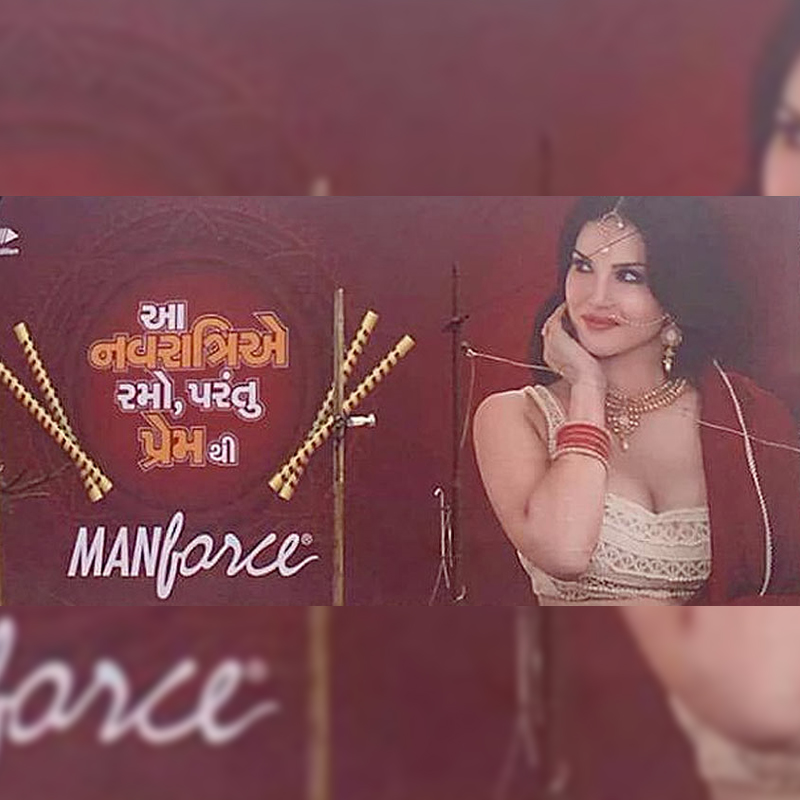
    The most recent instance wherein our sanskari-ness was awakened was when Mankind put up banners across Gujarat that had Sunny Leone advertising condoms with a tagline to ‘Play Navratri but with love’ that did not impress people one bit. Twitter and Facebook were bombarded with hate posts, forcing Manforce to eventually pull down the banner.

    ASCI’s consumer council looks into the content of advertisements and decides whether the ad is a s per its self-regulation code or not. Speaking to Indiantelevision.com, ASCI secretary general Shweta Purandare said, “Given the nature of the category (condoms), some sort of intimacy shown in the ad is inevitable but viewers are upset about them being shows during family viewing time. We replied to a few complaints that were forwarded to us by the MIB , by stating that those ads were not considered objectionable as per ASCI’s code but they (I&B) could consider the timing.”

    Vouching for brands, Vizeum Media Services associate vice president Saumya Agarwal adds, “One cannot penalise the product for the incorrect/unacceptable treatment in their communication. The guidelines must be placed towards how should the creatives be designed, without demeaning any gender in any way, etc., but to put an embargo on their exposure time is not justified.”

    Calling it an extremely myopic and ad hoc approach to solving a much larger issue, Agarwal notes that given the plethora of freely available information across multiple media, this would hardly make any difference. In fact, it is an irony that a country that is promulgating sex education is also fighting to ban condom advertising to the same audience.

    Doordarshan during the 1980s had declared that sanitary pads are ‘unmentionable’ and were not allowed to be advertised before 10 pm. That created a vicious circle for the product since young girls were the primary target. Brand-Building.com brand strategist and founder Ambi MG  Parameswaran is of the opinion that there is nothing wrong with pushing what is known as ‘unmentionable’ products into a more ‘adult’ time slot. “We should remember that condoms are in fact health products, they are for family planning and for prevention of sexually transmitted disease and that needs to be kept in mind when pushing condom ads to midnight slot.”

    On a different note, Harish Bijoor Consults brand strategy expert and founder Harish Bijoor said that laws such as these will help protect the innocence of young audiences that are besotted with television. “If implemented, I do believe that the meaning of explicit should be common to all categories and not condoms alone. If showing skin above the knee is explicit, it should be common to every category for sure. If a skin cream can get away with it, why not condom brands,” he adds.

    Pointing out that brands need to self-regulated before they put out ads, Purandare added, “We are not against advertising of products but the execution is very important. Some ads are quite bold in nature and may not be appropriate for kids and we can’t allow them to show pornography at prime time. Advertisers have to be more conscious about what they put out.”

    One might want to consider the fact that even if the I&B accepts the proposal, kids and teenagers are fairly active on digital as well. They can view the content on digital platforms making it a moot point. Havas India CCO Nima Namchu believes that the content can be delivered to the target audience with a relatively higher degree of accuracy on digital media. But if the idea is to regulate content so that explicit content is not viewed by our children, then this step with ads on television will perhaps be followed by similar requests with digital content as well.

    Doesn’t the nature of the product need ads to be creative with raunchiness and ‘explicit’ communication? Our media experts tend to think otherwise. While Namchu thinks that is not the case, Agarwal adds that categories like alco-bev (Alcohol and Beverages), condoms, feminine hygiene need to be portrayed sensitively without falling into the obvious traps and there must be some sure shot ‘socially responsible’ guidelines in order to prevent marketers crossing the line of objectification of women which is indeed objectionable!

    If and when the move happens, it will impact brand communication and marketing spends for these brands on television as the viewership between 11 pm to 5 pm is negligible. Advertisers would be forced to find alternative routes, use surrogate advertising and move to digital platforms. Harish Bijoor added, “The loss is more for the medium of television rather than for the brand player. The brand player will find other means to advertise. Water will find its own level.”

    Purandare also points out that whether prime time ban would only be applicable for certain products or the entire category would be I&B’s call.

    A head of a big TV network, who did not wished to be named, says it is “hypocritical “ on the part of any government or regulator to say condom ads pollute Indian culture or corrupt young minds, especially when government  itself runs awareness campaigns for HIV/AIDS.

    “At a time when bursting population is becoming a problem for a government and the country, saying young people should not be taught or made aware of sexual activities of humans, especially as it has a big health angle (prevention against AIDS, etc.), any effort to push ads of condoms to unearthly hours past midnight defeats the whole purpose of sex-health education of young people,” the TV exec adds. 

    However, sources in Ministry of Information and Broadcasting (MIB) said no decision has been taken on the issue yet, though, prima face, some content and it’s depiction in such ads are a bit explicit .

    KamaSutra and Durex declined to comment on the issue.

  • IPL net realisation up, digital ad revenue grew astronomically as compared to TV

    IPL net realisation up, digital ad revenue grew astronomically as compared to TV

    MUMBAI: How have the businesses of brands, advertisers and the allied industry changed since the advent of one of the most popular sporting events — IPL. The net realisation of IPL property has gone up by five per cent despite the depreciation of the rupee against the US dollar.

    Started in 2008, IPL success has been a catalyst for the T20 boom across the sporting world. But, for India, it was the beginning of a journey towards being a sporting nation. In short, the IPL has proved to a true game-changer — with distinct pre-and post IPL eras of sports marketing. It has added a new word to India’s vocabulary: Sport-ainment!

    IPL may see leading sports broadcasters such as Sony Pictures Network India (SPNI) and Star Sports invest over US$ 2 billion to pocket broadcast rights. Duff & Phelps is however expecting the broadcast and digital rights for IPL in next five years to go beyond $2 billion.

    Duff & Phelps 2017 report indicates 26 per cent growth in IPL brand values to USD 5.3 billion compared to USD 4.2 billion last year, boosted by the renewed Vivo title sponsorship deal at Rs 22 billion. A team of 6-7 persons worked on the report which also includes Duff & Phelps London MD Trevor Birch who was also the CEO of Chelsea FC. (As per Brand Finance, however, the value of IPL system grew by nine per cent in 2017 to $3.8 million.)

    Digital content is becoming a strong medium of social media engagement for the sports viewers. The number of tweets pertaining to the IPL has crossed 8.5 million and continues to grow.
    “In the span of next five years, it is a possibility that digital will reign over television, television will remain where it is — which means there would neither be significant growth nor fall. To give an example, Sony’s ad revenues crossed INR 13 billion this year with 10 per cent increase from last years ad revenue, while Hotstar’s ad revenues from IPL rose to Rs 1.2 billion, more than double the previous year,” Duff & Phelps MD Santosh N told Indiantelevision.com.

    The brand value of the individual teams have risen 34 per cent on an average in 2017 compared to 2016. The net realisation of IPL property has gone up by five per cent in the overall value of IPL business.

    Talking about the changes IPL is making to accelerate its growth in coming years, Duff & Phelps MD Varun Gupta said, “IPL is doing great when it comes to audience penetration — viewership in rural areas is going up, significantly. Focusing on international markets is making IPL capture eyeballs in different countries. With Afghanistan players playing for different franchises, it has added Afghani viewers too — for example.”

    IPL 2017 also ascended to new heights, with nearly 45 per cent of viewership coming from rural India.

    Talking about the ad revenue “Cricket is heavily leading with 80 per cent and the remaining is from other sports. India is a cricketing nation, the fact is — it has many slots for ads, everytime a wicket falls between the overs and the time outs,” Santosh added.

    Speaking on the competition among players bidding , “On the television side, the clash is between Sony and Star, but, in the digital space, Amazon, Jio and Hotstar are going to have a tough fight,” Gupta added.

    About whether advertisers are moving to digital, Santosh added, “Every advertiser is looking at the ROI, with digital advertising you can structure it in a better way which is not possible in a linear TV.”

    As per Maxus, a total of approximately six million mentions on social media were registered in the 10th season, more than twice those of the last season (approximately 3.1 million mentions). Mumbai Indians had an incredibly successful digital media strategy, attracting over 83 million engagements across Facebook (50 million), Instagram (29 million) and Twitter (3.95 million).
    “Merchandising continues to be a challenging aspect in India, their needs to be a better understanding as in how to license your brand to maximise revenues, its an area where international franchise has also struggled with and they got it right in the past 5-6 years,” Gupta added.

    Brand finance is an independent branded business valuation and strategy consultancy which has also compiled a report on IPL brand value in 2017. Comparing the data of Duff & Phelps and Brand Finance, Duff and Phelps have Mumbai Indians(MI) on the top with brand value of $106 million in 2017 and 36 per cent increase compared to last year followed by Kolkata Knight Riders (KKR) with $99 million gaining 29 per cent brand value. Royal challengers Bangalore with 31 per cent increase sits at third position with $88 million.

    Whereas, Brand Finance (UK) has KKR on top with $58.6 million and 24 per cent increase in brand value followed by MI with 17 per cent hike and $54.1 million. SunRisers Hyderabad has placed itself at third position with $46.5 million and 23 per cent hike. RCB is on the fourth position with only 4 per cent increase and $44.4 million as its brand value.  

    About the difference in the reports, Gupta said, “This involves a lot of primary and secondary research, it might be possible that we interacted with different stake-holders. The methodology might be different from ours: we use income and royalty approach to arrive at our final output.”

    ALSO READ :

    IPL: Discovery & YuppTV in fray, CoA-BCCI discuss conflict of interest & pay today

    CSA T20 Global League reschedules player draft dates

    IPL: BCCI tells SC rights bidding process under way, hearing on 22 Aug

  • Facebook to reduce unintentional ad clicks, announces new metrics

    MUMBAI: Facebook, last October, outlined what it will take to create a healthy advertising ecosystem: great experiences for people, meaningful business results for advertisers, and sustainable growth for publishers.

    Ad placements that are built to drive unintentional clicks run counter to that goal. While they can be profitable for publishers, they fail to deliver good experiences for businesses or people. For advertisers, these kinds of unintentional clicks can drive down the value of their campaigns.

    Over the next few months, Facebook will be making updates to stop delivering to ad placements that encourage unintentional clicks. These updates include policy clarifications on unintentional clicks, product changes to invalidate these clicks, and proactively pausing implementations that exhibit abnormal click behavior.

    Removing unintentional clicks from Audience Network: When browsing across the web or in an app, ads may pop up in places that cause people to accidentally click on them.

    Facebook is no longer counting Audience Network clicks where people “bounce back” in under 2 seconds. FB found that these clicks are almost always unintentional.

    Total campaign impressions: FB is providing two new metrics to offer clarity on the number of ads shown to people including gross impressions, auto-refresh impressions.

    Utilizing Signals About Intentional Clicks

    To understand if a click is intentional, one of the metrics FB looks at in FB delivery models and quality detection systems is “drop off rates” — the time a user spends on the landing page of an ad. Facebook found that people who click on an Audience Network ad and spend less than 2 seconds on a destination page almost always clicked accidentally. Moving forward, FB will no longer count clicks categorised as unintentional. Facebook will continually refine and adjust this threshold as Facebook gathers more data and signals.

    Pausing Implementations with Abnormal Behavior

    Publishers sometimes create ad experiences that fail to deliver true advertiser value. This can be due to implementation error, or because the ad is in the wrong flow of the app experience. When Facebook sees abnormal behavior, such as an inflated click-through rate (CTR), it will automatically pause placements to protect people and advertisers. Facebook also inform publishers so they can make necessary changes.

    Clarifying FB Policies

    FB also heard from publishers that they want more examples of FB policies, and specifically how to create better native ad experiences. So it recently updated FB policies with clear examples to avoid unintentional clicks (https://developers.facebook.com/docs/audience-network/policy), and went a step further by introducing a new policy that prohibits clickable “whitespace” on native ads. By requiring users to click on an advertiser asset, FB expects to see further reduction in unintentional clicks.

    Going forward, FB will be experimenting with more ways to reduce the number of unintentional clicks by looking further into bounce rates, additional metrics, and trying to prevent users from accidentally clicking in the first place.

  • Huge data growth helped brands slightly, M&E confidence score 82%, finds Publicis’ Zenith

    MUMBAI: Advertisers in the media & entertainment category are most confident about seeing growth in their category this year. They are closely followed by advertisers in pharmaceuticals & healthcare.

    This is the key finding from Zenith’s new biannual client survey. Ahead of marketers attending Cannes Lions 2017, we wanted to find out what are the key drivers of growth and to assess how confident they are about business growth in their category.

    Zenith asked clients how confident they were in the prospects for growth in their category this year. We then ranked each category on a scale from 0 to 100, where 0 means everyone expects substantial decline, 100 means everyone expects substantial growth, and 50 means the average expectation is for no growth.

    The results were as follows. Media & entertainment advertisers came out on top, with a score of 82.1, followed by pharmaceuticals &healthcare and alcohol. The lowest-scoring category was telecommunications, at 33.3, followed by food & drink and FMCG (non-food).

    Ranking of categories by advertiser confidence in growth

    Survey of 158 key Zenith clients around the world

    Category

    Confidence index


    Category

    Confidence index

    1. Media & entertainment

    82.1


    7. Travel

    61.4

    2. Pharma/healthcare

    70.3


    8. Retail

    60.0

    3. Alcohol

    70.0


    9. FMCG (non-food)

    55.7

    4. Luxury

    67.6


    10. Financial/insurance

    53.6

    5. Beauty

    67.2


    11. Food & drink

    48.4

    6. Automotive/vehicles

    63.6


    12. Telecommunications

    33.3

    Key drivers of business growth

    We then asked our clients to look at the drivers of business growth, ranking them according to how important they believed they were for their brand. From most important to least important, the factors were ranked as follows.

    Ranking of contributing factors to business growth

    Survey of 158 key Zenith clients around the world

    1. Data & technology

    2. Business transformation

    3. New competitive positioning

    4. Geographical expansion

    5. Diversification

    6. Automation

    7. Mergers & acquisitions

    The first three factors were ranked closely together, with quite a big gap between numbers 3 and 4. Adapting to the challenges of a transforming economy is clearly the main priority for advertisers.

    Translating growth in data to business growth

    We also asked clients how the huge increase in data has affected three areas of their business: buying efficiency, creating new insights into consumers, and generating profitable brand growth. For each area we gave them five options: data has made it more difficult, has had no effect, has slightly improved it, has greatly improved it, or has revolutionised it. And for each area there was one overwhelmingly popular response, with 50% or more of responses. These were as follows:

    •          The huge increase in data has allowed us to make small improvements in buying efficiency.
    •          It has allowed us to create much better insights.
    •          It has improved brand growth slightly.

    So while most clients agree that data has significantly improved their consumer insights, it has not yet transformed their buying efficiency or brand growth.

    “Brands have the opportunity to harness data and technology to transform their businesses and accelerate brand growth, but are having difficulty in turning theory into practice,” said Vittorio Bonori, Zenith’s Global Brand President. “Agencies must step up and work in partnership with their clients to unlock the true potential of this revolution in communications.”

  • Advertisers target rural north & south zone on serials & film-based content: BARC

    Advertisers target rural north & south zone on serials & film-based content: BARC

    MUMBAI: None realised the importance of rural market until BARC India started monitoring viewing habits in the countryside. After the TV audience measurement system gave its ratings, the industry woke up to the potential of this market.

    A recent newsletter released by BARC India emphasises on the viewing habits of the viewers on different fronts.

    From one front,  this research explores the advertisers and marketers targeting north and south zone on serials and film-based content to reach their respective audience.

    On an overall level for rural India, serial-based programmes secure the highest share, followed by film-based programmes. This pattern is consistent across zones with the exception of south India. Viewership for serials is driven majorly by the north zone while film-based programmes have maximum viewership in the south zone, which does not come as a surprise.

    public://barc6_0.jpg

    Most of the programme themes are driven by south zone. The only exception is music which is driven almost entirely by the north zone. For broadcasters in the serials and music genre, north rural market is the key.

    For advertisers and marketers targeting north and south zone, serials and film-based content will be the ‘Holy Grail’ to reach their audience respectively as over 30 per cent of the viewership is attributed to each of these content types across zones.

    For marketers targeting west or east zone, frequency-based plans yield results easily. On the other hand, for those targeting north, reach-based plans may be more achievable.

    On an overall level, the south zone registers the highest reach and ATS ( Average Time Spent) among the four zones in rural market. Looking at the west zone, ATS is the second highest after south zone. However, it has relatively lower reach. This shows that audience in the western rural market has lower reach but they spend a high amount of time consuming television content. Conversely, the north zone has the lowest ATS but has a comparatively better reach. One can infer that audience in the north zone does not stick to television viewing for as long as those in other zones.

    The rural viewership pattern

    Urban and rural India follow distinctly different viewing patterns across the day. Rural India starts its day much earlier than urban India around 5am, and continues to have higher viewership until 9am.

    Post 9am, urban India’s viewership catches up and has higher viewership than the rural India throughout the afternoon and evening. Both, urban and rural India see a marginal peak during 2-230pm. However, rural India sees an early spike for prime time as compared to urban India. The highest viewership in rural India is generated during the time-band 830-9pm followed by the time-band 8-830pm.

    Viewership starts declining around 1030pm hinting at an early wrap-up for the day for the rural audience.

    If one compares all the four zones in the rural market, it seems like the viewership is driven by southern rural market followed by the west zone. The lowest viewership in rural market can be observed in the north zone which has the lowest average rating percentage for the entire day.

    public://barc10_0.jpg

    public://barc9_0.jpg

    If one looks at the zone-wise viewership, both weekdays and weekends are driven by the south zone followed by west zone. Overall viewership for weekends is marginally higher than weekdays for rural India. At the zone level, this increase for weekend viewership is the maximum for the west zone and the least for the east zone.

    public://barc8_0.jpg

    public://barc7.jpg

    Viewership differs during prime time

    Millennials in rural India could be the next big target for broadcasters and advertisers to hold on to.

    Viewership in India during prime time is equally divided among both the genders. However, if compared by the four zones, north and west zone have a higher percentage of male viewers (51 per cent  and 52 per cent, respectively) and Millennials (age-group 15-30) form the largest percentage of audience in rural India. The pattern is the same among all the four zones with the exception of south where Gen X (age group 31-50) forms the largest percentage of the audience.

    NCCS C (New Consumer Classification System) has the highest share of viewership among all zones in rural India. While the west zone and the east zone display a composition similar to rural India, the north zone and south zone have some variations. The north zone has a substantially higher composition of NCCS A & NCCS B, while the contribution of NCCS C is lower than the rural India average. Conversely, in the south zone, the contribution of NCCS A is low.

    public://barc5_0.jpg

    Surprisingly, film-based programmes, which have the maximum reach during prime time, have one of the lowest stickiness across rural India for all the four zones. Game/talk/quiz and lifestyle-based programmes can hold the audience for long as they have a healthy ratio for reach to fidelity. In rural India, stickiness for serial-based programs is the highest across programme themes.

    Surprisingly, it is driven mostly by south zone, which had the lowest reach among all zones for this content. Interestingly, if one compares this to the audience composition analysed above, north zone and west zone, which have a higher percentage of male audience, also see higher stickiness for sports programmes. Lifestyle-based content in terms of stickiness has much better ratio of reach to fidelity across zones.

    public://barc4_0.jpg

    public://barc3_0.jpg

    Ad sector popularity

    The top ad sectors by viewership during prime time in rural India are personal care/hygiene, food & beverages, hair care and services etc.

    Personal care/hygiene and hair care sector have a higher share in the north zone. This can also be seen while comparing all the zones for the ‘personal healthcare’ category, where again the north zone takes the lead.

    On the other hand, the south zone is more inclined towards categories such as food and beverages, auto, durables and personal accessories.

    public://barc2_1.jpg

    Switching pattern for GEC & movie genre

    Since most of the TV viewership is generated by GEC and the movie genre, it would be interesting to understand the switching pattern of rural India on a day-part level.

    public://barc1_1.jpg

    As observed in the paragraphs above, throughout the day, most of the switching to or from a channel genre happens due to audience switching the TV on or not. However, it declines during the later time-bands. The only exception is 6pm to 12 midnight where switching between movies and GEC is higher than viewers switching TV on during that time-band (with movies as reference). On comparing switching from movies to GEC genre, switching percentage remains almost comparable throughout the day.

    On the other hand, switching from GEC to movies declines during later time-bands. On an overall level, switching from GEC to movies is seen more often that the switching from movies to GEC.