Tag: advertisers

  • IPL 18 advertisers score big as FMCG, gaming and finance jostle for air-time

    IPL 18 advertisers score big as FMCG, gaming and finance jostle for air-time

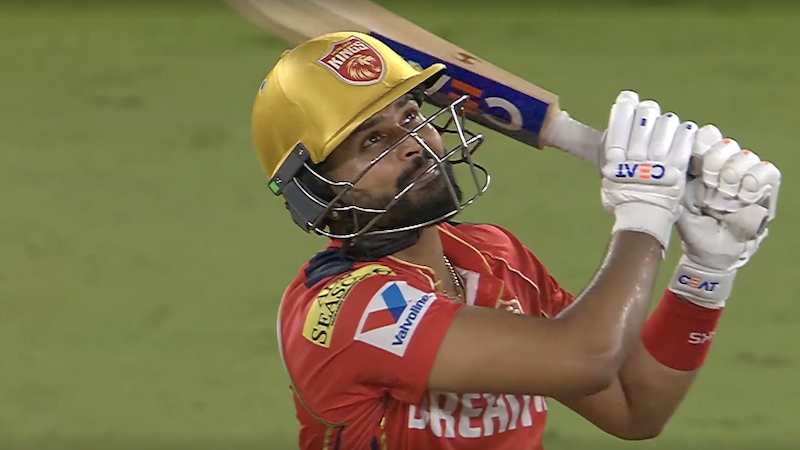
    MUMBAI: It’s not just the players smashing boundaries—advertisers are on a powerplay of their own. According to TAM Sports’ latest report on IPL 18 (covering the first 70 matches between 22 March and 27 May 2025), this season saw a brand barrage with more than 190 brands, 105+ advertisers, and 70+ categories vying for attention on TV. 

    That’s a 27 per cent jump in advertiser count and nearly 28 per cent rise in brand presence compared to IPL 17. Clearly, the advertising pitch is just as lively as the one at Eden Gardens. The commercial ad volumes for the first 70 matches of IPL 18 nudged past last season’s levels, with indexed TV ad volumes clocking in at 100.4, a whisker above the IPL 17 baseline of 100.
    top5newcategoriesandbrandsTop five advertising categories in IPL 18 (by ad volume share):
    1. Mouth Fresheners – 12.78 per cent  (up from 11.45 per cent in IPL 17)
    2. Biscuits – 9.77 per cent
    3. Ecom-Gaming – 6.83 per cent  (down from 11.04 per cent in IPL 17)
    4. Aerated Soft Drinks – 5.89 per cent
    5. Corporate-Financial Institutes – 5.34 per cent

    Mouth fresheners held on to their crown, showing that Indian advertisers still believe freshness sells, especially between overs. Biscuits crunched their way into the No. 2 spot, while ecom-gaming slipped a few spots—perhaps signalling ad fatigue or recalibrated spends post-pandemic highs.

    What’s also notable is the diversification of the ad pie. From perfumed pitches to cooling sales strategies (think air conditioners), the IPL has cemented itself as the go-to platform for mass-market and digital-first brands alike.

    As digital integration and CTV platforms begin syncing with traditional TV, IPL is morphing into a full-spectrum advertising festival. The brand blitz isn’t slowing down—if anything, it’s gearing up for a full 360-degree spin shot in IPL 19.

  • IPL18  ad-splosion – brands in a frenzy for cricket’s hottest ticket: TAM data, 13 matches

    IPL18 ad-splosion – brands in a frenzy for cricket’s hottest ticket: TAM data, 13 matches

    MUMBAI: The Indian Premier League (IPL) is not just a sporting event; it’s an advertising goldmine. New data (22 March to 1 April 2025) from TAM Sports indicates a massive surge in ad volumes, with IPL 18 experiencing a 112 per cent increase for the first 13 matches compared to IPL 17 (22-31 March 2024 ). The scramble for screen time is intense.

    top 5 brands ipl

    IPL 18 is attracting a wave of new players. The number of competing categories has risen by 13 per cent, and the number of advertisers has jumped by an impressive 31 per cent. Brands are clearly banking on the IPL’s broad appeal to connect with India’s passionate cricket audience.

    Mouth freshener brands are currently leading the pack, commanding an 11 per cent share of ad volumes. Ecom-gaming and biscuits are also major contenders, with 10 per cent and nine per cent shares respectively.

    The top five categories collectively account for over 40 per cent of all ad volumes, highlighting the fierce competition at the top. While ecom-gaming and cellular phones maintain a strong presence, the food and beverage sector is making a significant push, with two of the top five categories originating from it.
    top 5 brands iplParle Products holds the top position among advertisers, securing nine per cent of the ad share. The top five advertisers together account for 28 per cent of the total ad volumes.

    IPL 18 is also marked by significant change. 23 new categories and 83 new brands have entered the advertising arena. Emerging categories include cars, ecom-auto rental services, and fashion outlets. In contrast, categories such as range of food products and chocolates are absent this season.

    New brands vying for attention include Platina Hide & Seek and Campa Energy Drink. The advertising landscape is dynamic, with brands fiercely competing for visibility.
     

    top categories IPL

    As the IPL action unfolds on the field, an equally compelling drama is playing out in the advertising world. The stakes are high, and the competition is relentless.

  • India-Afghan T-20 series attracts strong advertiser support for Viacom18 Sports

    India-Afghan T-20 series attracts strong advertiser support for Viacom18 Sports

    Mumbai: This evening when the telecast of the three-match India-Afghanistan T-20 series begins on JioCinema and Viacom18 Sports, the roster of advertisers will impress one and all. Amongst the ones who have got on board include: Tata Commercial Vehicles and HDFC Bank as co-presenting partners.

    On the associate partner list figure: Matrimony.com, Eureka Forbes, Beam Suntory, Oppo, Kajaria, Hero Electronix and Farmley.

    Crex, MPL, Komaki EV and MP Birla bring up the rear as associates.

    The white ball series has been generating a lot of interest courtesy of the comeback of both Rohit Sharma and Virat Kohli to the Indian squad after an absence of 14 months. Also noteworthy is the absence of world-class all-rounder Rashid Khan from the Afghanistan squad. Khan is recovering from surgery a few weeks ago. Additionally, the Afghanis proved a world-class side, beating some of the better-known teams in the recently concluded ICC run One Day World Cup.

    Expect some great action over the next week.

  • JioCinema reboots for another big digital innings with advertisers for IPL 2024

    JioCinema reboots for another big digital innings with advertisers for IPL 2024

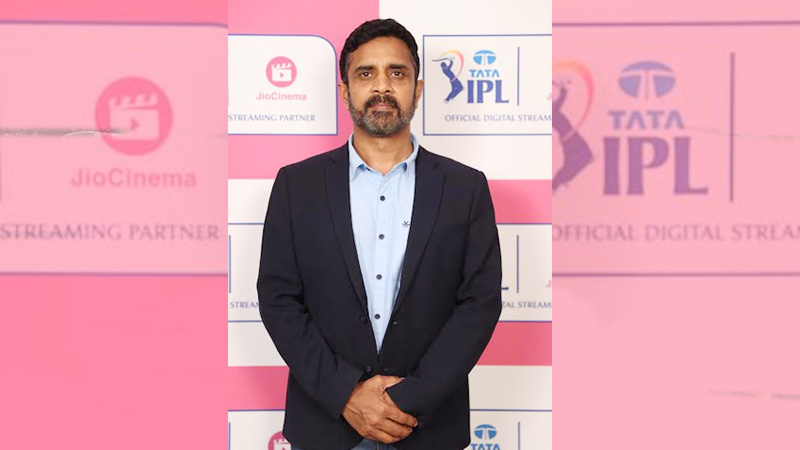
    Mumbai: Rebooting for a new season of IPL, JioCinema hosted a roadshow event for advertisers and partners that brought the power and potential of live sports on digital back into focus, and showcased the expanse of the platform’s offerings in the coming season. The event witnessed participation from some of India’s advertisers who discussed India’s paradigm shift towards digital and its implications on advertising in live sports.

    JioCinema anchor Anant Tyagi helped unfold an engaging session with brands such as Blackberrys and Mobikwik who shared a first-hand account of the transformative impact that IPL on JioCinema had on their respective businesses last season. The event also opened up conversations on the sharp rise in the adoption of Connected TV over the past year and how brands are making the most of it. Participants at the roadshow discussed how cricket on streaming platforms transcends demographics and enables unprecedented scale, thus making it sharper and more effective than traditional genres.

    All conversations at the event threw the spotlight on the scope and scale of IPL 2024 and what makes digital the right medium for this spectacle.

    Viacom18 sports head of revenue Anup Govindan, “With the first edition of IPL on JioCinema, we revolutionised the market by streaming the league for free, and also set an industry trend where competition followed suit while streaming other marquee tournaments,”

    “We are set to witness another staggering season of IPL on digital and hit 600-650 million viewers. The explosive growth of CTV and handheld devices will make it an inevitable phenomenon. This truly democratizes the opportunity for brands across the board to connect with their audiences through sharper targeting and in turn grow their businesses exponentially.” He added.

    JioCinema offered the world T20 league last season in 12 languages and 17 feeds for free and received a record-smashing 449 million viewership throughout the tournament, including 70 minutes of average watch time per match. JioCinema is now set for an encore with IPL 2024.

  • Advertisers have seen and understood the power of news, reveals Network18’s Sidharth Newatia

    Advertisers have seen and understood the power of news, reveals Network18’s Sidharth Newatia

    Mumbai: News18 India has outperformed its competition for the 15th week in a row, extending its dominance in the Hindi news segment in the country. According to Barc data (Market Share 24 hours TG:15+, India, WK 40 to 43′ 22, All Day), News18 India continues to lead with 15.7 per cent.

    This has also been noticed by advertisers, which will help the network with the growth in ad sales and eventually increase revenue. There is not only growth in viewership but also in overall advertising revenues, which is reflected in strong double-digit yield growth for News 18. Network18’s consolidated revenue increased 12 per cent year on year to Rs 1,549 crore this year.

    Network18 Hindi cluster national revenue head Sidharth Newatia spoke with IndianTelevision.com about the cluster’s growth, strategies, and challenges. “We will continue to press that business lever going forward. We have taken a conscious decision to back our content more and have thus been very cautious about the ad inventories that we run. We want to provide our advertisers with a clutter-free environment to ensure their marketing objectives are met,” he expressed.

    He believes that the North, West, and South are the largest markets, with the North region accounting for the highest advertising spend for the news genre.

    The pandemic has had a positive effect on ad sales in the news genre. The importance placed on having news as part of the media plans has increased over the past two years.

    “Advertisers have seen and understood the power of news in these times and have used the medium to further their communications. There was a brief period during a pandemic when the news genre had a higher reach than some of the other genres. So, all in all, business has been good in these pandemic times,” he said.

    News 18 is consistently working on increasing the penetration of news genre advertisers in tier I and tier II cities and showcasing to them the power of news and the importance of building their brands through it.

    He elucidated, “The contextual and relevant nature of the news has already made the genre a must-have in all the media plans. Growing the advertiser base has been the key pillar of growth for us, and we will keep on pushing this metric hard.”

    While speaking about challenges to getting advertisements, Newatia expressed that the challenges are not in terms of advertisers but getting the volumes up to earlier levels.

    “The television industry has not lost advertisers; in fact, it has gained them. The challenge is that the advertising spend per advertiser has gone down due to pressure on bottom lines because of rising input costs. Thus, clients have reduced their discretionary spending. Having said that, as a network, we are in an enviable position with the three national channels at the top of the pyramid. We have the number one Hindi general news channel in News18 India, the number one English general news channel in CNN News 18, and the incomparable number one English business channel in CNBC TV18,” he affirmed.

    This year, one of the strategies for Network 18 is to build an enviable intellectual property lineup that will be relevant, best in class, and second to none.

    Newatia stated, “The news genre is such that it has the power to bring about societal change. All programming/content is geared towards that objective only. We do shows like Rising India on a national level as well as on the state level with the political and social diaspora to discuss the way forward.”

    Recently, News18 India held a large event called Amrit Ratna, which honoured some very prominent Indians for their contributions to the country. All these things not only add shine to their brand but also give a 360-degree one-stop solution to advertisers.

  • Advertising on TV continues to flourish, reveals GroupM’s Consumer Eye Research

    Advertising on TV continues to flourish, reveals GroupM’s Consumer Eye Research

    Mumbai: GroupM has launched Consumer Eye Research, which seeks to uncover insights related to the impact of media-related technologies on brands and society. The latest edition of the report, titled “Advertising on TV: Flagging or Flourishing,” analysed the potential of advertising on television.

    The findings of the survey reveal that television continues to be the most beneficial and demanding medium for advertising.

    The past two decades have seen rapid transformations in the media landscape, with the number of options available to advertisers significantly increasing. Many of these options offer excellent opportunities for brands to reach audiences with high levels of precision, customization, and measurability.

    While this transformation is beneficial for many advertisers, TV continues to retain a power that can be leveraged by advertisers, according to the report.

    Additionally, the digital extensions of TV have not only given rise to new ways for people to consume content but have also created a myriad of opportunities for brands to engage with audiences through TV.

    TV makes the world a better place

    60 per cent of the surveyed respondents agreed that free TV channels make the world a better place. Hence, TV remains a very important medium for influencing mindsets and shaping cultural behaviour. The second most preferable medium to make the world a better place is the newspaper, according to 56 per cent of the survey respondents.

    TV retains a unique strength in building brand equity

    The report reveals that television is still the most popular channel that conveys the most positive impression of brands. In APAC, TV ads are ranked No. 1 for conveying a positive impression of brands. In fact, TV ads (39 per cent) received equal weightage alongside the recommendations of friends (39 per cent).

    TV offers a brand-safe environment 

    73 per cent of audiences believe it is a brand’s responsibility to control where their advertising appears. 45 per cent will have a negative opinion of the brand if it appears next to inappropriate or offensive content. The report demonstrates that TV is still one of the safest environments that allow for brands to be seen next to premium, high quality content.

    TV is still a tremendous entertainment platform for consumers worldwide. The verdant environment also offers many opportunities for creative innovation and impactful campaigns. More than ever before, brands can take advantage of TV’s addressable transformation by considering new formats like shoppable ads and dynamic creative ads that dangle bespoke offers in front of the target audience.

  • Instagram introduces new ways to verify age in India & Brazil

    Instagram introduces new ways to verify age in India & Brazil

    Mumbai: Meta-owned Instagram has announced that it has expanded the test of new options for people to verify their age to additional countries, including India and Brazil. The company further stated that it plans to expand to the UK and EU before the end of the year.

    The company has brought its new test for users to verify their age via an original ID or video selfie to India. It says that kids today are using fake dates of birth to create profiles on social media platforms.

    It requires people to be at least 13 years old to sign up for the service. In some countries, the minimum age is higher. Uners who are teens (13–17) will be offered age-appropriate experiences like defaulting them into private accounts, preventing unwanted contact from adults they don’t know and limiting the options advertisers have to reach them with ads.

    If someone attempts to edit their date of birth on Instagram under the age of 18 to 18, or over, in India, they will be required to verify their age using one of three options: upload their ID, record a video selfie, or ask mutual friends to verify their age. The company also expressed that they’re testing this to make sure teens and adults are getting the right experience for their age group.

    Instagram further added that it is removing “Social Vouching” as an option to verify age from the test to make some improvements.

    The Social Vouching option allows users to ask mutual followers to confirm how old they are. The person vouching must be at least 18 years old, must not be doing it for anyone else at that time, and will need to meet other safeguards that are in place. The three people selected to vouch for the user will receive a request to confirm the user’s age and will need to respond within three days.

    Further, Instagram also stated that it is partnering with Yoti, a company that specialises in privacy-preserving ways to verify age. Yoti is verified by the Age Check Certification Scheme and is an age verification provider for several industries around the world, including social media, gaming, and age-restricted e-commerce. Yoti has received public support for its approach and knowledge of responsible artificial intelligence from authorities and governmental organisations in the fields of youth and privacy, including the German regulator KJM.

    Yoti notes that it trains its dataset on anonymous images of diverse people from around the world who have transparently allowed the company to use their data and who can ask them to delete their data at any time. For people under the age of 13, Yoti collected data using specific data collection exercises where parents or guardians had given explicit consent.

  • GUEST ARTICLE: What are the advantages of the advertising industry with the new 5G technology

    GUEST ARTICLE: What are the advantages of the advertising industry with the new 5G technology

    Mumbai: In the recently ended spectrum sale, India auctioned 51,236 MHz of spectrum to incumbent operators for Rs 1,50,173 crore across several 5G networks. This implies a speedier experience for customers, with mobile devices interacting with wireless networks significantly faster and users seeing enhanced download and upload speeds. According to a Deloitte analysis, India’s digital economy is expected to reach one trillion dollars by 2025 as a result of growing smartphone use, fast internet penetration, and the acceleration of mobile broadband and data connectivity. However, 5G is expected to be the primary driver of this expansion.

    5G, like the radio, the internet, and other disruptive technologies before it, will allow advertisers to better engage customers by sending enormous amounts of data at speeds significantly quicker than current 4G technologies allow. Although 78 per cent believe 5G technology will be superior to 4G, 95 per cent are unaware of which 4G features are currently available on their devices. More than 70 per cent are prepared to pay for new technologies (with payment used as a proxy for perceived value). Faster downloads are significant for 71 per cent of 5G users. Respondents do not grasp the phrases “connectivity,” “capacity,” and “latency” and place a low value on these benefits. Here are the advantages for the advertising industry with the new 5G technology:

        Making your creatives suitable for 5G users.

    5G users interact with gadgets in a unique way, which can assist in personalising advertisements to what they’re most interested in. 5G has several concrete benefits, such as downloading a two-hour HD movie in roughly 18 minutes, live streaming a concert or live event to friends or family in HD, and low-latency gaming with 30-50 millisecond ping. However, tailoring your ads to fit consumers’ preferences is extremely critical for 5G over 4G. Users that have a strong interest in gaming, entertainment, and live streaming are more likely (92 per cent) to pay for 5G technology and purchase a 5G enabled phone early on, compared to the overall average (81 per cent). With all of the new 5G updates, there is also a huge opportunity to get creative with brand advertisements and innovate with new benefits.

        5G technology unlocks AR/VR advertising

    Because of 5G’s low latency and rapid download rates, advertisers and publishers will have more options to build new streaming media formats with better capabilities. As customers spend more time on 5G phones, they want new experiences to justify the higher cost. Therefore, advertising must capitalise on this. AR and VR have several applications. Over the next year, it is predicted that 100 million consumers will utilise augmented reality for purchasing. Creating increasingly meaningful, immersive experiences is the future of online engagement, and 5G will usher in those capabilities more naturally.

        Analytics will go real-time

    Already, a fraction of the data we can handle and analyse is considered real-time data. 5G will enable the integration of a broader variety of activities and impressions in real time. If a consumer makes a purchase in the future, they may no longer get any advertising connected to that product or product category. Fundamentally, this will improve targeting, segmentation, customer experience, and customer journey, as well as brand and consumer efficiencies.

        Serve advertisements that leverage 5G advantages

    Users may interact with adverts in novel ways thanks to the ability of 5G for advertisers to create more creative and original immersive content. Real, realistic on-device advertising experiences may be made possible in various ways with minimal latency. Advertisers may display full-screen commercials that let viewers see how a character or product appears in various settings that they can design and modify right from the creative. Additionally, brands may employ VR to present a 360-degree image of the gaming or social environment. Greater capacity also allows for the production of advertisements in a wide variety of audio and video formats. 5G technology has a tonne of unrealized potential, so businesses should be committed to coming up with fresh approaches to interacting with consumers through advertising.

    As with previous technological breakthroughs, advertisers will need to have their fingers on the pulse in order to fully capitalise on the new opportunities presented by 5G and avoid falling behind. Fundamentally, it’s fantastic for innovation that our most imaginative ideas may now confront fewer technological constraints. However, adapting our strategy to the new digital context will be a problem.

    The author of this article is Hotstuff Medialabs founder and CEO Arun Fernandes.

  • Xaxis launches programmatic media commerce solution Discovery Commerce

    Xaxis launches programmatic media commerce solution Discovery Commerce

    Mumbai: GroupM’s outcome media specialist, Xaxis, has launched a new programmatic media commerce solution in India called Discovery Commerce. This helps brands and advertisers navigate the evolving programmatic media commerce ecosystem and drives stronger outcomes from their media investments.

    Discovery Commerce enables advertisers to utilise data signals specifically around product adoptions, search patterns, and purchase patterns, then integrate additional advertising strategies that help drive sales, build brands, and engage customers on e-commerce platforms or brand-owned sites.

    Powered by Xaxis’ programmatic excellence, strong global partnerships, proprietary technology, and tailored data touchpoints, the solution creates a holistic approach to e-commerce performance, driving consumers towards purchase across various platforms and points of sale. Subsequently, the data and insights gathered from the various touchpoints will be used as benchmarks to inform future campaigns and audience planning.

    Xaxis has already onboarded multiple partners into Discovery Commerce, with specialised capabilities around data, inventory, technology, and creativity, including key partnerships with Shopalyst and Flipkart.

    Flipkart VP monetisation Sankalp Mehrotra said, “Commerce advertising today continues to grow faster than any digital channel. Over the years, Flipkart Ads has created solutions that are disruptive, unique, and scalable. Our partnership with Xaxis will unlock the next stage of exponential growth for brands of all sizes. Consumers will benefit from seeing communication that has higher relevance and a more seamless purchase journey.”

    In addition to driving stronger e-commerce performance and building benchmarks for future campaigns, Discovery Commerce helps brands better understand consumer behaviours and create more accurate target audiences by connecting online and offline data points. It can reach multiple online environments, premium publishers, leading marketplaces, and shoppable media ad formats, offering a simplified and consolidated service that unites previously siloed consumer data points.

    Shopalyst co-founder Girish Ramachandra said, “We are happy to partner with Xaxis. With Xaxis’ Discovery Commerce solution, brands can make their ads instantly shoppable and help drive impressions to conversions in one seamless journey for consumers.”

    One way Discovery Commerce uses that data to elevate brand outcomes is through the use of Shoppable Media, a solution powered by Xaxis’ in-house creative and execution shop, Xaxis Creative Studios (XCS). XCS leverages AI to understand real-time consumer behaviours on retailer websites and applies dynamic creative optimisation with data-driven product recommendations based on validated customer preferences. It provides a more convenient way for shoppers to add branded products to their preferred retailer’s basket, removing the need to remember the brand when they are online or in-store. It also significantly shortens the shopping journey for consumers, enabling them to browse, compare, and complete the order without leaving the ad.

    GroupM India president – data, performance and digital products Atique Kazi said, “We believe there could not be a more exciting time to launch this solution as there are so many opportunities for brands and advertisers to capitalise on e-commerce platform growth. From consistent datasets to campaign measurement and optimisation knowhow, there’s various key ingredients when it comes to doing e-commerce advertising right. We are delighted to be working with the likes of Shopalyst and Flipkart – further combined with the behavioural data segments from other partners, we can give our clients a deep understanding of how to leverage data to secure better outcomes.”

  • Digital radio technology can double broadcast sector’s revenue in five years: ICEA-EY report

    Digital radio technology can double broadcast sector’s revenue in five years: ICEA-EY report

    Mumbai: The adoption of digital radio technology will help the broadcast sector double its revenues within five years to Rs. 12,300 crore, according to a report prepared by the India Cellular and Electronics Association (ICEA) and EY.

    The report shows that digital radio broadcasting can be extremely beneficial for all the stakeholders in the sector—broadcasters, listeners, advertisers, and regulators—and can help the FM radio segment boost revenues. This comes at a time when the FM radio segment has been struggling to generate robust revenues over the past few years.

    It would lead to more advertising inventory to sell with the ability to charge higher rates based on segmented audiences. Given that the digital radio system can provide listenership data, broadcasters can build trust and eventually grow revenues.

    Another significant benefit of these technologies for broadcasters is that their transmitters use significantly less power than analogue radio transmitters.

    India has also tested two technologies – HD radio and digital radio mondiale (DRM), for digital broadcasting in the FM band.

    ICEA chairman Pankaj Mohindroo stated, “India is a heterogeneous market and provides audience segments with differing tastes as well as payment capabilities. Digital broadcast radio has the ability to cater to segments of entry-level smartphones and several hundred million feature phone users to receive enhanced services in the areas of health, education, emergency, and weather, which by complementing data networks, decongests them. Communication usage with IOT devices is next envisaged in the pipeline too.”

    Citing the report, Mohindroo said, “Digital technologies would go a long way in widening the network of broadcast infrastructure in the country and the number of radio stations would grow multifold from the current numbers of less than 300 to over 1,100 without any additional spectrum.”

    EY India partner Ashish Pherwani said, “Digital radio can provide a much-needed boost to the Indian radio segment. As a free-to-air medium, radio plays a very vital role in India’s informing and educating its people. Systemic issues around measurement, reach, operating models, competing products, and COVID-19 impacted the segment with failing revenues and shrinking opportunities. Digital radio can help grow the radio segment in India by 3x over 5 years, if implemented keeping in mind the requirements of various stakeholders and with the correct policy support.”

    According to the report, the number of channels will increase significantly from the perspective of listeners. Around 4x more channels are possible within the same frequency, which can provide more options to listeners. Furthermore, the technology is broadcast-centric, and consumers would not have to pay any data charges. Analogue transmission would also be enhanced as it provides a better listening experience than digital transmission across both audio quality and user interface.

    Digital technologies would also bring about major reforms for the regulators as it would result in optimum use of scarce spectrum in the middle and long term and lead to increased taxes from increased revenues. It would also allow the authorities to use digital radio infrastructure for emergency warnings and traffic information.

    The report prepared by ICEA and EY noted that a complete transition from analogue to digital radio infrastructure would take three to five years. Radio broadcasters cannot enable a switch-on-switch-off transition to digital radio as they are dependent on linear FM reach for their revenues. This would mean that analogue and digital broadcasting will need to exist in parallel till adequate reach is achieved.

    Consequently, for some years, there would be no spectrum saving, said the report. The report has recommended innovation around cost-effective chipsets, antennas, and software to drive quicker adoption of digital radio. It has also been said that competing products using low bandwidth data and consensus on music royalties are issues that need to be addressed.