Tag: advertisements

  • More than just an ad…

    More than just an ad…

    MUMBAI: To tell a brand’s philosophy in just 30 seconds isn’t an easy task. But everyday creative minds oil their machines to do just the same. While some click with the viewers, others are muted by them or flipped through without a second glance.

    While the year began with the political parties going all out to woo the voters – there were television commercials, digital films as well as hoardings pasted all across the country, Airtel’s Boss film led the charge with the Twitterati going crazy over it. 

    With the e-commerce sector war heating up, the companies too launched TVCs throughout the year to cash in the most, especially during the big sales offered by them. Digital as a medium to connect with the correct audience was optimised well. For instance, Honda for Mobilio released a 2.5-minute ad on YouTube featuring stand-up comedian Kapil Sharma as a salesman.  

    Promos of Indian Premium League (IPL), Pro Kabbadi League, Indian Super League (ISL) as well as Kaun Banega Crorepati (KBC) were able to catch people’s fantasy and created enough buzz before the game started. The right mix of sentiments and music made the films popular especially on the social media.

    2014 saw many ads which were more than being just a promotional feature and as the year comes to an end, Indiantelevision.com lists down some of the best ads of 2014.

    BJP election campaign

    Creative agency: Soho Square

    Purpose of the ad: After the Delhi gang rape case and many more that followed it, the campaign highlights the fact that the government has failed to provide safety to the women of the country and worse, hasn’t been able to punish the culprits.

    Storyboard: The black and white advert highlights how even though the country has progressed and people have sent there girls for higher education and work in other cities, they are not at ease. The woman/mother in the ad, stresses on the fact that the country isn’t safe in current government’s hands as women aren’t safe.

    Airtel Boss film

    Creative agency: Taproot

    Purpose of the ad: To strengthen Airtel’s legacy of identifying fresh and relevant insights around relationships.

    Storyboard: Relationships often get strained due to professional demands. At such times, smartphones transcend their role of being a mere communicating device, and play cupid.

    The TVC shows a woman boss ordering her subordinates to finish an assigned job no matter what. It turns out that the woman boss is the wife who goes back home to cook for her husband who happens to be the junior she had ordered.

    Fortune oil, ‘Ghar Ka Khana’

    Creative agency: Ogilvy & Mather

    Purpose of the ad: Adani Wilmar’s campaign for its Fortune Oil brand, shifting from ‘The joy of eating’ to a more personal ‘Ghar ka khana, ghar ka khana hota hai’ (Home cooked food is home cooked food after all).

    Storyboard: When you are away from the comfort of your space, braving the rigours of everyday life, all you need is two morsels of tasty home food cooked with a lot of love and affection. The gush of emotion that you feel when you have the first bite, only makes you thank your good ‘Fortune’!

    Idea, ‘No Ullu Banaoing’


    Creative agency: Lowe Lintas and Partners

    Purpose of the ad: To educate the masses about how some people cash on the other’s unawareness.

    Storyboard: A common phenomenon in almost every part of India, is how some people in order to make money or gain benefits, tend to take advantage of the ill-informed by coloring the truth or concealing the facts.

    In the TVC, a guide lies to tourists who then search on the web and the truth is exposed.

    Nescafe stammering standup comedian

    Creative agency: McCann Erickson

    Purpose of the ad: While perfection is what people chase these days, this ad feeds on a different meaning.

    Storyboard: The TVC shows a stammering stand-up comedian who faces rejection, but doesn’t give up and turns the same weakness into his strength.

    Fevicol Crazy chairs

    Creative agency: Ogilvy & Mather

    Purpose of the ad: Takes a humorous take on the current election scenario.

    Storyboard: A chai-wallah enters the shop of a carpenter who is making the next Prime Minister’s chair. He points out to three variations – one with BJP’s lotus, another with Congress’s hand, and a group of chairs joined unevenly symbolic of the Third Front.

    OLX Kapil

    Creative agency: Lowe Lintas and Partners

    Purpose of the ad: To promote selling off ‘unused or under-used’ products.

    Stoaryboard: Kapil Sharma stars in the film and plays a ‘juicer’. In the kitchen, he addresses the lady of the house urging her to use him (the juicer), or sell him. The lady notes that no one would buy him, telling him he’s useless. He corrects her, saying he has been ‘used less’. He proceeds to tell her how things are sold on Olx.in, and finds buyers in no time.

    Imperial Blue Men will be men

    Creative agency: Ogilvy & Mather

    Purpose of the ad: To carry forward the 17-year-old catchy tagline and philosophy.

    Storyboard: The campaign opens with a ghazal, “Pyar ki raah mein”, playing in the background as a beautiful young woman is seen talking on a phone in a lift. The camera reveals the torso of two men standing with her. The minute the woman exits both the men heave a sigh of relief and exhale, letting their stomachs hang out again. The film ends with both of them sharing a friendly high-five.

    Tata Docomo Bhalai ki Supply

    Creative agency: Contract Advertising

    Purpose of the ad: To encourage its subscribers to ‘Open Up’ and share happiness using their customised data offers.

    Storyboard: The advertisement features a ‘social media queen’ who appears to have lost her loyal online following. She pouts and preens in order to post the perfect profile picture that could restore her lost glory, but is continually disappointed, till one virtual ‘Like’ makes her day.

    Cadbury Snow Fight

    Creative agency: Ogilvy & Mather

    Purpose of the ad: To make the consumer aware of the fact that life lies in the ‘now’; that joy resides in the act of letting go, and that one should live like no one’s watching.

    Storyboard: The TVC shows a couple walking on a snowy mountain. While the man is busy oh his phone, the woman decides to change the situation by throwing a snowball on the man. The man too throws a snowball at her. The fight continues as they enjoy it.

    Titan Raga #HerLifeHerChoices

    Creative agency: Ogilvy & Mather

    Purpose of the ad: To tell that Raga is an evolved watch for the evolved woman of today – a woman who’s self-respecting and confident. 

    Storyboard: The film begins with Nimrat Kaur sitting at an airport reading a book. She is interrupted by an ex-lover who asks her if he could join her. When Kaur asks him how he has been, he makes a reference to Kaur leaving him. As they talk and catch up, it is revealed that Kaur is still single. On being asked why it is so, Kaur tells the man that she never gets time from work. This being something he knew all too well, he makes a passing comment about how their relationship would have worked had Kaur stopped working. Kaur retorts by saying that he could have also quit. Offended, he tells her that he could not have quit, seeing how he is a man.


  • ASCI launches ‘Swachh Ads Abhiyan’

    ASCI launches ‘Swachh Ads Abhiyan’

    MUMBAI: Observing the National Consumers Day on 24 December, Advertising Standards Council of India (ASCI) has launched the initiative ‘Swachh Ads Abhiyan’.

    With the purpose of combating misleading advertisements, the Department of Consumers Affairs proposed ASCI to come up with an initiative to create awareness amongst consumers to take action against misleading content. The campaign was initiated across various social platforms like Facebook, Twitter, LinkedIn and YouTube.  Engaging with the consumers and making them aware of what advertisements lead to misleading content and consumer’s right to complain against any such advertisements.

    ASCI chairman Narendra Ambwani said, “‘Swachh Ads Abhiyan’ is yet another initiative by ASCI to combat the issue of misleading advertisements and create awareness for the consumers on National Consumers Day. It’s really important that the consumers don’t blindly believe in advertisements and understand unethical and misleading claims. ASCI engaged with consumers through social media, which have massively driven consumer attention towards the campaign. We hope this initiative from ASCI will empower and are encouraging consumers to make the right decisions.”

    ASCI’s Consumer Complaints Council member Sucheta Dalal stated, “As a member of the consumer complaints committee (CCC) I have seen the big leap in ASCI’s effort to track misleading advertisements across different media and languages on a nationwide basis. ASCI has also made it easy to file and track complaints online or engage with it through social media. All we need now is better consumer awareness and action by concerned citizens to keep ASCI on its toes by filing complaints and making themselves heard on the evolving issue of misleading advertisements.”


  • NDTV’s media disclaimer on case with Quantum Securities

    NDTV’s media disclaimer on case with Quantum Securities

    NEW DELHI: The New Delhi Television has asked the media not to publish any defamatory advertisement or publication of any nature whatsoever etc by Quantum Securities Private Limited or its directors/associates in connection with and/or pertaining to and/or relating to NDTV, its senior officials and promoters in a contempt application filed by the channel in Bombay High Court in a case pending in that Court.


    The case against Sanjay Dutt, Quantum Securities Private Limited and its directors Om Prakash Arora, Neraaj Dewan and Sandeep Dutt was filed last year.


    The directive was sent to the media by NDTV advocates Amarchand and Mangaldas and Suresh A Shroff and Co.


    While issuing notice to Quantum as to why action under the provisions of the Contempt of Courts Act shall not be initiated against respondents for committing violation of the orders dated 6 August 2013 and 26 February 2014, the Court in an interim order restrained Quantum or its directors from issuing any advertisements, defamatory letters, notices, e-mails, or any publication whatsoever relating to the case.


    The matter has been fixed for 8 December.


    The judge said his attention had been drawn to the advertisement given by the respondents in the national daily newspaper ‘The Economic Times’ in New Delhi in Edition dated 30 October 2014 alleging that the NDTV had not disclosed facts and events in the presentation and also on NDTV website.


    It is stated that the Department of Income Tax, Government of India vide its final assessment order dated 21 February 2014 for AY 2009-2010 raised fresh demand of Rs 450 crore which has not been disclosed  which was required to be disclosed. NDTV said this was defamatory.


    The matter relates to an alleged Memorandum of Understanding of September 2006 and an agreement dated 1 July 2007 (as stated by NDTV senior counsel R M Kadam in court) executed between NDTV and Sanjay Dutt and Sanjay Jain whereby NDTV engaged services for providing strategic and financial advisory services; corporate finance; investment management and strategic consultancy. It is alleged by NDTV that under this agreement an amount of Rs 2,60,00,000 was paid by the Plaintiff to Dutt and Jain.


  • BARC India adopts NCCS as new classification

    BARC India adopts NCCS as new classification

    MUMBAI: In its endeavour to interact, engage and share with its stakeholders – key developments and initiatives – Broadcast Audience Research Council (BARC) India has embarked upon itself to unravel the puzzle of TV audience measurement system in India.
    One of the biggest changes that the measuring body has adopted is the New Consumer Classification System (NCCS).  The ‘New SEC’ system as it is referred to in the MRSI documents was co-developed by Market Research Society of India (MRSI) and Media Research Users Council (MRUC) as the new classification system for industry use.
    The new SEC system, which has been in existence since 2008, was developed after rigorous research as a better discriminator of the purchasing power of a household compared to the SEC. “Research has to evolve over time; and so have systems. In the 80s, MHI was used to classify purchasing power, which gave way to a better system called the SEC in the 90s. It is now time to embrace the new age system,” points out BARC India CEO Partho Dasgupta.
    Alternative systems – a point-based system including education of CWE, press exposure of housewife, ownership of durables and usership of consumer goods; and a system considering ‘best type’ of consumer durables owned – were considered before settling on the present NCCS.
    It is based on the assumption that a system that throws up more inequalities is more discriminating.
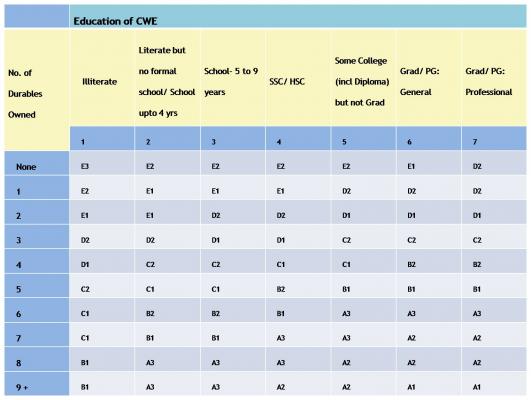
    The new SEC system is used to classify households in India and is based on two variables:  education of chief wage earner and number of consumer durables (from a predefined list) owned by the family.
    The 11 shortlisted durables (electricity connection, ceiling fan, gas stove, refrigerator, two wheeler, washing machine, colour TV, computer, four-wheeler, air conditioner, agricultural land (in rural areas) were identified as the best discriminators of the ‘purchasing power’ of a household after evaluating the series of variables, including education of housewife, type of dwelling (house), amenities, number of rooms, ownership of durables and usership of consumer goods.
    Dasgupta believes that the new system will be of great value to the industry due to various factors. “To name a few; (a) Advertisers do not discriminate between urban and rural India from their sales perspective; and the NCCS is a single system for urban and rural India, (b) It is not linked to only one individual in the household, but to the entire household, (c) It is dynamic, having the ability to change over time as discriminators change, and (d) It captures the affordability quotient of household and hence marketers can target more precisely.”
    NCCS v/s SEC – A Comparison:

    NCCS Grid has 12 grades ranging from A1 to E3:


  • Advertisements on state-owned buses banned during Elections

    Advertisements on state-owned buses banned during Elections

    NEW DELHI: The Election Commission (EC) has banned the display of political advertisements on State Road Transport Corporation buses and vehicles owned by Municipal Corporations etc, and other government owned vehicles when the Model Code of Conduct is in force for State Assembly or Legislative Council elections.


    The Commission, which has already banned such advertisements through hoardings and posters, said “it wanted a level-playing field for all parties since state-owned buses or the corporations were necessarily run by the ruling parties.”


    It also added that the action was taken after having duly considered all aspects of the matter in exercise of its powers under Article 324 (1) of the Constitution, and in the interest of conduct of free and fair elections.


    The Commission’s circular letter of 7 October 2008 contains the instructions and guidelines to be followed in the matter of display of election related advertisements through hoardings, banners, posters etc. It mainly deala with advertisements on static property and regarding display of flags and stickers on private vehicles.


    It can also be noted that there may be cases where advertisement-panels on buses are let out to advertising agencies for allocation to various clients during certain periods as per the contract entered into by them.


    EC also stressed that a level playing field envisaged under the Model Code of Conduct is a very vital aspect for ensuring free and fair elections. “A party should not be in a position to take undue advantage on account of it being in power in the government. This will put the other parties and contestants at a disadvantageous position and will disturb the level playing field, adversely affecting the fairness of election.”


    “There is reasonable likelihood that the allotment of advertisement spaces on such vehicles is likely to be manipulated more so in politically important constituencies and as such it will not be easy to ensure equitable distribution of advertisement space on the buses,” the Commission concluded.

  • MSOs in Kolkata request viewers to act as per guidelines

    MSOs in Kolkata request viewers to act as per guidelines

    KOLKATA: It was early this year that the multi-system operators (MSOs) in Kolkata introduced the gross billing system. And since, through numerous advertisements and hoardings, they have informed cable television viewers in the Kolkata Municipal (KM) area about this.


    However, seems like the viewers have still not come to terms with the fact that they have to pay as per the gross billing and not at their own will.


    Cable TV sources point out that there is no difference at the ground level. “Customers don’t want bills and that is the reason why local cable operators (LCOs)are not handing out receipts,” says a city-based MSO who adds that the LCOs get the bills without delay.


    However, with LCOs demand of a fee of Rs 5 from customers is hampering the process as well. The LCOs say that it requires money and manpower to distribute the bills and hence, the extra charge. “The LCOs are asking the customers if they need a bill and if so then the customers would have to pay Rs 5 extra,” says a MSO. “So they are not distributing bills using this as a reason,” he adds.


    Kolkata has around 30 lakh cable homes and since mid-January the MSOs have started issuing ad-hoc bills.


    “The MSOs are billing the full amount of package but in reality are getting much lesser in return. This problem needs to be solved at the earliest,” says another MSO.


    Advertisements like ‘Collect your monthly bill from cable operator’, ‘Enjoy Your Selected Package’ have been doing the rounds for some time now.


    The industry believes that to implement the gross (consumer) billing and bring transparency in the process, the MSOs will have to meet regularly. “Billing is a mess as LCOs are not willing to collect it and consumers are not willing to pay,” says a city-based cable analyst.

  • Government departments owe around Rs 80 crore to Doordarshan for advertisements

    Government departments owe around Rs 80 crore to Doordarshan for advertisements

    NEW DELHI: Public broadcaster Doordarshan has reported a revenue of Rs 1295.86 crore in 2013-14 from advertisements. Information and Broadcasting Minister Prakash Javadekar has said that the revenue in the current year till 31 May was Rs 87.76 crore.


    He told Parliament today that the advertisement revenue in 2012-13 was Rs 1298.16 crore, as against Rs 1100.27 crore in 2011-12.


    The Minister also clarified that there was no proposal to put any restriction on carrying government ads on the public broadcaster, even as he said various central and state government departments and public sector undertakings owe huge sums to Doordarshan.


    Javadekar said that various central and state government departments and PSUs owed Rs 79,66,30,752 as on 31 May this year to the pubcaster.


    The Directorate of Advertising and Visual Publicity, a media unit of the Ministry, owes an amount of Rs 6,94,91,429 to Doordarshan.


    He said this pertains to the advertisements released in the last quarter of 2013-14. However, Javadekar also said, “It is a normal process of bill settlement.”

  • ASCI upheld complaints against 68 out of 108 ads

    ASCI upheld complaints against 68 out of 108 ads

    MUMBAI: In March 2014, Advertising Standards Council of India’s (ASCI) Consumer Complaints Council (CCC) upheld complaints against 68 out of 108 advertisements. Advertisements in personal and healthcare sector category again emerged as the category which accounted for a majority of advertisements against which complaints were upheld.


    The CCC found the claims in health and personal care product or service ads of 44 advertisers, released in the press to be either misleading or false or not adequately / scientifically substantiated and hence violating ASCI’s code. Some of the health care products or services ads also contravened provisions of the Drug & Magic Remedies Act. Complaints against the ads like Hindustan Unilever’s Vaseline Healthy White Lotion showing exaggerated claims of ‘instant whitening’ on skin, Zydus Wellness claims that Everyuth Fairness Peel off to be India’s first intelligent delivering whitening technology that targets melanocytes to give unmatched fairness were upheld.


    Other complaints included Wipro (Glucovita Bolts) claims that Glucovita has iron and glucose which gives energy to the body and brain in 10 seconds. Hamdard Laboratories India product claims to be a herbal vitalizer for men.


    As for the education category, the CCC found claims in print ads by 14 different advertisers that were not substantiated and thus, violated ASCI guidelines for advertising of educational institutions and hence the complaints against these ads were upheld.


    For instance, DAV Institute of Engineering & Technology claims that it has ‘100 per cent placement track record of eligible students with highest offered pay package of Rs 5.65 lakh per annum, fourth top engineering college in Punjab as per CSR-GHRDC survey, 34th rank amongst private colleges of the country as rated by electronics for You magazine, 39th rank in top engineering colleges of excellence in India as per CSR-GHRDC survey and 66th rank in top engineering college of India as per Data Quest magazine.   


    In the food & beverage category, Cadbury India’s 5 star advertisement shows ‘a lady giving birth to a baby who is laughing. The voiceover says that the babies used to be laughing while being born in earlier days and later they started crying at childbirth due to a disease called seriousness. So eat 5 star to become jovial again.’ The CCC concluded that the frames in the TVC showing the process of child birth are gross and offensive.  The advertisement contravened Chapter II of the Code.  The complaint was upheld. The advertisement had received 21 such complaints against it.


    Other advertisements and claims which were upheld included the likes of CNBC TV18. The advertisement claims that, ‘CNBC-TV18 was the only channel India watched, during FM’s speech’ by relying on TAM rating of the day part 11:10 am until 12:06 pm. This claim of Network18 for its channel is completely misleading, factually incorrect, unsubstantiated and even disparaging to the other news and non-news channels including Network18’s competitor channels and ET Now. Network18 stated that according to TAM data, with the criteria- CS AB Males 25+, All India of 17 February 2014, the market share during the day part 11:10 am to 12:06 pm (‘Day Part’) was 100 per cent.  When calculating the TAM rating for the day part, we observed that Network18 had a share of 86 per cent which is in complete contradiction to what Network18 claimed in the Advertisement-1 and, ET Now had a share of 14 per cent, during the said day part, which clearly proves that Network18 was not the only channel that India watched during the FM’s speech as claimed by them.  TVTs garnered by ET Now during the aforementioned day part were 0.290, as against Network18 which garnered 1.680 TVTs.  Thus, it is very clear that ET Now also had viewership during that day part, which Network18 falsely and with mala-fide intention reduced to 0 per cent in the said Advertisement-1. Claim ‘as being the only channel watched’ is misleading to the viewers as there are 242 channels which had some amount of viewership ranging from 2,000 to 510,000 viewers in the Males 25+ SEC AB TG, out of which, 110 channels in that Day Part  had a higher reach than the Channel of Network18.  In the absence of comments from the Advertiser, the CCC concluded that the claim, ‘CNBC-TV18 was the only channel India watched, during FM’s speech’, was not substantiated and was considered to be misleading. The advertisement contravened Chapters I.1 and I.4 of the ASCI Code.  The complaint was upheld.  


    Click here for full report

  • Self-regulation is fine, but there is a need for govt backing: Parida

    Self-regulation is fine, but there is a need for govt backing: Parida

    NEW DELHI: Even as it acknowledges the role of self-regulation in curbing misleading advertisements, the government feels there is a role for powerful execution backed by a government authority.


    Consumer Affairs Ministry joint secretary Manoj Parida said that the Advertising Standards Council of India (ASCI) should have ex-officio members as part of its consumer complaint council meetings.


    At the outset, Parida said an advertisement is one that ‘gives casual leave to human intelligence’. Addressing a round-table on the subject of misleading advertisements organised by the Federation of Indian Chambers of Commerce and Industry (FICCI), he said the biggest problem in India was the low rate of literacy which resulted in the average consumer falling for any promises made through advertisements.


    While he acknowledged the role of the ASCI, he said it was a ‘friendly organisation’ of a few business houses. He said this was why self-regulation had not worked very well. There is a need to create an army of ‘ad monitors’.


    Even the courts have suggested setting up of an inter-ministerial committee for the purpose of checking misleading advertisements, he noted. He said the newly-formed inter-ministerial monitoring committee which is being constituted with the sole aim of monitoring misleading advertisements for protecting consumers could serve as the missing executive arm to ASCI. The committee will monitor misleading advertisement and unfair trade practices and suggest steps accordingly, he added.


    He noted that one major lacuna in the Consumer Act was that it only gave judicial remedy and therefore many consumers did not complain as court processes take much longer and there is no consumer protection agency.


    He also said there was need to put more money into creating consumer awareness.


    Elaborating on the role of ASCI and its future plans, ASCI Chairman Partha Rakshit said the council had been working since 1985. Since the Information and Broadcasting Ministry had given it recognition for hearing complaints, any direction given by it through the ministry’s IMC also applied to non-members. The ASCI worked on the three principles of honesty, decency and fairness.


    It was also incorrect to say that it only worked through friends since its Consumer Complaint Committees (CCC) had members of the civil society as well and the complaints were therefore heard by laymen. There were two CCC meets every week, each having around 14 members.


    In any case, two-thirds of the advertisements that appeared in the media were given out by ASCI members, though he admitted that this may work out to just around ten per cent of the companies in the country. He claimed that there was 85 per cent compliance with ASCI directions. He stressed that ASCI does not always wait for complaints and also takes suo motu action and some ads are suspended even before telecast.


    He said the bulk of countries around the world worked through self-regulation and India was no exception. Its 350 members included advertisers, advertising agencies, media and consultants.


    He said there was need to obtain legal authority for enforcing compliance of ASCI decisions by the print media, since the Cable TV Networks Regulation Act 1995 took care of TV.


    ASCI plans to cover print and social media (in internet) more extensively and Google and Yahoo had already come on board. It is also launching an online training programme on ASCI regulations targeted at young copywriters, agency executives and product managers in manufacturing/service companies.


    Speaking on consumer rights and remedies with regard to misleading advertisements, Germany’s GIZ consumer policy & protection Ruth Anna Buettner said that misleading and unfair practices were a global phenomenon. She added that the purpose of regulation should be proper functioning of markets and protection of individual consumer, mainly his contractual rights. Worldwide there are two ways of enforcement, one via public authority the other via courts, both accompanied by self-regulation institutions.


    Deliberating on the regulatory framework for misleading advertisements, Aazmeen Kasad and Law Practice Consultant owner Aazeen Kasad  said that to keep a vigil on the increasing incidents of misleading advertisements, the Central Consumer Protection Council (CCPC), apex body for consumer protection in India, has recently decided to draft guidelines to safeguard consumer interest from false advertisements in the country and set up a sub-committee to suggest strategies to deal with celebrity endorsements.


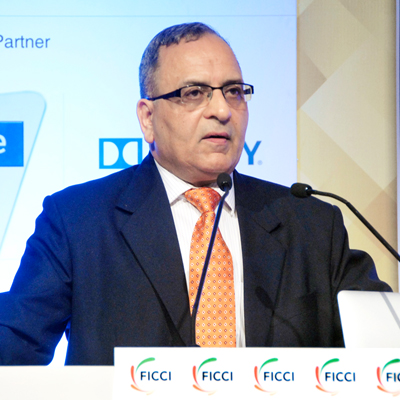
    FICCI FMCG Committee chairman & ITC ED Kurush Grant said all stakeholders – the NGOs and consumer forums, industry, self-regulatory body and the government – had unanimously agreed to work towards similar solution of empowering self-regulation. FICCI would work closely with ASCI and the Ministry of Consumer Affairs to tackle the menace caused by misleading advertisements.

  • Supreme Court sets panel on government advertisements

    Supreme Court sets panel on government advertisements

    NEW DELHI: Pursuant to the Supreme Court order for forming panel to frame guidelines to regulate publicly funded government advertisements, the Information and Broadcasting Ministry has formally notified the names of Bangalore’s National Law University director Prof NR Madhav Menon, former Lok Sabha secretary general T K Vishwanathan and senior advocate Ranjit Kumar.


    I&B Ministry secretary Bimal Julka will be the member secretary of the committee, which held its first meeting on 5 May.


     The Ministry said the report will be given preferably within three months of the date of the judgment, 23 April, by the panel after an intricate study of all the best practices in public advertisements in different jurisdictions.


     The apex court bench headed by chief justice P Sathasivam with justice Ranjan Gogoi and N V Ramana had said that the existing guidelines of the Directorate of Advertising and Visual Publicity (DAVP) do not cover such advertisements. There was therefore a need for substantive guidelines to be issued by the Court until the legislature enacts a law in this regard.


     The court passed the order on a public interest litigation (PIL) filed by the NGOs Common Cause and the Centre for Public Interest Litigation (CPIL) pleading it to frame guidelines. The petition sought issuance of guidelines for curbing ruling parties from taking political mileage by projecting their leaders in official advertisements.


     It was, the Court said, ‘vividly clear’ that the DAVP guidelines, which are available in the public domain, only deal with the eligibility and empanelment of the newspapers/journals or other media, their rates of payment, and such like matters. Besides, it only specifies that in releasing advertisement to newspapers/journals, the DAVP would not take into account the political affiliation or editorial policies of newspapers/journals.


     “Hence, it is evident that there is no policy or guideline to regulate the content of government advertisements and to exclude the possibility of any mala fide use or misuse of public funds on advertisements in order to gain political mileage by the political establishment.”


    The Government in its counter affidavit claimed that 60 per cent of the advertisements released by the DAVP on behalf of various Ministries/Departments/Public Sector Undertakings of the Central Government relate to classified or display/classified category such as UPSC/SSC or recruitment, tender and public notices, etc. The respondents asserted that government advertisements sometime carry messages from national leaders, ministers and dignitaries accompanied with their photographs.


    However, government counsel K Radhakrishnan said the purpose of such advertisements is not to give personal publicity to the leaders or to the political parties they belong to rather the objective is to let the people know and have authentic information about the progress of the programmes/performance of the government they elected and form informed opinions, which is one of the fundamental rights of the citizens in our democracy as enshrined in the Constitution.


    The apex court noted in its judgment that the immediate cause of filing these writ petitions in 2003 and 2004 respectively was stated to be the numerous full page advertisements in the print media and repeated advertisements in the electronic media by the Central Government, State Governments and its agencies, instrumentalities including public sector undertakings which project political personalities and proclaim the achievements of particular political governments and parties at the expense of the public exchequer.


    It was also the assertion of the petitioners – Common Cause represented by Meera Bhatia and the Centre for Public Interest Litigation (CPIL) represented by Prashant Bhushan – that such advertisements become more blatant and assumes alarming proportions just before the announcement of the general elections. Accordingly, it was the stand of the petitioners that such deliberate misuse of public funds by the Central Government, State Governments, their departments and instrumentalities of the state is destructive to the rule of law.


    It was also alleged that it allows the parties in power to patronize publications and media organizations affiliated to the parties in power and also to get favourable media coverage by selective dispersal of the advertising bonanza. It was projected that the use of public funds for advertising by public authorities to project particular personalities, parties or governments without any attendant public interest is mala fide and arbitrary and amounted to violation of Article 14 of the Constitution. It was also argued that use and wastage of public funds in political motivated advertisements designed to project particular personality, party or government by wasting public money is also in violation of the fundamental rights under Article 21 because of diversion of resources by the governments for partisan interests. Such violation, therefore, attracts the remedy under Article 32 for the enforcement of fundamental rights of the citizens.