Tag: Advertisement

  • “Reaching out to the mass is our biggest challenge”: ASCI’s Benoy Roychowdhury

    “Reaching out to the mass is our biggest challenge”: ASCI’s Benoy Roychowdhury

    MUMBAI:  Step outside your home and there is hardly a place where you can’t spot an advertisement — bus stops, public transports, and of course, the hoardings.  At home it reaches us through the glaring television screen or through melodious jingles via radio waves, in the newspapers and newspaper inserts, in magazines and leaflets. Many advertisers know us on a first name basis and communicate with us through SMS and WhatsApp forwards. Given their all-encompassing nature, there is no shortage of ads that claim everything and anything under the sun and  prey on gullible consumers.


    In spite of disagreements and disapprovals on certain advertisements, people hardly raise their voice against such ads assuming it is beyond their power – a fact that poses a challenge to the Advertising Standards Council of India (ASCI)


    Need to be better known:


    While ASCI commands considerable credibility amongst the industry operators, there is a growing need for it to be better known as an organisation. “Today pretty much all of the industry knows us. The large advertisers, the big companies who deal with us know how we function. The issue lies with the lay consumers who are directly affected by rogue and misleading advertisements,”says  HT Media executive director and recently appointed ASCI chairman Benoy Roychowdhury.


    “Often people come across something offensive or false, but aren’t informed enough to take action against it. When they see something offensive, they question themselves ‘what to do about it? Most of them are unaware of a body that protects their interests against advertisers, without drawing them into court litigations, etc.  I think informing them about ASCI and encouraging them to actively use our help to address misleading advertisements is our biggest challenge at hand,” Roychowdhury admits.


    ASCI is already taking action to redress the situation by reaching out to the consumer digitally.


    Roadmap for maximum reach:


    Considering the fact that gaining popularity is ASCI’s biggest challenge, Roychowdhury shares the regulatory body’s plans to launch a campaign to spread awareness of ASCI and its functions. “We are working on an advertising campaign, which we plan to put in place in the next few months. The purpose is to reach out to consumers and tell them what to do when they see some offensive advertising and familiarising them with how ASCI functions,” shares Roychowdhury.


    He also adds that the agencies on board with ASCI will contribute to the concept and execution of the ad campaign ASCI is about to launch.  With 2015 being the thirtieth year of ASCI’s operation, the organisation wants to send out a message through the campaign about how it has been working to protect consumers and what it has to offer.  “In fact, five or six years ago, we did a similar campaign with a popular television actress with the tagline, ‘Jhoot bole kauwa kaate’”, Roychowdhury recollects.


    “The second step in ASCI’s roadmap is to make it easier for consumers to reach out to ASCI and lodge their complaints. A vital step in this process was to put out an ASCI app that enables consumers to immediately share their grievances with us. Today, we have also started receiving a bulk of our complaints through emails as well, and we are also looking at other modes of communication with consumers like Whatsapp etc.,” shares Roychowdhury. His contention is that if the process to lodge a complaint becomes complicated, consumers are likely not to reach out to ASCI.


    While conventional media like print and broadcast are going steadily, it is the digital media that is growing rapidly. “Hence we need to focus on ad campaigns on the digital platform as well,” he asserts. Following this directive, the organisation has upped its ante in the social media sphere in the last one and half years. “We are taking part in more online discussions and expanding our engagement with people through various social networking sites like Facebook, Twitter, LinkedIn etc. as well,” he adds.


    Digital India- an edged sword: Native advertising


    While technology and digitisation has brought ASCI closer to the consumer, it has also the paved way for new marketing initiatives by advertisers using different mediums and tools that makes it harder for the self-regulatory body to implement its guidelines.


    “Digital is great for ASCI as 15 percent of our complaints are digitally sent to us now. Our app allows you to take a photograph of the advertisement you want to complain about and send us through the app.  10 percent of our digital presence is through this app. To that extent digital is something great,” Roychowdhury reveals.


    ASCI does not find any major problem in dealing with digital advertisers since the body believes in accepting and evolving with the society. “The real issue is that digital advertising is giving way to these so called native advertising, most of which is content driven. They fall into this grey area between content and advertising. We need to develop norms for them as we as a body do not pass any comment on content, unless it is offensive and obscene to the public,” he says.


    While consumers have predominantly complained about TV Commercials, ASCI has also seen an increase in the complaints against digital advertisements rising from 5 percent  in 2013-14 to 11 percent in 2014-15. The challenge is also to identify an advertisement from user uploaded content, and differentiate between advertorial and editorial.


    Reassuring consumers, Roychowdhury further adds, “Thankfully there are people ahead of us in the curve in other countries like Advertising Standards Authority (ASA) in UK. We are examining their rules and bylaws to figure how to incorporate them in India. Also the sheer size of the digital space is so vast that it becomes difficult to monitor each sphere of it.”


    Censorship of advertisement:


    Apart from mitigating issues about misleading advertisements, ASCI also has the additional responsibility to look out for advertisements that hurts people’s sentiments. Several consumers complain about vulgar and obscene advertisement to ASCI. But unlike film and television content, advertisements don’t go through a censorship screening.


    Explaining the knowhow behind the process, Roychowdhury says, “We don’t pre-screen advertisement in India. Every channel has its own set of rules and regulations that the advertiser has to adhere to. Moreover, ASCI being a self-regulatory body can only provide an advertising advice when a certain advertiser approaches them with questionable content, which is not binding on them. Having said that, most of the suggestions given by us have been upheld by advertisers and have worked to their advantage.”


    The parameters of judging whether an ad is offensive and vulgar are changing with times as society moves ahead and becomes more progressive. “There was a time when airing lingerie ads was unthinkable and now we don’t even flinch at them,” Roychowdhury compares. “Therefore the question of offensive content is a subjective matter and the norms keep evolving.”


    “When a council member looks into such ads they take into consideration if it can cause grave or widespread offence. An ad can cause grave offense to an individual, while others will be fine with it. Secondly, we judge an advertisement based on the product it is selling. If it is for lingerie or a condom, then the advertisement’s content needs to be taken in that light. On the other hand, we will raise an eyebrow to a car advertisement having unnecessary skin show,” he explains.


    Industry support:


    Being a self-regulatory body comprising of all four sectors connected with Advertising — advertisers, agencies, media including broadcasters and the press and others like PR agencies, market research companies, the organisation enjoys support and reverence from its stakeholders.


    “The specific reason behind why you have a self-regulatory body is because before moving the court, here is an option to settle the issues as per industry guidelines. It is challenging at times to keep our stakeholders on the same page, but if they are reminded of the option they have apart from ASCI – moving the court or going to the government, they clearly prefer us. Going to the government is a terrible option as it takes time due to bureaucratic involvement and secondly it comes at a hefty price. Whereas, ASCI addresses the issues without having to employ fancy lawyers or going through a tedious process,” explains Roychowdhury.


    While Chowdhury doesn’t cringe at the idea of going to the court if any party has been given a court notice, as ASCI isn’t above the court, going by industry behaviour, advertisers tend to settle intra-industry disputes through ASCI.


    “Most advertisers see us a far better option than going for either litigation or moving any other government body.” But the picture is completely different when it comes to the masses, the consumers who are directly affected by misleading advertisements.


    Industry dispute:


    “Lately we have observed a number of broadcasters using ASCI mails to settle their own personal score with rivals”. Roychowdhury makes it very clear that ASCI is strongly against such usage of their notices and mailers that are not included in their press releases meant for the public.


    “It’s not like we are carrying out any business behind closed doors. All the decisions we make are available through our press releases on our website and people are free to go over it. But picking specific details to carry out their rivalry is uncalled for,” he says.


    Out of the 1877 advertisements complained against during the year, 71 were received from industry regarding misleading advertising or unfair competitive advertising. Of these, 58 were upheld, as per ASCI’s CCC analysis report.


    “We are here to promote self-regulation among advertisers, so intra-industry disputes are more than welcome at ASCI. Because the resolution takes less time thanks to our fast track mechanism for intra member complaints, we are a more preferred mode to address their grievances. What we do discourage is going to the media with individual decisions to settle personal or industry rivalry. In the long run it doesn’t benefit the industry. In fact we don’t entertain queries on such issues,” he shares.


    While health and teleshopping remain an issue for ASCI to tackle, Roychowdhury informs that education has emerged as a sector that gives way to rogue advertisement.


    Biggest offenders:


    A majority of the advertisements against which complaints were upheld fall under the educational sector (439), followed by the healthcare sector (297) and medical services clinics (271).


    “This year we also see emergence of complaints against advertisements in the automotive (69) as well as the telecom sector (58). There have been other complaints against leadership claims of media (Channels/Publications), teleshopping advertisements promising magical results and real estate advertisements as well,” Roychowdhury informs.


    Surprisingly, he doesn’t find any issues with Ayurvedic and herbal product advertisers. “Ayurvedic remedies form a very respectable section of Indian traditions. ASCI doesn’t discourage advertisement of such products, as long as they don’t make unnatural claims like pills that reduce weight in a  jiffy and Ayurvedic products that cure cancer, AIDS  etc,” he says.


    Overall, ASCI has been able to achieve close to 90 per cent compliance, which is a good figure considering ASCI is a self-regulatory body. With the backing of regulatory agencies such as the MIB as well as the DCA, Roychowdhury hopes that this number will go up in the coming year.


  • India set to be 7th biggest advertisement market by 2020 : Magna Global report

    India set to be 7th biggest advertisement market by 2020 : Magna Global report

    MUMBAI: In its latest report on the global advertising marketplace, Magna Global estimates that media owner advertising revenues grew by +3.2 percent in 2015 to $503 billion. This is lower than the previous forecast (+3.9 percent in June 2015) and represents a slowdown compared to the 2014 growth (+4.9 percent).


    In 2016, advertising revenues will be boosted by economic stabilization and the incremental spending generated around non-recurring even-year events (US Presidential and General elections, UEFA Football championship in Europe, Summer Olympics in Brazil). Magna Global is thus predicting ad sales to grow by +4.6 percent, marginally less than its previous forecast. Neutralizing the impact of non-recurring events (NREs) in 2014, 2015 and 2016 (generating approximately 0.9 percent of extra growth in even-numbered years), the global ad market would have grown by +4.1 percent in 2015 and +3.7 percent in 2016, which suggest no real 2016 acceleration in the underlying ad demand, beyond the cyclical drivers.

    In terms of geographies, Asia-Pacific emerged as the most dynamic region with a growth rate of 6.5 per cent. As China is slowing down (slightly), India has become the most dynamic economy among BRICs and among all the large nations monitored by Magna. Real DGP grew by 7.3 per cent in 2015 and will grow again by 7.5 per cent in 2016 according to the IMF. In that context advertising spending grew by 16.3 per cent in 2015 to approximately $8 billion allowing India to become the 12th biggest ad market in the world at the expense of Russia.

    Looking at India specifically, Magna reports that advertising revenue will increase by Rs 68 billion (Rs 6,800 crore) and is expected to touch Rs 487 billion (Rs 48,700 crore) in 2015. Television revenue on the back of increased volume will add +18.5 percent (December 2014 +11.9 percent) to reach Rs 200 billion (Rs 20,000 crore). While the television market’s share is up by a percentage point (41 per cent), print goes down from 41 per cent to 38 per cent to touch Rs 183 billion  (Rs 18,300 crore) with a growth of 7.7 per cent. In 2016 television and print is estimated to grow at +15.1 percent and 8.2 per cent respectively.

    Digital formats will continue to grow the maximum at 49 percent to touch Rs 57 billion (Rs 5,700 crore), increasing their market share to 12 per cent. Ad sales generated from video and social increasingly will be through mobile impressions while the desktop in the near future will still be the domain for search and display. Share of mobile will increase from 32 per cent to close to half the pie in 2016.

    Newer formats and revenue streams after Twitter and Instagram opening up new advertising and influencer management platforms, bandwidth expansion through 4G launch and traditional advertisers increasing their digital budgets, will contribute to the growth of 67.3 per cent in 2016.

    Radio, with a market share of 4 percent will also grow at 14 per cent in 2015. Through the expansion of foot print, and there by volume, is estimated to add 16 per cent in 2016. Last but not the least, OOH will grow at 11.9 percent in 2015 and by another 10.4 per cent in 2016.


    Magna Global estimates total advertising revenue to touch Rs 576 billion (Rs 57,600 crore) in 2016. The T20 World Cup, encouraging response from audiences to non-cricketing leagues, state elections, 4G launch are some of the drivers for the advertising economy in 2016 in India. E-commerce will continue to pursue GMV’s, most action will be seen in the telecom sector followed by auto and FMCG advertising.


    Digital television and expansion of the measurement panel will allow advertisers to reach more consumers and broadcaster to better monetize their audience in 2016. While so far India is bucking the global trend of declining spends on Print by growing at a high single digit rate, Digital market shares are projected to equal Print by 2020.


    Hope 2016 round of data will get the currency out of the data dark period and aid the category to fight market share erosion. The second round of the Phase III auction, commissioning of the new stations won in the first round of bidding will keep radio top of mind.

  • eBay rolls out digital ad to educate consumers on refurbished products

    eBay rolls out digital ad to educate consumers on refurbished products

    NEW DELHI: eBay India, which had launched its ‘ebay Choices’ campaign in August to bring refurbished supply on its platform www.ebay.in; today launched a digital advertisement to educate consumers on the ‘refurbished’ category. 


    Link to the film: https://www.youtube.com/watch?v=AHP2_eeHs5Q&feature=emupload_owner


    Since launch of eBay Choices, ebay.in has witnessed tremendous response and demand for refurbished products. The category itself has grown from 6000 listings to over 25000 listings and has grown by 200 per cent over the last two months. The demand for refurbished products has been unparalleled especially from Tier II and III cities of India.


    Looking at the growing consumer interest and basis consumer feedback, there was a need to communicate of what really is ‘refurbished.’ The new digital film showcases the offerings in the refurbished segment through a story of a regular Indian family. 


    Consumers can view the ad film across eBay India’s digital platforms on YouTube and social media channels.


    eBay India marketing director Shivani Suri said, “We are extremely excited as our refurbished ad film goes live today on all digital platforms. Through this film, we aim to strike a chord with Indian consumers and further educate them about our diverse offerings in the refurbished space. This segment has seen a huge surge in consumer demand among Indian audiences and owing to the recent festive fever the demand of refurbished goods has reached an all-time high.”


    eBay India has tied-up with over 15 organised partners such as GreenDust, ValueCart, Budli, My Return Solutions amongst others to bring in consistent supply of refurbished products on ebay.in.

  • Google taking steps to boost advertisement revenue from mobile phones

    Google taking steps to boost advertisement revenue from mobile phones

    NEW DELHI: In an attempt to boost its online advertisement revenue, Google will enable faster online search capability for mobile phones with slower network connections in India.


    Indians, according to a Google blog post, are accessing the Internet through mobile devices such as their smartphones. However, not all of these devices come with fast, cheap Internet connections.


    Google said this is just another step the online search engine is taking to organise the world’s information and make it accessible to everyone, including those who do not have fast mobile connections.


    Google second quarter revenue increased 22 per cent to $15.96 billion.


    The average cost-per-click, which includes clicks related to ads served on Google sites and the sites of network members, decreased 6 per cent. Cost-per-click for Google sites decreased 7 per cent. Network cost-per-click decreased 13 per cent.


    However, sites revenues rose 23 per cent to $10.94 billion, while network revenues increased 7 per cent. Aggregate paid clicks increased approximately 25 per cent.


    ITU in a report released in September has ranked India at 125 for fixed broadband, 113 for mobile Internet, 75 for household Internet penetration and 142 for Internet user penetration in 2013.


    Google, which recently launched Android One operating system for emerging telecom markets, said it is adding a new streamlined version of search results page in India.


    Google will automatically check to see if a user has a slow wireless connection and deliver a fast loading version of search.


    Bharat Mediratta, software engineer of Google, in a blog post on 3 October, said: “The Internet is a global gathering space of infinite opportunity, where people from around the world can exchange ideas and access humanity’s knowledge. Everyone should have equal access to the Internet’s information to improve their everyday lives, regardless of who they are or where they live.”


    “Fewer bytes means you get your answer faster and cheaper. Google’s results will remain the same, but elements such as images and maps will only show up when they are an essential part of the result,” Mediratta added.


    ITU says mobile broadband subscriptions will reach 2.3 billion globally in 2014 with 55 per cent in developing world.


    Global mobile broadband penetration will reach 32 per cent in 2014 with 84 per cent penetration in developed countries and 21 per cent in developing countries.


    ITU says 44 per cent of the world’s households will have Internet access by end 2014. 31 per cent households in developing countries will be connected to the Internet against 78 per cent in developed countries. ITU does not share India specific Internet access details.

  • Airtel ad: What’s wrong in cooking?

    Airtel ad: What’s wrong in cooking?

    At a party I attended recently, a woman narrated how at her job interview she was asked if she was planning to get married soon. The question angered us all, as we asked, “Why aren’t the men ever asked the same question?”

    The discussion led to Pepsico CEO Indra Nooyi’s recent statement on work-life debate where she declared that women can’t have it all. Of course, her statements created a lot of furor; the feminists were the ring leaders as the ones, who after their 9-5 jobs go back home to cook for their families, wondered what the big deal was all about.

    But a question that hovers on my mind is why can’t we have it all? Why is it that we have to always choose?

    While I am still trying to figure an answer to that, there is a new debate that has been ignited and this time by a TVC. And I am sure, by now, everyone would have seen the latest Airtel data services advertisement. 

    The TVC shows a woman boss ordering her subordinates to finish an assigned job no matter what. It turns out that the woman boss is the wife who goes back home to cook for her husband who happens to be the junior she had ordered. The ad is about the telecom giant’s data services, but the buzz created by it on the social media has nothing to do with the services.

    ‘They couldn’t afford a cook?’ is the question everyone needs an answer to. As many applaud the first half of the ad for showing the woman as the boss, there is another set of people who can’t digest the fact that she went home and cooked.

    While people are criticising it, I ask what is wrong in that? What if it was one of those days when she wanted to cook for her husband? Is that a wrong thing? Most of us have seen our mothers do that for years and sometimes we do it too. Does that make us less of a feminist? She a boss and she loves to cook.

    Click here to watch the Ad

    Would we have the same reaction if the genders were reversed? Most of us would have gone ‘awwww’ on the man cooking for his wife.

    The question here isn’t about who cooks or not. What is needed is a changed mindset. The husband/employee is fine with a wife who is also his boss. This is a good move in a patriarchal society. So instead of debating on the latter half, we need to focus on the first.

    The ad is forward looking, it should, according to me, be applauded and not criticised. It is a reflection of the fact that a woman can have all that she wants. It’s a choice she makes, and no one can dictate her.

  • Why NDTV chose to re-subscribe to TAM

    Why NDTV chose to re-subscribe to TAM

    MUMBAI: The warring couple NDTV and TAM Media are back in bed and under the sheets together with the news network organisation re-subscribing to the TV ratings service in early April.  If readers will recollect, both NDTV and TAM have been having several rounds of fisticuffs – in court and in industry forums – about how its services are flawed and how it incorrectly depicts its viewership.


    Industry professionals are raising their eyebrows questioning how this rancour was resolved? 


    It may be recalled that several broadcast networks had rallied against TAM’s TV ratings service in mid-2013, and some had even chosen to unsubscribe. Many of them, however, backtracked and re-subscribed, following TAM’s assurance that they would heed broadcasters’ requests.


    NDTV, for its part, had chosen to unsubscribe to TAM data beginning 21 September 2013, holding on to its stand about the flawed nature of the TV viewership ratings.


    TAM continued monitoring NDTV on a weekly and monthly basis and providing its data to subscribers – broadcasters, agencies and marketers. But a little while later the rating agency chose to stop providing detailed programming and TV commercial level data to its subscribers. So advertisers, agencies could not fathom how viewers where consuming the NDTV network’s programmes or the commercials it was airing on a second by second basis, say observers close to the situation. This led them to start giving the network a go-by from media plans. And this is what hurt NDTV as advertisers and agencies started questioning if they were getting a bang for their buck for ad dollars spent on the channel. The NDTV senior management was also fearful that its ad revenues which were showing signs of weakening could be impacted further because of the lack of detailed viewing data.


    Simultaneously, it was investing in relaunches, revamps of its existing channels, and in its retail ecommerce venture. Additionally, the nationwide elections were coming up in the world’s largest democracy which are expected to be a revenue bonanza for most news channels.


    In order to feature in media planners’ plans it needed to have its detailed numbers being provided in the TAM data sent out to  subscribers. Hence, it had to per force subscribe once again to TAM’s viewership ratings service.


    Senior NDTV sources say that TAM manipulated and compelled it to re-subscribe by stopping doling out the detailed programming and commercial data, even as they continue to hold the view that TAM ‘s viewership data monitoring is flawed – along with the industry, the MIB and TRAI.


    “We need TAM’s ad data. TAM, in its present form has to end in due course, and BARC, the new industry standard is coming soon,” says a senior NDTV executive. “In the case of NDTV the flawed TRP data is not matched by any other data which has shown us to be leaders.” 


    TAM representatives however say that its hand was forced as NDTV had unsubscribed and failed to renew its contract which allows it to monitor a broadcasters’ content.


    Clearly, a truce seems to have been called, but it appears to be one which was forced and is probably only for the short-term.


    (Updated on 12 May 2014 at 3:33 pm)

  • Apex Court sets up panel to study issuance of ads glorifying politicians

    Apex Court sets up panel to study issuance of ads glorifying politicians

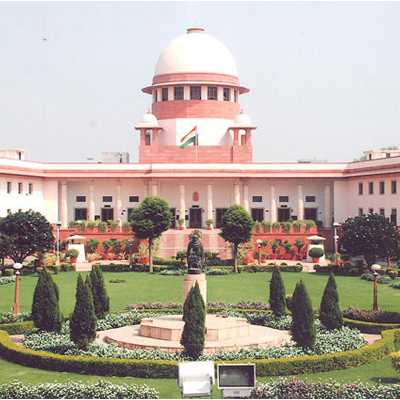
    NEW DELHI: The Supreme Court has formed a three-member panel to frame guidelines to regulate government advertisements glorifying politicians in media.


    The apex court bench headed by chief justice P Sathasivam said that the existing guidelines of the Directorate of Advertising and Visual Publicity (DAVP) do not cover such advertisements.


    The panel will be headed by Prof NR Madhav Menon, founder director of Bangalore’s National Law University. TK Vishwanathan, former Lok Sabha secretary general and senior advocate Ranjit Kumar are the other two members of the panel. The report has to be submitted to the court in three months.


    The court has asked Information and Broadcasting Ministry secretary Bimal Julka to coordinate the meetings of the committee.


    The court passed the order on a public interest litigation (PIL) filed by the NGOs Common Cause and the Centre for Public Interest Litigation (CPIL) pleading it to frame guidelines. The petition sought issuance of guidelines for curbing ruling parties from taking political mileage by projecting their leaders in official advertisements.


    Counsel for Common Cause, Meera Bhatia, had earlier said that the glorification of politicians linked to the ruling establishment, in order to attain political mileage at the cost of public exchequer, was violative of Article 14 of the constitution.


    But counsel representing CPIL, Prashant Bhushan, had told the court that there was nothing wrong in issuing advertisements and informing the public about the programmes of the government. However, he had said such advertisement campaigns become arbitrary and malafide when aimed at gaining political mileage.

  • ZooZoos as TV stars this IPL!

    ZooZoos as TV stars this IPL!

    MUMBAI: Those waiting with bated breath for the Indian Premiere League (IPL) have one more reason to hoot. The funny eggheads of the balloon bellies, gibberish and idiosyncratic ways will be back and how!


    Vodafone’s ZooZoos, which first appeared during IPL 2009, will take charge for the fifth time this season. This time round, they will be seen participating in television shows of different hues even as they peddle the mobile services provider’s value-added products.


    The latest campaign, also created by Ogilvy & Mather, comprises 10 TVCs depicting the ZooZoos in a creative and engaging manner; each promoting a unique Vodafone product/service.


    O&M national creative director Rajiv Rao, who, along with his team, started working on the creatives in March this year, said, “Television has become a part of popular culture so we thought of using it as the background. However, it is a challenge for the whole team to keep reinventing ZooZoos and whether we succeed in conveying the brand’s message through these films.”


    The first two TVCs releasing on 16 April revolve around two product propositions of Vodafone – Choose your Number and Chhota Credit – and feature a reality TV show and a quiz show, respectively.


    Will this result in a ZooZoo overkill? “The street hawkers started selling ZooZoo merchandises at least a month back. This is proof enough of how much people love these characters. On the digital front, the ZooZoos have millions of fans and since they come once a year, I think it’s quite the opposite of overdose,” said Rao.


    According to Vodafone India brand communications and insights senior vice president, Ronita Mitra, “Like every year, this year too, Vodafone India has planned a high decibel 360-degree campaign around IPL. The ZooZoos are back during IPL 2014 to communicate Vodafone’s differentiated customer experience that offers unique products and services to make the customer’s life simple and convenient.”


    Mitra added that apart from TV, Vodafone’s campaign during IPL 2014 would be supported by OOH, digital and other mediums.

  • Facebook buys WhatsApp for a whopping $19 billion

    Facebook buys WhatsApp for a whopping $19 billion

    MUMBAI: WhatsApp is an application that has seen exponential growth in the five years since its launch and it has become the most popular means of communication through mobile phones. In a deal announced today, popular social media website Facebook has acquired the messaging application for a whopping $19 billion.


    As per the terms of the transaction, $4 billion will be paid in cash to WhatsApp shareholders, $12 billion in Facebook shares and $3 billion in restricted stock units that will vest in the owners and employers of WhatsApp over four years after the deal is completed after regulatory approvals. WhatsApp co-founder and CEO Jan Koum will be joining the Facebook board of directors.


    After the acquisition, WhatsApp will continue to operate independently and will continue its policy of no advertising. Currently, the application has 450 million users and is adding a million users each day. A release from Facebook says that the acquisition supports Facebook’s and WhatsApp’s shared mission to bring more connectivity and utility to the world by delivering core internet services efficiently and affordably.


    “WhatsApp is a company of really hardcore engineers who are obsessing over perfecting messaging, not adding a lot of bloated features into a messaging app. Over time, I think people are going to pay for that,” said Facebook founder and CEO Mark Zuckerberg.


    Facebook was advised by Allen & Company LLC and Weil, Gotshal & Manges LLP and WhatsApp was advised by Morgan Stanley and Fenwick & West, LLP.


    Koum said, “WhatsApp’s extremely high user engagement and rapid growth are driven by the simple, powerful and instantaneous messaging capabilities we provide. We’re excited and honored to partner with Mark and Facebook as we continue to bring our product to more people around the world.”


  • Kolkata MSOs anticipate cooperation from LCOs in two months

    Kolkata MSOs anticipate cooperation from LCOs in two months

    KOLKATA: The multi-system operators (MSOs) have started gross billing for the month of December from 7 January in Kolkata and are hopeful that the local cable operators (LCOs) who at present are showing some resistance will eventually fall in line in the next two months.


    The MSOs in the meanwhile are educating consumers about gross billing by publishing advertisements in newspapers. The ads request consumers to make the payment against a bill only.


    “We have started the billing process. Customers are happy, but the operators do not want the billing to be in place. There might be some resistance but eventually things will fall in line,” said Siticable Kolkata director Suresh Sethia.


    While another MSO said that the company is having meetings with operators and trying to convince them of the benefits of digitisation.


    “We are talking to the LCOs and asking them to hike the bill which will include amusement tax and service tax. Even consumers have to understand that they have to pay taxes now,” said the MSO.


    When the MSOs were asked about the disbursement of the bills, some said they have given the bills to LCOs in compact disk (CD), while others like SitiCable said that they have uploaded the bills on their system and the LCOs can easily take the printouts.


    However, the LCOs in Kolkata have made it clear that they will not distribute the bills unless the revenue sharing model and other details are discussed.


    Cable Operators Digitalisation Committee of the Association of Cable Operators convener Swapan Chowdhury said, “The MSOs who are giving the bills on CDs to LCOs need to give a hard copy of the bills as printing will also involve cost.”

    It seems the LCOs are serious about every single penny and are not in a mood to give up easily!