Tag: Advertisement

  • Will GECs score big this IPL & festival season?

    Will GECs score big this IPL & festival season?

    MUMBAI: 2020 has been a different year, what with the pandemic totally putting things out of kilter for the economy, for business. And it continues to be different even as the festival season comes up in India.

    Normally, the fiefdom of India’s general entertainment channels which launch new seasons, and shows to indulge their viewers and attract a large chunk of the advertisers’ dollars and their own annual revenues,  August to November, this year features a party pooper, in the shape of India’s biggest sports extravaganza, the  Indian Premier League (IPL).

    Set to take place in the UAE between 19 September and 10 November, the league – which is usually held between April and May every year  – corners close to Rs 2100 odd crore of ad spends and is expected to better those numbers in its 2020 season .

    Hence, the question being asked is: will the IPL’s overlap with the festive season lead to  a drop in viewership for the GECs and to advertising dollars being sucked out from them towards the league?

    OMD MudraMax EVP & principal partner Navin Kathuria believes that viewers who are looking for refreshing content will find that in the IPL.  Says: ”Due to Covid2019, only 17 per cent of the total sports events took place and that too pre-Covod2019. Secondly, there is a fatigue in viewers due to the plethora of mythological programmes, overdose of Covid2019 news, repeat movies etc.”

    He says what will aid its viewership is the fact that majority of the working population will be at home during the IPL as many organisations will not be fully functional or will be working with shortened hours / reduced staff strength / alternate days of the week. “With bars and clubs shut, people will be watching more from home, reading to an  upsurge in home viewing.”

    The Media Ant co- founder Samir Chaudhary echoes Kathuria. Says he: “The lines were clearly demarcated that April-May would be for cricket and festive seasons would be for GEC, but as IPL is coming now the viewership of GECs will be impacted.”

    “The audience is hungry for IPL and cricket so the performance in terms of ratings could be unprecedented or amongst the best in the recent seasons,” shares regional language network Enter10 chief operating officer Deep Drona.

    The belief is that with matches scheduled at 3:30 pm and then at 7:30 pm, single TV homes – of which India has a majority – will opt for the IPL, with GEC shows being watched between the match breaks or viewers tuning into them when the matches end.

    Zee TV business head Aparna Bhosle does not support this viewpoint.

    According to her, Hindi GECs have over many years has managed to sustain viewership and even grow despite the IPL. She says, “Long running fiction or non-fiction shows have, by and large, not seen an adverse impact on viewership due to existing fan bases and the loyalty channels’ command in terms of appointment viewership.”

    She further adds: “The viewership of television has increased by 34 per cent during lockdown. There is a growth of 10 per cent in average daily reach as well as 22 per cent growth in average daily time spent. (Source: BARC| 2+| HSM (U+R)| Wk 12-20’20 vs Wk 1-11’20). With the best of content across our primetime, we want to ensure that our shows act as a great binder that brings families together during this period of social distancing.”

    In fact, so confident is she of it being business as usual, that Zee TV is gearing up to premiere four big-ticket family targeted shows during the festive season.

    Ditto with the Enter10 network. It is planning to have a robust line up starting from the end of August until November end with a slew of original new series planned.

    Estimates are that marketers signed checks to the tune of Rs 24,000 crore during the festival period last year. The pandemic and the lockdowns over the past six months have resulted in Indian advertising expenditure shrinking by as much as 39 per cent over last year. Soothsayers predict that 2019’s festival adex of Rs 24,000 crore will not be breached this year. 

    Not everyone agrees. Havas Media CEO Mohit Joshi says, “There has been a revival of sorts from June, July with spends going up gradually. We expect brands to press the accelerator pedal in September-October-November.”

    Drona believes the fact that the IPL and GEC launches are coinciding, will lead to an overall expansion of the ad pie in the festive season, benefiting both. According to him spending has been subdued for a large part of the year, and this will be the time when it will be all systems go for categories such as FMCGs, ecommerce sites, gaming platforms, the OTT sector and what have you. “Yes, there will be a scramble for marketing and ad budgets but that will lead to a growth in the overall spends,” he added.

    Chaudhary points out that may not come to be true as budgets have been slashed and with smaller budgets, advertisers would prefer to park it with a big bang event. Says he: “Disney Star India has priced its spots at Rs 10-15 lakh per 10 seconds. Only the big companies can afford these price points. So they will mostly park their spots with the IPL, leaving aside smaller spends for the GECs.”

    Will the GECs then be forced to shave their FCT and sponsorship rates? Kathuria would like to wait and watch. “Normally, GECs don’t discount big properties,” he says. “The challenge they face is that consumer sentiment has been subdued due to Covid2019 and it has impacted consumer spends. And hence the propensity by brands to spend big.”

    Clearly, for both the IPL and GECs, the festival season 2020 is bringing with it interesting and testing times.
  • Advertisement on regional channels grew by 13 per cent in 2019

    Advertisement on regional channels grew by 13 per cent in 2019

    MUMBAI: Regional channels are witnessing an astounding growth rate in recent times. In 2019, regional channels received 13 per cent more advertising compared to national channels. As per the recently-released FICCI-EY report 2019, regional channels saw 615 hours of advertisement per year whereas national channels witnessed 542 hours of advertisement during the same period. The ad volumes on regional channels grew by four per cent while national channels saw six per cent fall.

    Consumption of regional content grew across all media. It comprised over 50 per cent of television viewership, 44 per cent of films released in theatres, 43 per cent of newspaper circulation and around 30 per cent of OTT consumption.

    Ad volume share of regional GECs increased in most cases because of better content, formatted shows and new products that entered the market. In 2019, Bengali GECs' ad volume grew to four per cent from two per cent in 2018. The ad volume of Malayalam GEC also grew to three per cent in 2019 from two per cent in 2018.

    The New Tariff Order (NTO) implemented in February 2019 increased end-customer prices for television content, reduced the reach of certain genres of channels and resulted in a 6 per cent reduction in time spent watching television during the second half of calendar 2019. But it was a big gain for the regional channels as it benefited regional languages like Urdu, Punjabi, Bhojpuri, Marathi and Gujarati whose consumption increased over 20 per cent.

    Channel genres most positively impacted by the NTO included DTH home channels (+16 per cent), Bhojpuri movies (+60 per cent), Kannada movies (+58 per cent), Punjabi music (+33 per cent) and sports (+26 per cent).

    Hindi and Tamil, the two largest languages by viewership, saw a fall in their total minutes of viewing. In 2019, the Hindi language witnessed a fall of eight per cent in total minutes of viewing and Tamil saw a fall of 10 per cent. English and dubbed Hindi were amongst the most impacted with a fall of over 20 per cent in total minutes of viewing. But several regional languages like Punjabi witnessed a growth of 48 per cent in total minutes of viewing, Marathi’s total viewing minutes grew by 28 per cent, Bhojpuri saw a growth of 34 per cent while Gujarati gained 12 per cent in total minutes of viewing.

    According to the FICCI report, it is expected that the trend of consuming content in regional languages will keep growing over the next few years, particularly on digital media as growth in internet users continue to be led by non-metro audiences.

    The report also estimates that viewership of regional language channels will continue to grow and reach 55 per cent of total viewership in India as their content quality improves further.

    Even global media companies are investing in the Indian regional content through co-producing, distributing or marketing. The report says: “India’s many regional and local language markets offer exciting growth fundamentals for global and domestic media companies alike. However, to succeed in these regional markets, customisation is critical. Global media companies recognise this imperative and many are already producing their programming in multiple Indian languages to increase reach.”

    It further says, “Along with localising content, international streaming service providers are also exploring various pricing options for price-sensitive consumers. Foreign studios are collaborating with Indian companies to co-produce, distribute and market content geared to appeal to distinct Indian audiences. They are releasing trailers in a variety of languages, hiring Bollywood stars to dub local versions as well as to promote content on social media. We expect localisation and the focus on regional markets to be a significant priority for global media companies in the coming years.”

  • TV ad volume grew by 21% from 2016 to 2019

    TV ad volume grew by 21% from 2016 to 2019

    MUMBAI: The year 2019 was all about NTO and its impact; the transition period and the black-out threatened to bring down TV viewership. But despite all these, TV viewing minutes in India remained stable at 48.4 trillion in 2019, and in the last four years, television viewership has grown by 38 per cent. However, in the last four years the ad volumes has also grown  by 21 per cent from 2016 to 2019 but if compared to last year (2018) 1.64 billion seconds of advertising has fallen to 1.59 billion seconds of advertising in 2019.

    The BARC Yearbook 2019 -What India Watches shows that 634 channels generated 48.4 trillion television viewing minutes and 1.59 billion seconds of advertising. The year had many peak viewing moments, while overall viewership and advertising remained largely stable.

    BARC India chief executive officer Sunil Lulla says, “Viewership has grown 38 per cent over the last four years, and a total of 48.4 trillion viewing minutes were consumed on television in 2019. Each household watches 5 hours, 11 minutes of television every day and as many as 222 million individuals tune in to primetime television at any given minute. And with over a 100 million homes in India yet to get a TV set, growth continues to be ahead of us.”

    He adds, “BARC India now samples from a panel of 185,000 individuals across 44,000 homes and before the year ends, we will be in 55,000 homes. To enable its constituents to understand viewers and their engagement better, BARC India has introduced need-based products and tools that are gaining in popularity.”

    In 2016 India recorded 35 trillion TV viewing minutes which grew to 42.3 trilliom in 2017. In 2018, it further grew to 48.1 trillion and remained stable at 48.4 trillion in 2019. In the last four years GEC witnessed 28 per cent growth in TV viewing minutes from 2016 to 2019, movies grew to 47 per cent, news to 46 per cent, kids to 56 per cent, music to 53 per cent; sports to 89 per cent and niche/others to 52 per cent.

    The major growth driver for increase in TV viewership was Lok Sabha Election Counting Day (23 May) as it registered 59 billion viewing minutes for the news genre, which contributed to 38 per cent of total TV viewership for the day. In 2019, 26,080 movies were aired on TV. The four south Indian languages (Tamil, Telugu, Kannada and Malayalam) contributed to 48 per cent of these unique movie titles.

    The advertising volumes on TV have grown 21 per cent from 2016 to 2019. Increasing share of advertising across most languages is another indicator of the growth of regional television. In 2016 TV generated 1.31 billion seconds of advertising which grew to 1.43 billion seconds in 2017 and 1.64 billion seconds in 2018 but in 2019 it has fallen to 1.59 billion seconds.

    There has been an increase in advertising volume across languages. Apart from Hindi, the share of advertising volume has grown in Bangla, Kannada, Malayalam and Punjabi market over the previous year but the share of ad volumes has shrunk in Tamil, Telugu and English markets.

  • ASCI welcomes health ministry’s move to update healthcare ad regulations

    ASCI welcomes health ministry’s move to update healthcare ad regulations

    MUMBAI: Quacks, fake doctors and illegal mobile dispensaries had better watch out. The Indian ministry of health & family welfare (MHFW) is taking steps to take you out of business.

    Under the draft Drugs and Magic Remedies (Objectionable Advertisements) (DMR) (Amendment) Bill, 2020, it is seeking to levy fines of Rs 5 lakh and  imprisonment of two years on violators for the first offence, going up to as much as five years in gaol and a fine of Rs 50 lakh for subsequent violations. The various disorders and illnesses have also been clearly defined, while what constitutes an ad in modern times has also been spelt out. The MHFW is seeking the public’s feedback on the DMR Amendment Bill 2020.

    The effort by the ministry to update the older act has met with the approval of the advertising industry’s watchman the Advertising Standards Council of India (Asci). Its secretary Shweta Purandare got into a tele-conversation with indiantelevision.com and said that the amendment will help it police the healthcare sector better.  "The proposed DMR bill 2020 is an important development and would lend strong support to ASCI's efforts of suo motu monitoring of misleading advertisements in the healthcare sector,” she said. “Consequences of advertisements in violation of DMR regulations are serious and this would result in better compliance from advertisers as well as media concerned, be it an advertisement of allopathic products or Ayush products.”

    The draft bill has listed the diseases and conditions which will come under its  umbrella. These include: AIDS, blindness, blood poisoning, bronchial asthma, cancer benign tumour, cataract, change in colour of hair and growth of new hair, change of foetal sex by drugs, congenital malformations, deafness, diabetes, diseases and disorders of the uterus, obesity, fairness of the skin, form and structure of the breast, genetic disorders, improvement in size and shape of the sexual organ and in duration of sexual performance, improvement in height of children or adults, mental retardation, sub normalities, and growth.

    Purandare further stated, “Apart from print and TV, it will be interesting to see the impact of advertisements on social media as well as on the advertisers' websites. We would expect this effect to trickle to advertisements by Ayush doctors and clinics propagating ‘guaranteed cure’ as the Central Council of Indian Medicine has taken cognizance of DMR violations in the past and had issued an advisory to state councils for their action."

  • Netflix could lose subscribers if it starts running ads

    Netflix could lose subscribers if it starts running ads

    MUMBAI: Netflix users enjoy watching ad-free seamless content. The subscription-based video on demand service recently confirmed that it tested the idea of inserting promos for its shows and movies between episodes of existing programmes. A recent study found that if Netflix content includes ad, it could cost it the overall number of subscribers.

    Hub Entertainment Research in its recent study The Future of Monetization examined consumer reaction to several alternatives of Netflix pay model. It surveyed 1,612 TV consumers from ages 16 to 74 who watch at least an hour of TV per week and have broadband at home.

    If Netflix increases its subscription by $5, 23 per cent of the respondents said they may cancel the subscription. If it’s being raised to $10 more per month, 28 per cent would consider cancelling it. If the platform were to raise its monthly fee by $2, only 8 per cent said they would cancel.

    More importantly, almost one-fourth of the respondents said they would drop the streaming service if it began running ads during Netflix content. Its ad-free consistency is one of the topmost features which attract subscribers.

    “I think there are ways that they could arrange it so they retain as many customers as possible, but I think if they add ads at all, even at price reduction, there will be some people who leave,” Hub principal Jon Giegengack said.

    Principal at Hub and co-author of the study Peter Fondulas said Netflix’s low price, no ads, vast amount of programming and original shows help it to stand out in the crowded US market.

  • Complaints against misleading ads rose by 50% in 2017

    Complaints against misleading ads rose by 50% in 2017

    MUMBAI: The number of cases registered with regard to misleading advertisements has been on the rise. Grievance against Misleading Advertisements is a separate portal by the Department of Consumer Affairs to dispose of such complaints.

    Over the last three years, there has been a steady rise in the number of cases registered. In 2015, the launch year, there were 641 cases that shot up to 2032 the next year. Last year, 2017, saw a whopping 3302 cases being submitted to the portal.

    The departments had entered into a memorandum of understanding with the Advertising Standards Council of India (ASCI), a self-governing body, to process misleading ads in the print and electronic media, which will be received on the portal.

    In a reply to a question asked in the parliament, Minister of State for Information and Broadcasting (MIB) Rajyavardhan Rathore said that there was no pre-censorship done for TV channels but all broadcasters needed to abide by advertising rules set by the Cable TV Act and also could not telecast ads found violating ASCI’s codes.

    Also Read;

    Healthcare products lead in ASCI norms breach, 143 complaints upheld

    Ad spend on connected TV globally slated to grow in 2018

  • Swiggy’s first TV ad urges you to try its delivery

    Swiggy’s first TV ad urges you to try its delivery

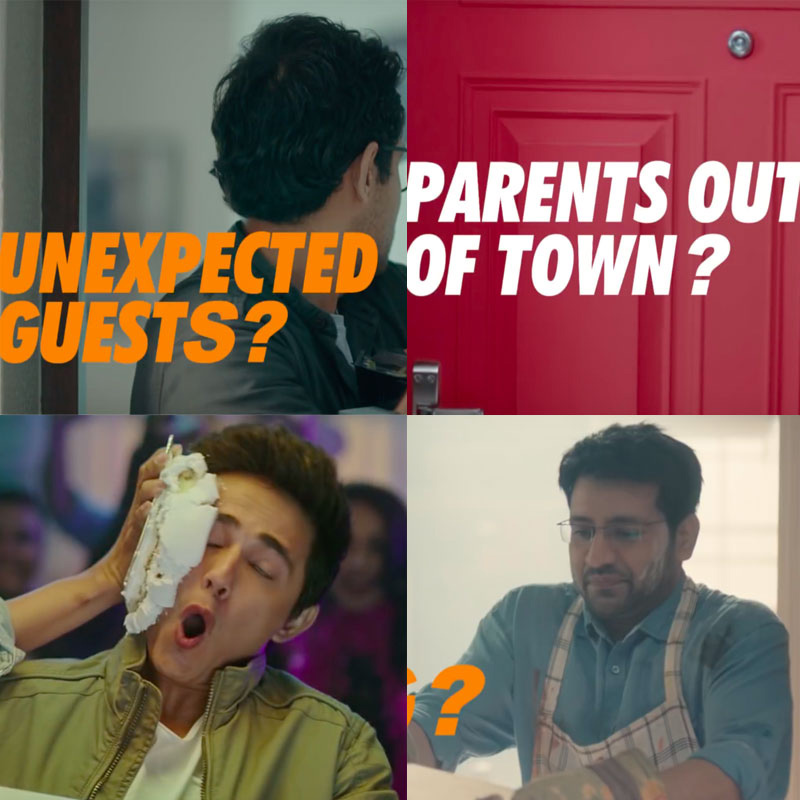
    MUMBAI: Food delivery app Swiggy is enticing customers to its platform in its first ever ad campaign for television and digital. Conceptualised by Lowe Lintas Bengaluru, it pivots around how Swiggy is the best resort for any occasion due to its superior food ordering experience.

    Devised keeping in mind India’s changing gastronomical culture, the campaign brings to life various food ordering occasions, showcasing how Swiggy plays a role in the consumer’s lives during those moments. Be it unexpected guests, cooking gone wrong, or even someone burning the midnight oil, the TVCs make for an intriguing watch as they explore relatable real-life scenarios.

    House Party TVC

    Swiggy vice president of marketing Srivats TS says, “As India’s largest food ordering and delivery platform, Swiggy has become an integral part of consumers’ lives. Our latest campaign and first set of TVCs showcase how Indians turn to Swiggy every time an occasion calls for delicious food and have a great food ordering experience. We hope to continue delivering the same loved experience to millions of more users.”

    Considering the relevance of the campaign, the ads are being aired on channels spanning the genres of Hindi and English entertainment, movies, music, sports, lifestyle/travel and news. Given Swiggy’s strong uptake, the ads will also be aired across some of the top regional channels.

    The brand film is complimented by Swiggy’s campaigns on channels such as outdoor and digital. 

    Cooking gone wrong TVC

    Parents out of town TVC

    Unexpected guests TVC

    Game nights TVC

  • Facebook rev, net income up in first quarter on higher mobile ad revenue

    BENGALURU: Facebook Inc., (FB) reported 51.1 percent year-on-year (y-o-y) growth in ad revenue for the quarter ended 31 March 2017 (Q1-17, current quarter) as compared to the corresponding year ago quarter. Facebook in its earnings release says that Mobile advertising revenue represented approximately 85 percent of advertising revenue for Q1-17, up from approximately 82 percent of advertising revenue in Q1-16. The social media giant reported ad revenue of $7,857 million in the current quarter as compared to revenue of $5,201 million in Q1-16. a

    Total revenue however increased 49.2 percent y-o-y due to a decline of US$ 6 million (about 3.3 percent decline) in payments and other fees in the current quarter vis-à-vis the year ago quarter. FB reported total revenue of $8,032 million in Q1-17 as compared to $5,382 million in Q1-16.

    Net income in Q1-17 increased 76.3 percent to $3,064 million (38 percent profit margin) as compared to $1,738 million (32 percent profit margin) in the year ago quarter.

    Total cost and expenses increased 39.5 percent y-o-y to $4,705 million in the current quarter from $3,372 million in Q1-16. FB says that capital expenditures for the first quarter of 2017 were $1.27 billion.

    “We had a good start to 2017,” said Facebook founder and CEO Mark Zuckerberg. “We’re continuing to build tools to support a strong global community.”

    The company says that Daily active users (DAUs) – DAUs were 1.28 billion on average for March 2017, an increase of 18 percent y-o-y. Monthly active users (MAUs) – MAUs were 1.94 billion as of March 31, 2017, an increase of 17 percent y-o-y.

  • 127 channels violating 12 min/hr ad-cap rule, TRAI releases details

    MUMBAI: TRAI has now released details of pay (104 non-news and 23 news) channels carrying more than 12 minutes average duration/hour of advertisement (commercial & self promotional) during peak hours (7 pm to 10 pm) for 27 June to 25 September 2016.

    Earlier, a Telecom Regulatory Authority of India (TRAI) report had revealed that 27 news and current affairs and 112 general entertainment channels continue to violate the regulations for telecasting a maximum of twelve minutes of advertisements and commercials.

    The report released by TRAI shows that the number of violators among news channels has come down from 36 while that of non-news channels has risen from the 105 as on June 29.

    The Delhi High Court in early January this year adjourned the hearing of the ad cap on television channels again, this time to 20 April 2017, as the concerned bench did not sit. Earlier, on 29 September 2016, the matter was put off as the bench headed by Chief Justice G Rohini did not have time to hear the matter in view of part-heard cases.

    The News Broadcasters Association (NBA) had challenged the ad cap rule, contending that TRAI does not have jurisdiction to regulate commercial airtime on television channels.

    Please see the complete list here:

    http://www.indiantelevision.com/News_Non-news_Channel_0.pdf

    Also Read:

    http://www.indiantelevision.com/regulators/high-court/tv-adcaps-case-in-delhi-hc-deferred-to-20-april-170112

    http://www.indiantelevision.com/regulators/trai/trai-report-139-channels-violating-12-mins-adcap-rule-151208

    http://www.indiantelevision.com/television/tv-channels/gecs/non-news-temporary-uplinking-approvals-in-15-days-160924

  • Music, Online and BJP crash FMCG party in weeks 1 to 6 of ’17

    BENGALURU:FMCG advertisers had 92.25 percent of the share of television advertisement insertions among the total TV ad insertions by top 10 advertisers across genres list in weeks 1 to 6 of 2017 (Saturday, 31 December 2016 to Friday, 10 February 2017). Of the total of 1,862,229 insertions by top 10 advertisers across in the first 6 weeks of fiscal 2017, FMCG had 1,724,381 TV spots.

    This paper must be read with a caveat: It deals only with the players present in BARC’s top 10 list of advertisers/brands. The sums/percentages of other genres/players’ advertisements have not been mentioned in this paper during the period under consideration could be more/higher.

    The only advertiser from the Music genre – Super Cassettes Industries (Super Cassettes) had 4.33 percent (80,293 insertions) of the share of TV ads among the top 10 advertisers across genres list in same period. Online player Amazon Online India Pvt Ltd with 44,601 insertions (2.39 percent) was followed by the BJP (Politics genre) with 1.03 percent (19,324 insertions). Please refer to Fig A below:

    public://Untitled-2_10.jpg

    Analysis ofBroadcast Audience Research Council (BARC) data for Top 10 Advertisers Across Genre: All India (U+R): 4+ Individuals, shows that 16 advertisers were present in the top lists for weeks 1 to 6 of 2017. Five FMCG advertisers were in the top 10 list during all the first 6 weeks of 2017 – Hindustan Lever Limited (Lever), Reckitt Benckiser (India) Ltd (Reckitt), PatanjaliAyurved Ltd (Patanjali), Cadburys India Ltd  (Cadbury) and Procter & Gamble (P&G). FMCG majors Brooke Bond Lipton India Ltd (Brooke Bond) was present in the list for five of the first 6 weeks, while its FMCG peers SmithklineBecham (Smithkline) and Ponds India (Ponds), along with Music company Super Cassettes, were present in the list for 4 of the six weeks on 2017. Please refer to Fig B below.

    public://Untitled-3_13.jpg

    Figure C shows the list of top ten advertisers for each individual week. Across all the six weeks Lever has been at the pole position in the top 10 list. Overall, Lever had 5,92,453 TV insertions (31.70 percent of the total TV insertions by the top 10 advertisers) during the period. During the first five weeks, there was a sort of a tug of war between Reckitt and Patanjali, with the odds in favour of Reckitt, for the second spot in the top 10 advertisers list. In week 6, Reckitt raced far ahead of Patanjalito second place with a massive 62,128 insertions as compared to the latter’s 23,356 insertions. However, Reckitt itself was a fair distance behind numerouno Lever in week 6. Patanjali dropped to the sixth place in week 2017 in list of top 10 TV advertisers.

    With elections in five states, the Political genre through the ruling party –BJP found a place for itself in the top 10 list in week 6. As mentioned above, the BJP was ranked eighth with 19,324 insertions in the top 10 list of TV advertisers.

    It may be noted that in terms of brands, the BJP lead the top 10 list in terms of TV insertions for weeks 5 and 6 with 11,563 and 19,324 insertions respectively.

    public://Untitled-4_0.jpg