Tag: adtech

  • Adcounty Media marks eight year milestone with eye on IPO and deeper global expansion

    Adcounty Media marks eight year milestone with eye on IPO and deeper global expansion

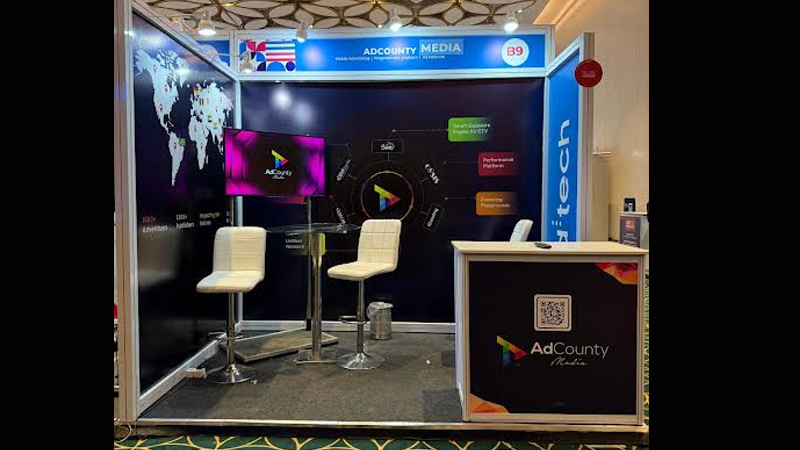
    MUMBAI: Adcounty Media has clocked eight years of digital dominance, marking its anniversary with global milestones, platform innovations, and bold plans for public listing. What began in 2017 as a mobile-first ad network has transformed into a full-stack marketing engine spanning 30+ countries, redefining how brands engage with digital audiences.

    The company, co-founded by Chandan Garg and Aditya Jangid with Abbhinav R. Jain (CFO), Delphin Varghese (CRO), and Kumar Saurav (CSO), has grown into a multi-million-dollar digital business with strongholds across India, LATAM, southeast Asia, the middle east, and Europe. With campaigns spanning gaming, BFSI, e-commerce, edtech, travel, and entertainment, Adcounty Media has focused its mission on simplifying complexity and delivering measurable brand impact.

    In a significant move that underscores its ambitions, Adcounty confirmed its IPO plans for the coming months. This follows its 2023 certification as a Great Place to Work®, cementing its reputation as a people-first, performance-focused organisation.

    Adcounty’s arsenal of proprietary tech includes:

    ●    Bidcounty: An in-house DSP for AI-powered programmatic buying across mobile, CTV, web, and DOOH

    ●    Opsis: Performance marketing suite built for CPL and CPS-driven user acquisition

    ●    Genwin: Conversion-first lead engine with real-time scoring, multi-channel targeting, and optimised landing pages

    ●    iSearch Ads: AI-based app store optimisation for high-intent installs

    ●    SeeTV: A connected TV commerce solution targeting 30 million+ households

    ●    Brand safety & Fraud detection: Enterprise-grade security and transparency infrastructure

    Operating out of eight global offices, the company is actively expanding its footprint in the middle east and southeast Asia. It has ramped up hiring across media sales, game development, app monetisation, and programmatic roles to support this next phase of growth.

    “We’re not just connecting brands and consumers. We’re rewriting how performance marketing works across the funnel”, said Adcounty Media MD Garg. “The future lies in AI-led storytelling, shoppable media, and immersive, measurable experiences”.

    With an eye on the trillion-impression economy and brand-safe, results-driven strategies, Adcounty Media appears well poised for its next act: scaling with speed, intelligence, and intent.

  • Kushal Sanghvi joins icubeswire as chief revenue officer to drive growth

    Kushal Sanghvi joins icubeswire as chief revenue officer to drive growth

    MUMBAI : icubeswire a Adtech company with a strong presence across Sea and Mena, has appointed its new chief revenue officer (CRO) Kushal Sanghvi. With extensive experience in digital marketing, business strategy, and technology-driven growth, he will spearhead revenue expansion, strengthen partnerships, and enhance the company’s position in the global advertising landscape.

    Expressing enthusiasm for the new role, Sanghvi shared, “The digital marketing ecosystem is evolving rapidly, and icubeswire is at the forefront of this transformation. I look forward to driving strategic growth, collaborating with brands, agencies, and tech platforms, and delivering innovative solutions in the ever-changing Adtech space.”

    Beyond this role, Sanghvi has been actively shaping the industry through multiple leadership positions. At Adtech India he was a board member helping to foster emerging technologies and talent in digital marketing. Additionally, at NITI Aayog he was an education mentor, driving digital-first skill development for young entrepreneurs. He also contributed at I-COM Global (India) as the vice chairman, promoting data-driven marketing, and at Appriffy-Digital IT Hub as a director, supporting startups through tech innovation and investment.

    With a deep understanding of digital strategy, online advertising, and integrated marketing, Sanghvi is set to make a significant impact at icubeswire, propelling the company towards its next phase of innovation and growth.

  • Megha Kotian Kataria joins AppLabs.ai in UAE, India sales head role

    Megha Kotian Kataria joins AppLabs.ai in UAE, India sales head role

    MUMBAI: Megha Kotian Kataria has joined adtech firm  AppLabs.ai as sales head for UAE and India. Kataria holds an MBA in marketing and has  over a decade of experience in the digital media adtech industry.

    Throughout her  career, she has worked with a wide range of brands, agencies, and networks across multiple regions, including India, the Asia-Pacific, the United Arab Emirates, and the United States. Among them: Apnext, Veve,Siteplug, Affinity Global, Buzz-Meter, Manhattan Communications and Ogilvy & Mather.

    Said Megha on linkedin: “The ad tech space is evolving rapidly, and I’m thrilled to be part of a team that’s shaping the future of how brands engage with consumers. This is an incredible opportunity to work at the intersection of innovation, data, and digital marketing, where I’ll be leading the sales strategy and helping brands harness the power of advertising solutions Looking forward to collaborating and pushing the boundaries of what’s possible in digital advertising.”

    .

  • A Decade of Transformation and Perseverance at Ventes Avenues

    A Decade of Transformation and Perseverance at Ventes Avenues

    We have reached a significant milestone: 23 October 2024 marks ten years of Ventes Avenues in the AdTech industry. Diving into the past, it all started in a coffee house, where ideas were jotted down on paper napkins. Now, a decade later, we have grown into a team of 115 professionals working alongside us. A deep understanding of the evolving needs of advertising has been one of the key pillars of our success, along with building strong relationships and fostering transparency, which has always been at the heart of our operations. A key driver of our achievement is the multi-talented team we’ve assembled, always engaged in continuous learning. We remain nimble while strongly believing in the power of technology and marketing precision. Over the years, we have expanded our global network and leveraged our diverse media experience to serve our clients better.

    We focus on a few core principles that define who we are and how we operate. We are unwavering in our Client First approach, prioritizing our client’s needs and goals above all else. Our drive for excellence is fuelled by our technology-driven mindset, ensuring we stay ahead of industry trends and offer cutting-edge solutions. Innovation is at the forefront of everything we do; for us, marketing is about creating measurable impact with strategies backed by data, rooted in ROI-driven Marketing Precision. We employ multi-level targeting to ensure our campaigns are tailored for maximum effectiveness. Having direct control over our inventory enables us to fine-tune campaigns precisely, ensuring the brand’s message is delivered exactly where it matters most. Our collaborative environment fosters creativity and mutual growth within our team, while our commitment to diversity and inclusion ensures that a multitude of voices and ideas shape our strategies. Above all, we operate with integrity, staying true to our values and always delivering on our promises.

    As we look toward the future, we are excited to expand our market reach, having already ventured into Southeast Asia with a presence in Malaysia, Indonesia, Vietnam, and Singapore. Global collaboration is key to our vision, and diversification is in our DNA—from performance marketing to branding, technology solutions, and influencer marketing. Our strategic partnerships with clients, publishers, and agencies have driven our success, and we remain committed to nurturing these relationships. We prioritize empowering our employees to grow and nurture their entrepreneurial spirit. Through our relentless pursuit of innovation, we will continue evolving our offerings to meet and anticipate our clients’ needs, ensuring we stay at the forefront of industry trends and deliver impactful, forward-thinking solutions. Our client-first approach, grounded in trust and transparency, has built a lasting foundation for strong relationships, and we will continue leveraging technology to deliver cutting-edge solutions. By collaborating with global giants, we aim to provide personalized experiences that help brands achieve their goals. As we solidify our market presence, corporate social responsibility (CSR) remains a top priority, extending beyond societal impact to caring for our employees. With these principles, we look forward to a future of innovation, growth, and meaningful
    contributions to society and the environment.

    To our valued partners, clients, and agencies — thank you for being part of this incredible journey. Your trust and support have been vital to our success. And to our dedicated team — your passion and hard work continue to drive us forward. Together, we’ve achieved more than we ever imagined. We are
    deeply grateful to each and every one of you. As we look to the future, we remain confident that the best is yet to come. With a continued focus on
    innovation, growth, and meaningful contributions to society and the environment, there is so much more in store. We are excited for the road ahead and ready to embrace new opportunities, challenges, and successes together.

    Here’s to the next decade!

  • Affle India rides high on Adtech surge, poised for strong growth

    Affle India rides high on Adtech surge, poised for strong growth

    Mumbai: As per Elara diet report, global adtech leaders like Trade Desk and PubMatic have seen an average 16.0 per cent year-on-year revenue growth in developed markets (DM), with Trade Desk outperforming at 27.3 per cent. The shift from linear TV to connected TV (CTV), which offers higher ROI, is driving this growth. Programmatic advertising is also gaining traction as CMOs seek better results from their ad spend.

    Trade desk reported strong 25.9 per cent year-on-year growth in Q2CY24, while PubMatic saw a modest 6.0 per cent due to changes in a major DSP buyer’s strategy. Despite this, both companies are maintaining solid growth in the US, with Trade Desk’s International segment performing especially well.

    The adoption of CTV is accelerating, with PubMatic’s omnichannel video revenue, including CTV, growing 19 per cent year-on-year, and Trade Desk seeing significant gains in CTV as well. Lower CTV ad costs are attracting more ad dollars due to higher ROI.

    Google’s decision to retain cookies has eased concerns about rising data costs. PubMatic and Trade Desk are well-positioned, with Trade Desk’s Unified ID 2.0 gaining traction.

    Affle India, with 26.8 per cent exposure to DM, is expected to benefit from these trends. The company is projected to see steady eight to 10 per cent growth in DM, supported by CTV adoption and increased programmatic spending. Its strong presence in emerging markets (EM) further enhances growth potential, with an expected 21.0 per cent organic revenue CAGR for FY25E-27E. Analysts recommend a “Buy” with a target price of Rs 1,727.

    Affle India is poised to capitalise on the ongoing adtech trends, making it a promising player in the industry.

  • MIS 2024: Leveraging a Customer – Centric Martech Stack

    MIS 2024: Leveraging a Customer – Centric Martech Stack

    Mumbai: Media Investment Summit 2024 is a dynamic platform that aimed to bring together minds from the Brand, Media, Advertising, Digital & TV fraternity to explore the ever-evolving landscape of Content, Adtech, Martech, Metaverse and Web 3.0, the evolution of traditional media planning and buying, data and privacy infringement and ROI on advertising.

    The day – long affair is to make sure to tantalize the thoughts of those looking for answers to myriad topics under the Branding, Advertising, TV, Digital media planning and buying roof.

    The panel for this session was moderated by Fractal Ink CEO Tanay Kumar. The panelists were Future Generali India Life Insurance Co. Ltd. CMO  Geetanjali Chugh Kothari, Pepperfry VP – Marketing & Growth Mahip Dwivedi, Schneider Electric director – Global Strategic Marketing Ankesh Kumar, Dangal Play head  Akshat Singhal and Vserv co-founder & CEO Dippak Khurana.

    Kumar posed the question on the various aspects of utilizing marketing technology (Martech) tools and strategies to the panelists. To which Kothari said, “There are essentially two aspects to consider. Firstly, many areas have become hygiene, especially when it comes to customer data. Secondly, when evaluating the tools to include in your entire CapEx.”

    Dwivedi underscored the customer-centric approach to Martech utilization. He said, To fully utilize Martech, the focus should be on serving the customer, not just selling to them. Using the term “sell” implies bombarding customers with irrelevant messages, which isn’t effective.”

    Kumar shared insights into the global utilization of in-house tools for efficient asset management and campaign execution. He reiterated, “We utilize a variety of in-house tools globally to control assets, release them, and manage various campaigns efficiently.”

    Singhal highlighted the role of Martech in content personalization, communication, and analytics. He said, “From personalizing content to sending communications, we rely on marketing tools to engage, gather analytics, send notifications, and craft personalized emails. So marketers help that way a lot.”

    Khurana said that, “Any marketer who is taking decisions buy or build, there are 2 areas they try to take decisions on. One is they have an objective of user growth and second is they have an objective of user retention.”

    The session concluded as panelists navigated the complexities of the digital landscape, leveraging Martech tools effectively will be essential for staying ahead of the curve and delivering exceptional customer experiences.

  • MIS 2024: The Evolution of Advertising: Ever – Changing Trends in Television Space

    MIS 2024: The Evolution of Advertising: Ever – Changing Trends in Television Space

    Mumbai: Media Investment Summit 2024 is a dynamic platform that aimed to bring together minds from the Brand, Media, Advertising, Digital & TV fraternity to explore the ever-evolving landscape of Content, Adtech, Martech, Metaverse and Web 3.0, the evolution of traditional media planning and buying, data and privacy infringement and ROI on advertising.

    The day – long affair is to make sure to tantalize the thoughts of those looking for answers to myriad topics under the Branding, Advertising, TV, Digital media planning and buying roof.

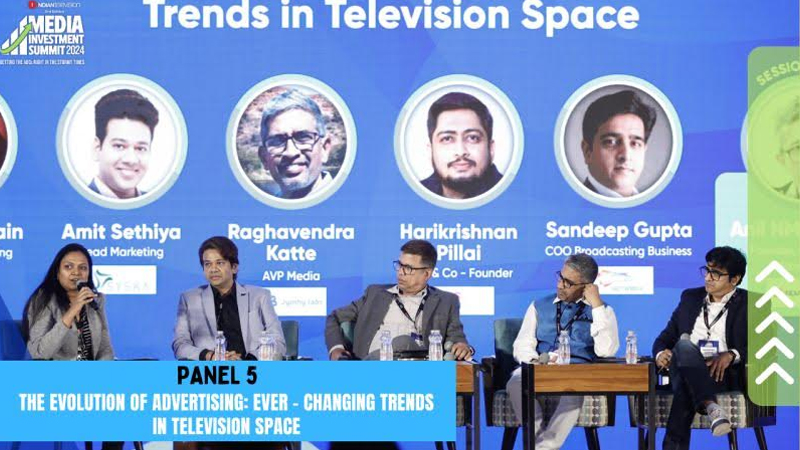
    The panel was moderated by Indian Television.com Group founder, chairman & editor in chief  Anil Wanvari along with the panelists Polycab head digital marketing Tanushree Jain, SYSKA Group head marketing Amit Sethiya, Laboratories Ltd. India AVP Media Raghavendra Katte and Shemaroo Entertainment, Sandeep Gupta

    The session provided an overview of the ever-changing trends in the evolution of television advertising, with a keen focus on potential disruptions, emerging technologies, and the industry’s strategic response to future challenges.

    Jain emphasized the imperative for television to embrace more technology and content that resonates with consumers’ preferences. She said, “With digital offering targeted and measurable last-mile conversion, television needs to incorporate more technology and content that resonates with consumers’ preferences.”

    Sethiya highlighted the brand’s significant presence built through television advertising over the past decade. His insights underscored the enduring value and impact of television as a medium for brand building and reaching diverse audiences.

    Katte delved into the marketer’s dilemma, emphasizing the importance of targeted approaches in advertising. He told, “The marketer has a choice, they can either participate in ad avoidance by being part of inventory without detailed targeting, or they can opt for targeted approaches where their information is actively sought out.”

    Gupta shed light on the evolving strategies of content providers and creators in television. He said, “Content providers and creators in television are exploring ways to monetize their content more effectively, adapting to changes in the industry.”

    Overall, as the industry continues to evolve, embracing technology, targeted approaches, and innovative content strategies will be crucial for brands and content creators alike to thrive in an ever-changing landscape.

  • GUEST ARTICLE: Artificial intelligence: The key ingredient to boost the growth of the advertising industry

    GUEST ARTICLE: Artificial intelligence: The key ingredient to boost the growth of the advertising industry

    Mumbai: For a layman, the term “artificial intelligence” is usually associated with robots and voice assistant software like Alexa and Siri or Elon Musk’s self-driving cars. Many people don’t think about the scope of AI beyond these concepts. However, the aforementioned use cases of AI are just the tip of the iceberg.

    In reality, the power of AI cannot be summarised in a few words or applications, as an infinite number of AI-enabled tools and interfaces are working behind the scenes to make the lives of consumers and other stakeholders a lot easier.

    This is especially true in the business world. AI has played a pivotal role in putting products and services in front of potential customers through social media or other means, even though it wasn’t widely recognised or understood. An impactful form of marketing, AI-enabled advertisements present themselves before customers only after learning and assessing their online preferences, shopping behaviour, and other necessary inputs.

    And soon, the fast-emerging advertising industry realised that the days of manually asking for customer inputs are behind us, as AI can do this job in the background. This was just the beginning of an AI hurricane that swept the advertising world off its feet. Automation technology evolved, and so did its applications.

    Against this backdrop, we will discuss AI’s role in the advertising industry and its advantages in-depth. Without further ado, let’s dive in!

    The emergence of adtech: A comprehensive overview

    If there’s one industry with a genuine case of AI fever, that is advertising, aka adtech. From the desktop sidebar ads in the 1990s to mobile advertising and the user recognition capabilities of CTV marketing, the advertising industry has evolved dramatically over the past two decades. Everywhere the eye can see today is likely an advertisement. One can thank the internet and new technologies like AI and ML (machine learning) for this drastic change.

    Gradually, as remote access to stable internet connections and the widespread distribution of smartphones and smart televisions increased, the pathway to video and online ads became clearer. Some significant industry experts believe that the launch of the iPhone and the consequent smartphone market growth played a considerable role in augmenting the acceleration of adtech, specifically online advertising.

    A 2021 InMobi report revealed that programmatic mobile video ads had registered a 194 per cent increase in India. This proves the widespread adoption of video ads as a more effective source of advertising than others, as they are better at connecting and engaging with the audience. But this is just one example of the new wave that enveloped the advertising industry and pushed it toward the path of unprecedented success.

    The latest tools and approaches are taking the adtech world by storm

    Interactive ads: Going over and beyond

    Interactive advertising is a contemporary marketing technique that enhances customer participation. The primary focus is to ensure that consumers engage with and interact with the ad, directly or indirectly, and provide real-time feedback on the relevant campaign. The idea is to not limit the audience from viewing the ad but to make them feel its presence and relevance. There are different ways to implement interactive advertising. Here are a few pioneering examples:

    1. 3D impact: A solution that offers immersive experiences to consumers by leveraging advanced animations to deliver multiple messages in one video. Utilising this, advertisers can improve customer brand recall, enhance the ROI, and make a high impact.

    2. 3D wobble: A solution that delivers compact and efficient information through a comprehensive UX powerhouse. It adds a noteworthy twist to ads and increases user engagement, brand conversion ratio, and click through rate (CTR).

    3. Shoppable unit: A solution that appears as a deck inside a conversational flow. It allows customers to swipe and check out the sequence of product images. This is an effective solution for brands gearing up to streamline their sales and marketing strategies.

    CTV advertising: Think bigger

    Connected TV advertising (CTV) is a type of advertising approach placed on any smart TV with the facility to connect to the internet. CTV essentially depends on a large TV screen, which enables advertisers to engage audiences in a linear TV-like environment.

    It allows advertisers to create a one-to-many relationship with the audience (propelled by co-viewing) compared to other advertising methods where advertisers establish a one-on-one relationship with their target customer base. There are several ways to implement CTV advertising. Here are a few suggestions:

    1. Split screen: The split screen technology offers viewers a non-disruptive, non-intrusive, side-by-side creative display. This ensures that consumers don’t miss any key details or pay attention to the content they are consuming while consciously or subconsciously watching the display ad.

    2. Brand assimilation: By harnessing the power of mighty brand assimilation, advertisers can manipulate visual effects and place brands in a place where they get seen by customers seamlessly and effortlessly.

    3. Persuasive overlay: This approach includes a contextualised and commercial interactive video that connects with the audience through powerful content. The video is created in such a fashion that consumers can quickly connect the display with the brand.

    Wrapping up

    The use cases, solutions, and approaches mentioned above clearly demonstrate that AI is not the distant future of adtech but its present. This remarkable technology plays a crucial role in helping advertisers deliver highly engaging and non-intrusive ads while providing incremental revenue to publishers. Additionally, given that AI can automatically generate the ad while keeping customer preference in mind, advertisers don’t need to engage their manual workforce for such tasks and can easily concoct their next ad campaign.

    AI has made it incredibly easy for advertisers to leverage its many benefits while simultaneously saving money and optimising efficiency to a noteworthy extent. Adequately handling this can improve the overall effectiveness and ROI of ad campaigns, making the entire concept more rewarding.

    The author of this article is VDO.AI founder and CEO Amitt Sharma.

  • Disney Advertising & The Trade Desk sign a significant advertising deal

    Disney Advertising & The Trade Desk sign a significant advertising deal

    Mumbai: Disney Advertising and global advertising technology company The Trade Desk have reached a landmark agreement to power greater audience activation at scale programmatically.

    This deal enables brands to target automated ads across Disney’s linear and streaming properties – Hulu, ESPN+, Freeform, ESPN, National Geographic and FX. This announcement comes ahead of Disney’s launch of an ad-supported tier for Disney+ that would likely be another target for the deal.

    This expanded deal marks yet another step toward transforming how advertisers access Disney’s portfolio of premium supply, rooted in secure data collaboration and powered by automation through Disney’s Clean Room technology. By offering clients more flexibility, choice and control across all deal types, Disney is delivering on its commitment to support addressability at scale.

    This agreement will enable a first-of-its-kind integration between Disney’s proprietary Audience Graph and the open-source identity framework, Unified ID 2.0, within a secure environment. As a result, buyers will be able to discover more addressable, biddable inventory across the Disney portfolio, all validated by Disney’s proprietary Audience Graph.

    “Disney Advertising had a bold vision backed by proven results from the start, and we’re thrilled to continue to deliver on our commitment to power greater automation and addressability for our customers through this expanded deal with The Trade Desk,” said Disney Media and Entertainment Distribution president advertising sales Rita Ferro. “We have spent years investing in our data and technology strategy to create innovative solutions for advertisers to engage their audiences with greater precision and accuracy in a privacy-focused way. This first-to-market capability sets the stage to empower access to the Disney portfolio, validated by powerful audience insights, in a way that’s automated and accessible.”

    Disney continues to advance its efforts towards a data-informed, tech-enabled future rooted in audience innovation. For example, more than 40 clients and most major agencies across all major categories have engaged in Clean Room strategies in collaboration with Disney leveraging its Audience Graph.

    Disney’s agreement with The Trade Desk is a key milestone in enabling greater interoperability with the programmatic ecosystem while setting the stage to power better audience activation and measurement. Moreover, it provides a path for advertisers to leverage their first-party data in biddable environments as the industry faces new disruption caused by the deprecation of third-party cookies.

    “Disney is reimagining our advertising platform to support a global and addressable future. We are uniquely positioned to match the world’s greatest content with next-generation products and technologies, through a secure and unified ad platform, and one-of-a-kind first-party data. The growth of our relationship with The Trade Desk is a milestone in addressability and automated buying at scale, and the latest step as we use technology to enable advertisers to buy once to deliver everywhere across Disney,” said Disney Media and Entertainment Distribution president and chief technology officer Aaron LaBerge.

    “With this agreement, Disney and The Trade Desk are pioneering a new approach to audience addressability in a post-cookie environment. By creating interoperability between Unified ID 2.0 and Disney’s Audience Graph, we are unlocking the opportunity for our customers to activate their first-party data at scale programmatically, against some of the world’s most premium content, across all channels. As a result, advertisers will be able to deliver relevant advertising, while ensuring consumers have more control of their privacy,” said The Trade Desk chief revenue officer Tim Sims.

    Disney Advertising is implementing this expanded capability with advertisers over the next several months, while setting the stage to support interoperability across all demand partners and platforms.

  • GUEST COLUMN: How conversational AI is helping adtech brands maximize advertising ROI

    GUEST COLUMN: How conversational AI is helping adtech brands maximize advertising ROI

    Mumbai: The role of Artificial Intelligence (AI) in adtech has become pivotal over the years. It started with simple bots that helped customers with basic queries and requests through voice or text & now has evolved into sophisticated conversational AI. It is capable of Automatic Speech Recognition (ASR) for taking voice inputs and formulating a context-specific response in real-time. After all, understanding natural language and providing a meaningful response is the key to creating a seamless experience for customers, and this is where conversational AI comes into play.

    Traditional online advertising was not successful in engaging customers

    As digitization has exponentially increased in the past years, it has become difficult to cater to customer demands manually, and automation has been widely experimented with in the adtech sector. The drawbacks of conventional chatbots ranged from being disengaged and irrelevant to frustratingly non-conversational. The seemingly robotic nature of digital advertisements led to a lot of digital campaigns going to dust.

    The result often used to be a loss in customers rather than a hike due to an uncontrolled and unthoughtful message being conveyed via the use of ineffective chatbots. A general lack of understanding of the customer’s intent and providing them with a specific solution were the topmost issues in the area of customer support. A lot of brands are now trying to implement conversational AI into their existing AdTech stack with varying levels of success. Some are doing it right, while others still have a long way to go.

    The modern-day consumer demands more than being sold a product

    Personalisation can be boosted from the very inception of a customer journey through predictive analysis. This innovation helps companies in customer personification, giving them access to a lot of structured data throughout the customer journey. The AI can analyse all the data available on a particular customer and predict what they want based on past behaviour. This enhances the prospects of call-to-action, directly impacting the revenues by 21 percent organically.

    The customer’s AI-generated avatar helps build a personalised experience in an omnichannel ecosystem for advertisements. The analysis is effective across these channels, and the consistent brand voice communicated to the customer imparts a sense of connection that aligns with the customer’s mindset. This plays a critical role in keeping them engaged as building upon previous impressions becomes easier and cost-effective due to reduced cost per acquisition (CPA). Customers are no longer just numbers on a spreadsheet; they are individuals with unique goals and needs. This is why conversational AI is such an essential technology for advertisers today.

    Conversational AI uses intuitive technologies to interact with their customers

    Conversational AI is a game-changer for the adtech industry. It is creating new opportunities for brands to maximise their advertising ROI. It offers in-depth customer insights that help adtech companies understand, adapt and respond to customer needs, thereby improving engagement and sales.

    It helps businesses create targeted audiences based on data analysis around various factors, including age, gender, location, and more. This helps deliver specific content to different groups of people, boosting engagement and sales. Predictive analysis by AI significantly reduces turnaround time, making it easier for companies to meet deadlines without sacrificing quality or spending more money on additional resources like hiring full-time employees for each department (like marketing).

    Conversational AI can analyse conversations between consumers and brands, which allows businesses to predict what their customers want next. This data can then be used to personify a consumer’s identity as part of their journey through the sales funnel so that they feel more connected than ever before.

    Summing up

    As the industry moves towards conversational commerce, it has become clear that conversational AI will play a fundamental role in driving this change. And because it’s built into an existing CRM system, the existing infrastructure can be used without having to make significant changes or upgrades. AI-powered chatbots are, therefore, the future of customer service, with the industry poised to reach a whopping $14 billion by 2025.

    The author is Amitt Sharma, Founder and CEO, VDO.AI