Tag: ADS

  • Partha Sinha & the art of monetisation at The ToI

    Partha Sinha & the art of monetisation at The ToI

    NEW DELHI: As the government imposed strict lockdown restrictions for close to three months, the print industry was one of the worst-hit. If various reports are to be believed, they lost around 60-80 per cent of their revenues. A lot of them shut down editions, most of them let go of their employees, shaved salaries, and almost all of them dealt with a painful period where their resources just bled.

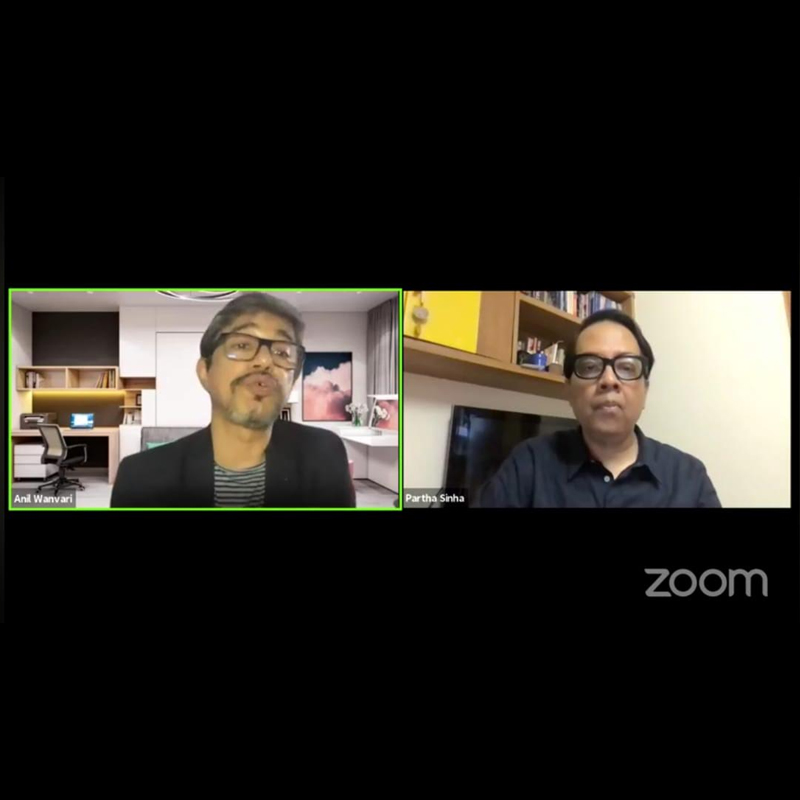
    However, as the world starts getting back to normal and a new world order sets in, the print industry is looking forward to a better tomorrow, lined up with new opportunities and relevancy, Bennet Coleman & Co Ltd (BCCL)  president–responses Partha Sinha shared in a virtual fireside chat with Indiantelevision.com founder, CEO, and editor-in-chief Anil Wanvari. On Monday evening, the duo sat across screens to discuss the impact of Covid2019 on print and the way ahead for the industry. 

    Sinha noted that the print industry has already reached a 70 per cent recovery in terms of the number of copies being delivered. “I think in some markets it has gone up to 90 per cent because, in the south or states like Kolkata, there was never a massive problem of circulation. Cities like Delhi, Mumbai, and a few more in the north were hit badly and I guess it has revived now, not just for us but for all the players.”

    He indicated that it is a good sign for the industry and debugs the myth that print will shut down. “For three to four months, our main concern was consumer demand that was severely impacted. But coming out of it so quickly is absolutely brilliant.”

    So, was it a knee-jerk reaction on the part of the industry to shut down some of the editions and let go of a number of employees, or as some of the unions say, an excuse, Wanvari questioned. 

    “I don’t think it was a knee-jerk reaction or an excuse. Even it was not for Covid2019 and something else would have happened, you would have got a consultant like McKinsey or BCG and asked them to optimise, right? This optimisation tells you if there is any cost reduction required and how can you improve profitability. Honestly speaking, as much as it's being talked about but it's quite a routine activity. Every organisation has optimised; when you find a new revenue opportunity, you hire people and if you find a revenue opportunity drying up, you optimise. I think this is a regular organization life cycle,” Sinha cleared the air. 

    So, what does the future of print seems like to him as digital and other mediums take centre stage? 

    Sinha insisted that there can’t be any substitute for the content that print generates and therefore the medium will stay here, but it might take just a slightly different role going ahead.  

    “I want to debug the myth that digital can replace or surpass print, or TV is a challenge to print. What is happening with both these mediums is that they are creating fragmented opinions, which lack credibility for the source and even for the brands. The news on television is so polarised, that it is sickening now. And obviously, if fake news becomes the business model, the credibility is hampered. Therefore, no amount of user-generated content or no amount of hair pulling on the camera will be able to substitute the credibility that print offers. Journalism will always remain about how deep you go, how sincere you are  and whether you are you're taking all the points of views,” Sinha elaborated. 

    He added that the role of print, going ahead, will move on from being a medium of discovery of product to being involved in its purchase by the customer too because of the credibility associated with the medium. He cited the instance of a real estate developer Casa Gold out of Chennai. It sold 120 apartments during the peak of Covid over four days. The Times of India Chennai response team managed everything from the webinar, to virtual expo, to get the potential buyers to take part in the virtual display of the advertisements to front page jackets of the physical newspapers.

    Sinha revealed that print media plays a big role in cultural marketing. "Cultural marketing works by creating truth and opinion and rallying people around the truth and opinion or finding emergent truth and opinion in society and making it bigger,” he explained. “Many branded efforts have almost become culture: Lead India, Teach India, Lead India led to Anna Hazare and the birth of AAP. Print can create a better narrative than any other medium. Another example is organ donation which has been driven by the Times of India.. The Times of India is the only way to create a culture with the affluent.

    “With so much fragmentation, there is a lack of credibility in the domain now. Due to fake news being so prevalent, print has started playing a significant role in building credibility and a path to purchase. The advantage of the printed word is it doesn't come with a picture. Therefore, you are forced to use your brain, you're forced to use your opinion. And that's how culture gets created. The beauty of culture creation is that eventually  brands will pay a premium to be closer to culture. Everything else is just a matter of discount because that's why the most popular method of advertising on the internet is programmatic led,” he shared. 

    He highlighted that cultural authority is the biggest asset a brand can ever own, because with that comes credibility. “These are the things that print media have to start thinking about, some like the New York Times has already done so,” he pointed out.

    Further, to help the brands gain the maximum out of the exposure and credibility that print offers Bennet and Coleman has come up with a pricing engine, which is based on artificial intelligence and machine learning. It can make an umpteen number of parameters and churn out a very specific notation for the time, helping the brands understand the right channels and the right strategy to advertise. “We are backing culture creation with data and analytics and have huge amount of data analysis,” he revealed.

    Sinha highlighted that all the assets of the Times of India group are brought into play while offering solutions to clients, whether its digital or TV or print or the social handles of these. “Thanks to the fact that we have all these assets, we can bring in 20 of our group assets or 30 of them,” he disclosed. “Let me also tell you we are open to look at assets outside the group to provide solutions to clients.”

    Times have indeed changed things at The Times. As many clients and marketers say, the change has happened for the better. 

  • YouTube carrying out trials for more pre-video ads

    YouTube carrying out trials for more pre-video ads

    MUMBAI: Video streaming service site YouTube has been carrying out trials to add more ads into videos.

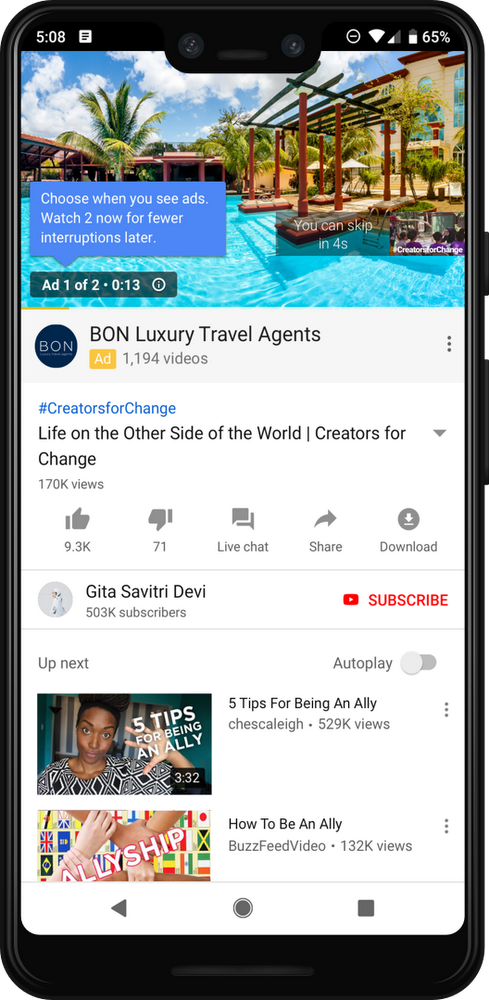
    In Google’s new blog post, it explained that interrupting viewers less often with ads correlates to better user metrics. And that is why; it has been carrying out tests which will show viewers two skippable ads back-to-back at the beginning of a video.

    Google wrote, “Because when users see two ads in a break, they’re less likely to be interrupted by ads later. In fact, those users will experience up to 40 percent fewer interruptions by ads in the session. Early experiment results also show an 8-11 percent increase in unique reach and a 5-10 percent increase in frequency for advertisers, with no impact to brand lift metrics.”

    This new change will first come to YouTube’s desktop experience. Mobile and TV screens will be followed with the new feature in the coming days.

    The update on YouTube will look something like this with a message explaining that you can watch two ads now for fewer interruptions later.

    Concluding the blog post, it wrote, “In the face of these burgeoning user trends — as well as the next wave, and the next — we’ll continue working to build the ideal video viewing experience, and keep thinking up ways to deliver value for our advertiser partners.”

  • Learning the importance of video marketing today

    Learning the importance of video marketing today

    MUMBAI: “Is it viral yet?” More often than not, this is what you will hear from marketers and agencies soon after they make a brand campaign or a video live on social media. The virality of a video is the new scale of measurement for most advertisers now, and rightly so! When a video goes viral, it can increase your search engine ranking, click-through rates, open rates and conversions.

    Brands have for the longest time needed a video marketing strategy but what has changed is how important video has become on every platform and channel. It is no longer restricted to doing television commercials or doing product placement on some television show or a movie. It has become the centre to their outreach and social strategy.

    While videos are great and should be every marketer’s best friend, there are several questions around it that need to be answered.

    How do you know if your videos are working? How can you measure the efficacy of your videos? How do you build brand confidence? What is the role of videos in overall brand strategy? What platforms should you choose to deliver the videos? How do you treat videos in regional languages? And most importantly, what are the top 5 things to keep in mind for branded videos and video marketing?

    To find out the answers to these compelling and perplexing industry questions, Indiantelevision.com will host a summit on branded videos and video marketing – BrandVid 2018( brandvid.in) on 30 October 2018 at Sahara Star, Mumbai. The summit will see industry stalwarts discuss these topics and map out a way for the industry where all major stakeholders can make the most of videos.

    Video has absolutely dominated social media and according to a recent HubSpot Research report, four of the top six channels on which global consumers watch video are social channels. And a common topic for every A&M conversation – video is the way forward – finally seems to look right.

    Video marketing isn’t just limited to slapping a video on television, YouTube and other social media platforms. Today, 70 per cent of millennials prefer watching a brand’s video when shopping online. According to Video Marketing Statistics 2018 report, 84 per cent of consumers are convinced to purchase a company’s product after they’ve watched their video. It is also interesting to note that 81 per cent of businesses with an explainer video on their homepage said that those videos have increased their sales.

    As per a report by Syndacast, click-through rates increase by between 200-300 per cent when a marketing email contained a video.

    Remember the Dancing Uncles video that went viral? No? Well, have a look at it here:

    []

    Bajaj Allianz signed Sanjeev Srivastava aka the internet’s dancing uncle to promote one of its offering. Lately, he was also seen promoting Amazon India’s Great Indian Festival Sale. The power of internet and video today!

    In a general media ecosystem, you would have a brand, an agency and a production house where a brand gives a brief to an agency about the kind of video they want and they in turn hire a production house to shoot the video and later get it edited from a third party. But that’s changing now. Brands are now becoming media companies and they have their own in-house content studio that creates content for them on-the-go. It’s challenging for a traditional agency to sustain and survive in a competing environment like this. But is there a way where brands, agencies and publishers can co-exist and collaborate? Maybe yes but how only time will tell.

    Most videos today seem to be mindless and done just because every other brand on the block is doing it. Marketers often forget that they don’t need to follow the herd mentality.

    It is incorrect to judge your video campaign solely on it becoming viral and famous. It may not always lead to your products being sold from the shelves. As simple as video marketing seems, it is actually more complex than that. While brands and agencies have exploited video marketing to the core, whether or not it works entirely depends on what do you want your audience to hear, see and feel. And most importantly, what message are you trying to convey and what is the call to action?

    All in all, video marketing is not only fun, it’s also one of the best ways to get up close to your audience and give them a real glimpse of what you and your business or your clients are doing The more they know about your positive practices, the more likely they are to stick around.

  • Facebook, Twitter get transparent about ads

    Facebook, Twitter get transparent about ads

    MUMBAI: Microblogging platform Twitter has made it easier for users to identify political campaign ads and know who paid for them.

    According to Reuters, Twitter has launched a transparency centre to allow  users to view ads that have been put on Twitter, with greater transparency about US federal election campaign ads.

    The tool follows Twitter’s recently launched political campaign ads policy and a similar move by Facebook which started a searchable archive of US political ads last month.

    Additionally, Mark Zuckerberg-led Facebook has also announced that it would go even further by enabling users to see listings of all active ad campaigns, whether the advertiser is political in nature or not. Users can also view a log of name changes to a Facebook page.

    Facebook also mentioned that the features should help people spot misuse of the platform. 

    Twitter’s ads centre gives users access to details such as demographic targeting data for the ads from US political advertisers, along with billing information, ad spending, and impression data per tweet.

    The transparency centre will include all advertisers on Twitter globally, but at this stage only US federal election campaign ads that fall under its new policy will be shown.

    Following suit, Google has also pledged to launch a similar transparency centre for political ads on its services this summer. 

  • Facebook to ban cryptocurrency ads

    Facebook to ban cryptocurrency ads

    MUMBAI: Facebook is banning ads on its social network that promote cryptocurrencies, initial coin offerings and binary options saying they’re “frequently associated with misleading or deceptive promotional practices.”

    In a blog post on Tuesday, the company outlined a new policy prohibiting ads that “promote financial products and services that are frequently associated with misleading or deceptive promotional practices.”

    The policy will be “intentionally broad” while Facebook works to understand which ads are deceptive or misleading, from companies “not currently operating in good faith,” the company said in the post. Facebook, along with its other properties including Instagram, won’t allow ads that say “Use your retirement funds to buy Bitcoin!” for example, or those that promote binary options trading, a risky derivative with an all-or-nothing payoff.

    As public interest in bitcoin and other digital currencies has skyrocketed, Facebook users may have seen an uptick in ads for investing in cryptocurrencies. Late last year, bitcoin’s popularity and value surged. In December, one bitcoin was worth $17,000. It has since fallen to $10,000.

    “We want people to continue to discover and learn about new products and services through Facebook ads without fear of scams or deception,” Facebook product management director Rob Leathern wrote in the post. “That said, there are many companies who are advertising binary options, ICOs and cryptocurrencies that are not currently operating in good faith.”

    A spokesman for Facebook said ad policies will be enforced through both automated and manual reviews, and ads that lead to websites where the main business model is cryptocurrency, ICOs, or binary options won’t be allowed. Facebook users can also report ads that they believe violate the policy.

    Also Read:

    YouTube, FB to corner major ad spend globally over 5 years

    Social media most significant for snackable content: NBA India MD

    MIB to collect data on satellite capacity needs, digital chatter

  • I&B tightens up on condom ads on TV

    I&B tightens up on condom ads on TV

    MUMBAI: Condom ads are off prime time television. The latest advisory from the information and broadcasting (I&B) ministry has asked broadcasters to keep them out of the purview of children and only telecast them between 10 pm and 6 am.

    The ministry said that it had taken note of objections regarding condom ads – which are “targeted at a particular age group” – being aired on some channels that are considered as ‘indecent especially for children.’ It used Rule 7 (7) and Rule 7 (8) of the Cable TV Networks Rules, 1994 to tell broadcasters to refrain from telecasting ads of condoms that could be considered inappropriate/indecent for viewing by children.

    Channels may air the ads at night from 10 pm to 6 am—a time when Indian kids are possibly asleep—and abide by the rules.

    Rule 7 (7) says that ‘no advertisement that endangers the safety of children or create in them any interest in unhealthy practices or shows them begging or in an undignified or indecent manner shall not be carried in the cable service.’ Rule 7 (8) says ‘indecent, vulgar, suggestive, repulsive or offensive themes or treatment shall be avoided in all advertisements.’

    The Advertising Standards Council of India (ASCI) had approached the ministry for guidance after several people complained regarding the inappropriate nature of condom ads being telecast during primetime viewing on most television channels.

    Recently, Mankind Pharma had been pushing the creative boundaries and had featured former porn-turned-Bollywood star Sunny Leone in a series of TVCs in which she cavorted around in a sensual and alluring way that could be argued as being in the zone of titillation. The company had earlier run into a spot when one of its ads had offended local groups in the western Indian state of Gujarat and it had to pull the hoardings off.

  • The creative storytelling in tourism ads

    The creative storytelling in tourism ads

    MUMBAI: Tourism ads have had the same ingredients for years: panning through scenic views, mountains, palaces, forts, rivers and people dressed in traditional state outfits. Once in a while you throw in a celebrity.

    These ads centre around a story about the state they represent. Vivid images of the landscape coupled with the right storyline and music can transport you into a place you may have never thought of visiting.

    The World Travel & Tourism Council calculated that tourism generated Rs 14.02 lakh crore or 9.6 per cent of the nation’s GDP in 2016 and the sector is predicted to grow at an annual rate of 6.8 per cent to Rs 28.49 lakh crore by 2027. About 88.90 lakh foreign tourists arrived in India in 2016 as compared to 80.27 lakh in 2015, recording a growth of 10.7 per cent. Domestic tourist visits to all states and Union Territories numbered 1,036.35 million in 2012, an increase of 16.5 per cent from 2011.

    Before the year 2002, the government’s efforts to promote tourism did not create much impact. Then The Ministry of Tourism decidedto put in a concrete effort to promote tourism with its iconic ‘Incredible !ndia’ logo in all communications, along with signing Amitabh Bachchan as the brand ambassador for Gujarat tourism. Since then, every year, Indian states release tourism ads to attract travellers.

    We’ve rounded up some of the most beautiful and iconic state tourism ad campaigns that incorporate creativity, alluring storytelling and show true essence of the state.

    Gujarat:

    Gujarat tourism has been synonymous with Amitabh Bachchan for over a decade now. The vibrant Gujarat theme has been well received and had led to a 30 per cent increase in tourist arrival in the state from 1.70 crore in 2009-10 to 2.23 crore in 2011-12.

    TVC Link::

    Madhya Pradesh:

    Madhya Pradesh tourism ads are known for their playfulness, vibrant shots and catchy jingles. Madhya Pradesh state tourism has create some of the most iconic ads that truly justify MP as the heart of India – MP mein dil ho bacche sa, MP ajab hai sabse gajab hai, sau rang hai and hindustan ka dil dekho.

    TVC Link:

    Rajasthan:

    Rajasthan, known for its desserts, vibrant colours and alluring folk songs has always been a constant favourite among local tourists and foreign lands. All Rajasthan tourism ads perfectly encapsulate the essence of Rajasthan.

    TVC Link:

    Jammu and Kashmir:

    Jammu and Kashmir has often been hailed as heaven on earth and there is hardly any doubt that it is perhaps one of the most beautiful places on the planet. Although the state hasn’t been very creative with its previous communications and campaigns, it has pitched itself as the ‘warmest place on Earth’ in its latest campaign. The film showcases the story of a couple on vacation in Kashmir. The duo mistake a citizen of the state for their taxi driver. Instead of correcting them, the man takes them on a tour of the state.The film was conceptualised by J Walter Thompson agency.

    TVC Link:

    Assam:

    Assam is another state that wasn’t really creating any interesting ads or promoting its state tourism until now. The state has however launched its new multimedia campaign with its brand ambassador Priyanka Chopra that captures not just the beauty of the state but also its diverse and rich culture. The central theme of the campaign ‘Once you visit Assam, it stays with you forever’ was created and conceptualised by YAAP & Crayons agency.

    Video Link:

  • YouTube: Ten ads clock 2.3 mn hrs of watch time in Q2 ’17, 180 mn Indians watching monthly

    MUMBAI: YouTube released the Q2’17 India Ads Leaderboard, a list of the top ads and promoted videos that Indian audiences consumed during the second quarter of the year. These ten ads clocked an astounding 2.3 million hours of watch time, with mobile devices accounting for 82% of the watch time. As per App Annie*, every month, 180 million Indians are watching YouTube on the mobile. The YouTube Ads Leaderboards showcase the most creative ads that people choose to watch. The list represents the top 10 ads on YouTube in India that resonated most with audiences over the past month and celebrates the brands that performed best through a combination of popularity and promotion.

    Here are the top 10 most viewed ads of 2017 on YouTube:

    public://F1_16.jpg

  • Facebook rev, net income up in first quarter on higher mobile ad revenue

    BENGALURU: Facebook Inc., (FB) reported 51.1 percent year-on-year (y-o-y) growth in ad revenue for the quarter ended 31 March 2017 (Q1-17, current quarter) as compared to the corresponding year ago quarter. Facebook in its earnings release says that Mobile advertising revenue represented approximately 85 percent of advertising revenue for Q1-17, up from approximately 82 percent of advertising revenue in Q1-16. The social media giant reported ad revenue of $7,857 million in the current quarter as compared to revenue of $5,201 million in Q1-16. a

    Total revenue however increased 49.2 percent y-o-y due to a decline of US$ 6 million (about 3.3 percent decline) in payments and other fees in the current quarter vis-à-vis the year ago quarter. FB reported total revenue of $8,032 million in Q1-17 as compared to $5,382 million in Q1-16.

    Net income in Q1-17 increased 76.3 percent to $3,064 million (38 percent profit margin) as compared to $1,738 million (32 percent profit margin) in the year ago quarter.

    Total cost and expenses increased 39.5 percent y-o-y to $4,705 million in the current quarter from $3,372 million in Q1-16. FB says that capital expenditures for the first quarter of 2017 were $1.27 billion.

    “We had a good start to 2017,” said Facebook founder and CEO Mark Zuckerberg. “We’re continuing to build tools to support a strong global community.”

    The company says that Daily active users (DAUs) – DAUs were 1.28 billion on average for March 2017, an increase of 18 percent y-o-y. Monthly active users (MAUs) – MAUs were 1.94 billion as of March 31, 2017, an increase of 17 percent y-o-y.

  • Digital ads share low; CII-KPMG hopes for 33.5pc CAGR

    Digital ads share low; CII-KPMG hopes for 33.5pc CAGR

    MUMBAI: Confederation of Indian Industry (CII) and KPMG in India unveiled today a report titled ‘Digital – The New Normal of Marketing’, at CII National Marketing Summit, which brings out valuable information on Indian digitization and the shift from traditional to digital marketing.

    The report estimates that, India is one of the fastest growing advertising markets globally with an estimated growth of 15.5 per cent in 2016, driven by a large consumer base and a burgeoning e-commerce industry. Although the share of digital advertising spend remains low at 12.7 per cent in 2016, it is one of the fastest growing mediums at an expected CAGR of 33.5 per cent (2015-2020) to cross INR 255 billion in 2020.

    Of the total digital advertisement spends, ‘search and display’ commands the largest share even though it is a relatively maturing segment.

    “The post-demonetisation days have clearly showed how the country is set to leapfrog a few stages to embrace the power of digital. Mobile is being rapidly adopted and marketers have an incredible opportunity to enhance the game of digital communication and deliver great customer experiences at each point of the journey,” said CII National Committee on marketing chairman and Aditya Birla Group CEO – textile business Thomas Varghese.

    As per the report, connected devices, smarter devices and ‘hyper relevant rich content’ will drive consumption for the consumer. Marketers will be well served if they are able to ride the data wave and use technology to build in analytical models. The Digital marketer will be responsible to deliver a distinctive consumer experience using various channels – thus making the role a key contributor to the overall omni channel experience. The report also gives insights into nascent technologies like emotions analytics and predictive marketing.

    ‘There have been silent and not so silent changes around us that are changing the way marketing will be done. With the internet becoming all pervasive, it has become so integral to our lives that it has literally disappeared. Singularity, connected systems, Cognitive and AI will create a world where the marketer will be marketing not only to humans but the ‘self-thinking’ machines,’ says KPMG India partner and head – digital consulting Rachna Nath.

    “Digital marketing is more about big data and technology innovation rather than conventional marketing. Digital marketer today will have to look at the consumer as a living sensor which creates data. Insights on consumer behavior will drive the next big innovation on the campaign. Success will depend upon how the digital marketer is able to drive differentiated strategies for each digital channel and eventually converging on consumer experience” says Aditya Rath, Partner and Lead for Digital Customer.

    Other key findings and suggestions presented in the report are:

    Video is new data format

    The digital consumer’s attention span has now come down to 8 seconds, down from 12 seconds in 2007. Marketers are expected to direct their content strategists to curate short videos that create a greater impact on the consumer’s mind while holding their attention till the end. Live streaming videos are interactive, immersive and cost-effective.

    Omni-channel experiences and touch points are essential in the digitally charged marketplace Healthcare, automotive, insurance, retail and manufacturing companies are experimenting on various IoT use cases to enhance the consumer experience.

    Wearables provide a new dimension from a data perspective Through the galvanic skin sensors and gyroscopes that are in-built in these devices, marketers can continuously monitor the customer’s physiological and behavioural data.

    Authenticity, relevance, and value are increasingly important parameters for content creation and distribution Customers trust user-generated content and give more weightage to peer recommendations and reviews than to professionally curated content.

    Native ads are being used increasingly to combat mobile and desktop ad blocking They blend in and appear as content that would normally and deliver value and relevance to the consumer and do not hinder user experience of the website even while monetizing.