MUMBAI: The media and entertainment industry is in the midst of rapid transformation, driven by evolving technologies and shifting workflows. As broadcasters and media companies adapt to meet new challenges, trends like artificial intelligence (AI), cloud-based production, IP infrastructure, and the rise of OTT platforms are reshaping how content is created, managed, and delivered.
Among these innovations, the Society of Motion Picture and Television Engineers (SMPTE) ST 2110 standard continues to play a pivotal role, offering a scalable and flexible foundation for the industry’s evolving needs. This article explores the key trends redefining media workflows, including the significant growth of OTT services, particularly in high-demand regions like India, and highlights why SMPTE ST 2110 remains essential in this changing landscape.
(For those not in the know: ST 2110 is a suite of standards from the that describes how to send digital media over an IP network. It is intended to be used within broadcast production and distribution facilities where quality and flexibility are more important than bandwidth efficiency)
Key Trends in 2024: AI, Cloud, and IP Integration
Three trends have stood out prominently in 2024: artificial intelligence (AI) and cloud platforms for live production. While AI has generated buzz for its potential efficiencies and cost savings, it has also raised challenges around legitimacy, trust, and synthetic content. Still, AI continues to drive backend efficiencies, particularly in media asset management and post-production workflows.
The OTT boom in India is primarily driven by affordable data plans and smartphone penetration, with platforms like Netflix and Amazon Prime competing against domestic players such as Zee5 and ALTBalaji. This growth highlights the need for robust, scalable infrastructure to manage diverse, multilingual content streams and deliver low-latency viewing experiences to millions of users daily.
Cloud platforms have equally made waves, enabling virtualized software stacks for live production, post-production, and content delivery. Yet challenges like latency, bandwidth, and the capex vs. opex debate have slowed widespread adoption. This is especially true in regions experiencing a rapid rise in OTT consumption, like India, where cloud-based production is critical for supporting the massive demand for mobile-first content delivery and regional programming.
ST 2110 as a Backbone for Integration
As cloud and OTT workflows rise, ST 2110 remains central to modernising media production. Initially developed to replace SDI limitations, ST 2110 has become the standard for scalable, low-latency, uncompressed IP workflows. By enabling unified transport for video, audio, and metadata on a single fabric, ST 2110 simplifies operations and reduces hardware dependencies—key for supporting the complex workflows of OTT platforms producing original content and live events.
For regions like India, where demand for OTT-driven production is surging, ST 2110 offers the flexibility to manage traditional broadcast workflows and the rapid scaling required to meet OTT platform expectations. The ability to integrate on-premise systems with cloud-based workflows positions ST 2110 as a critical enabler for companies delivering content across traditional broadcast and streaming platforms.
However, adoption isn’t without challenges. The high cost of entry limits ST 2110 to more prominent broadcasters and media companies, where SDI inefficiencies justify the transition. Smaller players—many of whom power regional OTT content in India—will continue leveraging SDI workflows until more cost-effective solutions emerge.
Trends Impacting ST 2110 Adoption
In 2024, hybrid models integrating cloud-based and on-premise workflows gained momentum. While cloud platforms offer elasticity and scalability, concerns around latency and bandwidth persist. Many broadcasters and OTT platforms are experimenting with cloud tools to scale content delivery quickly, particularly for live OTT events and regional programming that demand agility.
The slow adoption of cloud tools also reflects economic realities—especially for OTT platforms in price-sensitive markets like India, where flexible pricing and ad-supported models remain key. This makes hybrid workflows an attractive solution, offering the best of cloud-based scalability and on-premise reliability.
ST 2110 complements this shift by providing a scalable foundation that allows broadcasters and OTT platforms to connect on-premise production with cloud tools. As platforms in India and beyond experiment with live streaming, disaster recovery, and temporary event production, ST 2110 enables seamless transitions between local and cloud-based environments.
Looking Ahead: What’s Next in 2025?
Looking ahead, the growth of OTT platforms will continue to reshape content delivery and production workflows. In markets like India, OTT adoption will drive demand for scalable, flexible production infrastructure capable of supporting diverse content types—from original digital series to live events. Hybrid monetisation models, heavy investment in regional content, and the rise of AI-driven personalisation will define the next phase of competition.
Meanwhile, IP-based infrastructure will extend into post-production workflows and content delivery, supporting the needs of OTT platforms and broadcasters alike. Standards like ST 2110 and emerging technologies like Internet protocol media experience (IPMX) will enable flexible, cost-effective experimentation and delivery of both live and on-demand content.
Cybersecurity will also take center stage. As media companies, broadcasters, and OTT platforms increasingly rely on cloud and IP workflows, secure-by-design solutions will be critical for safeguarding content pipelines and protecting against piracy—one of the key challenges for OTT platforms in markets like India.
2025 and the years beyond will be exciting and challenging for broadcasters of all kinds. Trends like AI, cloud workflows, and the rise of OTT platforms—especially in high-growth regions like India—are shaping a new future for content creation and delivery.
(Travis Wrigley is senior director of sales – APAC at Ross Video. The views expressed in this article are his own and Indiantelevision.com need not subscribe to them)
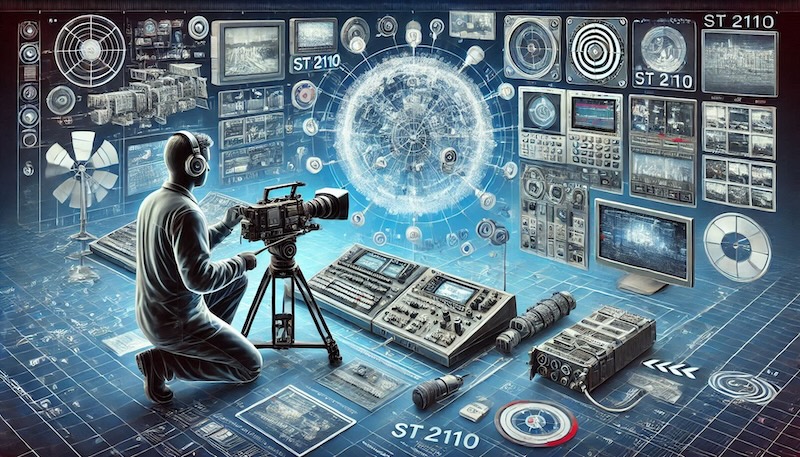
Main picture generated to Microsoft as a visual depiction of the theme of the article. No copyright infringement is intended)