Tag: Adobe Systems

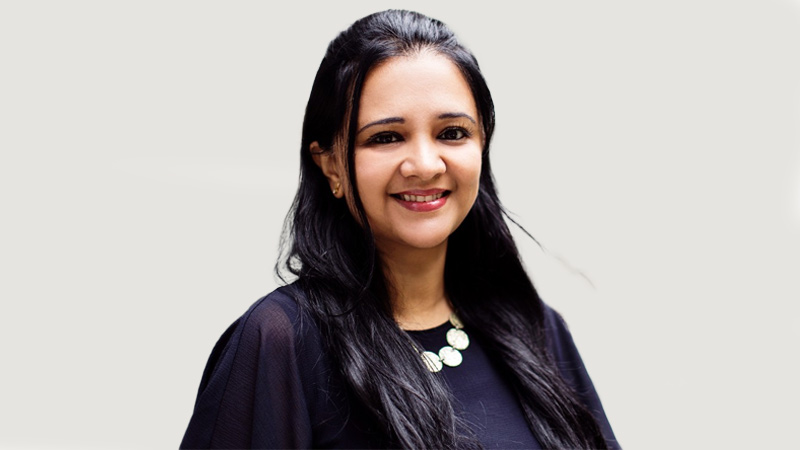
  • Supriya Goswami appointed global head of marketing at Whatfix

    Supriya Goswami appointed global head of marketing at Whatfix

    MUMBAI:  Asterix and Obelix and the Gauls would  have loved her company’s name, considering most of their names ended with an x in the comic book we have all loved for many years.

    Marketing veteran Supriya Goswami with a  track record in driving growth and shaping product strategies, has been elevated as  global head of marketing at Whatfix, a company that’s based in San Francisco, Bay Area and has a unique digital adoption platform.

    With over 20 years of experience spanning marketing, product leadership, and HR, Goswami is poised to lead Whatfix’s global marketing efforts and drive its continued success in the B2B SaaS space. Goswami’s career spans diverse industries, from SaaS to HR consulting, where she consistently demonstrated her ability to lead cross-functional teams and drive success in high-growth environments. Her leadership philosophy is rooted in strategic collaboration, innovation, and hands-on execution.

    Goswami joined Whatfix in 2020 as head of product marketing, where she has been instrumental in scaling the company. Known for her expertise in GTM strategies, product marketing, competitive intelligence, and brand building, she has built and led high-performing teams while driving collaboration with sales and product leadership to maximise revenue opportunities.

    In her expanded role as global head of marketing, Goswami will continue to leverage her deep expertise in areas such as value engineering, customer marketing, pricing and packaging, sales enablement, and analyst relations to accelerate growth and enhance the Whatfix brand on a global scale.

    Before joining Whatfix, Goswami held several leadership roles that cemented her reputation as a strategic thinker and marketing innovator:

    * InMobi (2015–2020): As VP & global head of marketing, Goswami led a global marketing team, developed product marketing strategies, and enhanced brand awareness. She also served as head of marketing for North America and marketing director for APAC, the Middle East, and India, contributing significantly to InMobi’s market growth.
    * Adobe Systems (2010–2013): Managed HR for a 1,000-member technology organization, overseeing talent development and performance management.
    * Aon (2005–2010): Led talent and organization consulting projects across Asia and the Middle East, managing key accounts and driving growth in leadership consulting.

  • How FB is helping brands to grow their biz in India

    How FB is helping brands to grow their biz in India

    GURUGRAM: Between dealing and refining its ad-targeting technology, coming clean about overestimating its video metrics to clients, failing to successfully launch Free Basics in India following ban by TRAI, its most recent tussle with Fake News, and, still doubling its revenues to USD 7.01 billion in its last quarter earnings (Q3) – Facebook has had an eventful year so far – be it globally or in India. How do these ups and down score with its partners and clients in India, Facebook’’s second largest market?

    Acknowledging India’s strategic importance to Facebook’ s overall business, Facebook India and South Asia managing director Umang Bedi reassured that advertisers’ faith in Facebook is going strong, and not without reason.

    Since joining the social media giant’s India team from Adobe Systems in July, the last 100 days have kept Bedi busy, hopping between cities catching up with partners across India.

    In line with its motto of ‘moving businesses’, Bedi cited several examples where Indian brands engaging with consumers on Facebook have seen a measurable difference to its brand outcome as well as sales.

    For example, Mondelez International gained over five points in brand consideration through Facebook’s Reach and Frequency tool, Durex saw a 29 per cent increase in sales during a running campaign on Mark Zuckerberg-led Facebook (along with TV), and Garnier saw a 19 per cent increase in sales in a weak market cluster using Facebook Carousel Ads.

    Snapdeal, Tanishq, Adidas, Ola, Yatra.com, were a few other brands of which Facebook helped move business, Bedi cited.

    As to how sales made by these brands could be attributed to ads placed on Facebook, Bedi clarified, “When there is a lift in sales done for a client online, we can easily track whether a consumer who saw its ad on our platform made a purchase or downloaded a certain app. It is a straightforward way keep track of a user across platforms through Software Development Kit (SDK) or pixels. For example, an Ola App will have a FB SDK embedded in its code. When you go offline, or cross media, we depend on our partners like Millward Brown who are known for meta cross-media studies, albeit through a sample-sized user base and campaigns.”

    Based on cross-media meta content measured and studied by Millward Brown in 26 of its campaigns across categories, Facebook managed to add five points to television in audience outcome at one-seventh the cost if same numbers were chased through television. Other measurement services that Facebook uses to procure data and measurement studies for its clients include Nielsen and BARC.

    The company’s impressive Q3 earnings, with a Y-O-Y increase of 16 per cent in revenue speaks volumes of its enormous reach that currently stands at 1.79 billion, off 1.18 billion are daily active users.

    Speaking strictly of the Indian market, Facebook has 166 million monthly active users as of its last quarter reports, of which 159 million access the site through mobile. Similarly, 85 million Indian users access Facebook daily, of which 81 million do it through mobile.

    Do these figures translate into revenues as well for the market? “Facebook India leads the charter among emerging markets when it comes to revenues. We are at par with Asia Pacific earnings, and Asia Pacific is the fastest growing markets for us, and India is a significant contributor to that,” Bedi shared, without putting a figure to its India earnings.

    According to its filings with the Registrar of Companies that was reported earlier this year, Facebook reported a 27 per cent increase in its revenues in India.

    On the flipside, Bedi also made a strong case of Facebook’s contribution to the Indian market to reinforce its positioning as a loved and trusted brand. Citing a Deloitte 2015 report, Bedi shared that Facebook contributes USD 4 billion to the Indan economy and supports 335,000 jobs through its marketing platforms and connectivity efforts.

    “We have generated 2.4 billion interactions between businesses and people in India through two billion small and medium business pages in India. Not to mention, 59 per cent people in India are connected to SMEs through FB.”

    While Facebook is focused on growing the base to reach the next billion new users in India and driving engagement, “everything we do around Facebook in the next five years is all about moving the real world business for our advertisers and partners,” Bedi makes it clear.

    Bedi’s strategy for that is quite simple – grow numbers by driving deep engagement that is augmented by partnerships valued by measured returns.

  • How FB is helping brands to grow their biz in India

    How FB is helping brands to grow their biz in India

    GURUGRAM: Between dealing and refining its ad-targeting technology, coming clean about overestimating its video metrics to clients, failing to successfully launch Free Basics in India following ban by TRAI, its most recent tussle with Fake News, and, still doubling its revenues to USD 7.01 billion in its last quarter earnings (Q3) – Facebook has had an eventful year so far – be it globally or in India. How do these ups and down score with its partners and clients in India, Facebook’’s second largest market?

    Acknowledging India’s strategic importance to Facebook’ s overall business, Facebook India and South Asia managing director Umang Bedi reassured that advertisers’ faith in Facebook is going strong, and not without reason.

    Since joining the social media giant’s India team from Adobe Systems in July, the last 100 days have kept Bedi busy, hopping between cities catching up with partners across India.

    In line with its motto of ‘moving businesses’, Bedi cited several examples where Indian brands engaging with consumers on Facebook have seen a measurable difference to its brand outcome as well as sales.

    For example, Mondelez International gained over five points in brand consideration through Facebook’s Reach and Frequency tool, Durex saw a 29 per cent increase in sales during a running campaign on Mark Zuckerberg-led Facebook (along with TV), and Garnier saw a 19 per cent increase in sales in a weak market cluster using Facebook Carousel Ads.

    Snapdeal, Tanishq, Adidas, Ola, Yatra.com, were a few other brands of which Facebook helped move business, Bedi cited.

    As to how sales made by these brands could be attributed to ads placed on Facebook, Bedi clarified, “When there is a lift in sales done for a client online, we can easily track whether a consumer who saw its ad on our platform made a purchase or downloaded a certain app. It is a straightforward way keep track of a user across platforms through Software Development Kit (SDK) or pixels. For example, an Ola App will have a FB SDK embedded in its code. When you go offline, or cross media, we depend on our partners like Millward Brown who are known for meta cross-media studies, albeit through a sample-sized user base and campaigns.”

    Based on cross-media meta content measured and studied by Millward Brown in 26 of its campaigns across categories, Facebook managed to add five points to television in audience outcome at one-seventh the cost if same numbers were chased through television. Other measurement services that Facebook uses to procure data and measurement studies for its clients include Nielsen and BARC.

    The company’s impressive Q3 earnings, with a Y-O-Y increase of 16 per cent in revenue speaks volumes of its enormous reach that currently stands at 1.79 billion, off 1.18 billion are daily active users.

    Speaking strictly of the Indian market, Facebook has 166 million monthly active users as of its last quarter reports, of which 159 million access the site through mobile. Similarly, 85 million Indian users access Facebook daily, of which 81 million do it through mobile.

    Do these figures translate into revenues as well for the market? “Facebook India leads the charter among emerging markets when it comes to revenues. We are at par with Asia Pacific earnings, and Asia Pacific is the fastest growing markets for us, and India is a significant contributor to that,” Bedi shared, without putting a figure to its India earnings.

    According to its filings with the Registrar of Companies that was reported earlier this year, Facebook reported a 27 per cent increase in its revenues in India.

    On the flipside, Bedi also made a strong case of Facebook’s contribution to the Indian market to reinforce its positioning as a loved and trusted brand. Citing a Deloitte 2015 report, Bedi shared that Facebook contributes USD 4 billion to the Indan economy and supports 335,000 jobs through its marketing platforms and connectivity efforts.

    “We have generated 2.4 billion interactions between businesses and people in India through two billion small and medium business pages in India. Not to mention, 59 per cent people in India are connected to SMEs through FB.”

    While Facebook is focused on growing the base to reach the next billion new users in India and driving engagement, “everything we do around Facebook in the next five years is all about moving the real world business for our advertisers and partners,” Bedi makes it clear.

    Bedi’s strategy for that is quite simple – grow numbers by driving deep engagement that is augmented by partnerships valued by measured returns.

  • Adobe Flash Lite to support video for mobile handsets

    Adobe Flash Lite to support video for mobile handsets

    MUMBAI: At the 3GSM World Congress in Spain Adobe Systems has announced that support for video will be integrated in the next generation of Adobe Flash Lite software, Adobe’s award-winning Flash Player runtime specifically designed for mobile phones.

    Flash Lite 3, expected to be available in the first half of this year, will bring the Adobe Flash Player video format from the desktop to mobile phones and devices, enabling operators, handset manufacturers and developers alike to deliver more experiences to mobile users.

    The firm says that the release will be an addition to its family of video technologies that includes Adobe Production Studio for professional video editing, Marcomedia Flash 8 from Adobe for video encoding, and Adobe Flash Media Server for video distribution. Adobe says that itsFlash technology is impacting the way video is distributed over the Internet.

    Today, television shows like Lost, Desperate Housewives, Grey’s Anatomy are being delivered online through FLV, the Adobe Flash Player video format, while the technology also powers the video capabilities of social networking sites such as YouTube and MySpace.

    The firm adds that video support in Flash Lite will change the way the way users engage with mobile content and open up new revenue opportunities for developers worldwide. This release will allow users to view vibrant video content from popular Internet sites like YouTube or MySpace and enable developers to create new applications across a variety of mobile and consumer electronics platforms.”

    Flash Lite will support the same video formats supported by Adobe Flash Player and will directly support video streams delivered by the Adobe Flash Media Server, allowing users to view a broad spectrum of Flash Player compatible content. Videos can be viewed in different forms within the Flash environment, including downloadable video clips, streaming videos, applications with user interfaces based on Flash or personalized content such as wallpapers or screensavers.

    Flash Lite runs on multiple platforms, including Symbian S60 v2/v3, Qualcomm Brew 2.x/3.x and Microsoft Windows Mobile 5, in addition to embedded operating systems on a variety of OEM platforms. This allows consistent content delivery across device types, broader distribution of engaging mobile experiences and simpler publishing, testing and selling of Flash Lite content for developers.

    By leveraging the Flash ecosystem – which includes the Flash authoring tool, Flash Lite player runtime and an established community of more than one million designers and developers – Flash Lite reduces deployment costs up to five times faster than competing solutions. Today, more than 200 million Flash-enabled devices have shipped worldwide