Tag: Adlabs

  • Adlabs’ CEO Bagla quits, Bakshi & Kale will be joint CEOs

    Adlabs’ CEO Bagla quits, Bakshi & Kale will be joint CEOs

    MUMBAI: Adlabs Entertainment’s Kapil Bagla has resigned from his post as the whole-time director and CEO with the effect from 1 September.

    Bagla shall now be focusing on reducing the debt of the company by monetizing the non-core assets such as the hotel and the surplus land through Walkwater Properties Private Limited (WPPL) (the wholly owned subsidiary of the company) as a director of WPPL.

    The company informed the BSE that Bagla will be continuing on the board as a non executive director (against his previous designation as whole time director) of the company with effect from 1 September.

    The company has also appointed Dhimant Bakshi as chief revenue officer and Ashutosh Kale as chief operating officer and executive director of the company as joint chief executive officers and key managerial personnel w.e.f. 1 September, 2017 to spearhead the executive functions.

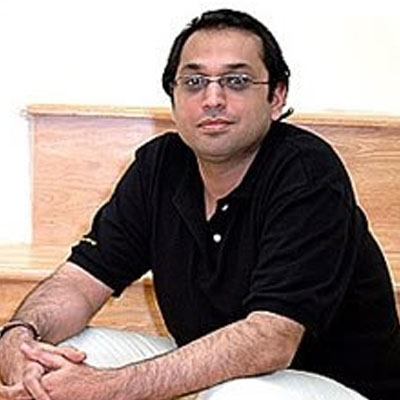
    Bakshi has over two decades of experience in the retail industry. He has also been awarded among Top 50 Most Talented Retail Professionals of India by Asia Retail Congress. He has been heading the sales, marketing, F&B and retail business of the company. Dhimant Bakshi has been associated with the company for the last five years. As the joint CEO of the company he shall be responsible for driving the revenues of the company to the next level, apart from regular executive functions.

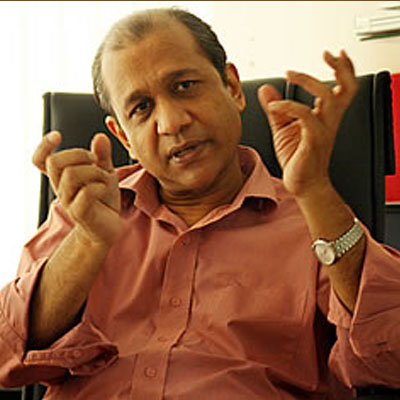
    Kale has over two decades of experience in the safety and security largely serving the Indian Army. He has served as an instructor in the Indian Military Academy and as an Anti-Terrorism Expert. He was handpicked to lead a contingent of 1700 Indian troops in the United Nations wherein he was responsible for leading strategic, diplomatic, cultural, PR and humanitarian initiatives in the Horn Of Africa. Kale has also been associated with the company for the last five years. As the joint CEO of the company, he shall be responsible for the operations of the parks of the company and enhancing customer experience, apart from regular executive functions.

  • AccorHotels & Adlabs to open integrated hotel & resort on 16 September

    AccorHotels & Adlabs to open integrated hotel & resort on 16 September

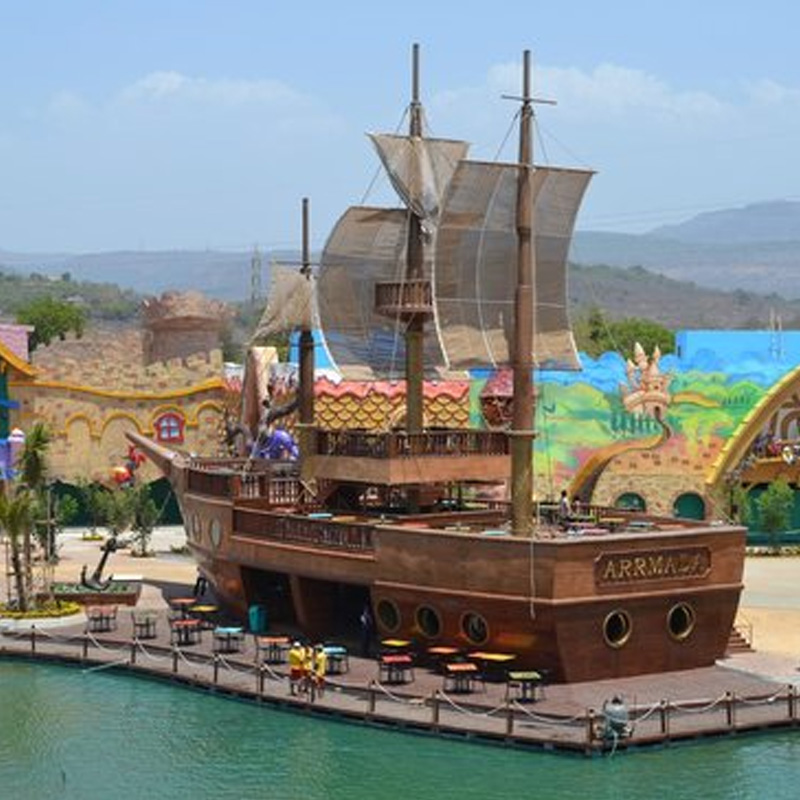
    MUMBAI: AccorHotels is all set to open an integrated hotel and resort property – Novotel Imagica Khopoli on 16 September. Located in the Sahyadri Hills near theme parks of Adlabs Imagica and Aquamagica in Maharashtra, the hotel, which is accessible via the Mumbai – Pune Expressway, is owned by the Adlabs Group and managed by AccorHotels. 


    In its opening phase, the hotel features 116 rooms, which overlook the park, pool as well as the Sahyadri Hills. The hotel plans to add another 171 rooms and suites later this year, which will also comprise rooms for specially-abled patrons. By the first quarter of 2016, the hotel plans to have an inventory of 287 rooms. Additionally, there are 20 interconnected rooms on each floor catering to larger family groups.


    Novotel Imagica Khopoli also features a large meeting space with a pillar-less ballroom that can accommodate approximately 460 guests. The hotel is also home to a bar and four restaurants, which offer a selection of cuisines.  


    AccorHotels India senior vice president – operations Jean-Michel Cassé said, “The opening of Novotel Imagica Khopoli strengthens our position in the Indian market in line with the brand’s growth strategy. The launch follows the growing trend of integrated hotels with theme parks, along with the brand’s assurance and service standards.”


    Adlabs Imagica’s Pooja Shetty Deora added, “We are delighted to be associated with the Novotel brand in India, and are confident that the first theme park property under AccorHotels will prove to be the preferred choice for families and holiday makers. Guests can re-live their childhood memories and treat their children to numerous marquee characters around the hotel.”


    To celebrate its opening, the hotel is offering one Superior room night stay with breakfast for two and theme park entry to Adlabs Imagica and Aquamagica park at Rs 10,500 on weekdays and Rs 13,300 on weekends.

  • Q1-2016: Adlabs revenue gets boost as theme park footfalls triple

    Q1-2016: Adlabs revenue gets boost as theme park footfalls triple

    BENGALURU: Adlabs Entertainment Limited (Adlabs) reported almost three times (2.98 times) the footfalls at its two theme parks Adlabs Imagica and Adlabs Aquamagica-Water Park in the quarter ended 30 June, 2015 (Q1-2016) at 5.392 lakh as compared to the 1.81 lakh in Q1-2015. 


    Consequently, the company’s operating revenue (total income from operations, TIO) was 2.34 times in this quarter at Rs 85.01 crore as compared to the Rs 36.37 crore in Q1-2015 and 72 per cent more than the Rs 49.43 crore in Q4-2015.


    Note:  (1) 100,00,000 = 100 lakh = 10 million = 1 crore

     (2) All numbers in this report are standalone unless stated otherwise.


    Four segments namely ticket sales, food and beverages (F&B); merchandise; and other operations contribute to Adlabs revenue. 


    The largest segment by far in terms of percentage of TIO, ticket sales, reported an operating profit of Rs 1.05 crore in Q1-2016 as compared to a y-o-y operating loss of Rs 16.13 crore in Q1-2015 and a q-o-q operating loss of Rs 18.89 crore in Q4-2015. All other segments also showed healthy growth and reported operating profits during the current quarter.


    The company’s loss in Q1-2016 has almost halved at Rs 14.81 crore as compared to the loss of Rs 28.67 crore in the corresponding quarter of last year and was less than half the Rs 31.16 crore in Q4-2015.


    EBIDTA in Q1-2016 was positive Rs 24.74 crore (29.1 per cent margin) as compared to the negative EBIDTA of Rs 2.25 crore in Q1-2015 and the positive EBIDTA of Rs 3.78 crore (7.7 per cent margin) in Q4-2015. Adlabs EBIDTA in the current quarter has already surpassed the EBIDTA of Rs 20.51 crore for FY-2015. 

    Segment details


    Ticket Sales

    Ticket sales revenue more than doubled (2.21 times) in Q1-2016 at Rs 61.91 crore (72.8 per cent of TIO) as compared to the Rs 28.05 crore (77.1 per cent of TIO) in the corresponding year ago quarter and was 76.1 per cent more than the Rs 35.16 crore (71.1 per cent of TIO) in the immediate trailing quarter. Results of this segment have been mentioned above.


    Food & Beverages (F&B)

    Adlabs F&B segment revenue more than doubled (2.4 times) in Q1-2016 at Rs 13.28 crore (15.6 per cent of TIO) as compared to the Rs 5.59 crore (15.4 per cent of TIO) in Q1-2015 and was 53.9 per cent more than the Rs 8.63 crore (17.5 per cent of TIO) in Q4-2015.


    F&B reported operating profit of Rs 3.83 crore in Q1-2016 as compared to an operating loss of Rs 0.13 crore in Q1-2015 and an operating profit of Rs 1.72 crore in the immediate trailing quarter.


    Merchandise

    Merchandise segment reported more than triple (3.3 times) revenue at Rs 7.31 crore (8.6 per cent of TIO) in Q1-2016 as compared to the Rs 2.27 crore (6.2 per cent of TIO) in Q1-2015 and was 66.4 per cent more than the Rs 4.39 crore (8.9 per cent of TIO) in Q4-2015.


    The segment reported an operating profit of Rs 1.07 crore in Q1-2016 as compared to an operating loss of Rs 0.18 crore in Q1-2015 and an operating loss of Rs 0.14 crore in the prior quarter Q4-2015.


    Other Operations

    Other operations’ revenue more than quintupled (5.4 times) in Q1-2016 at Rs 2.51 crore as compared to the Rs 0.46 crore in Q1-2015 and was more than double (2.02 times) the Rs 1.24 crore in Q4-2015.


    The segment reported an operating profit of Rs 0.09 crore as compared to an operating loss of Rs 0.97 crore in Q1-2015 and an operating loss of Rs 0.03 crore in Q4-2015.


    Let us look at the other numbers reported by Adlabs


    The company’s total expenditure in the current quarter at Rs 81.05 crore (95.3 per cent of TIO) was 47.4 per cent more than the Rs 54.97 crore (151.2 per cent of TIO) in Q1-2015 and was 18.7 per cent more than the Rs 62.87 crore (138.1 per cent of TIO).


    The company’s advertising costs in Q1-2016 almost doubled (up 97.6 per cent) at Rs 19.13 crore (22.5 per cent of TIO) as compared to the Rs 9.68 crore (26.6 per cent of TIO) in Q1-2015 and was 60.4 per cent more than the Rs 11.93 crore (24.1 per cent of TIO) in the previous quarter.


    Other expense in Q1-2016 declined 8.5 per cent to Rs 6.15 crore (7.2 per cent of TIO) as compared to the Rs 6.72 crore (18.5 per cent of TIO) in the corresponding year ago quarter and declined 39.2 per cent as compared to the Rs 10.12 crore (20.5 per cent of TIO) in the immediate trailing quarter.


    Employee Benefits Expense in Q1-2016 at Rs 15.47 crore (18.2 per cent of TIO) was 40.3 per cent more than the Rs 11.03 crore (30.3 per cent of TIO) in Q1-2015 and was 18.7 per cent more than the Rs 13.04 crore (26.4 per cent of TIO) in Q4-2015.


    Company Speak


    Adlabs CEO Kapil Bagal said, “As envisaged the theme park and the waterpark are complimenting each other and working extremely well as a combination. Imagica is focused on attracting children, families, groups and corporate and Aquamagica is focused on attracting the youth and college segments and together both parks covering all segments of customers. We are seeing great response from our promotional marketing activities and new properties of Happy Tuesdays and Lazy Sundays. All our sales channels activation is looking promising with a multi-city expansion of sales agents with expansion of our reach across India. Further, we have pre-paid approximately Rs 250 crore of debt with the funds in our IPO and we now have comfortable debt to equity ratio and our interest outgo has also reduced.”


    “Our hotel Novotel Imagica Khopoli is on the verge of launching in August and we are already seeing encouraging advance bookings by corporate for their MICE and social events. Once the hotel is operational, we will become a complete integrated holiday destination in India,” he added.

  • Adlabs Celebrates the “Imagica Joy” with School Students

    Adlabs Celebrates the “Imagica Joy” with School Students

    Mumbai, July 29th ‘2013: Over 1000 schools from across India will now have the opportunity to be a part of the first ever Adlabs Imagica Educators Connection Programme. As a part of this program, children will get an experience they’ve never had before. This unique offering takes students on an extraordinary adventure through the world of Imagica. The programme aims to inform students on topics ranging from Mughal history to Indian mythology through a state of the art presentation. With ‘I For India’, the students will also get to see and experience India like never before on a simulated flight; a unique bird’s eye view of our culture and heritage.

    Adlabs Imagica, which has delighted all visitors irrespective of age, is all set to infuse fun and entertainment for its youngest audience through various school packages. It plans to create customized itineraries that are a combination of learning and fun to make it a must visit destination for school students. The Educators Connection Programme allows school students to experience the stories they have only heard come to life around them. It is an opportunity for them to experience a whole new world and live out their imagination.

    After all the excitement, when the hunger kicks in, the kids can enjoy a wide variety of global cuisines at Imagica’s fine restaurants that include European, African, American, Chinese and Indian amongst others.

    Commenting on the initiative, Pooja Shetty Deora, Joint Managing Director at Adlabs Entertainment Group said, “We have always believed in providing exciting experiences to our special young audiences. We are very happy to initiate the Adlabs Imagica Educators Connection programme. Although Adlabs Imagica is a destination for all ages, children are among our most enthusiastic visitors. Our focus this year is to build connect with the schools and educate them about this new destination”

    The theme park which opened on April 18th 2013 has been attracting and drawing people of all age groups. With the Educators Connection programme Adlabs Imagica intends to showcase its offerings to its youngest target segment. Looks like children across the country now have a great and fun-filled outing to look forward to.

  • ‘We are talking with global companies to set up a studio to develop content’ : Rohit Sharma- Zapak Digital Entertainment COO

    ‘We are talking with global companies to set up a studio to develop content’ : Rohit Sharma- Zapak Digital Entertainment COO

    With a war chest of $100 million (Rs 4 billion), Reliance Entertainment’s online gaming portal Zapak is looking to invest in infrastructure and expand even beyond the frontiers of India. The portal is going to launch in China, Pakistan and the UAE.


    In an interview with Indiantelevision.com’s Ashwin Pinto, Zapak Digital Entertainment COO Rohit Sharma talks about the global plans of the gaming portal and the steps that are being taken to reach there.


    Excerpts:

    When George Soros picked up a 3 per cent stake in Reliance Entertainment for $100 million, how big was Zapak as a valuation attraction?
    It was definitely a point of attraction as it is one of our oldest businesses. Since Zapak is one of the most successful internet companies in India, it gives value to investors. However, I cannot talk about valuations. The investment has helped us understand what our value is and how we can scale it up.

    How much is Zapak going to invest and what is the breakeven period?
    Since gaming is still at a nascent stage in this country, the breakeven will not happen before four to five years. We are investing $100 million over the next five years. In terms of operational expenditure, we have to invest in manpower, bandwidth and marketing activities. In terms of capital expenditure, we are investing in infrastructure as well as technology and content. Our costs will go up each year as the business grows.

    What are the lines of synergy Zapak is drawing with the other verticals of Reliance Entertainment?
    We have the movie business with Adlabs. A lot of content alliancing will happen here as we acquire content, produce and co-produce it. Zapak will also develop content based on these movies.


    There are strong synergies between Big Flicks and Zapak as both are located in the internet space. Bigadda is our social networking site and the audience is similar. So we do a lot of cross-promotional activities. And with our FM radio business, we use it as an advertising medium.


    Thus, if we take the gaming piece in the entertainment space, there is a lot of content syndication, retail syndication and advertising opportunities that are possible.

    What are the trends being seen in online gaming in India?
    Zapak is setting the trends here as there is no other online gaming player in India per se. We have a 70-75 per cent market share in terms of revenues and the number of users which is four million right now. We are also attracting good advertising and so we are witnessing an upwards trend.


    The learning for us is that the user wants compelling content. Therefore, publishers/developers like us need to invest in the right kind of content. The content, whether global or local, has to be high-end in terms of graphics, artwork, game play and design.

    The kids genre has done well for us. Zapak Girls also does well as do our action oriented games. But cricket is our biggest property

    Who comprises your TG?
    Surprisingly consumers have an equal ratio between the top cities and B, C towns and cities. Males in the age group 12-25 are the core TG. Having said that, however, youngsters below 12 are increasingly playing on Zapak. They are becoming stickier towards gaming.

    How does the market size for online games compare with mobile gaming?
    If you look at developed gaming markets like China, Korea and Vietnam, online gaming has surpassed mobile gaming. In countries that have a strong PC and online penetration, online gaming offers a better user experience. The best part about online gaming is that you can form communities that you cannot have on the mobile.

    Could you shed light on the strategy being followed to increase the product portfolio?
    When we started, we focused on casual games, which is the low hanging fruit. There is no point getting hardcore games to non-gamers. We brought in world-class casual games into the country. We work with over 50 studios globally.


    Having built a critical mass of gamers, we want to expose them to better content. We are going into the next phase which is to bring in casual hardcore games and hardcore games.


    Hardcore games are played in cafes and most cafes do not have the right PC specifications and infrastructure for this. This is why we started our gameplexes across the country. We will have almost 10,000 seats by the end of this year. We started our gameplex business in the big cities and towns. Now we have expanded to smaller places like Jaipur where we are also getting good traction.

    What have been your top five properties?
    The kids genre has done well for us. Zapak Girls also does well as do our action-oriented games. But cricket is our biggest property. You need to have a hybrid model. Generally, in business it is a 80:20 ratio where 20 per cent of content gives you 80 per cent of traction.


    However, in casual online gaming, the long tail is also important. A lot of people who come back, also want to check out the catalogue in addition to consuming the same content twice or thrice. Therefore, you need to build on your catalogue.

    Zapak has done activities to get women and children involved in gaming. What prompted this?
    The 12-25 male TG is still being built up. It has not been fully tapped. However, we have gone into early segmentation. We want every gamer in this country to relate with Zapak. We want to have a product and a service for everyone including a four-year-old kid. Therefore, we have been broad basing our offerings.

    Does Zapak also focus on game development?
    We have a small in-house team but we don’t do actual game development. We outsource it. We work exclusively with studios both in India and abroad. We drive the game ideation, concept and documentation. Then they do the rest. We work with our sister company Jump Games. We work with a Delhi-based company Saffronage. However, by and large, we work with studios outside India.


    There have been technological advances from a product point of view. Casual games are now incorporating social networking phenomena. Community features which are possible due to technology are growing in importance. The more features you have and the better customer relationship management setup you have, the better is the traction you will get.

    Is Zapak also looking at acquisitions in the gaming space?
    Yes! We will be aggressive in this regard both in India and abroad. Our targets would include game developers. In India, nobody has the competence to develop a game from scratch to finish. Besides acquiring content, we are also talking with global companies to set up a studio which could serve as a factory to develop content.

    What are the different revenue sources for Zapak and how important is advergaming in the mix?
    Advertising is our main revenue stream at the moment. Casual games are a portal business. We also get some revenue from our cafes and our cards business as well as events that we do. Subscription revenue will come in when we get into offering hardcore games. Users either purchase the product or subscribe on a monthly or a weekly basis. Our first product here will be three casual MMOG titles which will be launched in May and June.


    Could you give me examples where Zapak has done innovations for clients?
    With McDonalds, we did a deal where you buy a “Happy Meal” and get a product from Zapak. With Dominos, we did an innovation around a gaming pizza which was accompanied with goodies. We also tied up with MTV for games around their show Roadies.


    There is talk about how gaming is evolving into a social activity with massively multiplayer online games (MMOG). What is your view on this?
    If you look at countries like China and Korea, it is the stickiest social networking opportunity. Other entertainment options do not engage on a social level. In a virtual world, though, you live a virtual life. Already in our cafes, you see thousands of kids who live in a virtual environment.


    The BCCI is kicking off the IPL in April. Are you looking to work with the franchisees to develop properties?
    Yes! We are working with franchisees to develop properties that aim to reflect the sport.


    Does cricket work better than Bollywood for games?
    Yes! This is partly because cricket has gameplay built in. With film, you have to think about a strategy that can fit. We have worked with Bipasha Basu and Salman Khan. We also did successful games around the film Cash. However, even in Hollywood, games out of films are not generally successful. Spiderman was an exception, though. The challenge for us is to tailor Bollywood content so that it is suitable for gameplay.


    Apart from cricket, are you looking at other sports?
    We are looking at tennis and F1. We also feel that table tennis will translate well as an online game. We recently did a successful tennis game that Apollo sponsored. In terms of working with official sports bodies like Fifa, their licence fees are too high to justify a good RoI in India at this point of time.


    What is the way forward to combat the lack of skill sets in game development in India?
    Gaming has to be more widely accepted as an activity and profession. Companies from abroad have to come in and invest. We cannot grow this space all by ourselves.


    How did the concept of “Zapak Corporate Gamer Challenge” come about? Do you foresee a time when gaming will be viewed as a professional sport in India?
    We have a division called Zapak Live. This division organises conferences, events, tournaments, etc. We realised that a lot of casual gaming happens in the office. So it seemed like a good idea to take it to an offline level where corporates can take part. The response was good. I see no reason why gaming cannot be looked at as a sport in India a few years down the line.


    One of your recent marketing innovations revolved around offering people the chance to win cash by constantly playing. How was the response to that?
    It was a loyalty programme for the portal. For each activity done, participants got points. It was a three-week programme. We also do other marketing innovations. We had done a series of short films to create awareness for our e-mail product. We also do a lot of viral activities which have included spoofs on films like Sholay. We also did innovative stuff in loos in multiplexes.


    Finally, is Zapak looking at expanding abroad?
    We are looking to launch our portal in China, Pakistan and the UAE. You will see launches from the next quarter. Our USP is content that is not India-centric; it appeals to a global audience. It is a question of customisation from a language point of view.
  • ‘Challenges of cultural adaptability of international formats in India are tremendous’ : Siddhartha Basu- Synergy Adlabs CMD

    ‘Challenges of cultural adaptability of international formats in India are tremendous’ : Siddhartha Basu- Synergy Adlabs CMD

    Synergy Communications founder Siddhartha Basu shot to fame as the curt quizmaster in BBC’s Mastermind India. But he sure knows a thing or two about drama. And that comes across as no surprise since he has a background in theatre.

    No wonder then that Basu was able to blend drama and quiz in the immensely popular Amitabh Bachchan-hosted show Kaun Banega Crorepati (KBC) that turned around the fortunes of Star Plus.

    Post the acquisition of Synergy by Adlabs, Basu now plans to scale up operations to produce content across various genres. And he is already making inroads into the regional content market.

    In an interview with Indiantelevision.com’s Arcopol Chaudhuri, Basu speaks about how the Adlabs association has helped and shares his views on the rapidly changing Indian television scenario. He hopes the relationship between content providers and broadcasters will be redefined.

    Excerpts:

    How has the acquisition of stake by Adlabs helped Synergy grow its business?
    With the Adlabs association, we have the resources to specialize in various genres and programmes. We may not have been able to do this as we were a small production house. We were known for large productions, quality of content and conduct. But whatever new challenging projects we took up in the recent past, we did not have the resources. We needed the manpower and the infrastructure to strengthen our hands as content producers to make quality programming across all genres.

    The association with Adlabs, thus, gives us a more sound financial grounding and standing amongst the competition. It empowers us not only to grow creatively, but also as a business.

    Have you expanded your production facilities post the formation of Synergy Adlabs?
    It’s a developing story. We are already functioning through two production offices in Delhi and Mumbai. Adlabs has made substantial investments in high-end infrastructure and equipment, which we are using for Jhalak Dikhla Jaa and our fiction show Jiya Jale.

    Are you looking at producing regional content as well?
    We are looking at a couple of assocations down South. Synergy Adlabs has taken a strategic stake in Chennai-based production house Shri Om Comtech, which will serve as our hub for producing Tamil content, to begin with.

    Which shows are you producing on the regional front?
    Post our association with Shri Om Comtech, we already have two daily shows on air on Kalaignar TV. One is Manjal Mahime at 8:30 pm, while the other one is Akkatangai in the afternoon at 1:30 pm. Both the shows are doing well.

    In the coming days, we are also looking to produce regional content in languages for Malayalam, Telugu, Kannada. But we have done regional content before as well. That was before the Adlabs association. It was a cricket-based quiz show called Howzzat which aired on Tara. But then again, regional content is our secondary market. Hindi GEC programming still remains our primary interest.

    Will Synergy Adlabs make inroads into films and animated content?
    We are currently focused only on television. But we’re going to go deeper into providing dubbing services, creating promos and formats.

    How would you describe the existing equation between content providers and broadcasters?
    Till now, it’s been a very one sided relationship and the plea from broadcasters has been that you operate under slender margin of profits and be happy about it.

    There has been lack of accountability on key creative and programming decisions on many occasions. Often you have proxy producers and creative directors, who are arbitrary and unaccountable and it becomes a ridiculous situation.

    We fortunately have had cordial relationships with broadcasters, but that has been the generic equation between the channel and production house. They retain the IPR and we work on a commissioned basis. We are hoping to see that equation change and settle down into something that benefits both parties.

    With the huge demand for content coming from the existing and upcoming channels, how do you see the relationship evolve between the content providers and the broadcasters?
    I think content producers have a wonderful opportunity now by not only creating content for the new players but also for the existing players. We will now have to generate more, produce better and produce it on better terms. When I say better terms, I don’t just mean better financial terms, but with better control over the content. There is ownership of the formats we as content producers own and create and in our case, we are looking at associations and relationship, not only as a job shop where a network merely uses a content producer on a work-for-hire basis. Hopefully, you should see production houses literally work as producers, maybe get into a revenue sharing arrangement, or establish their presence as a production partner. And that’s the kind of association we are seeking.

    Which broadcasters have you really enjoyed working with?
    We’ve had a good working relationship with almost all broadcasters – Star, Sony and now even Sahara’s Filmy.

    Any shows that you’re doing for Zee?
    No shows for Zee at the moment.

    Kaun Banega Crorepati (KBC) really took Star Plus up the ratings ladder. Ironically, the channel, it seems needs another KBC to make it regain its lost audience share to Zee.
    I think shows like KBC and Sa Re Ga Ma Pa work as tent poles, since they lift the overall audience share. Indian Idol did something similar for Sony. So there are several non-fiction shows which act like that. But to really lift a channel, you need all kinds of programmes and a variety in programming, which creates a bandwagon effect.

    You have been largely associated with quiz-based shows. Until last year you worked on Jhalak Dikhla Jaa, which is a celebrity-dance show. What prompted the foray into this genre?
    We’ve been best recognized for our format shows. But it was always a desire to do a variety of genres. Today, we as a production house are looking to specialize in all genres – of which talent shows are one. We are also handling a couple of fiction projects. The motive will be to associate with every genre thoroughly and professionally. We somehow got linked to the quiz-based shows.

    Till now, it’s been a very one sided relationship between content providers and broadcasters. We are hoping to see that equation change

    There were a number of quiz based shows that followed Kaun Banega Crorepati, none of which could replicate it’s success. Why do you think quiz-format shows have dried up now?
    I think it depends upon what the format is. In one sense, for some formats, the audience base is becoming much larger and on the other hand, some shows make it even more fragmented. So certain formats will appeal across segments and communities, like KBC did. That was a sort of tent pole effect it created.

    But as it happens in films and television, there were attempts made to replicate the format in some way or the other and they did not work. Some shows work, some don’t. It’s not necessarily the format that is to be blame. But we hope to tap popular genres for wider appeal. Bollywood Ka Boss is one such show – it’s a film based quiz show and we hope that it will catch up. At the end of the day, a show has to have a specialized audience.

    How much has KBC changed the profile of your company?
    The profile, I believe, changes with every new show that we do. With Jhalak Dikhla Jaa, the question mark transformed into an exclamation mark. A quiz master had now put on his dancing shoes. We are known for our thorough backend technological setup for the execution of television programming, a certain quality of content and class of presentation. That is the benchmark we will take to any genre we work upon.

    We have seen different phases in the Indian television scene. There was the time ofHum Log, Buniyaad and Mahabharat. Then there were the soaps which continue even today. Now reality TV and talent hunts have become popular. How do you view this change?
    I think Indian television is at the cusp of change. We’re still seeing the dominance of ultra-traditional soaps – a dulhan is titled bahu in one and lakshmi or a beti in another soap and there’s the saas that comes along as well (laughs). So we are becoming a nation of weepy family soaps.

    Which direction is Indian television moving in? Any genres of programming that are still missing?
    I don’t think it’s moving in one direction. I think we are still in an adolescent phase. The range within which we have been operating is still very limited. This is something that will now start finding definition. We are still a very amateur television watching community. We’ve been used to Doordarshan, which created a sort of a monoculture. Surprisingly we had a lot of variety then within those one or two channels of the public broadcaster, than we do now.

    The reason why I see the change coming is because broadcasters are actively seeking things that differentiate and mark them out. There are still so many genres that are waiting to be tapped – comedy in the form of sitcoms is something that’s missing.

    Do you see more of localization coming in?
    Definitely. I think Indian television will get intensely local. People with the raw, strong local cultures and flavours will see rapid growth. And these are audiences who are not looking at the Hindi GECs and English channels. Regional channels are more dynamic and they will experience a strong following. The storylines and concepts adopted by the regional channels are often more liberated and open-minded than the ultra-modern, regressive approach adopted by Hindi GEC programmes. Some trends will be borrowed across both genres of channels as a cross fertilization process.

    It is said that interactive TV is the key driver to the future of television programming?
    Interactivity of programming is important and they will drive key shows, but fatigues will set in after a point of time. Audiences will want to participate – maybe vote, for a dancer, a singer they really like. But you cannot build an entire programming strategy around that.

    What kind of associations or affiliations are you looking to build up internationally?
    We are looking to forge associations with various format owners and not merely confine ourselves to one. We have worked in the past with Endemol and even on Bluffmaster, but then how many of our broadcasters are keen on format shows? Very few.

    Why is that?
    Several factors account for it. It’s the cost, the complications, restrictions, adaptability and also the format that must deliver for them. In many ways, the Indian market is responsible for it. Here Thums Up outsells Coke, so you can’t have a McDonalds outsell the existing local delights. You cannot transplant a certain experience already tried in one country and hope that it will work. It’s a cautious decision. India is the only country in the world where Dancing with the Stars is Indianised, indigenised with the rules as well. So the challenges of cultural adaptability in India are tremendous.

    What are your views on the existing audience measurement practices?
    I think our advertisers and broadcasters are too heavily dependant on it. And I don’t think that’s a rational approach and I question it. Look at the number of SMS votes the talent hunt shows receive…they run into several lakhs. And the existing rating system merely confines itself to seven thousand boxes. So it’s far from a perfect system. And in a heterogenous demographic for a country like ours, the measuring system is full of ifs and buts.

    Okay. When are you getting back to hosting a show?
    Me as a host? No. I’ve never really fancied myself much in front of the camera. I’ve always liked to be involved in the conceptualization and execution of programming. I know the kind of effort that goes into it and there is enormous amount of satisfaction in putting a certain piece of communication together.

    How did you narrow down upon Boman Irani as a host for Bollywood Ka Boss?
    Boman is a fantastic host on stage. He’s also a national Bollywood buff. He can sing, joke, dance, do impersonations and can really perform. Having said that, it was the channel (Filmy) which really circled on him and was game for it. And I went along. Even the format of the show was something they were very keen on. The show aims to find the best informed person in the world of Bollywood.

    When is KBC back for its next season?
    Sometime next year. And Shah Rukh Khan’s hosting it. The agenda is different everytime. In KBC 2, it was about conquering the weekends. In KBC 3 it was about strengthening the 9-10 pm slot. You never know what they decide upon this time. Would you believe, once upon a time the Sunday 9-10 am slot was the most sought after slot since it aired Mahabharata!

  • UFO to raise $25 million, taps VCs

    UFO to raise $25 million, taps VCs

    MUMBAI: United Film Organizers (UFO) Moviez, a subsidiary of Apollo International Ltd, is in the process of raising venture capital (VC) funding of $25 million (Rs 1.13 billion).

    The company plans to spread its digital cinema network to 2,000 screens by 2007-08, for which it is going to invest Rs 3 billion. UFO has already invested close to Rs 800 million and its digital system runs across 550 theatres.

    UFO has mandated Ernst & Young to arrange the VC funding. “We are in talks with a few VCs. We will be raising $25 million. We have already pumped in around Rs 800 million. The balance will come from debt and internal accruals,” UFO Moviez CEO Sanjay Gaikwad tells Indianteleviievision.com.

    Apollo International holds 60 per cent in the company while 25 per cent is with the founder-promoters (including Gaikwad) and initial investors. The balance 15 per cent is held by Singapore-based DG2L Technologies. “After receiving the VC funding, all of our shareholdings will get diluted proportionately. We will know the new shareholding structure only when we finalise our VC partner,” says Gaikwad.

    UFO installs the digital equipment at cinema theatres which cost Rs 1.7 million. Theatres using the UFO digital system do not have to pay for the equipment but are charged Rs 450 per show. The company uses Mpeg 4 digital cinema solutions.

    “We plan to increase the fee to Rs 525 per show. We also expect the usage of digital systems in the theatres whiere we have installed them to go up from 60 per cent to over 90 per cent as the business matures,” says Gaikwad.

    UFO has competitors like Adlabs and Essel Group’s E-City Digital Cinemas. “We expect our revenues to touch Rs 2 billion by 2008-09,” says Gaikwad.

  • Media stocks big gainers

    Media stocks big gainers

    MUMBAI: Sparked by a buoyant stock market, media stocks stood as big gainers on Monday. While the Bombay Stock Exchange benchmark Sensex scaled a new high to end the day 56.10 points up at 13,186.89, strong activity was seen in media scrips like Balaji Telefilms, TV18 and Zee Telefilms.

    “There is a strong sentiment in favour of media stocks. Major action is happening in this sector and financial performances are improving,” said a market analyst.

    Balaji Telefilms gained 10.4 per cent in today’s trade, moving up from the previous close of Rs 158.55 to end the day at Rs 175. TV18 rose 10.18 per cent to close at Rs 898.55 while UTV went up by 9.26 per cent to Rs 221.75.

    Most of the other media stocks also firmed up with Zee Telefilms seeing a 3.62 per cent rise to close the trading session at Rs 337.65. Among the other gainers were TV Today (5.79 per cent to Rs 75.85), Sun TV (1.81 per cent to Rs 1264), Adlabs (1.88 per cent to Rs 365.55), K Sera Sera (1.43 per cent to Rs 31.95) and Bag Films (3 per cent to Rs 9.27). NDTV saw a marginal rise of 0.38 per cent with the scrip closing at Rs 236.30. Hinduja TMT, however, dipped by 1.48 per cent to Rs 519.15.

    “There is investment interest in media companies from private equity and non media players,” said an analyst in a brokering firm.

    A recent indication of this is the buyout of 51 per cent stake in Asianet by former chairman and BPL Mobile CEO Rajeev Chandrasekhar. Several media companies have also recently raised money through public offerings. Raj Television Network Ltd has just filed documents with the market regulator, Securities and Exchange Board of India (Sebi), for its initial public offering (IPO).

    “The media sector is set for further growth as digitalisation sets in. There is bound to be a rub-off effect in such stocks,” the analyst said.

  • TDSAT dismisses Radio Mid Day plea for uniform frequency

    TDSAT dismisses Radio Mid Day plea for uniform frequency

    MUMBAI: Radio Mid Day’s hopes of retaining its well known 92.5 MHz frequency hit a wall today after the sector regulator TDSAT dismissed its plea against the government’s decision to withdraw it. 

    The “big” beneficiary of the tribunal’s decision is the Anil Dhirubhai Ambani Group (ADAG)-controlled Adlabs’ Big FM, which has been alloted the 92.7 MHz frequency, as part of its unified frequency regime, to broadcast from 44 radio stations across India. 

    Radio Mid-Day, which manages Radio One (formerly known as Go 92.5 FM), has been broadcasting in Mumbai for around four and a half years on 92.5 FM. This frequency band has grown to be the brand identification, according to Radio Mid Day.

    But, Tdsat observed, “The importance of brand name of the broadcaster cannot be underestimated, particularly, in view of the provision in the “channel identity” clause which talks of brand name of the broadcaster. Frequency is not part of the brand name of the petitioner. The petitioner got its brand name changed, which was not objected to by the government. Petitioner’s (Radio Mid Day) popularity is through its brand name. It cannot insist on having a particular frequency number.”

    Despite refusing to shift to 94.3 MHz, the brand Radio One is already broadcasting on this freqeuncy in Bangalore and Delhi. Tdsat pointed out that nobody makes any gain from the Radio Mid Day being shifted to another frequency. Rather it in the interest of Radio Mid Day that it will have same frequency i.e. 94.3 FM for all the cities for which it has broadcasting licence except Ahmedabad for which petitioner makes no grievance, highlights Tdsat.

    Interestingly, the adovcate fighting the case on behalf of Adlabs had mentioned that Radio Mid Day has to change its earlier allocated frequency in any case because of the non-availability of 92.5 MHz at all.

    This case has been fought over last two weeks. Radio Mid-Day had questioned the granting of 92.7 frequency to Big FM in Mumbai despite the norms of having a difference of at least 0.8 frequency between two stations. Radio Mid-Day had in fact first approached TDSAT seeking a uniform frequency for all its six radio stations across the country, but the government allotted different frequencies to it.

    The information and broadcasting ministry had earlier allocated 94.3 frequency to Mid Day Group for Radio One in Mumbai and other cities except in Ahemabad. But the Mumbai-based company refused to switch to the new frequency asserting that 92.5 FM has grown to be its brand identification.

    How Radio Mid-Day responds to this setback remains to be seen.

  • Adlabs likely to pick up stake in a TV production house

    Adlabs likely to pick up stake in a TV production house

    MUMBAI: Adlabs Films Ltd is in talks with a television content production company to acquire a controlling stake. If the deal sails through, Adlabs will be able to make an entry into TV production.

    “We are in negotiations not for a total buyout but a majority stake,” says Adlabs Films chairman and managing director Manmohan Shetty.

    He, however, did not disclose the name of the company. “All that I can say is that it is not a listed company and produces 3-4 shows with a good balance sheet,” says Shetty.

    Though Adlabs has been funding a few TV content companies, it has never directly been engaged in the business. One among the companies it has financed is Pankaj Parashar’s Mazaa Films, the creator of the popular TV serial Karam Chand.

    “We have been funding some TV content production companies for some specific programmes, even in the past. We have acted like debt providers. We have, however, not been very aggressive. Even now we would not like to focus on TV content in a more aggressive manner, either on our own or as co-productions,” says Shetty.

    The TV content business will function as a division of Adlabs. “At present all activities of TV content are functioning as a division of Adlabs. We will see how it grows,” says Shetty.

    Adlabs, meanwhile, has put on the backburner its plans to enter the home video segment. The talks for acquiring stake in Mumbai-based Excel Home Videos have been called off. “The deal didn’t happen. We will enter the home video segment on our own once the distribution network is in place. The project is now relegated to the backburner,” says Shetty.

    Will Adlabs take the acquisition route like Inox to ramp up its multiplex business? “We are aggressively expanding exhibition screens on our own,” says Shetty.