Tag: Aditi Shrivastava

  • Pocket Aces plays new card with Finnet investment

    Pocket Aces plays new card with Finnet investment

    MUMBAI: From filters to finance: Pocket Aces cashes in with Finnet. The Saregama-backed digital entertainment company has announced an investment in Finnet Media, a rising star in managing creators across finance, infotainment, and healthcare.

    Finnet, which represents more than 40 influencers including Anushka Rathod, Chandralekha, Shankar Bhalla, and Dr Pal, has worked with over 500 advertisers and built a 50-member team since its humble beginnings in Bhopal. With this deal, it now finds itself on a bigger stage, supported by one of India’s most dynamic media players.

    For Pocket Aces, the move marks a strategic expansion of its creator management arm, Clout, which already works with over 240 talents in entertainment, comedy, fashion, food, and wellness. Together with Finnet, the portfolio now stretches further into finance and health, categories booming with Gen z audiences looking for trustworthy voices.

    Finnet’s founder and CEO Ayush Shukla reflected on the journey: “I started out with no connections, no backing, just belief in creators. Today, to be invested in by Pocket Aces is validation of that belief. With this partnership, we’re set to go deeper into BFSI and health, driving trust, scale, and growth.”

    Pocket Aces co-founder and CEO Aditi Shrivastava echoed the enthusiasm, “Finnet’s creators are the voice through which millions of young Indians understand money, entrepreneurship, and wellness. We believe the creator economy will only grow bigger, shaping how people learn, shop, and engage.”

    From Filtercopy’s viral sketches to Dice Media’s hit shows and now Finnet’s finance-first storytellers, Pocket Aces seems intent on proving one thing, in India’s creator economy, the house always wins.

  • The future of original content

    The future of original content

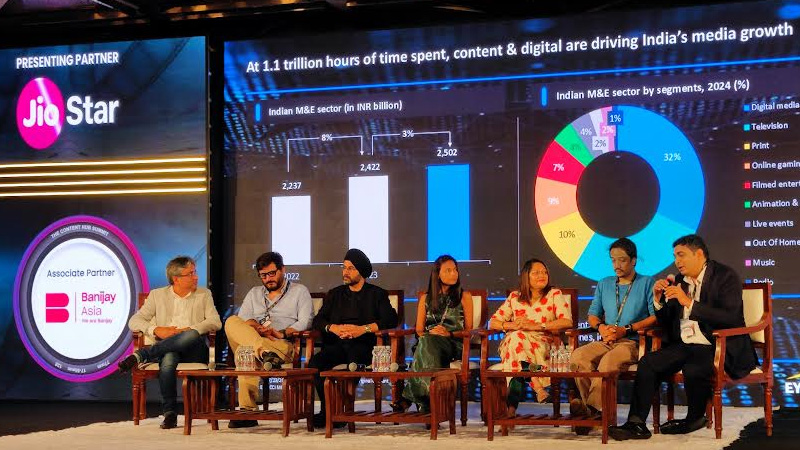
    MUMBAI: The 9th edition of the Content Hub Summit 2025 came roaring into Mumbai this week, promising answers to a question plaguing the media world: how do you stay original when the world’s drowning in content?

    Raghav Anand, partner at Ernst & Young LLP, kicked things off with some eye-watering numbers: the Indian media and entertainment (M&E) sector is now worth Rs 2.5bn, fuelled by 1.1trn hours of content consumption. “That’s a massive amount of attention,” said Anand. But with time spent on platforms now plateauing, he warned the next battleground will be retention, not reach.

    And yet, India’s churning out a gobsmacking 200,000 hours of original content a year—leading globally in volume. TV still dominates, but OTT, film and music are closing in fast. What’s changing is how and why content is made and the growing shadow of generative AI has everyone both curious and cautious.

    Goldie Behl, founder of Rose Audio Visuals, dismissed the obsession with “originality” as misplaced. “There’s nothing truly original. Everything’s borrowed, lived, or inspired. What matters is conviction,” he said, adding that content made with honesty and emotional depth is what ultimately cuts through.

    Aditi Shrivastava, co-founder and CEO of Pocket Aces, echoed the point, emphasising that her studio’s approach is to test stories at micro-scale before scaling up. “We find communities not demographics on social platforms. We create short, relatable pieces and build from there,” she said, adding that this modular testing lets them co-create with audiences in real time.

    Saugata Mukherjee, head of content at SonyLIV, was clear-eyed about what makes content stick: identity and consistency. “We built the platform on shows rooted in Indian culture. Our audience knows what we stand for, and that’s why they return.” Originals, he said, drive both customer acquisition and retention, with long-running franchises offering a steady heartbeat.

    Tejkarran Singh Bajaj, SVP and head of originals at Jio Studios, admitted times are “exciting but very difficult”. His team resists trend-chasing and instead banks on instinct: “We don’t make franchises. We find stories worth telling, ones that feel truly Indian.” That means even adaptations are reworked with a cultural lens, not just scene-by-scene lifts.

    Anuj Gosalia, founder of Terribly Tiny Tales, described today’s attention economy as “weaponised dopamine”, calling short-form ‘TV minus minus’—and still wildly effective. “People used to mock reels and TikToks. Now every A-lister’s on them. Micro-dramas will be the same,” he predicted.

    Swati Patnaik, creative director at Applause Entertainment, argued that the secret sauce of global success is local flavour. “The more rooted the story, the more it travels,” she said. “It’s not about the plot; it’s the point of view. That’s what cuts across borders.”

    As for AI, the mood was one of cautious intrigue rather than full-blown enthusiasm. Behl questioned whether AI can ever replicate emotional depth. “When an actor cries on screen, can AI make us feel that? I’ve yet to see it,” he said.

    Still, Anand noted that GenAI is already driving 20–25 per cent cost savings and slashing production time. The challenge, then, is less whether AI will be used and more how ethically and meaningfully it will be integrated.

    India’s original content scene is at a thrilling and slightly terrifying crossroads. The audience is fragmented, hungry, and overloaded. AI is knocking. Attention spans are plummeting. But as this year’s Content Hub Summit showed, the real winners will be those who tell deeply human stories with cultural authenticity, creative courage, and a sharp eye on what viewers really want.


  • Content bigwigs converge in Mumbai for Indiantelevision.com’s The Content Hub

    Content bigwigs converge in Mumbai for Indiantelevision.com’s The Content Hub

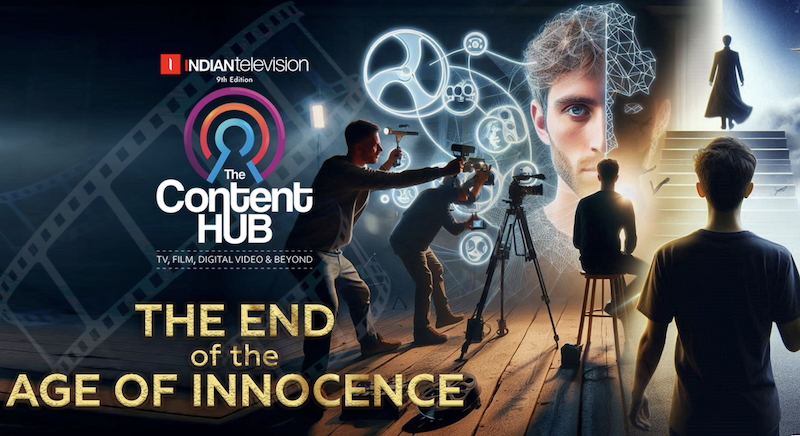
    MUMBAI: The floodgates of content may be open, but India’s audience has evolved—and she’s no longer easily pleased. That’s the sharp message echoing through the plush halls of JW Marriott, Juhu on 23 July as the ninth edition of Indiantelevision.com’s The Content Hub Summit gets underway.

    The theme, The End of the Age of Innocence, captures the new reality: streamers, broadcasters, and filmmakers can no longer afford to shoot in the dark. With 47 of the industry’s sharpest minds in attendance, it’s a day packed with soul-searching, strategy, and storytelling pivots.

    The curtain-raiser is a heavyweight panel on The Future of Original Content, featuring SonyLiv’s Saugata Mukherjee, JioStudios’ Tejkarran Singh Bajaj, Rose Audiovisuals’ Goldie Behl, Pocket Aces’ Aditi Shrivastava, Applause Entertainment’s Swati Patnaik, and Terribly Tiny Tales’ Anuj Gosalia, moderated by E&Y’s Raghav Anand.

    That’s followed by a fireside chat between Prime Video’s Nikhil Madhok and Indiantelevision.com’s founder Anil Wanvari, diving deep into how platforms are rewriting playbooks.

    Next up: Mindset Change: You are not making for a single screen, a spirited panel on diversifying content, with Fremantle’s Aradhna Bhola, Applause’s Sunil Chainani, Juggernaut Productions’ Samar Khan, Sri Adhikari Brothers’ Kailash Adhikari, Marigold Studios’ Hemal Thakkar, and Balaji Telefilms’ Nitin Burman. Chairing the discussion is Bodhitree Multimedia’s Sukesh Motwani.

    JioStar’s Alok Jain is slated to stir things up with a solo presentation, Reclaiming Bold – Why Indian Entertainment Must Dare Again.

    A burning issue up next: the inconsistent fortunes of Hindi cinema at the box office. A high-stakes panel, Getting the Business Model Right, features Panorama Studios’ Abhishek Pathak, Red Chillies’ Aashish Singh, Ormax Media’s Sailesh Kapoor, Friday Filmworks’ Devendra Deshpande, and Zee Studios’ Pragati Deshmukh, with film critic Mayank Shekhar at the helm.

    Regional powerhouses take centre stage in The Rise of Regional Content, chaired by Elara Capital’s Karan Taurani. Speakers include PTC’s Rabindra Narayan, Shemaroo’s Arpit Mankar, Junglee Pictures’ Mamta Kamitkar, ETV Win’s Saikrishna Koinni, OTT Play’s Avinash Mudaliar, and Banijay Asia’s Rishi Negi.
    A rare fireside chat follows, with Banijay Asia CEO Deepak Dhar in conversation with Shekhar, setting the tone for a deeper dive into genre-bending creativity.

    That’s precisely what the next panel explores—Pushing Genre Boundaries. Writer-director Kussh S Sinha, producer-director Ravindra Gautam, Banijay’s Mrinalini Jain, Applause’s Rahul Ved Prakash, and director Vishal Furia spar with trade analyst Saurabh Varma moderating.

    The day wraps up with two back-to-back masterclasses. The first, on Rana Naidu, sees actor Sushant Singh, director Suparn Varma, and screenwriter Vaibhav Vishal join film critic Stutee Ghosh. The second, on Mandala Murders, features actor Vaani Kapoor, Netflix’s Tania Bami, and directors Gopi Puthran and Manan Rawat, with editor Swati Chopra in the chair.

    In a market where content is no longer king unless it resonates, The Content Hub Summit has one message: India’s audiences have grown up—and the industry must too.

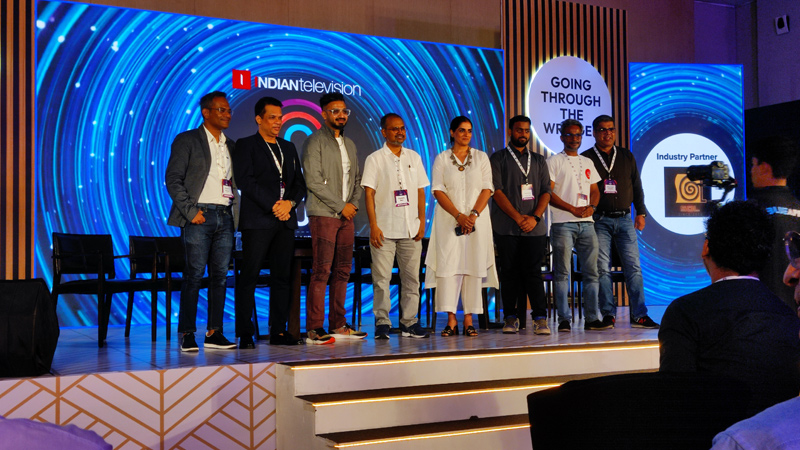
    A cross-section of India’s content powerhouses has lined up in support of The Content Hub Summit, signalling the growing importance of storytelling as a strategic business lever.

    JioStar leads the pack as presenting partner, while Applause Entertainment and Banijay Asia have come on board as associate partners. Fremantle is the lanyard partner, ensuring high visibility with every badge flash.

    The industry partners roster reads like a who’s who of television and digital production: Contiloe Films, Sol Productions, and OTT Play have lent their support, amplifying the summit’s reach and relevance.

    The show of strength from across the ecosystem—studios, streamers, and production houses—underscores the summit’s sharp focus on content strategy in a market where the audience is now firmly in the driver’s seat.

  • The Content Hub 2024 – New Content Trends

    The Content Hub 2024 – New Content Trends

    Mumbai: The eighth edition of The Content Hub Summit delved into the ever-changing world of content creation. With the consolidation of platforms, creators face new hurdles in gaining visibility, maximizing revenue, and maintaining creative freedom. The event explored the remarkable theatrical success of Indian cinema and unraveled the secrets behind its unprecedented profits, with a critical eye towards its sustainability.

    The esteemed panel of industry leaders has shared their expertise on adapting to the shifting landscape, tackling daily challenges, and envisioning the future of production.

    The session was moderated by HitFlik film director & CCO Saurabh Varma which includes panelists: Inspire Films Ltd founder & managing director Yash A Patnaik, Dangal Play head Akshat Singhal, writer & director Soumik Sen, Geophil managing director Robin Philip, producer Monisha Singh Katial, GSEAMS producer, creator Kartk D Nishandar and Pratilipi co-founder & CEO Ranjeet Pratap Singh.

    Verma kicked off the discussion by highlighting the future trend of regional content, to which Katial emphasised its growing popularity beyond traditional markets. She noted the increasing viewership of South Indian movies in the Hindi belt, signaling a promising avenue for content creators.

    Nishandar echoed this sentiment, stating the importance of creating content within budget constraints while adapting to changing trends. Success, he argued, lies in the ability to evolve with the times and cater to shifting audience preferences.

    Singh drew parallels between his platform and a modern-day version of Disney, emphasizing the power of storytelling to transcend barriers of format, language, and geography. In a landscape inundated with content, he stressed the challenge of identifying what resonates with audiences.

    Sen stated the importance of audience engagement, stating that creativity thrives on interaction and connection with viewers. In an era of abundance, where choices abound, creators must actively seek to engage their audience rather than passively expect their attention.

    Philip shed light on the global perspective, highlighting the significance of international distribution in monetizing Indian content. He urged industry players to aggressively position themselves for global licensing opportunities, viewing it as a lucrative avenue for revenue generation.

    Singhal gave more importance to regional content as according to him, focusing more on niche content meaning where people can relate themselves in their daily life, can give an immense boost to the storytelling narrative.

    Patnaik gave succinct framework for content success: invite, engage, involve, and entertain. He told the importance of consistency, drawing parallels with the enduring popularity of US sitcoms characterized by their extensive episode count.

    The session wrapped up with each panelist expressing a high level of optimism regarding the future of content.

  • IDBF 2023: Cipla X Pocket Aces – The Power of Impact Content

    IDBF 2023: Cipla X Pocket Aces – The Power of Impact Content

    Mumbai: The third edition of Indian Digital Brand Fest 2023 had brands, advertisers, and tech platforms, to discuss the trends and more. The summit also looked at the latest trends driving the change in consumer behaviour and how it has impacted the industry’s growth.

    Whether it was a boom in influencer marketing or the popularity of short video platforms, brands did not hesitate to jump onto the digital bandwagon to up their marketing game. So Indiantelevision.com took this opportunity to bring a host of industry experts together under one roof to discuss all these new trends shaping the future.

    The speakers of this fireside chat were Cipla director & senior marketing head – consumer marketing Amit Patel and Pocket Aces co-founder & CEO Aditi Shrivastava.

    Shrivastava began the conversation by saying, “These two words impact and content, they’re very dear to me because they bring together the last 12 years of my career working in the impact space and now working in content. For you, it’s been a really incredible marketing journey, from FMCG to pharma. So, today we’d love to talk about how you also made that journey in your career and what are the big differences that you see in, something like FMCG and marketing, something which is highly regulated like pharma.”

    Terming it as a very good question, Patel replied, ”I have been in the industry for last 15 years and one thing that has remained constant is my focus on creating robust content pieces. I believe as human beings, our prime objective to exist is story. Storytelling is one of the most important areas and last 15 years I’ve got various chances across various brands, across various countries to explore this art. Prior to working in the current organisation, I was associated specifically with Dabur International and there were many instances that I faced. Making content for the US market versus making content for a Middle East market or southeastern market, I believe that it’s the cultural nuances that change, consumers remain the same everywhere. If the content is timeless and geography less, it stays for years to come. We’ve seen examples of it right from Lay’s to Loreals of the world, P&Gs of the world, these have set certain boundaries around the content and it is working out for them. However I believe as marketers are moving into newer industries, and when I talk about my current industry, I’ve to give a disclaimer that views are my own because it’s a highly regulated industry. This doesn’t represent the views of my organisation.”

    He further added, “In a pharmaceutical company, the storytelling element kind of takes a back seat and it’s really important to reinvent that to ensure that you are bringing patients stories, you are bringing doctors stories out there, that what kind of change a particular therapy area or change a particular approach has in the life of patients. It’s very critical to keep on reinventing yourself, and that is what we’ve been doing through and through. As a pharma company, we run one of the largest marketing campaigns in the country and this has been going on since the last five years. The campaign essentially aims around creating awareness about the right treatments for Ashtma which is a deep-rooted problem in the country. Now there are two ways to go about it. We can do the traditional doctor-level marketing which every other pharma company does or can we break the mould, can we go beyond that, can we go beyond the pill and that is where we are innovating and partnering with storytellers like you.”

    Talking about Pocket Aces’ first video with Cipla being released on FilterCopy, and Cipla’s previous work on doing anthems and songs and associating with influencers, Shirivastava then asked him, ”So walk us through how in a pharma industry, legal and medical teams are sitting at the main table and marketing is behind them. How have you convinced your teams, your HQ to take this plunge and how have you shown them the ROI it will deliver?”

    Patel answered it saying, ”What we’ve been doing so far is we don’t call it marketing campaigns. The right way to put it would be – public awareness initiatives because here we are talking about lives and how we impact the lives of people. So this public awareness initiative doesn’t talk about any product. To distinguish between FMCG marketing and pharma marketing I would say pharma is more purpose-driven and FMCG is more profit-driven. So purpose-driven marketing is something that we started we realised that it is not the patient who is affected. Like in our country, everyone becomes a doctor as soon as you fall sick and the actual doctor takes a back seat. So it is very important to convince everyone in the room and not just the patient on what is right treatment or what is the right therapy area around that. Specifically when there is a disease as common as asthma, which is one of the leading causes of death in India unfortunately. So we created a campaign that tells people and asthmatics that you can live an unstoppable live even with asthma, what are the right ways to deal with asthma. We had done one of the largest patient support programs in Asia and every year we reach almost 38 lac patients one on one. On top of that, we have been working with a lot of Bollywood celebrities in the last five years wherein they helped in spreading the message. There is still some sort of stigma connected to it and the campaign that we embark, there is a very strange kind of challenge I would say and to describe the challenge in one sentence – the fear of stigma is more than the fear of disease. That is a very tricky problem to have. The only way to bulldoze that or make sure people are going for the right treatment is to go for large-scale consumer marketing campaigns as we do right now. There are a lot of elements that we have explored over the years. We also reinvented ourselves from TV to radio and right now the campaigns stays on digital channels. We have been constantly innovating with our storytelling approach. Earlier the focus was push. We’re doing a lot of ads but then we realised as consumers, how many times am I clicking on an ad? Or are ads getting as effective as they used to be? I believe the golden age of advertising is not here anymore. So it’s very important to take and park it into the journey where the consumer is going. So internally we have a map, which is something we call as micro-moments that cumulatively decide how the consumer journey is going to end and that’s how contextually relevant we want to be. That’s why storytelling is really important for us, alternate content formats become more relevant for u. We have been doing a lot of initiatives that come from music and we have a very beautiful song written by Amit Trivedi and Amitabh Bhattacharya, showing what is the real treatment for asthma in the country. Believe me, all these things coming from a pharma company taking the courage to go beyond the pill and that’s where we are heading.”

    Moving on, Shrivastava spoke about Cipla monitoring the engagements very closely, i.e., what is the audience saying on the content and anything we put out and what can we take to put in the next video, etc.

    Patel then added, “Being in a purpose-driven organisation and a purpose-driven environment, our metrics are generally different. It’s not the similar kind of metrics that you follow in a profit-led organisation because the awareness is largely done on therapy areas. We do have a Neilsen brand track, so over the years we have measured how the needle has moved in demolishing the myths, demolishing the stigmas associated with that. So all the metrics over the years is because of our communication and we’ve tried to break the myths. In the last five years, I would say the metrics that we measured with Neilsen data has gone down almost 30-40 points and that’s huge.”

    Furthermore, Shrivastava asked Patel, ”What advice do you have for brand markets in general when it comes to highly regulated industries like for example mutual funds? Their approach has also changed quite a bit over the years. You’ve done a lot of content with them a few years ago and now their specifically saying – ‘Oh we can’t have celebrities in the content, we can’t do XYZ things. So what is your advice for how to innovate regulated industries?”

    Patel then said, “So as you rightly mentioned the regulated industry marketing is no longer the star of the room. We somehow sit in the room and compliance, legal and all these departments become the force to deal with. Every time there is a new communication, you’ll have to take ten thousand approvals even if it is as simple as putting out a social media post. In industries like mutual fund, I would say we kind of understand the pain that they have because the adoption of mutual funds is similar to the adoption of inhalers in the country. Though I cannot compare both of them together but generally that’s how both of them move together. In these industries it is very important, first of all, to understand what is your position in the industry. For example, if you’re doing consumer-level marketing in a regulated industry and if you’re not a category leader then I would say you need to have a laterneck approach. You can only take these steps if you have the courage, might, and capacity to execute campaigns like these. And if the onus is on you to make sure that the category grows. If you’re a challenger brand in this situation.  I would very much recommend going with direct marketing. Sit directly with the stakeholders and convince them instead of investing a lot of money in creating large-scale campaigns. The benefit will go to the leader brand. It won’t go to the challenger brand. So unless you are a leader in the category, it is strongly advisable to go a direct marketing approach. Market shaping and changing the psychology of consumers is not easy as it looks and that is a true litmus test for any market leader to take that up.”

    Concluding the session, Shrivastava asked, ”What is Patel’s biggest pet peeve when it comes to marketing” but Patel then went on to ask the same question to her.

    To which, Shrivastava replied saying, “My biggest pet peeve has to be when people don’t respect the intelligence of the audience. Today’s audience is extremely discerning. They understand subtlety. We do content, so we know. Viewers understand everything from humor, drama, sarcasm, everything. So I think the beauty of storytelling is that you should be able to show regular use cases in the lives of consumers and how your brand beautifully fits in that life.”

    After that Patel said, ”My biggest pet peeve is deceptive advertising and a lot of marketers get into that. Using claims that your product won’t be able to deliver. This is not just deception at your level, you’re not true to yourself but to the markets.”

  • Cipla’s #BerokZindagi ushers in a new era of storytelling with digital content platform FilterCopy

    Cipla’s #BerokZindagi ushers in a new era of storytelling with digital content platform FilterCopy

    Mumbai: Cipla Ltd.’s #BerokZindagi, partners with one of India’s leading digital entertainment companies, Pocket Aces, to create multiple sketches for the platform’s leading short-form content channel – FilterCopy. By harnessing Pocket Aces’ expertise in crafting and amplifying unique stories, Cipla hopes to further the mission of its largest public and patient awareness campaign – dispelling asthma myths, improving inhaler acceptance, and inspiring asthmatics to live a Berok Zindagi (unstoppable life). This partnership marks the pharmaceutical company’s entry into alternative content formats, that uses relatable storytelling to convey and subtly reinforce an important message. The first video, ‘A Monsoon Romance: When Opposites Attract’, premiered on FilterCopy’s YouTube channel on 7 September.

    Created in easy-to-consume, snackable and shareable formats, each video will tell a heartwarming ‘Slice-of-life’ story scripted by the creative team at FilterCopy in collaboration with Cipla. The first premiere is a captivating love story set against the backdrop of the romanticized Mumbai monsoons. It will not only endear audiences but will also shed light on the fact that monsoons can be triggers for asthmatics. However, through subtle character integrations, the film emphasizes that with proper doctor-prescribed treatment, even those with asthma can enjoy the rainy season to the fullest. All films will be cross amplified through FilterCopy’s social media channels, reaching out to the ‘Digital GECs’ 22+ million audience and will be available in six languages – Hindi, Bengali, Telugu, Tamil, Malayalam, and Kannada.

    Cipla Ltd. CEO – One India business Achin Gupta said, “With India contributing almost 42% of global asthma deaths despite accounting for only 13% of the cases worldwide, Asthma continues to be a high burden disease in India affecting both adults and children.  Misconceptions about asthma and inhalers contribute to the imbalance in its prevalence and outcomes, but correcting these can significantly improve patients’ lives. Over the years Cipla has pushed the boundaries with #BerokZindagi, employing a multitude of creative mediums to help combat misinformation, stigmas, and myths about asthma as well as inhalers and connect with today’s audiences.

    By exploring various content formats that touch upon diverse themes our aim is to integrate our message of awareness and inspiration into the cultural fabric of the country, enabling us to reach and resonate with a wide-ranging audience. With this partnership, Berok Zindagi moves beyond being just an awareness campaign, but to a movement that aims to transform perceptions and improve the lives of those living with asthma.”

    Pocket Aces co-founder & CEO Aditi Shrivastava said, “The Cipla partnership is very special especially since it aligns perfectly with our renewed mission of positive content at Pocket Aces. Storytelling can have a profound impact on dispelling misconceptions, as the Cipla team has already proved with innovative initiatives on their #BerokZindagi campaign. We have thoroughly enjoyed working with the team at Cipla to design content pieces that will address different communities and distinct use cases that will reach a massive audience. Via this campaign, we are looking forward to leveraging our channel FilterCopy to educate, break myths, and empower our audiences to live #BerokZindagi.”

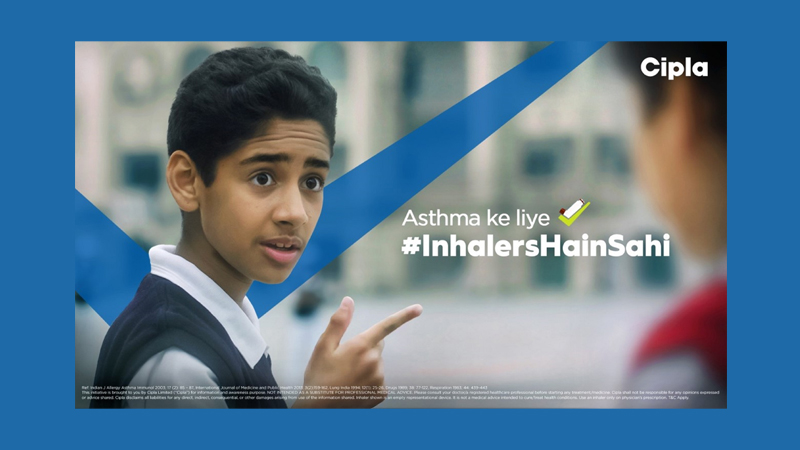
    Using ‘common sense’ as a tool to convey its message, Asthma Ke Liye Inhalers Hain Sahi, Cipla also released an ad film that follows the story of a young schoolboy living with asthma. After being underestimated by the rival cricket team because of his condition, the young boy shows them up and defies expectations, showcasing his talent and determination in the sport, while also highlighting the importance of sticking to his treatment. With a digital first approach, the film features a new rendition of the popular #InhalersHainSahi song. 

  • Ficci Frames 2022:  Experts discuss the evolving trends in M&E across segments

    Ficci Frames 2022: Experts discuss the evolving trends in M&E across segments

    Mumbai: The media and entertainment industries have evolved over the years, and post-pandemic growth has been shared across segments.

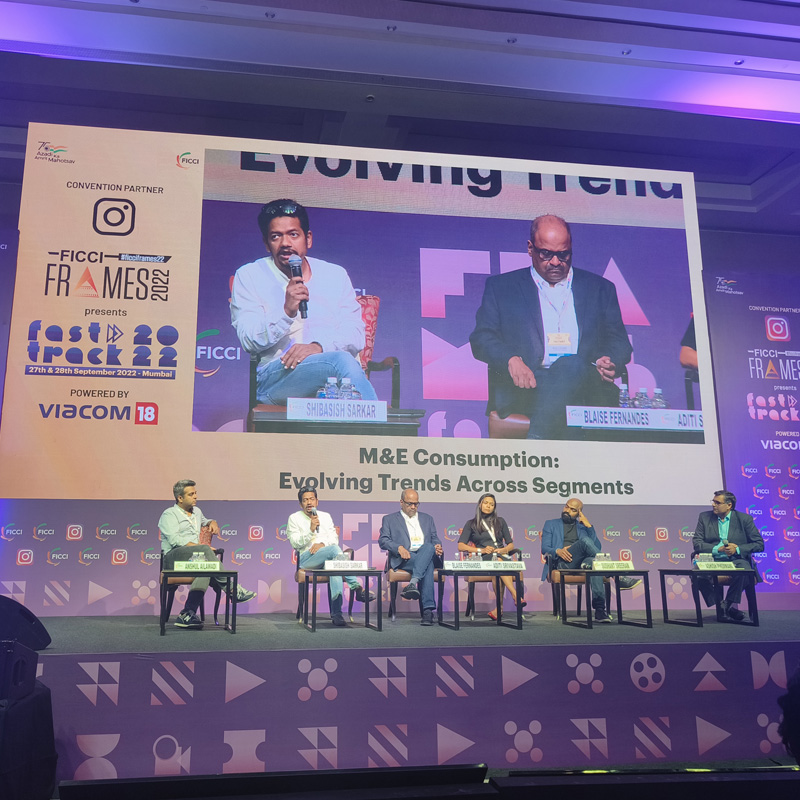
    In a recently organised session on ‘M&E Consumption: Evolving Trends Across Segments’ at Ficci Frames 2022 discussed how media has evolved and new emerging trends are helping or affecting business. The panel discussion was moderated by EY LLP media and entertainment advisory services partner Ashish Pherwani.

    The expert panellist included Viacom18 youth, music and English entertainment head Anshul Ailawadi, International Media Acq (IMAC) CEO Shibasish Sarkar, Indian music industry president & CEO Blaise Fernandes, Pocket Aces CEO & co-founder Aditi Shrivastava and Amazon Prime Video head & SVoD business head Sushant Sreeram. 

    Starting the discussion, Anshul Ailawadi shared insights on how MTV has reached every corner of the country and helped youth have an audiovisual experience. 

    “There are two specific needs: the discovery of the channel and an audio-visual experience, and we try to give them to the audience.” He also expressed that each platform has its unique role.

    Shibasish Sarkar shared, “We have seen a substantial amount of growth in digital consumption. This discussion happens whenever there is a new emerging medium, and will it end the cinema? But it has survived, and even after a pandemic, people are watching movies in theatres.” 

    He further added that in these two years, there has been a substantial level of quality content consumption that has happened by the audience across all video platforms.

    “Today, Hindi language consumers have been consuming the best of Korean, Tamil, Telugu, and Spanish language content, so the consumer’s expectation for good quality content is higher,” he said.

    “Storytelling does not necessarily always need to be expensive. He added that it has to be in touch with the audience with the thought, “What will the audience like?”

    Blaise Fernandes expressed that music is not regional anymore and any music can be consumed in any part of the world; creators just need to choose the right platform.

    When talking about user-generated content, Aditi expressed that “audience is a god, content is a king, and distribution is a queen.”

    Audiences are starting to understand the business of content. And that is opening up possibilities for creators and platforms.

    She said, “Earlier, audience creation was restricted to putting something out. They’re trying to become obsessed, and some of them are becoming influencers. Brands are ditching celebrities and collaborating with digital influencers and micro-influencers to promote the product.”

    “UGC is going to move in the direction where people will buy things and make money based on content,” she added.

    She believes 80 per cent of big influencers and 20 per cent of small influencers will be in the ratio. “You will see digital avatars are beginning to participate in metaverse concerts,” she said.

    Anshul, agreeing with Aditi, said, “New monetisation opportunities, new sorts of avenues, and new platforms will emerge in coming years.”

    Sushant Sreeram talked about content on Amazon Prime where he said, “We programme to an extremely heterogeneous customer expectation across languages, across accessibility, across price points, and across an infrastructure and streaming simplicity.”

    He further added, “We absolutely continue to explore all forms of collaboration. In our journey over the last six years, we have explored a variety of models to work with producers, studios, and theatres.”

    While discussing TV vs OTT, Aditi expressed that it’s important to define because TV is just a device now and its content is consumed on mobile phones as well. Anshul talked about how the audience has done demarcation between OTT, TV, social media, and their functions.

    Aditi further talked about how her company is focusing more on short formats and engagement with the audience rather than how many views they have got.

    “We would like to see content increase across platforms. We would like to be a content provider. Now we are working on engagement. Distribution is very important. But it’s also very expensive to build. The way we are building distribution is by having channels across platforms. We have put out content that our marketing spend and we believe in organic growth.”

    While talking about price and content, Shibasish expressed that the audience won’t pay if they don’t like the content. He believes that good content will make audiences pay irrespective of the medium, and that all mediums will co-exist if they serve good quality content.

    Sushant agreed with Shibasish and talked about how international content on Amazon Prime is consumed not only by the Indian diaspora but also by natives of those countries because of quality content.

    Sushant suggested three things to keep in mind: customer delivery, collaboration with creators, and empowering the creative economy. Aditi advised to drop the elitism when it comes to content, Shibasish asked creators to understand the audience, Blaise stressed that only subscriptions could help creators  while Anshul emphasised how audiences can hate or love but can’t ignore creators.

  • Amazon miniTV announces content partnership with Pocket Aces

    Amazon miniTV announces content partnership with Pocket Aces

    Mumbai: Amazon’s free video entertainment service miniTV has announced a partnership with digital entertainment company Pocket Aces. As part of this partnership, Pocket Aces will bring its repertoire of web series to miniTV starting with “Adulting” season three that will premiere exclusively on the platform on 12 November.

    Starring Aisha Ahmed and Yashaswini Dayama, “Adulting” is a coming-of-age story about two young women trying to handle the responsibilities of being independent adults in the past paced, urban bustle of Mumbai.

    Some of the other shows that will exclusively release on miniTV as part of this collaboration over the coming months are “Please Find Attached” – season three (starring Barkha Singh and Ayush Mehra) and ‘Crushed” – season one (starring “Noor” fame Rudraksh Jaiswal and Aadhya Anand who debuted in the film “A Yellow Bird”). 

    “We are proud to partner with Pocket Aces to bring quality entertainment to our hundreds and millions of customers in India for free!” said the head of Amazon Advertising Harsh Goyal. “Starting with the third season of the popular show ‘Adulting’, this is an alliance that will play an instrumental role in further bolstering our exclusive content offering.”

    “Pocket Aces’ mission is to entertain audiences wherever they are spending time, and hence the association with Amazon miniTV as one of the launch partners really resonates with us,” said Pocket Aces co-founder and chief executive officer Aditi Shrivastava. “In a country such as India, being able to offer high-quality content for free to audiences ensures huge reach and accessibility. We’re very excited about our slate starting with proven IPs such as ‘Adulting’ and ‘Please Find Attached’, and then building brand news properties such as ‘Crushed’ and others. With the way it is shaping up, we are sure that miniTV can become one of the most loved content apps in India, and we’re excited to be a part of that growth.”

  • Pocket Aces promotes co-founder Aditi Shrivastava to CEO

    Pocket Aces promotes co-founder Aditi Shrivastava to CEO

    Mumbai: Digital entertainment company Pocket Aces Monday has announced the elevation of co-founder Aditi Shrivastava to the newly created position of chief executive officer.
    Aditi will headline Pocket Aces’ three lines of business – social distribution, which houses FilterCopy, Dice Media and Gobble, a talent manager Clout, and a studio for digital content.

    Aditi will lead Pocket Aces in its next phase of growth and continue to be a member of the board of directors of the company. Founders Ashwin Suresh and Anirudh Pandita, will also continue to remain shareholders and board members, running Loco, the game streaming platform incubated at Pocket Aces, which was recently spun off into a separate entity, the company said in a statement.

    Speaking on her new role, Aditi shared, “We have built a strong foundation for Pocket Aces, and I am thrilled to grow it to one of the largest new-age media companies globally. Our core moat gives us the competitive advantage – a highly meritocratic culture with a diverse high-performance team; a data-driven approach to content creation that turns the traditional media model around its head and dramatically increases hit rate; and an ecosystem approach that leverages all major opportunities – capturing media real estate, building large IPs, and growing talent into brands. We have clear visibility of our content strategy and revenue leading us to profitability, and some very exciting new initiatives launching later this year as well.”

    Ashwin Suresh said, “Over the past few years Pocket Aces has cemented its leadership position within the digital entertainment ecosystem while championing the overall growth of the industry. In addition to building out monetization for the Social Distribution business and overseeing the growth of Clout, Aditi also put together an impressive slate of shows for the Studio business. Under her new mandate as CEO and supported by a capable leadership team with a healthy mix of industry experience, first-principles thinking, and creative innovation, Aditi is all set to write the next chapter in the Pocket Aces growth story. We are in the first innings of the digital media revolution and I am excited to see Aditi and our leadership team take Pocket Aces to new heights.”

    Anirudh Pandita said, “Pocket Aces has set the pace for innovation in digital entertainment and we are more confident than ever of delivering on our promise of solving boredom. The Pocket Aces leadership team led by Aditi, has the right mix of industry veterans and new-age digital-first thinkers, to execute on the exponential growth opportunity that we see in entertainment. Aditi has played a pivotal part in getting the company to where we are today and I am excited to see the new heights she will help the company scale with this expanded mandate.”

    3one4 Capital’s founding partner, Pranav Pai, a large investor in Pocket Aces, said, “The Pocket Aces team has used their deep experience in the field to connect with and grow amongst the largest digital audiences in India. Through grounded empathy for their audience’s consumption behaviours and tastes, Pocket Aces has reimagined the digital entertainment model. The company’s content channels are vertically integrated, from the creators up to the audience, and now leverage their position of strength and scale to continuously innovate and expand the frontier. We are excited to continue our support for the next wave of growth as the team pursues an orbital shift to newer heights.”

    Pocket Aces reaches over 50 million people on a weekly basis clocking over 700 million video views every month. The company has grown its revenue seven times in the last three years and is on track to become profitable this year, the company further said.

  • Pocket Aces partners with India Film Project for the Dice Creator Network

    Pocket Aces partners with India Film Project for the Dice Creator Network

    NEW DELHI: Pocket Aces and India Film Project (IFP) announced that they are further strengthening their long-standing partnership via the Dice Creator Network. Via this partnership, creators who have submitted short films to IFP will get visibility and distribution to over 2.6 million followers across Dice Media’s Facebook and Instagram pages. Via the Dice Creator Network, Pocket Aces works with talented external collaborates to give their content the reach and audience they deserve.

    Right from conceptualisation to scripting, production and  post-production, each film that is part of the India Film Project Filmmaking Challenge is created within a timeframe of just 50 hours, which is no small feat. With two films being released every week on Wednesdays and Saturdays from IFP’s large content catalogue, Dice Media has hand-picked films that have either an inspirational or a social message, with the thought that these will help the audience get through the COVID-19 lockdown. For example, the first short film ‘Nothing Is Impossible’ tells the story of a young man- Paul who overcomes his speech disorder with a magic medicine that he can vouch for. ‘Make a Difference’ on the other hand, is a narrative of a day in a man’s life who steps out as a lone warrior to save the environment.

    Pocket Aces co-founder Aditi Shrivastava said, “We are pleased to partner with India Film Project as one of our Dice Creator Network, via which we want to collaborate and give visibility to creators at scale. IFP is one of the largest platforms for aspiring filmmakers in India, resulting in a rich variety of content. For this partnership, we have specifically selected IFP films that are differentiated from the usual Dice content – we are experimenting across filmmaking styles, genres, and even regional languages – with the goal to keep our audiences entertained and inspired during this lockdown.”

    India Film Project festival producer Gaurav Dave said, "At IFP, we have a library of more than 9000 short films that were made as a part of our flagship 50 hours Filmmaking Challenge. We are always on a lookout for better opportunities where our creators and their content can reach the masses through the right distribution channels and our association with Pocket Aces is one such initiative. We are glad to have associated with Pocket Aces where they will be publishing some of our award-winning films on their popular platform along with shoulder content to promote the films. It always feels great to empower creators."

    Previously, Pocket Aces’ short-form video channel FilterCopy joined hands with India Film Project for its ambitious project Web Writer’s Lab 1&2 to provide an efficient launchpad to budding writers and assist them to adapt to the changing dynamics of the industry.