Tag: Adhikari Brothers

  • “India is not yet developed to venture into TV pay model”: Sri Adhikari Brothers’ Markand Adhikari

    “India is not yet developed to venture into TV pay model”: Sri Adhikari Brothers’ Markand Adhikari

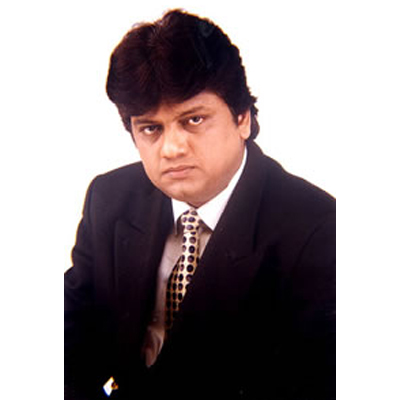
    15 September 1959 saw a small transmitter and a makeshift studio in a corner of Delhi give birth to terrestrial television. Decades later in 1990, India saw the arrival of private television channels. When saas-bahu dramas ruled, SAB TV is credited for putting a smile on the face of the Indian audience with the launch of India’s first and only comedy channel. After acquiring relevant experience in the fields of advertising, marketing and media publicity, Markand Adhikari, along with his late brother Gautam Adhikari, started Sri Adhikari Brothers (SAB) Group – in 1985 as a partnership firm. Later, it went on to become the first publicly-listed television production company in India when it was listed on the BSE in 1995.

    The company initially created regional language programs in Marathi and Gujarati and then moved on to producing Hindi programs on the Doordarshan. With the advent of satellite channels in India, SAB started producing serials for Zee TV. The group had numerous channels like SAB TV (now owned by Sony Networks), Mi Marathi & Mastii. The group made regional channels for rural parts of India like Dabangg, Dhamaal and Dillagi. The duo further forayed into films.

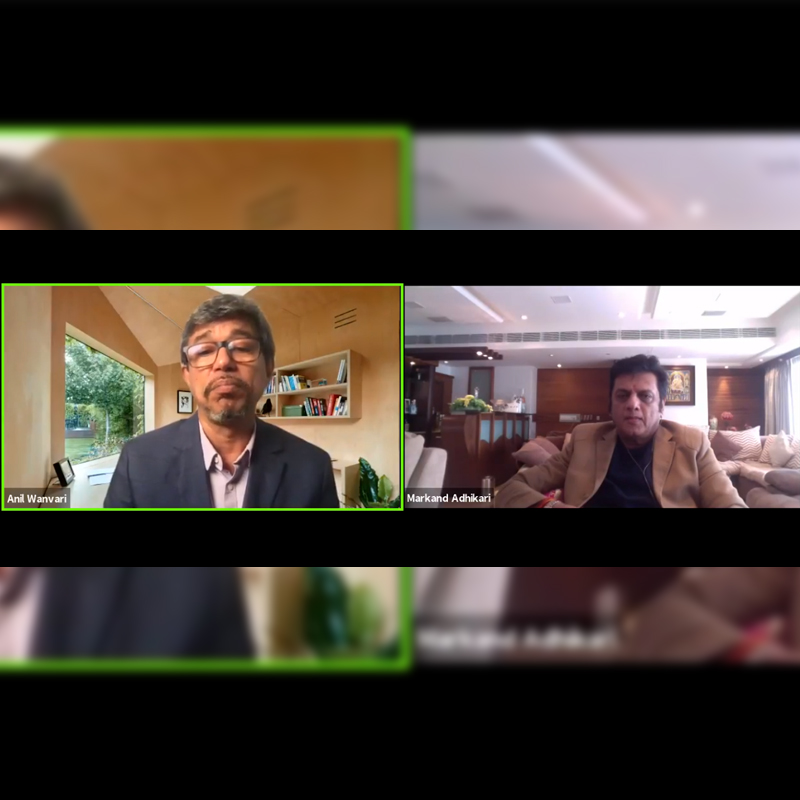
    Sri Adhikari Brothers co-founder Markand Adhikari, in an insightful fireside chat with indiantelevision.com founder, CEO and editor in chief Anil Wanvari, got candid about his journey, plan going forward, advertising and subscription model in television and more.

    Edited Excerpts:

    You have been a part of television industry for 40 decades; can you tell us more about your journey?

    When Doordarshan started in India, it only used to telecast an infotainment show called Krishi Darshan. When I was just a teenager, I met then information and broadcasting minister Vasant Sathe to discuss the chances of bringing commercial shows in India just like the west. At that time, he only asked me to look outside the window and asked me what do you see, I said I could see green trees and a colourful world. He explained to me about vision to bring colour television in India which was heavily criticised back then. Somehow, he accepted my proposal to create a show with Shashi Sharma. It started the era of sponsorship programs on television. We did sponsorship programs on Doordarshan for quite a few years then we ventured into regional space with LPTS (Low Power Transmission). We connected to the regional centres of Mumbai and Ahmedabad. Bandini became the first serial for Bombay Doordarshan. We carried a lot of shows for Doordarshan from the mid 80s to 1991.

    My late brother Gautam Adhikari’s name was registered in Limca book of world records for directing the maximum number of shows. I made Commander with Essel Group chairman Dr Subhash Chandra and I learned a lot from him. With the help of Jeetendra Kapoor (veteran Bollywood actor), I met Ketan Somaiya, a Nairobi-based entrepreneur who used to run an Asia channel in London with Amitabh Bachchan. We created a show called Waqt for him for $11,000 per episode and at that time import and export were free. The show had 52 episodes but due to some non-payment issues, the show was stalled at 26 episodes. After this, I again switched back to Doordarshan because Zee never used to give rights to the shows. DD Metro was recently launched where I did popular shows like Shriman Shrimati and All The Best. At that time, it was Rs 1,20,000 for 10-second spots on DD Metro. Doordarshan wanted us to make an afternoon soap within 15 days. I spoke to TV Asia about my 52 episodes out of which I was only paid for 26 episodes. I imported the pending episodes on half of the rate. Starting with 52 episodes I made Waqt Ki Raftaar which eventually had 600 episodes.

    What happened after you listed your company in 1995?

    Due to the Harshad Mehta Scam, the entire stock market suffered until 1998. Finally, in 1999 the economy was witnessing a boom then I realised it is the perfect time to start our own channel. The main challenge was we were always in production. Broadcasting was altogether a new experience. Our financial adviser only gave the plan of Rs 115 crore for the channel but to launch a channel it was too less. Then with the limited amount at my disposal, I started SAB TV in 2000. Again, due to Ketan Parikh’s scam, the economy was in shambles still we managed to run the channel for five years. We were a trend-setter by bringing a niche comedy channel. Sony Networks took over SAB in 2005, which till date is my biggest regret. However, I am happy that SAB is a big brand. After SAB TV we started two news channels Janmat and Mi Marathi which later I sold at a good price.

    What do you think about the future of television?

    Television in India is not going to die so soon, it will at least stay for another ten years. In the typical Indian household, it is still a culture to watch TV together. Most of the people are not aware of the multi-set concept or firesticks. However, one of the benefits with digital channels is that it is moving whereas television is static. Television is appointment viewing, on the other hand, digital is infinite. But digital requires a lot of capital investment. One cannot enter the digital market with a three-year plan.

    Are you looking at OTT content production?

    Our next-generation has already ventured to digital space with a series called Dheet Patangey that was uploaded on Disney+ Hotstar. It is directed by Gautam Adhikari’s son Ravi. My son Kailashnath and Ravi already have close to five shows which are almost done.

    Television is heavily dependent on advertisers; do you think subscription-based models will be a viable option in the long run?

    As far as television is concerned, I think in India most of the channels will be dependent on ad revenue. Also, I believe India is not yet developed to sustain on a pay model. There are broadcasters, MSO, semi-MSOs and then cable operators who collect money from individual households. So it has a lot of loopholes and layers in between which needs to be identified. There is a lack of transparency. At the same time advertising models will not work on digital platforms because audiences are now used to watching OTT content ad-free.

    What are your thoughts on IPL which is expected to happen during Diwali? Also, will it benefit all the channels or only sports channels?

    I believe it is good news; it is creating a moment with the advertising world and advertisers. IPL or any other cricket forms were running in the same manner as it was before Covid2019. Advertising spends were created keeping all the channels in mind; it was just not for sports channels. I don’t think so IPL will impact the revenue of any other channel.

    According to media planners, 30 per cent of advertising spends are kept for IPL, so do you think it will impact other channels?

    It is not a new scenario. In fact, it is a testing time for other channels, where we will get to see how they perform when IPL arrives.

  • Reliance Big DTH to take FTA route under new management?

    Reliance Big DTH to take FTA route under new management?

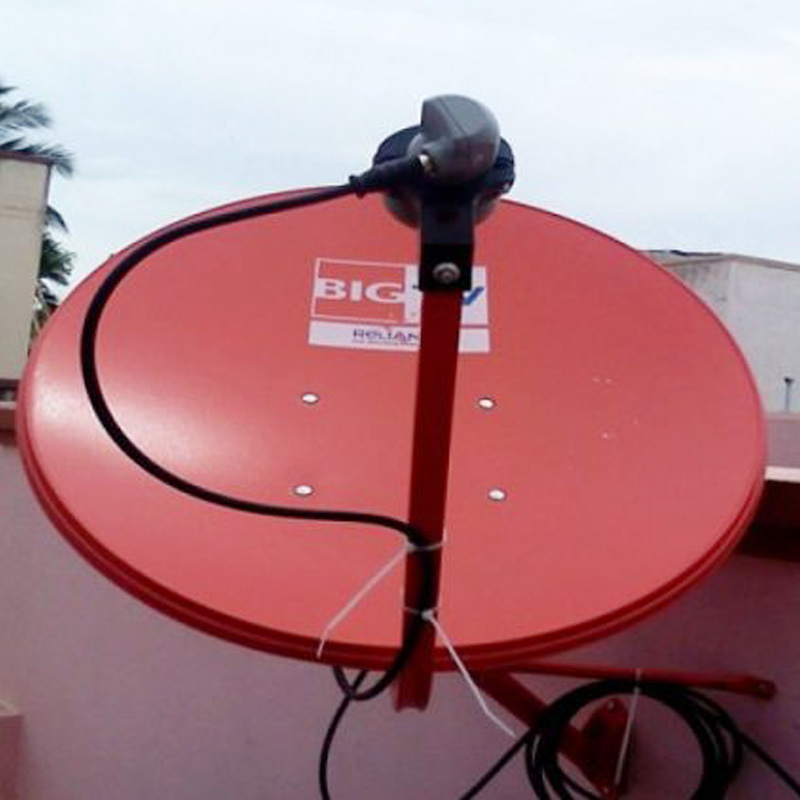
    MUMBAI:  Is another free-to-air (FTA) DTH operator pawing to take off in India? If the statements made by the Pantel Technologies (the company that took over the ailing Reliance Big DTH) management in media releases are to be believed, then the answer is in the affirmative.

    Yesterday, Sri Adhikari Brothers Television Network and Pantel Technologies announced through a release on the Bombay Stock Exchange that the companies had arrived at an understanding to jointly create a bouquet of over 20 FTA channels comprising diverse genres, such as entertainment, kids, infotainment, mythological, and movies.

    The release further stated that “the varied product offering will strengthen the business of Reliance Big TV (RBTV) and will give a leg up to the largest FTA network in India. FTA channels have shown an upsurge with all the leading broadcasters showing a keen interest in the FTA product offering.”

    Pantel Technologies CMD Vijendra Singh was quoted in the release as saying: “Our main aim is to develop the entertainment appetite of the rural market and create an alternative India. With our coalition with Sab Group, we will bring together our technological proficiency and their content expertise thereby enabling us to provide good content for rural India, which is what we are committed to for their upliftment.”

    Pantel had acquired the entire shareholding of RBTV with the business on an “as-is, where-is” basis. The transaction ensured that all 1.2 million customers of Big TV would continue to enjoy uninterrupted services, the company said in a statement. The deal also ensured continuity of employment for about 500 employees of RBTV.

    Attempts to connect with SAB group managing director Markand Adhikari and Singh were not successful.

    However, if Indiantelevision.com’s interpretation of the announcement today is correct, then it should prove encouraging for private broadcasters. The  Prasar Bharti-owned FTA service FreeDish has been an unmitigated success but its future looks in doubt with conflicting reports appearing about whether the powers that be want to continue providing the slots to private players. According to sources in the public sector Prasar Bharti, minister of information and broadcasting Smriti Irani has put a full stop to the e-auction process as the government wants to populate the FreeDish platform with its own channels.

    Also Read:  Veecon Media acquires Reliance Big TV

    Sab Group, Pantel Tech join hands to launch over 20 FTA channels

    Reliance launches JioTV for web

  • “Though I love acting, I want to take the spiritual road to where there is lasting happiness.”

    “Though I love acting, I want to take the spiritual road to where there is lasting happiness.”

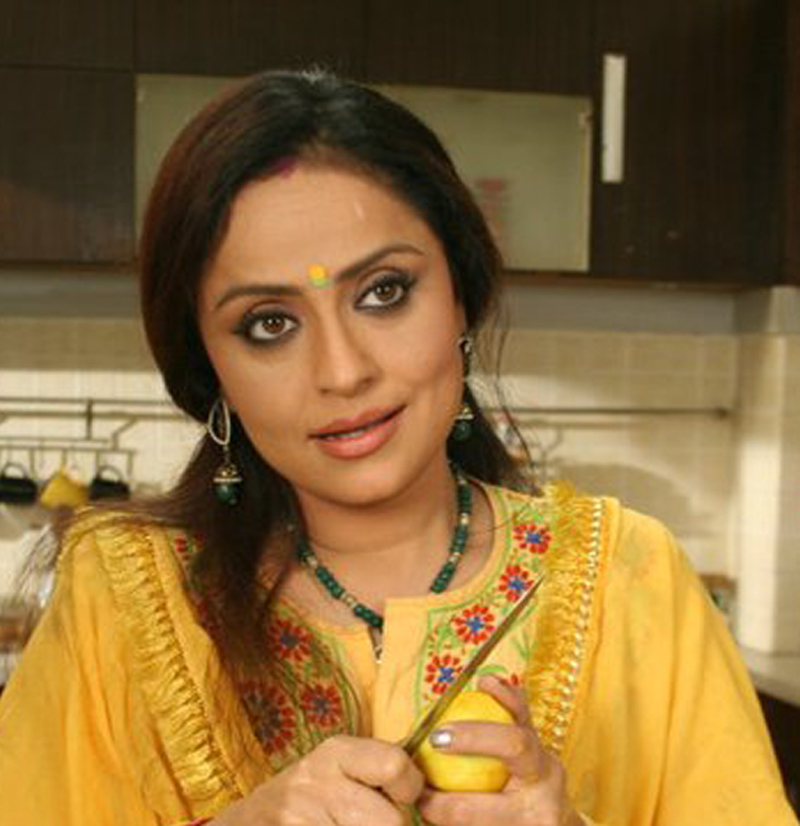
    Playing the lead in Choti Maa.. Ek Anokha Bandhan, Vaishnavi Mahant or Macdonald finds herself on totally new ground. The big budget and strong team aside, it is the challenging title role that is giving this young actress her much needed toehold in the fickle television industry.

    This Madhya Pradesh-born, Hyderabad-bred 25-year-old is deeply spiritual. The turning point in her life, she says, came ten years ago when she had a unique spiritual experience, which changed her from being a ritualistic Hindu to a devout Christian. This strong believer in God goes to church regularly, contributes half her successes and failures to destiny, although she is a disciplined worker herself.

    We meet her on the sets of Suraag-The Clue, the Adhikari Brothers’ hit thriller, being shot at Andheri, suburban Mumbai.

    It has been hectic for Vaishnavi the last few days. She has been shooting continuously and the previous day’s dubbing had stretched till two in the morning. Still, she was on the sets at eight in the morning. Excerpts from an interview held recently with indiantelevision.com’s Harish Patil:

    You look quite refreshed inspite of a hectic schedule ?
    My priorities are quite clear. I don’t mull over unnecessary things, and I don’t lose sleep over trivial matters. I also practise meditation, whenever I can. Of course, if such schedules continue for a while, it reflects on my face. Sleep is the only solution then.

    How did your acting career take off?
    I started my acting career at the age of eight, as a child artiste in Ramsay Brothers’ thriller Veerana and a couple of other films. Veerana was a medium success and my work was appreciated. It was like a picnic for me as everything was new and interesting, and there was hardly any pressure. Then I went back to Hyderabad to pursue my studies. I was set on studying to become a scientist. The desire to do films surfaced in my mind again when I visited Mumbai during a long vacation. With the support of near ones, I prepared a portfolio, which was shown to producers.
    Around that time, Bharat Kapoor was looking for fresh talent for a big budget film Barsaat Ki Raat. I was selected for the role. Inspite of having the best of talent availabale, like choreographer Chinni Prakash, Saroj Khan, cinematographer W B Rao, music composers Laxmikant Pyarelal, it did not work. For some reasons, the schedule stretched on for four years taking the film’s budget to nearly Rs 4 crore (Rs 40 million), and the film turned into a flop.Personally, it was like a school. I made mistakes but also learned a lot. This was the first time that I really looked and tried to understand the art of filmmaking. I started looking at it seriously and enjoyed every moment of it.
    During the same period, I received offers for a few other films. Bambaika Ka Babu, Ladlaa and Danvir … But nothing worked, except that they added to my confidence and maturity.

    My role in Chingari is that of a very strong woman who
    believes in herself. She knows she is right and so stands for what she does. I like to play such roles, which convey some
    message to viewers.
     

    What happened next? How did you turn to television? Was it with a kind of negative mindset?
    No, not at all. True, there was pressure from people around that I should continue only in films and that I would get the right role sometime. This was over four years ago, when moving from films to television was definitely taboo. But I am not the kind of person who will just wait and watch. More importantly, I could not adjust to the kind of atmosphere and “demands” of some of the players in the film industry.
    Luckily or otherwise, I was not branded in films, which would have otherwise been a problem for me while doing television. So I was as good as new for TV audiences. That was the time I got an offer to work in Shaktimaan (Vaishnavi replaced Kitu Gidwani in the fantasy serial).

    It must have been a novel experience to work in a tele-serial after doing four films. What difference do you observe in the two media ?
    The scale is totally different. The budget, time, resources don’t have any constraints in a film. There can be any number of retakes if the director feels that the shot is not ok. Television is very different in that sense.
    But as far as creativity or characterisation goes, I feel television is no lesser than films. It also gives you much needed space and time to settle in the character. On television, you have to be more like what you are unlike in films, where you are larger than life. Even the environment here is much better than in films.

    How was your experience working in Shaktimaan (on national broadcaster Doordarshan’s DD1 channel) as firebrand journalist Geeta Biswas? Does technology overshadow acting prowess in a fantasy serial?
    True, special effects do rule in a fantasy serial. But viewers’ attachment with Shaktimaan and Geeta is intense because the human angle has been developed well. The director keeps hammering into us the fact that we have to be careful with our portrayals since a majority of the audience is children.
    Even in the interior parts of the country, I am known as Geeta Biswas. A few months ago, when my character was put off air due to a change in the storyline, there were thousands of calls and letters to the producers demanding my return. After eight months, they had to call back my character. These are definite receipts of your efforts.
    Vaishnavi has appeared in a couple of episodes of Saturday Suspense on Zee TV, and has co-anchored the show Awaz Ki Duniya (DD1) with Rohan Kapoor, as well as acted in a couple of other serials like Chingari, Gharana and Dushman, which are now either off the air or no longer feature her. In Chingari, she etched a crucial role of a woman of substance.

    What about serials like Dinesh Bansal’s Chingari where you played a strong woman?

    My role in Chingari is that of a very strong woman who believes in herself. She knows she is right and so stands for what she does. I like to play such roles, which convey some message to viewers. The serial did well on Zee TV and my role was appreciated.

    But sometimes, it so happens that you just can’t understand the character. You don’t get the soul, in which case it is very difficult to do justice to that characte

    And how you did you get Choti Maa?
    There were nearly 100 aspirants trying for the role (well known actress Tabu too had been considered at one point). The director, Mohena Singh, had seen the pilot of Naqab made for Ashok Shekhar, in which I am playing a strong character.
    I think my Indian looks and eyes helped me getting the role. I was initially confident of clearing the audition, but got the jitters when I realised that even the channel and the producers would have to approve of me.
    Eventually, I got a call from Mohena asking me to find time for the serial’s shoot, which was already on in Pandharpur (where the early episodes are shot). At that time I was doing Gharana and Shaktimaan. I had a tough time convincing the producers of Gharana. Eventually the character in Gharana was replaced. And I landed in Pandharpur for the shoot ofChoti Maa.

    What was your initial reaction when you got the role?
    Frankly, I was not even aware of Chithi, the original Tamil mega hit serial on Sun TV. So it was like getting just any other role. But eventually when I read about Chithi and heard about it from people, I could understand the magnitude and importance of the project.

    Did you prepare specially for the role?
    I was like a clean slate. I had decided to be as spontaneous as possible. Sharda (i.e Choti Maa) is a unique character. She does not believe in God, but in human power. She believes in the strength and purity in human beings that makes it divine. She is against rituals.
    I had to take much care while portraying her character. My voice is very high and thin, which sounds like a young girl. Sharda is a mature woman with a lot of authority in her voice though she is young, so I have to deliberately keep my voice low, firm and with a strong base. At the same time, it has to be clear and should not sound fussy. For this, I literally take my pitch/voice to the ground, and physically take my hand towards the ground and take it up to the level I want from there. It was a bit difficult initially. I try to feel the character while dubbing too.I have no ego problems. I am always ready to change. My director and others give me a lot of tips, which help me understand the character better.

    There was a courtroom scene in Chingari that was 14 minutes long with three changeovers, totally focused on me. I had the dialogues by heart and I needed only one retake.

    Do you look to Radhika (who played the title role in Chithi) for inspiration or do you have other role models?
    I had not seen the original Chithi even once before I started shooting. The reason was we wanted to do it our way, taking our target audience into consideration. Radhika once came to the Choti Maa sets in Bangalore. She congratulated me on my performance, which I think was very valuable to me. She also gave me some crucial tips on posture and carriage. Such tips are very important for perfect characterisation.
    And I have kept Jesus Christ as my ideal person, because the way he carried himself is quite amazing. So I can identify Sharda’s character with him.

    Who are your favourite directors?
    I like Mani Rathnam and Sanjay Leela Bhansali for their sensitivity in handling the subject. On television, among my favourites is Ravi Rai for the way he handles emotional scenes. Anurag Bose is another of my favourites. I like the way he handles drama and perfect characterisation.

    Do you follow any particular acting pattern?
    I don’t follow any particular school of acting. I have not taken any formal lessons in acting. If the character is close to my nature, it is easy for me to play that. But sometimes, it so happens that you just can’t understand the character. You don’t get the soul, in which case it is very difficult to do justice to that character. And whenever it happens, it puts me off. I compare acting with singing. Each Avatar (character) is like a raga, there are different sur (tune) to play different characters. If you can’t find that sur, the singing is useless.

    Do you believe in living the role?
    Not to a great extent. Whenever I am on the set, I feel like I am playing that character. It is the case with strong characters like Sharda, especially when I shoot continuously. I feel that impact even when I leave the set. Normally I don’t read the script before going to the set. But in the case of Choti Maa, I read the whole story beforehand, which helped me understand the character.


    Shaktimaan Vaishnavi

    I have no ego problems. I am always ready to change. My director and others give me a lot of tips, which help me understand the character better.

    Do you take special efforts to remember dialogue?
    My memory is quite good. Most often, I easily remember dialogues. There was a courtroom scene in Chingari that was 14 minutes long with three changeovers, totally focused on me. I had the dialogues by heart and I needed only one retake. Everybody on the set applauded.

    Who are your favourite actors?
    Renuka Shahane, Sachin Khedekar and Pallavi Joshi are my favourites because of their natural and intense performances. I also liked Shefali Chhaya in Hasratein.

    Which channels do you usually watch?
    I watch Zee and Sony. I particularly watch Hum Pardesi Ho Gaye on Sony and Sarhadein on Zee.

    How do you spend your leisure time?
    Reading is my passion. I read anything that gives knowledge. There is no specific genre that I go for but I am interested in philosophy and spiritualism. I like religious books that deal with spiritual experiences

    Acting, I feel, is making me a self centred person. Everything is me, my, mine. I think we should also look at the people outside our periphery. There are so many people whom you can help to improve life.
     

    So what is Vaishnavi all about?
    I don’t know. I am very difficult to understand. At times, I behave like a kid. I like to laugh a lot. I don’t have ego problems. I am a down to earth person and vibe well with similar people. If I don’t like somebody, I just withdraw from the conversation.

    I am very close to my mother (who handles her career) and my younger sister is my greatest pal. And of course my fiancé (who is in the navy). Whenever I get time I like to spend time with my sister.I believe in God and destiny. I feel every success is 50 per cent hard work and 50 per cent destiny.

    What are your plans for the future?
    I will be pursuing acting as a full-time career for the next two years at least. I am simultaneously working on another project, which might make me give up acting after two years.
    I may take up some acting assignments in between. Acting, I feel, is making me a self centred person. Everything is me, my, mine. I think we should also look at the people outside our periphery. There are so many people whom you can help to improve life. If you can do it, I feel one can really live his life.

    So what is this plan of yours?
    All I will say is that it will not be related to media. (In an interview three years ago, she had spoken of her involvement in church activities, related to slum development and literacy).

  • FIPB clears Adhikari Brothers’ Broadcast Initiatives plans to induct foreign equity partner

    FIPB clears Adhikari Brothers’ Broadcast Initiatives plans to induct foreign equity partner

    MUMBAI: The Foreign Investment Promotion Board (FIPB) has formally cleared the application filed by Sri Adhikari Brothers News and Television Network Limited (the name has changed to Broadcast Initiatives Ltd).

    The approval is part of the procedure for news channels planning to raise funds through an initial public offer (IPO) to induct investments from non-resident Indians (NRIs) or foreign institutional investors (FIIs). The company has filed a Draft Red Herring Prospectus for an IPO.

    Broadcast Initiatives Ltd, the Sri Adhikari Brothers promoted company through which Janmat news and views channel was launched, proposes to issue 8,550,000 equity shares of Rs 10 each for cash at a premium to be decided through the book building process. The issue would constitute 44.27 per cent of the fully diluted post issue equity capital of the company. Post-issue, the promoter holding would be 55.73 per cent.

    As per the prescribed government norms, the FIIs can invest in news and current affairs channel and companies managing them, but the total foreign investment component is capped at 26 per cent, whereby the FII investment has to be part of the total foreign investment allowed, including foreign direct investment.

    For any such induction, the news broadcaster has to obtain a no objection certificate from information and broadcasting ministry as well as the FIPB approval for the shares issued to the NRIs/FIIs.

    In its application last month, the Adhikari Brothers had said that it “proposes to induct foreign equity partner up to 26 per cent through the IPO/Public issues.”

    On the same day, the FIPB had also approved a proposal of Reuters Group Plc to invest in the Times Global Broadcasting Co. Ltd’s, which manages the six month old English news and current affairs channel Times Now. The ministry has approved an investment of Rs 221 million by the Reuters in the Times Global Broadcasting for uplinking and broadcasting news and current affairs television channels from India.

    The clearances are part of a package okayed by finance minister P Chidambaram based on the recommendations of the FIPB in its meeting held on 29 June 2006. The total package approved by the FM amounts to Rs 7.62 billion.

  • Adhikari Brothers post net profit of Rs 65.7 million

    Adhikari Brothers post net profit of Rs 65.7 million

    MUMBAI: Sri Adhikari Brothers Television Networks Ltd has posted a marginally lower total income for the fourth quarter of fiscal 2005-06 at Rs 128.3 million compared to corresponding fourth quarter total income of Rs 138 million.

    For fiscal year 2005-06 ending 31 March, the company reported a total income of Rs 414.8 million, gross profit of Rs 77.3 million and net profit of Rs 65.7 million, according to an official release.

    The gross profit was higher by 284.47 per cent at Rs 31 million for the fourth quarter compared to previous year’s last quarter gross profit figure of Rs 10.9 million.

    At the net profit levels, the company has posted a positive figure of Rs 20.3 million compared to previous year’s fourth quarter net loss of Rs 21.7 million. This translates into a basic earnings per share of Rs 0.44 on its equity shares with a face value of Rs 2 per share.

    The earning per share (EPS) for fiscal 2006 translates to Rs 1.42 per share (face value: Rs 2).