Tag: AdEx

  • BARC India & TAM collaborate to supply raw data; form new company

    MUMBAI: Indian television ratings monitoring agencies BARC India and TAM India have joined hands to form a new meter management company.


    The new company will run meter operations and supply raw data to BARC India. Meters will be deployed based on BARC’s sample design and the ratings will be computed and disseminated through BARC India’s software. This ratings data will be the sole trading currency for the country, giving advertisers, broadcasters and agencies accurate and quality measurement.


    The meter company will have the meter assets and panel management operations of the present BARC India and TAM India panels, which will be jointly owned by BARC India, Nielsen and Kantar with management control resting with BARC India.


    To start with, the company will have 34,000 meters covering all of India, and will supply raw data to BARC, which will use its own statistical processes and sampling design. The details of the formation and roll out of this new company will be shared in the coming weeks.


    TAM India will continue to provide its non-TV ratings services to the market, notably AdEx – Advertising Expenditure for TV, Print, Radio, RAM – Radio Audience Measurement, Eikona – PR Audit, TAM Sports Measurement and S-Group Consulting. 


    BARC India chairman Punit Goenka said, “This partnership is a big step forward and in this era of cooperation, we welcome this move forward as a joint industry body. The technology and methodological prowess of BARC, combined with the extra meters and the field force will definitely help the industry progress.”


    “This new venture represents our organization’s commitment to providing precise and stable data around the world, and draws strengths from both BARC India and TAM India. We look forward to the great coverage and representation this new partnership will deliver,” added Nielsen global president Steve Hasker. 


    Kantar CEO Eric Salama said, “We are happy to cooperate with BARC India to be able to provide clarity and a large single sample for the industry and to keep India as a key market for us.”  

  • “Emerging categories are looking at digital as it is cost effective to reach the TG”: CVL

    “Emerging categories are looking at digital as it is cost effective to reach the TG”: CVL

    One of the most awaited report, which brings out the trends of advertising spends for the calendar year, was released by media agency GroupM on 2 February. Called ‘This Year, Next Year,’ the report highlights a marginal increase in the AdEx: from 12.5 per cent in 2014 to 12.6 per cent in 2015.


    Inaugurating the report, GroupM south Asia CEO CVL Srinivas said, “With achhe din at the centre, we are hoping that things will only go upwards from here.”


    The media agency has forecasted the nation’s advertising investment to reach an estimated Rs 48,977 crore in 2015. Digital, as per the report, will show maximum growth with 37 per cent in 2015, which had been growing at an average rate of 35 per cent over the last two years.


    With the whole industry looking very positive, Indiantelevision.com’s Seema Singh and Meghna Sharma caught up with Srinivas to get a few insights on the released report and the way forward.


    Excerpts:


    What is the highlight of ‘This Year Next Year’ findings?


    We have just released GroupM’s ‘This Year Next Year’ ad spent forecasting and GroupM is forecasting ad spent growth of 12.6 per cent this calendar year, which is January to December as compared to the previous year. We are in the same level as we were last year, which we estimated to grow at 12.5 per cent.


    General elections helped increase the ad spent last calendar year. Wouldn’t World Cup 2015, Indian Premiere League and Delhi elections help boost AdEx?


    To an extent, the World Cup 2015 and the other opportunities offset the fact that we don’t have the general elections this year. Because last year, minus the general elections, the total AdEx grew at over 10 per cent. So on a like-to-like basis, if we remove the general elections, then the AdEx is growing from 10 odd per cent to 12.6 per cent, and this is definitely a growth with the rest of the industry. But if you bring the general elections into play, looks like we are in the same zone.


    We see this year, once again, to be strong for e-commerce. While the base is still small, we expect them to increase their ad spent anywhere upwards of 50 per cent. We also see a good year for segments like auto and BFSI. Not only this, FMCG which is a very big contributor to the AdEx, while will be a bit under pressure, is expected to be steady on their ad spent.


    The report also highlights the growth of digital. How do you see Star India’s Video on Demand (VoD) platform hotStar and MSM’s Sony LIV adding to the medium?


    Digital has been growing, in fact by about 35 to 40 odd per cent year on year for the last many years and we forecast the ad spent growth by about 37 per cent for the current year and I think the reasons for that would be:


    1) Lot more penetration of smartphones and we are seeing better infrastructure and hopefully we will see better bandwidth in months and years to come, and therefore using smartphones to connect with consumers with lesser wastage is a trend that will only catch on from here.


    2) The other contributor to the digital ad spent will be digital video. The fact that as Indians we love consuming video on content and we are one of the highest consumers of video online, plus there are a lot of platforms opening up for video consumption, large broadcasters are launching their own platforms to disseminate content and hence more opportunities for advertisers on digital media.


    3) A lot of emerging categories are looking at digital, because it is very cost effective for them to reach out to the target audience.


    So all said and done, digital will see a strong growth.


    What about broadcasters who are launching new channels?


    TV, despite having a high base already and contributing to 44 per cent of the total AdEx, according to our estimate, will continue to grow at healthy double digits. Also this year, we have opportunities like the World Cup and various programming initiatives being taken by channels. We also have some increase in the supply that is available across newer channels. So overall, we see the medium to grow this year as well.


    The report shows a drop in OOH. What’s the reason for that?


    We have estimated that OOH will grow by four per cent this calendar year. I think these are estimates of what each medium will do. But the bigger story is that there is huge opportunity to grow across media.


    We are still a nation, which is under branded and we are still scratching the surface when it comes to smaller towns, geographies, which are regional and we need to get more and more of those brands and clients to advertise. I think, the more we do that, the more we can open up revenue opportunity for media players in this industry.


    The sky is the limit for all media – be it radio, OOH or print and hopefully 2016-2017 onwards, one would see the industry moving at higher growth rate when consumer sentiment improves and one actually sees off takes going up on the ground.


    You have also stressed on native advertising being the trend to watch out for. How can one implement this?


    It is one of the formats of advertising, which is gaining in popularity because of more consumption of content of digital media of smaller screens. So you cannot always use the same content or format of advertising for different screens and different modes of consumption. On smaller screens content is consumed on the go and is quick and easy. The consumption is very different and so there needs to be a different style of advertising.


    Native advertising has been born out of this change in consumption habits. It is one form of advertising and will not override all the other forms of advertising because you will still need the traditional storytelling and brand advertising, but it’s definitely a format which is here to stay and provides opportunities to brands to communicate and connect with its consumers.


    Last year, GroupM revised its report. Will you do that even this year? If yes, will it be upwards or downwards? Do you think ‘Achhe Din Aa Gaye Hai?’


    The way we do the study is that we put out the number at the start of the year basis all the analysis that we do through our intelligence and analytics team. We get a chance to review our numbers in the middle of the year, because by then we can get real data and numbers. So we are able to go back and test our hypothesis and take a call if we have to revise our numbers.


    Currently, it is very difficult to say if we will revise our numbers and if so, upwards or downwards, because it will all depend on the performance of the first five-six months. But if at all, we will need to revise the numbers, we will do it in July and not wait for the end of the year.

  • Share of news channels in total AdEx is encouraging: CVL Srinivas

    Share of news channels in total AdEx is encouraging: CVL Srinivas

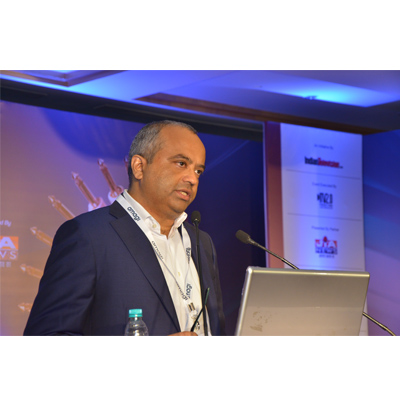
    NOIDA: “Indian news industry is as vibrant as the different cultures of India,” said GroupM south Asia CVL Srinivas as he presented the keynote on Innovations in news selling at the 7th Indian News Television Summit.


    Srinivas, sharing a media agency’s perspective on news and brands, added that the news industry today needs a lot of balance especially in terms of reportage, content for different audiences across platforms. 


    As for the AdEx, he informed that in the country the advertising expenditure for television stood at Rs 16,000 crore. “The news channels take 13 per cent share of the pie which is encouraging as the viewership of news channels stood at 10 per cent,” he stressed upon.


    Talking about the ad spend growth in the country, he informed that the television medium was growing at a rate of 14 per cent overall. The Hindi news genre was growing at 15 per cent, closely followed by regional news at 10 per cent while English news genre stood at seven per cent.


    Moving then onto brand research, Srinivas felt that today brand research is undergoing a radical change and old measurement methods are being questioned. Throwing some light on GroupM’s one such initiative, Social Command Centre, he said, “It is a virtual conference room that monitors the digital space and provides rich insights about consumers and brands.” And stated the example of Nestle which uses the tool to monitor chatter and gather buzz around the brand digitally. 


    Honda using the popular comedian Kapil Sharma to launch a series of campaign online, which garnered 1.5 million hits, was another example, he highlighted upon. He went on to say that cause-based marketing should be initiated and brands should ask themselves, how do we evolve ourselves to become more meaningful entities?  “Once brands are able to answer the same, there will be a lot of headroom for improvement and growth,” he opined. Providing another example, he said an agency called Crayon Data was able to come up with tastegraphs that showed the purchasing and behavioural pattern of different audiences in well-segmented clusters.


    He further went on to add that the evolving Indian digital space sees 220 million Indians active on the digital front spending  almost 200 minutes a day online either checking mails or watching videos. “This implies that the new medium cannot be ignored,” he informed.


    According to Srinivas, news broadcasters need to keep in mind a few things for the future such as co creating socially responsible agendas with brands, invest more in digital, adopt new metrics such as consumer sentiment, social buzz, social impact, viewers’ profile and lastly getting into big data.


    In his closing remarks, he said that while the upcoming digital environment has caused a big disruption to some it will provide a huge opportunity to the news industry and sky is the limit.

  • BARC India likely to roll out weekly data

    BARC India likely to roll out weekly data

    MUMBAI: Industry led TV ratings measurement body BARC India has shed some more light on its operational format.


    The biggest question that has been answered is that of reporting frequency. In an official communication, BARC India has said that the frequency of reporting is likely to be weekly except for certain data types for which it might aggregate the data by period, time band or geography.


    It also says that since currently the number of households with multiple TV sets is low, it won’t be reporting this number separately but will still measure multiple TVs wherever it may be in sample households. At the same time it is aiming at releasing viewership data and adex data simultaneously.


    The upcoming ratings agency also claims to be future ready by having the technology that will allow it to report even time shift viewing from the first day.
     

    Addressing the concern about broadcasters switching off watermark, it says that such a step is not in the interest of the broadcaster. ‘But like any technology, such eventualities could happen due to various reasons. To arrest these instances stringent processes with escalation matrix across watermark monitoring agency, broadcaster and BARC India are in place. They will highlight even if a small bit of content is not watermarked,’ it says in the communiqué. This will dissuade media agencies from buying the channel, forcing the broadcaster to correct this.


    A stringent monitoring process is on the cards. BARC India is looking at appointing a senior police official for heading vigilance. But it says that the data collection format and technology that it uses makes it highly unlikely for tampering.


    Watermarking technology can also support capturing cable TV channels and if MSOs want their channels to be measured, they can invest in the embedding technology. However, no MSO biases would be considered for sampling as the panel would be a reflection of what people watch.


    For its extensive and advanced technology, it is looking at an ingenuous pricing model that will make affordable data available to the last mile.

  • GroupM estimates 11.6% increase in AdEx in India in 2014

    GroupM estimates 11.6% increase in AdEx in India in 2014

    MUMBAI: GroupM, the leading media investment planning conglomerate in India, today released their annual estimated advertising expenditure report called the This Year, Next Year (TYNY) 2014. Along with the Advertising Expenditure (AdEx) numbers, GroupM India also released the mTrends, the list of the biggest media and communication trends in the country.


    As per GroupM’s in-depth research of the Indian media industry, the projected AdEx growth estimate is 11.6%. Digital media shows the maximum growth with 35%. This is followed by 12% in TV, a drop from 13.6% in 2013. Cinema remains constant at 12% for this year as well. The print medium shows a significant increase by 8.5% as against the 2013 estimate of 4.6%, owing to growth in vernacular print publications across the country.


    CVL Srinivas, CEO, GroupM South Asia said, “We are cautiously optimistic about the media industry in 2014. Sectors like FMCG, Auto and Retail will continue a stable increase in ad spends. We will see an increase in rural spending by FMCG and Telecom.” He added, “The first half of the year will continue to be uncertaingiven the general economic &political environment, and ambiguity surrounding the measurement system. However advertising by political parties is expected to give a boost to the AdEx by upto +2.5%. We envisagea stronger second half with an upsurge in ad spends.”


    The TYNY report is the most comprehensive understanding of the estimated media spends by advertisers in the current year. It also highlights some of the industry sectors that will have a major effect on advertising spends across media.This year GroupM also launched mTrends, a quick reference book of the hottest media and communications opportunities in 2014. This list of 20 trends is a derivative of the TYNY 2014 report and has been put together by the team at GroupM India, including the agencies and specialist units.

    ­­­­­­­­­­­­­­­


    About GroupM


    GroupM is the leading global media investment management operation. It serves as the parent company to WPP media agencies including Mindshare, Maxus, MEC, MediaCom, and Motivator in India.  Our primary purpose is to maximize the performance of WPP’s media communications agencies on behalf of our clients, our stakeholders and our people by operating as a parent and collaborator in performance-enhancing activities such as trading, content creation, sports, digital, finance, proprietary tool development and other business-critical capabilities. The agencies that comprise GroupM are all global operations in their own right with leading market positions. The focus of GroupM is the intelligent application of physical and intellectual scale to benefit trading, innovation, and new communication services, to bring competitive advantage to our clients and our companies. www.groupm.com


    For further information, please contact:

    Ishita Mookherjee

    GroupM India

    Email: ishita.mookherjee@groupm.com

    Phone: +919819838566


    Business category overview for key advertising sectors


    Elections

    • With general elections and 5 state elections on the anvil, Government spending and political party election spending adding significantly to the ADEX of all media


    FMCG

    • Volume growth back for FMCG companies on the back of good monsoon and hence good rural income
    • Raw material prices benign and hence more flexibility with advertisers
    • Ad spends of most FMCG companies on the rise to ride on the back of higher disposable income due to election spending


    Retail

    • Category growth story continues

     – More players getting into the food & beverage segment

     – E-commerce making inroads into small town India

     – Regional players expanding getting into national arena


    Auto

    • Despite slowdown in the 4wheeler segment, bullish on entry level cars, sports utility vehicles and multi utility vehicles.
    • 2wheelers to continue the focus on small town and rural India. Competiitve intensity on the back of recent market developments leading to more launches by existing players and subsequently higher ad spends


    Telecom

    • Smartphones penetration rising. Stiff competition in the segment to continue
      • Phablets & connected devices gaining popularity
      • Cellular phone service providers witnessing growth in revenue and ARPU. With service providers slashing prices for 3G schemes competitive activity expected to pick up in this segment


    Banking, Financial Services & Insurance

    • Revival expected in the segment on the back of likely rate reduction.
    • IPO market to pick up pre-election owing to better market sentiments
    • Recent RBI policies leading to a more favourable business environment


    New bank licenses likely to push ADEX of the category


    Click here for the full report

  • Govt for self-regulation and legal controls to check misleading ads

    Govt for self-regulation and legal controls to check misleading ads

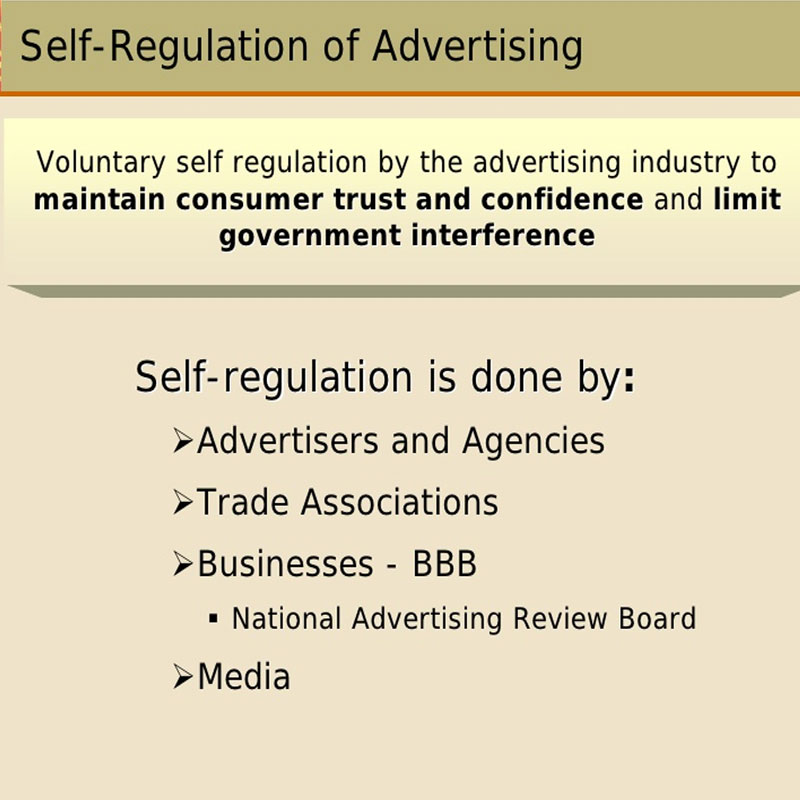
    NEW DELHI: The government is in favour of a process that would involve self-regulation and legal controls to check misleading ads.

    Consumer Affairs Minister K V Thomas today underlined the urgent need to update laws and improve enforcement to protect consumers from false and misleading advertisements which had continued despite several provisions.

    Thomas said the widely accepted opinion was that both self-regulation and legal controls should work in synergy. “I feel that both types of regulation should be applied with the ultimate aim of reaching balance between the sacred right of freedom of choice and information and minimising possible widespread offence,” he said.

    Despite the freedom of expression guaranteed by the Constitution, he said the government is authorised to regulate commercial advertisements, and can restrict deceptive, unfair, false and misleading advertisements.

    Prof Thomas was addressing a national Seminar on misleading claims in advertisements organised by the Department of Consumer Affairs with a view to protect the consumers from exploitation.

    He pointed out that his Department had started countrywide consultations with all stakeholders to elicit their views in order to come to a consensus on what suitable measures could be put in place to regulate such misleading advertisements.

    Advertisements had become a part and parcel of lives today, but it was necessary to use advertisements with caution to avoid a vicious effect on social values, he said, adding that advertisements are a crucial aspect of any type of business because they promote products. The problem arose when this was exploited by unscrupulous businesses persons to mislead the public as it may then destroy the very image of advertising.

    Though advertising is a useful tool to give information that is factual and accurate, questions are frequently raised whether this can create class consciousness, materialism, conspicuous consumption and other values which are not universally accepted, he said, adding that to reach the target markets, advertisers sometimes overstep the legal and social norms.

    An advertisement is termed deceptive when it misleads people and affects the purchasing behaviour of the consumer. In India, advertisements for cigarettes, liquor, pan masala (chewed tobacco), and products that are harmful to the public continue to find a place in the TV channels, despite the ban imposed by the Government.

    Unfortunately, despite several laws meant to protect consumers against such unfair trade practices, false and misleading advertisements continue to exploit the consumer. In fact such advertisements now have a wider canvas. While earlier one saw them only in the print media, today they can be seen on television, influencing a larger number of people and impacting even the illiterate.

    Proliferation of advertisements through television marketing networks promoting health cures, slimming and beauty gadgets of unproven value is a cause of great concern, because today the reach of television channels is phenomenal. Undoubtedly, the impact of the visuals on the television screen is far greater than the newspapers, he added.

    Outdated laws and poor enforcement of laws are the main reasons for the prevalence of any social malady and mal-advertising is no exception. There is need for better laws, their regular updation, improved enforcement, and regular surveillance by the authorities.

    He said social acceptability varies from one culture/country to another. At the end of the day “good taste or bad is largely a matter of the time, the place, and the individual”. It would be also probably impossible to set clear-cut and detailed rules in the era of Internet and interactive TV.

    The most controversial issue in the field of marketing communications is probably the content of advertisements. Three areas of interest in terms of ethical judgment of advertisements are “individual autonomy, consumer sovereignty, and the nature of the product”.

    The individual autonomy is concerned with advertising to children. Consumer sovereignty deals with the level of knowledge and sophistication of the target audience whereas the ads for harmful products are in the centre of public opinion for a long time. Advertising of hazardous products is even more harshly criticised when it is aimed at audiences with low individual autonomy, that is, children. Children are not only customers, but also consumers, influencers and users in the family Decision-Making Unit, though they are too impressionable to be deciders, he said. It was not a surprise then that “spending on advertising for children has increased five-fold in the last ten years and two thirds of commercials during child television programs are for food products”.

    Advertising standards and self-regulation by the advertising industry is an important issue, particularly so in a country such as India where a majority of the consumers are in rural areas.

    However, he said going by the number of ads for which the Advertising Standards Council of India receives complaints, Indian advertising is of exceptionally high standards, since more complaints are received by similar bodies in the United Kingdom. But the number of complaints does not always give a true picture of the standards of advertising nor does it say anything about the level of consumer dissatisfaction. The reasons are low awareness level and apathy.

    Section 2 (r) of the Consumer Protection Act gives a comprehensive definition of unfair trade practice and Section 14 deals with the directions that the court can give to deal with such practices. The consumer courts have given some excellent orders in this area, but they cannot deal with misleading advertisements like the MRTPC. For one, the consumer courts neither have the power nor the infrastructure to investigate, suo motto into misleading advertisement nor take up such cases on their own, as done by the MRTP Commission. Nor do they have an investigative wing like the office of the DG (Investigation and Registration) under the MRTP Act.

    The consumer courts can only adjudicate over complaints filed before them. However, the consumer courts can issue interim orders stopping such advertisements pending disposal of the case. They can give directions to the advertiser to discontinue such advertisements and not to repeat it. They can award compensation for any loss or suffering caused on account of such unfair trade practices, they can also award punitive damages and costs of litigation. Section 14 h (c) of the Act, describing the powers of the court, says that the court can order “corrective advertisement to neutralize the effect of misleading advertisement at the cost of the opposite party responsible for issuing such misleading advertisement’’.

    In so far as misleading advertisements are caused, this is the most important provision and can really have a deterrent effect, if used effectively. Unfortunately, this provision has hardly or perhaps never been used.

    The Minister expressed the hope that the meeting with the stakeholders – in this case the consumer bodies – would produce a consensual document delineating the steps leading to affirmative action, including legislative efforts if found necessary, without impeding the freedom of responsible speech.

    The day long seminar was attended by representative of the State Governments, various Central Ministries, Advertising Council of India and Consumer bodies.

    In a parallel but related development a couple of days back, the Advertising Standards Council of India announced it was partnering with TAM Media Research to monitor misleading ads, a move aimed at improving the self-regulatory mechanism by speeding up the processes and compliance of its codes for advertising content.

    Under the pact, TAM‘s division, AdEx, would check around 350 TV and 10860 newspaper ads per week.