Tag: AdEx

  • Marketing in 2018: Led by revenues, ditched creativity

    Marketing in 2018: Led by revenues, ditched creativity

    MUMBAI: Long gone are the times when advertising and marketing industry in India was a small-scale business with just a few creative heads scratching their brains and churning out a minuscule number of campaigns. With the growing disposable income and aspiration to own premium goods and experience quality services, customers in India are willing to explore more, thus prompting sellers to market their products better.

    2018 was, in many ways, a cornerstone year for brands and agencies alike as they tried to peg more and more consumers to their base. The impact of demonetisation and GST gradually faded, thus allowing the brands to spend more than the previous year on marketing their products. As revealed by Zenith’s Advertising Expenditure Forecasts, the ad spends for India in the year 2018 are expected to close at Rs 62,699 crore. This number is around 10-12 per cent higher than what 2017 saw. And 2019 looks even better. The same Zenith forecast reveals that total adex for India will see an increase of 15 per cent and climb up to Rs 72,169 crore in 2019.

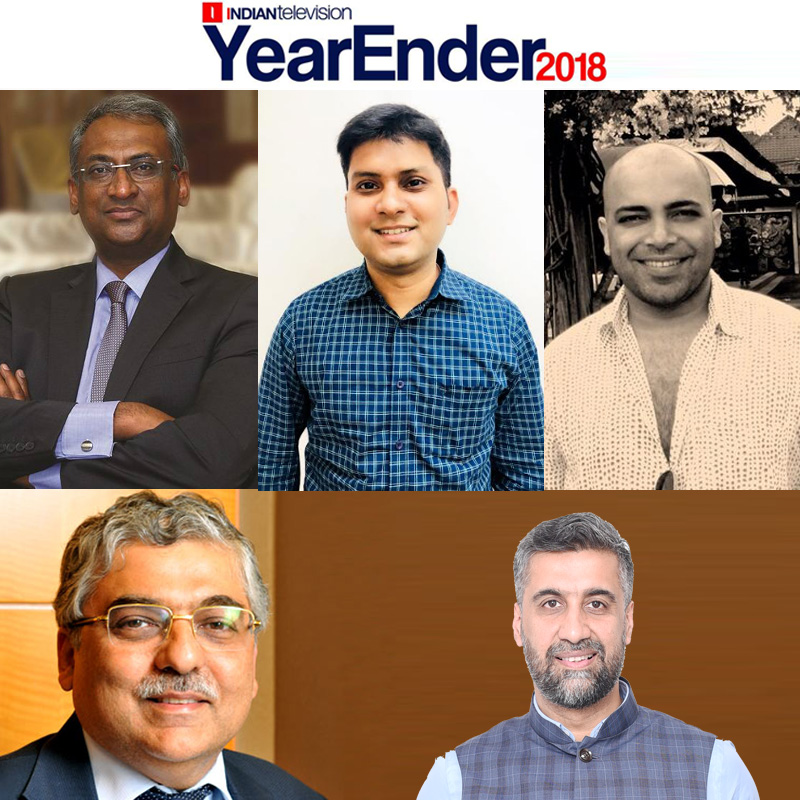
    As per Ethinos Digital Marketing MD Sidharth Hegde, most brands tend to spend between 7-15 per cent of their total revenue on marketing and advertising. “This percentage of spends is likely to continue, however, large brands are looking to insource a lot of the marketing and advertising that will help them save large amounts of funds that would now be going to external agencies,” he says.

    Hegde also gives a breakdown of the expenses, “In 2018, the average firm was expected to allocate 42 per cent of their marketing budget to online, and this rate is expected to grow to 45 per cent by 2020. Social media advertising investments will continue to grow, with a 17 per cent compound annual growth rate from 2016 to 2021, and is expected to represent 25 per cent of total online spending in 2018. Investment in paid search, display advertising, social media advertising, online video advertising, and email marketing is predicted to account for 46 per cent of all advertising by 2021.”

    It is clear from his predictions and is obvious otherwise as well, that digital is, in fact, seeing massive growth in India. Dentsu Aegis Network chairman and CEO – south Asia Ashish Bhasin seconds this thought and describes 2018 as the year that will be remembered as “when digital became an integral part of the marketing mix”.

    Bhasin notes, “I think this (2018) was the year in which digital came to the forefront. From being a nice-to-have part of strategy it became an integral part of the marketing mix. This was partly helped by the JIO effect as it brought down the prices of data and increased the bandwidth available. Also, the falling prices of smartphones made it happen.”

    He further adds, “And I take that by 2020, one-fourth of the advertising market will be digital. In 2022, the number of Indians reached by internet will nearly be the same as those reached by television.”

    Mirc Electronics Limited (Onida) head of marketing Pratyush Chinmoy says, “One clearly visible trend (in 2018) was companies increasing their digital pie in the overall marketing spends, in recognition of shifting consumer touchpoints. Many industry leaders also saw impressive growth in video marketing, OTT media, with the consumer from all walks of life, consuming data at a much faster pace than ever before helped by telecom price decreases.”

    But does that mean digital will overpower the other ‘traditional modes’ of advertising? Ashish Bhasin doesn’t think so. He quips, “When the tides are rising, all the boats rise along. In India, we are currently in a position where all the media are growing; be it print, TV, or digital, and it will remain so for the next 5-10 years. So, it is not digital vs print or print vs TV, or TV vs digital, it is digital and TV, and print, and OOH for India.”

    An IBEF report also supports this claim of Bhasin. According to its September 2018 report on Media and Entertainment, in FY 2018, TV advertising was the largest contributor to the country’s advertising revenue, generating Rs 223.5 billion closely followed by print that generated revenue of Rs 210.6 billion. Digital advertising generated revenues worth Rs 116.3 billion.

    Chinmoy also shares a similar brief based on some internal data, “In a period of Jan ’18 to Oct ’18, leading brands have spent around Rs 270 crore. Television has continued to gather a major pie, with print coming in second. In 2019, the spends are expected to slightly increase by a factor of 10-15 per cent.”

    He also adds, “While OTT caters to a subset of the television audience with a different offering altogether in terms of content, it has still a long way to go to catch up with television spends.”

    JHS Svendgaard Laboratories MD Nikhil Nanda adds an interesting insight, “As far as marketing trends are concerned, digital is growing fast but television and print still remain as traditional and dominant mediums. Content has been ruling the market and OTT. Disruptive marketing and radio are picking up faster than digital.”

    N Chandramouli, CEO of TRA Research has the same input. He notes, “There is no TV or OTT for the consumer. They only know the screen. None of the advertisements in such platforms are getting consumed and only the skip button catches their attention. Smart brands are focusing on consumer basis for transactions and what urges it fulfils in them, rather than present product benefits. Brands must see it as an integrated consumer experience, not as how it is delivered.”

    But Hegde differs slightly as he mentions that according to TDG Research, ad spend on OTT is projected to hit $40 billion by 2020, which is nearly half of the $85 billion in forecasted total TV ad revenue. “Also, with the influx of cheap and easily available internet, more and more users are bound to ditch the traditional TV for OTT services,” he says.

    2018 was a grand year for many agencies as many national and international honours fell upon them, the grandest being creative and impactful campaigns that were churned out in the past year; the most impressive being Piyush and Prasoon Pandey getting the prestigious Lion of St. Marks honour at the Cannes. Yet the industry feels 2018 was not a very impressive year when it comes to creativity in marketing campaigns.

    Chandramouli says, “2018 has not been an impressive year in brand creation. In the wake of a slow sales year, most of it has been attempts at selling. This, unfortunately, was based on a wrong premise because the consumer is dramatically changing.  If you sell, they don't want to buy.”

    Ashish Bhasin shows more or less the same emotion, “I think it has overall been a good year but not a great year in terms of creativity on TV because there haven’t really been any breakthrough campaigns that stood out at the national level.”

    He adds, “I think this is because the creativity in digital has significantly improved and for digital creative films from India have been getting digital identification. I think the first example that is a big name is the ‘Powerless Queen’, which was done by WatConsult, which internationally won some 15-20 awards, which we really hadn’t seen earlier for a digital campaign. We have seen print campaigns win, TV campaigns win but I guess it is a sign of coming times more creative efforts will be put in digital and we will see more of that in 2019.”

    Nikhil Nanda, however, differs in his observation. He notes, “Creatively, storytelling took the driving seat and advertisements showing the brand or products were more subtle. Whether it was an ad meant for digital/social channels or OTT alone, the more impressive the story, the better it was for the brands. Also, social causes and emotions took centre stage. Case in point: Colgate strong teeth campaign with Deepika Padukone and her mother. Campaigns in 2019 will be strongly inclined toward emotional and adopting better health habits storytelling.”  

    While 2018 was a pretty impressive year with its highs and lows, marketing agencies are now looking up to 2019 with a twinkle in their eyes. Big events like general elections and cricket world cup will be ruling the year and thus there will be a great influx of money as well.

    Bhasin believes that 2019 will see around 12 per cent growth in ad revenues. He believes that India is all set to reach the $10 billion mark in advertising in the coming year. This sentiment comes after taking into consideration some facts. Bhasin notes, “Advertising is very susceptible to sentiments. If a stable government, which is considered pro-business, is in power then the sentiments of the brands and marketers improve. They tend to spend more. Otherwise, advertising is the easiest expenditure to cut. I am hopeful that we will show good economic growth and will have a good monsoon, so we have a good performance.”

    While Bhasin is hopeful, Chandramouli sees 2019 as a difficult year for brands and marketers. He says, “2019 is a slippery year ahead, with brands not investing in new things.  So, the way to go for brands is to understand the consumer basis for trust and their innate sense of desire. Other than a few who will stand out using consumer insights and buying propensity understanding, many brands will continue to waste their money on campaigns irrelevant to the consumer. Brands that only try to sell will not get bought. Those that help the consumer buy, will be loved.”

    Another trend that might rule the advertising and marketing industry in 2019 will be of consolidations. Bhasin notes, “I think there is a process of consolidation that has started in advertising globally. We saw one of the oldest agencies JWT being merged into Wunderman this year. Even in India, there are six groups that control about 85-90 per cent of the advertising market. I see that this process of consolidation will only go bigger.”

    He further adds, “The legacy agencies will come under pressure now. The groups that have been formed in the new age and are more digital-savvy, who have more proportion of the business coming from the digital will do well. Big names that have been in the market for 100 years will suddenly now start feeling the pressure and start feeling the heat. We saw the beginning of that in 2018, we will see more of that in 2019.”

    All in all, 2019 looks like a great year for the brands and marketing agencies as it comes with its own shares of challenges and opportunities. The industry is very positive about the revenues but a little work on the creativity side is required to make 2019 a year better than the gone by.

  • TAM AdEx reveals print, radio reducing spend on TV

    TAM AdEx reveals print, radio reducing spend on TV

    MUMBAI: A recent report created by AdEx, a part of TAM Media Research, has revealed how television medium uses others mediums i.e. print and radio for its own advertising and vice versa.

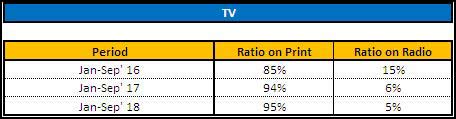
    As per the report, television has been increasing ad-spends on the print medium for the past three years—it spent 85 per cent of its ad revenue on print in January-September 2016, followed by 94 per cent and 95 per cent during the same period in 2017, and 2018 respectively. The subsequent ad-spends on radio dipped from 15 per cent in 2016 to 6 per cent in 2017, and 5 per cent in the current year.

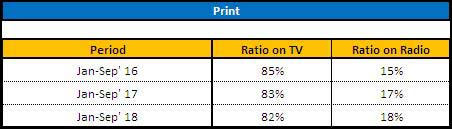
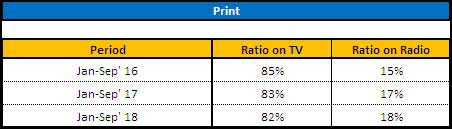
    On the other hand, print has been deducing its ad-spend ratio on TV to radio. In January-September 2016, it spent 85 per cent on TV and 15 per cent on the radio. In the following year, the ratio was 83 per cent and 17 per cent respectively, while it further changed to 82 per cent and 18 per cent in 2018.


    Radio also has been reducing its ad expenditure on TV. As per the report, radio medium spent 91 per cent share of its ad expenditure on TV in January-September 2016 and decreased it to 83 per cent in 2017. There had been a slight increase in the expenditure in 2018 as compared to the previous year, but the share remained much less than 2016, at 85 per cent. The subsequent expenditure on print medium was 9 per cent, 17 per cent, and 15 per cent, respectively.


    On a related note, India is one of the top countries when it comes to investing money in ad-expenditures. As per the latest report revealed by GroupM, the media investment arm of WPP group, India will rank third globally in terms of ad-expenditures in the coming year, contributing $ 1.35 billion to worldwide spends.

    An Indian Brand Equity Foundation (IBEF) report of March 2017 highlighted the market size of various media terming print as the biggest contributor to the sector, accounting for almost 41.2 per cent of the total advertising revenue, followed by TV (38.2 per cent) and other modes including radio, outdoor, and cinema collectively contributing 10 per cent. The share of digital stood at 11 per cent.

  • BJP leads ad-insertions for August-November 2018

    BJP leads ad-insertions for August-November 2018

    MUMBAI: The general elections of 2019 are just around the corner and for the past few months a feirce political battle is ensuing in some of the major Indian states including Madhya Pradesh, Telangana, and Rajasthan. No party is leaving any stone unturned in promoting its agendas in this politically charged season but Bhartiya Janata Party (BJP) is surely leading this battle of advertisements.

    As per ad-insertion calculation for the period of August-November 2018 – released by AdEx India, a part of TAM Media Research – BJP tops the share of advertisements across television, print, and radio at 58 per cent, which is nearly 2.5 times more than the rival Congress. However, they both collectively contribute a massive 85 per cent to the overall ad-insertion share of political parties.  

    The following parties lag much behind in terms of ad-insertions with Telangana Rashtra Samiti (TRS) and Jana Sena Party contributing three per cent and two per cent respectively, given the state assembly elections in Telangana.Regional Party Dravida Munnetra Kazhagam (DMK) stands at the 5th position with two per cent ad-insertions that can be attributed to the death of  M Karunanidhi  in August.

    Meanwhile, BJP topped the ad-insertions in central Indian state of Madhya Pradesh that went into polls on 28:November as well, owing 73 per cent share. The state also saw a rise in ad-insertions made by the political parties on TV (1.9 times) and radio (2.3 times) as compared to the previous assembly elections. However, the ad-insertions in the print medium saw a dip of 74 percent.

  • Pitch Madison report forecasts 2018 digital adex growth at 25%

    Pitch Madison report forecasts 2018 digital adex growth at 25%

    MUMBAI: According to the findings of the 16th Pitch Madison Advertising Report (PMAR) 2018, the advertising market slowed down to 7.4 per cent (Rs 53,138 crore) in 2017. The report also predicts the advertising growth in 2018 to be around 12.03 per cent thereby adding Rs 6,392 crore to adex to reach a total size of Rs 59,530 crore.

    “We are optimistic about 2018 because you can’t keep the Indian economy down for too long,” said Sam Balsara as he presented the report. He added that the forecast is tempered by the possibility of the government’s reforms that may destabilise the economy in the short term.

    In 2017, the report had predicted growth for 2017 to be around 13.5 per cent; however, the industry could not keep up its pace because of the government’s structural reforms.

    Following the repercussions of demonetisation, 2017 had a bad start. “Adex was slow to recover from the impact of demonetisation and the first quarter of 2017 saw de-growth of 2 per cent and growth of a mere 2 per cent in the second quarter on the back of the IPL. Just when we expected adex to gather steam, the Goods and Services Tax (GST) Bill came into effect in July and the market saw a drop of close to 20 per cent in traditional media over June 2017, and a drop of 5 per cent as compared to July 2016,” the report notes. “Mercifully, the festive period brought cheer to adex, and it grew from August 2017 to December 2017 by 13 per cent.”

    Hindustan Unilever Ltd, Amazon Online India, Procter & Gamble, and Reckitt Benckiser topped the list once again. The newest entrant in the top five for 2017 was Patanjali Ayurved Ltd, which climbed from No 15 to No 5 on the list. Patanjali Ayurved is predicted to have nearly doubled its ad spend from Rs 300-400 crore to Rs 500-600 crore per annum.

    According to the report, in 2017, traditional media grew by only 4 per cent, the slowest in half a decade. Television, which continues to be the largest contributor to adex with 37 per cent share, grew by just 4.3 per cent and reached Rs 19,650 crore; this is the lowest growth television has witnessed in the last five years. TV that is closely followed by print at 35 per cent share had even lower growth of 2.7 per cent to reach Rs 18,640 crore.

    In 2018, television adex is expected to grow 13 per cent to reach Rs 22,205 crore while print adex is expected to grow by 5 per cent in 2018, taking the print market close to Rs 20,000 crore.

    “It is thanks to digital media, which continued its onward march and grew by 27.2 per cent in 2017, that we are able to report an overall adex growth of 7.4 per cent,” the report observed. Digital added nearly Rs 2,000 crore to adex, to reach a size of Rs 9,303 crore in 2017. It now contributes a whopping 17.5 per cent to Indian adex, with video gaining huge ground, along with search, display, native and programmatic advertising.

    Digital advertising is projected to grow by about 25 per cent to cross the Rs 10,000 crore mark and grow to Rs 11,629 crore in 2018. Digital is expected to continue its growth trajectory and growth at a rate of 25 per cent, taking the digital adex up to Rs 11,629 crore in 2018. FMCG, telecom, BFSI and real estate will continue to be growth drivers for digital while e-commerce will remain the backbone of digital adex.

    Emerging from one of the darkest years for advertising so far, the industry is keeping its fingers crossed for 2018. There are some key factors that will drive growth in 2018, the report observes. There are signs of return of consumer spending and benefits of GST will start accruing this year boosting growth. Media, in particular print, will also get a fillip from the eight State Assembly elections scheduled during the year.

    Also read:

    Digital takes centre stage on tepid Valentine’s Day for brands

    Industry applauds Sam Balsara as he turns 67

    Pro Wrestling League rallies on North India viewership


  • GroupM forecasts India’s 2018 adex to grow by 13%

    GroupM forecasts India’s 2018 adex to grow by 13%

    MUMBAI: WPP’s media investment group Group M has forecast the advertising expenditure (adex) in India to grow by 13 per cent in 2018 year on year. According to GroupM’s futures report ‘This Year, Next Year’ (TYNY) 2018, which was released today, India’s advertising investment will reach an expected Rs 69,346 crore this year. The report also estimated ad spending in 2017 as Rs 61,263 crores, growing at 10 per cent, as predicted by GroupM in February of last year.

    Various industry estimates peg economic growth at 7.3 per cent to 7.8 per cent for 2018 as the benefits of GST-higher productivity and lower cost of goods sold-become apparent. This, combined with key reforms already implemented, such as bank recapitalisation, budget provisioning of non-performing assets and the Bankruptcy Bill approved by law, are likely to facilitate a recovery in consumer demand and private investment.

    GroupM South Asia CEO and WPP India country manager CVL Srinivas said, “As consumer sentiment stabilises and spending increases, we estimate 2018 to be a relatively better year from an ad-spend perspective. Growth in digital media will continue to outstrip other media but, unlike most markets, India continues to see traditional media formats grow. After a couple of sluggish years, rural volumes are expected to pick up this year leading to increased marketing budgets. The structural changes witnessed in the last couple of years could pave the way for a more stable outlook in the coming years. We haven’t yet realised our full potential as an ad market but are headed in the right direction.”

    Continuing urbanisation and rising wages are supporting consumer growth in finance, durables, services and retail. E-commerce is becoming a key channel for FMCG, and ad investment is anticipated to increase in shopper and performance marketing. India is witnessing an increase in spending from rural markets, as sales growth at 1.5-2.5 times of urban sales growth for major FMCG and consumer durable companies.

    Looking at the advertising industry worldwide, GroupM estimates the global advertising expenditure to grow by 4.3 per cent, and APAC is anticipated to grow at 5.4 per cent. GroupM South Asia chief growth officer Lakshmi Narasimhan said, “India remains one of the fastest growing ad markets globally and is among the top-five countries that are expected to drive incremental investment in 2018. Our growth percentage is three times that of the global adex and more than double of the APAC growth percentage.”

    This year, 35 per cent of all incremental ad spends will go towards digital advertising (including mobile). GroupM estimates digital adex to continue to grow by 30 per cent in 2018 to Rs 12,337 crore. Video advertising on digital is estimated to grow at 54 per cent as bandwidth improves and data and mobility device become more economical for the consumer.

    As digital becomes 18 per cent of the overall advertising spends in India, measurement and transparency become paramount. Last year, GroupM globally led the conversation on measurement and transparency in digital media, and released viewability standards that are higher than those stipulated by the Media Rating Council in the US. In India, too, GroupM is working with industry bodies, brands and publishers to adhere to a standard viewability index that would become integral to the digital ecosystem.

    “On the traditional media front, parliamentary elections in H1 2019 will stimulate advertising from the back half of 2018. Print will see a slight uptick in 2018 from the elections, with key markets in demand. The growth rate for newspapers is estimated at 4.2 per cent with English papers growing slightly slower than Hindi and regional languages,” the report stated.

    Television continues to be the largest medium, with its contribution remaining at close to 45 per cent share. This year, the growth rate for TV is 13 per cent, as there is growth in both volume with free-to-air channels as well as value with HD channels. In 2018, the last leg of cable digitization will improve quality of delivery to rural India, also driving viewership.

    This year, radio is expected to grow at 15 per cent which is higher than the last couple of years. This growth is predominantly due to the launch of new radio stations across the country. Other media such as OOH will witness good traction of 15 per cent growth from premium transit sites. Cinema will continue to grow at 20 per cent in 2018, as the infrastructure investment made last year will attract a larger audience to theatres for a blockbuster experience.

  • TV ads worth Rs 850 cr lost in Nov-Dec, ’17 ad-ex forecast at 13.5pc: Pitch Madison Report

    MUMBAI: The much awaited Pitch Madison Advertising Report 2017 was released at a function held in Mumbai by Crompton Greaves Consumer Electricals MD Shantanu Khosla. Releasing the report, Khosla highlighted to advertisers the importance of truthful advertising. He said, “Truthful advertising is not only the right thing to do, but also great for the business.”

    Key findings:

    • Growth in the Indian advertising market slowed down to 12.5 per cent in 2016, thanks to the tsunami that hit in the form of demonetisation. Demonetisation knocked off Rs. 1,650 crore from ADEX in November and December 2016. Growth in 2015 over 2014 was as high as 17.6 per cent.

    • The ADEX growth in the first half of the year was slow at 13 per cent, but accelerated to 16 per cent by October 2016, before ‘de-growing’ in November and December 2016 by eight per cent.

    • Growth came mainly on the back of  Digital, which grew by 40 per cent plus, and now stands at Rs. 7,315 crore, 15 per cent of the market.

    •  Growth in traditional media (all media other than digital), slowed down to 8.5 per cent.

    • he dominant category continues to be FMCG contributing 32per cent, followed by Auto at 10 per cent and Telecom 8 per cent. E-Commerce that had taken ADEX (only TV + Print + Radio) by storm in 2015, contributed only 4 per cent in 2016.

    • TV grew by 9 per cent and print only by 7 per cent in 2016.

    • Radio stood out with a growth rate of 13.2per cent although on a small base.

    • Nearly 50 per cent of Print’s growth of Rs. 1,216 crore is accounted by only four categories FMCG, Auto, Education and BFSI. Nearly 44 per cent of TV growth of Rs. 1,570 crore is accounted by FMCG.

    • Advertising continues to be a Big Boys’ game with the largest spender HUL spending approximately Rs. 2,500 crore and top 10 spenders accounting for 16 per cent of the total market and contributing 45 per cent of the top 50 list.

    • Unilever, Amazon and Procter & Gamble continue to be the top three advertisers.

    • Many new entrants entered the Elite top 50 list like Patanjali, OPPO Mobiles, Nissan Motors, Reliance JIO, Vivo Phone, SBI and Videocon.

    Says Madison World chairman Sam Balsara, “Our expectation is that the market will grow 13.5 per cent in 2017, but growth rates will vary widely from month to month.We expect the market to grow by just 8 per cent for the period January to April 2017, 14 per cent from May to October 2017 and 24 per cent in November and December 2017, given that market had ‘de-grown’ by 8 per cent in November and December 2016. Our optimism for good growth in ADEX starting May comes on the back of several govt initiatives- from high government investment in infrastructure, lower corporate and personal taxes for small and medium companies and the masses, good government support for the poor and consequently the wide scale expectation of yet another year of high GDP growth.”

    http://www.indiantelevision.com/sites/drupal7.indiantelevision.co.in/files/styles/large/public/indian%20%281%29.jpg?itok=G_y3fTLp

    In the current environment, Madison advises:

    1. Take Advantage of weaker January-April months and intensify campaigns to get good Impact during this period.

    2. Use Digital, but less for top of Funnel Awareness and more for Mid/Bottom Funnel Consideration, Leads and Advocacy.

    3. Don’t become a slave to Media Ratings / Readership Data. Ride it and use it as a Guide, Not as a Crutch.

    • The original forecast for February 2016 was 16.8 per cent which was brought down to 13.2 per cent in August 2016. The projection now for 2017 is 13.5 per cent.

  • India’s AdEx revised to Rs 62,483 cr. by EEMA; includes ‘experiential’ with 13.6 per cent share

    India’s AdEx revised to Rs 62,483 cr. by EEMA; includes ‘experiential’ with 13.6 per cent share

    MUMBAI: ‘Experiential Marketing’ or the concept of creating a bond between the consumer and the brand beyond ‘buying and selling’ by immersing them in an experience, is an underrated and underrepresented form of marketing, several marketers guiltily admit.

    Historically they have shied away from accepting experiential as a separate media to spend on, due to the dearth of representative figures, measurement challenges  and studies done on the subject.

    Off-late things have changed and experts observe that experiential marketing is increasingly becoming part of the popular marketing conversation, thanks to the acceptance of digital and the advent of several new technologies.

    This has led to several industry bodies to sit up and take notice, and do a quantitative evaluation of the sector.  In fact a recent report on the sector released at the EEMAX Conclave 2016 has raised India’s estimated total adex for 2016-2017 to Rs 62,483 cr by including an additional ad ex of Rs 8,483 cr represented by experiential marketing.  

    As per a report compiled by Business World and Tstratoo, in partnership with Event and Entertainment Management Association (EEMA),  between 2014 and 2016 the experiential marketing industry has seen an estimated 16 to 17 per cent growth.

    The EY-EEMA report for 2014-2015 assessed the experiential marketing industry size to be worth Rs 6250 cr in terms of revenue out of which Rs 3750 cr represented the organised sector and Rs 2500, the unorganised sector. Estimates for its 2015-2016 report pegs the industry at Rs 7281 cr, showing a growing increase in the representation of the organised sector. It amounted to Rs 4,369 of the total worth in 15-16 financial year.

    EY-EEMA predicts sector’s growth

    Identifying ‘experiential’ as a whole new media segment in which marketers are investing their media budget, the study further provides an advertisement expenditure break-up.

    FICCI-KPMG report predicts India’s total AdEx to reach Rs 54000 cr in the year 2016.  Citing that advertising spend in the experiential marketing sector doesn’t feature in the major industry reports like FICCI-KPMG, GroupM’s TYNY and Pitch Madison, the report takes the liberty to include the estimated Rs 8,483 in the total adex, increasing it to Rs 62,483.

    public://chart.jpg

    Upon consulting the report with marketing expert and Maxus experiential marketing national direct Vidur Patney, he said, “It is a disorganised and fragmented sector. Not many firms have a process or are part of larger groups to ensure that the quoted figures are spot on to be used in such researches. While I trust EY, the numbers are what companies say, and are seldom validated.”


  • India’s AdEx revised to Rs 62,483 cr. by EEMA; includes ‘experiential’ with 13.6 per cent share

    India’s AdEx revised to Rs 62,483 cr. by EEMA; includes ‘experiential’ with 13.6 per cent share

    MUMBAI: ‘Experiential Marketing’ or the concept of creating a bond between the consumer and the brand beyond ‘buying and selling’ by immersing them in an experience, is an underrated and underrepresented form of marketing, several marketers guiltily admit.

    Historically they have shied away from accepting experiential as a separate media to spend on, due to the dearth of representative figures, measurement challenges  and studies done on the subject.

    Off-late things have changed and experts observe that experiential marketing is increasingly becoming part of the popular marketing conversation, thanks to the acceptance of digital and the advent of several new technologies.

    This has led to several industry bodies to sit up and take notice, and do a quantitative evaluation of the sector.  In fact a recent report on the sector released at the EEMAX Conclave 2016 has raised India’s estimated total adex for 2016-2017 to Rs 62,483 cr by including an additional ad ex of Rs 8,483 cr represented by experiential marketing.  

    As per a report compiled by Business World and Tstratoo, in partnership with Event and Entertainment Management Association (EEMA),  between 2014 and 2016 the experiential marketing industry has seen an estimated 16 to 17 per cent growth.

    The EY-EEMA report for 2014-2015 assessed the experiential marketing industry size to be worth Rs 6250 cr in terms of revenue out of which Rs 3750 cr represented the organised sector and Rs 2500, the unorganised sector. Estimates for its 2015-2016 report pegs the industry at Rs 7281 cr, showing a growing increase in the representation of the organised sector. It amounted to Rs 4,369 of the total worth in 15-16 financial year.

    EY-EEMA predicts sector’s growth

    Identifying ‘experiential’ as a whole new media segment in which marketers are investing their media budget, the study further provides an advertisement expenditure break-up.

    FICCI-KPMG report predicts India’s total AdEx to reach Rs 54000 cr in the year 2016.  Citing that advertising spend in the experiential marketing sector doesn’t feature in the major industry reports like FICCI-KPMG, GroupM’s TYNY and Pitch Madison, the report takes the liberty to include the estimated Rs 8,483 in the total adex, increasing it to Rs 62,483.

    public://chart.jpg

    Upon consulting the report with marketing expert and Maxus experiential marketing national direct Vidur Patney, he said, “It is a disorganised and fragmented sector. Not many firms have a process or are part of larger groups to ensure that the quoted figures are spot on to be used in such researches. While I trust EY, the numbers are what companies say, and are seldom validated.”


  • The vehemently tailored factual entertainment genre in India

    The vehemently tailored factual entertainment genre in India

    The factual entertainment channels’ genre in India has seen rapid growth over the last couple of years. While the big daddies of factual entertainment like Discovery,National Geographic Channel and HistoryTV18 have already carved out a niche for themselves with a balanced mix of international and localised content,a few new channels have also sprung up,which are trying to make their mark. What’s more,with a handful of more channels slated to launch soon,the genre is poised to get a huge impetus.

    The genre has shaped effectively due to key factors like digitisation,change in lifestyle and localised content amongst others. Breaking away from the soaps and movies,it is observed that the demand for non-fiction and reality content is on the rise.

    The entire genre,both in terms of share and viewership has grown exceptionally,by providing a great breeding ground for advertisers to effectively target a larger number of niche audience. Viewers now are demanding good quality entertainment with a blend of enrichment and learning.

    According to the FICCI-KPMG M&E report 2015,the factual entertainment genre enjoys a viewership share of 1.3 per cent of the total market,higher than the 0.9 per cent of English Entertainment and 0.1 per cent of English News,while the genre’s AdEx share stands at two per cent of Rs 175 billion ad spends for 2015.

    India is a young and diverse country,where viewers have a high demand for inspirational programming. They want to be informed and entertained at the same time. Television viewing in India has undergone a dramatic shift over the last decade. The change has come into play owing to factors like tastes and preferences of the audience,competition in the TV entertainment industry as well as changes in regulation. Though the factual entertainment genre is not that diverse,apart from the pioneers in the space,newer channels like Travel XP,Insight Channel,Living Foodz are also catering to the needs of the audience. Additionally,channels like Sony BBC Earth,Living Travelz,Living Rootz and Living Homez are all waiting to launch and further expand the genre.

    Discovery Networks has many firsts to its credit. Discovery has pioneered the factual entertainment genre in India since 1995 and has also introduced a refreshing new wave of programming. It also led dubbing of international content with multiple language feeds in the country.

    Discovery was the first mover in bringing the best of non-fiction programming across genres like science,exploration,survival,natural history,sustainability of the environment,technology,anthropology,health and wellness,engineering,adventure,lifestyles and current events. Lately,the channel has expanded its portfolio to include reality television and pseudo-scientific entertainment.

    Discovery Channel has maintained its leadership in the factual entertainment genre. The new rural rating released by BARC has reiterated viewership trends amongst urban and rural audience alike. The channel showed a viewership increase of 84 per cent from 2014.

    The channel has played an important role in shaping the entire infotainment genre in India.

    Discovery Networks Asia Pacific executive vice president and general manager – South Asia Rahul Johri tells Indiantelevision.com,”We have also witnessed increased demand for genres such as adventure,wildlife,survival,technology,travel,cuisine,auto and science. The channel runs with original content globally as well as in India. The channel airs shows like Man v/s Wild,HRX Heroes and How Do They Do It,etc.’

    Observing that India has a significantly diverse viewer base with differentiated tastes and preferences,Johri says,”While local content finds more appeal,there is demand for a mix of international and localised content from our network. Discovery Networks offers viewers a window to the world.’

    Viewers expect to see unique facets of India from the prism of such infotainment channels and hence,localisation forms the bedrock of the India growth strategy.

    The channel has very well stuck to its localised content by airing a new India series every month like Tiger Sisters of Telia,Story of Yoga,India’s Wandering Lions,India Emerges,1965: A Visual History,Jai Ho with A.R. Rahman and HRX Heroes with Hrithik Roshan. While Investigative Discovery saw Indian shows like Khooni Saaya with actor Rohit Roy and Shaitaan with Sharad Kelkar,the Discovery Kids channel contributed with series like Kisna and Luv Kushh amongst others.

    While some channels have advanced to the 4K format,Johri is of the opinion that 4K is still in its nascent stage in India. “We continue to explore new opportunities to make a strong connect with our viewers. 4K is at its nascent stage in India and as technology evolves,we shall assess the prospects,’ he says.

    The channel claims to have evenly distributed the revenues across both advertising and affiliate business. Emphasising that the network values both cable as well as DTH subscriptions due to their respective advantages,Johri adds,”While cable is cheaper,it gives wider penetration to the channels. On the other hand,DTH offers more value to its consumers viz. variety,clarity,service and offers high growth in revenues for broadcasters.’

    The channel claims to have nearly three billion cumulative subscribers in more than 220 countries and territories. In the Asia Pacific region,Discovery’s reach is at 209 million subscribers.

    “Our vision moving forward would be to bring best in class content and offer distinct value to all our stakeholders. We shall also relentlessly explore new opportunities of growth. India content has been a key focus for the network and we shall continue to produce path-breaking programs to suit Indian viewers’ tastes. Our aim is to continue to innovate and deliver value to viewers,advertisers and affiliates alike,’ says Johri.

    While in 2015,Discovery took its focus a notch up with an intensive slate of India shows across all brands,in 2016 plans are to keep the momentum high with new formats,exclusive accesses,topical shows and refreshing hosts in a bid to satisfy the curiosity of Indian viewers.

    Cable television digitisation has been a major change that the industry has witnessed,which has also helped drive up the value of differentiated and high quality content. “Backed by digitisation,we launched eight new channels including three high-definition channels,a kids channel (Discovery Kids),a regional (Discovery Tamil) and a Hindi entertainment channel (ID) in the last five years. Each of these channels has garnered tremendous response from the viewers,advertisers and affiliates alike,’ says Johri.

    Catering to a specific audience segment,Animal Planet has climbed up the ropes in the factual entertainment genre and is successfully surging ahead of competition. The channel offers entertainment-focused programming tapping people’s primal instincts with compelling stories,engaging characters and the innate drama of the natural world.

    The channel aims to bring refreshing television content for Indian audiences making for family entertainment. Beyond just animals,the channel will continue to offers different perspective to the animal kingdom. It will immerse viewers in a rich range of wildlife content – from blue chip natural history to adventure,conservation to extreme expeditions,and intimate stories of wildlife enthusiasts to bizarre creatures; catering to audience across age groups.

    Animal Planet has sharpened its claws and is ready for 2016 with a new programming line-up including series and specials to strengthen its content slate. In the first quarter of the year,the channel will launch Masters of the Jungle,which will be aired every night at 9 pm. The band is one of the highly rated time bands that will bring exciting new adventures of the channel’s hosts and wildlife experts. Animal Planet will also bring the fifth edition of Where Tigers Rule,an initiative to shine spotlight on the importance of tiger,which will be aired every night at 9 pm starting from March.

    “We have a well-entrenched portfolio that provides high-quality and differentiated audience through the year for advertisers across categories. Our brands offer consistent and targeted viewers,which is what the advertisers look for. This is evident from the fact that our channels have a wide range of advertisers and product categories across markets,pan India,’ adds Johri.

    The channel will also introduce two new shows namely Rann Bhoomi,which will be aired every night at 10 pm uncovering the lives of the world’s most elusive predators and Return of the Lions,which will air every Monday at 8 pm,honouring the majestic lion. The channel will also be bringing the new season of its popular series The Wildlife of Tim Faulkner,River Monsters,etc this year.

    “In a cluttered television environment,the challenge remains to establish unique and differentiated proposition and we have succeeded in our mission to provide the highest quality entertainment across our 11 brands,’ asserts Johri.


    As per data provided by Discovery Network, the channel in AA 4+, All India market is placed at second slot.

    Another channel that enjoys a strong foothold in the space is National Geographic Channel (NGC). The channel is owned by Fox Cable Networks,which had seen its inception in 1997. It airs non-fiction television programs and also features documentaries with factual content involving nature,science,culture,history,reality and pseudo-scientific entertainment programming. The channel ranks third in the genre in Week 1,2016 all India (U+R) data from Broadcast Audience Research Council (BARC) India with 4090 (000Sums).

    With the digitisation wave in India,the channel has witnessed a shift in the audiences’ TV viewing habits. There is an increasing demand for specialised content,which in turn has created an opportunity for special interest channels. The other significant impact of digitisation has been a gradual demand for quality and localised content. “Infotainment channels like National Geographic are slowly but steadily commanding a much larger viewership pie compared to what they were commanding earlier. Competition is making sure that everyone has enough and more to keep the audience hooked on to TV,’ says National Geographic and Fox International Channels India business head Swati Mohan.

    “Viewers expect content to be world class,distinctive,informative and awe inspiring. Nat Geo takes pride in continuing to deliver on this promise,’ adds Mohan. Even as the genre has seen an increase in the local content hours,Mohan is of the opinion that there will always be room for stories,facts,innovations from across the world that Indian viewers will continue to want to see and learn about.

    Content creation for the infotainment genre is definitely not inexpensive,but at the same time the channel also believes in the unique access it provides,the conversations it creates,and the evergreen nature of the content as priceless. Maintaining a balance between what the viewers want and what will the advertisers be interested in,is NGC’s core are of focus.


    Travel XP,the home-grown travel channel owned by Celebrities Management Private Limited,flagged in 2011 and enjoys good viewership in India. The channel features shows like Xp Guide,Great World Hotels,Great Indian Hotels,Bada Weekend,Foodicted,Strictly Street,Xplore World,etc and is known to provide 100 per cent original content to viewers as well as license its shows to several networks outside India.

    Travel XP believes in localising content for the Indian trade. “The sensibilities and requirements of the Indian consumers are different and so are the consumption patterns. Audiences have to identify with the content and we think local content is what they would relate to,’ says Travel XP CEO Prashant Chothani. The channel is aggressively investing in 4K and will be soon migrating its complete production from HD to 4K.

    The channel is widely available across India,Sri Lanka,Africa,Canada and the Middle East. The ad free channel effectively reaches out to viewers through DTH and cable and rakes in revenue from domestic as well as international subscription. The channel syndicates its content to over 50 networks across various geographies and licenses content to over 15 airlines for in-flight entertainment.

    “There has been a lot of activity in the genre in recent times. Niche has its own distinct audience and advertisers. Original content will help the genre grow in terms of viewership but the quality cannot be compromised. Overall,I see the genre doing well,’ says a media planning and buying veteran,who did not wish to be named.


    One of the factual entertainment channels enjoying success in India is History TV18,which began its sprawl in 2011. The channel is jointly owned by A+E Networks and TV18 and broadcasts programmes related to historical events,infotainment and persons. It is available in eight languages across all major markets in India. The channel ranked second in Week 1,2016 all India (U+R) data from BARC India with 5143 (000Sums).

    “The entire factual entertainment genre lacked some action and was operating in a niche space before the launch of History TV18,concentrating more on GEC,sports,etc. Post our channel’s launch,the entire genre grew by 30 per cent,’ informs A+E Networks | TV18 vice president and head marketing Sangeetha Iyer. “With more players in the fray,the entire genre expands with a larger number of audience sampling the genre,’ she adds.

    Even though History TV18 runs with original content,Iyer believes that there is not much local content to dramatically change the landscape of the genre yet. “Players run with only 10-15 per cent of original content and are cautious about localising it. If you don’t invest in original content and not talk the language that the local market understands,the business opportunities won’t grow,’ voices Iyer.

    The channel is strategising to invest more in storytelling,idea,innovation and uniqueness of the story by talking about things that are rooted in people’s culture,lifestyle and choices.

    The newest player in town is Trilogic Digital Media and iTV Network’s Insight,which is a linear and non-linear channel. The channel is focussed on technology with an emphasis on showcasing talent to its viewers. It claims to change the ordinary television viewing experience and has a strategically planned line-up that will upgrade the level. “We are working towards taking the interaction and integration on TV to an entirely different podium globally. We are working on how the product is coming out and how will it work in the market,” says iTV Network MD Kartikeya Sharma.

    “Subscription revenue is a contending contributor and a lot depends on the implementation of Conditional Access System (CAS) for this to become a larger contributor.Currently,the subscription revenue is in the range of 20-30 per cent overall and about as high as 35 per cent for infotainment at this point. Infotainment has higher reach through cable therefore,the implementation of CAS is critical for their overall growth,” informs Madison Media COO Karthik Laxminarayan.
    The ad free channel,Insight,has been positively received by DTH players and expects to yield up to 30 per cent subscription revenue in year two of operations. “We are aiming for a 35 per cent hike in subscription revenue in our third year,” says Trilogic Digital Media COO Shivani Jaisingh.

    Insight idealises that growth depends on the content available and claims to reach out to 80 million viewers. The channel has laid down content for the entire year exclusively for a splendid 4K experience. “Talking about ad spends,the figure has been growing quite highly and is in the 15 per cent range,while the infotainment spends are growing at 10-12 per cent annually,” adds Jaisingh.

    The infotainment channels are expecting a drastic change with the phase III of digitisation and have rolled up their sleeves in preparations. With more channels poised to enter the market soon,the genre’s growth will be interesting to watch. “The phase III of digitisation will be a milestone achievement for the country and will generate higher value for all stakeholders,especially the viewers. It will also be crucial for broadcasters and will see a substantial growth in the reach and revenue,” adds a media observer.

  • FMCG, e-commerce, telecom & auto to boost Indian AdEx by 15.5% in 2016: GroupM

    FMCG, e-commerce, telecom & auto to boost Indian AdEx by 15.5% in 2016: GroupM

    MUMBAI: India’s advertising investment is predicted to reach an estimated Rs 57,486 crore in 2016, which is a growth of 15.5 per cent for the calendar year 2016 over the corresponding period in 2015, according to GroupM’s bi-annual advertising expenditure futures report This Year Next Year (TYNY).

    The last calendar year closed on a promising note, with the advertising expenditure in India closing at Rs 49,758 crore, growth of over 14.2 per cent over 2014.

    The growth will come from the FMCG sector as it continues to remain the most dominant sector with a 28 per cent share of the AdEx. Despite facing volume pressure, the sector is expected to continue ad investment aided by the softening of commodity prices.

    In 2016, e-commerce ad spends are expected to be high on the back of increasing competition, market expansion and newer players entering the space. Many leading traditional retailers will be expanding their e-commerce presence in 2016 even as consolidation continues in the sector. Another exciting development is the opening up of e-commerce as a platform for advertising, which will see further traction in 2016.

    What’s more, with the advent of 4G services in India, telecom service providers are expected to roll out extensive marketing campaigns across media. This roll out will also see global and domestic handset manufacturers launching new models of 4G/ LTE handsets. Another big contributor to the Indian AdEx this year will be the Auto sector, on the back of multiple launches across both four-wheelers and two-wheelers.

    GroupM South Asia CEO CVL Srinivas said, “India is the fastest growing ad market among all the major markets of the world. 2015 was the best year for ad spend growth we’ve had in the last five years. While global headwinds are building up in the new year, there are a number of positive factors that will help the Indian ad sector grow at higher levels in 2016. The GroupM TYNY report released today highlights these factors. While FMCG, Auto and e-commerce, which have been the top sectors contributing to ad growth in 2015 will continue to invest, Telecom, BFSI and the Government sector will see a ramp up. Events like the T20 World Cup, IPL and many state assembly elections will give a further impetus to ad spends. While digital will remain the fastest growing platform, India is one of the few large markets where all traditional media platforms will show positive growth.”

    GroupM South Asia chief growth officer Lakshmi Narashimhan added, “With significant number of users accessing internet primarily from a mobile device, ad-spend on mobile will become as large as the digital AdEx from two years ago. With digital media achieving audience reach numbers that are next only to television, multi-screen planning is the order of the day. We have seen focused targeting of digital and native advertising with programmatic buying over the last two years, and this momentum will continue in 2016, as automation increases.”

    GroupM estimates the Digital AdEx to grow by 47.5 per cent in 2016 to Rs 7,300 crore from the earlier Rs 4,950 crore. A significant part of this growth is on the back of higher investments in cross-screen campaigns. The digital AdEx is estimated to take a 12.7 per cent share of the total AdEx in 2016. However TV still leads the pack with 47.1 percent contribution to the total AdEx, which is a growth from 46.3 per cent in 2015. On the otherhand print advertising will see a slight decline in AdEx from 32.4 per cent share of the total pie in 2015 to 29.7 percent in 2016.

    2016 will see Video on Demand (VOD) services gaining popularity in India. The Asia Pacific region is expected to overtake Western Europe as the second largest market for VOD services by 2020, fuelled by rapid growth of smart phones in China and India. With the recent Netflix service launch in India, several domestic and international players will actively market their VOD services and acquire customers in the next 12 to 24 months.

    2016 is estimated to be a better year for newspapers than 2015. The increase in ad spends expected from print heavy sectors like Auto, BFSI and the Government sector augurs well for newspapers. Regional advertising of Telco and FMCG brands will benefit language dailies. While print as a medium is facing a lot of pressure from digital there is still headroom for growth in certain pockets and amongst certain audience clusters.

    While Radio is expected to grow at a little over 10 per cent, there is scope for the medium to pick up towards end 2016 when most of the new stations (set up after Phase III licenses, round I were issued) are fully operational. Digital audio platforms are gaining in popularity, opening up a new format for radio.

    There has been an upswing in Cinema Advertising in the last few years, which will continue in 2016 with an estimated 25 per cent growth in ad spends. Recent acquisitions by larger multiplex chains will help create a far richer viewing experience for consumers, giving brands another avenue to capture their target audience. The medium can expect more brands to come on board with longer term deals if they invest in measurement and build more accountability. At present Cinema advertising is less than one per cent of the total ad spend.