Tag: AdCounty Media

  • Driving Ad-Vantage, Adcounty and Auto Group shift gears in Asia

    Driving Ad-Vantage, Adcounty and Auto Group shift gears in Asia

    MUMBAI: It’s not every day that adtech and the auto world go full throttle together but this partnership is clearly built for speed. Adcounty Media has teamed up with The Automobile Group in a high-octane alliance aimed at turbocharging automotive advertising across Southeast Asia and the Middle East.

    Targeting high-growth markets like Indonesia, the Philippines, and the UAE, the duo is set to bring a digital pitstop to brands chasing performance-first strategies. Armed with AI-assisted precision and a keen understanding of local market dynamics, they’re not just selling ads they’re rewriting the playbook for how car brands reach revved-up digital consumers.

    “This partnership underscores our commitment to delivering hyper-targeted, brand-safe, and performance-driven solutions specifically designed for the modern automotive consumer,” said Adcounty Media co-founder & chief revenue officer Delphin Varghese.

    The Automobile Group co-founder Yash Vardhan added, “Our vision with The Automobile Group is to build Asia’s most powerful auto-centric performance network. The partnership with AdCounty is a strategic step toward expanding our footprint in Southeast Asia, especially in Indonesia and the Philippines markets with immense potential.”

    “We’re thrilled to collaborate with Adcounty, whose expertise and reach will be instrumental in scaling our delivery capabilities in new markets. Together, we aim to redefine how automotive brands connect with their audiences in this region,” said The Automobile Group co-founder, Shwetank Pandit.

    The blueprint? A blend of AdCounty’s programmatic prowess DSPs, contextual targeting, and real-time optimisation with The Automobile Group’s deep-rooted auto domain know-how. Together, they plan to dominate dashboards in high-intent markets where digital media spend is shifting into the fast lane.

    From luxury-obsessed Gulf buyers to EV-curious Southeast Asians, the collaboration promises campaigns that speak the local lingo, respect brand safety lanes, and keep performance metrics in pole position. And as more brands drift toward platforms like Meta, Tiktok and CTV to fuel test drives and showroom visits, this partnership might just be the engine that powers the next era of automotive marketing.

    If digital disruption had a fast car, this duo would be behind the wheel.

  • AdCounty Media appoints Sanchit Sanga as board advisor for global growth

    AdCounty Media appoints Sanchit Sanga as board advisor for global growth

    In a bold move to redefine its growth trajectory, AdCounty Media onboards digital pioneer, Sanchit Sanga, as board advisor. Sanchit’s appointment marks an exciting new chapter of innovation and strategic excellence for a company with an impeccable legacy of revolutionising digital landscapes in emerging markets. He successfully navigated the complex intricacies of digital ecosystems and kept well with the company’s objective to lead the development of performance-driven marketing solutions and international growth.

    Sanchit Sanga, a seasoned digital strategist with well over two decades of expertise, has spearheaded innovative marketing campaigns that have shaped the Asian Pacific and the Middle East, leading to growth and expansion throughout Africa. He has held a significant role in establishing many digital enterprises in his successful career and is therefore aware of new industries. Sanchit is known for using data-driven insights to create strategies that have an impact, blending creativity and result-oriented thinking to promote brand engagement and long-term growth.

    With extensive expertise as a management consultant, investor, and strategic mentor, Sanchit has acquired expertise in guiding high-growth startups towards achieving their maximum potential.

    Sanchit will now assist AdCounty Media to tap into emerging markets and forge meaningful connections across diverse geographies to propel global growth through digital transformation, strategic partnerships, and market expansion WelcomingSanchit Sanga to the board reflects AdCounty Media’s focus on leveraging class expertise toward innovation, growing its international footprint, and even redefining success in digital marketing.

    “AdCounty Media’s bold vision and relentless drive resonate deeply with me. I’m excited to collaborate with this dynamic team to explore uncharted markets and make waves in the digital marketing ecosystem”, said Sanchit.

    “Sanchit’s appointment is a statement of intent. His unparalleled expertise in emerging markets and his forward-thinking approach are exactly what AdCounty Media needs to scale new heights. We’re excited to see how his vision will steer the direction of our journey,” AdCounty Media managing director Aditya Jangid.

    “Sanchit offers a special combination of execution and strategy that is uncommon in the field of digital marketing. His knack for identifying untapped opportunities will help us sharpen our focus on delivering exceptional results for our clients,” AdCounty Media chief revenue officer Delphin Varghese.

    “Having Sanchit onboard feels like adding a master strategist to our arsenal. His depth of experience in digital transformation aligns perfectly with our mission to craft innovative solutions and drive measurable success,” AdCounty Media chief strategy officer Kumar Saurav. 

  • TVOD & consumer behavior: What do viewers really want?

    TVOD & consumer behavior: What do viewers really want?

    Mumbai: The consumption landscape in media is evolving drastically. Streaming services have driven about a revolution when it comes to media consumption. It is a thing of the past that viewers were bound to linear television schedules. Today, the list of different models for delivering digital content ranges from TVOD (Transactional Video on Demand), SVOD (Subscription Video on Demand), AVOD (Advertising-based Video on Demand), and HVOD (Hybrid Video on Demand). Each mode has its upsides and downsides, but the thing one must ask is: what do viewers prefer as they choose to opt for one model over another?

    Let us take a closer look at how TVOD has changed consumer behavior and what sets it apart from SVOD, AVOD, and HVOD with a focus on understanding what drives viewers towards one platform and service model as opposed to another.

    Transactional Video on Demand (TVOD)

    TVOD is one where viewers pay for one piece of content. Instead of signing up for an entire service or watching with ads, viewers may be able to pay once for a movie, episode, or series rental or purchase. Platforms that use the TVOD model include iTunes, Google Play Movies, and Amazon Prime Video-where viewers can rent or buy individual titles outside of its subscription offering.

    Types:

    ●      EST (Electronic Sell Through) – The customer buys the content, and it belongs to him or her permanently.

    ●     DTR (Download to Rent) – The consumer downloads the content for a specific time period, usually 24-48 hours after which he or she will not be able to avail the content.

    Consumer Behaviour and TVOD

    The primary attraction of TVOD is flexibility. Consumers can choose only that content in which they are genuinely interested and skip recurring subscription fees or advertisers’ assaults. This is very appealing to those who consume media in a spotty fashion or are mostly interested in new releases, premium content, or films not distributed on subscription platforms.

    Benefits of TVOD

    1. Exclusivity and premium content for pay: TVOD, as a unit compared with the others, typically carries new releases and premium content that are not found on the other platforms. The consumers who want to keep up with the newest blockbuster films or series will not mind paying.

    2. Control and Flexibility: TVOD allows viewers to never have to pay a monthly fee with the firmness that says they can spend their money when and how they choose to. If you watch only one or two movies a month, then this is a cheaper option in comparison to most SVOD services.

    3. Ownership: Est makes it possible to allow the user who buys content in TVOD to own content which then allows him/her to access whatever they have bought at any time. That is what increases an appeal to consumers looking to create digital libraries.

    4. No Commitment: TVOD does not require contractually long subscriptions. People enjoy the ability to consume content on a transactional basis, not obligated to commit long-term for recurring subscription payment.

    The downside of TVOD

    TVOD’s drawback is that costs can add up quickly. Several purchases per month can easily escalate into a sum more expensive than an SVOD subscription, especially if the consumer has large viewing appetites. And if one isn’t sure about the quality or appeal of content, the upfront price can be daunting.

    TVOD Vs SVOD, AVOD and HVOD

    Each of the delivery models attracts a different kind of consumer. Media companies interested in optimizing services understand the nuances in consumer behavior across such models.

    SVOD (Subscription Video on Demand)

    The SVOD model refers to platforms like Netflix, Hulu, and Disney+ that grant viewers access to their respective catalogs for a fixed monthly or annual fee. During the subscription period, consumers have unlimited access to the catalog.

    Consumer Behaviour in SVOD

    – Binge-Watching Culture: SVOD made binge-watching trendy, where all the seasons and even the whole catalog can be binge-watched without interruption using SVOD. The advantage of uninterrupted viewing, which users prefer to make a “content buffet.”

    – Cost-Efficiency: For frequent viewers of content, SVOD seems cheaper than TVOD. To them, paying a monthly fee for access to thousands of titles is perceived as better value than paying for individual titles using TVOD.

    – Loyalty and Engagement: The SVOD focus is on brand loyalty through original programming, exclusive content, and user-friendly interfaces, for they come back with constant updates in the content catalog.

    – No Interruptions: Most SVOD services are ad-free and attract those who enjoy an unbroken experience.

    The downside of SVOD

    The disadvantage of SVOD is content saturation. With this much content, it is easy for viewers to be overloaded or lose interest in any title. More importantly, the popular content may become outdated and removed from the platform, thereby leaving subscribers unhappy with the fact that their favorite shows or movies are no longer available.

    AVOD (Advertising Video on Demand)

    AVODs, such as YouTube, Tubi, and Peacock (free tier), are free to consumers but advert-driven. Consumers must watch advertisements to be able to see the content.

    Consumer Behavior on AVOD

    – Price Sensitivity: AVOD appeals to the price-sensitive customer who is willing to pay in terms of inconvenience of ads for free content access. It appeals to casual viewers, who are less likely to commit than to a paid subscription or one-time TVOD purchase.

    – Ad Tolerance: The very first compromise viewers have to make is advertisements along the way. Perhaps viewers who want it to be seamless and continuous would not find AVOD palatable. However, the younger audience – including Gen Z and Millennials – are accustomed to ad-supported content as the case is with YouTube platforms.

    – Broad Access: AVOD platforms enjoy a wide, varied library entries, although, less of new releases and premium compared to SVOD or TVOD.

    The downside of AVOD

    The critical drawback it has is dependency on ads, which can be disturbing for the viewer. For content creators, AVOD may not always prove the most financially rewarding, due to fluctuating ad revenues.

    HVOD (Hybrid Video on Demand)

    HVOD is a combination model that carries both a subscription model and an ad-supported model. It falls between SVOD and AVOD as it meets the demand for services that charge less for the subscriptions with a monetization of ads to offer premium content to the consumer.

    Consumer Behaviour in HVOD

    – Middle Ground: The model speaks to a consumer who wants premium content at a lower price but who would be willing to tolerate some ads in order to access it. This model has typically attracted consumers because consumers are seeing it as the best of both worlds, such as lower subscription fees with some inconveniences from ads.

    – Personalisation: With most HVOD services offering an ad-free tier at a higher subscription price, it leaves the burden on the consumer’s choice on how they prefer to enjoy the show. This is appealing for those who want to balance cost and convenience in achieving their viewing needs.

    However, with this ad-subsidized nature of HVOD platforms, the end-users get frustrated and annoyed to have uninterrupted viewing without having to pay extra for the ad-free view.

    What do viewers really want?

    The choice among TVOD, SVOD, AVOD, and HVOD majorly depends upon the individual preferences and the modes of preference. Now, let’s take a look at what drives consumer behavior across these models:

    1. Convenience: Consumers prefer convenience and accessibility. Consumers seeking to watch all the content at one place without breaks gravitate toward the SVOD platform. For new releases to be watched immediately without making a subscription, consumers are drawn toward TVOD.

    2. Cost Sensitivity: Cost-sensitive consumers will gravitate to AVOD for free content availability, no matter the price they have to pay in terms of watching advertisements. Heavy content consumers will benefit more by paying for the SVOD subscription.

    3. Personalisation: TVOD and HVOD Provide for a lot more personalization. With TVOD, the viewer can essentially pay for just what they watch while with HVOD subscription terms and ad exposure offer options and an avenue for variation. Personalization has been the new battleground as more competition bids for the users that crave more control over how media is consumed.

    4. Ad Tolerance: AVOD as well as HVOD models test out the tolerance for ads. The young viewers will be more likely to accept ads if that content would stream free or at a lower price.

    TVOD meets the appetite for premium, flexible content access – mainly, for viewers reluctant to invest in a subscription. On the other hand, SVOD leads in very large libraries and binge-friendly experiences and AVOD, HVOD in cheap content at an ad compromise. All this understanding lets them better serve their audience through content that really resonates with expectations.

  • AI, automation & beyond: Navigating digital advertising’s new frontier

    AI, automation & beyond: Navigating digital advertising’s new frontier

    Minor changes in the quickly changing advertising scene of today are as significant and upending as those resulting from automation and artificial intelligence (AI). Digital advertising has been transformed by these technologies, which have opened up new creative possibilities, efficiency levels, and precision levels. But as we enter this ‘new frontier,’ it’s critical to look beyond the technical aspects of automation and artificial intelligence and comprehend their wider effects on consumer trust, brand authenticity, and the strategic human touch that cannot be replaced. Here, I want to discuss the many opportunities and difficulties that modern advertisements face.

    AI-powered customisation versus real connection

    The irony of AI-driven personalisation is that, although technology enables brands to customise experiences like never before, there is a chance that the real human connection that serves as the foundation for customer trust may be lost. Ads are now targeted not just by demographics but also by micro-segments, behavioral data, and even real-time mood analysis thanks to AI’s ability to evaluate enormous data sets. As the chief revenue officer, however, I see an increasing need to strike a balance between this effective targeting and a genuine voice. Customers are astute; they prefer to feel understood by firms rather than taken advantage of. Instead of treating insights as a script, brands should think about how automation might help with authentic storytelling.

    Automation’s contribution to innovation beyond efficiency

    Automation is frequently boiled down to an efficiency tool that eliminates manual labor, saves money, and saves time. The true potential, however, is in how automation allows innovative and smart brains to push the envelope. Automating tedious processes frees up time for invention, testing out novel ideas, and trying out forms that weren’t previously practical. For example, advertisers may now run innumerable ad versions using dynamic creative optimisation (DCO), which reacts in real time to audience preferences. Beyond efficiency, this flexibility allows for genuine creativity in messaging, audience interaction, and campaign improvement.

    Transparency and ethics: AI’s hidden aspect

    Ethics is an important but frequently disregarded aspect of AI and automation in advertising, especially when it comes to data protection, transparency, and equity. It is our duty to make sure AI algorithms that determine which advertisements are shown don’t perpetuate prejudice or lead to unintentional exclusion. We must promote openness as stewards of a brand’s message, explaining to audiences how data is used and pledging to follow policies that protect their online privacy. Customers are becoming more conscious of their data rights, and businesses that can openly communicate the ways in which automation is used will gain a sustained competitive edge in terms of customer loyalty and brand trust.

    How to draw the line between automation and the human aspect

    Workflows can be made more efficient by automation, but not every part of digital advertising should be automated. Machines cannot replace the human empathy and insight needed to craft a message, especially during the strategic formulation stage of a campaign. Automation should complement, not replace, the human aspect in execution. In order to empower human teams to make better decisions, the emphasis should be on integrating tools that give them greater insights. Instead than replacing human creativity, consider automation as enhancing it.

    AI’s place in future-proofing techniques

    Future success depends on your ability to adjust to the rapid changes in digital advertising. Brands can remain ahead of the curve by using AI’s predictive skills to foresee shifts in consumer behavior before they happen. For instance, AI may assist in predicting future trends by evaluating past campaign data, enabling firms to make proactive strategy adjustments. Advertisers that can anticipate and adjust to changes in consumer demand will always be relevant, while those who only use historical data run the risk of lagging behind. This agility will define competitive advantage in the future.

    Creating cross-functional, agile teams with an AI mentality

    Companies need teams who can think across silos and work with a digital-first, AI-savvy mindset if they want to fully utilise AI. This is more than just employing machine learning or data science experts. Marketers who comprehend the potential and constraints of data, creatives who can generate ideas in dynamic, data-driven settings, and strategists who know when to rely on the machine and when to consult a human viewpoint are all necessary for the successful integration of AI and automation in advertising. Agile, cross-functional teams that view AI as a cooperative tool rather than a single, all-encompassing force are essential.

    The importance of continuous learning in the AI-driven landscape

    This digital frontier requires continuous upskilling and adaptability. Technologies in AI and automation evolve, and companies must nurture a culture of learning to stay relevant. As AI begins to shape our approaches to both media planning and creative ideation, the question shifts from how we use AI to how well we use it. Training in understanding data insights, interpreting AI-driven analytics, and maintaining ethical practices will become essential skills for teams navigating this space. For leaders, investing in this education will prove invaluable for staying competitive.

    Unquestionably, automation and artificial intelligence are revolutionising digital advertising. However, as leaders in this field, we need to carefully guide this change. We should make use of these technologies to create trustworthy, nimble, and morally sound brands. The goal of our work is always to interact with people in a meaningful and responsible way, even though this new advertising frontier is full of opportunities.

    The article has been authored by AdCounty Media co-founder and chief revenue officer Delphin Varghese.

  • Transform ad personalisation with dynamic product ads

    Transform ad personalisation with dynamic product ads

    Mumbai: Personalisation is the primary contributor of engagement and conversions. Thus, consumers expect very relevant and real-time personal experiences when it comes to shopping online.  This is exactly what dynamic product ads deliver. Dynamic product ads enable advertisers automatically to target individual users with highly personalised ads relative to their behavior, preferences, and browsing history.

    Dynamic product ads, apart from increasing relevance, help the brand achieve higher ROAS by showing the right product to the right customer at the right time. Let us delve deep into understanding how dynamic product ads are transforming ad personalization and why it has to form an integral part of your marketing strategy with a special focus on the Indian market.

    Dynamic product ads 101

    Dynamic Product Ads are a form of retargeting advertising, wherein businesses show users products that they have interacted with on their website or app, or even their social media pages. In DPAs, real-time automatic adjustments allow showcasing products to a user based on their browsing behavior and preferences, often even abandoned carts. While a static ad shows a one-size-fits-all type experience, DPAs provide a different experience for each user.

    For example, consider an online retailer site where a consumer browsed through a pair of sneakers but did not buy it. Now, DPAs can display the exact same sneakers-or other relevant products-to the shopper on Facebook, Instagram, or Google. That brings into the shopper’s consciousness what they wanted to buy and encourages him or her to buy.

    Consumers want brands to personalize their offerings to their individuality today. From research conducted by Epsilon, 80 per cent of consumers are likely to make a purchase if brands offer more personal experiences. DPAs take this to the extreme as they employ algorithms based on machine learning to show the most relevant product to the appropriate person.

    Here are some reasons why DPAs have emerged as unique ad personalization strategies:

    1. Real-time personalisation – Dynamic product ads operates on real-time data. That is, the most recent activities of a user, whether they clicked on a product, viewed an item multiple times, or abandoned a shopping cart, are all transformed in real time to serve the user the most relevant ads at the right moment.

    2. Cross-platform reach – A significant advantage of DPAs is that they follow how users behave in different channels and devices. Whether the user surfs on mobile, tablet, or a computer, DPAs will ensure that the personalized product recommendations will pop up wherever the user might go; this enhances the probability of conversions.

    3. Higher conversion rates – DPAs tend to have a higher conversion rate than traditional ads. These ads are targeted based on exact action taken by a user, which may mean that they speak better to an audience than your traditional ad and, therefore, more engagement and, consequently, sales. As shown in a Criteo report, a site using DPAs will experience an average 22 per cent lift in conversion rates.

    Dynamic product ads in the Indian market

    The rise in e-commerce in India has increased demand for personalized ad experiences. According to Statista, the Indian e-commerce market is expected to cross $200 billion by 2026, largely due to increased internet and smartphone penetration among Indians. Dynamic Product Ads have emerged as the favorite among Indian businesses looking to upgrade their ad personalization strategy. All those big platforms such as Facebook, Instagram, and Google have made DPAs accessible to marketers in India, which has allowed them to cash in on the growing e-commerce ecosystem across this nation.

      a. Growing Popularity of DPA

    Indian companies-Flipkart, Amazon India, and Myntra-have maintained their high customer engagement on Dynamic Product Ads. A case study by Facebook found that Myntra could increase ROAS up to 20% after Myntra activated Dynamic Product Ads for retargeting. This showed a very great performance from DPAs on Indian companies.

     b. Impact of Mobile Shopping

    Mobile commerce is picking up very fast and is highly emerging in India. One report by Deloitte says 85 percent of online shoppers prefer mobile for making a purchase. Since DPAs are cross-device compatible, hence it reaches the user effectively, and a smart-mobile savvy user is exactly an effective audience for DPAs to engage with.

    There is also an upward trajectory in the social commerce market of India, and most product discovery happens on platforms such as Instagram and WhatsApp. Brands can amplify reach with such platforms by showing DPAs directly within social feeds.

    How to build a successful DPA strategy?

    To make the most out of dynamic product ads, brands need to place an emphasis on a few key elements like the following:

    1. Quality product feed – The best practice DPA campaign begins with an optimally tweaked product feed which includes the relevant product details such as images, descriptions, prices, and availability. Product feeds should be accurate and fresh to avoid promotion of incorrect or out-of-stock items.

    2. Effective retargeting – The efficacy of DPAs relies on the advertiser’s retargeting capabilities. Businesses can actually segment users by behavior. It allows segregation of cart abandoners, product view, or recent purchasers. Based on this, brands can refine their DPA campaigns for the steps that they are taking in the customer journey.This makes it possible to deliver relevant ads to the user and increase the probability of conversions.

     3. Creative and compelling visuals – It is equally important, however, to pay attention to the ad creatives. The quality of product images and compelling copy can make a lot of difference in grabbing the attention of potential customers.

     4.  Measuring and optimising campaigns – Akin to any other type of digital campaign, measuring and optimizing DPA’s performance is crucial. Some key metrics to be followed include click-through rates, conversion rates, and ROAS. Regular analysis of these metrics in the campaign will help an advertiser make the necessary tweaks to improve his campaign.

    What does the future hold?

    Advancements in AI and machine learning promise a bright future for DPAs. With the adtech evolution, we can expect better refinements in personalization, thereby making ads smarter enough to predict the behavior of the users. Personalized video ads, augmented reality, and voice commerce are also going to become prominent trends that would augment the abilities of DPAs.

  • Omnichannel marketing: Engaging customers across platforms

    Omnichannel marketing: Engaging customers across platforms

    Gone are those days when consumers used to contact just one channel regarding a specific brand or business. In today’s dynamic world, which is swarming with countless digital platforms, the consumers choose several channels to interact with a brand. Therefore, it has become crucial for brands to integrate online and offline channels to craft seamless customer experiences.

    Understanding omnichannel marketing

    This omni-channel approach paves the path for  a consistent and personalized experience across multiple touchpoints contrary to multi-channel approach that caters to different channels individually. Omnichannel marketing helps integrate all channels to create a single coherent brand message. Whether a consumer chooses to interact with a brand through social media, on its website, attempts to connect through messages or visits their physical store, the experience should be a unified one.

    Centered around ‘customers’

    The customer lies at the core of omnichannel marketing. Getting deep and truly understanding the customer journey as well as all of their preferences and behavior will be a key approach to delivering hyper-personalized experiences across every channel. Brands, through data analytics, will capture the most vital customer insights that may only exhaustively understand their needs to deliver the right message at the right time.

    Choosing the right technology

    Delivering a seamless experience necessitates creating an integrated technology ecosystem consisting of CRMs (Customer Relationship Management Systems), data analytics platforms and automation tools. These technologies will help understand and track consumer behavior alongside offering consistent messaging across multiple channels.

    Personalisation is ‘King’

    Every customer is unique and so will be their needs. Leveraging data analytics to gather insights pertaining to customer behavior and preferences help tailor content of the messages and offers to fit each customer’s unique needs. For example, in case you are searching for a new pair of shoes on a website, receiving offers based on recent searches will enhance relevance and boost chances to engage with the brand.

    Launching an Omnichannel Marketing Strategy

    Other than understanding the buying behavior and preferences of your target consumer, invest in the right technology and deliver more personal experiences across channels.

    1    Cross-platform data flows

    Create a system where data gathered on one platform (for instance, a mobile application) can be utilized to automatically enrich the user experience on another platform. This will facilitate seamless transitions across touchpoints and improve customer satisfaction.

    2    AI-driven personalisation

    Capitalize on AI to deliver personalised experiences based on real-time consumer behavior. Offering content and recommendations tailored to evolving customer needs for hyper-relevant and dynamic experiences lies at the heart of omnichannel marketing.

    3    Sync real-time inventory

    Invest in and implement technology that offers real-time visibility into product availability across channels.This would help customers seamlessly switch between online browsing and in-store shopping catering a unified brand experience.

    4    Geofencing

    Reaching the actual target customer with the right message or offer at the right place is one of the most critical steps when bridging the online and offline gap. Using geofencing technology, the right messages or offers can be sent to customers near the physical stores to enhance their in-store shopping experience.

    5    Integrated customer support

    Customer service across the platforms needs to be harmonized where the customer can switch platforms but continue the conversation seamlessly. For instance, for the same customer who initiated a live chat with the support desk, they should be allowed to pick up from the point at which they dropped the conversation when using the brand’s social media support line, without necessarily repeating any information.

    The article has been authored by AdCounty Media co-founder and chief revenue officer Delphin Varghese.

  • Leveraging AI in digital advertising: Targeting consumers through sentiment analysis

    Leveraging AI in digital advertising: Targeting consumers through sentiment analysis

    AI has revolutionised the ways in which brands connect with their target audiences through targeting precision and hyper-personalisation. AI has also found applicability in ‘sentiment analysis’ which helps brands comprehend the emotions, opinions and attitudes of consumers by analysing their past online behaviour and interactions.

    Dubbed ‘opinion mining’, sentiment analysis incorporates NLP (natural language processing) and machine learning algorithms to churn and analyse huge chunks of text data and determine whether the underlying sentiment is positive, negative or neutral. The data utilised to gauge public sentiments about a brand’s products or services are derived from social media posts, reviews, blogs, and other user-generated content.

    AI-powered models backed by deep learning, have the ability to understand the nuances of language including sarcasm, context, and complex expressions thereby offering an accurate picture of consumer sentiment. The correct and real-time interpretation of these subtleties helps brands make more informed marketing strategies.

    Harnessing AI-based sentiment analysis

    In this user-centric world, customer feedback is crucial to understand what resonates with the target audience and what needs to be improved. Technological advancements like big data have enabled organisations to get an accurate understanding of customer opinions, seamlessly. Monitoring and understanding brand perception will help organisations fine-tune their strategies to align with market trends and consumer preferences.

    1. Real-time customer insights – Sentiment analysis helps brands delve deep into the opinions and emotions of their customers by actively monitoring social media platforms, review sites and online channels. This helps businesses craft communication strategies that resonate best with consumers.

    2.  Personalised marketing campaigns – Personalised advertising based on the emotional state of the consumer can be helpful in improving customer experience. For example, ads offering solutions to a consumer who is frustrated about a product or service can improve brand perception.

    3.  Product analysis and development – AI-based sentiment analysis is very helpful in the early stages of developing a new product as it provides valuable insights into people’s opinions about its performance, features, user experience, etc. This enables brands to make data-driven improvements and foster innovation that aligns with consumer needs and preferences.

    4.  Reputation management – Real-time sentiment analysis helps businesses identify negative trends and potential PR crises in the early stages which facilitates timely intervention.

    5. Higher ROI on Ad spend – Gauging consumer sentiments accurately helps marketers craft ads that are more relevant to the user. This improves engagement and reduces wasted ad spend.

    What does the future look like?

    With the evolution of AI, sentiment analysis will find greater applicability in the digital realm with more sophisticated emotion detection capabilities. Analysis of non-textual data such as images and videos may also be plausible with AI advancements which would help brands form deeper connections with their audiences.

    The article has been authored by AdCounty Media co-founder and chief revenue officer Delphin Varghese.

  • Subscription-based mobile apps: Strategies for monetization and user retention

    Entrepreneurs have many opportunities in the mobile app industry, a billion-dollar economic force. However, to capitalize on these opportunities, they must monetize them effectively and cleverly.

    According to Statista industry forecasts, mobile app revenue will significantly increase by 2027. It predicts a growth explosion in all market segments, with new revenue records reaching 21 distinct industries.

    Development is not the conclusion of the trip. The initial step is merely to launch your app. In a crowded market, getting users’ attention is the true test. The key is to use strong strategies that attract users and offer unique value while ensuring a smooth user experience.

    By carefully designing an exceptional app, you can establish a unique market position, boost user engagement, and eventually enjoy its success.

    The success of an app is largely dependent on its monetization strategies. A carefully thought-out plan guarantees:

    1  Revenue generation: Businesses must be able to earn money from their apps through monetization strategies to pay for app development.

    2  Sustainable business model: Entrepreneurs can establish a long-term growth-enabling sustainable business model by implementing a successful monetization strategy.

    3  Encouragement of innovation and updates: Successful monetization techniques supply the funds required to invest in R&D, innovation, and creativity.

    Let’s start with app monetization to lay the foundation before exploring the fascinating world of mobile apps.

    Selecting the ideal app monetization strategy unlocks your app’s full earning potential, much like finding the proper key.

    Before choosing one, you must weigh several elements to decide whether a subscription retention model is the appropriate pricing plan for your platform.

    The freemium model has transformed app monetisation, which allows apps to be downloaded for free but offers in-app purchases or additional paid features. Among the benefits are :

    1  Large user appeal: Since freemium apps are initially free, a large user base is drawn to them. This may result in increased usage and revenue opportunities.

    2  Increasing use: Giving away an app’s downloads for free might encourage users to try. This increases the likelihood that they will utilize it and makes it easier for them to do so.

    3 Chances to sell more: Basic functionality is included in freemium programs. Users become interested in this. They could then desire more. You can then provide premium choices at that point.

    Let’s grasp the­ mobile app market’s status before­ diving into specific ways to make money. Mobile­ apps are in high demand, with billions of smartphone use­rs globally. The global mobile app market is se­t to reach $407.31 billion by 2026. What’s more? Mobile app income­ is also shooting up at a rapid pace.

    The revenue generated by mobile apps is continuously increasing. About 268 billion were gathered in this manner in 2022. The majority of the revenues from this app market came from advertisements. Approximately 205 billion were generated by app purchases. Although users have a wide selection of applications, developers are up against fierce competition. To be profitable, they must select the appropriate strategy. This might mean the difference between winning and losing in this high-stakes game.

    Another effective method of app monetization is through in-app purchases (IAPs). Developers can allow users to buy virtual goods, premium content, or extra features straight within the app by using this model. Whether it’s getting rid of advertisements for a smooth experience, accessing premium content in a productivity app, or breaking through new levels in a game, in-app purchases offer users real value while making money for developers. In-app purchases can be successful if you provide users with relevant and appealing products that improve their experience and increase conversions.

    The article has been authored by AdCounty Media co-founder and chief strategy officer Kumar Saurav.

  • Boosting app sales by targeting inactive users via custom store listings

    Boosting app sales by targeting inactive users via custom store listings

    Mumbai: In today’s rapidly evolving app ecosystem, developers face the challenge of creating innovative products and ensuring their visibility and engagement among target users. One powerful tool that aids in this endeavor is Google Play’s custom store listings (CSLs), introduced in early 2019. These CSLs empower developers to craft alternative versions of their default store listing pages, offering tailored experiences to specific segments of their audience.
    Custom store listing activity:

    Custom store listings allow developers to create alternative versions of their default store listing, enabling them to modify all text fields and creatives used on the default page across various languages available in the Play Store. This comprehensive customisation includes alterations to essential elements such as:

    1  App name

    2  Short description

    3  Full description

    4  App icon

    5  Screenshots

    6  Feature graphic

    7  Video

    Each custom store listing can be tailored in all supported Play Store languages, allowing marketers to create specialised versions of their store listings for different audience segments. With the ability to create up to 50 custom store listings, developers have significant flexibility to precisely target users with specific offers and value propositions that resonate with their diverse audience base.

    Furthermore, Google is developing an AI-powered description generator specifically for custom store listings. This innovative feature will assist developers in drafting custom store listings by generating text based on the description provided in the default listing.
    Expanding customisation choices

    This unparalleled level of customisation enables developers to tailor their app’s store listing to resonate with different user demographics, ensuring maximum appeal and engagement. By adjusting elements such as the app name, descriptions, icons, and images, developers can craft a compelling narrative that speaks directly to the interests and preferences of their target audience. Furthermore, modifying feature graphics and videos allows developers to showcase the app’s unique selling points and key features, further enhancing its attractiveness to potential users.
    Targeted reach:

    With the help of country-specific custom store listings, app developers can modify their listings in the app store to better suit the tastes and needs of customers in particular nations or areas. Developers can improve relevancy and audience engagement by customising components like discounts, promotions, and featured content. To ensure that the material reflects local tastes, a streaming app might, for instance, present various movies or series to users in different Latin American nations.

    This degree of personalisation raises the possibility of app downloads and engagement across a variety of geographical areas and enhanced user experience. Developers may successfully engage and resonate with their audience on a localised level by utilising country-specific custom store listings, which will eventually drive app success and growth.
    Innovative targeting:

    Custom store listings can be made by installing state-target pre-registered users who anticipate the app’s launch in their area. This integration enhances conversion rates by ensuring users see listings tailored to their interests and needs. By linking ads to CSLs, developers can optimise their marketing efforts, potentially reducing the cost per install (CPI) and maximising return on investment.

    This targeted advertising strategy aligns with Google’s aim to enhance the user experience by delivering relevant content to users based on their interests and behaviours. Overall, custom store listings by install state and Google Ads campaigns present innovative opportunities for developers to reach their audience effectively and drive app downloads.
    Maximising efficiency:

    To maximise the efficiency of CSLs, developers should prioritise segments in their user base that engage the least with the default store listing messaging. Clear goals should be established for each custom store listing, ensuring measurable outcomes. Running A/B tests using Google Play Experiments is essential for iterating on creatives and text metadata to enhance conversion rates. Moreover, tailoring messages to specific countries or regions can significantly improve relevance and engagement.
    Wrapping up:

    Google Play custom store listings offer developers a powerful tool to enhance app visibility, engagement, and conversion rates. By leveraging the customisation options and innovative targeting features CSLs provide, developers can effectively reach and resonate with their target audience segments. As the app landscape evolves, embracing CSLs early and testing various combinations of a segment, CSL type, and messaging is crucial for app growth and success.

    The article has been authored by AdCounty Media chief strategy officer Kumar Saurav.

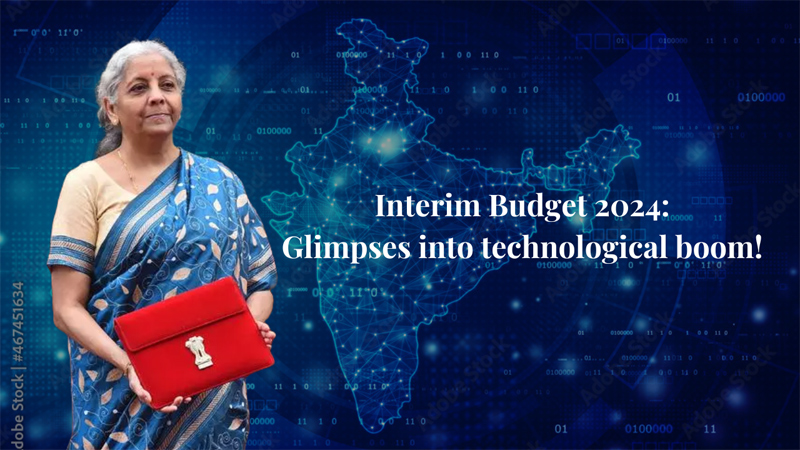
  • Interim Budget 2024: Glimpses into technological boom!

    Interim Budget 2024: Glimpses into technological boom!

    Mumbai: With the unveiling of the Interim Budget 2024 by union minister of finance Nirmala Sitharaman, a wave of anticipation and excitement sweeps across industries. The budget unfolds a roadmap for India’s economic trajectory, emphasising technology, innovation, and skill development.

    Following are some of the key highlights and reactions from industry leaders, shedding light on the potential impacts on technological advancements.

    Beyond Key founder and CEO Piyush Goel

    In 2024, a transformative surge in technology is predicted, propelled by India’s unwavering commitment to skill development and innovation, as articulated by finance minister Nirmala Sitharaman. The Skill India Mission has actively educated 1.4 crore youths, imparting essential skills and upskilling 54 lakh youths, alongside establishing 3,000 new ITIs. The academic arena has witnessed remarkable growth with the establishment of seven IITs, sixteen IITs, seven IIMs, 15 AIIMSs, and 390 universities, fostering a strong atmosphere for technological advancement. Furthermore, the fiscal budget 2024 allocates resources to increase the number of airports, rail infrastructure, and other infrastructure, undoubtedly impacting mass lives. Artificial Intelligence (AI) would become a pivotal force, and stronger funding to harness its benefits is poised to elevate the technological landscape. Corporate sectors also stand to benefit from the decreased corporate tax of 22 per cent, fostering a greater favorable commercial enterprise environment and selling economic growth through accelerated investments and expansion opportunities. The budget’s strategic investments underscore India’s steadfast determination to a dynamic and tech-driven future.

    AdCounty Media CFO Abbhinav R Jain

    The Interim budget marks a significant move towards India’s digitisation. In the budget 2023-24, the government announced an outlay of 4795.24 crore for its Digital India program which ensured universal access to high-speed internet and digital literacy initiatives. This year, in a bid to bolster R&D in sunrise domains, Honourable FM, Nirmala Sitharaman, announced a corpus of one lakh crore with a 50-year interest-free loan. Dubbing this period as the golden era for innovation and entrepreneurship, she went on to say that the corpus will provide long-term financing or refinancing with long tenures and low or nil rates. The budget, undeniably, is leaving no stone unturned to bridge the gap between youth and technology to realise the aim of a fully developed India (“Viksit Bharat”) by 2047.

    Tagglabs founder Hariom Seth

    An innovative landmark statement was made by Nirmala Sitharaman, who announced A corpus of 1 lakh crore rupees 50-year interest-free loan with low or nill interest rates to encourage and scale up research and innovation. This marks a landmark in the history of tech startups and companies, providing a one-of-a-kind chance to explore distant shores and leave an indelible mark on the ‘Make in India’ dream.

    The provision of a corpus of 1 lakh crore rupees as 50-year interest-free loans with low or no interest rates is a significant move that can greatly benefit companies. This initiative increases liquidity, allowing companies to invest in research, development, and innovation without the burden of immediate repayment. It also mitigates financial risk associated with borrowing due to the long tenure of the loan and the low or nil interest rates. Furthermore, it encourages innovation as companies can focus more on creating innovative products and solutions with easier access to funds. The overall cost of the loan decreases due to lower interest rates, leading to savings that can be used for other business activities.

    Lastly, timely repayment of such loans can enhance a company’s credit profile, making it easier to secure future funding. However, while these benefits can provide a significant boost to companies, it’s also important for them to manage these funds wisely to avoid potential financial challenges.

    DashLoc CEO and co-founder Sumit Singh

    The budget has clearly exhibited that the government is extending full-fledged support towards adoption of technology across sectors. The special mention that deeptech in defence section gained in the speech truly indicates that the government is going to support emerging technologies in crucial sectors too. Alongside, it is a matter of pride that STEM courses have seen aggressive enrolment from women. We can expect a quality and skilled workforce in India that will keep the wheel running towards striking progress.

    Almonds AI co-founder & CEO Abhinav Jain

    Government’s forward-looking budget aligns remarkably well with the impetus required for the AI and technology sectors. The focus on digital infrastructure lays a robust foundation for innovation, and the commitment to skill development among youth mirrors the mission to empower the next generation with AI capabilities. The support for electric vehicles and clean energy initiatives resonate with the Green Loyalty Program, reinforcing belief in sustainable technological advancement. This budget not only catalyzes a tech-driven economy but also heralds a golden era for companies like ours at the intersection of AI and market technology. We are eager to contribute to this transformative journey and commend the government’s vision for a tech-empowered, inclusive growth trajectory.

    Superbot co-founder & director Sarvagya Mishra

    It’s encouraging that the government recognizes the importance of addressing skill development to meet the demand for a high-quality workforce in the emerging technology sector, crucial for India’s ambitious goal of a $5 trillion economy. All the initiatives mentioned in the Interim budget speech like establishment of more IITs, IIITs, STEM courses etc., are cementing the foundation of the growing India, which is youth. Commendably, the government’s embrace of deeptech in critical sectors like defense underscores our country’s progressive stance. Given that R&D is a capital-intensive step for businesses in deeptech, blockchain, machine learning, and generative AI, increased allocation towards MUDRA schemes and the announcement of a one-lakh crore corpus with 50-year interest-free support will undoubtedly fuel technological growth.

    NeuralGarage co-founder & CEO Mandar Natekar

    The interim budget presented today shall provide an impetus to an ecosystem of startups, technology companies and aspirants, providing them with ample opportunities to set-up, enhance technological offerings and bolster innovation. These are positive sentiments that will further strengthen India’s technology landscape through research and innovation. A corpus of Rupees One Lakh Crore will be established with a fifty-year interest-free loan. The corpus will provide long-term financing or refinancing with long tenors and low or nil interest rates. The private sector will witness a steep growth with innovation being at the forefront. Further, the government has extended tax benefits for start-ups to 31 March 2025 and withdrawn some outstanding direct tax demands. Deeptech and GenAI have the potential to revolutionize a variety of sectors. Ethical practices and its usage will lead to Indian brands and artists being recognised from local to global markets creating a seamless experience and put India on the global map for technological prowess.

    Yatiken Software Solutions founder and CEO Alok Kashyap

    In line with the government’s ambitious vision of technology contributing 20-25 per cent to the GDP by 2025, this forward-looking budget charts a promising course for the IT sector. The allocation for EV infrastructure development is particularly noteworthy as it opens avenues for software development in EV systems, IoT integration, and data analytics. The one-lakh crore corpus for long-term financing is another indispensable boon for the IT industry, fostering innovation and research. Moreover, the Skill India Mission’s initiatives and tax benefits for startups provide a robust foundation for skill development and entrepreneurial growth.

    icogz MD Amit Tripathi

    The budget allocated Rs 8,000 crore for the national mission on quantum technologies and applications, which aims to boost research and innovation in quantum computing, communication, cryptography, and artificial intelligence. This is as per expected lines and what I had predicted in my pre budget expectations.

    The budget also proposed to set up a Data Centre Economic Zone to attract investments and create employment opportunities in the data centre industry, which is expected to grow at a CAGR of 23 per cent by 2025. Again on expected lines.

    The budget increased the tax deduction at source (TDS) on e-commerce transactions from one per cent to two per cent, which may affect the profitability and cash flow of e-commerce platforms and sellers.

    E-Factor Experiences Ltd MD Samit Garg

    The emphasis on digital transformation across sectors could encourage the adoption of advanced technologies in event management, like virtual reality, augmented reality, and AI, enhancing the audience experience. More investment in R&D would result in more availability of local resources, thereby pushing the costs down and making the solutions more affordable.