Tag: adcap

  • Adcap case put off to 27 April, court to hear plea challenging stay order

    Adcap case put off to 27 April, court to hear plea challenging stay order

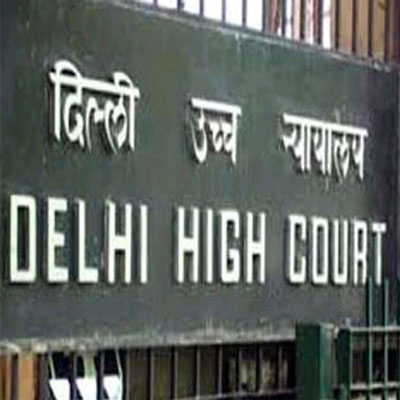
    NEW DELHI, 29 March: In a day of swift developments, the Delhi High Court listed the adcap case for 27 April when it will hear an application by intervener Home Cable Network Pvt Ltd seeking vacation of the order staying action against violating television channels.

    Early in the morning, a plea was made in a mention before Chief Justice G Rohini and Justice Jayant Nath on behalf of the Information and Broadcasting Ministry that a proposal was being contemplated to amend the relevant provision relating to limiting ads to 12 minutes an hour. Thereupon, the Court adjourned the matter for 21 July.

    However when the matter came up in the list, counsel Vivek Sarin of Home Cable pressed his application for vacation of stay. Thereupon, counsel for Discovery Communications said it wanted to press its application to come in as intervener.

    After hearing counsel for both sides, the judges agreed on early hearing and pre-poned the matter to 27 April.

    The Court had on 11 February adjourned the hearing to today when it had agreed to take up the application by Discovery Communications to intervene on the matter.

    Earlier on 27 November last year, the Court chaired by the Chief Justice had said the matter had been pending for some time and therefore it will hear and conclude the case in the next hearing.

    On that day, the I and B Ministry had informed the Court that it was in talks with the News Broadcasters Association and other stakeholders on the issue of the advertising cap of 12 minutes per hour.

    This was the first time that the Ministry had put in an appearance in the petition filed by the News Broadcasters and others against the Telecom Regulatory Authority of India and others.

    Home Cable Network Pvt. Ltd had been permitted to intervene on 5 January and the Court had agreed to consider contentions on whether pay channels should be permitted to carry commercials in view of subscription fee charged by them. Home Cable Counsel Vivek Sarin had told the court that the petitioners had not disclosed that broadcasters had given their consent to observe the 10+2 ad cap rule under the Cable Television Network Regulation Rules 1994 and the Act that followed a year later and also under the Uplink and Downlink Guidelines. He also said pay TV broadcasters should not be allowed to take ads as they charged subscription fee.

    The case, filed by 9x Media, News Broadcasters Association and others against the Telecom Regulatory Authority of India and the Union Government, has so far been adjourned from time to time on the plea that the government and the broadcasters are in talks on this issue.

    (It is learnt by indiantelevision.com that this comes in the wake of a statement made by Minister Arun Jaitley in January last year that there should be no ad cap in the print or electronic media, However, no instructions have been issued in this regard by the Minister so far,).

    The Court has already directed that the order that TRAI will not take any action against any channel pending the petition will continue. In an earlier hearing, the Court had, at the regulator’s instance, directed that all channels keep a record of the advertisements run by them.

    The NBA had challenged the ad cap rule, contending that TRAI does not have jurisdiction to regulate commercial airtime on television channels. Apart from the NBA, the petitions have been filed by Sarthak Entertainment, Pioneer Channel Factory, E24 Glamoru, Sun TV Network, TV Vision, B4U Broadband, 9X Media, Kalaignar, Celebrities Management, Eanadu Television and Raj Television.

    Meanwhille, complaints against fifteen broadcasters by TRAI on the adcap issue are also pending with the Chief Metropolitan Magistrate in Delhi.


  • Adcap case put off to 27 April, court to hear plea challenging stay order

    Adcap case put off to 27 April, court to hear plea challenging stay order

    NEW DELHI, 29 March: In a day of swift developments, the Delhi High Court listed the adcap case for 27 April when it will hear an application by intervener Home Cable Network Pvt Ltd seeking vacation of the order staying action against violating television channels.

    Early in the morning, a plea was made in a mention before Chief Justice G Rohini and Justice Jayant Nath on behalf of the Information and Broadcasting Ministry that a proposal was being contemplated to amend the relevant provision relating to limiting ads to 12 minutes an hour. Thereupon, the Court adjourned the matter for 21 July.

    However when the matter came up in the list, counsel Vivek Sarin of Home Cable pressed his application for vacation of stay. Thereupon, counsel for Discovery Communications said it wanted to press its application to come in as intervener.

    After hearing counsel for both sides, the judges agreed on early hearing and pre-poned the matter to 27 April.

    The Court had on 11 February adjourned the hearing to today when it had agreed to take up the application by Discovery Communications to intervene on the matter.

    Earlier on 27 November last year, the Court chaired by the Chief Justice had said the matter had been pending for some time and therefore it will hear and conclude the case in the next hearing.

    On that day, the I and B Ministry had informed the Court that it was in talks with the News Broadcasters Association and other stakeholders on the issue of the advertising cap of 12 minutes per hour.

    This was the first time that the Ministry had put in an appearance in the petition filed by the News Broadcasters and others against the Telecom Regulatory Authority of India and others.

    Home Cable Network Pvt. Ltd had been permitted to intervene on 5 January and the Court had agreed to consider contentions on whether pay channels should be permitted to carry commercials in view of subscription fee charged by them. Home Cable Counsel Vivek Sarin had told the court that the petitioners had not disclosed that broadcasters had given their consent to observe the 10+2 ad cap rule under the Cable Television Network Regulation Rules 1994 and the Act that followed a year later and also under the Uplink and Downlink Guidelines. He also said pay TV broadcasters should not be allowed to take ads as they charged subscription fee.

    The case, filed by 9x Media, News Broadcasters Association and others against the Telecom Regulatory Authority of India and the Union Government, has so far been adjourned from time to time on the plea that the government and the broadcasters are in talks on this issue.

    (It is learnt by indiantelevision.com that this comes in the wake of a statement made by Minister Arun Jaitley in January last year that there should be no ad cap in the print or electronic media, However, no instructions have been issued in this regard by the Minister so far,).

    The Court has already directed that the order that TRAI will not take any action against any channel pending the petition will continue. In an earlier hearing, the Court had, at the regulator’s instance, directed that all channels keep a record of the advertisements run by them.

    The NBA had challenged the ad cap rule, contending that TRAI does not have jurisdiction to regulate commercial airtime on television channels. Apart from the NBA, the petitions have been filed by Sarthak Entertainment, Pioneer Channel Factory, E24 Glamoru, Sun TV Network, TV Vision, B4U Broadband, 9X Media, Kalaignar, Celebrities Management, Eanadu Television and Raj Television.

    Meanwhille, complaints against fifteen broadcasters by TRAI on the adcap issue are also pending with the Chief Metropolitan Magistrate in Delhi.


  • Adcap case put off to 29 March; Discovery moves for  intervention, Home Cable seeks early hearing

    Adcap case put off to 29 March; Discovery moves for intervention, Home Cable seeks early hearing

    NEW DELHI: The Delhi High Court today adjourned the hearing of the adcap (advertising cap) challenge to 29 March, when it will also take up the application by Discovery Communications to intervene in the matter.

    While the matter was listed for today, it was put off to another date in view of pending cases before the court.

    In the last hearing on 27 November, the Court chaired by Chief Justice G Rohini said the matter had been pending for some time and therefore it will hear and conclude the case in the next hearing.

    On that day, the Information and Broadcasting Ministry had informed the Court that it was in talks with the News Broadcasters Association (NBA) and other stakeholders on the issue of the advertising cap of 12 minutes per hour. This was the first time that the Ministry had put in an appearance in the petition filed by the NBA and others against the Telecom Regulatory Authority of India (TRAI) and others.

    On an oral plea by intervenor Home Cable Network Pvt Ltd counsel Vivek Sarin for early hearing, the Court directed him to file a written application with the relevant contentions for early hearing, saying that the court would consider it.

    Even as Discovery Communications sought to press its plea for being impleaded as an intervenor, the Court said this would also be considered at the next hearing.

    Home Cable Network was permitted to intervene on 5 January and the Court had agreed to consider contentions on whether pay channels should be permitted to carry commercials in view of subscription fee charged by them. Sarin had told the court that the petitioners had not disclosed that broadcasters had given their consent to observe the 10+2 ad cap rule under the Cable Television Network Regulation Rules 1994 and the Act that followed a year later and also under the Uplink and Downlink Guidelines.

    He also said pay TV broadcasters should not be allowed to take ads as they charged subscription fee.

    The case, filed by 9X Media, NBA and others against TRAI and the Union Government, has so far been adjourned from time to time on the plea that the government and the broadcasters are in talks on this issue.

    Indiantelevision.com has learnt that this comes in the wake of a statement made by Minister Arun Jaitley in January last year that there should be no ad cap in the print or electronic media. However, no instructions have been issued in this regard by the Minister so far.

    The Court has already directed that the order that TRAI will not take any action against any channel pending the petition will continue. In an earlier hearing, the Court had, at the regulator’s instance, directed that all channels keep a record of the advertisements run by them.

    The NBA had challenged the ad cap rule, contending that TRAI does not have jurisdiction to regulate commercial airtime on television channels.

    Apart from the NBA, the petitions have been filed by Sarthak Entertainment, Pioneer Channel Factory, E24 Glamoru, Sun TV Network, TV Vision, B4U Broadband, 9X Media, Kalaignar, Celebrities Management, Eanadu Television and Raj Television.

    Meanwhile, according to information available with this website, the Chief Metropolitan Magistrate in Delhi is already hearing a case on this issue against 15 broadcasters. It is further learnt that officials of these channels have obtained bail and the matter is pending before the Magistrate.

  • Adcap case put off to 29 March; Discovery moves for  intervention, Home Cable seeks early hearing

    Adcap case put off to 29 March; Discovery moves for intervention, Home Cable seeks early hearing

    NEW DELHI: The Delhi High Court today adjourned the hearing of the adcap (advertising cap) challenge to 29 March, when it will also take up the application by Discovery Communications to intervene in the matter.

    While the matter was listed for today, it was put off to another date in view of pending cases before the court.

    In the last hearing on 27 November, the Court chaired by Chief Justice G Rohini said the matter had been pending for some time and therefore it will hear and conclude the case in the next hearing.

    On that day, the Information and Broadcasting Ministry had informed the Court that it was in talks with the News Broadcasters Association (NBA) and other stakeholders on the issue of the advertising cap of 12 minutes per hour. This was the first time that the Ministry had put in an appearance in the petition filed by the NBA and others against the Telecom Regulatory Authority of India (TRAI) and others.

    On an oral plea by intervenor Home Cable Network Pvt Ltd counsel Vivek Sarin for early hearing, the Court directed him to file a written application with the relevant contentions for early hearing, saying that the court would consider it.

    Even as Discovery Communications sought to press its plea for being impleaded as an intervenor, the Court said this would also be considered at the next hearing.

    Home Cable Network was permitted to intervene on 5 January and the Court had agreed to consider contentions on whether pay channels should be permitted to carry commercials in view of subscription fee charged by them. Sarin had told the court that the petitioners had not disclosed that broadcasters had given their consent to observe the 10+2 ad cap rule under the Cable Television Network Regulation Rules 1994 and the Act that followed a year later and also under the Uplink and Downlink Guidelines.

    He also said pay TV broadcasters should not be allowed to take ads as they charged subscription fee.

    The case, filed by 9X Media, NBA and others against TRAI and the Union Government, has so far been adjourned from time to time on the plea that the government and the broadcasters are in talks on this issue.

    Indiantelevision.com has learnt that this comes in the wake of a statement made by Minister Arun Jaitley in January last year that there should be no ad cap in the print or electronic media. However, no instructions have been issued in this regard by the Minister so far.

    The Court has already directed that the order that TRAI will not take any action against any channel pending the petition will continue. In an earlier hearing, the Court had, at the regulator’s instance, directed that all channels keep a record of the advertisements run by them.

    The NBA had challenged the ad cap rule, contending that TRAI does not have jurisdiction to regulate commercial airtime on television channels.

    Apart from the NBA, the petitions have been filed by Sarthak Entertainment, Pioneer Channel Factory, E24 Glamoru, Sun TV Network, TV Vision, B4U Broadband, 9X Media, Kalaignar, Celebrities Management, Eanadu Television and Raj Television.

    Meanwhile, according to information available with this website, the Chief Metropolitan Magistrate in Delhi is already hearing a case on this issue against 15 broadcasters. It is further learnt that officials of these channels have obtained bail and the matter is pending before the Magistrate.

  • Adcap case on 11 February to consider if pay channels have right to show commercials

    Adcap case on 11 February to consider if pay channels have right to show commercials

    NEW DELHI: The Delhi High Court, which is slated to hear the advertising cap (adcap) challenge case on 11 February, today agreed to consider contentions on whether pay channels should be permitted to carry commercials in view of subscription fee charged by them. 


    In a brief hearing, counsel Vivek Sarin on behalf of Home Cable Network Pvt. Ltd, which has come as an intervenor in the case, also told the Court that the petitioners had not disclosed the fact that broadcasters had given their consent to observe the 10+2 minutes ad cap rule under the Cable Television Network Regulation Rules 1994 and the Act that followed a year later and also under the Uplink and Downlink Guidelines.  


    Defending the plea that pay TV broadcasters should not be allowed to take ads as they charged subscription fee, Sarin wanted the Court to order that offending pay TV broadcasters should deposit the advertisement revenue earned during the period from 17 December, 2013 onwards in the Consumer Welfare Fund maintained by the Union Government.


    He said the Standard of Quality of Services Regulation 2012 and the subsequent amendment of December 2013 was clear that all channels had to observe the adcap.


    However, Sarin also sought to argue that since pay channels charge a subscription fee, they should not be permitted to air ads and even if they do so, then the subscription charges should be adjusted accordingly. He said that the amendment of 17 December, 2013 to the Standard of Quality of Services Regulation should be modified accordingly and the protection given by the subsequent order of 27 November last should also be modified.


    The case, filed by 9x Media, News Broadcasters Association (NBA) and others against the Telecom Regulatory Authority of India (TRAI) and the Union Government, has been adjourned from time to time on the plea that the government and the broadcasters are in talks on the issue.


    Sarin wanted issuance of directions to the TRAI to enforce the 2012 Standards of Quality of Service (Digital Addressable Cable TV Systems) Regulations as amended in 2013 and the provisions of rule 7(11) of the Cable TV Network Rules 1994 against the offending pay TV broadcasters.


    He also sought directions to TRAI and the Union Government to enforce the Clause 5.1 of the Down Linking Guidelines and the undertakings given by the Pay TV Broadcasters under Form A 1 against the pay TV broadcasters.


    In the last hearing in November 2015, the Information and Broadcasting Ministry informed the Delhi High Court that it was in talks with the NBA and other stakeholders on the issue of the advertising cap of 12 minutes per hour on television channels.


    Consequently, the Court put off hearing of the matter to 11 February, 2016 but observed that the matter had been pending for some time and therefore it will hear and conclude the case in the next hearing.


    The intervention application by multi system operator (MSO) Home Cable Network and its head Vikki Chaudhary said it wanted to intervene as it was directly affected by the outcome of the present petition and “the ordinary subscribers are unduly burdened with unjustified charges when the cost of operating the channels can be recovered from the advertisement revenue. The said cost includes notional profits also.”


    The application wanted the NBA petition to be dismissed and added, “The pay channel broadcasters are profiteering at the expense of subscribers and the DPOs. There is no justification for changing monthly subscription when commercial advertisements are inserted. The Standards of Quality of Service (Digital Addressable Cable TV Systems) Regulations 2012 (with Amendments thereafter) is justified to the extent they are applicable to pay channels. The pay channel broadcasters cannot charge the subscription fee while inserting commercials into the content or in the alternative, the subscribers have to be compensated for the revenue earned on the basis of their being subscribers of the channels.”


    In the last two hearings on 8 and 23 September, the NBA had sought the adjournment on the ground that the matter was under discussion with the Ministry to seek certain clarifications.


    It is learnt by Indiantelevision.com that this comes in the wake of a statement made by I&B Minister Arun Jaitley in January last year that there should be no ad cap in the print or electronic media, However, no instructions have been issued in this regard by Jaitley so far.


    The Court in an initial hearing of this case directed that TRAI will not take action against any channel violating the ad cap rule until the hearing of petition is over. The Court has since reiterated that this order will continue. In an earlier hearing, the Court had, at the regulator’s instance, directed that all channels keep a record of the advertisements run by them.


    The NBA had challenged the ad cap rule, contending that TRAI does not have jurisdiction to regulate commercial airtime on television channels. Apart from the NBA, petitions have been filed by Sarthak Entertainment, Pioneer Channel Factory, E24 Glamour, Sun TV Network, TV Vision, B4U Broadband, 9X Media, Kalaignar, Celebrities Management, Eenadu Television and Raj Television.

  • Adcap case to be heard on 11 February, MIB informs Court matter under discussion with broadcasters

    Adcap case to be heard on 11 February, MIB informs Court matter under discussion with broadcasters

    NEW DELHI, 27 November: The Information and Broadcasting Ministry today informed the Delhi High Court that it was in talks with the News Broadcasters Association and other stakeholders on the issue of the advertising cap of 12 minutes per hour.


    Consequently, the Court put off hearing of the matter to 11 February. This is the first time that the Ministry has put in an appearance in the petition filed by the News Broadcasters and others against the Telecom Regulatory Authority of India and others.


    The Bench observed that the matter had been pending for some time and therefore it will hear and conclude the case in the next hearing.


    Counsel for NBA Nisha Bhambhani also said that talks were on with the Ministry in this regard.


    Meanwhile in an intervention MSO Home Cable Network (P) Ltd said it wanted to intervene as it was directly affected by the outcome of the present petition. Lawyer Vivek Sarin appearing for Home Cable said in the intervention application that “the ordinary subscribers are unduly burdened with unjustified charges when the cost of operating the channels can be recovered from the advertisement revenue. The said cost includes notional profits also.”


    The application wanted the NBA petition to be dismissed and added: “The Pay channel broadcasters are profiteering at the expense of subscribers and the DPO’s. There is no justification for changing monthly subscription when commercial advertisements are inserted. The Standards of Quality of Service (Digital Addressable Cable TV Systems) Regulations 2012 (with Amendments thereafter) is justified to the extent they are applicable to Pay Channels. The pay channel broadcasters cannot charge the subscription fee while inserting commercials into the content or in the alternative, the subscribers have to be compensated for the revenue earned on the basis of their being subscribers of the channels.”


    In the last two hearings on 8 and 23 September, the NBA had sought the adjournment on the ground that the matter was under discussion with the Ministry to seek certain clarifications.


    (It is learnt by indiantelevision.com that this comes in the wake of a statement made by Minister Arun Jaitley in January this year that there should be no ad cap in the print or electronic media, However, no instructions have been issued in this regard by the Minister so far,).

    The order that TRAI will not take any action against any channel pending the petition will continue. In an earlier hearing, the Court had, at the regulator’s instance, directed that all channels keep a record of the advertisements run by them.
      
    The NBA had challenged the ad cap rule, contending that TRAI does not have jurisdiction to regulate commercial airtime on television channels.
     
    Apart from the NBA, the petitions have been filed by Sarthak Entertainment, Pioneer Channel Factory, E24 Glamoru, Sun TV Network, TV Vision, B4U Broadband, 9X Media, Kalaignar, Celebrities Management, Eanadu Television and Raj Television.
     

    The news and regional broadcasters fear that the capping of commercial airtime will curtail their ad revenues. They also argue that the ad cap must be brought only after the benefits of cable TV digitisation start showing. 


     Meanwhile, TRAI had three months earlier released results of their records which show that around 36 news channels apart from 105 General Entertainment Channels are violating the ad cap by telecast ads of more than 12 minutes an hour.

  • Delhi HC adjourns ad cap case to 25 September

    Delhi HC adjourns ad cap case to 25 September

    Updated: 03:46 PM


    NEW DELHI: The Delhi High Court today once again adjourned – this time to 25 September – the final hearing of the bunch of petitions challenging the ad cap sort to be imposed by the Telecom Regulatory Authority of India (TRAI) as the authority has not finalised its rejoinder.


    In any case, Chief Justice G Rohini and Justice Rajiv Sahai Endlaw also noted that the Court did not have sufficient hearing at present for a final hearing in view of the large pendency of other cases.


    However, the assurance by TRAI given in an earlier hearing that it will not take any coercive action under the ad-cap regulations will continue.
     
    However, the Court had said the petitioners have to submit a weekly report on the consumption of commercial airtime in a clock hour.


    This matter had initially been filed before the Telecom Disputes Settlement and Appellate Tribunal (TDSAT) but fresh petitions were filed in the High Court after the Supreme Court ruled that TRAI regulations could not be adjudicated upon by the Tribunal.


    During the last hearing on 6 May, TRAI Counsel Saket Singh had said that the Cable TV Networks (Regulations) Rules of 1994 were clear about the ad cap and TRAI had only sought to implement that.
     
    However, Neeraj Krishna Kaul who represented one of the petitioners – News Broadcasters Association – argued that the case involved important constitutional issues as there were cases where the freedom of the press and freedom of speech and expression are involved and the case cannot be decided without having all facts on record.
     
    The case had been first heard in the High Court on 17 December last year and 13 March this year.


    The NBA had challenged the ad cap rule, contending that TRAI does not have jurisdiction to regulate commercial airtime on television channels.


    Apart from the NBA, the petition have been filed by Sarthak Entertainment, Pioneer Channel Factory, E24 Glamoru, Sun TV Network, TV Vision, B4U Broadband, 9X Media, Kalaignar, Celebrities Management, Eanadu Television and Raj Television.


    The news and regional broadcasters fear that the capping of commercial airtime will curtail their ad revenues. They also argue that the ad cap must be brought only after the benefits of cable TV digitisation start kicking in.


    Earlier this year, the Court had also granted interim relief to Hyderabad-based MAA Television Network against the ad cap regulation. However, the court had also observed that the cap on advertisements is a ‘reasonable exercise’.


    Four major broadcast networks—Star India, Zee Entertainment, Multi Screen Media and TV18 Group—are following the regulations.

  • There is a Government in my TV

    There is a Government in my TV

    From the days of a single Doordarshan channel where one had to watch Krishidarshan and pretend that one is enjoying it, Indian TV has come a long way.  The choice of channels is awesome, sometimes even exhausting. There is music. There are movies. There are soaps. There is news. There is education and there are a host of special interest programmes and channels. TV is no longer just colour. If one is willing to pay for it, it is full HD with Dolby Surround Sound.


    Indian Government in general and a succession of Ministers of Information and Broadcasting have played a stellar role in this progress. They have been supported by outstanding bureaucrats – from Secretaries of I&B at the top to Joint Secretaries. They have been friends of the Indian public and accessible to the industry. How much the industry values the caliber and integrity of these people individually is reflected in the fact that a couple of years ago, by popular vote the industry picked Mrs Ambika Soni as the Impact Person of the year.


    That said, government actions in the last year or two have raised a question in many minds about the role the Government should be playing in the world of media. Not many will debate that Government has a role to play in setting the policy for media. And that the policy has to cover a number of areas.  Content to the extent it can impact law and order or public’s sense of decency for one.  Foreign investment for another. These two policy areas are relevant to all media. The third are where TV, Internet and probably radio are unique is the pace of technological advancement.  Various components of the industry have to move forward in unison to commercialize technological innovations and make them accessible to all. And to that extent government must be involved in setting these technological standards.


    Beyond that, Government’s involvement in issues like adcap and TV audience measurement in truth is hard to justify.  In the courts and tribunals, one can advance arguments referring to clauses of acts to justify these ‘policies’. Examples of anything can be found if one looks at government regulations around the world to support a government’s stand.


    But let us pause and look at some of these questions dispassionately, honestly.  What is not so unique about TV that it has advertising. If the government does not prescribe the max percentage of advertising a newspaper can carry or a website can carry, why should it prescribe a limit in the case of TV?


    What is not unique about TV is that advertisers want audiences of each media vehicle measured so that they may rationally decide the price they will pay for it. If the government does not prescribe guidelines for print readership measurement or internet engagement measurement, why should it be involved in setting guidelines for TV ratings measurement?


    Fewer regulations in important areas of policy and their strong enforcement make for a healthy, economically vibrant society.  Government’s involvement in setting ‘policy’ in dozens of micro-areas makes for a high-cost uncompetitive economy. Perhaps the incoming Government will take heed and pull out of regulating these micro-areas that are best left to the market forces.


    (Arvind Sharma, outgoing chairman of Leo Burnett, was the Guest Editor Of the Day at Indiantelevision.com)