Tag: Ad Tech

  • Lemma disrupts DOOH CMS with AI-powered free platform ‘Lemma Phi’

    Lemma disrupts DOOH CMS with AI-powered free platform ‘Lemma Phi’

    MUMBAI: The digital out-of-home (DOOH) advertising landscape is about to experience a shake-up as Lemma, a pioneer in omnichannel digital advertising, unveils ‘Lemma Phi’, an advanced, AI-powered free content management system (CMS). With this revolutionary platform, DOOH screen owners can ditch hefty CMS costs and reinvest those savings into growing their businesses while seamlessly connecting to global programmatic demand.

    With AI at its core, Lemma Phi doesn’t just manage screens—it transforms them into smarter, revenue-generating assets. It automatically classifies OOH media based on location, audience demographics, and seasonal footfall variations, ensuring that advertisers find the perfect screen for their campaigns without breaking a sweat.

    Packed with AI-driven tools, it takes the grunt work out of DOOH management, making operations simpler, smarter, and more efficient. Key features include:

    1    AI-powered discovery tool: This automated matchmaking genius connects global brands with the most suitable DOOH inventory based on real-time data.

    2    Auto categorisation of screens & creatives: Say goodbye to manual tagging—Lemma Phi automatically sorts screens by type (indoor, outdoor, transit, etc.), making onboarding seamless.

    3    AI-powered floor rate recommendations: Stop guessing—Lemma Phi suggests optimal floor rates based on live market data, ensuring competitive pricing.

    4    Energy-saving AI brightness control: The system adjusts screen brightness dynamically based on light conditions, cutting operational costs and championing sustainability.

    “Why pay for something that should be readily available and easy to manage from anywhere?” questioned Lemma founder & CEO Gulab Patil. “With Lemma Phi, we are making access to powerful DOOH CMS technology free, enabling screen owners of all sizes to maximise inventory value and drive revenue growth.”

    He added, “This mobile-first platform, combined with an expanded feature suite, is not just a CMS; it’s a catalyst for innovation and revenue generation in the DOOH ecosystem.”

    Lemma Phi doesn’t just stop at AI-powered tools—it’s designed for effortless and scalable management:

    1    User-friendly interface: Whether you’re a tech wizard or a total newbie, Lemma Phi makes content management intuitive and accessible.

    2    Scalability & reliability: Handles networks of all sizes, from small indoor displays to massive 100-foot billboards.

    3    Smart screen grouping & scheduling: Effortlessly organise screens and sync content with precision.

    4    Remote control & monitoring: Adjust screen power, brightness, and content playback—from anywhere.

    5    Real-time dashboard & alerts: Stay in control with live reports on screen status, content performance, and analytics.

    Lemma Phi ensures that screen owners stay ahead of the game with cutting-edge automation, eliminating inefficiencies while boosting revenue potential. With AI doing the heavy lifting, screen operators can focus on expanding their networks and driving business growth.

    So, if you’re in the DOOH business, stop paying for CMS and start growing your network with Lemma’s new brainchild.

  • VDO.AI report outlines 2025 publisher profitability strategies

    VDO.AI report outlines 2025 publisher profitability strategies

    MUMBAI: What’s next for digital publishers navigating the turbulent AdTech seas?

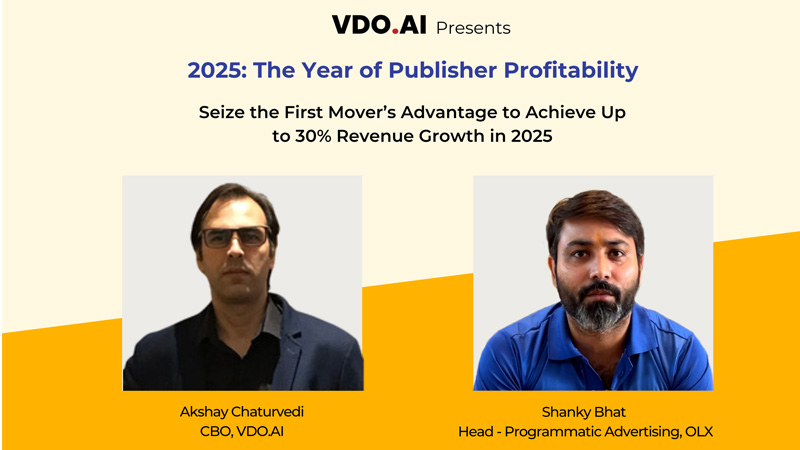
    VDO.AI, a global AdTech powerhouse, has released its much-anticipated “2025: The Year of Publisher Profitability” report, packed with actionable insights to help publishers scale revenue in the face of industry challenges. If you thought the digital ad landscape couldn’t get any trickier, think again—this report doesn’t just highlight the hurdles but lays out the tools to leap over them.

    Did you know mobile advertising accounted for over 60 per cent of digital ad revenue in 2024, hitting a jaw-dropping $400 billion? In 2025, this figure is projected to grow even more, with native ads stealing the show. With advanced targeting and contextual alignment, native ads are expected to deliver 15-20 per cent higher revenue growth. For publishers, this isn’t just a trend; it’s a revenue revolution.

    Want to know the secret sauce for better profitability in 2025? The report points to premium ad formats like video and native ads as game-changers. Rewarded ads—those interactive, opt-in ads that users love—are set to drive a 30 per cent revenue increase alongside an 18 per cent jump in eCPM.

    What about interstitial ads? Brace yourself. With improved strategies and placements, these full-screen gems could make up more than 70 per cent of ad revenue in 2025. Are you ready to take your ad strategy up a notch?

    Despite the usual mid-year dips, VDO.AI forecasts a 20 per cent year-over-year increase in global ad spend for Q1 2025. By Q4, this figure is expected to climb to a stellar 23 per cent. The big question is: are publishers equipped to ride this wave of growth?

    VDO.AI chief business officer Akshay Chaturvedi puts it best, “2025 ushers in a transformative era for publishers, demanding resilience and strategic evolution. This report provides actionable insights to navigate CPM challenges, optimise premium ad formats, and build quality partnerships. By aligning monetisation with engagement and embracing innovation, publishers can discover new growth opportunities and achieve sustained profitability, setting a benchmark for success in digital advertising.”

    OLX head of programmatic advertising, Shanky Bhat chimed in with high praise for interstitial ads, “Interstitial ads have emerged as a top performer for OLX, delivering higher CPMs and revenue impact compared to other formats. With VDO.AI’s expertise, we overcame initial challenges with in-app integrations and now enjoy seamless ad placements. Their consistent results and collaborative approach make them a trusted partner, driving substantial revenue growth and positioning OLX for continued success.”

    The report doesn’t stop at trends; it’s a masterclass in digital advertising strategy. Among its key insights:

    . Video formats like in-stream and out-stream will continue leading revenue charts with improved engagement metrics.

    . Capitalising on seasonal ad surges is crucial, with tailored strategies for each quarter.

    . Choosing the right technology and forming premium SSP/DSP partnerships will be critical for transparency, performance, and competitive CPMs.

    VDO.AI’s report proves that success in digital advertising is about embracing innovation, investing in quality partnerships, and being bold with your strategies. Publishers who adapt will not just survive but thrive in 2025’s challenging landscape.

    If you’re a publisher looking to future-proof your strategies, this report isn’t optional reading—it’s your 2025 survival guide. Ready to dive into a transformative year for AdTech?


  • Siddharth Dabhade hangs up his boots at MIQ, joins Lemma

    Siddharth Dabhade hangs up his boots at MIQ, joins Lemma

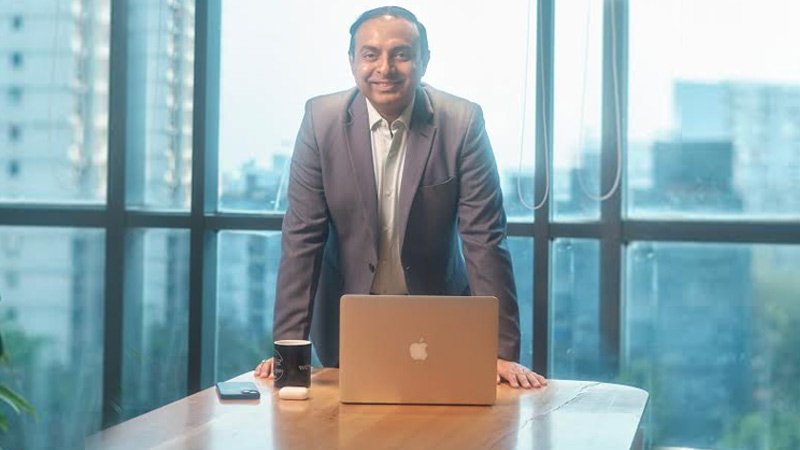
    MUMBAI: After 24 years of navigating the competitive corridors of tech giants like IBM, Microsoft, Google, and Criteo, Siddharth Dabhade steps into the limelight with a new challenge.

    His journey from the boardrooms of global multinationals to the forefront of cutting-edge innovation now finds him driving Lemma’s vision of revolutionising the digital out-of-home (DOOH) landscape.

    As the newly appointed CBO, performance business at Lemma, Dabhade’s mission is clear: to take this omnichannel platform to unprecedented heights with its trailblazing, outcome-focused DOOH solutions.

    Can his wealth of expertise and transformative leadership redefine the boundaries of advertising?

    The stage is set for a new chapter in Lemma’s growth story.

    Dabhade brings over 24 years of leadership experience in the digital advertising and technology sectors. Before joining Lemma, Dabhade served as the MD at MIQ, where he successfully launched and scaled commercial operations across India and China. He has held key leadership roles at industry giants such as IBM, Microsoft, Google, and Criteo, amassing expertise in P&L management, strategic advisory, business development, and customer relationships.

    At Google, Dabhade led the travel business for India, and during his tenure at Criteo, he significantly contributed to the APAC leadership team, driving the company’s growth in the Indian market.

    Commenting on his new role, Dabhade said, “As Digital Out-Of-Home (DOOH) continues to grow, it is now at the heart of omnichannel journeys, offering brands unparalleled opportunities to connect with consumers across screens and digital spaces. I’m excited to be a part of Lemma’s vision to pioneer this shift and to lead the expansion of the new solution as a powerful tool for outcome-driven growth through outdoor media globally.”

    Lemma founder & CEO, Gulab Patil welcomed Dabhade’s appointment, stating, “Siddharth’s track record of driving growth in the digital adtech and programmatic space makes him an invaluable addition to our team. With this solution, we’re offering brands the next level of full-funnel performance driven by OOH, and Siddharth will be key in ensuring its success across markets. His leadership will be instrumental in capitalising on the massive opportunities that OOH now presents in not only shaping but also driving results through a full-funnel approach, from Outdoor to outcomes.”

    Under Dabhade’s leadership, Lemma aims to reinforce its mission to transform emerging media through programmatic adtech. The company is focused on offering brands a comprehensive outdoor-to-outcome solution, leveraging DOOH to drive measurable results. This strategic expansion signals a pivotal moment in Lemma’s journey, positioning it at the forefront of the $65 billion global OOH market.

  • Hathway and Den bring Invidi Tech’s addressable ad tech to digital cable TV

    Hathway and Den bring Invidi Tech’s addressable ad tech to digital cable TV

    MUMBAI: Invidi Technologies, a pioneer in addressable advertising technology, has announced a ground-breaking partnership with Hathway Digital Ltd. (Hathway Digital), a wholly owned subsidiary of Hathway Cable & Datacom Limited (Hathway)  and Den Networks Ltd. (Den), India’s leading multi-system operators (MSOs). This collaboration marks a significant step in transforming the digital cable TV advertising landscape by introducing, for the first time, digital cable TV markets advanced targeted ad solutions to Hathway Digital  and Den’s extensive distribution network. This partnership will help in addressing the pressing need of the current day and age of reaching the right audience in the right markets in the most economical way. 

    Both Hathway Digital and Den will leverage Invidi Technologies’ cutting-edge ad tech through this strategic alliance to deliver highly targeted and personalised advertisements to diverse audiences. This solution will ensure anomalies of linear TV ads is addressed and they  are delivered with the required advertiser’s customer profile cohorts. This innovative approach will open new avenues, improve media buying efficiencies and allow brands to reach specific viewer segments with tailored messages, enhancing the relevance and effectiveness of their money spent on ad campaigns.

    Says Invidi Technologies chief operating officer Prasad Sanagavarapu: “Our collaboration with both Hathway and Den represents a major advancement for content owners, viewers, and advertisers alike. By deploying Invidi’s  addressable TV solutions, Hathway and Den will enable brands to optimise their marketing spend by delivering relevant ads directly to their target audiences. This partnership underscores our commitment to enhancing the Indian advertising ecosystem with state-of-the-art technology.”

    Adds a Den representative:  “We’re excited to integrate Invidi’s technology into our operations. This partnership is a game-changer for our advertising partners, giving them the ability to target their audiences with unprecedented precision. For our subscribers, it means receiving more relevant and engaging content, which enhances their overall viewing experience. By bringing Invidi’s  advanced solutions to the Indian market, we’re not just improving our ad offerings but also providing our subscribers with more relevant content and less ad clutter.”

    “We are delighted to bring first time in digital cable TV, targeted ad solutions and partnering with Invidi Technologies represents a major milestone in our commitment to delivering cutting-edge solutions to our advertisers,” points out a Hathway representative. “This partnership will redefine the ads on digital cable TV and enable us to offer a new level of precision in linear TV advertising. With this, brands can connect with their audiences more meaningfully.”

    Addressable TV advertising represents a departure from traditional broad-spectrum TV ads. Unlike conventional methods, which cast a wide net, addressable ads allow for precise targeting based on viewer demographics, interests, and behaviours. This tailored approach not only improves the relevance of the advertising content but also boosts engagement and maximises the return on investment for advertisers by minimising wasted impressions.

    Combining Hathway Digital and Den’s extensive distribution network and reach with Invidi’s advanced targeting capabilities, this partnership will deliver a robust ad solution that bridges the gap between linear digital cable TV’s wide audience and digital precision targeting, providing brands with a powerful tool to connect more effectively with their ideal customers.

    (Pix: courtesy Barc)


  • GUEST COLUMN: The role of AI and ML in the media industry

    GUEST COLUMN: The role of AI and ML in the media industry

    Mumbai: There is truly no such thing as “show business!” We have seen the world of entertainment and media shape shift over the last few years, and more dramatically ever since the world around us changed in the wake of the pandemic. The entertainment industry showed a massive fillip during the lockdown years, but not in the way that was expected. The new age of media and social media platforms have transformed the way entertainment is consumed today, and the role of technology has become far more intrinsic along the way too. Everything from how we create, publish, and share textual, audio, and video content to the increasing accessibility of production technologies such as high-resolution cameras, content development software, and smartphones is changing. The landscape is burgeoning with tech-driven innovation both from the delivery and consumption ends of the spectrum.

    With revenue expected to exceed $9.5 billion in 2022 when video ad tech is taken into account, the importance of AI and ML in the media and entertainment sector can no longer be dismissed. While it may not have been an obvious use case earlier, today, harnessing AI and ML to better target homes with advertisements, automate more operations, and secure the operators’ content and services is only the tip of the iceberg. AI has already demonstrated its promise in the music business by producing beautiful tunes and in the world of art with a strong aesthetic influence. It will be interesting to see how AI in entertainment is likely going to have a marked influence on how people interact with movies, television shows, videos, sports, and games.

    Glimpses of this shift are already apparent today. Media firms realise the growing competition they face with new players in the market, right from OTT platforms to social media platforms, vying for the consumer’s attention. There is a swelling urgency to not only produce more content more rapidly but also ensure that the quality and intrigue of the content produced remains top-notch.

    Enter AI and ML.

    There are myriad applications for these two cutting edge technologies, to enable a massive uptick for media and entertainment businesses, right from beta testing of content to gauge interest to creating interactive content to even assessing the right platform for maximum success and viewership. There is a role for AI and ML to play the hero that saves the day at every juncture.

    Some of the emerging areas of application for AI and ML are:

    Knowing your audience: With increased choices comes the problem of plenty too. Audiences that were previously limited to a few platforms for satiating their entertainment appetite are inundated with a plethora of choices. In such a landscape, knowing audience preferences becomes business critical, and media companies that can harness the power of machine learning to understand their audiences more keenly are going to have a definite advantage as we move ahead by being able to provide relevant and engaging content to each individual every single time.

    Feel with your audiences: It’s not enough to just know who your audience is. A step up from the data intelligence that AI and ML provide is understanding how audiences feel each time they view content that is produced by you. Testing your audience’s emotions can help you dive deeper into how the content was consumed and perceived in order to make future bets that are likely to help you win viewer share and also ensure stickiness in an era when customer/viewer acquisition costs are only climbing up.

    Deliver to your audiences: How many times have you heard the phrase “right place, wrong time”? Marketing leaders understand the critical importance of timing in reaching out to customers. The same content that finds resonance at a particular time can have a diametrically opposite response when you catch the consumer at the wrong hour. Emotion AI can help you not only understand how much of the content delivered is falling on the right side of the scale to ensure better results for your targeted campaigns. Retiring the spray and pray approach could be very possible if advertisers and marketers can tap into the hidden potential that emotion AI helps unlock for all the video content that is being produced for their brands’ success currently.

    Engage your audience: If only we could read the minds of our users to know exactly what they have understood and where the gap remains, all our efforts to produce better content in any context would be multiplied. This function is offered by all major corporations, like YouTube, Netflix, Spotify, etc., to improve the dependability and usability of their services.

    AI is also capable of adjusting video quality for internet speed. AI can analyse the internet connections of various viewers in various regions to handle this issue, and it can compress videos without sacrificing their quality to provide a buffer-free streaming experience.

    Advertising and the media

    Advertising, design, and content promotion are just a few of the marketing and trade applications of artificial intelligence in the entertainment industry. The greatest AI algorithms to use when developing solutions for advertising and marketing that are results-driven. With the use of AI-driven marketing software apps, companies may address the needs and preferences of their audience, develop marketing plans, and create efficient customer-centric digital solutions. For instance, AI in the media sector may quickly produce hundreds of eye-catching graphic designs for advertising. Thanks to such cutting-edge and revolutionary technology, manual labour has been substantially reduced, and productivity has increased. Using emotion AI, the advertiser can understand the best demographic to pinpoint their campaign towards to get maximum output.

    For example, if the emotion AI indicates that a person gets the feelings of passion and attachment while watching a football match, it can help the sportswear company understand that this particular audience and this medium work best to reach them through their campaign. By checking the pre-launch creative intelligence output and post-launch creative intelligence output, the campaigns will become more focused.

    Development of AR/VR

    As we are already seeing with the usage of AR in advertising, it’s important to note that in addition to the fundamental use of AI in entertainment, AR and VR app development will also make this area more compelling and immersive. We will be able to watch events from all angles, enabling us to have experiences that are richer and better. AI will assist us in comprehending the sensation of the actual, live event. AI may, however, be used to produce interactive content for AR and VR. With a set of goggles and AI technology, the entertainment sector may work miracles and produce magnificent scenes.

    Consumer interest is naturally drawn to the creation of virtual reality content for cooking shows, reality shows, and live events and programmes based on artificial intelligence. Watching television and movies with true emotional effects won’t be a pipe dream with all these modern technological advancements; it will certainly become a reality. To make this a reality and to understand the concrete effect of the content, Emotion AI will be a tool that will be pathbreaking and extremely important for advancements in terms of what kind of content would be precise for different pieces and scenarios.

    Harnessing Emotion AI

    For any piece of content to succeed, gaining and sustaining the attention of the audience in question is key. If the audience isn’t engaged from the beginning, one has already lost the plot. It, therefore, becomes imperative that the industry puts its best foot forward by testing creatives before the final launch—it helps to gauge the potential. Pre-testing content using Emotion AI helps empower the creators to better understand how pre-launch video creative intelligence can help drive better business outcomes. Emotion AI testing with a pre-defined target audience helps content creators ascertain whether the content is evoking the right kind of reciprocal emotional response. It empowers the creators to understand zones of high and low engagement and modify content for maximum engagement. The organisations can have the emotional AI response outputs mapped to multiple variables of age, gender, geography, time of day, etc., ensuring that the content is never out of flavour.

    Subtitles and automatic transcription

    International media companies should provide material that is relevant to audiences in different locations. As a result, businesses must offer precise and appealing multilingual subtitles for their video content platforms. It may take thousands of hours and effort to hand write subtitles for several films and TV series in a variety of languages. Additionally, finding the ideal applicant to accurately translate text into several languages is challenging.

    Thus, to bridge this existing gap, the powers of AI-based technologies like deep learning and machine learning are harnessed for natural language processing to transcribe movies, music videos, and TV episodes into many languages. To reach a larger audience and foster user engagement, the voice of the movie is translated into several languages with subtitles and audio commentaries.

    For instance, YouTube’s artificial intelligence helps its publishers easily access their material by automatically generating closed captions for videos posted to the platform.

    Metadata tagging

    With the huge amount of content being created every minute, making this content visible to viewers can be an unnerving task for media and entertainment companies. Distributors and media producers like CBS Interactive are utilising artificial intelligence-based video intelligence technologies to thoroughly analyse the footage by detecting and framing things in order to add appropriate tags in order to carry out this task on a wide scale. As a result, any content held by media firms is easily discoverable, regardless of its bulk.

    Due to the intense rivalry and the changing nature of the market, the economic and business models needed to flourish in the digital world are difficult and call for a considerable change in mentality and approach. Customers are the core of the media industry because they are now more powerful than ever. Organisations all across the world are realising that the customer is really the king and cannot be disregarded. By unravelling and experimenting with AI and ML, media and entertainment houses are maximising their business performance and enhancing the user experience and entertainment value with greater efficiency.

    The author of the article is Lightbulb.ai co-founder and CPO Vishal Soni.

  • Xapads Media appoints Gagan Uppal as country head for Mena region

    Xapads Media appoints Gagan Uppal as country head for Mena region

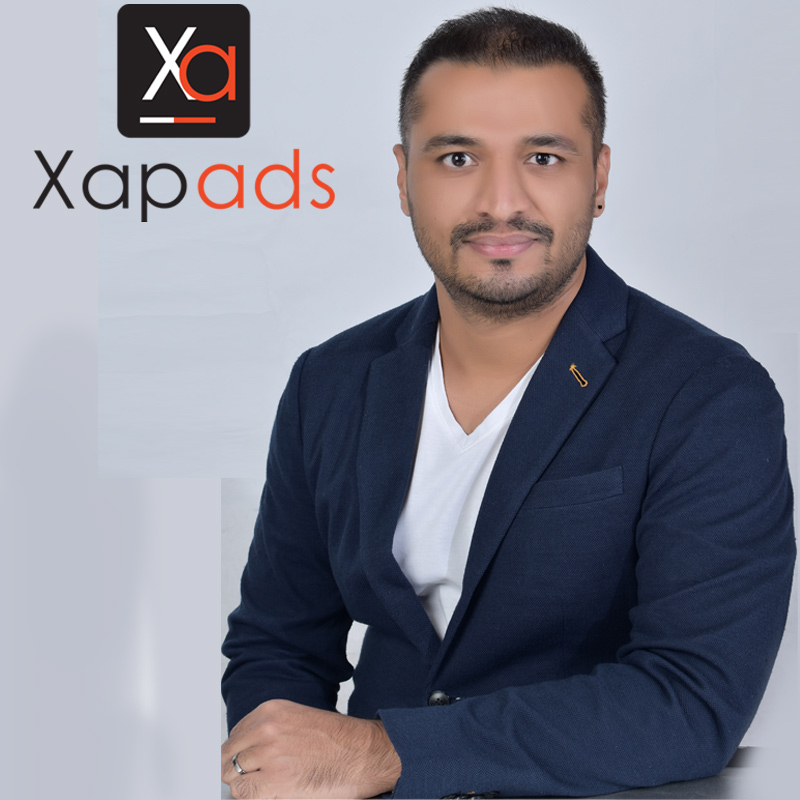
    MUMBAI: Programmatic adtech platform Xapads Media has announced the appointment of Gagan Uppal as the country head for the Mena (Middle East and North Africa) region to give them a local leadership boost in the region. Xapads Media with the onboarding of Uppal, will now focus on its strategic growth strengthening the local team, partnerships, and innovation in the MENA region.

    Associated with brands like Bath and Body Works, H&M, Aldar, Abu Dhabi Tourism, DTCM (Department of Tourism and Commerce Marketing), Samsung, IQOptions, Starbucks and McDonalds in the Mena region, Xapads is now looking to increase its footprint further in the region. With the expansion of its offerings, Xapads’s UAE office will serve as the hub for the company’s business development in the Middle East market and will explore new opportunities in the fast-growing Mena region.

    Prior to Xapads, Gagan was spearheading Advertising and Emerging Tech Partnerships at The TechVantage and was responsible for onboarding global AdTech/MarTech partners. In 14 years of work experience, Uppal has managed several popular campaigns for well-known clients including Nestle, Expo 2020, Neom, Dubai Holdings, Address Hotels and ENOC to name a few.

    Xapads Media founder, CEO Nitin Gupta said, “With a focused approach to further expand our horizons, Xapads will strengthen its position in the Mena region with a new country head. We are delighted to have Gagan on board, with his leadership skills and work experience he would contribute to further strengthen our footprints in the MENA region”.
     
    Xapads through its AdTech platform Xerxes- empowered with AI/ML, aims to generate performance programmatically with data layering and brand safety. Currently, with a market reach of over 850 million users globally, it aims to help and bring high-end results for their partners.

    Xapads Media COO Ramneek Chadha said, “Gagan is a seasoned veteran in the industry with a vast experience and insights of the ad-tech field and I am sure that he will successfully implement his growth strategies in the market and help Xapads Media be one of the top Adtech Platform in the region.”

    Uppal said, “It is a great opportunity for me to join Xapads Media at such a pivotal time and lead its Mena office which is rapidly growing and creating a niche in the region. As the company is already catering to well-known brands and agencies with its advanced ad tech services, I’m confident in bringing a positive revolution to the business and the company’s growth.”

  • Vodafone Idea rolls out an ad-tech platform for the advertisers to connect

    Vodafone Idea rolls out an ad-tech platform for the advertisers to connect

    Mumbai: Digital revolution in India has led to innovation and significant growth in the ad-tech industry, thereby, also increasing the volume of investments in the industry. Generating content and programmatic media buying on customized platforms will be the new normal. As the Digital Adex juggernaut moves ahead unabated, Vi aims to participate as a major player in the multibillion-dollar Indian advertising industry. With this, India’s leading telecom operator Vi on Wednesday announced the launch of its world-class ‘Ad-Tech’ platform – Vi Ads – an Artificial Intelligence (AI) & Machine Learning (ML) driven Adtech platform. It gives marketers a programmatic media buying platform that is cutting edge and returns on investment (ROI) focused.

    Riding on Vi’s deep data science technology, Vi Ads will enable marketers to engage with the operator’s over 243 million subscribers through multiple channels like Vi owned digital media – Vi App, Vi Movies & TV App, and traditional channels like SMS, IVR calls. One of the key differentiators of Vi Ads is that it will be media agnostic and empower marketers to engage with Vi users on external media channels and publisher partners of Vi Ads. 

    Additionally, Vi Ads will offer a self-serve interface enabling marketers with full control of their campaigns from a campaign set up, tracking campaign performance to driving campaign insights. Since Vi Ads is built to achieve a full-funnel campaign objective, be it awareness, consideration or purchase – it caters to advertisers looking to drive reach, generate leads or drive sales. The combination of advanced features and ease of execution will appeal to large agencies and SMEs alike.

    In the last 10 years, Digital AdEx has grown at a compounded annual growth rate of 27 per cent. Even during the pandemic, when all other media saw a decline, Digital AdEx witnessed significant growth. Programmatic media buying has firmly taken root in India and its share has been increasing year on year, now standing at 42 per cent, as per Madison Advertising Report 2022.

    Commenting on the launch of Vi Ads, Vi CMO Avneesh Khosla said “With our programmatic platform – Vi Ads, we will address two of the biggest challenges faced by marketers today – authentic insights and enhanced reach. Firstly, it offers marketers the benefits of unique audience segments, interest groups and targeting parameters derived using Vi’s deep insights of our consumers built on opt-in data. Secondly, it allows advertisers to not only reach their chosen audiences over Vi’s own digital media like Vi app and Vi movies & TV app, but also on external third party programmatic media and traditional channels of SMS & IVR calls. This is a simple, easy to use and highly efficient solution for marketers to effectively reach out to the right target group with the most relevant messaging at any given point of time, while also providing a monetization opportunity to Vi as we aggressively build and scale our digital assets.” 

    The Vi Ads platform has been built in partnership with TorcAi, a global provider of audience infrastructure and programmatic solutions, leverages advanced data sciences & machine learning to stitch together legacy marketing & advertising technology platforms with new breed tech. TorcAi helps media value chain stakeholders to build and nurture audience assets by bringing together data and activation channels at the organizational level. 

    TorcAi Digital CEO Rohit Verma said, “This partnership, and the development of the Vi Ads platform, will enable Vi to connect their vast stores of customer insights with advertisers, and publishers, to deliver the right message, at the perfect time. We look forward to a long relationship with Vi and welcome the opportunity to deliver world-class products and technologies that will continue to revolutionize the way data is used to better engage with consumers across an ever-evolving digital backdrop.”

  • CAMM Summit 2022: ‘Technology no longer just a vehicle to transmit content’

    CAMM Summit 2022: ‘Technology no longer just a vehicle to transmit content’

    Mumbai: Technology has evolved from a support system to an enabler and finally a driver of content consumption in the modern media landscape. Content and technology have become inextricably intertwined with the role of technology becoming more important in the media industry. At the Content-Tech, Ad-tech, Mar-Tech and More (CAMM) Summit and Exhibition 2022 organised by IndianTelevision.com co-powered by PubMatic and industry partner Adjust, the publishers, technology partners and marketers were part of a panel discussion on ‘managing content infrastructure to create a seamless content experience.’

    The session was led by CupShup co-founder Sidharth Singh, who was joined by Network18 Media and Investments group chief technology officer Rajat Nigam, Rezolve chief executive officer – India Sunder Madakshira, Korra founder and CEO Gaurav Nabh, Yotta Infrastructure vertical business head Jollydeep Kaur, and Rackspace Technology managing director Asia Pacific/Japan Sandeep Bhargava.

    Network18’s Rajat Nigam started the discussion by highlighting the constant pressure on publishers to keep innovating in terms of content. “Creativity is a continuous challenge and we need to keep being different. Society has become a co-producer of content. This has opened the field up to multiple players. Our focus is on two areas which are increasing creativity and reducing costs,” he said.

    Rackspace Technology’s Sandeep Bhargava spoke about tools that help brands control costs and innovate by leveraging data. “We use the term data gravity. Similar to how a denser planet has a greater gravitational pull, the more data that you have, the more costs build up and it becomes difficult to make sense of it. At Rackspace, we have a media accelerator that helps our clients optimise data, lowers the cost of keeping data and finds ways to monetise it,” he shared

    The discussion veered towards technical integration in content and dos and don’ts for marketers. “My first advice is to only look at technology as an enabler. It’s not about which technology is best but how you use it,” explained Korra’s Gaurav Nabh. A lot of clients ask me why we’re missing out on NFTs, metaverse or any new technology. But the question they should ask themselves is whether this technology is relevant to their business and is generating RoI.”

    Over the years the perception of technology has changed. “Technology is not just a vehicle for transmitting content but it can actually help the industry generate better insights and create better content,” remarked Yotta Infrastructure’s Jollydeep Kaur.

    Rezolve’s Sunder Madakshira observed that evolving technology must also be accompanied by better metrics to understand consumer behaviour. He noted, “Earlier, marketers used to measure performance in terms of market share. Then it became share of wallet. Today, we talk about share of attention because there is so much content out there that it has created clutter. Similarly, when we talk about revenues, we no longer speak in terms of ownership but in terms of subscription.”

    In a subscription economy, it’s no longer relevant to look at app downloads as a metric for success, according to Madakshira. “There’s no point if the app has become a dormant platform. The focus then should be on retaining attention,” he affirmed.

    Watch the panel discussion here:

  • CAMM Summit 2022: ‘Ad-tech to allow brands to take control of consumer experience’

    CAMM Summit 2022: ‘Ad-tech to allow brands to take control of consumer experience’

    Mumbai: Facebook rebranded to Meta in October last year and threw the marketing world into a frenzy by coining a new buzzword ‘metaverse.’ Marketers are often quoted saying that technologies such as AR/VR, blockchain, cryptocurrency, non-fungible tokens (NFTs) will have a transformative effect on the advertising industry but the implementation of these technologies at scale still has ways to go.

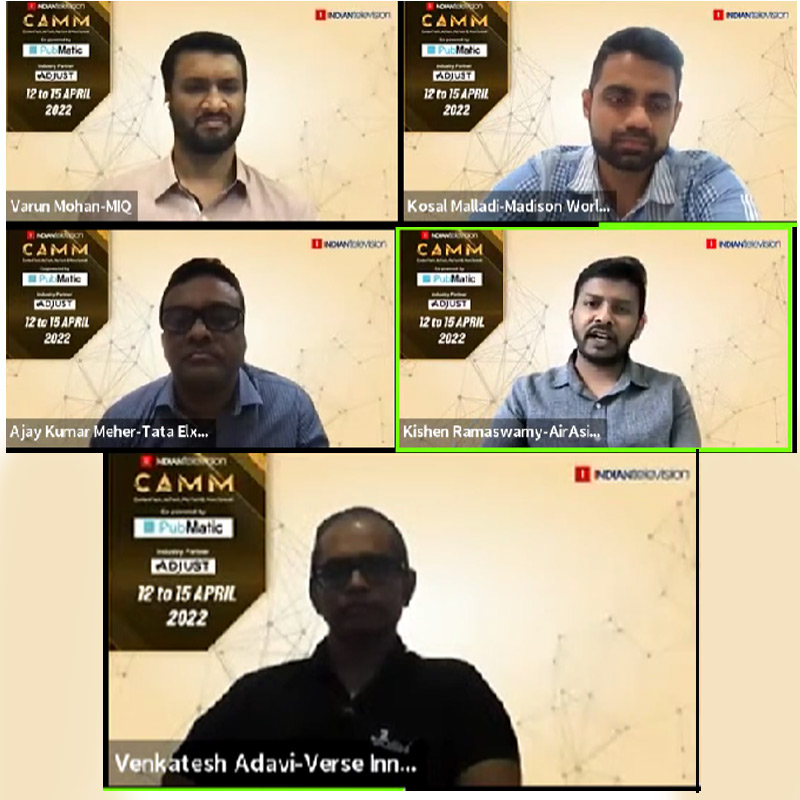
    “In digital media, we’ve been comfortable talking in terms of reach, frequency, leads but suddenly there is a challenge that we’re all facing,” said Madison World vice president Kosal Malladi during a panel discussion held recently. The discussion was on ‘new technology experiences in content-tech, ad-tech and mar-tech’ organised by IndianTelevision.com during its Content-Tech, Ad-Tech, Mar-Tech and More (CAMM) Summit and Exhibition 2022. The virtual event was co-presented by PubMatic and industry partner Adjust.

    The challenge we’re facing, explained Malladi, is that while there are a lot of people giving ‘gyaan’ about the metaverse, blockchain and everything associated with it, they don’t know how to implement it. “Adtech and martech is evolving so quickly that if we don’t keep pace with the change, we’ll become dinosaurs.”

    The discussion was joined by eminent marketers, technologists and media strategists including AsiaAsia India lead product marketing and brand communications Kishen Ramaswamy, Tata Elxsi global practice head for media and new media Ajay Kumar Meher, Verse Innovation vice president monetisation, growth strategy and partnerships Venkatesh Adavi and MIQ India and SAARC head of growth and revenue Varun Mohan.

    Starting off the discussion on the applications of blockchain technology, Tata Elxsi’s Ajay Kumar Meher said, “There are people who’re asking the fundamental question of what is the practical use of a blockchain.”

    “Blockchain is a shared immutable ledger,” he explained. “It is a process of recording transactions that is unchangeable. It also helps in tracking assets that may be digital assets such as NFTs. Should the asset only be digital in nature? Not necessarily. The sale of a house may be recorded and registered on a blockchain so that the owner can be defined. This would prevent the same property from being sold multiple times to different people.”

    In the media and entertainment industry, “blockchain can manage content micropayments. Suppose a broadcaster is buying the rights to a movie and an artist has recorded a song that is played in the movie, then that artist can be paid a specific micropayment every time the movie is played,” said Meher.

    He added, “If a content owner would like to sell the rights to his content to various stakeholders via the blockchain then he will be able to track whether the content is being used as stipulated in the agreement. Another level of usage are royalty payments where we can define all the stakeholders in the piece of content and precisely know what is to be paid for a particular usage.”

    “Artists who are creating a lot of digital assets may leverage NFTs to define their ownership of that asset,” Meher further said.

    Meher shared several use cases on how blockchain could be deployed in the media industry including creating a blockchain-based exchange between advertisers, agencies and publishers to measure exactly how many ads are displayed on the publisher side.

    “The wastage of media will be controlled with far more engagement opportunities unlocked by ad-tech,” remarked MiQ India and SAARC head of growth and revenue Varun Mohan. “Ad-tech will play a vital role on the measurement side. Today, If I take the FMCG category as an example, they are facing a lot of challenges in monitoring data that is coming from offline channels. With ad-tech, brands will take ownership of consumer behaviour and engagement via multiple touchpoints that will help them plan their media activation.”

    Next Verse Innovation’s Venkatesh Adavi spoke about the use cases for AR/VR in India. He said, “AR is quite ahead in terms of adoption compared to other technologies. It is being used by both people who consume content as well as marketers and media companies who want to talk about their brands and products.”

    He added, “VR still suffers from issues such as proliferation of equipment, bandwidth and network coverage that needs to be there to enable the ecosystem. There’s still some heavy lifting required in terms of development of VR content and from an access point of view.”

    “AR technology is growing fast as there is a processor and camera in everyone’s hand via the smartphone. What we see on short video app Josh is that users live creating content that can be layered on AR. Brands are also catching up. We get a lot of brands who want to create AR effects, so that they can be a part of the content that consumers create.

    “The holy grail of marketing is engagement and AR gives a canvas to marketers to enable their products to be utilised in the videos that consumers are creating. If millions of consumers create videos using brands’ AR effects, then you get so much earned media,” surmised Adavi.

    AirAsia’s Kishen Ramaswamy spoke about potential use cases of the metaverse in the airline industry. “Metaverse is a combination of AR/VR but with a real-world economic model. Today, in general, people are more open to having virtual meetings over physical ones, especially in the corporate segment. This opens up people to have experiences outside the workplace. That is important for us as a brand and we’ve been focusing on creating experiences that our audiences would appreciate,” Ramaswamy said.

    “For a first-time flier booking a ticket, checking-in and picking your seats can be an intimidating experience,” he stated. “Why not create a metaverse experience where our customers can explore doing those things and learning on their own. For a brand, it is an opportunity to show what they can expect. We expect this use case to become a reality in the near future.”  

    Watch the panel discussion here:

  • Nazara acquires majority in ad tech company Datawrkz

    Nazara acquires majority in ad tech company Datawrkz

    Mumbai: Sports media company Nazara Technologies has entered an agreement to acquire 55 per cent stake in programmatic advertising and monetisation company Datawrkz valuing the company at Rs 255 crore (~$30 million) linked to CY 22 EBITDA performance.

    “Datawrkz tech offerings will enhance in-house capabilities of Nazara for optimising its customer acquisition spends as well as enhance yields on ad monetisation of its large consumer base,” the company said in a statement on Tuesday. “The ad revenue monetisation is expected to assist many of the companies in the ‘Friends of Nazara’ network.”

    Nazara will acquire 33 per cent stake (Rs 60 crore payable of which Rs 35 crore is partly payable in cash and the balance consideration of Rs 25 crore will be paid either in cash or swap of shares) in the first tranche by 22 April. Nazara has reserved an option to acquire an additional 22 per cent in the second tranche that is expected to close in Q4 FY23.

    “We, at Nazara, are looking to build strong gaming ad tech offerings globally with the partnership with Datawrkz,” said Nazara Technologies CEO Manish Agarwal. “We strongly believe that growth of gaming-focused ad tech will be exponential in the coming decade across geographies with the growth of gamers and game publishers across freemium, web 3.0 and skill-based real money gaming.”

    He further added, “Ad tech companies with deep data processing capabilities and first-party data ownership will emerge as winners in gaming-focused ad tech and will help Datawrkz to create value for itself as well as for Nazara shareholders.”

    Datawrkz was founded in 2013 by IIM Ahmedabad alumnus Senthil Govindan and is a global advertising technology firm focused on accelerating user and revenue growth for clients through highly optimised digital advertising. It has offices in the US, Singapore, and India and functions as an independent trading desk to power digital media strategy, planning and execution.

    Datawrkz’s self-service product suite for advertisers – Vizibl includes a demand-side platform as well as a customer data platform. On the supply side, Datawrkz generates revenue for publishers through AdPrimus, its supply-side product that drives user engagement, mediates between demand sources and enables audience segmentation.

    For the calendar year 2021, Datawrkz posted combined revenue of Rs 90.7 crore (~$12.1 million) and EBIDTA margin of 12 per cent with around 70 per cent of its revenue coming from the US as per CY 2021 unaudited financial statements.

    “We had started this company with a vision to disrupt the digital advertising space,” said Datawrkz founder Senthil Govindan. “Datawrkz was already on a fast track to achieve our objective with rapid growth and satisfied clients around the world. Through our partnership with Nazara, I see our pace accelerating further. While Datawrkz will be able to immediately bring our natural strengths to bear within the existing Nazara fold, this also gives both sides a tremendous opportunity to build global advertising and publisher monetization products with a sharp focus on the gaming vertical.”

    “As always, it’s a great moment for us to welcome a new friend to our ‘Friends of Nazara’ network and I believe Senthil and the entire Datawrkz team will add great value to what we are building at Nazara over the next few years,” added Nazara Technologies founder and joint MD Nitish Mittersain.