Tag: ad spend

  • TV ad volumes for June 2021 surpasses 2019, 2020 levels: BARC

    TV ad volumes for June 2021 surpasses 2019, 2020 levels: BARC

    Mumbai: TV advertising continues to remain resilient, despite the onslaught of the second wave of the pandemic. According to Broadcast Audience Research Council (BARC) India’s latest THINK report, the TV ad volume in June, 2021 has surpassed the ad volume recorded during the corresponding period in 2019 and 2020.

    As many as 1,839 advertisers and 3,074 brands chose Television as a medium for advertising in June, at par with 2020 showed the data. In fact, June 2021 recorded a six per cent growth in ad volume compared to the pre-pandemic levels in June, 2019.

    The report titled – ‘TV Ad Volumes Insights – The Mid-Year Analysis’ released on Thursday also found that TV advertising performed much better during the H1 2021 and witnessed a 12 per cent higher growth compared to ad volume in H1 2019. While, the growth was 37 per cent higher compared to H1 2020.

    “Ad volumes for H1 2021 are promising and encouraging for the industry as a whole. The number of active advertisers and brands are also picking pace. Data for the first half of 2021 reinstates that while new advertisers have turned to television for widespread reach, existing ones continue to increase their attention to the medium,” says BARC India, head- client partnership and revenue function, Aaditya Pathak.

    FMCG continues to lead TV ad volume

    There was also a sharp increase in ad volumes from the top three advertisers. “While FMCG continues to dominate by share, the e-commerce category continues to see strong growth year on year. The auto sector has also made a comeback despite the impact of the second wave,” added Pathak.

    FMCG continued to lead the share in H1 2021 with 566 mn seconds, a growth of 40 per cent over H1 2019. HUL, Reckitt Benckiser, P&G, Pepsi have shown maximum growth over previous years. Seven of the Top 10 brands are Reckitt and two are HUL.

    After a dip in June 2020, the auto sector made a strong comeback in June 2021 by registering a growth of 74 per cent. With 3.94 million seconds in June 2021, the auto sector is at par with the ad volumes it registered in June 2019.  More impressively, the sector achieved 128 per cent growth over May 2021.

    Likewise, ad volumes for the Telecom sector almost doubled in June 2021 over May 2021 and has registered 2x growth in June 2021 over June 2019. 

    With 15.4 million seconds in June 2021 alone, ad volumes for the E-commerce sector have registered a whopping growth of 56 per cent when compared to June 2019. Currently at all-time high, the category constitutes a 12 per cent share in the total ad volume pie.

    Building sector registered 30.7 mn seconds of Ad Volumes; a 24 per cent growth in H1 2021 versus H1 2019. ad volumes for the BFSI sector grew by 7 per cent over H1 2019 with 14.5 mn seconds in H1 2021. 

  • Global ad market to top $700 bn in 2022: WARC Data

    Global ad market to top $700 bn in 2022: WARC Data

    New Delhi: Global advertising spend is expected to rise 12.6 per cent during 2021 as a whole to reach $665bn, according to WARC Data’s report tracking global ad-spends. This is a sharp increase from the 6.7 per cent initially forecast, and would result in all of 2020’s losses being recouped, contrary to previous expectations.

    The new report signals renewed optimism in the situation getting better for the overall market as it recovers from the severe impacts of the pandemic. According to WARC Data, a further growth of 8.2 percent is predicted for next year, with the global advertising market to be worth more than $700 billion. While it took six years to move from $500bn to $600bn, it has now taken just four years to reach $700bn. This is in no small part due to rapid investment in online formats, which has doubled in the last five years, it stated.

    India, too, will see strong growth in advertising spend over the next two years, but 2021 investment will not fully recover 2020’s losses, said WARC Data in its latest report, tracking 100 markets worldwide. According to the report, India’s growth is up 16.1 percent to $8.2 billion in 2021.

    Regional advertising investment in the Asia Pacific is forecast to increase by 12.8 percent this year to top $200 billion for the first time. This will be driven by the Chinese ad market, which is expected to grow by 16.3 percent to exceed $100 billion for the first time.

    WARC’s quarterly research also finds that advertising spend in the second quarter rose 23.6 percent to $157.6 billion, marking a new high for a Q2 period and the strongest rise in over a decade. This growth was mainly driven by online formats, which collectively saw spend rise 31.2 per cent versus the previous year. eCommerce was the star performer with growth of 59.5 per cent, though offline media – most notably linear TV saw 11.5 per cent growth – also fared well.

    Linear TV to grow 7.1 per cent in 2021

    For linear TV, spend is projected to grow 7.1 percent to $168.1 billion this year, equal to a quarter (25.3 percent) of the global ad market. Investment is expected to rise by a further 2.7 percent in 2022, though this means just 60 percent of 2020’s losses will be recovered by 2022.

    “The 2020 downturn was felt disproportionately among legacy media owners. While online ad investment rose 9.4 per cent last year, mostly to the benefit of a few pure players, brand spend on legacy media such as print, TV, radio, outdoor and cinema fell by $63bn. Data show that this loss was on a par with the Great Recession,” as per WARC.

    The forecast suggests, legacy media will see two consecutive years of growth in 2021 (8.8 per cent) and 2022 (3.1 per cent) for the first time in a decade, but budgets will continue to move online. More than 60 per cent of spend is expected to be on digital media in 2022, an increase in share from 50 per cent before the pandemic in 2019.

    “New quarterly research, collated from 100 markets worldwide, shows for the first time the true extent of the digital shift in response to the coronavirus outbreak last year. Growth in online adspend has typically tracked some 20 percentage points ahead of offline media, but in the final quarter of 2020, this leaped to a remarkable 41 points—an absolute difference of $41 billion,” WARC Data, managing editor and author of the report, James McDonald.

    “Investment in offline media fell by $63 billion worldwide in 2020, marking the worst year in living memory for the majority of media owners. All media are forecast to record growth this year, with most sustaining this into 2022. Yet, as has been seen before, it is the online platforms that are set to benefit most from the ad market’s recovery.”

    All consumer-facing product sectors are expected to increase advertising spend this year. The travel sector, however, will take more than two years to lift spend back to pre- pandemic levels, it added.

  • India’s ad-revenue to rebound over 2020-25 with 13 % CAGR : MPA

    New Delhi: After a 27 per cent plunge in 2020, ad revenue in India is forecast to rebound strongly over 2020-25 with a CAGR of 13 per cent, said a new report released by Media Partners Asia (MPA) on Monday.

    According to the report- Asia Pacific Advertising Trends 2021, digital advertising is expected to benefit from India’s expanding digital economy across online gaming, ed-tech, food and delivery platforms, outgrowing television to become the largest advertising segment by 2024.

    Overall, APAC advertising expenditure is forecast to grow at 5.4 per cent CAGR to reach $245 billion by 2025, powered by growth across key markets such as China, India, Japan, and Korea, says the report.

    Digital ad-revenue most resilient

    According to the report, digital ad revenue remained most resilient through the pandemic, with consumers across APAC spending more time online and brands accelerating digitization efforts. The medium is projected to contribute 67 per cent of APAC ad revenue in 2025, eating into TV’s share (18 per cent), it said.

    The role of e-commerce in advertising surged in 2020, with e-commerce contributing an estimated 39 per cent of China’s ad revenues, while growing significantly, albeit from a small base, in India, Indonesia, Japan and Korea. Search and social advertising benefited as well. As per MPA’s projections, digital advertising’s share of net advertising spend is likely to grow from 59 per cent in 2020 to 67 per cent in 2025.

    TV ad-spend to rebound in 2021 growing 4.6 per cent Y/Y

    Television advertising faced further pressure in 2020 as advertisers accelerated their transition to digital, declining 15 per cent Y/Y to $43.3 billion.

    While the dips in TV ad spend are expected to be permanent in mature markets such as Australia and Japan, the medium remains important in key markets like India, Indonesia, the Philippines and Thailand where it retains its position as the largest ad segment as of end-2020. Overall, TV advertising is expected to rebound in 2021, growing 4.6 per cent Y/Y, before secular decline sets in again in 2023, according to the report.

    MPA projects total Asia Pacific TV advertising spend to grow at a CAGR of 0.7 per cent over 2020-2025 to reach $44.8 billion in 2025.

    Online video advertising to grow $ 33.3 billion in 2025

    TV broadcasters are growing online video ad market share through catch up and dedicated AVOD streaming services, particularly in connected TV markets such as Australia, Japan and Korea. MPA estimates online video advertising, led by YouTube, contributed 16 per cent to APAC digital ad revenue in 2020. With various local and regional AVOD and freemium platforms, including broadcaster-led platforms driving growth, online video advertising is forecast to grow to $33.3 billion in 2025, representing 20 per cent of the APAC digital ad pie while topping 40 per cent in emerging markets such as India & Indonesia.

    Ad-spend to exceed $ 200 billion by end-2021 in Asia-Pacific

    According to the report, net advertising expenditure in Asia Pacific, calculated after discounts, declined 4.3 per cent Y/Y in 2020 as Covid-19 ravaged the countries across the globe. Pandemic-induced macroeconomic uncertainty softened advertiser demand in the first half of 2020.

    However, as economies rebound, recovery is underway with ad spend forecast to exceed $200 billion by end 2021, topping pre-pandemic levels for the region. China was the single largest contributor to advertising expenditure, with 55 per cent share of APAC ad spend. The growth was largely led by digital advertising, which accounted for 70 per cent of China’s total ad spend, anchored to short video, live streaming, social, and e-commerce platforms. Ad markets in Korea and Vietnam will also return to pre-pandemic net ad spend levels by end-2021.

    Most other countries including India will follow in 2022, bolstered by the growth of digital advertising; TV advertising will return to pre-pandemic levels in India, Thailand and Vietnam, it said.

    KOREA: Ad spend fell one per cent in 2020, with a 9 per cent decline in TV advertising and bolstered by 12 per cent growth in digital advertising, led by mobile, display and search ads. The Korean advertising market is forecast to grow at 6 per cent CAGR over 2020-25. TV has bounced back strongly in Q1 2021 and digital advertising, including video, continues to maintain double digit growth levels.

    JAPAN AND AUSTRALIA: Ad spend is projected to grow by 2 per cent over 2020-25, led by digital. TV remains scalable in both markets. Video’s share of digital advertising is growing in both markets with global tech majors dominant though broadcasters are growing rapidly from low base through dedicated streaming platforms.

    SOUTHEAST ASIA (INDONESIA, PHILIPPINES, THAILAND AND VIETNAM): Ad markets are recovering rapidly with TV & online benefiting. Indonesia remains Southeast Asia’s largest advertising market and is projected to grow at 4 per cent CAGR over 2020-25, powered by digital (including video) and free TV.

  • Alcohol digital ad spend grows to 24% in 2020

    Alcohol digital ad spend grows to 24% in 2020

    MUMBAI: Alcohol ad spend in 12 key markets, including India will grow by 5.3 per cent in 2021, ahead of the 4.9per cent growth of the ad market as a whole, as brands recover from a much steeper drop last year, according to a report by media agency Zenith published on Monday. Alcohol advertising will then grow roughly in line with the market, with 4-5 per cent annual growth in 2022 and 2023.

    Pandemic forced the alcohol ad spend to move online

    Alcohol brands have historically been slow to commit to digital advertising, devoting less than half as much of their budgets to it than the average brand in 2020. This is changing rapidly now. The closure of hospitality venues meant that brands needed a new route to market. Breweries, distilleries, bars, and restaurants diversified into direct-to-consumer shipping and takeaway drinks, facilitated by e-commerce, and advertised heavily on digital media, particularly social media. Alcohol brands increased their spending on digital media from 21per cent of budgets in 2019 to 24per cent in 2020. Seeking to create compelling brand experiences at home instead of at the bar, drinks companies invested in owned assets such as brand websites and educational content. Spirits brands were particularly prominent, using influencers and trade partners to teach consumers to mix their cocktails, for example.

    “Spirit brands have surpassed beer brands in terms of sales value by offering more premium experiences and rituals around their product and serve,” said Zenith global chief strategy officer Ben Lukawski. “With the pandemic taking audiences away from the on-trade we have seen a greater emphasis on bringing these premium experiences in the home through owned digital content.”

    Consumers are now much more aware of the available options for buying alcohol online, and alcohol brands now have distribution networks in place to supply them. Zenith expects brands to expand their digital advertising to support alcohol eCommerce even after pubs and restaurants are fully open, fueling 9.2per cent annual growth in digital ad spend between 2019 and 2023 when digital advertising will account for 30per cent of alcohol advertising budgets.

    Adspend on Television & OOH less effective

    Alcohol brands traditionally rely heavily on television and out-of-home advertising, spending twice as much on television as the average brand and nearly four times as much on out-of-home. Alcohol brands devoted 49 per cent of their budgets to television in 2020, compared to 24 per cent for the average brand, and 19per cent to out-of-home advertising, compared to 5per cent. This tactic has become less effective as audiences shift to digital media, though, particularly the young consumers most likely to visit a new bar and try out a new drink.

    Zenith predicts alcohol brands will reduce their expenditure on television by 2.4per cent a year to 2023, compared to the 2019 baseline, as traditional broadcast audiences continue to shrink. Out-of-home advertising, by contrast, will grow by 1.1per cent a year, even taking into account the pandemic-induced reduction in foot and road traffic. Television’s declining reach makes out-of-home ubiquity even more valuable.

    Alcohol advertising to recover from 2020 decline by 2023

    Alcohol advertising shrank nearly twice as fast as the overall ad market in 2020, falling by 11.6per cent compared to 6.4per cent of the market as a whole, Brand finances were squeezed by reductions in consumption volume, the average price per drink, and profit margins. With bars, pubs, and restaurants closed, consumers drank less alcohol and bought the drinks they did consume from shops where they cost less, with a much lower mark-up. Brands cut back their marketing sharply to protect their bottom lines, and their combined ad spend fell from $7.6bn in 2019 to $6.7bn in 2020.

    Brands are now bringing money back into the market as vaccine programmes have consumers socialising in person again, and the hospitality industry has begun to reopen. But the return to normality will be slow, and alcohol ad spend will still be 8per cent below the 2019 level by the end of 2021, at $7.0bn. Zenith does not expect alcohol advertising to exceed the pre-pandemic peak until 2023 when it will reach $7.7bn.

    “The alcohol industry has suffered more from the pandemic than most, and that was reflected in the steep drop in ad-spend last year,” said Jonathan Barnard, Head of Forecasting, Zenith. “The recovery won’t be as dramatic as the downturn, but investment in digital communication will drive steady growth in alcohol advertising for the next few years.”

  • Indian ad spends estimated to grow at 10.7 per cent in 2020: GroupM’S TYNY report

    Indian ad spends estimated to grow at 10.7 per cent in 2020: GroupM’S TYNY report

    MUMBAI: GroupM, the media investment group of WPP, today announced their advertising expenditure (adex) forecasts for 2020.  As per the GroupM futures report ‘This Year, Next Year’ (TYNY) 2020, India will continue to top the list as the fastest-growing major ad market in the world. TYNY forecasts India’s advertising investment to reach an estimated Rs. 91,641 crores this year. This represents an estimated growth of 10.7 per cent, for the calendar year 2020.

    India will continue to be the third-highest contributor to the incremental ad spends, only behind UK and USA while China drops to the fourth spot and the eight fastest-growing country with respect to ad spends across the globe. 

    Commenting on the TYNY 2020 report, GroupM South Asia CEO Prasanth Kumar said, “We expect the global adex to grow by 5.1 per cent. The Indian media landscape is constantly evolving, will continue to witness the fastest growth of 10.7 per cent to reach Rs 91,641 crores. While we expect sustained and stable investment across media in India, Digital to garner 65 per cent of incremental ad spends in 2020. In 2020, India faces challenges and uncertainties across sectors just like other markets. However, this also brings opportunities for brands to innovate because of which we see an evolving media stack. This will be propelled by greater use of technology and better content across media.”

    Digital secures number two position as the most used media vehicle and is estimated to reach 30 per cent of ad spend in 2020 with growth coming from 3Vs (video, voice, vernacular-Indic) and advertising on e-commerce. The growth of digital is set to soar high because of changing consumer habits.

    “There are multiple advancements happening in technology which is transforming digital advertising and other mediums. India being a diverse country, digital will keep growing, especially with the rise of content platforms and its availability in multiple languages powered by the growth of 3Vs. From a predominantly ‘at home’, ‘urban’, ‘English print’ & ‘TV’ consuming market, the Indian media consumer evolved to include ‘on the move’, ‘rural’ & ‘regional’ counterparts, experimented with digital media in the early 2010s’, adopted social media in middle of the decade and started consuming digital videos voraciously after 2016,”  GroupM South Asia president growth and transformation Tushar Vyas said.

    Even with an overall slowdown in the global economy Indian media spends are expected to be between low to moderate in H1, with robust growth anticipated in H2 2020.

     “The format of print storytelling is changing but the content is still the strongest. With print media organizations undergoing transformation across India. Publication houses have invested heavily in promoting digital subscriptions and have started limiting access to digital versions of epapers. We believe that this would pave the way for newer business models. Print will continue to remain relevant to advertisers wanting to build credible brands. Television will continue to grow at a steady pace. This year, the growth rate for TV is estimated to be 7 per cent and Radio is expected to grow at 6 per cent. While cinema and OOH will grow at 15per cent and 6per cent respectively in 2020,” GroupM India investments and pricing president Sidharth Parashar said.

    OTT has seen a faster evolution in India, which is now complementing television. OTT hybrid models looking at both advertising and subscription will continue to be an effective model.

     “While there are challenges and uncertainties in the market, it is a world of abundant opportunities in the content eco-system. This gives us vibrant options to reach and engage with consumers. It necessitates us to be agile, invest in new-age talent and technology while keeping an eye on the future. The key is to be always prepared while we are shaping the media landscape,” GroupM India partnerships and trading president Ashwin Padmanabhan commented.

    GroupM also shared some of the top watch-outs that will shape the Indian consumer & therefore industry in the coming decade. The trends presented were around emerging technology, behavioural changes, data, etc, that put the consumer at the centre and emphasize digital driving the change across all formats of media.

  • Zenith report says online video viewing to cross 1 hour a day

    Zenith report says online video viewing to cross 1 hour a day

    MUMBAI: Consumers across the globe are becoming increasingly engaged with online videos. Zenith’s Online Video Forecasts 2018 reveals global consumers will spend watching online videos more than one hour on average this year. From 2017’s 56 minutes, the average will go up to 67 minutes.

    In addition to that, the report also predicts this time span will go up to 84 minutes in the next two years. Viewers from China, Russia and the UK are expected to watch the most online video at 105, 102 and 101 minutes per day respectively.

    “It [online video] accounts for almost all the growth in total internet use, and is growing faster than media consumption overall, so it is taking consumption time from traditional media,” the report says.

    Still now, ad spends for online video is very less compared to traditional media. The report predicts that by 2020, online video adspend will reach 23 per cent of the size of television adspend. In 2015, online video ad market was 10 per cent of the size of the TV ad market.

    “The rapid rise in video viewing makes online video the world fastest-growing advertising format, creating new strategic and creative opportunities. Brands that do not currently have a strategy for online video need to think about getting one,” Zenith’s global intelligence director Jonathan Barnard said.

  • MPA forecasts India to lead APAC in ad spend growth

    MPA forecasts India to lead APAC in ad spend growth

    MUMBAI: Ad growth in India–a contender for Asia’s most dynamic market–was weighed down in 2017 by the lingering effects of demonetisation as well as a new goods and services tax, which disrupted advertiser supply chains, inhibiting marketing activity in the process, according to a Media Partners Asia (MPA) report. Net ad spend consequently grew by 6.9 per cent in 2017 to total $9.0 billion, ending three successive years of double-digit growth. Nonetheless, India should re-emerge as APAC’s fastest-growing ad market over the next five years. MPA analysts forecast a 10.9 per cent CAGR in net ad spend in India from 2017 to total $15 billion by 2022.

    Advertising revenue across Asia Pacific insreased by 6.1 per cent in 2017 to hit $173 billion and is on course to grow by a further 6.2 per cent in 2018 to move close to $184 billion this year, the report stated.

    Published today, Asia Pacific Advertising Trends 2018 forecasts net ad spend after commissions and discounts across 14 major markets in the region. The region’s advertising outlook remains positive with MPA analysts forecasting ad gains in almost all markets in 2018 and ad growth across the board over 2017-22. The MPA expects net ad spend in APAC to total $226 billion by 2022, having grown by a 5.5 per cent CAGR from 2017.

     “Market momentum for Asia Pacific as a whole should hold steady over 2018 and 2019, but we expect a slight deceleration from 2020 as online advertising, increasingly the main engine of growth across the region, settles into a gentler trajectory in some large ad markets,” remarked Vivek Couto, executive director, Media Partners Asia. “Much of digital’s growth will be driven by China, which should retain more than 60 per cent of online advertising in Asia Pacific over our forecast period.”

    Couto added: “Traditional TV advertising is now in or on the verge of decline in most countries, having peaked at $54 billion across the region in 2017. That said, India, Indonesia, the Philippines and Thailand are notable exceptions, underscoring the ongoing importance of mass-market broadcast as a platform for reach and awareness in these growth economies. Overall, TV advertising should contract very slightly from 2017 to 2022, at a -0.1 per cent CAGR. Print advertising, however, is on the retreat almost everywhere, although both newspaper and magazine advertising will continue to grow at a modest single-digit pace in India. Out-of-home, meanwhile, remains on an upward trajectory in most markets, benefiting from ongoing urbanisation as well as digital upgrades.”

    While the overall rate of advertising growth for APAC is slowing, a mixed picture emerges on the ground. Ad spending over 2017-22 should pick up speed compared with 2012-17 in Australia, Hong Kong, Malaysia, the Philippines, Singapore and Thailand. At the same time, cornerstone markets such as India, Indonesia and Japan should be able to sustain the pace they have set over the past five years.

    The pattern of ad growth across Asia Pacific is becoming increasingly determined by online media, which will soak up the vast majority of new ad dollars in the region for the foreseeable future. MPA estimates that internet advertising in APAC grew by 18.1 per cent in 2017 to nudge past $76 billion, with a projected 14.4 per cent growth in 2018 taking the total to $87 billion this year.

    Online video advertising meanwhile is entering into a red-hot growth phase, powered by the rising prominence of high-speed broadband. The MPA forecasts that by 2022, online video platforms will contribute at least 10 per cent of all advertising in nine markets: Australia, China, Hong Kong, Indonesia, Malaysia, New Zealand, Singapore, Taiwan and Vietnam, compared with just one market (Taiwan) in 2017.

     Also read:

    Ad spend on connected TV globally slated to grow in 2018

    Digital ad spend pegged at Rs 13000 crore in 2018

    MPA: India & China power APAC ad rev, ads in largest medium TV still robus


  • Price cuts, higher ad spend fail to buoy Colgate’s sales

    Price cuts, higher ad spend fail to buoy Colgate’s sales

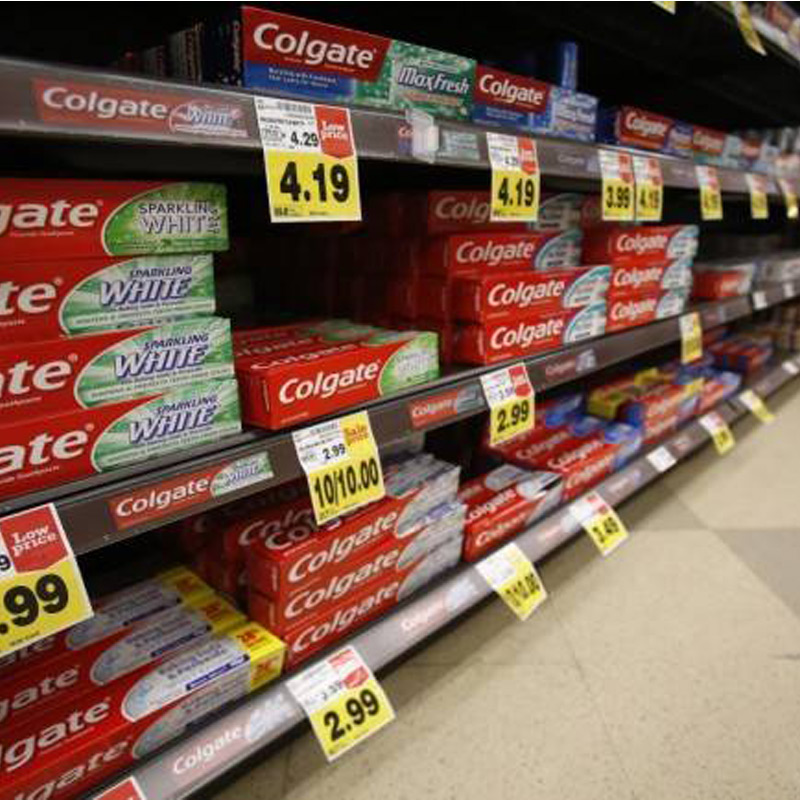
    MUMBAI: The price of Colgate-Palmolive Co’s shares plummeted on Friday after the company reported lower-than-expected quarterly sales despite spending more on advertising and cutting prices.

    The world’s largest toothpaste maker said gross margins fell to 59.8 percent in the fourth quarter from 60.4 percent a year earlier, hit by higher costs for raw materials and packaging according to a Reuters report.

    Colgate said it expects sales growth in 2018 but the forecast did nothing to shake the impression of stagnation that has dogged Colgate and other consumer goods producers in the past year.

    Organic sales improved sequentially, but the rate of improvement was less than expected, the company said in a post-earnings conference call.

    For 2018, Colgate forecast mid-single digit percentage net sales growth and low- to mid-single-digit organic sales growth, and double-digit earnings per share growth.

  • Shemaroo files satisfying maiden results; PAT up 82% to Rs 12.77 crore

    Shemaroo files satisfying maiden results; PAT up 82% to Rs 12.77 crore

    BENGALURU: Shemaroo Entertainment has its maiden annual numbersafter listing in September 2014. The company has reported 50.7 per cent growth in profit after tax (PAT) at Rs 40.92 crore (12.7 per cent of Total Income from Operations or TIO) as compared to the Rs 27.16 crore (10.3 per cent of TIO) in FY-2014.


    For Details Click:-


  • Hawkins Ad spends in Q2-2015 up 10%; marketing spends likely to rise in Q3-2015

    Hawkins Ad spends in Q2-2015 up 10%; marketing spends likely to rise in Q3-2015

    BENGALURU: Hawkins Cookers Limited (Hawkins) reported a 10.3 per cent quarter on quarter (q-o-q) increase in advertisement (ad) spends in Q2-2015 at Rs 3.72 crore (2.5 per cent of Total Income from Operations or TIO) as compared to the Rs 3.37 crore (3.5 per cent of TIO) in Q1-2015 and almost 6.5 times more year on year (y-o-y) versus the Rs 0.58 crore (0.4 per cent of TIO) in Q2-2014. Going by the trends during the preceding two years, (in Q3-2013 and Q3-2014 ad spends were significantly higher than Q2-2013 and Q2-2014 ad spends respectively) the company’s ad spends are likely to be higher in Q3-2015.

    Note: 100,00,000 = 100 lakh = 10 million = 1 crore

    Over a 10 quarter period starting Q1-2013 until Q2-2015, the company’s ad spends show an increasing trend in absolute rupees as well as in terms of percentage of TIO.

    Hawkins advertisement and sales promotion spends (ASP) in this report comprises advertisement expenses and discounts. In Q2-2015, Hawkins ASP at Rs 14.12 crore (12.1 per cent of TIO) was 80.6 per cent more than the Rs 9.88 crore (10.2 per cent of TIO) in Q2-2015 and 37.1 per cent more than the Rs 13 crore (10.1 percent of TIO) in the corresponding year ago quarter. The company’s ASP shows a linear increasing trend over the 10 quarter period under consideration in this report.

    The company’s ‘discounts’ in Q2-2015 at Rs 14.12 crore (9.6 per cent of TIO) was more than double (2.17 times) the Rs 6.51 crore (6.7 per cent of TIO) in Q1-2015 and 13.6 per cent more than the Rs 12.43 crore in Q2-2014. Since the period in Q3 of a year has the Indian festivals season that has most brands offering huge festival price reductions and freebies, it is likely that the ‘discounts’ by company will be higher in Q3-2015. Overall, discounts’ shows an increasing linear in terms of percentage of TIO and in absolute rupees. Please refer to Fig 1 below.

    Hawkins TIO in Q2-2015 at Rs 147.5 crore was 51.7 per cent more than the Rs 97.2 crore in the immediate trailing quarter and 14.8 per cent more than the Rs 128.46 crore in Q2-2014. Over the 10 quarter period under consideration in this report, the company’s TIO shows an increasing linear trend. It’s Q2-2015 TIO has been the highest across the 10 quarters.

    Hawkins reported 74.3 per cent increase in PAT at Rs 12.32 crore (8.4 per cent of TIO) from Rs 7.07 crore (7.3 per cent of TIO) in Q1-2015, but a 10.3 per cent decline from the Rs 13.75 crore (10.7 per cent of TIO) in Q2-2014. Over the 10 quarter period under consideration, the company’s PAT shows a linear increasing trend both in terms of absolute rupees and in terms of percentage of TIO. Please refer to Fig 2 below.

    Click here to read the full financial report