Tag: ad revenue

  • FAST frenzy: Viewers binge more, advertisers cash in, everyone wins!

    FAST frenzy: Viewers binge more, advertisers cash in, everyone wins!

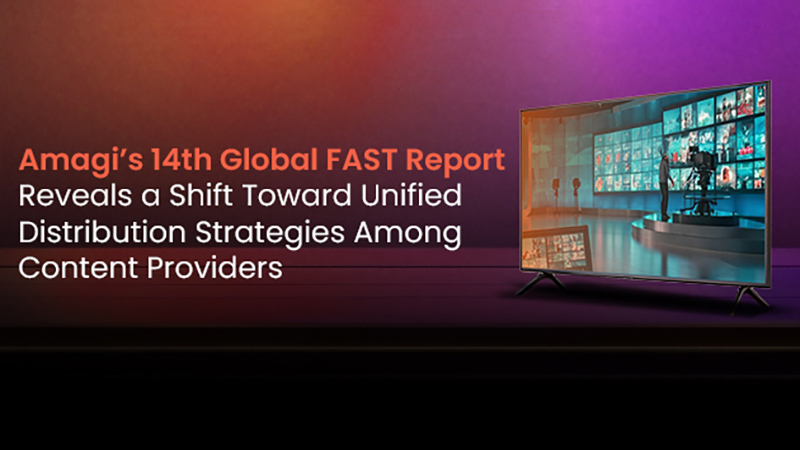
    MUMBAI: Not too long ago, TV lovers had two choices—pay up for endless subscriptions or rely on old-school cable. But just when you thought you were stuck juggling streaming bills like a circus act, FAST (free ad-supported streaming television) swooped in like a digital superhero. Forget flipping channels—now, viewers get premium content for free, advertisers get their dream audience, and content providers rake in the ad dollars. It’s a win-win-win, and Amagi’s latest Global FAST Report 14 Edition proves it.

    The report unveils staggering double-digit growth in both hours of viewing (HOV) and ad impressions, making it clear that FAST isn’t some fleeting trend—it’s an advertising revolution. Gone are the days when ads interrupted your binge session; now, they power the very shows you love.

    Amagi crunched the numbers from 3,300+ channels streaming via its SSAI (Server-Side Ad Insertion) platform, Amagi Thunderstorm. The results? A jaw-dropping 95 per cent YoY surge in global HOV and a 65 per cent jump in ad impressions—because when it comes to FAST, the stream never stops, and neither do the ad dollars. If streaming had a crystal ball, it would be flashing ‘bright future ahead!’

    Key takeaways:

    . U.S. and Canada keep the FAST train running at full throttle, contributing the lion’s share of global ad impressions and HOV. Who needs cable when free streaming is this good?

    .  APAC is the new streaming superstar, boasting a blockbuster 132 per cent YoY increase in HOV and a 130 per cent spike in ad impressions. If FAST were a stock, you’d want to buy in now.

    . LATAM and EMEA aren’t sitting on the sidelines, with entertainment, news, and documentaries leading the charge. Because who doesn’t love free content that informs and entertains?

    .  Entertainment remains the undisputed champion of FAST, making up 40–45 per cent of global HOV. Drama, reality TV, and movies—FAST has it all, without the price tag.

    .  New FAST channels are shaking up the game, with 25 per cent of global HOV and ad impressions coming from channels launched after December 2023. The future of TV is FAST, and it’s only getting started.

    The streaming wars may be ongoing, but FAST has found its niche. Unlike SVOD (Subscription Video on Demand), which relies on subscription models, FAST offers premium content free-of-cost, funded entirely by ads. Viewers have spoken, and their preference for free, high-quality content has set the stage for an advertising revolution.

    Amagi’s consumer survey of 500+ U.S. households revealed key trends:

    . 75 per cent of respondents watch free, ad-supported streaming content.

    . 66 per cent reported watching FAST channels multiple times per week.

    . 67 per cent noticed and engaged with overlay ads, proving the model’s efficacy for advertisers.

    FAST isn’t just standing alone—it’s merging with traditional Pay TV and SVOD models. Pay TV services now offer FAST channels, SVOD giants like Warner Bros. Discovery are experimenting with ad-supported tiers, and FAST services are enhancing their content portfolios with premium offerings.

    With global advertisers shifting their focus from Pay TV to CTV (Connected TV) and FAST, content providers are being forced to rethink their distribution strategies. Industry leaders like Dazn are already unifying conventional broadcasting with FAST to create a seamless viewing experience.

    As more regions embrace FAST, expect to see a sharper focus on localised content, better ad targeting, and stronger partnerships between streaming giants and advertisers. The numbers don’t lie—a 95 per cent rise in viewing hours and a 65 per cent spike in ad impressions make one thing clear: FAST isn’t slowing down—it’s just getting warmed up.

    So, whether you’re an advertiser chasing eyeballs, a content creator searching for the next big platform, or just someone who loves free TV with a side of perfectly timed ads, FAST is your new best friend. 

  • GroupM India’s 2024 TYNY Report unveils surprising trends and insights

    GroupM India’s 2024 TYNY Report unveils surprising trends and insights

    Mumbai: GroupM India has released its annual This Year Next Year (TYNY) report on 13 February 2024. The overall ad revenue is expected to reach Rs 1,55,386 crore in 2024, with an incremental Rs 14,423 crores compared to 2023.

    GroupM South Asia CEO Prasanth Kumar said, “Despite facing macroeconomic challenges, we remain optimistic about the industry. At 10.2% India will be the fastest growing top market. 2024 will also see an upside from the spends leading to the General Elections. Digital particularly retail media and digital extensions of TV are expected to drive the growth. SME continues to fuel the growth. Linear TV is at a point of inflection and needs to be enabled with rapid deployment of technology to stay relevant.”

    GroupM – India president – Investments, Trading, and Partnerships Ashwin Padmanabhan said, “The advertising landscape is evolving with the fragmentation of search, rapid rise of influencer marketing and retail media. Reflecting this, at INR 88,502 crores of the overall INR 1,55,386 crore, digital will contribute to 57% of all ad revenue. Within digital ad revenue, search contributes 22%, retail media 18% and the rest 60%. Sectors like Auto, Realty and Offline Retail are expected to power the overall advertising growth.”

    GroupM India business Intelligence head Parveen Sheik said, “Global advertising presents a steady picture: a projected 5.3% global growth in ad revenue for 2024, reaching $936 billion, with digital leading the charge at a commanding 79% share of all ad revenue. India continues to be ranked 8th globally and its ad revenue growth among its peers is a testament to its potential and resilience. Adaptability is key to navigating an evolving advertising landscape amidst inflation and geopolitical tensions.”

    The GroupM TYNY report also unveiled several evolving trends for 2024.

    Key trends include:

    1   Increasing influence of gen-alpha will drive distinctive marketing strategies

    2   Attention Planning – customising insights for actionability

    3   21% of television homes to be addressable in 2024

    4   Sports to focus on immersive experience journeys

    5   Brand marketing becomes more accountable on performance, breaking silos

    6   Step-up on search

    7   Ecommerce drives deeper into organisations

    8   India’s general & modern trade getting digitized leading to rise of omni channel commerce

    9   Rapid developments in AI will transform media, messaging, and measurement

    10   AI & technology dominate the content landscape & creator economy

    11   Importance of niche consumer segments will power the growth of micromarketing

    12   With consent becoming critical, zero party data will empower various areas of marketing

    https://indgrm.com/TYNY/

  • “Our focused efforts and investments in content and user experience enhancements are displaying positive results”: ZEEL MD & CEO Punit Goenka

    “Our focused efforts and investments in content and user experience enhancements are displaying positive results”: ZEEL MD & CEO Punit Goenka

    Mumbai: Speaking in a conference call, ZEEL managing director & CEO Punit Goenka said during the company’s Q2 FY23 earnings call that he remains hopeful of a steady recovery in the advertising environment during the second half of the fiscal given some of the green shoots due to a good monsoon and the onset of the festive season.

    “We are utilising this period to further strengthen the resilience and fundamentals of our business across all aspects. Our focused efforts and investments in content and user experience enhancements are displaying positive results. Going forward, we remain cautiously optimistic about the overall advertising sentiment gradually recovering through the second half of the fiscal year, which will further aid revenue growth.”

    While the underlying impact of the macroeconomic headwind across the industry continued to spill over in the second quarter of the fiscal year, Goenka emphasised, “That said, we have been able to moderately grow our advertising revenues sequentially in the second quarter on the back of our network share gain and focused efforts from our ad sales team.”

    He noted that the merger with Sony should be completed within this financial year. “As you would know, this is something that we are grappling with on a daily basis because the regulatory approval is required, and we can’t give you one final date. The number of days required for delisting or the company’s continued delisting, our expectation is it will be about five to six weeks.”

    Talking about sports being a newer growth opportunity. Goenka mentioned, “In addition to strengthening our current offerings, we are also consistently identifying new growth opportunities for sustained value creation. We took yet another firm step in this direction by sharpening our strategic vision to build the sports business for the company. The strategic licensing agreement with Disney Star makes Zee the exclusive TV destination for all ICC events starting in 2024. Going forward, all our investment decisions to make the sports segment a compelling value proposition for the company will continue to be taken with a prudent approach. Our energies remain focused on enhancing performance across platforms through compelling content offerings and delivering a robust user experience.”

    “For instance, our linear viewership share has increased QoQ, and our key markets like Hindi and Tamil are showcasing an improvement in their performance.” He explained that both in Tamil and Hindi, it is basically implementation and picking the right shows that have worked for it. “In Hindi, particularly, both fiction and non-fiction have done well for us. Tamil is still largely fiction-driven, and we are pretty confident that these will now continue to grow from here. They are stabilised at this level, and now we should see more growth coming. In Marathi, as I mentioned in previous calls to Abneesh, it was an implementation and team issue. A new team was formed about a quarter of a year ago. They are working on plans for getting the turnaround to happen in Marathi, too. I’m quite hopeful that in the next couple of quarters we’ll see something turn around there.”

    When asked about the reason for the NTO 2.0 delay, Goenka stated, “I don’t know what Trai was planning to do, but as I understand it from informal sources, they were trying to build consensus amongst all the stakeholders. As you will understand, building consensus in this industry among broadcasters, cable operators, and DPOs is not easy. I think that is largely the reason for the delay.”

    “My view is that they are finished with all the discussions and everything. We should see the NTO guidelines come out anytime now. As Rohit (ZEEL CFO Rohit Gupta) mentioned, the 28 of February is the deadline they have kept, but I’m quite confident that they will not miss this deadline,” he added further.

    Gupta noted that in the absence of a clear path ahead for NTO 2.0, the near-term outlook for subscription growth remains uncertain and muted. “We will continue to monitor NTO 2.0 guidelines and will be prepared to implement the same for improved long-term revenue outcomes.”

    When asked about the possibility of rethinking capital allocation towards movies given the disappointing performance of Hindi cinema, Goenka said that the company is rethinking or re-studying its movie portfolio strategy and maybe rejigging the capital allocation within that. “So, instead of spending a lot more on, let’s say, Hindi, for example, do we want to spend a little bit more on the regional languages, which are doing much better than the Hindi side, but will we completely look at reducing capital allocation to movies. No, that’s not in the thought process.”

    When asked if it makes sense to buy movie rights after their theatrical release, Goenka responded that, unfortunately, the industry does not work that way because these films are sold even during production. “If we were to wait for the film to be released in theatres and then take the chance of buying the film, there is a risk to that as well. So therefore, the industry is behaving in the manner that it does. Therefore, we have to participate and play the game as per the industry, and our view is that we would also like to continue to build and buy as little as possible. At times that’s not possible, but we are working on that strategy,” he concluded.

  • TV ad revenues recover by 86% in Q2 : ICRA

    TV ad revenues recover by 86% in Q2 : ICRA

    KOLKATA: After bearing the brunt of the initial shock of the pandemic, TV broadcasters saw a strong sequential recovery of 86 per cent in advertising revenue in Q2. Although it was lower by 20 per cent year-on-year basis, the growth was aided by the lifting of the lockdown, easing of restrictions and resumption of fresh content on general entertainment channels (GECs) with effect from June 2020, according to credit rating agency ICRA Ltd.

    As per the report, GECs regained their popularity and market share that they had lost to news and movies during the quarantine phase. FMCG, ecommerce and consumer durables remained the top contributors in terms of advertisement spends in Q2 FY2021.

    Overall, TV broadcasters in ICRA’s sample set reported a 21 per cent  year-on-year decline in revenues in H1 FY2021. Advertisement revenues witnessed a sharp 40 per cent year-on-year decline in H1 FY2021, though the same was partly offset by the nine per cent year-on-year growth in subscription revenues as subscribers increased their TV viewing during the pandemic.

    In Q1, ICRA’s sample set of TV broadcasters witnessed a 59 per cent year-on-year decline in advertisement revenues, as corporates pulled back their advertisement spends, amid the uncertainty during the then imposed lockdown and the pandemic. Depending on genres, advertisement revenues were impacted by 25-60 per cent (vis-a-vis pre-Covid average monthly revenues) in Q1 FY2021.

    While news and movies genres were on the lower end of the spectrum, with an average decline of 25-30 per cent in advertisement revenues, GECs and sports channels witnessed a sharp 50-60 per cent reduction in advertisement revenues in Q1 FY2021, given the absence of fresh content and deferment of high viewership driving sports events – including the IPL, UEFA 2020, Olympics 2020, among others.

    TV viewing remained high during the first half of the year, which resulted in increase in subscription revenues, up by 12 per cent on a year-on-year basis in Q1 and seven per cent in Q2. Since advertisement revenues account for more than 55 per cent of the total revenues of TV broadcasters, this decline adversely impacted the operating profit margin (OPM) of TV broadcasters, which contracted to 26.6 per cent in H1 (for ICRA’s sample set).

    However, ICRA expects the TV broadcasting industry to witness year-on-year contraction of 15-20 per cent in revenues in FY21. Subscription revenues for TV broadcasters are expected to hold steady in H2 FY21 as consumers are likely to continue their TV viewing amid limited outdoor avenues of entertainment. Overall, subscription revenues are expected to witness mid-single digit revenue growth in FY2021.

    Advertisement revenues witnessed good traction during the festive season and most of the TV broadcasters have witnessed an uptick in ad rates in Q3 FY2021. Industry players expect to reach pre-Covid advertisement revenues in Q3 FY2021. Advertisement revenues will thus witness a strong recovery in H2 FY21, as economic activity and growth improves, though it will be lower by five per cent on a year-on-year basis.

    The OPM in the period was supported by the savings on fresh content creation costs. Given the anticipated year-on-year revenue decline for H2 FY21, ICRA expects the OPM to remain under pressure and overall contract by 400-500 bps in FY21. Profitability pressures have also risen due to the increasing investments in content necessitated by increased competition from digital platforms, ICRA states.

  • Fresh content, new subscribers vital for long-term growth: Zeel

    Fresh content, new subscribers vital for long-term growth: Zeel

    KOLKATA: An unstable regulatory environment compounded by an unprecedented global pandemic has stymied growth in FY21 for the already-ailing broadcasting sector. In some ways, the second half of the year could be better for the industry, with advertising coming back. Zee Entertainment Enterprises Ltd (Zeel) has also pinned its hopes on the last two quarters, especially Q4.

    Zeel CEO and MD Punit Goenka said in an earnings call that the company has seen significant improvement, but acknowledged that the ad pricing has not returned to pre-Covid level yet. Goenka estimated that it would normalise in Q3 and start seeing growth in Q4.

    “Q3 and Q4 base anyways are soft but we expect that in Q3, we will only be able to maintain what we had received last year; very insignificant, moderate growth if at all possible. But Q4 certainly will have heavy growth over the last year,” he remarked.

    While Zeel has been able to stay ahead of the pack in some markets in terms of viewership, it has fallen behind in regional spaces like Marathi and Bengali. Goenka is of the view that a new and improved content pipeline could be a cure for this.

    “Obviously, the current pipeline seems jaded to the viewers and therefore they have chosen to go and consume more on the competition. But the good part is we have not lost reach on the channel as yet, therefore we will have to revamp the content there,” he said.

    He did go on to add that Zeel is already seeing a recovery in the Bengali market and it will clock faster growth in the next couple of months. For the Marathi market, the company expects a recovery in the next one or two quarters. However, Goenka is sanguine about making a comeback with their audience.

    “Certainly the new line-up that competitors have introduced post the lockdown has refreshed content for them and the consumers may have preferred that over the legacy shows that we have been serving. As you know, there is always an up and down in this kind of a business so we are confident that we will regain our viewership back,” he said.

    In terms of domestic subscription growth too, FY21 would be difficult for the company. It has cited instability of NTO 2.0 as a key reason because it has frozen the pricing for the year. But going forward, it hopes double-digit to low-teens is quite possible as the directive should be out of the way, either implemented or disposed of.

    “What has happened is when we implemented NTO 1.0, we had a complete blueprint of how we were going to take up pricing and how product launches would happen over a period of time and how we will drive our subscription revenue. In fact, in the third and fourth quarter of last year we launched four new channels. So that was also a part of it. Now because of NTO 2.0, all the plans of our bouquet as well as taking up the pricing is on hold and that is the reason why subscription revenue for this year would be impacted on the domestic broadcast side,” Zeel FPA and investors relations, corporate strategy head Bijal Shah commented.

    In the long term, the network sees a two-fold opportunity in the domestic broadcast sector. There are around 100 million homes in the country that do not have TV yet, which could be a significant opportunity for a deeper subscriber base. On the pricing side, it thinks that the ARPUs are pretty low. ZeeL has already planned price increases in some of the markets. Moreover, the company aims to launch more products.

    On EBITDA margin, Zeel hopes to see an improvement every quarter. Once FY22 proves to be a normal year without any disruption on the advertising side or subscription side, the margin trajectory should gradually return to normal.

  • Facebook ad biz weakening despite upsurge in users

    Facebook ad biz weakening despite upsurge in users

    MUMBAI: Streaming services, social media services and apps are emerging as the unwitting beneficiaries of an unprecedented situation which has forced people to stay at their homes. The usage of Facebook has gone up in many of the countries hit hardest by the novel coronavirus. Total messaging has increased more than 50 per cent over the last month. Moreover, in places hit hardest by the virus, voice and video calling have more than doubled on Messenger and WhatsApp. Despite the spike in usage, however, Facebook's ad business seems to be weakening.

    Facebook shared in its blog post that much of the increased traffic is happening on its messaging services, but it has also seen more people using its feed and stories to get updates from family and friends. 

    “At the same time, our business is being adversely affected like so many others around the world. We don’t monetise many of the services where we’re seeing increased engagement, and we’ve seen a weakening in our ads business in countries taking aggressive actions to reduce the spread of COVID-19,” Facebook stated.

    According to Cowen & Co analysts' estimate, the two internet giants, Facebook and Google, together, could lose more than $44 billion in worldwide ad revenue. Facebook ad revenue for the year is expected to slide by $15.7 billion to reach $67.8 billion for the year. 

    “During this emergency, we’re doing everything we can to keep our apps fast, stable and reliable. Our services were built to withstand spikes during events such as the Olympics or on New Year’s Eve. However, those happen infrequently, and we have plenty of time to prepare for them. The usage growth from COVID-19 is unprecedented across the industry, and we are experiencing new records in usage almost every day,” it added further. 

    The social media giant also noted that maintaining stability throughout these spikes in usage is more challenging than usual as now most of the employees are working from home. However, it has mentioned that the team is working to keep the apps running smoothly while also prioritising features such as COVID-19 Information Center on Facebook as well as the World Health Organization’s Health Alert on WhatsApp.  To help alleviate potential network congestion, Facebook is temporarily reducing bit rates for videos on Facebook and Instagram in certain regions. 

  • TV still has headroom for monetising from underpenetrated areas

    TV still has headroom for monetising from underpenetrated areas

    GOA: With the advent of OTT platforms, technological disruptions and change in content consumption trends, traditional linear TV has been facing a difficult time. Moreover, demonetisation and inclusion of GST also came as additional challenges in the recent past, with effects that lingered for long, while the biggest disruption – the new tariff order – is on the way. Due to the rapid changes, traditional players in the ecosystem are changing their strategy to stay profitable.

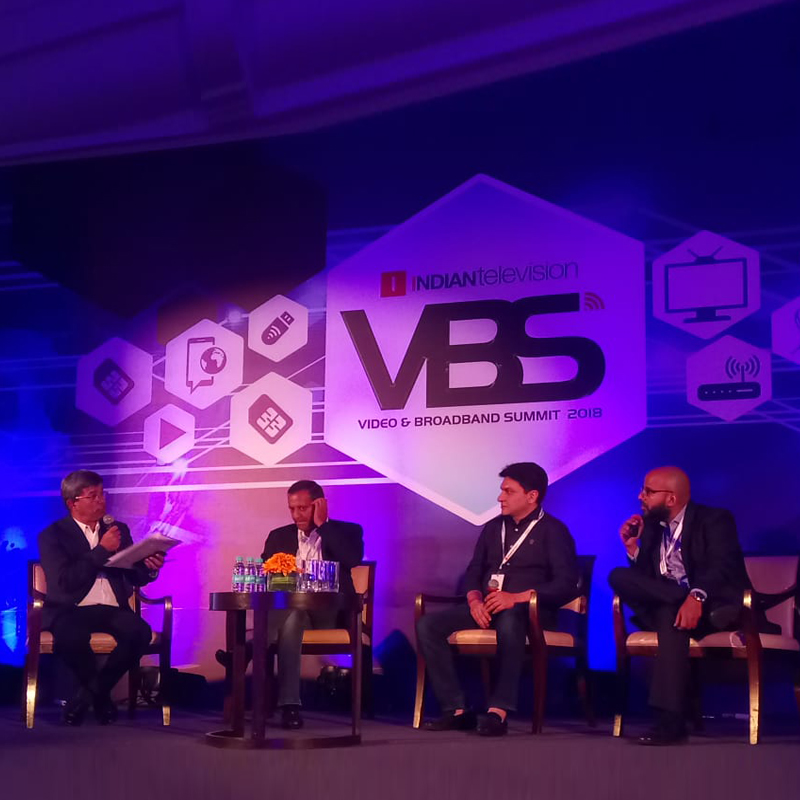
    In this scenario, Video and Broadband Summit 2018 held a session on monetising TV in times of transition. Zee Entertainment Enterprises Ltd (ZEEL) chief growth officer Ashish Sehgal, TAM India CEO LV Krishnan, KPMG India media and entertainment partner, deal advisory and head, Girish Menon took part in the session which was moderated by Indiantelevision.com founder and CEO Anil Wanvari.

    Wanvari kick-started the session asking what the monetisation trend in TV industry was in the last nine months. Menon, whose organisation KPMG published a report two months ago on the entire ecosystem, spoke about the increasing interest levels, contribution and demand from rural and regional markets on the advertising side which ensures that there is a growing deeper demand. He added that if someone is able to optimally monetise those options, the opportunities fairly exist for ad growth. He also added that a fair amount of traction in the FTA market is attracting brands there. On the subscription side, Menon said there’s enough headroom for growth as till now only 65-66 per cent households are penetrated by TV in India.

    ZEEL's Sehgal also endorsed Menon’s view on the growth opportunities for TV. “Across the industry, there has been a healthy double-digit growth which is happening. Even if you talk about the demonetisation and GST period, which stunted growth, even then the industry grew in single digit. It’s not like it had gone back to a certain level and then grew back,” Sehgal commented on the growth of the TV industry.

    Asked about tariff order, he said they still need to see how it’s going to pan out. But he mentioned that broadcasters like Zee and Star have come out with consumer-friendly packages which will help in ARPU growth. While he was asked whether users will start cutting cords if the price of subscription packages goes up too much, he answered that there’s no other better option available. According to him, to get the amount of content available on cable or DTH, users need to subscribe to ten other platforms.

    TAM India CEO Krishnan also agreed with Sehgal on the growth side of TV. He said that in the first 9 months of this year, TV showed around 11 per cent growth. Owing to the assembly elections, the growth may reach up to 12-13 per cent at the end of the year. Moreover, he added, it is the real revenue growth, not only volume growth.

    While the moderator asked if TV has got its real value, Krishnan said it definitely has brought in value itself from advertising and subscription. He also spoke about opportunities in hyperlocal advertising which is very much prevalent in print. There were 130,000 new advertisers just in the last 9 months compared to 2017 on the print medium which is coming from hyper-local editions of newspapers. But when that is being monitored in the adex data, those advertisers are still not translated into advertising on television or radio or digital yet.

    “On the other hand if I look at exclusive advertisers happening on digital and on TV it’s very comparable. There are around close to 16,000 advertisers uniquely positioned only on TV and around 12,000 unique advertisers on the digital adex. Now they are just 10 per cent of the overall volume that’s coming into print. If that translates slowly into regional television or digital OTT platforms for advertising, imagine the growth that TV and OTT can get,” he added.

    Sehgal believes that certain TV genres aren't getting a fair deal. “Average price across the genres are increasing. Yes, I would say there are certain genres which are still underpriced. For example, south channels are 90 per cent penetrated in terms of television. They are still underpriced. This pricing needs to be corrected. Kids' channels segment is underpriced. Hindi movie genre is highly underpriced while the value input behind purchasing movies is high, from advertising as well as subscriptions you are still not getting the value back,” he said.

    Where all the experts agreed was that sports content and TV premieres get higher value but when it was asked if it’s enough compared to other countries they said it’s linked to the purchasing power of the country. Moreover, they also said the growth rate in India is much higher than the US or China. It was also said that the pay-TV ecosystem in most of the developed markets are subscription led not ad led. India is always going to be a market where the rates of advertisement will be low but the fact is given the level of demand there is in the country from a consumption perspective, the growth will also be much higher than what can be seen globally.

    While most of the players work on volume rather than value, Sehgal said ZEE is working on the mix. “We have to start working with the real mix – how to get value and volume both together. Today, we are going 2X with the market only because we are not only getting the volume but also value. My price point from what it was last year to this year has increased in every channel. Now somewhere it has increased more and somewhere it has not increased more,” Sehgal said.

    On the question of how TV, cable or DTH can be monetised better, the experts think they should not shy away from the competition coming from digital. They think investment in technology, going back to advertisers with more value proposition is important. Though TV cannot engage like digital, they think brand building on TV is easiest. Unless a brand advertises on TV, building awareness becomes difficult.

  • Amazon heavily dependent on Diwali sale for revenue

    Amazon heavily dependent on Diwali sale for revenue

    MUMBAI: Not only do Indians eagerly await Diwali but so does Amazon it seems. The largest online retailer across the world has published a mixed result for the third quarter. While its revenue fell short of Wall Street expectation, it posted a record profit. On the other hand, despite the growth in domestic business, the international business showed a significant slowdown. Interestingly, a late Diwali in India has been cited as the reason which shows how crucial the Indian market has become for it.

    “There's also material change in the Diwali calendar in India. About half of our Diwali sales last year were in Q3. This year they'll be fully in Q4. So those are a couple factors that hit the international growth area in particular,” Amazon chief financial officer Brian T Olsavsky said in an earnings call.

    In India, Amazon is already fighting the domestic player Flipkart which is now backed by Walmart. The first leg of Diwali sale from both the player was around same time. Despite Flipkart’s popularity in India, three fold number of people signed up on Amazon to shop in the first two days compared to last year.

    “We've seen great response from customers. We've had 60 per cent growth in new customers during the period. Orders are coming in from 99 per cent of the pin codes in the country. So, great first wave of the, what we call the Amazon's Great Indian Festival, which lead into Diwali,” Olsavsky added.

    Advertising has been one of the major areas where the company reaped high profit. The revenue from the unit representing its display, sponsored product and other advertising revenue jumped 123 per cent, more than double the growth rate a year earlier.  While it is locked in a battle with Google, Facebook for digital ad pie, the company has made it clear that it won’t go down the road of ad-supported Amazon Prime Video soon.

    Amazon Prime membership, the card at hand to turn more consumers into shoppers, has continued to grow in US, as well as other countries. The company claims to be satisfied with the renewal data and annual sign up data since the price increase earlier this year.

    “Since then, program remains very strong, both in membership and engagement, and a lot of our video content, music and shipping definitely as well as other Prime Benefits. We just continue to see that ramp up, not only in the US, but in other countries. So we do continue to make the Prime offer better as well,” Amazon CFO said.

    Although the slowdown in international business led to fall in shares, it continued to reduce losses, which came down to $385 million in Q3 from $494 million in Q2. However, on the back of Diwali sale Amazon expects a huge boost to international segment reaffirming India’s importance in its business.

  • Q2-2015: Twitter sees 61% revenue growth, ad revenue up 63.2%

    Q2-2015: Twitter sees 61% revenue growth, ad revenue up 63.2%

    BENGALURU: Twitter, Inc. reported 60.9 per cent growth in revenue for the quarter ended 30 June, 2015 (Q2-2015) at $502.38 million as compared to the $312.17 million in the corresponding year ago quarter. Excluding the impact of year-over-year changes in foreign exchange rates, revenue would have increased 68 per cent says Twitter.Advertising revenue increased 63.2 per cent to $452 million as compared to $277 million in Q2-2014.


    GAAP net loss of $136.66 million in Q2-2015 was lower than the net loss of $144.64 million in Q2-2014, while non-GAAP income in the current quarter was $48.52 million as compared to the $14.60 million in the corresponding year ago quarter. Adjusted EBIDTA for Q2-2015 at $120.19 million more than doubled (up 2.2 times) as compared to the $54.13 million in Q2-2014.


    “Our Q2 results show good progress in monetization, but we are not satisfied with our growth in audience. However, product initiatives we’ve mentioned in previous earnings calls, like instant timelines and logged-out experiences, have not yet had meaningful impact on growing our audience or participation. This is unacceptable and we’re not happy about it. In order to realize Twitter’s full potential, we must improve in three key areas: ensure more disciplined execution, simplify our service to deliver Twitter’s value faster, and better communicate that value,” said Twitter interim CEO Jack Dorsey.


    YTD, Twitter’s revenue increased 66.6 per cent to $938 million in Q2-2015 from $563 million in the six month period ended 30 June, 2014 (6M-2014). Ad revenue in 6M-2015 increased 67 per cent to $840 million as compared to the $503 million in 6M-2014. GAAP Net loss in 6M-2015 increased to $299.10 million as compared to the net loss of $277 million in the corresponding period of last year. Non GAAP net income in 6M-2015 increased to $95.03 million as compared to the $14.80 million in 6M-2014. YTD EBIDTA increased to $224.21 million as compared to the $91.08 million in 6M-2014.


    Twitter says that Monthly Active Users – Average Monthly Active Users (MAUs) were 316 million for Q2-2015, up 15 per cent y-o-y, and compared to 308 million in Q1-2015. The vast majority of MAUs added in the quarter on a sequential basis came from SMS Fast Followers. Excluding SMS Fast Followers, MAUs were 304 million for Q2-2015, up 12 per cent y-o-y, and compared to 302 million in Q1-2015. Mobile MAUs represented approximately 80 per cent of total MAUs.


    In Q2-2015, Twitter launched a new autoplay feature for native videos, Vines and GIFs, as well as Periscope live video streaming on Android.

  • FY-2015: Increased ad revenue propels Zee income by 10.4%; PAT up 9.6%

    FY-2015: Increased ad revenue propels Zee income by 10.4%; PAT up 9.6%

    BENGALURU: The Subhash Chandra led content and broadcast player Zee Entertainment Enterprises Limited (Zeel) reported a 9.8 per cent hike in PAT to Rs 977.50 crore (20 per cent of Total Income from Operations or TIO) in FY-2015 (year ended 31 March, 2015, current year) from Rs 892.08 crore (20.2 per cent of TIO) in FY-2014.


    The company’s advertising revenue increased 11.8 per cent in the current year to Rs 2660.30 crore (54.5 per cent of TIO) from Rs 2380.05 crore (53.8 per cent of TIO) in the previous year and consequently, Zeel TIO increased 10.4 per cent in FY-2015 to Rs 4883.65 crore from Rs 4421.70 crore in FY-2014.


    Note: 100,00,000 = 100 lakh = 10 million = 1 crore


    The other revenue streams that add to Zeel TIO are subscription revenues and other sales and services (other) revenues. Zeel’s subscription revenues were almost flat (down 0.5 per cent) in FY-2015 at Rs 1793.48 crore (36.7 per cent of TIO) from Rs 1802.22 crore (40.8 per cent of TIO) in the previous year. Other revenue increased by 79.5 per cent to Rs 429.87 crore (8.8 per cent of TIO) in FY-2015 as compared to the Rs 239.43 crore (5.4 per cent of TIO).


    Let us look at the other numbers reported by Zeel for FTY-2015 and Q4-2015:


    Zeel PAT in Q4-2015 improved 6.1 per cent to Rs 230.77 crore (17.1 per cent of TIO) as compared to the Rs 217.58 crore (18.8 per cent of TIO) in the corresponding year ago quarter, but declined 25.2 per cent as compared to the Rs 308.61 crore (22.6 per cent of TIO) in the immediate trailing quarter.


    Zeel TIO in Q4-2015 at Rs 1347.05 crore was 16.2 per cent more than the Rs 1158.81 crore in Q4-2014, but declined 1.2 per cent as compared to the Rs 1363.72 crore in Q3-2015.


    Advertising revenue in Q4-2015 increased 15 per cent to Rs 669.66 crore (49.7 per cent of TIO) as compared to the Rs 582.36 crore (50.3 per cent of TIO) in Q4-2014, but declined 9.8 per cent as compared to the Rs 743.60 crore (54.5 per cent of TIO) in Q3-2015.


    Subscription revenue in Q4-2015 increased 10.2 per cent to Rs 510.77 crore (39.9 per cent of TIO) in Q4-2014 and increased 14.5 per cent from Rs 446.13 crore (32.7 per cent of TIO) in the previous quarter.


    Zeel says that during Q4-2015, domestic subscription revenues stood at Rs 417.5 crore, while for FY-2015, it stood at Rs 1424 crore. Adjusting for the difference due to accounting changes necessitated by change in the Telecom Regulatory Authority of India’s (TRAI) content aggregator regulation like-to-like growth for the full year FY-2015 is in low teens.


    Further, during Q4-2015, international subscription revenues stood at Rs 93.3 crore. Due to change in arrangement with various operators across international territories, the reporting of subscription revenue for the current year has undergone a change and hence previous year figures are not comparable with that of current period. For the full year FY-2015, like-to-like growth in rupee terms was in mid-single digit.


    ‘Other’ revenue in Q4-2015 increased 47.6 per cent to Rs 166.62 crore (12.4 per cent of TIO) as compared to the Rs 112.91 crore (9.7 per cent of TIO) in the corresponding year ago quarter, but declined 4.8 per cent as compared to the Rs 174.99 crore (12.8 per cent of TIO) in the previous quarter.


    The company’s Total Expenses (TE) in FY-2015 increased 13.2 per cent to Rs 3697.27 crore (75.7 per cent of TIO) as compared to the Rs 3267.54 crore (73.9 per cent of TIO) in FY-2014. TE in Q4-2015 increased 26.3 per cent to Rs 1093.70 crore (81.2 per cent of TIO) as compared to the Rs 866.15 crore (74.7 per cent of TIO) in Q4-2014 and increased by 6.5 per cent as compared to the Rs 1027.36 crore (75.3 per cent of TIO) in Q3-2015


    Zeel’s operation cost in FY-2015 at Rs 2139.34 crore (43.8 per cent of TIO) was 3.4 per cent more than the Rs 2068.79 crore (46.8 per cent of TIO) in FY-2014. Operation cost in Q4-2015 increased 13.9 per cent to Rs 620.09 crore (46 per cent of TIO) as compared to the Rs 544.42 crore (47 per cent of TIO) in the corresponding quarter of last year but was 4.9 per cent lower than the Rs 645.57 crore (47.3 per cent of TIO) in Q3-2015.


    The company’s Employee Benefits Expense (EBE) in FY-2015 increased 15.2 per cent to Rs 449.83 crore (9.2 per cent of TIO) as compared to the Rs 390.52 crore (8.8 per cent of TIO) in the previous year. EBE in Q4-2015 at Rs 120.89 crore (9 per cent of TIO) was 21.1 per cent more than the Rs 99.84 crore (8.6 per cent of TIO) in Q4-2014 and 10.6 per cent more than the Rs 109.27 crore (8 per cent of TIO) in Q3-2015.


    Zeel’s advertisement and publicity expenses (ad expenses) in FY-2015 increased 50.1 per cent to Rs 372.2 crore (7.6 per cent of TIO) as compared to the Rs 247.93 crore (5.6 per cent of TIO) in FY-2014. Ad expenses in Q4-2015 more than doubled (2.23 times) to Rs 132.46 crore (9.8 per cent of TIO) as compared to the Rs 59.42 crore (5.2 per cent of TIO) in Q4-2014 and was 54.2 per cent more than the Rs 85.92 crore (6.3 per cent of TIO) in Q3-2015.


    Company speak


    Zeel chairman Subhash Chandra said, “With a stable government at the centre, the Indian economy has shown some signs for optimism and is expected to see a positive growth trajectory. New initiatives like the Make in India campaign and other reform measures have boosted confidence among investors in the successful and sustainable growth of the economy. Introduction of GST in the coming future should be a positive for the media sector. With the aforementioned developments in the economic environment we hope that the media industry will see improvement in the revenues.”


    Chandra added, “Our performance in this quarter is reflective of the investments we are making to further enhance of market position. We continue to pursue opportunities in existing and new markets that will yield long-term growth. Since, financially we are in a sound position, we are confident that we will benefit from exploring such growth opportunities in the coming year.”


    Zeel managing director and CEO Puneet Goenka said, “This quarter, our performance has been satisfactory. As expected, advertising spends increased during the quarter backed by consistent performance of our channels. We also witnessed a sustainable growth in our subscription revenues in this period and with the implementation of digitization in Phase III and IV we expect to see our subscription revenues grow further in the future.”