Tag: ad fraud

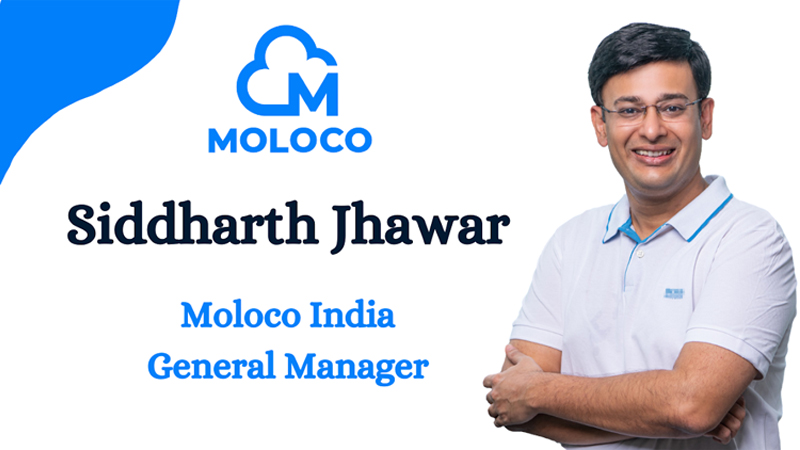
  • “Bad ads are spam but good ads are content”: Moloco India’s Siddharth Jhawar

    “Bad ads are spam but good ads are content”: Moloco India’s Siddharth Jhawar

    Mumbai: Ad personalisation isn’t just about tailored ads, it’s about transforming them into engaging content for enhanced user experience. Moloco, a multinational adtech company pioneering machine learning, is at the forefront of this revolution. In a strategic partnership with Viacom18 and JioCinema, Moloco’s advanced capabilities are reshaping the landscape of Indian advertising.

    From combating ad fraud to leveraging 5G for programmatic innovation, Moloco is driving tangible results for advertisers while prioritising user privacy. With success stories like Zupee’s 5x growth and significant user jumps for Rummytime, Moloco’s vision for India extends beyond market growth—it’s about fostering innovation and empowering businesses to thrive in a dynamic digital ecosystem.

    Indiantelevision.com caught up with Moloco India general manager Siddharth Jhawar to talk about growing concerns about ad fraud and privacy in the Indian market, the future of programmatic advertising in India, and much more…

    Edited Excerpts:

    On Moloco addressing growing concerns about ad fraud and privacy in the Indian market

    We believe that complete transparency, constant vigilance, & working with trusted partners are critical to ensuring that advertisers and customers are protected from fraud and privacy concerns.

    Moloco ads reports advertising spends to the most granular level, which empowers advertisers to pressure-test the quality of their traffic for any suspicious activity. For instance, we capture timestamp data and then analyze whether the time taken between viewing an ad, clicking on it, installing an app, and making a purchase are coherent with expected customer behaviour. It certainly helps if an advertiser works only with reputed channels, because it minimizes the risk of fraudulent activity.

    First-party data is critical for a machine learning engine to become intelligent in identifying high-value users of an advertiser. Hence it becomes even more important to adopt the highest standards of safety and privacy to help companies grow while ensuring their customers’ privacy.

    On Moloco envisioning the future of programmatic advertising in India, with the advent of 5G

    Moloco ads processes seven million requests per second. We take 14 milliseconds to make a deep neural network prediction. Building this kind of infrastructure has taken us more than a decade, and it helps that network speeds are improving. The advent of 5G will support the nature of innovation that we do in terms of speed and efficiency of computational infrastructure.

    On Moloco’s approach to ad personalisation and its impact on user experience

    Bad ads are spam but good ads are content. If an ad can be hyper-personalised to a user and their context, it improves the customer experience and also gives better returns to an advertiser.

    The trends we see today are that customers want great but inexpensive service without being bombarded with ads, advertisers want maximum returns on every rupee spent, and platforms want to grow fast while also being profitable. Personalized ads address these needs by enhancing the customer experience, delivering measurable outcomes to advertisers, and boosting advertising revenue for platforms. But this is easier said than done. There are almost five billion internet users in the world today. We can not expect any two customers to be exactly the same. But when the scale is massive, 1-1 targeting becomes computationally tough. This is when companies need world-class machine learning systems to support them. Moloco uses machine learning that works on an advertiser’s first-party data and helps them show hyper-personalised ads to users while also optimising bid prices and probabilities in real-time – that is tough, but when done right, can be valuable to both advertisers and customers.

    On the strategies that Moloco employs to effectively integrate in-game and mobile advertising for maximum engagement

    Showing relevant and hyper-personalised ads to a user on a gaming app improves their engagement levels on the app. India’s gaming industry makes about one-fifth of its revenue from in-app advertising, and this trend is expected to grow further.

    On Moloco’s approach to operational machine learning and its significance in optimising ad campaigns

    Operational machine learning is special in four ways – it is autonomous, it involves real-time predictions, it can work at massive scale, and it is highly adaptable to the context. While machine learning and artificial intelligence have become household terms now, building an operational machine learning system at scale is a problem that very few companies in the world have effectively cracked.

    We use this operational machine learning system to train on an app’s first party data, identify high-value users, and efficiently bid for them on the open internet – this helps the app acquire more high-value users which can grow their revenue and profitability.

    On Moloco’s partnership with Viacom18 and JioCinema exemplifying its commitment to revolutionising the ecosystem in India

    Viacom18 is building one of the largest streaming platforms in the world and we are proud to be their ad-tech partners. The platform has immense scale and saw 32 million concurrent users during IPL 2023 – we use Moloco’s machine learning and ad-serving capabilities to serve relevant ads at astronomical scale on JioCinema.

    On any success stories or case studies where Moloco’s solutions have driven tangible results for advertisers in India

    Within a matter of 18 months, we have created a measurable impact on several industries and digital platforms in India. Moloco ads works with nine of the ten largest gaming apps in India and we have driven high-quality user growth for them. Our partner Zupee attained 5x growth and 3x return on ads spend targets using our ML engine. Rummytime from the Gameskraft group saw a significant jump in their high-value users. We also used our monetisation solution for CityMall to help them build an in-house advertising business and increase ROAS by 900 per cent. There are over 40 apps who have benefited from Moloco’s machine learning in India.

    On Moloco’s plan to further expand its footprint and partnerships in the Indian market moving forward

    India is a unique region for Moloco. Not only is the India market a small yet fast-growing region, India is also emerging as an innovation hub of Moloco. The entrepreneurial activity and scale in India make it an exciting place to develop machine learning products. For this reason, we are also building a global engineering centre in Bangalore, so that we can build products in India that can be scaled to the rest of the world.


  • 1 percent improvement in marketing capability fit is linked 2.5 percent increase in sales growth: MMA Global study

    1 percent improvement in marketing capability fit is linked 2.5 percent increase in sales growth: MMA Global study

    MUMBAI: As per a global study by MMA, a 1 percent improvement in marketing capability fit is associated with a 2.5 percent increase in sales growth and 2.35 percent increase in market value. Based on this insight, MMA has developed a structured approach by creating a capability fit map for organisations to evolve into winning marketing organisations. 

    MMA India, a part of MMA global hosted the 11th edition of its biggest marketing event “MMA Impact India 2022 – The Future of Modern Marketing” with key stakeholders across industries to champion the theme of enabling organisations to evolve into winning marketing organisations. 

    Popularly recognised as a credible marketing think tank that brings effective solutions for marketers, MMA also unveiled three informative reports titled “Brand Safety Reimagined: A Toolkit for the Modern Marketer”, “Modern Marketers Guide to Leveraging Data” and “Martech 2022 and Metrics that Matter” at the event. 

    The Digital Marketer Brand Safety survey 2022 revealed that while knowledge of brand safety guidelines exists, the implementation is weak in India. The Brand Safety Reimagined toolkit report is an initiative by MMA to highlight why brand safety and suitability need to be part of the marketer’s agenda and explains why it should be owned by marketing organisations. The Modern Marketers Guide to Leveraging Data and Martech report highlights that most organizations have 25 percent to 75 percent data aggregated in a unified data mart. However, many organizations lack the clarity of how unified data can help in improving the connected customer experience.

    In addition to these two toolkits, MMA also unveiled a white paper titled ‘Metrics that Matter’ which is an MMA India Board initiative with meta. It talks about two common key concerns: ‘What are the metrics that matter and must be measured?’ and ‘How do we measure the cross-media impact of advertising across all digital and non-digital media’?

    MMA India country head, board member Moneka Khurana said, “Our theme of Impact this year of evolving into a winning marketing organisation is more inevitable today than ever before. We are in an era of Digital Darwinism where technology and consumers are evolving faster than businesses can naturally adapt. 52 percent of companies on the fortune 500 list have become obsolete in the past 20 years. Evolving is no longer an option, it is a necessity to succeed. At Impact this year, we have unveiled a framework that helps businesses evolve with the ever-changing consumer”.

    MMA India board chair, L’Oréal India managing director Amit Jain said, “The interaction between consumers and brands has been evolving rapidly – it is closer, personal, powerful, and pervasive. Hence, the marketing function needs to be nimble and swift to effectively cater to this evolution. Winning Marketing Organisations need to keep customer value and company value at the heart of all their initiatives. To create a strong recall among consumers for your brand, effective storytelling is key. If you have a good story, there is no reason why a customer will not connect with your brand”.

    The sessions focussed on the tenets of engagement, experience and exchange -commonly referred to as the ‘3E’ formula to attract, acquire and retain the consumer through effective marketing. This year, at Impact 2022, leaders and experts are discussing, debating and having a constructive discourse on the aspects of the winning marketing organisation framework. It is a fresh take on strategies to retool the marketing field, so that brands can innovate on their product plans.

  • Global ad fraud rates dip in 2020, but brand risk on the rise: IAS study

    Global ad fraud rates dip in 2020, but brand risk on the rise: IAS study

    NEW DELHI: As the world underwent a tectonic shift in 2020, sparking evolution in consumer behaviour, brands had to resort to innovative ways to target their TGs. With greater time spent at home, TV viewing increased, as did online video consumption and uptake of gaming, leading to people interacting with advertisers on new, diverse platforms. And as is the case in times of crisis or economic slowdown, there were concerns that businesses may resort to less than fair means to sell their product or services. But in a positive sign, overall ad fraud rates have improved in the second half of 2020 globally, according to the H2 2020 Media Quality Report (MQR) released by Integral Ad Science (IAS) a global leader in digital ad verification. 

    Ad fraud rates improved in H2 2020

    As marketers all across the globe adopted advanced techniques to detect and prevent fraud, global ad fraud rates improved overall, while optimised-against-ad-fraud levels dropped across all devices and environments. 

    Ad fraud is the fraudulent representation of online advertisement impressions, clicks, conversion, or data events to generate revenue, and marketers have been using several tools to measure and prevent possible ad fraud. The report states that global fraud rates among optimised campaigns dropped between 0.3 to 0.8 per cent worldwide. On the other hand, non-optimised campaigns registered a 5.1 to 8.6 per cent drop based on device and environment. 

    At the country level, India contributed to 1.4 per cent ad frauds in the desktop environments. Even though most of the countries witnessed an improvement in ad fraud levels, Japan and Australia became the only two markets where ad fraud rates significantly increased. 

    Brand risk increased 

    However, during the same period, the brand risk increased across several categories. The study conducted by IAS calculated brand risk based on the number of pages scored as a medium or higher risk to brands. Finding indicate that adult content was the primary driver that led to a surge in brand risks among all categories globally. 

    The report stated that mobile web video contributed the highest for global brand risk at 8.6 per cent. Hate speech content also contributed to brand risk, especially on desktop video. Indonesia is the riskiest market for brand advertising in both desktop display and mobile web domain, while Canada was the only market to witness a decrease in brand risk. India recorded a total brand risk of 1.8 per cent on desktop display and a 2.8 per cent on mobile web display. 

    Viewability rates show mixed results

    As consumers continue to rely on digital media, viewability rates showed mixed results. According to the report, connected TV (CTV) viewability topped the video viewability rankings worldwide. CTV viewability reached 93.3 per cent globally, and it was followed by mobile app video viewability at 92.6 per cent. Mobile web video viewability increased by more than two per cent and reached 73.7 per cent. 

    "As marketers evolved their strategies in the second half of 2020, our latest MQR report shows greater adoption of tools that mitigate ad fraud and brand risk around digital content,” said IAS chief marketing officer Tony Marlow. “These unique insights also showcase the huge opportunities for marketers related to contextual targeting and emerging platforms such as CTV. Right now, every impression counts, and ensuring ads are viewable by real people in the environments that align with campaign objectives has never been more important.'' 

  • Ad fraud: The aftermath of digital advertising

    Ad fraud: The aftermath of digital advertising

    NEW DELHI: In the past four months due to the Covid2019 crisis, customers have been compelled to embrace technology in their daily lives whether it's ordering grocery, food, rapid adoption of OTT, VoD, or games. Hence, leading to an influx in the digital economy. As the adoption of digitisation happens at a large scale, the chances of ad frauds increase and programmatic advertising is no exception. Ad fraud is probably one of the most poignant points of fraud in any industry. Programmatic digital advertising fraud is a deliberate, malicious activity that manipulates with the delivery of ad content and prevents its serving to the targeted audience.

    Xaxis India country lead Bharat Khatri, in a web meet, discussed how ad fraud is denting programmatic advertising in the digital landscape. 

    The general conception about digital advertising is that display ads on digital have a benchmark of viewability around 60-65 per cent in India which means if you’re serving 100 impressions on display ads, only 60 per cent of the ads are being seen.

    Digital has stronger power because digital brands can actually measure which half of the advertising is viewable and which half is not working. Every impression served on digital can be measured on all three aspects – viewability, engagement or the impression served with the audience.

    In today’s context, BAV serves as a key benchmark for buying quality inventory because it gives, ‘human viewable impression’, ‘decreased invalid traffic’, and contextually relevant ad placements.

    Brand safety 

    Brand safety refers to considerations, practices, and tools to ensure that advertising does not appear in a context that is inappropriate for a brand. Digital brings power in terms of brand suitability and brand safety.

    YouTube is one of the channels that come under scrutiny because YouTube as a publisher has a lot of user-generated content. YouTube has a brand safety channel YouTube has partnered with 3rd party tech & data companies to help with brand suitability aspect on YT Videos, Channel factory is one of the partners called the channel factory, it is focused on measuring the role of content, its quality level, safety level, and relevance. Contextual targeting is available on ad-supported by YouTube channels using proprietary guard and graph technology.

    Custom targeting slates can be applied to YouTube ad buys.

    Ad fraud

    Ad frauds mean invalid traffic, which either comes from non-human activity or there are devices that are accessed by humans but controlled by machines.

    Impressions generating from a deliberate activity to stop the proper delivery of ads to the relevant audience at the right time. There are different ways ad frauds are taking place be it human or non- human. Hackers use code to create bots able to take orders from botnet centers. Users unknowingly download and install bot engines on their computers. Bots are instructed to visit premium sites, picking up desirable cookies, and then visit fraudulent sites.

    The highly trafficked fraudulent sites use exchanges and networks to attract advertisers, ads are continuously served to bots, and botnet operators get paid.

    People have also started doing domain spoofing on digital for quite a long time

    Viewability

    MRC or Media Rating Council is a body that tells about the viewability aspects of the digital. As per MRC if you are running a digital ad, display viewable impressions are counted if at least 50 percent of pixels on screen for one continuous second. Video viewable impressions are counted if at least 50 percent of pixels are on screen for a continuous second.

    However, as per Group M viewability standards, Display viewable impressions are counted if at least 100% of pixels are on screen for 1 continuous second. Video viewable impressions are counted if at least 100% of pixels are on screen for 50% of the video duration (capped at 15 secs) with sound on.

    An ad that is not viewable has no value. Viewable ad impressions are a measurement of true reach. Optimising towards viewable inventory allows us to sieve out low-quality sellers and buy more efficiently.

    Viewability is all about the type of place you buy, and the pricing you pay to the publisher.

    Follow Tellychakkar for the consumer facing news & entertainment

  • Countering the industry-wide challenge of digital ad frauds

    Countering the industry-wide challenge of digital ad frauds

    Digital advertising has brought with it an array of unique benefits like precise targeting, measurable and trackable performance indicators, and the ability to provide extremely personalised customer experiences. Advertisers can now practically do things that they could only dream of earlier. However, it has also brought with it the menace of ad frauds. Advertisers are struggling with ad frauds since quite some time. All ad frauds can be loosely defined as any deceitful online activity meant to mislead the advertisers, making them pay for low-quality or fake traffic. Ad frauds wipe out huge chunks of advertising budgets, causing huge losses to the companies. This has created negative connotations about digital advertising solutions in the minds of businesses.

    A few years ago, the advertising industry witnessed two of the greatest ad frauds ever – Hyphbot and Methbot. They decimated gigantic volumes of ad dollars. Methbot churned out revenue of $3 to $5 million each day by targeting premium video advertising ecosystem. Hyphbot was 3-4 times the extent of Methbot and generated up to 1.5 billion ad requests each day. These figures speak for themselves about the urgency to address these problems.

    It is about time to fix this. But, unfortunately, it is easier said than done. As technology evolves, the nature and sophistication of ad frauds evolve with it. It is a game of whack-a-mole, between the industry and the fraudsters, wherein as soon as one problem is addressed, they continuously come up with new and different ways to continue the menace. In order to solve the problem, we first need to understand it well by getting into its nitty-gritty. So let’s take stock of the situation and have a look at the different types of ad frauds advertisers are facing.

    Bot Traffic/Non-Human Traffic (NHT)
    Ad consumption or other online traffic generated by bots or automated websites

    Click Farms
    These consist of a large group of human workers who view or click on the ads on behalf of a third-party, who gain economic benefits from those illegitimate clicks. To do this, these workers are given minimal compensation.

    Sourced Traffic
    It is a way by which publishers acquire more visitors to their sites through third-parties. It is basically artificially generated inorganic traffic.

    Domain Spoofing
    It facilitates passing off a low-quality website as a premium website. Thus, when a user clicks the link, the fraudsters get access to the ads, which are run on the illegitimate site.

    Ad Injection
    It is the practice of inserting ads into any online inventory like a website or an app without the knowledge and consent of the publisher or the owner of that property.

    The ones mentioned above are only a few ways in which ad frauds are perpetrated. The field of digital advertising is highly dynamic. With the addition of new technologies each day it keeps evolving continuously. Fraudsters are constantly coming up with ingenious ways to adapt to these advancements and fulfill their objectives. As a result, brands have to be constantly alert and have to match the pace of technology, in order to be a step ahead of the curve. However, unsurprisingly, it becomes difficult for them to be constantly updated about everything.

    One of the ways to address this problem is to ensure that advertisers partner with the right kind of programmatic platform. A platform which provides a good level of security on-boarding fraud detection and fraud prevention partners, that helps to filter out fraudulent ads and illegitimate traffic in real-time. The platform must also follow the standards set by industry watchdogs like The Internet and Mobile Association of India (IAMAI), Trustworthy Accountability Group (TAG), The Interactive Advertising Bureau (IAB), etc.

    Next, brands must make sure that they measure the conversions and goals instead of measuring clicks.  Measuring clicks as an indicator of performance makes the brand more susceptible to bots and NHT. Also, they must work with publishers who have implemented ads.txt – IAB’s protocol designed to help keep ad frauds in check. It involves publishers hosting a text file on their web servers. This file lists all the authorised dealers of the publisher’s inventory. Also, publishers should be transparent with advertisers about the source of their traffic.

    Ad frauds are a problem not only for advertisers but they also harm publishers. Ad frauds devour a huge chunk of their revenues and also raise a question in the publishers’ credibility. Thus, ad frauds are affecting the entire ecosystem at large. Industry-wide standards are necessary to control this industry-wide challenge. It calls for all the entities across all parts of the advertising ecosystem to launch concerted efforts in fighting-off ad frauds.

    (The author is CEO and Founder, Vertoz. The views expressed here are his own and Indiantelevision.com may not subscribe to them)  

  • Havas launches meta quality barometer to tackle ad fraud

    Havas launches meta quality barometer to tackle ad fraud

    MUMBAI: As per eMarketer ad fraud is a top concern for both media buyers (33 per cent) and suppliers (44 per cent), and both groups also show great concern for ad viewability.


    Adledge estimates that only 42 per cent of all impressions served were considered ‘visible’ according to the definition of the Interactive Advertising Bureau and eight per cent were displayed in a potentially damaging context for the advertiser.


    White Ops recently reported that non-human traffic (aka bots) alone will cost digital advertisers worldwide over $6.3 billion this year. 


    To improve media inventory and campaign quality, Havas Media Group has launched a unique Meta Quality Barometer, based on a comprehensive, inclusive approach to data.  The Meta Quality Barometer from Artemis Alliance delivers continuously updated data across global, pluri-media campaigns, to share with all stakeholders (technology partners, media publishers and clients) to optimise investments.


    Havas Media Group global managing director Dominique Delport said, “Confidence in data quality is a critical issue for our industry. The scale of fraudulent inventory generated by sophisticated ‘bots’ is extremely concerning and neither media vendors nor agencies are safe. We need to bring trust and clarity back for our clients. For these reasons Havas has invested in our best-in-class Artemis Alliance data platform for over a decade. Now it manages 100 per cent of our online campaigns, harvesting over 300 billion secure and disaggregated data points each year and was recently awarded ISO27001 certification by Bureau Veritas. Its focus – to create an actionable measurement for viewability, brand protection, media inventory and campaign quality.” 


    He added, “As a result, we are delighted to launch the first Meta Quality Barometer for our industry. Helping us to connect the dots of the most advanced tech providers, delivering a unique and systematic “meta” barometer on data integrity, security and brand safety. This will facilitate and boost our communications with media owners to increase the quality of inventory for our clients. I am extremely proud of the teams in Artemis Alliance who have formalised a systematic approach to challenging industry practices so that we can help to provide better business solutions for our clients and media partners.” 


    Leveraging its extensive experience in handling event level data, Artemis Alliance collects detailed and raw data from all of its technology partners (Adledge, Catchpoint, ClarityAd, Hub’Scan, WhiteOps, Integral Ad Science and Peer39/Sizmek). That data, at its most granular level, is used to analyse and score the quality of the media inventory by industry, by market and by media owner.


    Havas Media Group EVP Media Futures & Innovation Rob Griffin summarised, “This is a win-win deal. We can now pull in data from across all screens, technology companies and media partners to provide the first external, objective review of outcomes across the five critical areas of Compliance, Experience, Impact, Context and Traffic.  While we can’t guarantee 100 per cent viewability or zero fraud, we can make a commitment to our clients and our publishers to improve the quality of inventory available and make the information clear and easy to activate. The ultimate win, therefore, will be for clients, who will benefit from smarter solutions and cleaner data to drive investments and business decisions.”


    With the help of extensively researched data, the Meta Quality Barometer covers five main areas:


    1. Compliance: Matching impressions against purchased media


    Artemis Alliance rates media owners’ compliance with campaign directives: promise (purchased versus delivered media) and technical qualifications (specifications and requirements).  Artemis Alliance constantly audits both tagging systems (with partner Hub’Scan) and creative work provided for each campaign (with partner ClarityAd).


    2. Experience: User experience 


    Artemis Alliance takes into account user experience and user interaction with campaign messages, in particular how long it takes for pages and ads to load for users (with partner Catchpoint), as well as where the ads are located on the page.


    3. Impact: Viewability and performance auditing


    Artemis Alliance can correlate performance (in particular in terms of audience) and viewability of media campaigns, to gauge their impact, through automatic and personalized tracking for each advertiser and for each action. 


    4. Context: Media content and brand safety


    Brand safety services are codes inserted in campaign tags, which allow Artemis Alliance to protect a brand’s image, quantify the number of blocked impressions (undesirable context), and identify the context where these impressions were delivered (with partners Adledge, Peer39). 


    5. Traffic: Securing campaign distribution


    To combat the rise of illegitimate Internet traffic worldwide, Artemis Alliance provides teams with both manual and technological solutions. Media teams identify and blacklist all suspect URLs based on abnormal click-rates, coded URLs and pages without ads. Artemis Alliance also works with several anti-fraud technology solutions to better protect our campaign results (with partners Adledge, Peer39, Integral Ad Science, White Ops, etc).