Tag: Ad cap

  • The puzzling case of TRAI’s ad cap

    The puzzling case of TRAI’s ad cap

    MUMBAI: The Telecom Regulatory Authority of India (TRAI) found some unlikely supporters on the ad cap issue last week. On the one hand, Zee Entertainment, Star India and Viacom18 approached the Telecom Disputes Settlement and Appellate Tribunal (TDSAT) saying that they were in favour of a limit to how much advertising should be allowed per hour and that they would like to become respondents to the cases filed by other broadcasters. Among these figure the News Broadcasters Association (NBA), regional and music channels all of whom have been opposing the regulation and have sought relief from the tribunal. The other supporter of the ad cap is an NGO called MediaWatch which said the ad cap should be extended to cable TV also and that TRAI should also ensure that broadcasters don’t cross the line on audio levels of commercials and also specialised ad formats on the TV screen.

    Though the intervention filed by Zee, Star India and Viacom18 was rejected in the hearing that took place on 31 October, the tribunal has asked the networks to file a separate application, which would be heard only after the main case filed by NBA, music and regional channels, the next court hearing for which is 11 November.

    “Well! We had filed for an intervention which was postponed,” is what Star India president and general counsel – legal and regulatory affairs Deepak Jacob said when Indiantelevision.com contacted him to enquire more about the case. However, he refused to divulge any more on the matter.

    The three mainline Hindi GECs have been following the 10+2 ad cap regulation since 1 October, which was the deadline set by TRAI.

    Industry watchers are asking what is it that made the three networks come out so blatantly in support of the ad cap when fourth network Sony Entertainment has not been following the TRAI diktat at all?

    “They are in a position of strength as they have a tremendous share of viewer eyeballs,” says a media observer. “Hence, they can afford to take a hard stance in favour of the ad cap. Their belief is that advertisers have no alternative but to advertise on their channels. Their following the ad cap allowed them to jack up air time rates which more than made up for the drop in inventory. They would ideally like the status quo of lower advertising time to continue as it has benefited them and will continue to benefit them because paucity will result in better yields and rates.”

    Another media observer believes that the approaches that the leading GECs have taken will add to the chaos and confusion. “The TV broadcast industry seems to have learnt very well how to stall any disruptive regulatory changes,” says a media planner laughingly. “You have several opposing and pro-voices speaking up at the same time which tends to lead to policy paralysis.”

    She elaborates: “On the one side, the advertisers, agencies, news broadcasters, music channels and niche channels are against the TRAI ad cap. One of the major networks are also opposing it; while the other three are showing that they want it. It will be tough for anyone to decide which direction should things move. If the ad cap is on – in an election year – the news channels will take umbrage and the government cannot afford to have a negative fallout in an election year. If the ad cap is stalled for a while, that is good for everyone: the leading GECs have already got rate hikes of some sort; Sony can join in and hike rates and finally the news channels will not be faced with shriveling air time revenues. So they will be happy.”

    “We are also taking a leadership position by complying with the TRAI regulations,” says an executive with one of the three networks. “We believe the time for change on TV advertising is now and hence are supporting it.”

    What move will the telecom industry’s conscience – the TDSAT – and the regulator – TRAI- make next? Our guess is as good as any, but the ad cap game play is surely beginning to resemble a very complicated game of chess.

  • Ad cap petitions adjourned till 11 November

    Ad cap petitions adjourned till 11 November

    NEW DELHI: The case challenging the adcap regulations sought to be implemented on television channels was today adjourned to 11 November by the Telecom Disputes Settlement and Appellate Tribunal.

    TDSAT Chairman Justice Aftab Alam and member Kuldip Singh also rejected the interventions filed by Zee, Star and Viacom18, with the Tribunal asking them to file separate applications.

    The News Broadcasters Association had moved TDSAT challenging the constitutional validity of the regulations of Telecom Regulatory Authority of India enforcing the ad cap.

    Several other broadcasters – mostly general entertainment channels – had later moved TDSAT, but the Tribunal had in 30 August accepted the argument by NBA that the cases of the general entertainment channels could not be clubbed with the petition of NBA.

     The news channels are seeking relief from the 10+2 ad cap regulation prescribed by TRAI.

    Senior Counsel Abhishek Manu Singhvi on behalf of the NBA sought time as the pleadings were not ready.

    Some regional channels from Kerala also wanted to intervene as petitioners, but TDSAT said their matter would be heard after the main hearing.

    Channels that sought to move to the court today included 9X, B4U, TV Vision and Pioneer Channel Factory of Mumbai, Sun TV Network of Chennai, E24 Glamour, Polimer Media, Reliance Big Network, Eenadu TV, Sarthak Entertainment and Raj TV.

    Later, some general entertainment channels including music channels had also approached TDSAT in various petitions and the Tribunal had decided to hear these matters after the NBA matter.

    Counsel for TRAI said that an anomalous situation had been created with some channels having accepted the adcap with effect from 1 October. It was therefore requested that the matter be resolved once for all.

    Meanwhile, TRAI had been forbidden on 30 August from taking any ‘coercive action’ against news channels who are not abiding by the agreement relating to advertisement time on news channels.

    The Tribunal also said that while the news channels will maintain weekly records of the advertising time per hour on a weekly basis, they will not be required to submit this to the regulator as being done at present and will only submit these to TDSAT at the hearing of the case.

    Counsel for the NBA A J Bhambani had said on 30 August that a delegation of the Indian Broadcasting Foundation had submitted a formula to the regulator but that did not preclude the broadcasters from challenging the validity of the Regulations. He also said that this was only a compromise reached between the broadcasters and the regulator and could not form the basis of penal action since it was not a regulation or legal provision. He had added that there were many members who were common to both the IBF and the NBA, and therefore the IBF had submitted a ‘proposal’ on 29 May this year, which the TRAI accepted. But this could not be construed as a regulation.

    Even otherwise, he argued that TRAI was only empowered by its own Act to make ‘recommendations’ on issues like advertisements and not bring about or enforce regulations and resort to prosecution.

    When the law was invoked by the Authority in May 2012, it was disputed by television broadcasters which had also challenged the jurisdiction of TRAI in this regard before the Tribunal.

  • The year of the big risk

    The year of the big risk

    MUMBAI: As the headline states, Year 2013 will go down in history as the year of the big risk in Indian television and media. Whether it was with big jump into cable TV digitisation or in the area of experimenting with new programming formats or working on changing the status quo in TV ratings or in battling the Telecom Regulatory Authority of India’s (TRAI’s) ad cap, the year saw everyone playing a long hand. India’s economic growth slowed down; inflation went on the rampage as did the dollar when it appreciated drastically against the rupee, but the industry took things in its stride.

    The biggest of the gambles was the leap of faith the industry took (as though it had a choice) on the government mandate of digitising India’s fragmented nearly 100 million subscriber strong cable TV market. With no clarity on how it would roll out, everyone in the ecosystem plunged ahead – almost recklessly – into phase I and phase II, distributing nearly 18 million set top boxes (STBs). This at a time – when even a year later after digitisation commenced – there is no understanding between the multi-system operators (MSOs) and the local cable operators (LCOs) or the broadcasters on who would do the billing and take a call on how the revenues would be split post the completion of the set top box (STB) seeding and who would own the subscriber.

    The other pieces of good news during mid-2013 were the $110 million investment the Sameer Manchanda-led MSO DEN Networks attracted from Goldman Sachs and the $18.5 million that Hathway got from Prudence.

    The industry, however, took to digitisation in fits and starts. Some cities such as Chennai, thanks to a state government with a vested interest in cable TV, chose to not obey the centre’s digitisation order. Others went to court and delayed things a bit. The TRAI and the ministry of information and broadcasting (MIB) however kept at it doggedly. Though both played a soft hand, they pushed the industry hard. Deadlines were extended, consultation and supplementary consultation papers were issued and recommendations made to accommodate the industry. But they kept at it and the fact is that STBs moved into Indian cable TV homes on a scale unprecedented globally.

    Some roadblocks remained in the 42 towns where digitisation has made some progress: complete collection of Consumer Application Forms (CAFs), incorporation of subscriber information into the subscriber management system and consumer billing. LCOs have been loathe to part with all their subscriber data, as there is no surety that the MSOs will not cut them off once they have all the info.

    But just as the year was ending, light was showing through, with Hathway and the Maharashtra Cable Operators Federation (MCOF) working on hammering an agreement that could put in place a business model for LCOs and MSOs that could be replicated nationally. The other pieces of good news during mid-2013 were the $110 million investment the Sameer Manchanda-led MSO DEN Networks attracted from Goldman Sachs and the $18.5 million that Hathway got from Prudence. The efforts of InCable to set up HITS under the leadership of Tony D’Silva and the Rs 300 crore investment by Grant Investrade Limited (GIL) in InCableNet and InDigital was also notable. The cherry on the cake was the setting up of cooperatives across the country.

    DTH players, were not so lucky. Their efforts to consolidate or expand or raise capital did not meet with much success.

    DTH players, however, were not so lucky. Their efforts to consolidate or expand or raise capital did not meet with much success. Reliance Digital TV and the Sun group talked for a large part of the year to merge their respective DTH services, but the dialogue stopped when expectations on valuations by each of them did not match. Airtel also had many conversations to raise capital from investors, but was unsuccessful. Tata Sky, however, managed to get an injection of funds from the Tata group, even as it failed to convince ISRO to give it its transponders which it so desperately needs to expand its consumer offering. But it has not deterred it as it went ahead and started a massive box replacement programme, upgrading millions of consumer STB’s to MPEG-4 so that it could pack more channels into homes.

    The second gamble that the broadcast industry took was when it took on the advertiser and advertising agency fraternity in the gross vs net billing issue and on who is liable for the tax on the commission that agencies get from marketers. Advertisers and agencies had threatened to cut off the advertising lifeline for broadcasters if they even tried to change the century old tradition of gross billing. Indian broadcasters called their bluff, and even blacked out TV commercials for a day. Belligerent agencies, advertisers and broadcasters glared at each other for a while. Finally, a solution was worked out; net billing was introduced – in a format which was to the satisfaction of all concerned, including the tax collector who accepted that broadcasters need not make any payments for past commissions made to agencies by advertisers.

    At one stage, seven TV networks walked away from TAM, leaving its future uncertain. TAM, broadcasters, marketers and agencies once again sat across the table and the ratings agency agreed to change the way it would deliver the viewership numbers. TV ratings were jettisoned and viewership per thousand was ushered in.

    The third punt the industry took was in the area of reaching a consensus on changing the Indian TV ratings currency run by TAM Media Research for more than a decade. The year commenced with news broadcaster NDTV continuing with its case in a New York Supreme Court, charging TAM Media and AC Nielsen of corruption and manipulation of TV ratings. The court turned down NDTV’s plea. Though later, it went in appeal, which was also dismissed by an American judge, who asked the Indian newscaster to fight its case in Indian courts.

    TAM  Media spent the year fighting fires on several fronts. The pubcaster DD was pretty irked with it as the network’s shows did not generate much rating despite its wider reach and penetration in both urban and rural India. TAM at the beginning of the year added less than class 1 (LC1) towns to its reporting to find a solution around that. Simultaneously, it started reporting on the digitised phase I and phase II towns. The change in the universe saw the ratings of some private broadcasters plummet, while those of others went up. Sony Entertainment Television attributed the drop in ratings for its much touted IPL to the addition of LC1 towns.

    This got the private broadcasters’ goose. One by one like dominoes around mid-this year, they announced that they were cancelling their subscriptions to TAM as they had lost faith in the currency. At one stage, seven TV networks walked away from TAM, leaving its future uncertain. TAM, broadcasters, marketers and agencies once again sat across the table and the ratings agency agreed to change the way it would deliver the viewership numbers. TV ratings were jettisoned and viewership per thousand was ushered in.  

    BARC remained in the news throughout the year, with its several meetings, road shows and several biddings. As we came to the end of the year, BARC had finalised the French audience measurement company Médiamétrie as its ratings partner, using audio watermarking technology.

    The industry also quickly revived a comatose Broadcast Audience Research Council (BARC), hired a CEO in Partho Dasgupta, and quickly went about shortlisting vendors, suppliers in a bid to have another ratings system in place by mid-2014. BARC remained in the news throughout the year, with its several meetings, road shows and several biddings. As we came to the end of the year, BARC had finalised the French audience measurement company Médiamétrie as its ratings partner, using audio watermarking technology.

    2013 was also the year of the TRAI, which is led by its warlike and extremely determined chieftain Rahul Khullar. He went around whipping almost everyone in the TV ecosystem in a bid to drive ahead digitisation and also the seeding of boxes in phase I and II towns. And then he pursued the MSOs diligently to get aggressive on customer application forms and billing. The TRAI was hyperactive to say the least. Consultation papers, open houses, private meetings – it went the whole hog in trying to bring about some change and order in the way the industry operates. At the time of writing, an extremely irritated regulator had once again pulled up broadcasters and MSOs asking them to sign inter connection agreements with the latter being told to announce subscriber packages, so that true digitisation could be said to have been achieved.

    Amassive shot in the dark that the broadcast industry took was in challenging the TRAI’s stance on curtailing TV commercial air time to 12 minutes. TV channels and networks approached the TDSAT and appealed that the TRAI had no right to do what it was threatening to implement and that it would damage the industry permanently.

    A massive shot in the dark that the broadcast industry took was in challenging the TRAI’s stance on curtailing TV commercial air time to 12 minutes. TV channels and networks approached the TDSAT and appealed that the TRAI had no right to do what it was threatening to implement and that it would damage the industry permanently. Just as its arguments were beginning to sink in through several hearings, there came the news that the Supreme Court, in another hearing, had declared that TDSAT is not the right platform to challenge TRAI regulations, the High Court is. What that meant was that the months of work done by TRAI, broadcasters and TDSAT came to nought and the argument moved to the High Court where the appeal would begin afresh.

    Year 2013 saw some new risk takers diving into the already competitive television market. Among these figure: News Nation, Zee Rajasthan Plus, Jia News, &Pictures, Zee Anmol, Star World Premiere HD, InSync and Romedy Now. But several others who were willing to roll their dice did not get government clearances. Estimates are that around 50 channels are awaiting licensing from MIB. Epic TV, Blue TV, Maha Movie are some of those which figure in this list. But the MIB released data in early December 2013 which revealed that around 784 channels have been licensed to beam over India. The MIB also cancelled 61 licences of broadcasters, in the wake of the collapse of the Saradha group, as they had provided insufficient information about changes they had made in the management or their operations after being licensed.

    Year 2013 saw some new risk takers diving into the already competitive television market. But several others who were willing to roll their dice did not get government clearances.

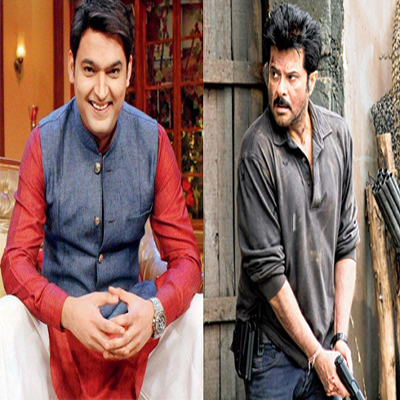
    On the Hindi GEC front, channels for the most part walked the tried and tested path in soap, drama, reality TV, though attempts at mythogolicals and historicals did bear fruit. Colors walked unknown terrain when its CEO Raj Nayak wagered with the Indian adaptation of American thriller24 with Anil Kapoor in the lead role, and also with a new stand-up comedy show Comedy Nights with Kapil. The first got critical acclaim; the second, a vast popular following. Nayak also gambled with seasons, bringing back shows such Na Bole Tum Na Maine Kuch Kaha for its second season.

    Star Plus continued to lead the genre for almost the entire year, with second, third and fourth places being traded between Colors, Zee TV, Sony, Life Ok and Sab. Period dramas and mythological drams such as Saraswati ChandraMahadevMahabharata from Star Plus and Life Ok did well with viewers. Staid old Zee was the real risk taker this year with its reality show –Connected Hum Tum (adapated from Armozia Formats). It tracks the life of ordinary folks on TV. India’s oldest existing private network flagged off shows such as Jodha AkbarBudha and added another leg to its DID franchise in DID Super Moms. It did phenomenally well for Zee TV. Sony too had a winner in its period drama – Maharana Pratap, even as its long serving CID,Adalat continue to keep it amongst the top six Hindi GEC roster. Life Ok was the surprise of the year as it has emerged as a strong contender. Channel V, Sony, Zee TV all refreshed their packaging and branding through the year.

    Colors walked unknown terrain when its CEO Raj Nayak wagered with the Indian adaptation of American thriller 24 with Anil Kapoor in the lead role, and also with a new stand-up comedy show Comedy Nights with Kapil.

    The year also saw channels risking with the film industry in a big way. Star India announced that it was forking out almost Rs 900 crore for exclusive telecast rights of all of Salman Khan’s and Ajay Devgn’s films which will be released till 2017. Then film maker Kamal Hassan attempted to premiere his film Vishwaroopam on DTH platforms but had to retreat when theatre owners protested.

    What started with Amitabh Bachchan in 2000, has now snowballed with Madhuri Dixit, Salman Khan, Mithun Chakraborty, Karan Johar, Shilpa Shetty, Anil Kapoor all becoming permanent fixtures on the small screen. Other film stars too made TV shows a must stop to promote their films. Whether it is a Hrithik Roshan or an Ajay Devgn, they definitely stopped over on the sets of a Taarak Mehta Ka Ooltah Chashmah or a reality show to promote their films. While this helps create excitement on the respective shows, too many appearances on television has made them seem rather deja vu for viewers.

    Whether it is a Hrithik Roshan or an Ajay Devgn, they definitely stopped over on the sets of a Taarak Mehta Ka Ooltah Chashmah or a reality show to promote their films. 

    Film folks turned to TV production too during 2013. Anil Kapoor co-produced 24, Sanjay Leela Bhansali produced Saraswati Chandra, Anurag Kashyap announced a fictional show starring Amitabh Bachchan, who is also reviving his production house Saraswati Audio Visuals to co-produce the show with Endemol. His wife Jaya Bachchan has also announced that she is going to make her TV debut. The Bachchans’ TV fiction show debut is much awaited as it is the septuagenarian who opened the doors for Bollywood’s big stars to host or be a part of non-fiction shows with his fabulous performance on Kaun Banega Crorepati.  

    Sports in India still means cricket for the masses. However, the year 2013 saw efforts being made to kick start other sports such as football, hockey, and even badminton through leagues. At the forefront of this was the Rupert Murdoch-owned Star India which coughed up Rs 3,851 crore to acquire the rights to domestic and international cricket from the Board of Control for Cricket in India until 2018. The deal covers 96 matches, including all the international matches India plays at home and local tournaments such as Ranji Trophy, Duleep Trophy and Irani Trophy. It even invested huge monies in becoming an associate sponsor of the Indian Premier League and followed it by paying close to Rs 200 crore to become the sponsor for Team India. This just a year after it scooped out close to Rs 1,700 crore to Disney to acquire its 50 per cent stake in their ESPN Star joint venture. The year also saw Star India rebranding and relaunching the six channels under the Star Sports umbrella Star 1,2,3,4,5,6 and introducing Hindi language commentary.

    Sports in India still means cricket for the masses. However, the year 2013 saw efforts being made to kick start other sports such as football, hockey, and even badminton through leagues. At the forefront of this was the Rupert Murdoch-owned Star India which coughed up Rs 3,851 crore to acquire the rights to domestic and international cricket from the Board of Control for Cricket in India until 2018.

    2013 has also been the year when Sony Entertainment’s billion dollar plus investment to acquire the rights to broadcast the Indian Premier League for 10 years was being questioned. Viewership ratings showed some slack, even as the entire league was embroiled in a betting and fixing scandal, which involved players from different teams. Fears were that viewers would be put off, but these were short lived and it is evident from the fact that Sony has started selling inventory for the 2014 edition at higher advertising rates than earlier years.

    In the meanwhile, on the news front, it was the year of pink slips. Almost every news network trimmed the fat on bloated payrolls as the economic crisis bit deeply. Efficiency is the buzzword today in television as TV networks grapple with a tough competitive environment, high costs, and shrinking margins. News channels like NDTV, Network 18 and Bloomberg reorganised their operations, and told excess staff to go home, with journos and camera crews being the hardest hit. Zee Media (earlier Zee News) too got shareholder approval to merge the group’s English newspaper DNA with itself. Its plan is to create an integrated newsroom serving TV, internet and print. It is quite likely that the process of doing this will result in excess staff being ejaculated. Already, its cousin sister channel Ten Sports relocated staff from Dubai to Noida, a move that saw many of them putting in their papers.

    On the news front, it was the year of pink slips. Almost every news network trimmed the fat on bloated payrolls as the economic crisis bit deeply.

    Efficiency was also the buzzword with advertisers, this year, in getting a better bang for the buck. Hence, companies such as Amagi Media saw takers for its geotargeting advertising service. Bengaluru-based Amagi Media announced its deal with Hindustan Unilever (HUL) and the Viacom18 kid’s channel Nickelodeon. The deal meant that an HUL TV commercial could run simultaneously on Nick nationally in different versions, depending on geographical location using Amagi’s DART platform. The platform also entered in a partnership with Zee TV, Zee News and Zee Business.

    With all the twists and turns in the year 2013, the upcoming year looks set to be even more interesting. Will the industry earn rewards for all the risks it took? Or, will it be forced to to continue to play the role of the great gambler?  That’s a bet we at indiantelevision.com  are not willing to wager on.
  • TDSAT-Ad cap: 2nd amicus curiae done, channels turn now

    TDSAT-Ad cap: 2nd amicus curiae done, channels turn now

    MUMBAI: The second amicus curiae Aman Ahluwalia continued his arguments today in the TDSAT-ad cap hearing. After giving the legal perspective yesterday, today he focused on the commercial implications of the ad cap regulation.

    Ahluwalia said that the Telecom Regulatory Authority of India (TRAI) has the power to implement licensing under section 11 (1) (a) of the TRAI Act as well as enforcing it on broadcasters through section 7 (11) of the Cable TV Networks (CTN) Act. There is no need for it to choose the CTN act. The TRAI’s procedure may have been faulty but the bench should not strike down the ad cap regulation on account of this.

    The bench wondered that when a licence is issued, the terms and conditions need to be read properly, and if the ad cap regulation issued by TRAI adds anything to section 7 (11) of the CTN act, then should it be accepted. The agreement between the licensor and licensee is only for section 7 (11) and if points like clock hour and reporting to TRAI come into the picture, it is in excess of the section.

    The bench said that one cannot change, modulate or supplement the terms of the licence. If TRAI had implemented it under sections 11 and 12 of the TRAI Act that address the issue of licensing and advertisements then such problems wouldn’t have come up.

    The amicus curiae read out the final draft report of the convergence bill which gives the definition of ‘broadcasting services,’ as it doesn’t have an exact one. He said that content, distribution and technical components all come under the TRAI act and content and distribution together mean carriage. By reading out reports such as the Nariman report, he chose to interpret broadcasting services to include content.

    Ahluwalia then proceeded to the commercial aspects. He told the bench that after reading the code in the UK, he saw that the ad cap may work for GECs while the news channels that have less viewership will be most affected by it. The only way revenue can be raised is either by digitisation when subscription revenue will go up, or by raising advertising rates. However, if subscription rates are jacked up, viewers may not pay, and resort to cord cutting, resulting in lower viewership, and comitantly lower ad revenues as they depend entirely on viewership.

    To support his statement, he also produced financial reports of Zee TV and the Sun Network which showed that their ad revenues were high as compared to news channels. Sponsored shows could be a way out for news channels to generated additional revenues but this could turn out to be dangerous as news could become coloured. And thus he suggested that genres should be dealt with differently.

    According to him, English news channels will be the most affected because advertisers will start turning the screws on them as viewership will quite likely drop off the cliff. The scenario could improve when DAS is implemented completely all over the country as by then subscription and ad revenues each will contribute equally to a company’s top line.

    Reading from an Ofcom (independent regulator and competition authority for the UK communications industries) report, he emphasized that TRAI’s ad cap regulation needs to be more precise in terms of the number of ads per half an hour, duration of the promos etc. Till DAS isn’t complete, it should not be implemented as, under Article 19 of the Constitution, broadcasters have the right to disseminate information and viewers have the right to receive plurality of information giving them the power to choose.

    If the regulation comes into effect now, many smaller news channels may shut down and the existing ones will generate less revenue and hence news could end up being coloured as only a limited number will be left to provide news.

    After Ahluwalia concluded, the News Broadcasters Association (NBA) counsel presented the rejoinder. He argued that TRAI’s analysis of the ad cap violations was incorrect.

    His second argument was that TRAI has the power to implement the terms and conditions between the licencee and licensor under section 4 A of the Telegraph Act that talks about teleport licences. It cannot implement it on the basis of the uplinking and downlinking policies.

    Teleport licences do not mention the CTN act at all and when TRAI is enforcing it on the basis of licensing then its line of reasoning needs to be read in the context of teleport licensing.

    The NBA counsel stated that TRAI cannot act against broadcasters under the uplinking/downlinking policy since it falls under the ambit of the Ministry of Information and Broadcasting.

    During its arguments, TRAI mentioned that broadcasters had suppressed documents related to licensing. The NBA counsel clarified that the data was about OB vans and teleports, which was available in the public domain.

    He added that, according to Ofcom, UK channels were allowed ad commercials of 9-12 minutes averaging and not per clock hour. Also, if TRAI were to enforce the ad cap, it should be under the teleport licence under section 4 A of the Telegraph Act.

    The NBA will continue its rejoinder tomorrow as well.

  • TDSAT-Ad cap: Amicus curiae No 2 takes over

    TDSAT-Ad cap: Amicus curiae No 2 takes over

    MUMBAI: The TRAI ad cap hearing has entered its final stages at the TDSAT even as the second amicus curiae Aman Ahluwalia came up spoke forth, following the completion of first amicus curiae Madhavi Divan’s arguments.

    Divan had opined that the Telecom Regulatory Authority of India (TRAI) has authority because duration of TV commercials is not content and quality of service is not a technical point. So the TRAI had the right to mandate any ad regulation under section 11 of the TRAI Act.

    Ahluwalia put forth the point that there wasn’t a necessity to get into the larger aspects as to whether TRAI has the right to deal with content or not because duration is not content. A decision can be made as to whether duration can be taken as content and if it is not then TRAI has the powers under section 11 of the TRAI act to deal with quality of services.

    Articles 19 and 14 of the Constitution will not come into the picture if it is held that duration is not content.

    He also said that he had personally done an average of ad timings on English channels for a week in September, after the 12 minute ad cap regulation came into effect. His finding was that broadcasters were doing an average of 17 to 19 minutes of TV commercials and it was not as grave as TRAI was making it out to be.

    The TDSAT bench questioned Ahluwalia that if there already was a provision in the Cable TV Networks (CTN) Act then what was the need to consider enforcement of regulating advertising under the TRAI Act. The bench added that it was difficult to understand that the regulation is the same as section 7 (11) of the CTN Act because they don’t have the same wording. To this Ahluwalia said that if they have powers under two laws but they have just used one then the two should be harmoniously constructed.

    Ahluwalia will continue on the commercial aspects of the the enforcement of the ad cap case tomorrow after which broadcasters will get a chance to submit their rejoinders.

  • TDSAT & Ad cap: TRAI almost done with its arguments

    TDSAT & Ad cap: TRAI almost done with its arguments

    MUMBAI: The third day of the arguments presented by the Telecom Regulatory Authority of India (TRAI) saw several crucial points being touched upon and the TDSAT also noting down points that could be pondered upon for rumination.

    The TRAI counsel Rakesh Dwivedi pointed out that if one reads section 7 (11) of the Cable TV Networks (CTN) Act then it must be read with the ad cap regulation because the regulator was using it only to enforce this section.

    Section 7 (11) states that the authority has the power to ‘seize equipment used for operating the cable television network if it is found to be breaching its other sections’.

    According to the TRAI, programmes and advertisements are different and the regulator is trying to prevent intermixing of these two and ensuring an increase in quality of service.

    The regulator also gave its version regarding Article 19 (a) of the Constitution saying that airwaves and frequencies are a public property of the government and so there is no fundamental right that can apply to it. Electronic media and press are different and cannot be treated equally. Broadcasters are companies and not citizens so fundamental rights don’t apply to them, Dwivedi argued.

    The point about misuse of clock hour was once again raised by Justice Aftab Alam to which the TRAI reverted by saying that the clock hour regulation instituted by the TRAI and the CTN Act are the same thing and they cannot be interpreted in any other way. Broadcasters are thinking of a bankable hour, that can be carried over within 24 hours but the TRAI says that a clock hour is fixed.

    The bench questioned the TRAI that if it could have enforced the ad cap law under the CTN Act then it need not have made a separate regulation or a direction or use the TRAI act for it.

    To this, counsel said that the CTN Act only applies to cable operators at this stage. And just because they have two powers that are coinciding they cannot take away one power. The point where broadcasters come into the picture of this Act, is for the advertising and programming code, which they have to adhere to by virtue of them having to apply for an uplinking and downlinking licence.

    The TRAI counsel also requested that merely because it had framed a regulation or passed a direction the bench may not nullify it because it has passed it under the TRAI act and not the CTN act, although it has powers under both. He also requested that if the bench were to find anything wrong with the ad cap regulation, they may modify it. However, Alam said that it cannot be done since it was a delegated regulation. To this TRAI asked the bench to consider it as a direction and then modify it keeping in mind the best interest of the viewers.

    One of the arguments, that the counsel raised, relates to Article 14 of the Indian Constitution that speaks about the fundamental right to equality. He stated that it would be in fair spirit if cable operators and broadcasters are not equated with each other at this juncture. The TRAI counsel presented data which clearly showed that broadcasters were airing TV commercials for an unbearable duration every day in between programmes and hence it had decided to apply the ad cap to them first. The limits on TV commercial time will be imposed on cable operators later by the TRAI, the counsel revealed. And the fact that cable ops will be made to comply later does not mean that broadcasters should be excluded from the ad cap now.

    The counsel said he would be addressing the issue of clubbing channel genres together on Monday.

    The bench asked the TRAI why it wasn’t willing to wait till digitization was completed to impose the ad cap regulation. The TRAI argued that by September 2014, nearly 50 per cent of the country will be digitized. Hence it was a good enough reason to bring in ad time limits rules now so that TV air time could be slowly modulated over the period. The TRAI counsel agreed the regulation may not be perfect in its current form, but that does not give the TDSAT a reason to strike it down.

    Regarding FTA channels, Dwivedi said that the broadcasters had not given the TRAI any financial or commercials analysis of the minute by minute usage of ad time and data to support that ad revenues will indeed fall when the ad cap comes into effect. Hence, the regulator had made a general reccee of the channels and deduced what needed to be done and only then drawn up the ad cap regulation. It also stated that FTA channels don’t have too many ads so TRAI did not know why they were objecting to it.

    At the end of the proceedings, an important observation was made by the TDSAT that if the ad cap regulation is struck down, no law can be contended except section 7 (11) of the CTN Act, because broadcasters have accepted this act. Articles 14 and 19 (1) (a) of the Constitution are against the imposition of the ad cap regulation and then the only thing that remains is the interpretation of the 7 (11) section of the CTN Act.

    The TRAI will continue with its arguments on Monday and the broadcasters are scheduled to speak after that.

  • TDSAT & Ad cap: TRAI continues arguments

    TDSAT & Ad cap: TRAI continues arguments

    MUMBAI: Continuing to present its side to the Telecom Disputes Settlement Appellate Tribunal (TDSAT), the Telecom Regulatory Authority of India (TRAI) put forth its arguments to the bench consisting of Justice Aftab Alam and member Kuldip Singh.

    It started off continuing on yesterday’s argument trail saying that the law does not state that if the laying requirements are not fulfilled then it becomes void. That is, TRAI cannot execute its regulation on channels. That broadcasters are covered by both the Cable TV Networks Act and the TRAI act is a parliamentary mandate and there is nothing illegal in what it is doing. There are several precedents where a subject matter could be covered by more than one statute,  TRAI counsel  Rakesh Dwivedi stated.
        

    TRAI also claimed that it has a clear parliamentary mandate exercised through the central government to regulate advertisements. It contested the broadcasters’ arguments that TRAI has just a recommendatory role, by highlighting that it has an additional function under section 11 (1) (a) of the TRAI  Act and that does not mean its plenary functions under section (11) (1) (b) are taken away. Therefore, apart from its recommendatory function under (a), its powers also remain under (b). Both the sub clauses complement each other and there is no clash, the counsel stated.

    Reiterating that it has the authority, it said that what it is aiming to do is in perfect accordance with the powers the ministry and it has under section 7 (11) of the Cable TV Act. Likewise, the counsel, said it is not as if the government is seeking to have a higher allowance for advertising air time and is in disagreement with the limit of 12 minutes that the TRAI is seeking to impose.

    To support its argument, the counsel also read out various preceding judgments. According to the TRAI, broadcasters are licensees under the Telegraph Act and so the regulator has full power to ensure compliance within the licence term.
    Singh asked if TRAI can direct Google on the duration and number of ads it can run. To this, the TRAI counsel replied by saying: ‘I am the regulator and I will decide who, when and how much to regulate.

    Coming to the point raised yesterday about a statement TRAI had made in 2004 that “there should not be any regulation at present on advertisement on both FTA and Pay channels” it said that much water had flown under the bridge since it made its statement and the situation was different today. So, it can deem it appropriate to regulate since an expert opinion at one point of time does not mean that it will stay forever, the counsel stated.

  • TRAI presents its ad cap arguments

    TRAI presents its ad cap arguments

    MUMBAI: After nearly a week long argument from the News Broadcasters Association (NBA) and music channels – B4U, 9XM, Mastiii and M Tunes — it was time for regional players and the big daddy – the Telecom Regulatory Authority of India (TRAI) to present their side of the story on the ad cap.

    Among those who presented their case today were Polimer Media and south India biggie Sun TV. The channels brought to the fore a point from February 2011 when TRAI had confirmed that “there should not be any regulation at present on advertisement on both FTA and Pay channels.”

    It had taken this position in Petition No. 34(C) of 2011 in the TDSAT filed by a society called Utsarg against TRAI and several other broadcasters and content aggregators seeking a cap on television advertising time on the ground that these advertisements interfered with viewership of television programmes. The channels questioned the reversal in TRAI’s  stance today.

    Now, it was the turn of the TRAI to send its lawyer to make its deposition.  TRAI argued that it was right in taking recourse to  both the Acts – the Cable Networks Regulation Act 1995 as well as The Indian Telegraph Act 1885 and the TRAI Act – and it was empowered under both as broadcasters are licensees under the latter. To this, the bench comprising of Justice Aftab Alam and member Kuldip Singh said that if it already has the authority under the Cable TV Act then it should not have acted on the TRAI Act.
        

    However, TRAI argued that the Cable TV Act is applicable only to cable operators and the bench in turn responded that a broadcaster does not come under it then. TRAI claimed that they were merely interpreting section 7 (11) of the Cable TV Act of 1995 which says that the authority has the power to ‘seize equipment used for operating the cable television network’ if it is found to be breaching its other sections.

    On the laying of the ad cap regulation in Parliament, TRAI’s counsel said that it had submitted it to the relevant ministry. To this, the bench responded that the law decrees that it would become applicable only after it is accepted or rejected or modified in the house. All the actions TRAI takes won’t apply with retrospective effect. Hence if TRAI  prosecutes a broadcaster before laying in parliament would not that be a violation of fundamental rights was the question?  The argument was then that in such a situation it is beyond the jurisdiction of the TDSAT and comes under the ambit of the Supreme Court.

    One of the points raised by the petitioner channels was the possible misuse of the 12 minute ad cap regulation. It said that a broadcaster could have uneven advertising slots such as one minute of advertisement in the first 30 minutes while the next half an hour could have 11 minutes. Similarly the concept of clock hour too had its flaws. Hypothetically, a broadcaster could air 11 minutes of ads from7:49 pm to 8 pm and then another 11 minutes of commercials between 8:00 pm to 8:11 pm. That would mean TV viewers would be subjected to 22 minutes of commercials in an hour of television time, thus putting paid to TRAI’s mandate to maintain quality of service. To this, the TRAI claimed that all laws can be misused but then it doesn’t stop them from being made.

    TRAI will continue its arguments tomorrow.

  • What the music channels said on the ad cap issue

    What the music channels said on the ad cap issue

    MUMBAI: After the News Broadcasters Association (NBA) presented its side of the story, it was the turn of the music channels to present their case in the Telecom Disputes Settlement Appellate Tribunal (TDSAT) regarding the troublesome 12 minute ad cap regulation that is being enforced by the Telecom Regulatory Authority of India (TRAI).
        

    The hearing that went on for two days (Monday and Tuesday) had the music channels counsel speaking on behalf of the four music channels – 9XM, B4U, M Tunes and Mastiii. The main point raised was violation of Article 14 of the constitution of India by the TRAI. The Article states: “The State shall not deny to any person equality before the law or the equal protection of the laws within the territory of India Prohibition of discrimination on grounds of religion, race, caste, sex or place of birth”.
     

    According to counsel, the TRAI is violating Article 14 by putting all the channels in the same basket. There are different types of broadcasters delivering both free to air and pay channels in the genres of news, sports, music etc. It is inappropriate to be treating ‘unequals as equals’ by classifying all channels in the same category, counsel emphasized. To support his argument, he said that FTA channels don’t get subscription revenue and work on purely advertising while pay channels have the benefit of both.
     

    Apart from this, other issues raised during the hearing were similar to the ones the NBA counsel had raised such as the jurisdiction of the TRAI to come out with such a regulation, unregulated and high carriage fees and high cost of content production.
     

    There is a long list of channels that will now present their cases in front of the TDSAT bench of Justice Aftab Ahmed and member Kuldip Singh including Reliance Big Broadcasting, Sun TV Network, Raj TV, E24 Glamour, Eenadu Television and Polimer Media.
     

    After this, TRAI will defend itself. The hearing is set to continue today.
     

    This is surely one case that will take much time to resolve.

  • Reliance joins the horde of TV channels challenging the 12 minute ad cap in TDSAT

    Reliance joins the horde of TV channels challenging the 12 minute ad cap in TDSAT

    NEW DELHI: The Telecom Disputes Settlement and Appellate Tribunal (TDSAT) today said a petition by Reliance Big Broadcasting, Mumbai, relating to their television channels will be heard along with other matters challenging issues relating to the ad cap sought to be implemented by the Telecom Regulatory Authority of India (TRAI).


    The matters will be heard by the TDSAT on 21 October along with other channels such as Music Xpress, Mastiii, B4U Music, M Tunes and 9XM.


    Earlier, TDSAT had accepted an assurance by TRAI not to take any coercive action against television channels from 1 October, when the ad cap of 12 minutes per hour was to have come into force.


    In a hearing earlier this week in a similar matter, counsel for TRAI had told TDSAT that an anomalous situation had been created with some channels having accepted the ad cap with effect from 1 October. It was therefore requested that the matter be resolved once for all.


    TRAI has so far admitted a large number of matters including one by the News Broadcasters Association (NBA) which seeks to challenge the status quo of TRAI in the matter. That petition had been listed for hearing on 11 November but will now be heard along with the others.


    The Tribunal had earlier said that while the channels will maintain weekly records of the advertising time per hour on a weekly basis, they will not be required to submit this to the regulator. Unlike the current practice, the records will only be submitted to TDSAT at the time of the hearing of the case.


    At that time, Counsel A J Bhambani for the NBA had said that a delegation of the Indian Broadcasting Foundation (IBF) had submitted a formula to the regulator but that did not preclude the broadcasters from challenging the validity of the regulations.


    He also said that this was only a compromise reached between the broadcasters and the regulator and could not form the basis of penal action since it was not a regulation or legal provision.