Tag: Ad cap

  • Pressure of work before HC leads to adjournment of ad cap hearing to 21 January

    Pressure of work before HC leads to adjournment of ad cap hearing to 21 January

    NEW DELHI: The ad cap case has been adjourned yet again – this time to 21 January – in view of a large number of pending cases before the High Court.

     
    During the last hearing on 25 September, News Broadcasters Association counsel Nisha Bhambani had sought adjournment in view of the senior counsel S Ganesh not being in Delhi.

     
    Earlier on 15 July, the Court had adjourned the case as the final hearing of the bunch of petitions challenging the ad cap sort to be imposed by TRAI as the authority had not finalised its rejoinder.

     
    The case had been previously heard in the High Court on 17 December last year and 13 March this year.

     
    While TRAI had earlier given an assurance that it would not take any action against any channel pending the petition, the Court had at the regulator’s instance directed that all channels keep a record of the advertisements run by them.

     
    The NBA had challenged the ad cap rule, contending that TRAI does not have jurisdiction to regulate commercial airtime on television channels.

     
    Apart from the NBA, the petition have been filed by Sarthak Entertainment, Pioneer Channel Factory, E24 Glamoru, Sun TV Network, TV Vision, B4U Broadband, 9X Media, Kalaignar, Celebrities Management, Eanadu Television and Raj Television.

     
    The news and regional broadcasters fear that the capping of commercial airtime will curtail their ad revenues. They also argue that the ad cap must be brought only after the benefits of cable TV digitisation start kicking in.

     
    Earlier this year, the Court also granted interim relief to Hyderabad-based MAA Television Network against the ad cap regulation. However, the court had also observed that the cap on advertisements is a ‘reasonable exercise’.

     
    Four major broadcast networks—Star India, Zee Entertainment, Multi Screen Media and TV18 Group—are following the regulations.


  • NBA and IBF to approach govt bodies regarding broadcasting woes

    NBA and IBF to approach govt bodies regarding broadcasting woes

    MUMBAI: The broadcasting industry of India has been facing several issues right from carriage fees to the imposition of the ad cap. In order to reduce the burden on the broadcasters, the Indian Broadcasting Foundation (IBF) and the News Broadcasters Association (NBA) have now decided to unite and present their views to the highest authorities in India.  


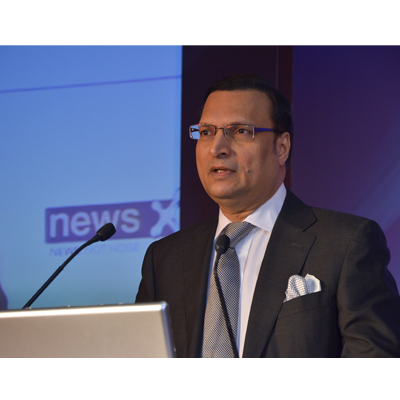
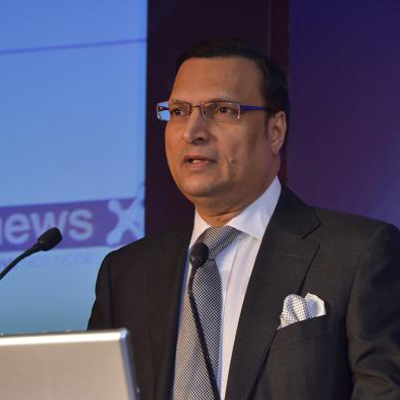
    India TV chairman and editor in chief Rajat Sharma who is also the NBA president and the IBF vice president of strategic affairs, said that the two bodies will meet the Prime Minister Narendra Modi, the Finance Minister Arun Jaitley and the Information and Broadcasting Minister Prakash Javadekar to make them aware about the growing cancer called carriage fees. ”We will also show a revenue model that MSOs can adopt so that we don’t become dependent on carriage fees,” said Sharma.    


    Regarding ad cap he said that they will show the ministers the kind of revenue loss the channels will incur if the 10+2 minute ad cap is implemented. The case is currently being fought by the NBA in the Delhi High Court.  “We will request for the 12 minute advertising cap to be removed from the licencing conditions,” he said. The NBA president added that no channel, be it a news channel or a GEC, wants to show more than five minutes of advertising but the revenue model forces them to do so. “None of us want to compromise on programming,” he said.


    The new ratings system that will be applicable once BARC India starts its operations, should be transparent, he said. ”Till the time these issues are not addressed, the industry will keep suffering,” he opined.   


    While speaking to indiantelevision.com, Sharma said that the meeting is expected to happen in the next few days.


    Sharma was addressing a keynote at the Seventh Indian News Television Summit, organised by indiantelevision.com where he discussed the role of a news channel and the challenges and hurdles that they face.

  • “The news industry is fighting amongst itself”: Rajat Sharma

    “The news industry is fighting amongst itself”: Rajat Sharma

    NOIDA:  He is one of the most well known faces of the Indian media industry. Rajat Sharma, the host of popular talk show, Aap Ki Adalat, has added responsibilities on his shoulders. He is not only the chairman and editor in chief of India TV, but also represents the industry as the new president of the News Broadcasters Association as well as the vice president of strategic affairs of the Indian Broadcasting Foundation (IBF).

    Sharma, who was addressing the 7th Indian News Television Summit 2014 organised by indiantelevision.com as a keynote speaker highlighted the evolution of the news industry as well as listed the three biggest challenges that lie ahead.

    He began by saying that three years ago the news channel industry was very different from what it is today. “There has been a change in perception in the way news is seen,” Sharma said adding that news no longer is considered to be negative.

    Substantiating the evolution in terms of changing perception, Sharma gave the example of the 26/11 terror attack when reporters did 24X7 reportage and were blamed for aiding the terrorists and their handlers in Pakistan. “News channels also suffered commercial losses during the attacks as ad breaks were restricted,” he informed. According to Sharma, while news channels earlier were perceived as being a platform that telecasted frivolous events to garner eyeballs, things today have changed. “News is back,” he announced.

    He pointed out that the space has seen drastic changes.  “The society has evolved and the media has played a great role in it especially during events like the Lokpal Bill, the Delhi gang rape and the tirade against corruption,” he said.

     “Today even if Shah Rukh Khan or Salman Khan want to promote their films or emerging sports like Kabaddi wants to garner attention, news channels have a role to play in that as well,” he opined.

    Sharma while praising the social commitments of the news industry said that the space as a whole is not healthy. “The biggest problem for the industry is its revenue model,” he said while pointing out that though this year the balance sheets of the industry looks good due to elections, but, as a whole, the model is not sustainable.

    Listing the three main challenges for the genre, Sharma said that carriage fee was the biggest concern. “A few years ago, people expected news channels to be a loss making property since carriage fees were high and when broadcasters spoke to the multi system operators (MSOs) they said it was a problem of demand and supply. When digitisation kickstarted, we thought that consumers will get better quality channels and carriage fees will disappear. For the MSOs, it is the carriage fee from the news channels that helps them sustain, since they pay the GEC’s huge sums for getting their programming on their platform,” he said.

    He informed that the industry had 20-25 meetings with the previous TRAI chairman to discuss the issue of carriage fees.  While it was expected that digitisation would bring down carriage fees, something unexpected happened. Two days before the former TRAI chairman could retire he signed the ad cap. “When we were trying to improve the content and trying to solve one issue we were burdened with another one.”

    “Ad cap ensured we received 50 per cent less advertising. Death was certain now for the news channels,” he added.

    While the then Union Minister Ambika Soni said she will look into the matter, the broadcasters decided to fight the case in TDSAT. “News channels have managed to get a stay and therefore are surviving,” he said while giving the example of the newspaper industry, which has no such restriction. “We want the same for the broadcasting industry,” he opined.

    He also mentioned that the industry needs a better rating system and the TAM currency will be replaced by BARC India, which is an incorruptible agency.  “Therefore today the biggest challenge for the industry is the ad cap, the rating system and carriage fees,” he informed.

    In his closing remarks he said the whole industry including the IBF and the NBA should work together to resolve these issues. “The news industry as a whole cannot fight the MSOs as we are fighting amongst ourselves. While, we come together during a board room meeting, once we are out there will be one or two who would go against the same,” he lamented. 

  • Ad Cap case adjourned till 20 November

    Ad Cap case adjourned till 20 November

    MUMBAI: The Delhi High Court once again adjourned the ad cap case, this time to 20 November.


    The News Broadcasters Association (NBA), the lead petitioner in the matter, had sought 10 days adjournment as senior counsel S Ganesh, was not present in view to other pending cases in Mumbai.


    “We had requested to accommodate the case for 10 days as the senior consel had to go to Mumbai,” said the lawyer for NBA.


    However, the HC postponed the case till 20 November since it didn’t have any dates before that to hear the case.


    The Telecom Regulatory Authority of India (TRAI) advocate Saket Singh emphasised that the matter has already been pending for more than 10 months.


    During the last hearing on 15 July, the HC had adjourned the case as the final hearing of the bunch of petitions challenging the ad cap sort to be imposed by TRAI as the authority has not finalised its rejoinder.


    The case had been previously heard in the High Court on 17 December last year and 13 March this year.

     
    The NBA had challenged the ad cap rule, contending that TRAI does not have jurisdiction to regulate commercial airtime on television channels.

     
    Apart from the NBA, the petition have been filed by Sarthak Entertainment, Pioneer Channel Factory, E24 Glamoru, Sun TV Network, TV Vision, B4U Broadband, 9X Media, Kalaignar, Celebrities Management, Eanadu Television and Raj Television.

     
    The news and regional broadcasters fear that the capping of commercial airtime will curtail their ad revenues. They also argue that the ad cap must be brought only after the benefits of cable TV digitisation start kicking in.
     

    Earlier this year, the Court also granted interim relief to Hyderabad-based MAA Television Network against the ad cap regulation. However, the court had also observed that the cap on advertisements is a ‘reasonable exercise’.

     
    Four major broadcast networks—Star India, Zee Entertainment, Multi Screen Media and TV18 Group—are following the regulations.

  • Ad cap case adjourned till 15 July

    Ad cap case adjourned till 15 July

    Updated: 05:04 pm


    NEW DELHI: The Delhi High Court today adjourned to 15 July the final hearing of a bunch of petitions challenging the ad cap sort to be imposed by the Telecom Regulatory Authority of India (TRAI), even as it said the regulator will not take any coercive action under the ad-cap regulations.
     

    The adjournment by Chief Justice G Rohini and Justice Rajiv Sahai Endlaw was allowed after counsel Neeraj Krishna Kaul representing the News Broadcasters Association (NBA) sought more time to file a rejoinder.


    The bar on coercive action by TRAI had been given in an earlier hearing and remains in force. However, the Court had said the petitioners have to submit a weekly report on the consumption of commercial airtime in a clock hour.


    TRAI Counsel Saket Singh opposed the adjournment noting that the matter had come up earlier before the Telecom Disputes Settlement and Appellate Tribunal (TDSAT) but has been transferred to the High Court after the Supreme Court ruled that TRAI regulations could not be adjudicated upon by the Tribunal.


    He said a lot of time had been, and in any case the Cable TV Networks (Regulations) Rules of 1994 were clear about the ad cap and TRAI had only sought to implement that.
     
    However, Kaul argued that the case involved important constitutional issues as they were cases where the freedom of the press and freedom of speech and expression are involved and the case cannot be decided without having all facts on record.
     
    Earlier in the hearing on 13 March, TRAI sought early hearing in the case on the ground that it had filed its affidavit and the court gave time to NBA to file its rejoinder.


    The NBA had challenged the ad cap rule, contending that TRAI does not have jurisdiction to regulate commercial airtime on television channels.


    Apart from the NBA, the petition have been filed by Sarthak Entertainment, Pioneer Channel Factory, E24 Glamoru, Sun TV Network, TV Vision, B4U Broadband, 9X Media, Kalaignar, Celebrities Management, Eanadu Television and Raj Television.


    The news and regional broadcasters fear that the capping of commercial airtime will curtail their ad revenues. They also argue that the ad cap must be brought only after the benefits of cable TV digitisation start kicking in.


    Earlier, the Court had also granted interim relief to Hyderabad-based MAA Television Network against the ad cap regulation. However, the court had also observed that the cap on advertisements is a ‘reasonable exercise’.


    The broadcasters had on 17 December challenged the ad cap rule in the Court after TDSAT had dismissed their appeal in the wake of the apex Court judgment that the tribunal does not have jurisdiction over TRAI regulations.


    Four major broadcast networks—Star India, Zee Entertainment Enterprises, Multi Screen Media and TV18 Group—are following the regulation. 

  • South Indian films dubbed in Hindi more popular than English

    South Indian films dubbed in Hindi more popular than English

    MUMBAI: Sony MAX and Sony MIX executive vice president and business head Neeraj Vyas was the Guest Editor of the day at Indiantelevision.com today.

    During his interaction with journalists at Indiantelevision.com, Vyas talked about what he thinks about broadcast journalism. His complaint was that journalists do less of research-based writing and are more interested in the financial details of the broadcasting business.

    While dwelling on the businesses he heads, Vyas talks about how Sony MIX has tried to make the music channel musical from being a trade channel, on the preparations for Indian Premier League (IPL) season 7 and the preferences of Indian audiences for the film genre.

    Following are the comments made by Vyas on films, music and IPL:

    There is a channel dedicated to English movies dubbed in Hindi — UTV Action. If you look at the other channels — Sony MAX, Zee Cinema, Star Gold, & Pictures and Movies OK, almost 25-30 per cent of everybody’s FPC in a week comprises south Indian films dubbed in Hindi. South Indian dubs are a very integral reality of composition of every Hindi movie channel. There was reluctance from advertisers initially. Indians completely enjoy south Indian cinema.  They might not know who is Nagarjuna or who Ravi Teja is but they love the action. They love the way the action is choreographed. They love the fact that there are no songs. They like the feel of the characters because they are larger than life.

    They like the plots in south Indian films because they feel some of the plots are better than Hindi movie plots. Its vendetta, its revenge, it’s about the common man rising. These are the plots that work across.

    The language of Indian cinema does not change just because the film is made in the south or made in Mumbai or Hyderabad. Most of the films dubbed are Telugu films which are over the top. Tamil films are by and large understated. Telugu films have blood and gore and all that. Indian viewer does not mind.

    The characters are bound differently because of language reasons, geographical reasons. Otherwise Indian films are Indian films. Viewership tilts towards the male.

    Hindi movie channels are skewed towards male. Unless you have Chennai Express which is very universal. If I have to give you some south Indian parallel is Telugu film Magadheera. We promoted it as a proper Hindi film blockbuster. It gave me a rating of 2 in the first screening. That cuts through all TGs and massive special effects.

    International dubbed movies are not staple diet, but can be served as a surprise and can be a good break from the regular.

    MUSIC:

    We went and bought more music and put more variety than anybody else.  The other call we took was that whatever we do we should be musical. We will not have movies like some channels do. We will not have animated characters. Whatever we do will be music. We have got something like Solos. Singer comes and sings two lines.  These are things that we did and after digitisation we got shelf space. We saw 13 weeks in a row we were the number one channel. But for that we did a lot of sacrifice. We reduced advertising time. Against 30 minutes I was doing 15-20 minutes.

    We started with 12 million viewers and today we have 55 million viewers.

    Indian Premier League

    The second edition was done in South Africa, but at that time the scale at which IPL was hosted wasn’t as big as it is today. Everything today has changed. So the campaign has to be bigger.

    This season, if done outside India, will be very critical in terms of revenue as well. IPL for us is like a huge ‘Mela’. The ‘Mela’ gets prominence and written about because it happens in our city. If it happens outside India, it also impacts advertising, since the advertiser loses the buzz. It also has an impact on the rating. If IPL happens in South Africa, they will ensure that the match is aired in India at 8 pm. This time there will be only 60 games, because there is one team less.

    IPL Campaigns

    We need to up the entertainment quotient. There has to be a call of action. These two states always have to go hand in hand. It needs to be engaging, entertaining and fun-filled. It needs to be riveting; it needs to cut through different kinds of loops. Can’t be very male dominated, can’t be very male–centric, can’t be very female centric, can’t be very children centric. So, it’s a tough brief, not a very easy brief; because these guys are used to very focused briefs. I say, “this is my TG, these are the values of my brand, this is what it needs to be and these are the values that need to come through my communication. So, the consumer knows that I’m buying this for this.

    On Farah Khan

    Farah brought her own style and because of the fact that she’s a director and actor, made it easier for her to get into the zone of her character. She knew the tone and tenor of what we needed. She has changed the entire paradigm of the campaign. Then we roped in Vishal – Shekhar, who she is very close with. So it became a huge family gathering. We also got Rajeev Sethi, the director of Keroscene Films is also a childhood friend of ours.

    The 2014 campaign has no real people, they’re all models. Especially because our campaign is emotion based. One wrong reaction about what the character is feeling and the whole 30 second ad can go for a toss. That is why we spend a lot of time in casting. I personally am a stickler for casting!

    This year, we are doing five 30-40 seconders and one 60 seconder and again there will be an anthem that’s been composed again by Vishal Shekhar. We’ll also have an Extra Innings music video shot on that with the actors and the commentators. So, it all comes together as a package.

    So, this year we have the same girls and boys back for IPL.

  • Music genre to lose 15-20% inventory due to ad cap

    Music genre to lose 15-20% inventory due to ad cap

    MUMBAI: Sony MAX and Sony MIX executive vice president and business head Neeraj Vyas was the Guest Editor of the Day at Indiantelevision.com today. In his role as a journalist, Vyas interviewed Sony MIX’s senior VP sales Mayar Penkar on music broadcasting as a genre and its potential.


    Penkar feels the 12-minute per hour cap on advertisements would force music channels like 9XM and Masti to change their programming for the better.


    He says the music genre does not get what it deserves in terms of ad rates because of the way these channels have been positioned so far.


    Following are the excerpts from the interview:


    From the sales point of view, what do you think is the perception of the genre in the trade and what is the perception of MIX in the same subset?


    I completely believe that, music as a genre, and when I am saying music, I am talking about pure play music channels that are actually today looked upon as supplementaries or value addition to a media plan which is looking at Hindi speaking markets largely driven by the GEC (general entertainment channel) and Hindi movie channels. Today, it is being bought as a frequency buy. The reason for that are the broadcasters themselves for the way they have positioned the channel and the genre as more of a frequency buy channel and not as something which can actually deliver far more better results in audience targeting.


    How can music be the vehicle for better audience targeting?


    One of the biggest consumers of the music today is the youth. Be it on television, on mobile or any other digital platform and these are very important subset for most of the brands to actually be a part of the media plan or be a part of their marketing objectives. The broadcasters will actually have to make music channels far more relevant and important in the minds of clients than just the media sellers or media buyers. Till such time the client does not perceive music channels as a core genre for their media requirements or for their marketing requirements, they will continue to look the channel from a little downward point of view and not really from the mainland point of view. It will never be seen as the critical part of the media plan till such time the broadcasters take upon themselves to make it a relevant point with clients that this channel has lot of potential reaching out to the TG of 15-24 which is 60-70 per cent of today’s India youth.


    So what are you trying to say is that education has not happened. It is being treated like a commodity and sold like a commodity and hence the core values of the channel will never be exposed to the end buyer?


    Never! So coming back to MIX, the channel has made an effort to stand out in terms of its positioning, compared to what the other pure play music channels are. There is not so much differentiation that can be brought on to the content part. The role MIX has played by setting up the mood for the viewer with the segmentation of the music being played across the day has actually become far more acceptable to the viewer.


    Why is MIX perceived to be a favourite among the music fraternity?


    The kind of support MIX has got from the industry itself in terms of talent coming on to MIX and showcasing as to what their viewpoints on music are, has actually brought in a large amount of differentiation as far as MIX is concerned. Be it in terms of MIX voices, MIX Solos, MIX Gigs that we have done and TV’s first radio show. We brought radio live on television and I think that deserves a big applaud as far as MIX programming is concerned for having done something which is breakthrough in the space of music. Going forward things like this will only create that positive perception in the minds of clients that music can actually be looked upon as a proposition which is far more targeting and not anymore random and not just a commodity. So I guess MIX is playing that role, but is a fairly new channel in the space.


    Coming back to the critical reality of getting a fair share of revenues, do you think the genre per say gets its fair share of revenues?


    No product which is sold as a commodity will ever get its fair price. Today, my sense is that the entire genre is at least down by 50 per cent from the revenue point of view. The reason being, I think the way most of the broadcasters in the music space were operating was not very clear as to the setting up of the right benchmarks. Most importantly, in the pure play music channel, there were no strong networks involved in the business of pure play music.


    The first strongest network that was involved in pure play music was Sony and that was one of the last ones to enter. So when you look at channels like 9XM, 9X Jalwa, Masti or Mtunes, the whole survivor model for them is to actually somehow get the money. The survival model for them is to actually not look at creating brand assets or creating a proposition which can for a long term be monetised.


    What’s wrong in the music genre?


    When you have quarterly profitability into play, you have gone ahead and aired 30 minutes of the advertising time in an hour. In a scenario where you should have actually consolidated as a category and as a genre to help raise the benchmark of the music space, the sheer fear that you may lose out that little bit of revenue has prevented creation of a fair pricing model. It would have helped the category on the long-term basis and would have made the category even more stronger as far as revenue potentials are concerned.


    How will the 12-minute per hour ad cap impact?


    As far as MIX is concerned, we are clearly awaiting the ad-cap regulation to happen. Once that ad-cap regulation happens, there will be a level playing field. Also there would be approximately six and half to seven and half lakh seconds which will clearly get vanished from the current music genre space. Once the level playing field is set, the market will suddenly realise the importance of music space with close to 15-20 per cent of the inventory getting vanished overnight.


    People will start looking at this genre with a little more respect and I think that respect will come with a little bit of regulation and with a little bit of effort that each broadcaster will actually bring in to put on to the table when they are making their pricing models or pricing strategies.


    I guess this channel will move. The music category according to me is in the same phase as the Hindi movie channels were in 2002 — bought for frequency and not really for the content and the value that they want to bring on to the table. Hindi movie channels have actually moved a distance in the past 10 years. Music will move in a similar fashion.


    But provided every broadcaster chips in…?


    I don’t think there is a choice. Once they are down by 20-25 per cent of their inventory, nobody will have a choice but to actually re-look at their rates and by then if you have to go back to an advertiser asking for a rate hike, the first thing the advertiser will start looking at is the differentiation on the programming, content and quality of the channel if he has to start paying you a rate hike. Gone will be the days when broadcasters could accept commercials after commercials just because they could expand the time. So when the time restriction comes in, people will start looking at the product. I guess MIX in that point of time will be a clear winner as far as being looked upon as a much more valued product than just a commodity product.


    So giving these realities and given the fact that ad-cap is a likely reality for the entire genre, what do you think is the growth prospect?


    To look at it in a two-year horizon, the growth would be anywhere between 25-30 per cent. But if you look at it coming from the next fiscal which is going to be March- April next year, most of the people according to me are actually not ready for creating a strategy on how will they tackle the  rate growth. Reason being, most of these channels like 9XM or Masti used to enjoy clear dominance in terms of leadership 13 weeks prior to today. Even in a commodity model, they had established price points for themselves.


    For them after April, life will become a more real scenario where they are number two and three players by a distance, in the sense of 25-30 per cent distance, with number one being MIX. And then to work at price points which will be much higher than currently what they were operating with or what they were enjoying as leaders is going to be a difficult task.


    For them or for clients to start giving them higher rate hikes immediately, I don’t see that happening. We may see price point corrections happening but the category may just remain flat only because of lesser inventory and more or less securing the same level of revenue growth. But next year, this genre will actually become a very important channel. The genre will get its share price or share due in the next two years to come.
  • TRAI’s ad cap regulation is reasonable: Delhi HC

    TRAI’s ad cap regulation is reasonable: Delhi HC

    MUMBAI: Another challenger to the ad cap petition has got relief from the Delhi HC regarding a Telecom Regulatory Authority of India (TRAI) regulation on restricting advertisement duration in an hour to just 12 minutes. Maa Television, a leading Telugu GEC, has been asked to tag along with other petitioners such as the News Broadcasters Association (NBA), Sun TV, E24, Pioneer Channel Factory on 13 March.


    During the course of the hearing, the bench of acting chief justice B D Ahmed and justice S Mridul observed that “Twelve minutes of advertisement in 60 minutes of a programme is ridiculous. The content becomes an advertisement and the ads become the content.”


    The bench also supported TRAI’s decision of bringing in ad cap amongst broadcasters. “What TRAI is doing is reasonable. Take an opinion poll. Everyone will say no to advertisements,” remarked the bench.


    However, it also gave the channel an interim relief till the next hearing while asking it to submit its weekly advertising data to TRAI. It has restrained the regulator from taking any coercive measures against the channel.


    The NBA is leading the case. The case was initially with the Telecom Disputes Settlement Appellate Tribunal (TDSAT) and later shifted to the Delhi HC after the Supreme Court in a separate case stated that challenges to TRAI regulations cannot be heard at TDSAT.


    However, the lawyers, who are part of the case, think that the observation won’t have any significant impact on the hearing on 13 March.


    With less than a month, all parties involved are gearing up to submit their pleas to the court.

  • HC restricts TRAI from taking coercive action against Kalaignar TV

    HC restricts TRAI from taking coercive action against Kalaignar TV

    MUMBAI: Most of 2013 kept the industry preoccupied  with the 12 minute ad cap saga. After the Supreme Court passed a judgment that barred the Telecom Disputes Settlement Appellate Tribunal (TDSAT) from looking at appeals against the Telecom Regulatory Authority of India (TRAI) regulations, the appeals were then moved to the Delhi High Court.


    And the latter passed an interim order that forbade the TRAI from taking any coercive action against channels  that had appealed in the HC,  even if they did not adhere to the 12 minute per hour limit.


    Now, the Tamil GEC run by political party, DMK, Kalaignar TV has got a favourable order from the HC after it also appealed against the TRAI regulation. The HC has asked the regulator not to take any coercive action against the channel and has asked the latter to submit to it weekly ad duration data.


    In December, many channels had moved the court who were then given a hearing date of 13 March 2014. Kalaignar TV’s writ petition will also be heard along with the others on the same date. The channel was also a part of the list of appeals that had come up before the TDSAT but were told to move it to the Delhi HC after the SC judgement.  


    TRAI had passed a quality of service regulation for limiting advertising air time to 12 minutes per hour in mid-2013.

  • ‘Post 2-min ad cap on TV, OOH medium will see double digit growth’

    ‘Post 2-min ad cap on TV, OOH medium will see double digit growth’

    Out of Home industry has always been categorised as a supporting medium for television; however, it has gained more popularity amongst advertisers after the two-minute ad cap on television. Interestingly, television medium has sufficient channels and different TV slots to cope up with ad cap restriction. But I really think that OOH medium will grow and see double digit growth in the next three to five years. The key reasons for OOH medium’s growth would be that people have figured out better ways to utilise this medium in terms of innovations, latest technology and result orientated campaigns  and another reason is that the young audiences is spending ample amount of time outside, therefore this medium becomes much more relevant.


    The FMCG category has never made a significant use of OOH medium. But this will change consistently and this medium has more potential for the FMCG category. But the OOH medium will see a lot of spends from the entertainment and movies categories. Also, the OOH medium will see huge impulse spends from e-commerce sites and therefore this area will grow. I also believe that it will be difficult for brands to pay such sharp increase in rates.


    I believe that outdoor advertisements are one of the most cost efficient ways to reach potential customers and clients. Additionally, we can target with OOH the consumers across culture, language, season, age, and in any format. In order to address GAPS in terms of marketing reach, OOH is the best customized solution for the organization.


    However, there is tussle between advertisement spend when it comes to Internet and OOH. In fact OOH media is used throughout the year for product launches, branding initiatives, sales activation because of its cost-effectiveness.


    But I am also sure that TV budget will never be kept nil as it is an important medium. But having said that, a brand needs to be always active in OOH medium, as it gives multiplier effect on ground level. The large format with its local communication, singular pictorial representation, minimal and bold message, strategic locations, cost efficiency and media effectiveness helps a brand deliver its key message to a large audience in an uncluttered environment.


    With new techniques, innovation and new formats, outdoors has earned its share in the market. Brands which are looking at exploring unique solutions, outdoor offer them great creativity in still media and random visibility with the help of transit media.


    Importantly, outdoor will have to compete with print, radio and most importantly social media. Innovations will play crucial role if more brands are diverting their interest on this medium. Ambient and transit media along with BTL activation will become important.  Monitoring system and assured ROI will enhance the preference for the medium.


    (The writer is the Managing Director, Global Advertising)