Tag: Ad agencies

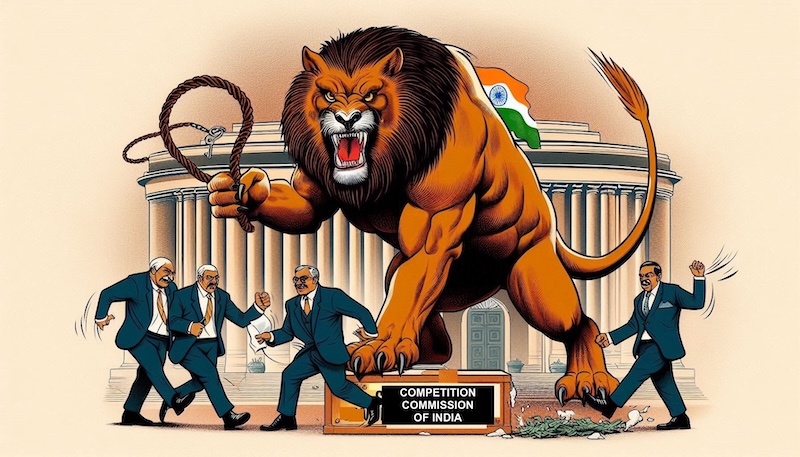
  • CCI to crack the whip harder on anti-competitive cartels

    CCI to crack the whip harder on anti-competitive cartels

    MUMBAI: The investigation into alleged ad pricing collusion between  select ad agencies is just one of the proactive initiatives that the competition watch dog the Competition Commission of India (CCI) has been undertaking. Finance and corporate affairs minister Nirmala Sitharaman told the Lok Sabha  today that 35 cartel cases across various sectors over the past five financial years, up to 13 March 2025, have been under the CCI’s magnifying glass. And this is just a start:  with a sharper legal framework and global collaborations, the watchdog is stepping up its efforts to keep markets fair.

    She informed the house that the watchdog  has inked bilateral and multilateral agreements with competition authorities in Egypt, Mauritius, Japan, Brazil, Canada, Australia, the European Commission, Brics nations and the US Department of Justice. These pacts enable enforcement cooperation, subject to each country’s legal framework and resources.

    The Competition (Amendment) Act, 2023, introduced the ‘lesser penalty plus’ (LPP) framework under Section 46, offering incentives for cartel members to turn whistleblowers. The CCI (Lesser Penalty) Regulations, 2024, which replaced the 2009 rules, reward existing applicants who spill the beans on previously unknown cartels.

    To widen its net, CCI has also brought in the ‘hub-and-spoke’ mechanism under Section 3(3) of the Competition Act, 2002, ensuring that enterprises or individuals indirectly facilitating cartels are also held accountable.

    India has signed 14 free trade agreements (FTAs), some of which contain specific competition clauses to curb anti-competitive practices. CCI also has a dedicated division for market analysis and research, aimed at detecting unfair practices before they spiral.

    Enforcement is only part of the game. Over the last five years, CCI has held 1,446 advocacy programmes to educate businesses and policymakers on competition rules. By ramping up market studies and training initiatives, the regulator is working to sustain a fair and thriving business environment.

    With cartels under increased scrutiny and tougher penalties in place, competition in India’s markets is only set to heat up.

  • Social Media Dissect DM and Schbang spat revives plagiarism concerns

    Social Media Dissect DM and Schbang spat revives plagiarism concerns

    NEW DELHI: In the last decade, social media has changed the dynamics of the marketing landscape. But this has given rise to another big problem – plagiarism. In the latest incident, digital marketing agencies Social Media Dissect DM and Schbang got into a quarrel for allegedly plagiarising content. 

    Social Media Dissect accused Schbang of copying the design concept of Motiphor from a year ago post without giving due credit. The agency posted on Instagram: “Speaking to the original creator and not giving credits while you go ahead and use someone’s work claiming it to be independent thinking, still counts as plagiarised content.”

    Schbang founder Harshil Karia said, “We appeal to the industry to come together and find, perhaps, a technology-based solution that helps agencies vet whether the content is similar to the one being created perhaps by using image recognition.”

    Schbang replied that it’s an original work and posted, “We don’t plagiarise, two separate minds in front of separate screens thought of the same concept and created it. There is no data to support it.”

    Several agencies are plagued by this issue and end up taking it on social media or dragging the party to court. This damages the reputation of the agency and even the brand.

    View this post on Instagram

    Of trolls, sensationalists and better conversation.

    A post shared by Schbang (@schbang) on

    The Advertising Standards Council of India (ASCI) has a code for self-regulation in advertising, which has a section “Fair in Competition” that deals with such issues.

    Former Asia-Pacific Marketing head of HP business strategist Lloyd Mathias opines, “I think plagiarism is a reflection of a lack of original ideas. Any brand that does so consciously is doing itself more harm than good. Social media has got nothing to do with it, but yes, with the increased proliferation of brands using social media – the issue has become stark.”

    Mathias adds, “The best way to deal with plagiarism is to call it out. Showing one’s original content with the plagiarised piece, as a simple name and shame tactic, should be adequate. In an age where interesting posts go viral, this may be the best way to handle the issue.”

    Some years ago, in 2013, several awards were withdrawn from Goa Fest’s Creative Abbys on plagiarism charges. Leo Burnett India withdrew three award-winning Tata Salt Lite radio campaign after its client stated that the work did not meet the guidelines for entry.

    A recent case is that of Ogilvy when it took Vivo and its creative agency, Dentsu, to court over allegations of plagiarism. Matheno Films also initiated legal action against Citibank over a ‘copied’ film. 

    A few years back, McDonald’s pulled down a Twitter ad campaign after a freelance photographer alleged that the brand had copied the idea from his work. He posted a series, which was featured on BuzzFeed that had captured the man’s ‘engagement’ with a burrito and was intended to be a spoof on the romantic photos that flood social media every day. McDonald’s decided to use the idea for its double cheeseburger meal.

    According to Nut Cracker Communications founder Udit Jain, the ideal way to deal with such situations is for the two parties to talk to each other instead of taking it out on public forums. He says, “While there is no shortage of original and creative ideas and concepts, I believe that plagiarism has been in every mass media. Social media has not really contributed to its rise but given higher user participation and two-way engagement. So, issues seem to go hyperbole. There is also cut-throat competition and constant pressure to churn out engaging content but this should not be acceptable. While there are certain groups and organisations for dealing with plagiarism in other mass media, there are still no governing bodies for the social media, which gives us an opportunity for self-regulation and is the ideal way to go.”

    Pulpkey founder Amit Mondal says, “There is no way you can control the situation. The bare minimum which can be done is to check with the representative if there is a serious issue, otherwise, if they have given the work-credits it can actually help the original creative to get more reach.”

    While the issue persists, the industry will have to figure out ways to address this growing concern.

  • Ad agencies to be empanelled for RBI work

    Ad agencies to be empanelled for RBI work

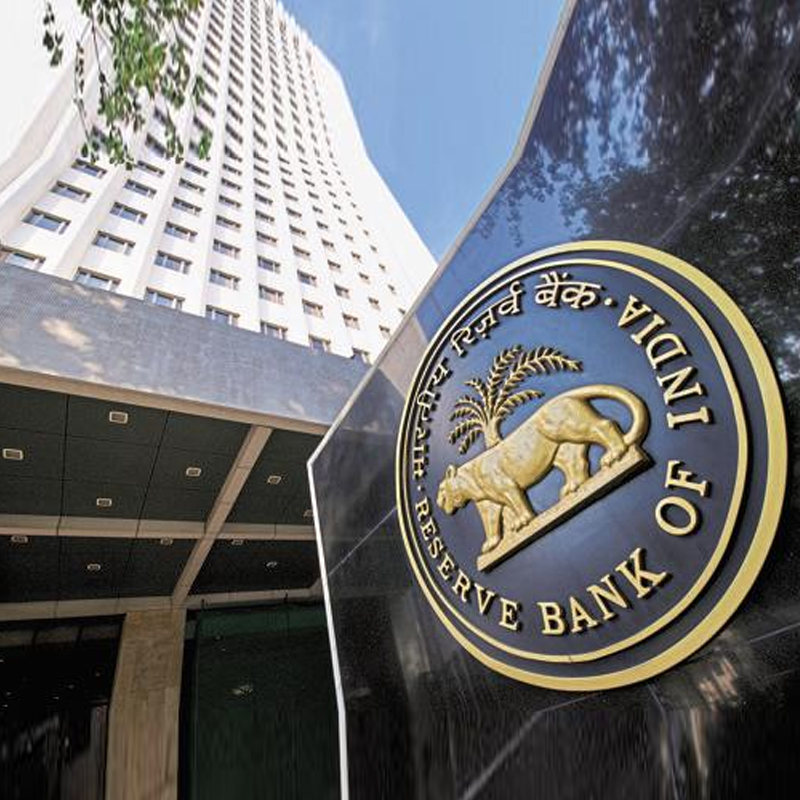
    MUMBAI: The Reserve Bank of India (RBI) is planning to empanel advertising agencies for undertaking activities ranging from regular tender notices to full-fledged multimedia, multi- language ads across electronic and print media.

    The empanelled agencies would be conceptualising, designing and releasing commercials on television and radio and ads in newspapers, according to RBI’s Request for Proposal (RFP) for Empanelment of Advertising Agencies.

    The scope of work of the agencies would also cover production of TV spots/radio jingles, PTI reported. Translation / dubbing and adaptation of short films, TVCs radio spots and print advertisements into various India languages would also fall under the scope of work of the agencies.

    Detailing the process for assigning jobs, the document stated that the routine notice or tender type advertisement below Rs 1.5 million will be given to the empanelled agencies by rotation. For ads of between Rs 1.5 million and Rs 10 million, the work would be assigned after inviting bids.

  • Ad agencies bullish about Union Budget 2017

    Ad agencies bullish about Union Budget 2017

    MUMBAI: The Union Budget 2017 provides the much-needed encouragement to digital India and MSE companies. This, in turn, is said to boost more digital transactions and payments which might boost the growth in advertising in the digital space.

    The biggest highlight for the advertising agencies was that those with billings of less than Rs 50 crore in FY15-16 would benefit from corporate tax reducing to 25 per cent. This is believed to boost their overall profits and cash flows.

    Though, the digital marketing sector was hoping for cuts in service tax on digital advertising and certain clarifications on the soon-to-be-rolled-out GST, the industry is positive about the budget’ implementation. In the design sector, the budget has brought several new opportunities in the areas of user interface and user experience.

    Here’s what the advertising, marketing, communications and design agencies have to say about the budget:

    Advertising

    DAN Performance Group CEO Vivek Bhargava said, “It’s a good budget overall and an extremely positive one for the digital industry. The strong focus on promoting a digital economy through various initiatives on the digital payments front will give a great impetus to the digital revolution that the country is currently undergoing. We are witnessing a significant increase in digital transactions owing to the cashless movement already, which is a huge indication of the times to come – largely in the benefit of the common man. It’s encouraging to see the government introduce movements like ‘Digi-gaav’ and others which will take digital technology to the rural areas where most of the country’s population is actually based. This aggressive digital push is sure to contribute substantially in making India one of the fastest growing economies in 2017.”

    FCB India group chairman and CEO Rohit Ohri asserted, “The focus on reviving rural consumption, digital India and SWAYAM were the highlights of Budget 2017 for me. The high impetus on digitization, will pave the way for empowerment of the common man. And will open doors to a massive opportunity, untapped as of now, in the digital space. Overall, a progressive budget.”

    Marketing

    VML SEA & India CEO Tripti Lochan added, “The government has created a budget with prominence on digital.  Demonetization’s longer term benefits will percolate – as the first step towards a cashless economy.  But more importantly, there are incentives across all areas of the budget pushing digital.”

    Salt Brand Solutions founder Mahesh Chauhan said, “Tax reduction should boost consumption and more than offset the decline post demonetization. ​ It ​​ should boost the real estate sector with tenure reduction for capital gains. ​As the focus continuous on infrastructure good for long term prospects.​”​

    MindShift Interactive CEO Zafar Rais asserted, “The Union Budget 2017-2018 proposes reforms in tax rules with a positive impact on the corporate tax structure by providing a welcoming tax relief to medium and small business after the affects of demonetisation. The initiatives to encourage digital transactions have been maintained with an outlook on a digitized economy. Overall the budget looks progressive though we are awaiting more clarifications on the GST implementation.”

    Communications

    Pulp Strategy Communications founder and MD Ambika Sharma said, “The latest budget announcement holds great promise. I am particularly enthused by the hike in capital allocation for women skill development initiatives to INR 1.84 lakh crore for the 2017-18 fiscal. This move will empower women across the country and help them in becoming active contributors in the country’s growth. The allocation of INR 10,000 crore for the BharatNet project is also promising, as it will bring high-speed internet connectivity to rural citizens in nearly 150,000 gram panchayats through Wi-Fi hotspots. With nearly 70% of the country’s population living in rural and semi-urban geographies, the move will give the vision of a ‘Digital India’ a big boost. On the business side, the reduction of corporate tax for MSMEs with annual turnover up to INR 50 crore to 25 per cent is a very welcome move which is expected to benefit nearly 96% businesses in the industry. Given that corporate tax is one of the major expenses for the country’s MSMEs, the cut in tax rates will promote greater growth within the sector and will allow Indian businesses to become more competitive globally. Increasing the period for profit-linked deductions to three years out of seven years as against five years is also extremely positive news for the country’s entrepreneurial landscape. Since start-ups often do not generate any profits for the first few years of their operations, increasing the consideration period to seven years will benefit more start-ups and promote entrepreneurship across the country. The setting up of Payment Regulatory Board by RBI to replace BPSS (Board for Regulation and Supervision of Payment and Settlement Systems) as the regulator of electronic payments is also a promising development in the quest to become a less-cash and digital-first economy.”

    Mogae Media chairman Sandeep Goyal voiced, “It is a growth oriented budget with special emphasis on youth and rural, and large provisions for skill development and alleviating unemployment. Combined with the digital thrust, this should help brands focussed on younger audiences especially outside cities. Two-wheelers, telecom, handsets, ‘get-ahead’ education products, grooming and accessories (look-good) products should all receive an advertising fillip. Digitisation of payments and purchase should help enhance the geographies of e-commerce making more brands more easily available to larger numbers of newer customers. This is a new opportunity for advertising and a new challenge for targeting right media to right customers through right apertures at the right time.”

    Knowlarity Communciations CEO and founder Ambarish Gupta added, “The Budget for FY 2017-18 has been declared and though it does not have any major reforms as pundits claimed it would, post demonetization, it has tried to incorporate all essential elements that were of prime concern. The flailing agricultural sector has received a big boost as a sum of Rs. 10 lakh crores has been allocated as credit to the farmers, with an interest free period of 60 days. In order to deal with the uncertainties of monsoon, a dedicated micro-irrigation fund will be established under the aegis of NABARD with Rs. 5000 crores as initial corpus.A number of tax SOPs have been directed towards aiding the MSME sector which was the worst hit during demonetization. For companies with an annual turnover of less than Rs 50 crores, corporate tax has been reduced from 30% to 25%. The budget also directed a sum of Rs 24,000 crores for the growth of the MSME sector. For start-ups reeling under high taxes, the Finance Minister has declared that they would have to pay taxes only for three out of seven years-which was earlier just five- that too only if they make profits.With elections in three states coming up, the budget was expected to be a neutral one. It however, has tried to focus on certain areas which needed immediate effect, without attempting any extravagant measures.

    Design

    Factral Ink Design Studio CEO and creative director Tanay Kumar said, “The Union Budget 2017 gives a huge impetus to Digital India. Incentives like no service tax on digital rail bookings, digital pension distribution system for retired defense personnel for easier access to their funds, the DigiGaon initiative to provide tele-medicine, education, and skills, through digital technology and two new schemes to promote use of BHIM should drive digital traffic. Along with this steps to strengthen connectivity with high-speed broadband on OFC will be available in more than 150,000 gram panchayats, with hotspots and access to digital services at low tariffs, and the emphasis on cyber security with computer emergency response team to be established for the financial sector to work in close coordination with financial sector regulators and other stakeholders, with boost confidence in the people to use digital platforms. As a Digital Design company we are really excited on the opportunities that this budget has created in developing some path breaking work in the areas of user interface and user experience.”

    The Minimalist co-founder Chirag Gander said, “This is a welcome budget by our Finance Minister. The advertising industry, which saw a downfall and was hit due to demonetization, has now got relief on many counts. Increased focus on ‘Digital India’ by the Government will encourage the setting up of new companies, eventually bringing in more business for the advertising and marketing sector. Besides, with the Government’s ‘Make In India’ initiative there will be greater focus on the Indian market and consumer, thereby creating a sort of increased competition among the players in the market to occupy the top spot and reach out to the end buyer. In such a scenario, the reduction in Corporate tax by the Government will give Companies and Brands more power to spend on advertising and marketing activities. Also, the early release of the budget will help Companies plan their marketing and advertising budgets well in advance for this.”

  • Ad agencies bullish about Union Budget 2017

    Ad agencies bullish about Union Budget 2017

    MUMBAI: The Union Budget 2017 provides the much-needed encouragement to digital India and MSE companies. This, in turn, is said to boost more digital transactions and payments which might boost the growth in advertising in the digital space.

    The biggest highlight for the advertising agencies was that those with billings of less than Rs 50 crore in FY15-16 would benefit from corporate tax reducing to 25 per cent. This is believed to boost their overall profits and cash flows.

    Though, the digital marketing sector was hoping for cuts in service tax on digital advertising and certain clarifications on the soon-to-be-rolled-out GST, the industry is positive about the budget’ implementation. In the design sector, the budget has brought several new opportunities in the areas of user interface and user experience.

    Here’s what the advertising, marketing, communications and design agencies have to say about the budget:

    Advertising

    DAN Performance Group CEO Vivek Bhargava said, “It’s a good budget overall and an extremely positive one for the digital industry. The strong focus on promoting a digital economy through various initiatives on the digital payments front will give a great impetus to the digital revolution that the country is currently undergoing. We are witnessing a significant increase in digital transactions owing to the cashless movement already, which is a huge indication of the times to come – largely in the benefit of the common man. It’s encouraging to see the government introduce movements like ‘Digi-gaav’ and others which will take digital technology to the rural areas where most of the country’s population is actually based. This aggressive digital push is sure to contribute substantially in making India one of the fastest growing economies in 2017.”

    FCB India group chairman and CEO Rohit Ohri asserted, “The focus on reviving rural consumption, digital India and SWAYAM were the highlights of Budget 2017 for me. The high impetus on digitization, will pave the way for empowerment of the common man. And will open doors to a massive opportunity, untapped as of now, in the digital space. Overall, a progressive budget.”

    Marketing

    VML SEA & India CEO Tripti Lochan added, “The government has created a budget with prominence on digital.  Demonetization’s longer term benefits will percolate – as the first step towards a cashless economy.  But more importantly, there are incentives across all areas of the budget pushing digital.”

    Salt Brand Solutions founder Mahesh Chauhan said, “Tax reduction should boost consumption and more than offset the decline post demonetization. ​ It ​​ should boost the real estate sector with tenure reduction for capital gains. ​As the focus continuous on infrastructure good for long term prospects.​”​

    MindShift Interactive CEO Zafar Rais asserted, “The Union Budget 2017-2018 proposes reforms in tax rules with a positive impact on the corporate tax structure by providing a welcoming tax relief to medium and small business after the affects of demonetisation. The initiatives to encourage digital transactions have been maintained with an outlook on a digitized economy. Overall the budget looks progressive though we are awaiting more clarifications on the GST implementation.”

    Communications

    Pulp Strategy Communications founder and MD Ambika Sharma said, “The latest budget announcement holds great promise. I am particularly enthused by the hike in capital allocation for women skill development initiatives to INR 1.84 lakh crore for the 2017-18 fiscal. This move will empower women across the country and help them in becoming active contributors in the country’s growth. The allocation of INR 10,000 crore for the BharatNet project is also promising, as it will bring high-speed internet connectivity to rural citizens in nearly 150,000 gram panchayats through Wi-Fi hotspots. With nearly 70% of the country’s population living in rural and semi-urban geographies, the move will give the vision of a ‘Digital India’ a big boost. On the business side, the reduction of corporate tax for MSMEs with annual turnover up to INR 50 crore to 25 per cent is a very welcome move which is expected to benefit nearly 96% businesses in the industry. Given that corporate tax is one of the major expenses for the country’s MSMEs, the cut in tax rates will promote greater growth within the sector and will allow Indian businesses to become more competitive globally. Increasing the period for profit-linked deductions to three years out of seven years as against five years is also extremely positive news for the country’s entrepreneurial landscape. Since start-ups often do not generate any profits for the first few years of their operations, increasing the consideration period to seven years will benefit more start-ups and promote entrepreneurship across the country. The setting up of Payment Regulatory Board by RBI to replace BPSS (Board for Regulation and Supervision of Payment and Settlement Systems) as the regulator of electronic payments is also a promising development in the quest to become a less-cash and digital-first economy.”

    Mogae Media chairman Sandeep Goyal voiced, “It is a growth oriented budget with special emphasis on youth and rural, and large provisions for skill development and alleviating unemployment. Combined with the digital thrust, this should help brands focussed on younger audiences especially outside cities. Two-wheelers, telecom, handsets, ‘get-ahead’ education products, grooming and accessories (look-good) products should all receive an advertising fillip. Digitisation of payments and purchase should help enhance the geographies of e-commerce making more brands more easily available to larger numbers of newer customers. This is a new opportunity for advertising and a new challenge for targeting right media to right customers through right apertures at the right time.”

    Knowlarity Communciations CEO and founder Ambarish Gupta added, “The Budget for FY 2017-18 has been declared and though it does not have any major reforms as pundits claimed it would, post demonetization, it has tried to incorporate all essential elements that were of prime concern. The flailing agricultural sector has received a big boost as a sum of Rs. 10 lakh crores has been allocated as credit to the farmers, with an interest free period of 60 days. In order to deal with the uncertainties of monsoon, a dedicated micro-irrigation fund will be established under the aegis of NABARD with Rs. 5000 crores as initial corpus.A number of tax SOPs have been directed towards aiding the MSME sector which was the worst hit during demonetization. For companies with an annual turnover of less than Rs 50 crores, corporate tax has been reduced from 30% to 25%. The budget also directed a sum of Rs 24,000 crores for the growth of the MSME sector. For start-ups reeling under high taxes, the Finance Minister has declared that they would have to pay taxes only for three out of seven years-which was earlier just five- that too only if they make profits.With elections in three states coming up, the budget was expected to be a neutral one. It however, has tried to focus on certain areas which needed immediate effect, without attempting any extravagant measures.

    Design

    Factral Ink Design Studio CEO and creative director Tanay Kumar said, “The Union Budget 2017 gives a huge impetus to Digital India. Incentives like no service tax on digital rail bookings, digital pension distribution system for retired defense personnel for easier access to their funds, the DigiGaon initiative to provide tele-medicine, education, and skills, through digital technology and two new schemes to promote use of BHIM should drive digital traffic. Along with this steps to strengthen connectivity with high-speed broadband on OFC will be available in more than 150,000 gram panchayats, with hotspots and access to digital services at low tariffs, and the emphasis on cyber security with computer emergency response team to be established for the financial sector to work in close coordination with financial sector regulators and other stakeholders, with boost confidence in the people to use digital platforms. As a Digital Design company we are really excited on the opportunities that this budget has created in developing some path breaking work in the areas of user interface and user experience.”

    The Minimalist co-founder Chirag Gander said, “This is a welcome budget by our Finance Minister. The advertising industry, which saw a downfall and was hit due to demonetization, has now got relief on many counts. Increased focus on ‘Digital India’ by the Government will encourage the setting up of new companies, eventually bringing in more business for the advertising and marketing sector. Besides, with the Government’s ‘Make In India’ initiative there will be greater focus on the Indian market and consumer, thereby creating a sort of increased competition among the players in the market to occupy the top spot and reach out to the end buyer. In such a scenario, the reduction in Corporate tax by the Government will give Companies and Brands more power to spend on advertising and marketing activities. Also, the early release of the budget will help Companies plan their marketing and advertising budgets well in advance for this.”

  • Doordarshan partners SBI to launch payment gateway for ad agencies

    Doordarshan partners SBI to launch payment gateway for ad agencies

    NEW DELHI: In a pioneering move, Doordarshan today became the first Indian television channel to introduce an online payment gateway for advertisers that will ensure greater efficiency and transparency.


    Under the system, each advertiser dealing with Doordarshan will have its own page through which it will not only be able to know its status of payments but also make these payments. 


    Although set up in collaboration with the State Bank of India, the system permits advertisers to transfer the payments through their own banks using the gateway. 


    Doordarshan automated its commercial operations for DD National channel in the Phase-I in January this year. The process for DD’s other channels is under implementation. The move has helped integrate various steps involved in executing commercials from booking to scheduling and billing. 


    However, the last step of payment receipt is still manual. Doordarshan has integrated the payment gateway and with its traffic and billing system would facilitate all clients and agencies to make online payment by directly going to Doordarshan’s portal from the place of their convenience at any time of the day. 


    The new system was inaugurated today by Prasar Bharati member (finance) Rajeev Singh in the presence of DD director general C Lalrosanga, Engineer-in-Chief CBS Maurya, ADG (CRD) Mukesh Sharma, ADG (commercial & sales) Inderjeet Kaur, ADG Deepa Chandra, ADG PA Naidu, and DDG (commercial) CK Jain, who also explained the system along with State Bank of India main branch chief manager (e-banking) DN Sharma.


    Jain said the first phase would cover Delhi and Mumbai, whereas the second phase will cover other centres. It will also facilitate an Online Deal and Release Order Booking System (ODROBS).


    Sharma said the multi-operating payment system could be used for sending payments from other banks as well. Each ad agency would have a name and password to log on through the DD portal and then go on with checking status or making payments. This facilitates collection of fees from ad agencies and is completely automated with options of NEFT, RTGS, and draft with provision for updating etc. 


    Doordarshan has so far been facing huge problem of reconciling its accounts because of entire manual operations, which leave a lot of agencies and clients dissatisfied. This has also resulted in several disputes and also in arbitrations with agencies. 


    It was pointed out on the occasion that Prasar Bharati CEO Jawhar Sircar has also been emphasising on use of IT in both Doordarshan and AIR for bringing efficiency into the system. 

  • Ad agencies globally turning to video and digital formats

    Ad agencies globally turning to video and digital formats

    NEW DELHI: Around 48.3 per cent of ad agencies have said a majority of their RFPs (requests for proposal) included a video ad component in 2014, as against 38.1 per cent in 2013 and 30.2 per cent in 2012. The findings are part of a  survey by BrightRoll which claims that online video ads are becoming mainstream.


    Agencies are turning to online video because they believe in its effectiveness. The survey found that 72 per cent believe that online video advertising is as or more effective than TV spots. Just 18 per cent see online video ads as less effective.


    BrightRoll also found that 22 per cent of agencies plan to devote the majority of their digital video budgets to programmatic ad buys in the next 12 month – up from six per cent in last year’s survey.


    “Programmatic video is going mainstream with agencies because it has proven to be effective in shifting consumer perception. Agencies told us they are investing with confidence, measuring consumer behaviour directly, and effectively engaging audiences across screens using programmatic video,” says BrightRoll vice president global marketing Guy Yalif.


    The most important metrics for ad agencies are completed views (20 per cent), conversion (18 per cent), and brand lift (17 per cent). Click-through rates, once seen as key, are now less important, coming in fifth.


    With mobile video viewing on the rise, so is mobile video ad spending: 79 per cent of respondents were likely or very likely to devote some of their video ad budgets to tablets, a rise from 68 per cent in 2014.


    Meanwhile, another study shows around 28 per cent of marketers have reduced their advertising budget to fund more digital marketing.


    In 2015, search engine marketing (SEM) will continue to capture the largest share of online spend at 47 per cent, or about 14 per cent of the firm’s total marketing budget 2014.


    Worldwide social network ad spending reached $16.10 billion in 2014, a 45.3 per cent increase from 2013 that pushed social’s share of overall digital ad investment to 11.5 per cent. Combined social network ad dollars from North America, Western Europe and Asia-Pacific represented 93.7 per cent of global expenditure.


    Spending on paid media in the US totaled $179.80 billion in 2014. Digital accounted for 28.2 per cent of total ad investments, with 10.6 per cent going toward mobile. Digital ad spending rose 17.7 per cent in 2014 and will rise another 15.5 per cent in 2015, fueled by mobile.


    Digital ads will lead the way for global media growth in the next four years, accounting for 33 per cent of total advertising revenue, nearly catching TV in the process. TV advertising will generate $173.7 billion worldwide in 2014 and grow to $214.7 billion in 2018. During the same period, Internet advertising will grow from $133 billion to $194.5 billion.


    Total entertainment and media spending on digital services is forecast to grow at a 12.2 per cent compound annual growth rate (CAGR) between 2013 and 2018 and account for 65 per cent of global entertainment and media spending growth, excluding spending on Internet access.


    By 2018, Internet advertising will be poised to overtake TV as the largest advertising segment. As recently as 2009, Internet advertising revenue was $58.7 billion and TV advertising revenue was more than twice as big at $132 billion. But Internet advertising revenue will rise at a 10.7 per cent CAGR to reach $194.5 billion in 2018, just $20 billion behind TV advertising.


    Two-thirds of revenue growth from consumers and advertising will be digital. Of the $241 billion growth in total entertainment and media consumer and advertising revenue from 2013 to 2018, $157 billion will come from digital sources.


    Marketers spent $4.4 billion on mobile advertising in the US in 2012. That figure doubled to $8.5 million in 2013; and that figure is projected to quadruple to $31.1 billion by 2017. Search advertising accounts for about half of the total.


    Just one per cent of all US advertising spending is on mobile platforms, compared to 43 per cent for TV and 29 per cent for print.


    More than 40 per cent of US marketing professionals said they increased spending on data-driven marketing in the first quarter of this year, compared with 38.4 per cent who said the same in Q4 2013. More than 40 per cent of US marketing professionals said they increased spending on data-driven marketing in the first quarter of this year, compared with 38.4 per cent who said the same in Q4 2013.


    Digital marketers spend almost as much to keep buyers (45 per cent) as they do to gain new ones (55 per cent).


    Meanwhile, US marketers spend an average of 2.5 per cent of their total company revenue on digital marketing activities, according to a new report by Gartner Inc. US marketers spend an average of 2.5 per cent of their total company revenue on digital marketing activities, according to a new report by Gartner Inc.


    According to Duke University’s CMO Survey, digital marketing spending is forecast to grow by 10.2 per cent, a slower rate than the 11.5% increase forecast in August 2012, but a healthy rate nonetheless.

  • Cabinet gives go-ahead to TV ratings regulatory mechanism

    Cabinet gives go-ahead to TV ratings regulatory mechanism

    NEW DELHI:  The Union Cabinet today gave the go-ahead to the television ratings guidelines ,which had earlier been proposed by the Telecom Regulatory Authority of India (TRAI) in September 2013, cleared by the Ministry of Information and Broadcasting (MIB) in November. The ministry had then forwarded the proposed guidelines for the cabinet’s approval. With the cabinet’s clearance the MIB will now have regulatory control over TV ratings agencies in India.


    This was disclosed by MIB minister Manish Tewari after the cabinet meeting.


    The guidelines cover detailed procedures for registration of ratings agencies, eligibility norms, terms and conditions of registration, cross holding restrictions, methodology of audience measurement, a complaint redressal mechanism, sales and use of ratings, audit, disclosure norms, reporting requirements and action on non-compliance of guidelines etc.


    The guidelines state that TV ratings providers – including TAM Media which is the industry standard currently – will have to first get registered with the MIB. The registration will be given to them only if they comply with the rules the TV ratings guidelines have enumerated. Among these figure:


    * No single company / legal entity either directly or through its associates or interconnect undertakings shall have substantial equity holding that is, 10 percent or more of paid up equity in both rating agencies and broadcasters/advertisers/advertising agencies. 


    * The ratings agency should have a net worth of at least Rs 20 crore.


    * Panel homes for audience measurement shall be drawn from the pool of households selected through an establishment survey. A minimum panel size of 20,000 is to be implemented within six months of the guidelines coming into force. Thereafter the panel size shall be increased by 10,000 every year until it reaches 50,000. 


    * Ratings ought to be technology neutral and shall capture data across multiple viewing platforms viz. cable TV, Direct-to- Home (DTH), Terrestrial TV etc. 


    * Secrecy and privacy of the panel homes must be maintained. 25 percent of panel homes shall be rotated every year. 


     * The rating agency shall submit the detailed methodology to the Government and also publish it on its website. 


    * The rating agency shall set up an effective complaint redressal system with a toll free number. 


    * The rating agency shall set up an internal audit mechanism to get its entire methodology/processes audited internally on quarterly basis and through an independent auditor annually. All audit reports to be put on the website of the rating agency. Government and TRAI reserve the right to audit the systems /procedures/mechanisms of the rating agency. 


    * Non-compliance of guidelines on cross-holding, methodology, secrecy, privacy, audit, public disclosure and reporting requirements shall lead to forfeiture of two bank guarantees worth Rs 1 crore furnished by the company in the first instance, and, in the second instance shall lead to cancellation of registration. For violation of other provisions of the guidelines, the action shall be forfeiture of bank guarantee of Rs. 25 lakh for the first instance of non-compliance, forfeiture of bank guarantee of Rs 75 lakh for the second instance of non-compliance and for the third instance, cancellation of registration. 


    * A time of 30  days would be given to the existing rating agency to comply with the guidelines. 


    * The guidelines would come into effect immediately from the date of notification. 


    The Guidelines for Television Rating Agencies in India are designed to address aberrations in the existing television rating system. These guidelines are aimed at making television ratings transparent, credible and accountable. The agencies operating in this field have to comply with directions relating to public disclosure, third party audit of their mechanisms and transparency in the methodologies adopted. This would help make rating agencies accountable to stakeholders such as the Government, broadcasters, advertisers, advertising agencies and above all the people. 


    Television Rating Points (TRPs) have been a much debated issue in India since the present system of TRPs has reportedly not found favour with industry, consumer groups, broadcasters, agencies, government who have said they are riddled with several maladies such as small sample size which is not representative, lack of transparency, lack of reliability and credibility of data etc.


    In 2008, the MIB had sought recommendations of TRAI on various issues relating to TRPs and policy guidelines to be adopted for rating agencies. TRAI, in its recommendations in August 2008, had amongst other things recommended the approach of self-regulation through the establishment of an industry-led body, that is the Broadcast Audience Research Council (BARC). 


    The MIB had constituted a Committee under the Chairmanship of Dr. Amit Mitra, the then Secretary General FICCI, in 2010 to review the existing TRP system In India. The committee also recommended that self-regulation of TRPs by the industry was the best way forward. 


    Since, the BARC could not operationalise the TRP generating mechanism, the  sought recommendations of TRAI in September 2013 on comprehensive guidelines/accreditation mechanism for television rating agencies in India to ensure fair competition, better standards and quality of services by television rating agencies. TRAI recommendations on Guideline for Television Rating Agencies were received in September 2013. While supporting self-regulation of television ratings through an industry-led body like BARC, TRAI recommended that television rating agencies shall be regulated through a framework in the form of guidelines to be notified by MIB. It also recommended that all rating agencies, including the existing rating agency, shall require registration with MIB in accordance with the terms and conditions prescribed under the guidelines. 


  • Ad film maker Film Farm to foray into feature films post TV success

    Ad film maker Film Farm to foray into feature films post TV success

    Film Farm India, a leading ad-cum-entertainment film production house, is planning to foray into the feature film business after a successful foray into the television production. The firm is already working with top ad agencies including Lowe, JWT, O&M amongst others. The feature film will be an out and out commercial film.
     

    The Economic Times Brand Equity dated 4 June 2003 featured two of the ad film firm’s commercials in a compilation of “three best commercials of the week”. The two commercials that were featured in Brand Equity include “Rasna Juc- Up” directed by Pushpendra Mishra; and “Kissan Mr. Fruit” directed by Navdeep Singh, both a part of the Film Farm team of directors and both produced by Film Farm.
     

    In a double whammy, the company also celebrated the success of the television division’s successful foray into the TV production business at a party held in Mumbai on 6 June 2003. The serial Dil…Na Jaane Kyon on Zee TV – as part of it’s new initiative Chausat Panne – has reached the No. 2 slot in Zee’s Top 10 list just below Astitva Ek Prem Kahani.
     

    While speaking to the indiantelevision.com team, Film Farm India’s managing partner Harsh Dave says: “We are amongst two or three top companies that have adopted a different model – talent kitty within an ad film. We have a panel of young directors who have developed a core competency area of expertise and domain knowledge. The ad film industry is constantly evolving and clients/ad agencies prefer to rope in the younger generation in an attempt to get fresh ideas. The senior team within our group merely nurtures talent and guides them. Our films look much more contemporary and original.”
     

    Film Farm has a team comprising of 32 professionals. Different directors specialize in conceptualizing films related to different themes – be it fashion or food or people. “The younger lot has a lot of fire in their belly, more enthusiasm and have a broader perspective. Also, there is no one-upmanship within the team and everybody contributes in the brainstorm sessions,” Dave adds.
     

    Dave is also not in favour of creatively-oriented people running an ad production house. “We believe that production houses need managers who work out economies of scale and keep the focus on costs and schedules. There has to be a balance – since the business involves both Saraswati and Laxmi. There must be teams that focus purely on business development, others that nurture relationships and the rest who focus on creative aspects.”
     

    In less than five years since its conception Film Farm has done advertising work for companies such as Hindustan Levers, Dabur, Hero Honda, Revlon, MTV, J & J, Marico, Nerolac Paints, Jyoti Laboratories, MRF, Bombay Dyeing, Rasna, V.I.P. to name a few.
     

    “Clients and ad agencies want value and seek a comfort level while working with any ad film maker. The focus is not on cutting costs. After all, at any point of time, an ad film maker makes a Rs 3 million film that will be part of a Rs 30-million media campaign which in turn will decide the fate of a Rs 300-million brand,” adds Dave.
     

    Along with two more in-house and some more freelance directors from advertising fraternity, Film Farm has also produced TV commercials with directors of feature film background like John Mathew Mathan (Denim soap commercial), Mansoor Khan (Nerolac commercial), Pankaj Parasher (Hercules cycles with Akshay Kumar), Kundan Shah , Govind Nihalani and Rituparno Ghosh (Ponds). “We use different directors based on their styles or personality or expertise or even areas of interest,” says Dave.
     

    Besides India, Film Farm has done work for companies in Thailand, U.A.E.,Malaysia, Australia and South Africa working with directors from the same regions. Film Farm has also collaborated in production with U.K. based Academy Films for the prestigious music videos for bands like UB 40, Basement Jaxx.
     

    “We believe in two-way traffic. We have also done line productions and provided value added services to Europe/US firms that want to shoot in India. Through our international affiliations, we have also sourced good directors from a talent pool; got them down to India to shoot some of our campaigns.”
     

    Currently, the production house has an 80:20 mix as far as the ad business and television business is concerned. However, the mix will vary after we foray into the feature film production arena and increase our presence on TV channels,” adds Dave.
     

    Film Farm India is definitely planning to give it’s close competitors Big Brother and MAD a complex!

  • Ad agencies compete in Yahoo! Hackathon

    Ad agencies compete in Yahoo! Hackathon

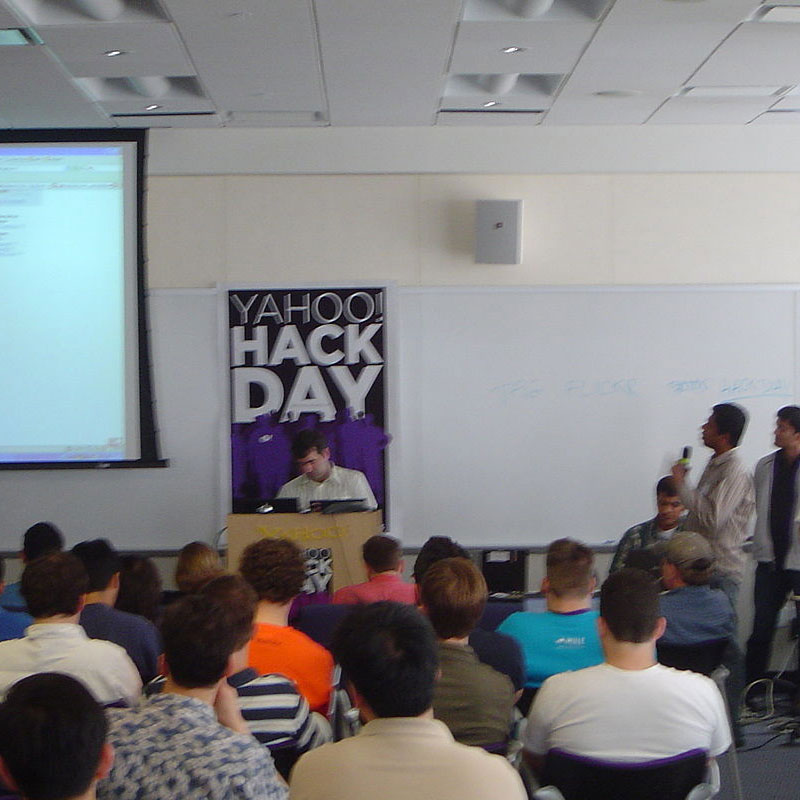
    NEW DELHI: Yahoo! India has announced the successful completion of its first ever Agency Hack in India, the first to be held outside the United States.

    The 24-hour non-stop Hackathon was held at Gurgaon on 2 and 3 November. The event saw participation from leading advertising agencies with teams from Delhi, Bangalore and Mumbai competing to come up with smart digital and tech-powered solutions to address real-life challenges.

    In the past, Yahoo! has organized successful Agency Hacks in New York with large advertising groups such as WPP and Publicis.

    Agency teams comprising developers, designers, user-experience specialists, copy-writers, media planners and digital strategists got together to come up with innovative ideas and build prototype solutions within 24 hours. Participating teams could choose to either build a campaign-based solution or a product-based one using technologies from Yahoo! and other players. Seven agencies, including Ogilvy, Webchutney, Sapient Nitro, ad2c, Digitas, Indiatimes and Reprise Media participated in this event.

    Eight working prototypes ranging from mobile applications, to companion apps in a living room experience, to social apps for voting and blood donations, were completed in the frenzied 24-hour hacking event.

    The hacks were adjudged by a team comprising technology, media and marketing experts. The Gold Prize was won by the team from Web Chutney (Mandeep Singh, Sattvik Mishra, Gurbaksh Singh, Abhishek Saxena and Akshay Raheja) with their whacky utilitarian hack ‘Y! Loo‘ – a hardware-led hack that usesYahoo! Messenger and allows users to remotely check the status of the office loos (and conference rooms). Users can knock on the door if the loo is engaged and it is smart enough to notify the user back, once vacant. Team Digitas (Akshat Bhardwaj, Prosenjit Som, Sidharth K Dhanda, Vivek R Sharma) walked away with the Silver Prize for their twitter-based hack “Twinority Report”, a tweet investigator that anticipates criminal intentions ranging from drug abuse to suicide to serious national threats by analyzing keyword patterns. Bronze Prize was won by Sapient Nitro (Syed Suffiyan, Parag Gajjar) for their movie viewing companion experience platform “Lens”.

    “It feels awesome to have won at the first-ever Agency Hack in India. For this event we wanted to solve a problem that we ourselves face and that‘s how we came up with the Y Loo. We are five people in our team, and only one has been to the US. So a trip to participate in the international hack event is thrilling. We are so kicked about it!”, said Sattvik Mishra, from the winning team from Web Chutney.

    The Agency Hack was one of the initiatives that Yahoo! hosted in the run up to the prestigious Yahoo! Big Idea Chair Awards. This year‘s Yahoo! Big Idea Chair, has received a significant 383 entries across 8 categories. The entries will be evaluated and judged by a panel of 16 eminent jury members from diverse sectors within the marketing and advertising world. The panel will shortlist three outstanding campaigns in each of the 8 categories: Best Use of Display Advertising, Best Online Video Advertising, Best Use of Social Media, Best Use of Technology, Best Use of Mobile Advertising, Best Use of Search, Digital 360, andYahoo! Big Idea Chair Award. They will also select the Grand Winner from amongst all the entries received across all categories. The winners will be announced at a gala event in Mumbai on 9 November.