Tag: Act II popcorn

  • We build consumer affinity on the strength of brand offering: Agro Tech Foods’ Asheesh Sharma

    We build consumer affinity on the strength of brand offering: Agro Tech Foods’ Asheesh Sharma

    MUMBAI : Agro Tech Foods Ltd (ATFL), an FMCG player engaged in the manufacture and sale of a wide range of snacks and edible oil products and name behind the household brands like Sundrop Oil and Act II popcorn, recently announced its entry into the chocolate confectionery segment, with the launch of a coconut-centered product under brand name Sundrop Duo.

    The packaged food sector in India has witnessed some significant highs and lows through the pandemic. Despite lockdowns in various parts of the country and the economic impact of the pandemic, the industry showed resilience by bouncing back after an initial slump in 2020. The FMCG industry grew 9.4 per cent in the January-March quarter of 2021, supported by consumption-led growth and value expansion from higher product prices, particularly for staples, according to Nielsen. Significantly, the FMCG market in India is expected to increase at a CAGR of 14.9 per cent to reach $220 billion by 2025,  from $110 billion in 2020.

    Against the backdrop of its growth focus announcement, IndianTelevision.com spoke to Agro Tech Foods vice president marketing Asheesh Sharma in a freewheeling conversation, where he shares how the company engaged with its consumers in the wake of evolving buying behaviour and changing consumer sentiment. Sharma does a deep dive into the journey of its flagship brands Act II popcorn and Sundrop peanut butter, how they fared during the pandemic, and now betting big on the competitive confectionery segment.

    Interestingly, Sharma also reveals the reason why the brand chose not to clamber onto the IPL bandwagon.

    Edited excerpts:

    On the brand’s TG and its current consumer demographic

    For us, our brand’s TG normally does not change with a time period so often. Act II is primarily focused on an age group of 4-14 as its main TG, and then 31-41 for the mothers. For peanut butter, we target TG which’s 15 to 24 because it’s an acquired taste. In the case of popcorn that’s not a problem because it’s a known taste. So the TG hasn’t changed, and our marketing communication has been the same. But we increased our investment behind it to reach more people who were at home. And we think that that’s how the brand Act II will continuously grow even in the years to come.

    Coming to our consumer demographic, we don’t have too much of a presence in rural. We have got growth in all tier 2, tier 3 towns as well as metros. So if we take these one lakh plus towns- that’s where more of our urban market is and that’s where we are focused on. And the phenomenon of people being at their homes was not restricted to these. So our growth came from all of them, partly also driven by the fact that some people had migrated from the metros to their homes in smaller towns with WFH. So there were multiple parameters like e-commerce delivery in smaller towns has improved and so on. So barring a few percentage points here and there we can say our distribution network largely covers the urban area and we mostly grew across the geography that we operate in.

    On investing in the red hot media property that’s IPL

    Cricket and Bollywood are the two religions in India. And we have always chosen Bollywood to go with Act II. Popcorn enhances your film-watching experience, so we just stayed with it. We normally do not participate or advertise in the IPL because we still have a lot to leverage on the films.

    In a similar vein, when it comes to investing in celebrities, principally as a company we don’t believe that we need to have celebrity endorsement or give crutches to the brand. What we do is build on consumer insights, unmet needs, benefit, cost structure, and delivering the brand. We want consumers to come for the benefit that the brand offers, and not do interim jumps of, say, a celeb endorsement.

    We build consumer affinity on the strength of the brand offerings- both in terms of imagery and in terms of product experience in itself. And this is also why our rates of repeat customers and customer retention are very high.

    On the thought behind the business’ foray into the confectionary segment

    A large part of our growth comes from two factors- one is innovation and the other’s the increased spends on advertising. Almost 50 per cent of our growth comes from innovation, and the other 50 comes from the investment, in terms of demand generation in media. It allows us to build products that are differentiated, address an unmet consumer need and is value offerings. Any of our new products have to meet these three criteria.

    So when we decided to foray into this segment our thought was, how do we add nutrition to an indulgent category. That was brief with which we started this work. For if you see, our company’s vision is ‘Nourishing Families, Enriching Lives.’ We always try and build nutrition into it so that the trend towards healthier habits. Thus, our Sundrop Duo confectionery is nearly 30 per cent lower sugar than comparable products of our competitors’ products. Lastly, we made sure that we are competitive with the price, in that we are almost 50 per cent cheaper than the competitor’s products.  

    On the media and marketing strategy for this new segment

    Right now we have not gone digital on our chocolate confectionery. We went on television talking to people about the brand proposition, ‘Taste ka asli fusion.’ We are first doing mass media with it and are building a distribution reflective of the fact that we are going to be doubling our chocolate capacity in Quarter one of FY ’23. And then again doubling it in Q3, so we will be quadrupling our capacity in the next year. Which talks volumes about the response and acceptability of the product. The growth rate and the acceptance have been the biggest driver for me with this product.  

    On how the company’s flagship brands fared during the pandemic

    One very important thing that worked for us was that in the last two years, the amount of time consumers spent in-home was significantly more than what they were spending out of the home. And as a consequence, in-home consumption went up. And that uniquely benefited Act II Popcorn. So for the years of FY ’21 and FY’22, we saw very good growth in our Act II business, primarily led by increased in-home availability of people, and the product was perfectly suited for that. There might have been some peaks and troughs for the reasons of panic buying versus regular buying, but overall the steady-state of consumption was higher.

    The same thing applied to our second category i.e. spreads. This was also the time when people became more concerned about the health benefits. As a consequence, peanut butter which is primarily a healthier alternative to spreads that are available in the market started getting an adaptation. So combined with all these factors, we had a very good run on spreads also.

    Overall, FY ‘21 we grew at almost 35 per cent as compared to our competitors, who were at 16-17 per cent.

    On leveraging the pandemic boom and sustaining it

    A big factor during these two years of FY ’21 and ’22 was that travel was restricted, impacting the businesses of FMCG companies like ours. So what we did very knowingly and selectively was that, whatever savings we got out of this, we deployed them all in demand generation activities of the media. That put us in a very strong base because consumers were coming in, and we kept on advertising. And in this period (FY’21-22) we increased our advertising media by almost 30 per cent versus what we did in FY’18-20. That in my view, was a very significant step because there will be moments and opportunities which come.

    You have to leverage those opportunities to build a steady business going forward. Because the opportunity might disappear but the retained consumer will keep giving you business in the balance years. Hence, even as we see the economy now opening up and people will be less at home than they were earlier during the pandemic, we are very well set to leverage this opportunity even in FY ’23.

    On the media mix adopted by the company

    We still spend 95 to 97 per cent of our ad spend on television, because that is the single biggest mass media reach that we get. For our TG of 15 to 24, this generation, of course, is more digital-oriented. In my view, however, even as the digital adaptation has increased it hasn’t reduced television. We do digital but only as an add-on to TV. So we take Hotstar and we pick these other YouTube channels, and on Instagram the various food handles. But that’s not our mainstay. We do need them and we use it as a medium to just make sure that people are aware of us, and we are present with them as and when they’re receptive.

    One of our philosophies has been ‘talk to the consumer when and where they are more receptive’ and in that, we found that during TV and entertainment which is a leisure time you are more receptive. Versus being on digital when you’re just trying to catch up and to be updated. So we are balancing the two. So it’s 97 per cent on TV and three per cent on digital. Print and radio we don’t do much largely, and might go into decimals. Only if we have a messaging which allows itself to be better communicated on print and as a means of augmenting the communication, we go for it. Otherwise, we are very singularly focused on using television as a medium, as that’s the mainstay for us in terms of mass reach and building a scalable business.

    On the critique that it stands to lose out on its millennial + Gen Z consumer by not leveraging digital enough

    See, the investments are done in proportion to the kind of growth that you need. So normally television for all the single TV households was a family viewing experience. OTT has made it a very personalised viewing. So while we did go on OTT with Hotstar, we did not give away the mainframe of television because we still feel our brand equity is more about family.

    Have the numbers dropped? Maybe there’s a little shift here and there but the people who are watching TV are still sufficient for us to keep growing our businesses. So that was the way we wanted to go and hence, the media choices that we made. In my view, the use of a medium should be determining the quantum of growth and the acceptability of your proposition which happens. And that’s what we do.

    On the FMCG’s road map ahead

    The packaged foods & FMCG sector, both will continue to grow- some years little lesser, some years little more. The interim disruptions that happen, for example, the current Ukraine war may act as barriers here and there. But the bigger picture will be, it is going to keep growing.

    In the ready-to-cook segment at home, we were already anticipating that when the economy opens up, the growth rate may slow down. As of now, we haven’t seen it, but probably when people move out more than they are at home that shift has to happen.

    So we already entered into a newer portion there with the- ‘Ready To Eat Meal Kits.’ These meal kits have already started contributing to the Ready To Eat cook at home. So that has ensured that we continue to grow at our past rate of 15-20 per cent. The categories that we have been historically working with, such as Act II and peanut butter- we have been growing at about 15 or odd per cent.

    And then the newer segments of chocolate confectionery and breakfast cereals would add another 600 to 1000 business points of growth, taking us anywhere between close to 25 per cent growth rate going forward. And half of it probably would come from innovation and a half from the media, that’s the long-term plan.  

    We are a company that relies heavily on innovations to meet unmet consumer needs, have in-house manufacturing to have a very good cost structure, and does moderate media investments. So that there is a sustainable business model for growth forever.

  • Disney coming? Cartoon Network believes localisation gives it the edge

    Disney coming? Cartoon Network believes localisation gives it the edge

    2002 will be the year of intensified localisation for kiddies’ channel Cartoon Network. 

    Govindan – Cricket to reward viewer loyalty
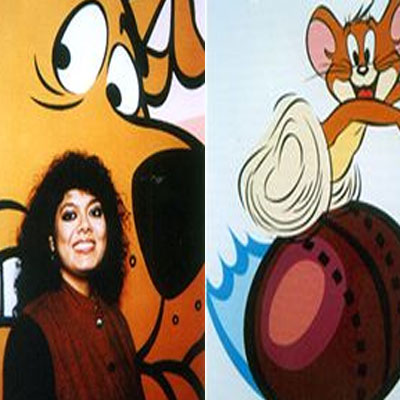
    The channel that started going desi in February 2001, managed to climb to the number two position in the Hindi market in the 5 – 9 pm band by December (close on the heels of Star Plus), according to VP, marketing and PR Hema Govindan. The rapid rise in rankings is due to local acquisitions like Pandavas and Sinbad, bought from Pentamedia Graphics, which have paid off handsome ratings and Govindan sees the channel going in for more Indian folklore in animation. “Not just Indian stories, we are looking at acquiring animation from Japanese studios too, which are creating shows whose essence appeals to Indian sensibilities”, she says. 

    The channel is shifting gears to cope 
    with the imminent entry of Disney, although Govindan insists that some competition would only keep Cartoon Network fighting fit. In the last few months, the channel revamped its programming franchises and taken a whole new look at promotions, which too have received a dose of localisation. That the channel is not sparing any efforts to maintain viewer loyalty and phenomenise toon characters is clear from the massive promotion that accompanies its second Toon Cricket event in Chennai and Mumbai this year.

    Although Govindan is reluctant to put a figure on the huge promo blitz, she admits it is ‘massive, probably the largest in scale for the year.’ Apart from the hoardings and the ads on FM and local cable channels, there will be a ‘toon mobile’, a 17-foot open float depicting cricket net sessions that will move through the cities, with toon characters in tow, handing out passes in schools and entertaining the younger generation. Besides, the channel has run a contest for selecting the teams and will be flying down five children from their home towns to watch the match live. 

    The channel’s Night Shift, launched in November is targeting an entire new viewership comprising teens and young adults. Not surprisingly, the move has widened the channel’s ad client base, with clients like Gili’s diamonds entering into tie-ups for Valentine’s Day packages. While Govindan says it is early days to gauge the increase in viewership post the launch of Night Shift (timed to wean adults away from soaps and thrillers on mainstream channels), she says the channel currently reaches between 12 to 15 million Indian households.

    Announcing the details of ‘Toon Cricket 2002’, Govindan said that the three-hour match will be held at the Andheri Sports Complex on 24 February. Beverage conglomerate Pepsi is the main sponsor. The co-sponsors are Solana, Colgate, Cadbury Gems, Boost, ACT II Popcorn, TI Cycle’s. Positioning as a highly interactive event, she said that cricket was chosen because today’s cricketer’s are role models for aspiring youngsters. The initiative is targeted at kids as well as the young at heart. The tagline is ‘It’s a mad game but soomeone’s got to play it’. The network hopes that it will make audiences as well as rival channels aware that the toons seek a larger slice of the action pie.

    In a move inspired by the ESPN Star Sports show ‘Super Selector’ the channel invited toon addicts to be ‘Super Selectors’. The channel claims that thousands of entries were received in a contest to decide who the captains should be and 450 winners will be given passes to the event. Elaborating further on the strategy, Govindan said that the aim is to blur the line between the real world and the toon world. To achieve this the rules of the game have been tweaked to make it unusual and refreshing. The tie-up with Pepsi involves hoardings where cricketers who appear in the cola’s ads give hilarious tips to the toons.

  • Disney coming? Cartoon Network believes localisation gives it the edge

    Disney coming? Cartoon Network believes localisation gives it the edge

    2002 will be the year of intensified localisation for kiddies’ channel Cartoon Network. 

    Govindan – Cricket to reward viewer loyalty
    The channel that started going desi in February 2001, managed to climb to the number two position in the Hindi market in the 5 – 9 pm band by December (close on the heels of Star Plus), according to VP, marketing and PR Hema Govindan. The rapid rise in rankings is due to local acquisitions like Pandavas and Sinbad, bought from Pentamedia Graphics, which have paid off handsome ratings and Govindan sees the channel going in for more Indian folklore in animation. “Not just Indian stories, we are looking at acquiring animation from Japanese studios too, which are creating shows whose essence appeals to Indian sensibilities”, she says. 

    The channel is shifting gears to cope 
    with the imminent entry of Disney, although Govindan insists that some competition would only keep Cartoon Network fighting fit. In the last few months, the channel revamped its programming franchises and taken a whole new look at promotions, which too have received a dose of localisation. That the channel is not sparing any efforts to maintain viewer loyalty and phenomenise toon characters is clear from the massive promotion that accompanies its second Toon Cricket event in Chennai and Mumbai this year.

    Although Govindan is reluctant to put a figure on the huge promo blitz, she admits it is ‘massive, probably the largest in scale for the year.’ Apart from the hoardings and the ads on FM and local cable channels, there will be a ‘toon mobile’, a 17-foot open float depicting cricket net sessions that will move through the cities, with toon characters in tow, handing out passes in schools and entertaining the younger generation. Besides, the channel has run a contest for selecting the teams and will be flying down five children from their home towns to watch the match live. 

    The channel’s Night Shift, launched in November is targeting an entire new viewership comprising teens and young adults. Not surprisingly, the move has widened the channel’s ad client base, with clients like Gili’s diamonds entering into tie-ups for Valentine’s Day packages. While Govindan says it is early days to gauge the increase in viewership post the launch of Night Shift (timed to wean adults away from soaps and thrillers on mainstream channels), she says the channel currently reaches between 12 to 15 million Indian households.

    Announcing the details of ‘Toon Cricket 2002’, Govindan said that the three-hour match will be held at the Andheri Sports Complex on 24 February. Beverage conglomerate Pepsi is the main sponsor. The co-sponsors are Solana, Colgate, Cadbury Gems, Boost, ACT II Popcorn, TI Cycle’s. Positioning as a highly interactive event, she said that cricket was chosen because today’s cricketer’s are role models for aspiring youngsters. The initiative is targeted at kids as well as the young at heart. The tagline is ‘It’s a mad game but soomeone’s got to play it’. The network hopes that it will make audiences as well as rival channels aware that the toons seek a larger slice of the action pie.

    In a move inspired by the ESPN Star Sports show ‘Super Selector’ the channel invited toon addicts to be ‘Super Selectors’. The channel claims that thousands of entries were received in a contest to decide who the captains should be and 450 winners will be given passes to the event. Elaborating further on the strategy, Govindan said that the aim is to blur the line between the real world and the toon world. To achieve this the rules of the game have been tweaked to make it unusual and refreshing. The tie-up with Pepsi involves hoardings where cricketers who appear in the cola’s ads give hilarious tips to the toons.

  • Nickelodeon and Sonic engage with over 500 schools across India

    Nickelodeon and Sonic engage with over 500 schools across India

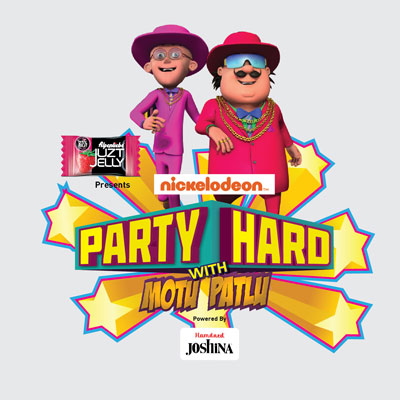
    MUMBAI: School time is synonymous with friends, fun and learning and kids channels Nickelodeon and Sonic are set to add to the unforgettable experience. The campaigns, ‘Nickelodeon Party Hard with Motu Patlu’ and ‘Sonic Jo Dekhega Wo Jeetega’ aim at making school time special by curating a high octane entertainment and engagement event with kids. Upping the edutainment experience at schools, the month long engagement will reach out to over 5 lakh children in 500 schools across 16 cities in India.


    Days spent at school are most memorable and these campaigns through the school contact programme are all set to make sure that children celebrate the best years of their life.  The engaging programme kick starts with the introduction of the Nickelodeon and Sonic shows, leading to children participating in multiple learning based games with their favorite characters.  The games will be seamlessly integrated with team building activities with their school buddies and the Pakdam Pakdai gang.  Stories of their favorite characters Motu Patlu  will bring alive the spirit of friendship and themed games based on mind mapping and analytic skills will keep children engaged and entertained while also helping them hone their cognitive skills. Select few kids will also get a chance to win cool goodies and party with the awesome twosome Motu Patlu and get to win cool gadget from Sonic’s Pakdam Pakdai.


    Speaking about engaging with lakhs of kids though the school contact programme Nina Elavia Jaipuria, EVP & Business Head, Kids’ Cluster, Viacom 18 Media Pvt Ltd, said, “Engaging with children and making our characters an intrinsic part of every child’s life has been our key endeavor. Our robust school time engagement helps us connect with kids as we imbibe core values and skills in them. We are sure that kids will be delighted to spend time with their favorite characters at school with their friends”.


    Leading brands like Alpenliebe Juzt Jelly, Hamdard Joshina, Dabur Red Toothpaste, Act II Popcorn and Luxor have partnered with Nickelodeon in this celebration of school time.  The 1.5 month long initiative filled with laughter, action and entertainment will culminate on September 30th 2015.