Tag: acquisition

  • Disney formally closes deal with Fox, massive layoffs expected

    Disney formally closes deal with Fox, massive layoffs expected

    MUMBAI: Walt Disney Co (Disney) has finally closed the deal with on its $71 billion acquisition of 21st Century Fox (Fox). In recent months, the acquisition received final approval from antitrust regulators across the globe. This merger will lead to thousands being fired, industry experts as well as several media reports speculate.

    With the deal, Disney is taking over majority of Fox’s assets including 20th Century Fox studio, the FX and National Geographic cable networks, and an additional 30 percent of Hulu. The giant media conglomerate thinks the deal will help it increase its international footprint along with expanding its direct-to-consumer offerings.

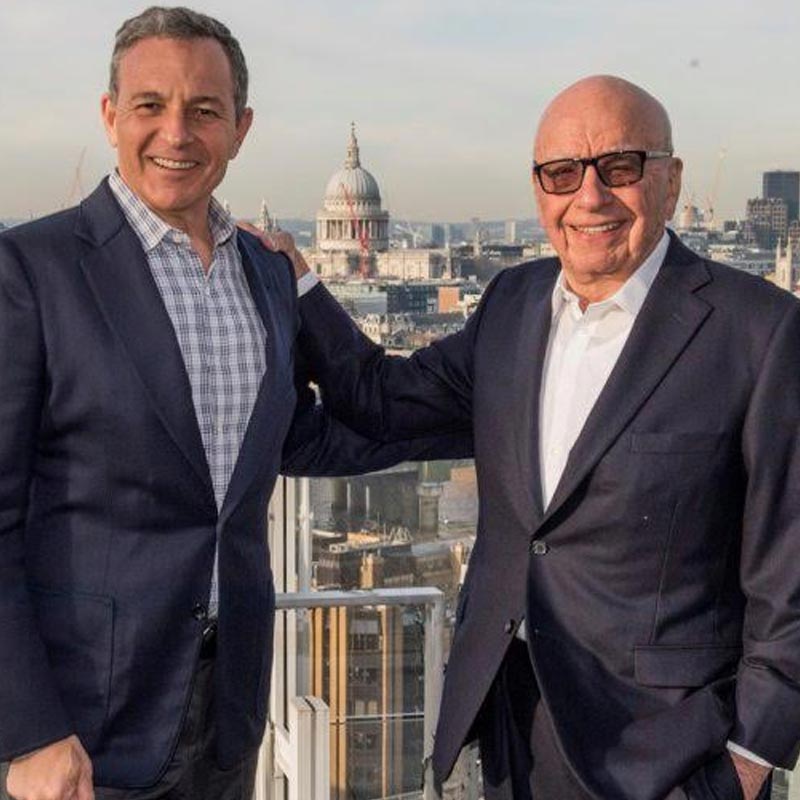
    “This is an extraordinary and historic moment for us — one that will create significant long-term value for our company and our shareholders,” Disney CEO Bob Iger said in a press release. “Combining Disney’s and 21st Century Fox’s wealth of creative content and proven talent creates the preeminent global entertainment company, well positioned to lead in an incredibly dynamic and transformative era,” he added.

    Bob Iger promised $2 billion in cost savings which clearly indicates to epic job cuts. While Disney is taking on 15,400 Fox employees, the smaller new Fox Corp will keep about 7,000. The layoffs are expected to come down heavily on domestic market first. “You can anticipate more domestic at the front end, just because of regulatory issues outside of the US,” Disney chief financial officer Christine McCarthy said earlier as quoted by Bloomberg.  The number of cuts could reach up to 4000, maybe even higher than that. Most of the jobs that are expected to be hit by the acquisition are duplicate ones.

    To take on this bet, Disney has to sell 22 regional sports networks in the US and its sports networks in Brazil and Mexico as part of regulatory approvals. The company also agreed to sell its stakes in such networks as Lifetime and History in Europe.

    Although the Fox deal will help Disney in its direct to consumer business, the cost of launching Disney+ is expected to impact the company’s financials next year.  A study from the research firm Ampere Analysis suggested that Comcast, after the acquisition of European pay TV giant Sky, and Walt Disney, after its Fox deal, will dominate global content spending.

  • Wunderman acquires Amazon consulting agency 2Sales

    Wunderman acquires Amazon consulting agency 2Sales

    MUMBAI: Wunderman, the leading global digital agency and a WPP company has acquired 2Sales International, an e-commerce consulting agency that supports global brands in building their business on Amazon and other online marketplaces.

    2Sales will become part of Wunderman’s growing global commerce offering, Wunderman Commerce.

    The acquisition further strengthens Wunderman Commerce’s Amazon expertise across supply chain, operations and assortment planning, content/search optimisation and promotional management, particularly in European markets where Amazon’s market share is growing rapidly, and where their broader consumer influence is becoming increasingly important to clients. 

    2Sales employs 66 people in Luxembourg, and is a one-stop Amazon solution that utilises automated processes to optimise content generation, sales promotions across eight international Amazon platforms. Clients include ACCO, Columbia, Fiskars and SC Johnson.

    Wunderman Commerce global CEO Neil Stewart says, “For brands to win on Amazon requires tools and techniques that come with direct knowledge and expertise, something 2Sales has mastered over the years by working with over 150 brands. We are delighted that they are joining the Wunderman Commerce family, fortifying our Amazon capabilities across EMEA, and supporting our ability to provide multichannel digital commerce services to our brand clients.”

    2Sales CEO Helmut Rieder adds, “This is an exciting time for 2Sales as it will enable us to extend our marketplace services and Amazon capabilities to Wunderman Commerce’s global client base. Wunderman Commerce has established itself as the go-to agency in defining and delivering digital commerce strategies across all online channels, and we are thrilled to now be a part of it.”

  • Reliance Brands acquires Rhea Retail for $30 million

    Reliance Brands acquires Rhea Retail for $30 million

    MUMBAI: Mukesh Ambani led Reliance Brands Limited, a subsidiary of Reliance Industries Ltd, has acquired Rhea Retail Pvt. Ltd. Reliance acquired 100 per cent stake in the company for $30 million (Rs 203.46 crore)in an all cash deal. 

    Rhea was incorporated in 2007 and is in the business of selling of products in India for expectant mothers and in general merchandise for children. The company’s turnover for  FY 2017-18 stood at Rs 200 Cr.

    With this acquisition, Reliance Brands will expand its product portfolio. 

    The acquisition of Rhea does not fall under related party transaction and none of the promoters / promoter group / group companies have any interest in Rhea.

    Reliance Brands has a portfolio of over 40 international brands. These include luxury, bridge-to-luxury, high-premium and high-street lifestyle segments such as Gas, Diesel, Marks & Spencer and Steve Madden.

    In 2017, Reliance Brands acquired a 46.6 per cent stake in Genesis Luxury Fashion Pvt. Ltd, which operates brands such as Michael Kors, Armani and Canali.

  • India’s taxi war may be headed for a truce

    India’s taxi war may be headed for a truce

    MUMBAI: Gone are the days when we had to book a cab by calling a local can agency, and that’s because cab aggregators in India have completely changed the way we book a cab.

    Back in the day, while Mumbai had its distinguished kaali-peelis, Delhi had its metro whereas Bengaluru didn’t have a great public transport system. Cabs were never a mode of transport in India until a few years ago.

    India’s first official cab service began in Mumbai in 2007 with Meru cabs, who were extremely high priced but came in handy during airport and long-distance travels. It was in 2011, when cab service provider TaxiForSure eased the booking process by starting an online portal, aggregating multiple cab agencies. They grew in popularity by including an Android-based GPS system, which helped customers track their ride.

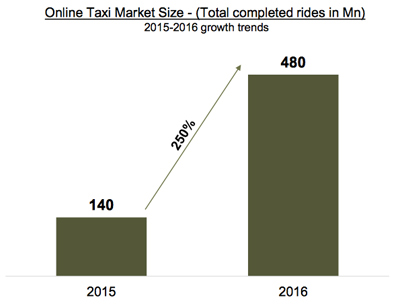
    ONLINE-TAXI-MARKET-INDIA_1.jpg

    Meanwhile, Ola, which started in 2010, was following a different model by associating directly with cab drivers, thereby eliminating the need for cab agencies. The company gained popularity only in 2013 as in the initial years, people couldn’t relate with the idea of talking to the driver directly on booking a cab and questioned the model’s authenticity. It was around the same time that global taxi market leader Uber entered the Indian market but failed to connect with the audience as it only allowed credit cards as a mode of payment.

    Over the years, a lot has changed in the Indian cab aggregator sector, where some had to shut shop or were bought over due to bankruptcy and increasing losses. In March 2015, OlaCabs acquired TaxiForSure for approximately US $200 million and Geotagg, a trip-planning applications company, for an undisclosed sum. The company also acquired Foodpanda’s business in India in 2017. 

    The segment has gained a lot of attention due to huge funding, highly competitive pricing (Ola-Uber on-going price war), security issues of women passengers and tussle with the government for license and permits.

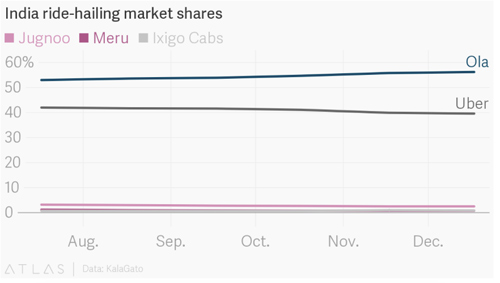
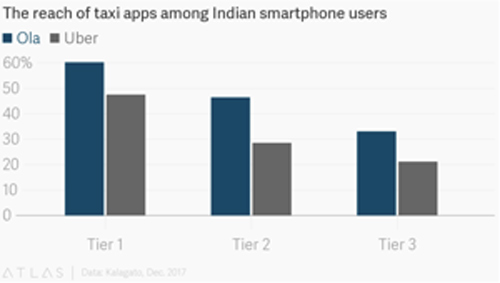
    Today, Ola clocks an average of more than 150,000 bookings per day and commands 60 per cent of the market share in India, while Uber’s shares have slipped from 42 per cent in July 2017 to 40 per cent in December 2017.  According to Japanese multinational conglomerate, SoftBank, the organised taxi sector in India may be worth $7 billion by 2020.

    In 2016, Uber made a deal with its Chinese rival Didi Chuxing to exit the Chinese market, after the duo fought hard for the country’s huge customer base Uber also exited Russia and Eastern European markets last year after reaching a similar deal with Yandex, giving Uber 36.6 percent of the entity formed by the two companies. 

    SoftBank has made major investment in Ola and Uber who has also invested in Grab, which is Uber’s rival in South East Asian countries. Ever since Uber inked the deal with SoftBank, there have been speculations that Uber would pull out of those markets and it turned into a reality earlier this year where Uber sold its business in SEA to Grab.

    Now, news is doing the rounds in market that a possible merger between Ola and Uber may be on its way in India. Since the Ola-TaxiForSure acquisition, the Indian market has essentially been a two-horse race and now, were the Uber-Ola deal to work out, we'd witness a monopoly situation like never before as Uber and Ola, together hold nearly 95 per cent of the market today. 

    public://INDIAN-CAB-MARKET-OVERALL.jpg

    If the merger does happen, we may see increase in advertising and marketing for the new merged entity as Ola and Uber are India’s two major cab aggregators with pockets filled. Ola has a robust advertising budget for television and print whereas Uber has an upper hand at digital and social media marketing. The combined entity would indicate 360-degree advertising including print, out of home, television and digital. 

    While Uber has always had an elite and urban vibe to it, Ola has a stronger presence across smaller towns and segments. The Indian firm operates in 110 cities, far more than Uber’s 31. The merged entity would ensure a better penetration in rural as well as urban markets as the customer base for both the apps would be aligned together. 

    public://TIER-2,-TIER-3-MARKET-SHARE.jpg

    This would also mean the prices would be kept in check as currently, Ola is assumed to be comparatively cheaper and affordable than Uber. But this could also go the other way, as a monopoly could lead to price tampering and exorbitant charges.

    But the merger will also open the field for newer players to enter in the segment which will only help in competitive prices and all of them striving to serve better in order to acquire and retain customers. 

    All said and done, when and how the merger will unfold is a story for another day but if there’s one thing, it will definitely be an interesting tale to tell.

    Also Read :

    2018 will be a year of video campaigns: WATConsult's Rajiv Dhingra

    Going from clicks to bricks

    Kohli brand driving on the up

    Competing with consumer activities not brands: Kingfisher's Sheikhawat

    Cinema advertising begins to take centre stage

  • ZEEL scraps 9X Media acquisition

    ZEEL scraps 9X Media acquisition

    MUMBAI: Owing to non-completion of certain material conditions, Zee Entertainment Enterprises Ltd (ZEEL) has terminated its deal to acquire music broadcaster 9X Media.

    ZEEL, on 6 October 2017, had entered into an agreement to buy 9X Media and INX Music from New Silk Route (NSR) and other shareholders for an all-cash deal of Rs 160 crore.

    In a release to the BSE, ZEEL stated, “This is further to our communication dated October 6, 2017, providing relevant details of the proposed acquisition of 100% equity stake in 2 Media entities viz. 9X Media Private Limited and INX Music Private Limited (9X entities).”

    “In this regard, we wish to inform you that the said acquisition deal has been terminated/called-off by the Company inter alia due to non-completion of certain material Conditions Precedent.”

    9X Media, along with its subsidiaries, operates a bouquet of six music channels–9XM (Latest Bollywood), 9X Jalwa (Evergreen Hindi), 9X Jhakaas (Marathi), 9X Tashan (Punjabi), 9XO (English), 9X Bajao (Hindi Classics).

    ZEEL was to acquire 91.45 million shares of Rs 10 each of 9X Media for a total consideration of Rs 155.2 crore. Furthermore, the company had also agreed to acquire 29.15 per cent stake in INX Music for Rs 4.8 crore.

    Post the acquisition, INX Music would have become a subsidiary of the company since 9X Media holds 70.85 per cent stake in the company.

    The acquisition was expected to be completed in 60 days as no government approvals were required.

    The deal would have provided an exit to private equity firm NSR that owns close to 80 per cent stake in 9X Media.

    Also Read:

    9X media announces two appointments in programming

    9X Media elevates Clyde D’Souza 

  • TV18 completes acquisition of Viacom shares

    TV18 completes acquisition of Viacom shares

    MUMBAI: TV18 is now officially in control of the Viacom18 joint venture in which the US partner, Viacom Inc (Viacom), was a majority holder till now with 51 per cent. In an announcement to the Bombay Stock Exchange (BSE), it said that the formalities of the transfer of 1 per cent shares from Viacom’s paid up equity capital to TV18 had been successfully completed.

    A statement to the BSE said, “With this acquisition, the company has acquired control and now holds 51 per cent of the equity share capital of Viacom18.”

    In January, the companies had announced the decision to transfer power in the hands of TV18 for $20 million (Rs 127 crore). In the meantime, deals for content licensing and brands between Viacom and Viacom18 also got extended by a decade.

    Holding more authority, TV18 can understand and execute strategies in the evolving digital India market. It can decide to drop or add new business verticals that can push up the company’s profitability.

    While announcing the plan to shift the power, Viacom International Media Networks CEO David Lynn also pointed out that Viacom18’s association with Network18 would help accelerate growth and even added Jio as one of the catalysts.

    Viacom18 Group CEO Sudhanshu Vats said, “This development will allow us to leverage deeper synergies with Jio as we enter our next growth phase.” Undoubtedly, Vats meant the presence of the network in the digital sphere with Voot. Calling the company a ‘full play media organisation’, Vats stated that the focus will be on ‘enriching the digital life of every Indian’. Jio is likely to play a major role in boosting Viacom18’s presence and reach through its 160 million subscribers. Recently, the telecom company announced that it is positive of touching 99 per cent of India by Diwali (October-November) 2018.

    Also Read:

    TV18 to increase Viacom18 stake to 51%

    Sudhanshu Vats on Viacom18’s growth strategy and why data analytics is key

    TV18 reports profit for second quarter

  • With Star India, Disney emerges as India’s largest M&E firm

    With Star India, Disney emerges as India’s largest M&E firm

    MUMBAI: Unlike the US, where the merger of The Walt Disney Co and 21st Century Fox’s entertainment assets is between two near equals, the scenario in India is totally different. 21st Century Fox’s India venture Star India is a $1.7 billion dollar media and entertainment behemoth while Disney India is a minnow with just about $150 or so million in sales, including its theatrical releases, TV businesses, and merchandising and licensing of the Disney characters and brands.

    For long, the mouse house has struggled to attain scale in India, like it has done in China with its $100 million box office theatrical releases and successful Shanghai Disneyland but it has not attained the success it would have wanted.

    Acquiring Ronnie Screwvala’s UTV half a decade ago gave Disney four channels—Bindaas, Hungama TV, UTV Action and UTV Movies, apart from a film production studio which it shuttered last year despite having
    a huge hit in the Aamir Khan starrer Dangal.  Other channels in its portfolio include Disney Channel, Disney Junior, Disney Channel HD, and Disney Junior HD.

    The acquisition of Star India with its 61 channels, stakes in DTH operator Tata Sky, VOD service Hotstar, and in-film production and distribution has in one fell swoop catapulted it to the number one media and entertainment company status in India.

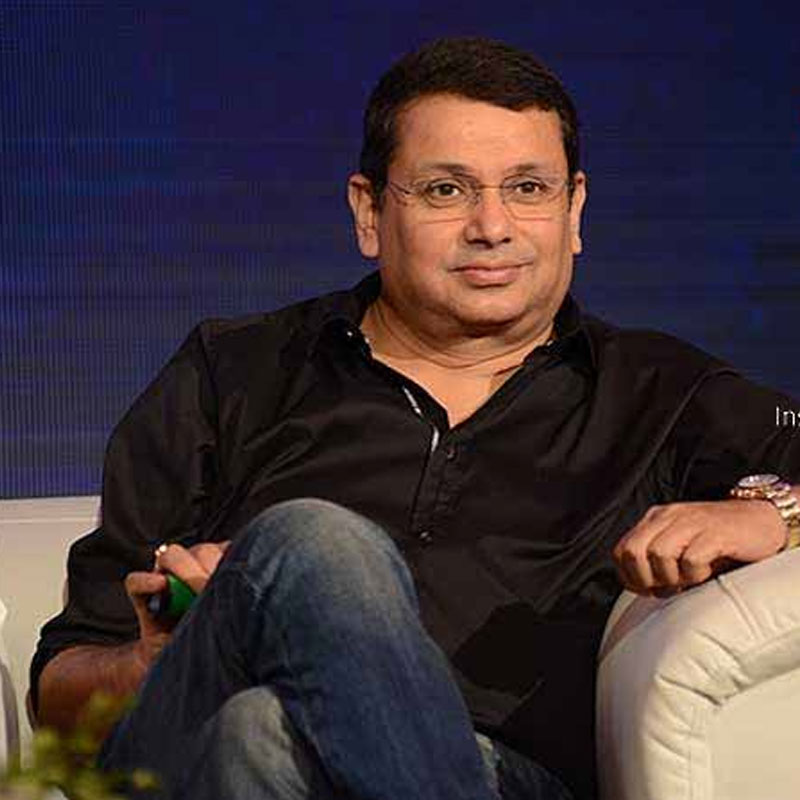
    However, it’s most likely that Star India chairman & CEO Uday Shankar will be given the mandate to steer and drive the enthusiastic young and new management team in Disney India, in synergy with Star India.  Shankar has been focused on regional language entertainment channel expansion, sports and Hotstar at the powerful media firm–a portfolio he has grown since he took over in 2007.

    Disney India is run by Abhishek Maheshwari–who was elevated to that position recently–following the promotion of Mahesh Samat as executive VP & managing director for South Asia.  How Shankar will manage the operations and whether he will restructure the management there will become clearer over the next few months.

    Star India has lacked kids channels in its portfolio; the addition of the Disney channels will help complete that. 

    Its Hotstar service has the most complete international portfolio and has had exclusive access to fresh Disney content, shows from HBO, Fox, CBS, and Showtime. And with it, Disney India will get more than 70 odd million active users consuming a multiple billion minutes a month of content.  

    “It is going to be an unrivalled media and entertainment powerhouse,” says a media observer. “All other media companies pale in comparison in the country.”

    The Tata Sky stake immediately brings into the Disney fold a satellite TV distribution platform making it a first for the company. UK satellite TV distributor Sky will most likely be the second one if the Murdochs’ bid for it in the UK gets the go-ahead from local authorities in time. 

    Of course, the arrangement in India will give Disney access to the world’s most valued cricket league, the IPL, for which Star India bid aggressively this year–some say too much. Then there are other sports activities that it automatically gets, like the leagues for kabaddi, football, hockey, and badminton. But being a part of Disney will aid its larger partner, too; it will have the facility to dip into the former’s massive cash trove to aid Shankar’s aggressive growth and entrepreneurial urge whether on video-streaming expansion or in sports.

    Interesting times are clearly on hand for the media and entertainment business in India.

    Also read:

    Comment: The rise and rise of Uday Shankar

    Disney to buy 21st Century Fox assets for $52.4 billion

    Disney expected to announce 21 CF buyout tomorrow: media reports

    Now, Comcast in talks to buy 21st Century Fox

  • Nexgtv acquires Sooperfly parenting shows’ international digital telecast rights

    Nexgtv acquires Sooperfly parenting shows’ international digital telecast rights

    MUMBAI: Nexgtv has acquired the international digital telecast rights to the immensely popular parenting TV series, ‘The Tara Sharma Show’. The move enables new and existing nexGTv users to view content that focuses on childcare, family-centric topics and women’s & children’s issues, spread across 13 episodes each from Season 1 and 2 of the show. This unique and differentiated content is produced by digital creation agency Sooperfly, which is joint venture between Digaonal View and 120 Media Collective, South Asia’s leading content production and distribution firm.

    Nexgtv COO Abhesh Verma commented, “At nexGTv, our aim is to offer consumers compelling entertainment with complete ease and convenience. Our acquisition of the digital telecast rights of ‘The Tara Sharma Show’ further strengthen our commitment to consistently get relevant content serving to the need of our customers beyond just entertainment and will enable our viewers to access inspirational stories and healthy discussions aimed at helping viewers to learn tips and tricks to good parenting. Indian viewers, both in India and abroad, can look forward to experiencing informative entertainment on our platform through their laptops, phones and tablets.”

    Users at nexGTv can avail of entertainment solutions through captivating videos that run seamlessly across 2G, EDGE, 3G, 4G and Wi-Fi networks, and across Android, iOS, BlackBerry and Tizen devices. The Tara Sharma Show and other featured content by Sooperfly is made available as a part of the paid packages at nexGTv, and can be accessed be either through www.nexgtv.com or through the nexGTv mobile app.

  • Nexgtv acquires Sooperfly parenting shows’ international digital telecast rights

    Nexgtv acquires Sooperfly parenting shows’ international digital telecast rights

    MUMBAI: Nexgtv has acquired the international digital telecast rights to the immensely popular parenting TV series, ‘The Tara Sharma Show’. The move enables new and existing nexGTv users to view content that focuses on childcare, family-centric topics and women’s & children’s issues, spread across 13 episodes each from Season 1 and 2 of the show. This unique and differentiated content is produced by digital creation agency Sooperfly, which is joint venture between Digaonal View and 120 Media Collective, South Asia’s leading content production and distribution firm.

    Nexgtv COO Abhesh Verma commented, “At nexGTv, our aim is to offer consumers compelling entertainment with complete ease and convenience. Our acquisition of the digital telecast rights of ‘The Tara Sharma Show’ further strengthen our commitment to consistently get relevant content serving to the need of our customers beyond just entertainment and will enable our viewers to access inspirational stories and healthy discussions aimed at helping viewers to learn tips and tricks to good parenting. Indian viewers, both in India and abroad, can look forward to experiencing informative entertainment on our platform through their laptops, phones and tablets.”

    Users at nexGTv can avail of entertainment solutions through captivating videos that run seamlessly across 2G, EDGE, 3G, 4G and Wi-Fi networks, and across Android, iOS, BlackBerry and Tizen devices. The Tara Sharma Show and other featured content by Sooperfly is made available as a part of the paid packages at nexGTv, and can be accessed be either through www.nexgtv.com or through the nexGTv mobile app.

  • Zee’s Ali Zaidi sheds light on the English entertainment genre

    Zee’s Ali Zaidi sheds light on the English entertainment genre

    MUMBAI: The English entertainment genre is passing through a wave of evolution with more entrants, digitization, home-grown content, with acquisition of rights of more international shows and has shaped effectively due to key factors such as literacy, change in lifestyle, etc. The entire genre, both in terms of the share and viewership has grown exceptionally since its inception, by providing a great space for advertisers to target larger audiences and get effective results.


    According to the FICCI-KPMG M&E report 2015, the entire genre enjoys a viewership share of 0.9 per cent  of the total share, higher than 0.1 per cent of English News while the genre’s AdEx share stands at 4.6 per cent of the Rs 17,500 crore ad spends for 2014.


    There is no exclusivity in the TV shows screened on these channels. A majority of the English entertainment channels are just acquiring rights for international shows; hence the need for channels to differentiate exists more than ever. Despite the diverse range of content available on the channels, the genre hasn’t seen a rise in viewership. However, things are expected to change after BARC (Broadcast Audience Research Audience India) stabilizes its data.

    Indiantelevision.com got in touch with Zee Studio and Zee Café’s business head English cluster Ali Zaidi to throw some light on the genre, the challenges that it faces, about original content production in India, and the bouquet’s future plans.


    The genre has seen a decline this year by 0.2 per cent from last year as per the FICCI-KPMG M&E report 2015, while the AdEx share has remained constant. “The genre as a whole is growing day by the day as we have more English literate people in India. English language is getting more common in India which is a plus point for us. The genre will see a positive growth in the coming calendar”, says Zaidi.


    Zee Cafe and its foray into HD


    Zee Cafe has grown from 21-22 per cent to 42per cent while Zee Studio has seen a growth from 7-8 per cent to 13 per cent this year. Zee Cafe has recently been converted to a HD channel. Zaidi says out that the over the years, the demand for English entertainment content has just increased and the audiences are willing to invest their time and money to watch the best and the latest. With this new step, the bouquet is taking TV viewing experience a notch higher. The channel is home to popular shows and is a trendsetter in the industry. There was a demand for a high definition experience of the shows that are aired on Zee Cafe. Due to the technological advancements and with the advance of 4K television in the metro cities, the audience wants a detailed viewing experience. Zaidi says that this conversion is a natural progression for the premium channel.


    Commenting about the response the HD channel has received so far, Zaidi asserts “The response for Zee Café HD has been great. It was a pull strategy rather than push approach. We always want to give the audience a better viewing experience.” The channel will also see a 4K conversion once the market gets digitalised with better availability of infrastructure.


    Original content production in India and simulcast


    Zaidi says, “India has seen the launch of a new channel with home-grown content on it. Successful English entertainment channels are just acquiring rights for international content to be broadcasted in India. Even though our motherland has a huge talent pool, the channels have yet not resorted to use the resources available”. Zaidi backs up this fact by mentioning the immense content available in India, while also pointing out that such decisions lay with the channel heads and it was their call on what kind of content was to be shown to its viewers. 


    Channels have to follow certain ethics and have to be careful about not hurting any person’s or community’s sentiments. Talking about the idea of producing original home-grown content, Zaidi says, “The quality that Hollywood studios are providing right now is something that is far for India to reach for now. A simple fact behind this is that Hollywood studios have a worldwide market to recover the cost, whereas in India, the market is limited and only caters to a niche audience”. He strongly believes that shows would get traction only when the channels provided some different content to which the audience could relate to. Linear English shows should strongly be dependent on their concept and had to be stand out of the box to compete with the existing standard quality of production in the world.


    Zaidi also mentions the quality that is being provided by international studios.  “Quality plays a vital role as you want to retain your audience by giving the best to them. India is not in that position as yet to give that quality, says Zaidi, though he thinks that providing home-grown content and making it popular in US as well as in India at the same time through strategic marketing is a goal that is not too far.


    Zaidi points out that for a simultaneous release, it was important for the production house to ensure that it had a worldwide reach. “It cannot just be Hollywood and India as studios recover costs from various markets. We don’t have that right now and therefore if we get into producing a high budget show, we are unlikely to recover costs”, he adds.


    Perception or Ratings

    According to Zaidi, both the elements are important, because the genre is small in size and caters to a limited audience. Ratings are the indicators of what people are watching as trends, and the genre is represented by a small number when it comes to ratings and that is why perception also plays an important role when it comes to trading.


    “People already know what is airing in the US and that is followed to India. We are talking about an audience that’s well informed. We pick our shows with lot of research and the shows which will work for our viewers in India. One needs to buy the right content and have a programming strategy in place to air the shows at the right time”, mentions Zaidi.


    At the same time he also points out that it all depended on the strategies that a channel followed. Channels have to decide on various factors like how they wanted to acquire the show, how they wanted to place it what timeline were they strategizing for the show, etc.


    Challenges for the genre


    Zaidi says that the biggest challenge for the English entertainment industry is the way it is being represented in the ratings system. He believes that once the rating gets steady, there would be no other major challenge that would affect the genre as a whole. “We are waiting for BARC to stabilize its data and give the right kind of representation. We are sure that it will happen in the assured time period of three months”, Zaidi hopes.


    With Indian audiences getting more television oriented and with everything available on the internet, piracy has been one of the threats to the genre since a long time. Every show and movie faces piracy issues in today’s era. Zaidi strongly believes that the entire industry, be it the studios, content providers, content aggregators or the broadcasters, everyone has to come together and understand that piracy needs to be fought.


    According to Zaidi, though this threat has been around for many years, it does not affect the viewership, as the audience, even after downloading the content, is interested and curious to watch it again on television sets. “There is enough audience that will watch content on the television box and I don’t think piracy will make that kind of a big dent, as people pirate also watch shows on TV”, adds Zaidi.


    The way forward


    Channels need to observe the viewing pattern that is followed in India before broadcasting a show. They need to strategize based on what viewers are expecting, when they will consume most of the content, what time will be convenient for them, which content is followed and viewed for a longer period of time? When they follow these pointers, the channels will naturally get viewers.


    Channels should opt for content acquisition for longer periods of time. “The channels are not in the ecosystem for a short period of time; they are and want to be in the business for years to come. It makes more sense to block content for a longer period of time”, explains Zaidi.


    Talking about the Ad spends on HD channels Zaidi informs that they were growing at 100 per cent year on year, but the base was low. The English genre is expected to grow by 25 per cent in 2016.


    He also points out the Ad spends are not a major problem, because more and more people watch this genre and know that HD definitely gives an opportunity to brand managers to watch this channel. The discussions between advertisers about the content shown on different channels is always helpful to decide which shows are popular and where should they invest in.