Tag: acquisition

  • JWT acquires majority stake in Social Wavelength

    JWT acquires majority stake in Social Wavelength

    MUMBAI: WPP Group’s JWT has acquired a majority stake in Social Wavelength.


    JWT’s acquisition of Social Wavelength is a logical confluence of social media and mainline expertise, coming together to create integrated communication for brands. The rich experience of five years that we have, in this young industry of Social and Digital Media, will find the next leap of growth, through this partnership. A socially connected world is going to create new challenges and opportunities for brands, and we will create solutions to help brands navigate those challenges,” said Social Wavelength joint CEOs Haresh Tibrewala and Sanjay Mehta.  


    The social media agency was founded in 2009, and headquartered in Mumbai, with offices in Delhi and Chennai. The agency now has over 170 professionals who offer social media communication services, social media listening services using Radian6,  influencer outreach program, application development, video and rich media content creation and media buying to over 50 leading brands.


    The acquisition marks a further step in WPP’s strategy of developing its networks in fast-growth markets and sectors. In India, WPP companies (including associates) generate revenues of nearly $500 million and employ almost 13,000 people.


    “We want to be a critical resource partner across the many solutions we provide to our clients. As we continue to relentlessly transform our offerings, Social Wavelength adds a huge dimension to our existing clients and the brands we steward. Across the marcom value chain and across various digital touch points the skills and capabilities of Social Wavelength will be that edge,” said JWT South Asia CEO Colvyn Harris.


    Social Wavelength’s revenues for the year ended 31 March 2013 were Rs 9.15 crore, with gross assets at the same date of Rs 5.92 crore. Social Wavelength marks WPP’s fifth acquisition in India in the last four years.


    JWT Asia Pacific has invested heavily in expanding its digital footprint over the last two years.  In addition to the acquisition of Hungama, in India, JWT acquired Post Visual in South Korea in 2013, and took a stake in Converge, in Pakistan, in 2012.  XM Asia, a digital agency owned by JWT, also acquired Designercity, in Hong Kong, and Thomas Idea, in Thailand, in 2013, and XM Gravity in 2012.

  • Why bigger agencies net smaller fish?

    Why bigger agencies net smaller fish?

    MUMBAI: Passion drives creative minds to set up independent agencies. In a majority of cases however, after the initial burst, resources become a constraint and growth avenues out of reach.


    While being able to do what you want, pitch to the client of your choice or leverage the tools of your choice continue to be the perks of going solo, at some point, the smaller independent agency is forced to reflect on how long it can continue to stand alone successfully.


    This is probably when selling out to a larger entity seems like the best option. In the past couple of years, there have been several instances of big networks snapping up smaller, independent agencies; the most recent being DDB Mudra’s acquisition of Bangalore-based 22feet. Indiantelevision.com spoke to a cross-section of the advertising industry in a bid to understand what really drives network agencies to invest in independents or conversely, independents to sell out or as in some cases, hold on to their freedom.


    Vineet Gupta of 22feet, who will soon take charge as MD of the new entity, 22feet Tribal Worldwide, says mergers and acquisitions (M&A) aren’t necessarily about losing independence. “We have always wanted to outperform and be ahead in the market. And in Tribal, we found a partner which had the same vision like us and hence, we went ahead by joining hands,” he explains.


    Praveen Kenneth of Law & Kenneth – at the time Law & Kenneth was integrated with Saatchi & Saatchi – had famously said that Law & Kenneth was born out of passion and had always focussed on adding value to client brands and to the lives of the people it touched every day. The story of Law & Kenneth was an example of the Saatchi & Saatchi spirit of ‘Nothing is Impossible’, and the combination of Law & Kenneth’s stability, proven success and experience in India’s dynamic market place and Saatchi & Saatchi’s iconic status and mystique had resulted in a creative powerhouse called L&K Saatchi & Saatchi.


    WebChutney, a digital agency founded in 1999, became part of Dentsu India Group when the network agency acquired 80 per cent stake in it in 2013. How has it benefitted the independent agency? Says, the agency’s co-founder Sidharth Rao, “Our unique chutney culture is the same but yes, being part of a global network has helped in terms of new alliances & smarter processes. One of the best parts is that we have access to global learnings which we think will be a big advantage going forward in our journey.”


    For Naresh Gupta, CSO and managing partner of Bang in the Middle, the iYogi in-house creative agency that went independent in 2012, the best marriage is when creative and cultural freedom isn’t taken away and bigger agencies only provide support through finance and sources to scale up. “There has to be a cultural match before any formal arrangement is made because a group which has invested too much money in acquiring one doesn’t want it to fall. It will only want it to grow as it wants back the money it had invested in it,” says he.


    Publicis’ South Asia CEO Nakul Chopra believes that while cultural and operational differences between the two agencies would never cease to exist, it depends on how well they make the marriage work. “If the home-work has been done well before the acquisition is made and the two are culturally close at the core, there are not many difficulties between them. We at Publicis have a well-oiled and tested process that allows us to achieve that goal,” he says, adding that the acquisition is also about ‘strategic fit’. “Ideally and normally, we would want to acquire an agency when it fulfils multiples of strategic goals. In parallel, we also look closely at the culture of that agency and how well it fits into the culture of our network. Only after this, do we decide on acquiring any agency.” Chopra insists that acquisitions are not like buying a shirt and either the agency is in talks with someone or someone approaches the agency. What matters is how transparent and deeply connected the two agencies feel before shaking hands.


    Dentsu India group executive chairman Rohit Ohri echoes similar sentiments. “Network agencies are always on the lookout for a holistic view. There are some or the other gaps which need to be filled-up so network agencies look for agencies which can do so. The fundamental law of any acquisition is that the two parties work closely in the pre-acquisition period to get to know each other’s culture and get a sense of partnership. There has to be a chemistry match otherwise it can lead to a fallout past acquisition or the smaller agency can collapse. There has to be a meeting of minds,” he explains.


    On the bigger agency trying to impose its culture on the smaller one, he gives the example of Dentsu’s Taproot acquisition close to two years ago. “The merger has worked well for both of us. Dentsu has been able to work on major accounts (Congress being the latest client) that were won after the merger. Taproot has been a leading light in the creative field and has a strong reputation. So we follow what they set out to achieve. It is the other way round for us. We at Dentsu are trying to assimilate that,” he says.


    And not all mergers end on a good note. Remember what happened to Enterprise Nexus? The agency was created in 1996 when Enterprise (born out of the partnership between Mohammad Khan and Rajiv Agarwal in 1983) and Nexus (founded two years later when Agarwal left the agency to launch his own along with Arun Kale) joined hands.


    However, what started off great, fizzed out soon when Agarwal and Kale, gave up their shares to Khan, making him the majority shareholder in Enterprise Nexus. The agency was later acquired by WPP and merged with Bates India.

    With a few mergers ending on a bitter note, it hasn’t stopped the majority of firms from acquiring others or launching new ones. So does the buck stop at M&A?


    According to Anil Kakar, founder of Gasoline, a lean agency structure based on a collaborative model where both like-minded creative talent and projects have been cherry-picked to ensure faster and more cost-effective solutions, “A lean agency structure ensures a greater investment of time and thought into a campaign, a greater control over the creative output, customised solutions, faster turnaround times and access to some of the best brains in the business.”


    “Obviously it helps in terms of getting access to a larger client base as well as in leveraging the media strengths of the network. The network consists of a unique bunch of agencies each with their own particular strength which is very useful when pitching to global brands,” adds Rao.


    Gupta offers a different perspective altogether. “Acquisitions work both way; most independent agencies don’t want to remain small and want to add muscle and that can be only added either by becoming a network agency or becoming a part of a network agency. Also, it is very difficult for an independent Indian guy to go international and become a network,” he says. 


    However, agencies that are “okay with what they have” may choose to remain independent. Otherwise, the question “Can I make the business grow?” is bound to crop up from time to time. “Our country is a very competitive one and it is a price-sensitive market. Clients don’t pay agencies for the amount of work they do for them,” he adds.


    In sum, you need to tread on M&A with caution: while it is necessary for further consolidation and growth, it can’t be achieved at the altar of the agencies’ DNA.

  • Pubilicis acquires 51% of Law & Kenneth

    Pubilicis acquires 51% of Law & Kenneth

    MUMBAI: In December last year, when Publicis Groupe CEO Maurice Levy visited India, he was very clear about India being a strategic market for the company.


    Staying true to his words, the world’s third-largest advertising network has acquired 51 per cent of Law & Kenneth, a New Delhi-based independent agency led by adman Praveen Kenneth. 


    The acquired entity will merge with the group’s Saatchi & Saatchi in India and will be re-branded as L&K Saatchi & Saatchi (Law & Kenneth Saatchi & Saatchi), which will strongly reinforce the agency’s presence in India between its offices in Mumbai, Delhi, Chennai and Kolkata. Kenneth will take over as the chairman and managing director of the combined unit. He will join the Saatchi & Saatchi Asia-Pacific board and will work directly into Saatchi & Saatchi Asia-Pacific Chairman and CEO Chris Foster. Kenneth was also the CEO of Publicis India from 1999-2003.


    The senior management team of Law & Kenneth including, Anil S. Nair (CEO and Managing Partner), Sandhya Srinivasan (Chief Strategy Officer and Managing Partner) and Anil K. Nair (CEO Digital and Managing Partner) will continue their respective roles in the new entity. Law & Kenneth’s CFO Vijay Agarwal will report to Saatchi & Saatchi Asia-Pacific Regional CFO Johann Xavier.


    “We are excited to be adding the breadth and depth of talent and resources of Law & Kenneth to the Saatchi & Saatchi network in India, a growing and important market for Publicis Groupe as a whole. Praveen has built an impressive network throughout the country, one that will provide a heightened added value and a mutually beneficial relationship for both existing and future clients. We are glad to be welcoming him back into the Publicis Groupe family,” said Levy in a release. 

     
    Kenneth remarked: “Law & Kenneth was born out of passion and has always focused on adding value to client brands and to the lives of people we touch every day. This has helped us become the largest independent agency in India in just over 10 years. Our story is an example of the Saatchi & Saatchi spirit of Nothing Is Impossible. The combination of Law & Kenneth’s stability, size proven success and experience in India’s dynamic market place, together with Saatchi & Saatchi’s iconic status and mystique, results in a creative powerhouse that is L&K Saatchi & Saatchi. Success for us will be to use the philosophy of Lovemarks to win the hearts of Indian consumers and grow our clients’ brands and reputations.” 


    Years ago, Kenneth along with Andy Law and investment support from Bodyshop’s Anita Roddick took over St Luke’s India operations to form Law and Kenneth. With this newly formed agency, he had wished to create an agency that gives creative freedom. Over the years, the agency only grew and presently counts over 285 professionals and boasts of clients that include Renault, Dabur, TATA AIG Insurance, Godrej, ITC, Reliance, Idea and Hero MotoCorp among others. 


    However, lately, the agency witnssed a number of exists including that of CEO Matt Seddon, besides Ramanuj Shastry, Kamal Basu, Nisha Singhania, Sourabh Mishra among others.


    This acquisition follows those of Beehive into Publicis Worldwide in October 2013 and Neev into Razorfish earlier in 2013.

  • M&A Guidelines to be finalised by EGoM later this month

    M&A Guidelines to be finalised by EGoM later this month

    NEW DELHI: The much-awaited Merger and Acquisition (M&A) Guidelines has got further delayed and now the Empowered Group of Ministers (EGoM) on Telecom is expected to discuss it on 22 November.


    The GoM will also study the roadmap for the third round of spectrum auction. “Besides auction related matters, the department of telecom will place before them the M&A guidelines as recommended by the Telecom Commission,” a Telecom Ministry official said.


    Inter-ministerial panel Telecom Commission has suggested about 25 per cent higher base price compared to the amount recommended by sectoral regulator Telecom Regulatory Authority of India (TRAI) for radio waves used for mobile phone services for the proposed auction.


    The Telecom Commission had only forwarded its view on two sets of airwaves used by GSM players like Airtel, Vodafone and Idea Cellular.


    The official said DoT has written today to TRAI to suggest a base price for CDMA spectrum used by players like Sistema Shyam Teleservices, Tata Teleservices and Reliance Communications in 15 days.

    TRAI had recommended against auction of CDMA spectrum at present and suggested studying whether a part of these airwaves can be used for extended GSM services.


    The official said DoT is working on other details for auction of all three sets of spectrum in third round which is expected to start in January.


    Telecom Commission has recommended to allow companies to acquire another operator in a manner that market share of the resultant entity does not exceed 50 per cent.


    EGoM will have to decide on spectrum related issues that entity formed as result of consolidation of companies should be allowed to keep.


  • Publicis acquires Beehive Communications

    Publicis acquires Beehive Communications

    MUMBAI: The Publicis Groupe has acquired six companies since mid-2012 and today, it was time to take one more leap. In a new development, the French multinational advertising and PR major announced the acquisition of Beehive Communications, one of the country’s foremost independent integrated communications agencies, which serves clients across South Asia.

    With this deal, Beehive will be rebranded Publicis Beehive, to operate as a unit within Publicis Worldwide’s global network. The agency’s current team will continue to lead it under the direction of founder and CEO Sanjit Shastri, and will report in to CEO South Asia Publicis Worldwide Nakul Chopra.

    Without disclosing the value, Shastri said both companies were happy and added that the deal gave Beehive a wider platform, better growth prospects and overall appeal as the agency was entering a totally new league. He pointed out that the work strategy would be pretty much similar to what has been the norm so far.
    “I think we will continue with our same old approach, focusing on building steps and verticals and providing integrated solutions through digital media and other creative platforms. Employees will be benefitted too as they will get much more exposure and will get to work at a higher level. We have clients from four different buckets including retail, education, travel and tourism and we have recently started handling a few clients from real estate as well. We are also in the process of signing deals with a few more real estate people,” he said.

    For Publicis, the Beehive acquisition marks a significant step in becoming the leading communications network in India.

    “Beehive brings both scale and strategic value to the Publicis offering in India. The verticals that they have are complimentary. Like, Publicis currently has very good exposure in sectors such as food, beauty, fashion, personal sector etc. While Beehive comes with exposure in other sectors, they are not exposed to the areas that we handle. So, the association is going to be a learning experience for both the companies,” said Chopra and added that their employees would be benefitted as well. “Employees of the smaller company gain by being a part of the larger organisation. They gain because they are exposed to better platforms and newer opportunities,” he added.
    B Sanjit Shashtri (L) and Nakul Chopra (R) are expecting their association to reap profits

    Founded in 2003, Beehive Communications today employs more than 130 staff, and provides integrated solutions in creative, reputation management, media, digital, brand activation and research. Beehive’s clients (over 50) include the likes of Malaysia Tourism, General Motors, Korea Tourism, Jubiliant Retail, India Bulls Finance and Bisleri among others. Headquartered in Mumbai, it has a presence in Delhi and Bangalore as well. Known for its ability to build expertise in important vertical markets with speed and efficiency, the agency has built a reputation for growing and winning over their clients.

  • Merger and Acquisition Policy for Telecom by mid-October: Sibal

    Merger and Acquisition Policy for Telecom by mid-October: Sibal

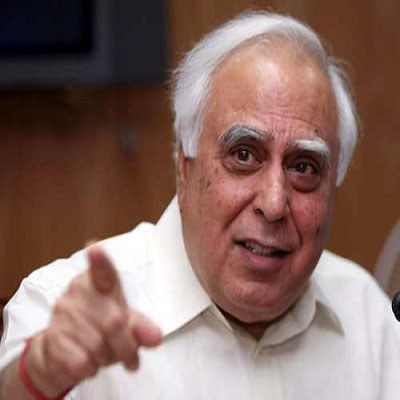
    NEW DELHI: The government hopes to announce its merger and acquisition policy for telecom companies by mid-October.

    Communications and Information Technology Minister Kapil Sibal said he had wanted them to in place by the middle of September but this had not been possible.

    Speaking at the Indian Women’s Press Corps, he said the Department of Telecom has plans to meet industry representatives before releasing the final guidelines.

    Meanwhile, Sibal said his top priority was to get Post Banks started in rural area. “Something that is very close to my heart is to get post bank in place for rural India. All post offices should also function as banks. I think we will be able to serve the rural economy and rural folk much better,” Sibal said.

    The Department of Posts has applied for a banking licence. The approval of banking licence by the Reserve bank of India is expected to triple bank branches in the country.

    The Minister wants to ensure that the “next auction is not just successful but phenomenally successful”.

    For the financial year 2013-14, government expects revenue of Rs 40,847.05 crore from other communication services, which include receipt from spectrum sale and one-time spectrum fee levied on old players for holding airwaves frequencies in addition to quantum they were allocated with licences.

    Sibal said that his ministry is working on a policy framework for Optical Fibre Network under which 250,000 village panchayats in the country will get connected by 2014. He wants to move the fibre optics policy framework as quickly as possible so that 600 universities and 3,500 colleges can also be connected with dedicated national knowledge network.